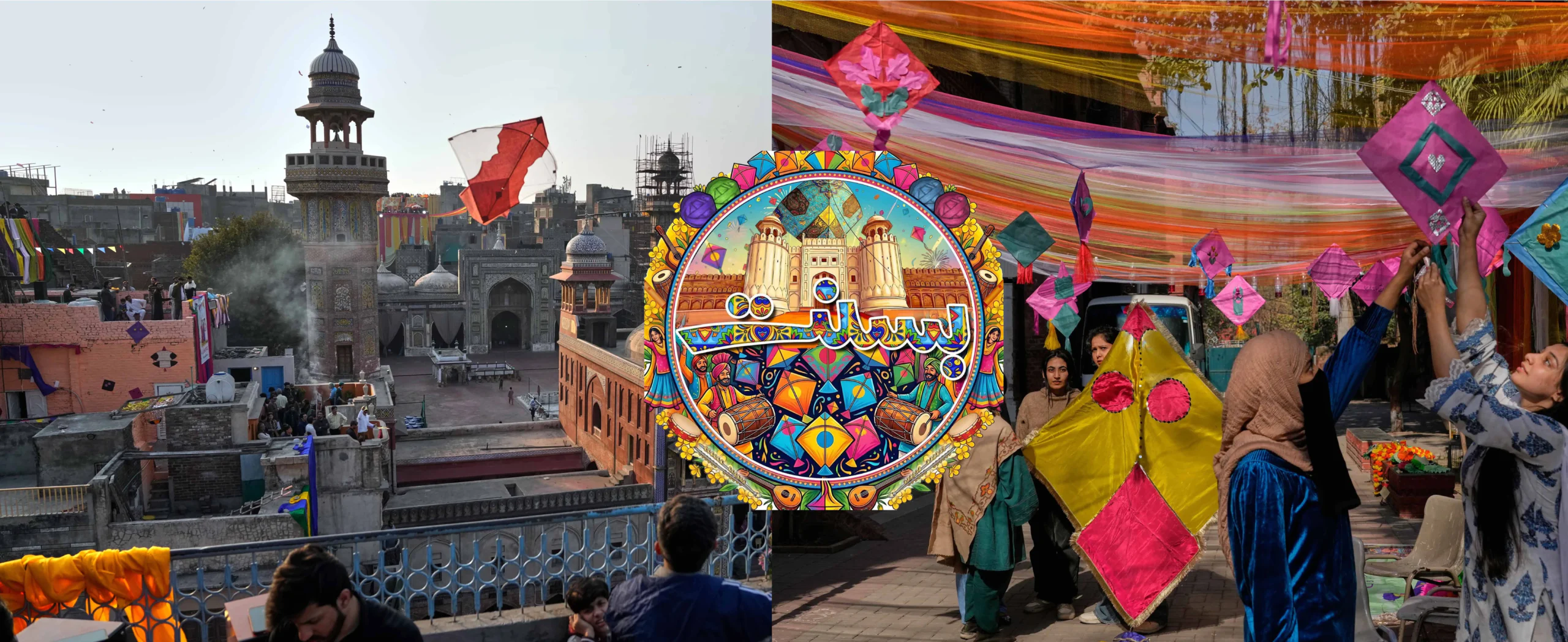
The Basant Festival, also known as Jashn-i-Baharaan, is one of the oldest seasonal celebrations of the Punjab region. Long before modern borders, political ideologies, or administrative laws, Basant existed as a celebration of spring, marking the transition from winter’s dormancy to nature’s renewal. It is most famously associated with kite flying, yellow attire, music, food, and collective joy, particularly in Lahore and central Punjab.
The Basant Festival Pakistan is not merely an event; it is a cultural expression shaped by climate, agriculture, poetry, urban life, and shared social rhythms. To understand Basant fully, one must begin with its origins, its historical evolution, and the human impulse that gave birth to it.
Origins of Basant: The Meaning of Spring
The word “Basant” comes from the Sanskrit “Vasant”, meaning spring. Across South Asia, spring has traditionally symbolized:
- Renewal of life
- Agricultural abundance
- Emotional awakening
- Hope after hardship
In agrarian societies like ancient Punjab, seasons were not abstract concepts — they directly affected survival. Winter was associated with scarcity, cold, and confinement, while spring brought:
- Blooming mustard fields
- Warmer sunlight
- Increased mobility
- Social gatherings
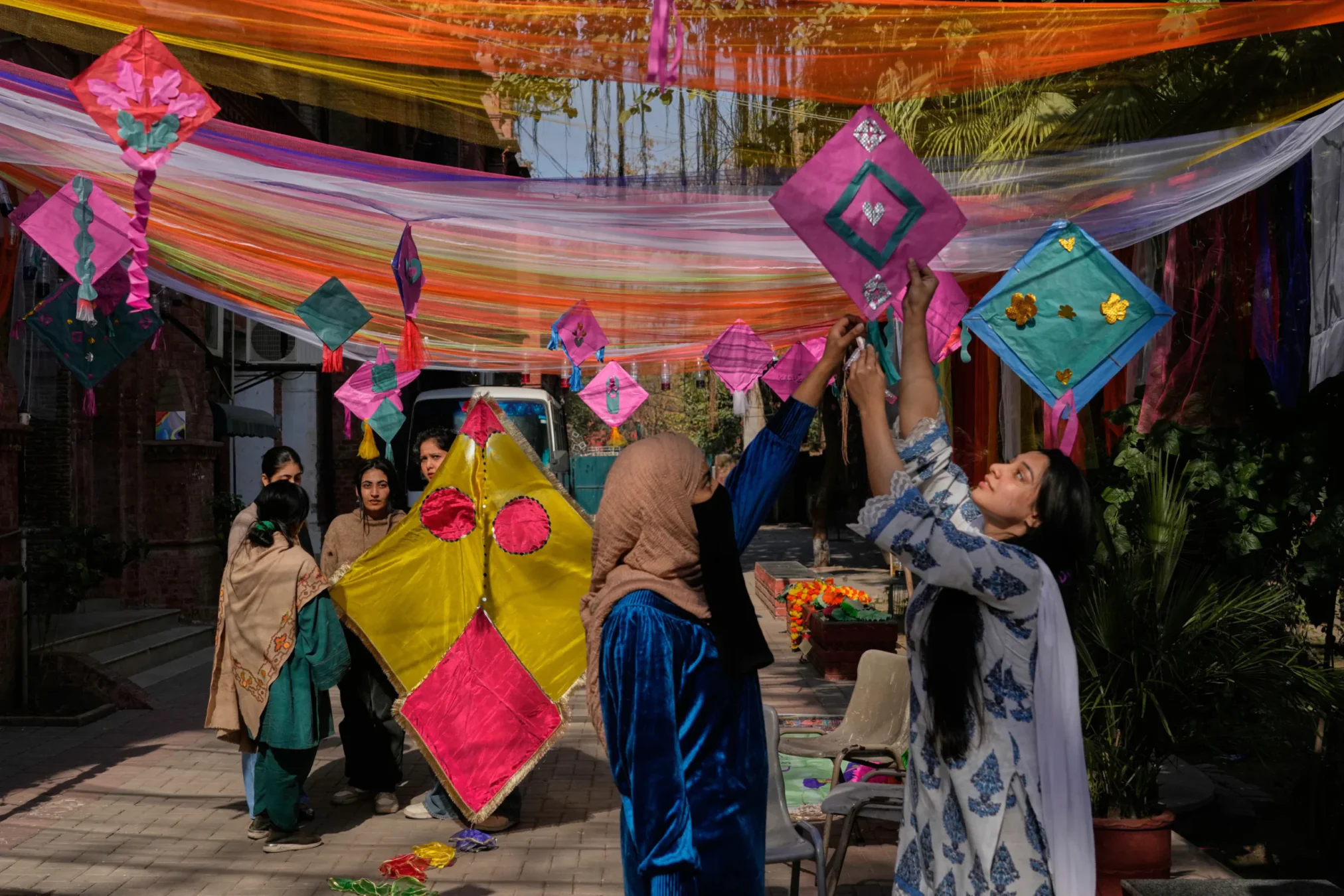
Basant Festival emerged as a seasonal marker, not a religious obligation. It was a way for communities to collectively acknowledge that the hardest part of the year had passed.
Basant Festival Before Religion: A Seasonal Celebration
One of the most important aspects of Basant’s history is that it predates rigid religious categorization. Like many ancient festivals, Basant began as a nature-centered celebration, rooted in:
- Solar cycles
- Agricultural rhythms
- Climatic transitions
Long before organized religious identities solidified in the region, people celebrated seasonal change through:
- Color
- Music
- Outdoor activities
- Communal participation
Early Cultural Roots in Punjab
Punjab’s geography played a central role in shaping Basant traditions. As a fertile land fed by rivers, Punjab depended heavily on seasonal predictability. Spring signaled:
- Successful sowing
- Livestock health
- Social mobility after winter confinement
Villages welcomed spring with:
- Fairs
- Songs
- Folk dances
- Competitive games
Over time, kite flying emerged as a natural extension of this seasonal joy — a way to engage with the open skies after months of gray confinement
Sufi Influence on Basant Festival Pakistan
One of the most fascinating aspects of Basant is how it transcended religious boundaries and became a shared cultural celebration. Muslim Sufi saints, particularly followers of the Chishti order, played a key role in this integration.
The Chishti Sufis, known for their emphasis on love, harmony, and devotion to God through music, poetry, and community gatherings, recognized the spirit of joy and togetherness in Basant. They adopted and encouraged the festival as a way to engage the local population in spiritual and social cohesion.
At Sufi shrines, kite-flying events were organized not merely as recreation but as community gatherings where people could connect. These shrines often became hubs of celebration, attracting people of different social classes and backgrounds. While the kites symbolized the joy of spring, the gatherings around the shrines promoted charity, reflection, and unity, core principles of Sufism.
Over time, this influence ensured that Basant was not confined to a single religious or ethnic group. It became a festival celebrated across Punjab, blending the folklore, spirituality, and artistic traditions of the region, giving Basant a unique character that was both cultural and spiritual.
In essence, the Sufi contribution helped transform Basant from a seasonal festival into a unifying cultural phenomenon, allowing communities to celebrate life, nature, and togetherness under the open sky.
Why Kite Flying Became Central to Basant Festival
Kite flying did not originate because of Basant, but Basant gave it meaning.
Kites symbolized:
- Freedom
- Skill
- Playfulness
- Community rivalry without violence
Rooftops became social spaces. The sky turned into a shared arena where:
- Neighbors interacted
- Class barriers softened
- Competition remained playful
The act of cutting another kite was never about defeat — it was about participation in a collective moment.
Basant Festival in the Medieval Period
By the medieval era, Basant had become embedded in the cultural consciousness of North India and Punjab. It found expression in:
- Courtly life
- Poetry
- Music
One of the most famous historical figures associated with Basant Festival is Amir Khusrau, the 13th-century poet and musician. Historical accounts and oral traditions link him to Basant celebrations, particularly through:
- Wearing yellow
- Composing seasonal verses
- Associating spring with spiritual awakening
This period transformed Basant from a rural observance into a cultural motif — a metaphor for renewal, love, and inner transformation.
Basant Under Sikh Rule
The Basant Festival gained formal prominence during the reign of Maharaja Ranjit Singh in the early 19th century. Unlike many rulers who imposed religious uniformity, Ranjit Singh:
- Embraced regional traditions
- Encouraged cultural plurality
- Participated personally in Basant celebrations
Historical accounts describe:
- Royal courts dressed in yellow
- Kite flying from palace rooftops
- Citywide festivities in Lahore
This royal patronage elevated Basant without stripping it of its popular character. It remained a people’s festival, not a state ritual.
Basant Festival in Urban Punjab: Lahore’s Identity
By the late 19th and early 20th centuries, Lahore had become synonymous with Basant. The city’s architecture — flat rooftops, dense neighborhoods, open skies — made it ideal for kite flying.
Basant in Lahore was unique because:
- Entire neighborhoods participated
- Rooftops became communal spaces
- Artisans, vendors, and musicians depended on it
It was not a one-day event but a seasonal mood that reshaped urban life.
Why Basant Festival Endured for Centuries
Basant survived invasions, regime changes, colonial rule, and Partition because it fulfilled a deep human need:
- To celebrate together
- To mark time through joy, not just suffering
- To connect nature with emotion
Unlike festivals tied strictly to doctrine, Basant adapted organically. It absorbed influences without losing its core identity — the celebration of spring and shared happiness.
Cultural and Historical Background of the Basant Festival in Punjab
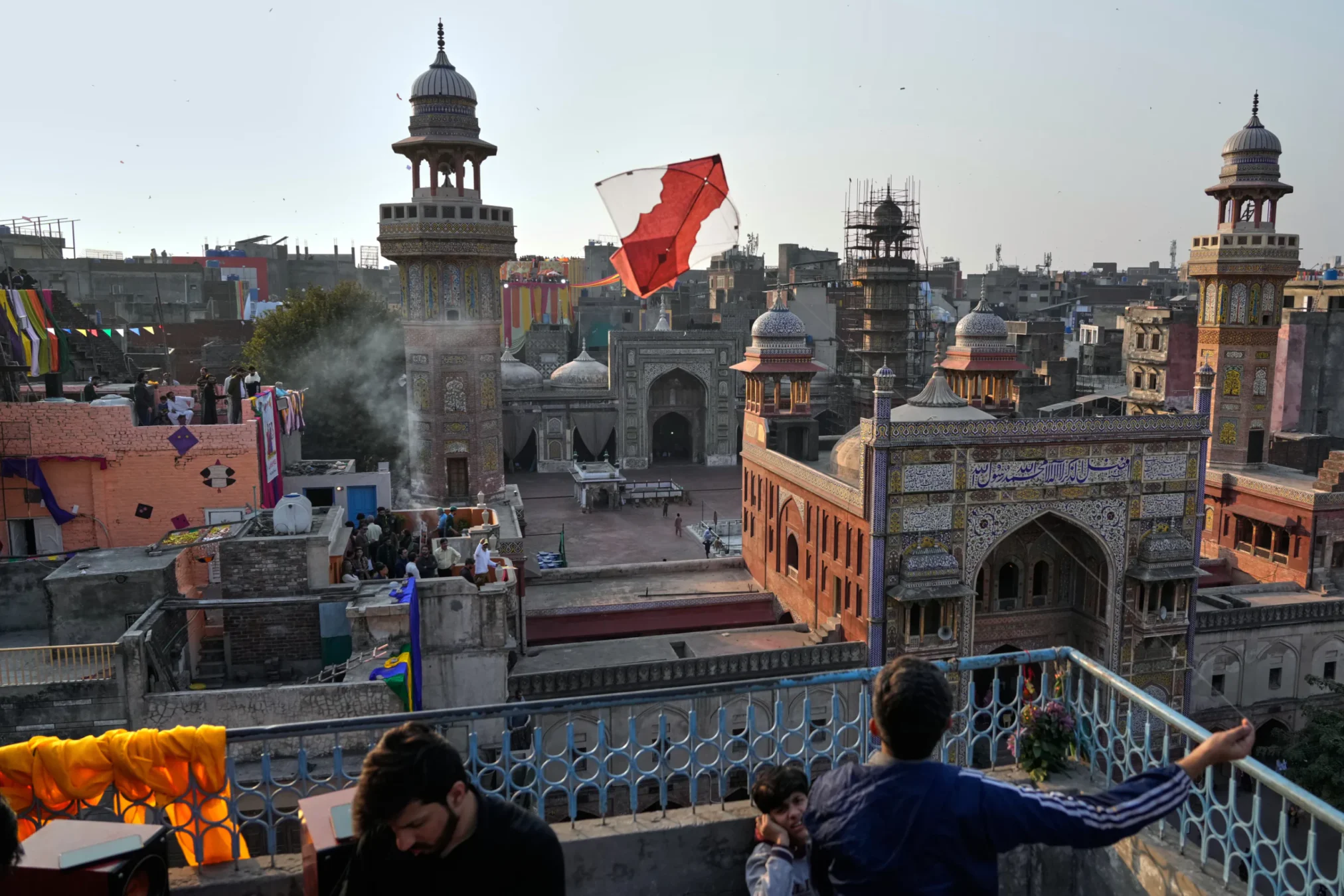
To understand the Basant Festival beyond its surface celebration, it is essential to see it as a cultural system, not merely an event. In Punjab, Basant evolved over centuries as a shared social rhythm — something that shaped how people related to seasons, space, and one another. It was woven into everyday life, reflecting Punjab’s pluralistic ethos, agricultural cycles, urban culture, and artistic expression.
Unlike festivals rooted strictly in theology, Basant functioned as a cultural commons — open, inclusive, and participatory.
Punjab’s Seasonal Culture and the Role of Spring
Punjab has always been a land defined by seasons. The agricultural calendar structured:
- Work patterns
- Food habits
- Social gatherings
- Emotional life
Spring, in particular, marked a psychological turning point. The end of harsh winter meant:
- Increased mobility
- Outdoor social life
- Weddings and fairs
- Music and celebration
Basant aligned naturally with this transition, offering a moment when communities collectively welcomed warmth, light, and growth.
Basant Festival and Agricultural Symbolism
The color yellow, so central to Basant, comes directly from Punjab’s agrarian reality. Mustard crops bloom across the plains during spring, painting fields in vibrant yellow. This color came to symbolize:
- Fertility
- Abundance
- Hope
Food traditions during Basant often reflected seasonal produce, reinforcing the link between celebration and land. In this way, Basant was not detached from labor; it celebrated the reward of agricultural endurance.
A Basant Festival Beyond Religious Boundaries
Historically, Basant Festival in Punjab was observed by:
- Muslims
- Hindus
- Sikhs
While Basant Panchami held specific religious meanings for some communities, the Punjabi expression of Basant was largely secular in practice. Participation did not require:
- Ritual purity
- Formal worship
- Religious affiliation
This shared celebration reflected what scholars often describe as Punjab’s syncretic culture, where music, language, food, and festivals flowed across religious lines.
Basant Festival in Pre-Partition Punjab
Before 1947, Basant was a collective urban and rural experience. Cities like:
- Lahore
- Amritsar
- Kasur
were known for their spring festivities. Rooftops, streets, and open grounds became spaces of interaction where:
- Neighbors exchanged greetings
- Children and elders participated together
- Economic activity flourished
Partition disrupted many shared traditions, but Basant persisted in memory, especially in Lahore, where it remained deeply embedded in urban identity.
Basant Festival and Urban Social Life
In cities, Basant transformed the use of space:
- Rooftops became social platforms
- Streets filled with vendors
- Neighborhoods opened to one another
For a few days, social hierarchies softened. People who rarely interacted shared:
- Food
- Music
- Competition
This temporary reordering of social life is what gave Basant its emotional power — it allowed people to experience community differently.
Cultural Economy of Basant Festival
Basant was not only cultural but also economic. Entire livelihoods depended on it:
- Kite makers
- String dyers
- Musicians
- Food vendors
- Artisans
Seasonal economies thrived around Basant, especially in Lahore. The festival created short-term employment and sustained traditional crafts that otherwise struggled in modern markets.
Basant Festival in Literature and Oral Tradition
Punjabi and Urdu literature frequently reference spring as a metaphor for:
- Love
- Awakening
- Liberation
Poets and storytellers used Basant imagery to express emotional and spiritual renewal. Even when not explicitly named, the themes of:
- Color
- Movement
- Joy
echo Basant’s cultural vocabulary.
Colonial Period and Cultural Persistence
During British colonial rule, Basant festival continued largely uninterrupted. While colonial authorities regulated public gatherings, Basant remained:
- Non-political
- Community-driven
- Socially embedded
Its survival during this period highlights its deep-rooted acceptance as a cultural tradition rather than a political statement.
Why Basant Became Symbolic of Lahore
Lahore’s identity as a cultural capital amplified Basant’s visibility. Over time, the festival came to represent:
- The city’s openness
- Its artistic temperament
- Its resilience
Basant became shorthand for Lahore’s personality — playful, expressive, and communal
How the Basant Festival Is Celebrated: Traditions, Kites, Food, Music, and Social Life
The Basant Festival is best understood not through descriptions alone but through how it is lived. For generations in Punjab—especially in Basant Festival Lahore—Basant unfolded as a multi-sensory experience: skies filled with kites, rooftops crowded with families, music echoing across neighborhoods, and kitchens alive with seasonal flavors. Celebration was not limited to one activity; it spread across homes, streets, and public spaces.
Basant was never a single ritual. It was a collective atmosphere.
Kite Flying: The Heart of Basant Festival
Kite flying is the most iconic element of the Basant Festival. During Basant:
- Rooftops become gathering spaces
- Entire neighborhoods participate
- The sky turns into a shared arena
Kite flying during Basant is not merely recreational; it is social. People:
- Compete playfully
- Cheer for one another
- Share victories and losses
The act of cutting a kite carries symbolic meaning — not aggression, but skill, timing, and participation.
Rooftop Culture and Community Interaction
One of the most distinctive features of Basant festival is how it redefines private space. Rooftops, usually confined to family use, become:
- Semi-public social platforms
- Meeting points for neighbors
- Spaces of collective joy
This temporary openness fosters:
- Social bonding
- Informal hospitality
- A sense of shared ownership of the city
Basant creates a rare moment when urban life feels less divided.
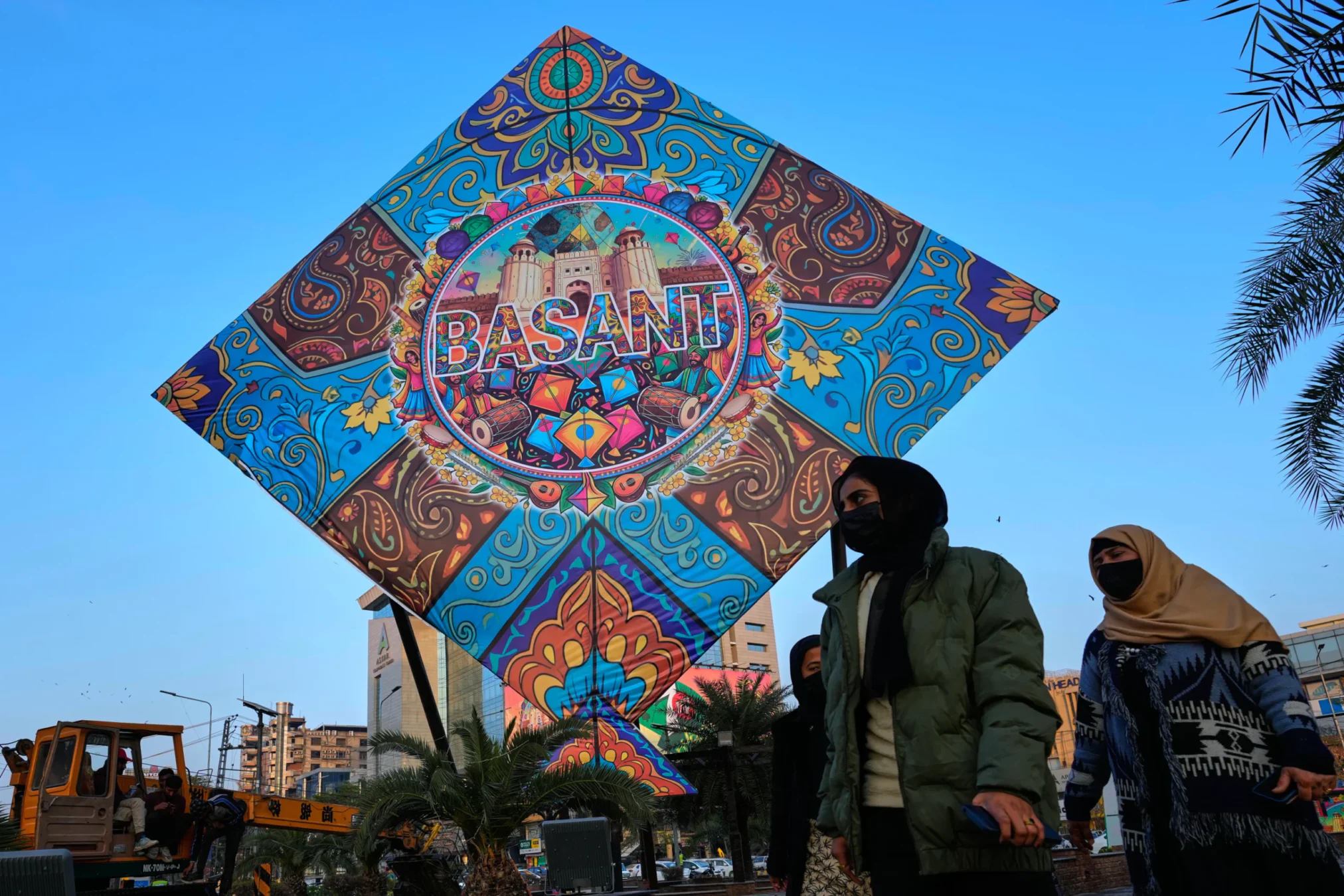
Basant Kite Flying Competitions: The Thrill of “Bo Kata!”
One of the most electrifying aspects of the Basant Festival is the kite flying competitions, where skill, strategy, and daring take center stage. As the skies of Lahore and other cities fill with kites of every color and size, rooftops, terraces, and open grounds become the battlefields for kite enthusiasts.
Each participant maneuvers their kite with precision and technique, attempting to cut the strings of rival kites. When a competitor successfully slices through another’s string, the victory cry “Bo Kata!” rings out across the neighborhood, a phrase that has become synonymous with Basant celebrations. The shout signals triumph and sparks excitement among fellow flyers and onlookers.
The competitions are intense. Flyers must anticipate wind patterns, string tension, and the movements of opponents’ kites, turning the seemingly playful activity into a strategic contest. As strings tangle and snap in the wind, the air is filled with energy, laughter, and the joyous cries of “Bo Kata!” from every rooftop.
The visual spectacle is unforgettable: dozens of kites dancing, diving, and soaring, their vibrant colors painting the sky. The soundscape—the flapping of kites, the cheering crowds, and the repeated chants of “Bo Kata!”—adds to the festival’s infectious energy, making it both a cultural ritual and a thrilling competition.
For many, the moment of shouting “Bo Kata!” is not just about winning a kite—it is a symbol of joy, community, and the spirit of Basant, celebrated for generations as a marker of spring, skill, and festivity.
Clothing and the Symbolism of Yellow
The color yellow dominates Basant celebrations. People traditionally wear:
- Yellow kurtas
- Dupattas
- Accessories
This color choice reflects:
- Blooming mustard fields
- The strengthening sun
- Prosperity and optimism
Wearing yellow is less about uniformity and more about shared expression — a visual language understood across communities.
Food Traditions During Basant
Food plays a central role in Basant celebrations. Families prepare seasonal dishes, often emphasizing:
- Desi Cuisine — Flavors of the Season
- Food is an essential part of Basant’s social fabric, reflecting the rich tastes of Punjabi and Lahori culture:
- Barbecue and Grilled Meats: Items like malai boti, broast, mutton tikka, and pak gosht were staples at rooftop feasts and street stalls.
- Snacks & Street Foods: Samosas, pakoras, spicy chaat, and jalebis kept kite flyers and spectators energized as they moved between rooftop and market.
- Traditional Sweets: Ladoos and hareesa, along with seasonal fruits and dry fruits, were served to mark the sweetness of spring.
- Refreshments: Lassi (a yogurt drink) and green tea were popular thirst-quenchers during busy daytime kite flying.
- These dishes were both comforting and symbolic, often shared with extended family and visiting friends during multi-hour gatherings.
Meals during Basant are rarely private. Sharing food with:
- Neighbors
- Guests
- Passersby
reinforces the festival’s communal nature.
Traditional Bazaars Celebration
In the weeks leading up to Basant, the city’s traditional bazaars buzzed with activity. Areas like Mochi Gate and Rang Mahal in Lahore became epicenters of Basant commerce, with shops and stalls selling:
- Handcrafted kites in vibrant colors and unique shapes.
- Manually wound reels of thread (dor) in various thicknesses and lengths.
- Decorative accessories, fabrics, and yellow clothes tied to the festival’s spring identity.
- Local crafts like paper-cut designs and floral garlands that added to the festival décor.
Watching skilled kite makers tie bamboo frames, thread the string, and decorate kites by hand was itself a cultural craft performance—a living tradition of urban artisanry
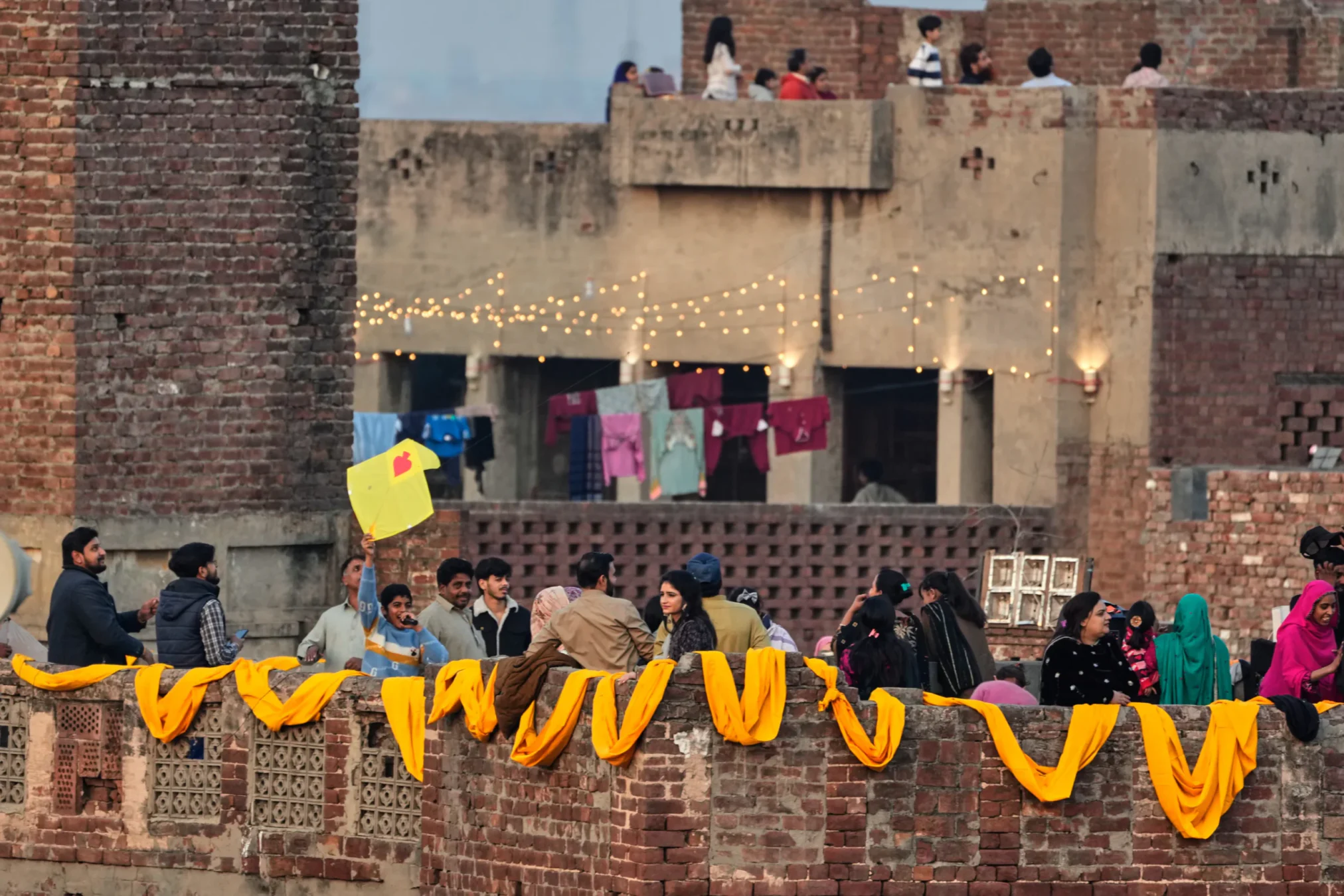
Music, Dhol, and Celebration Sounds
Music, Dhol, and the Soundscape of Basant
Basant was never a silent festival. Even before the first kite rose into the sky, the air itself seemed to change — filled with rhythm, laughter, drumbeats, and human voices. Sound was central to the Basant experience, transforming cities like Lahore into living, breathing celebrations of spring.
The Beat of the Dhol
At the heart of Basant’s soundscape was the dhol — the traditional double-sided drum deeply rooted in Punjabi culture. Dhol players, often positioned at street corners, rooftops, or within neighborhood melas, set the tempo of the festival. Their energetic beats echoed through narrow lanes and open rooftops, signaling that Basant had arrived.
In areas such as Androon Lahore, Bhati Gate, Mochi Gate, and Anarkali, the dhol was not just background music; it was a call to gather. People clapped, danced, and moved instinctively to its rhythm. The beat carried excitement, urgency, and joy, encouraging even hesitant onlookers to join in.
Folk Music and Punjabi Songs
Alongside the dhol, Punjabi folk songs filled the air. Informal singing sessions emerged on rooftops and in courtyards, with lyrics celebrating spring, love, color, and reunion. These songs often drew from traditional Punjabi poetry and seasonal folk verses, passed down orally through generations.
In many neighborhoods, especially around Data Darbar, Shah Jamal, and Ichhra, folk singers performed live, accompanied by instruments such as the chimta, tabla, and harmonium. The music created a bridge between celebration and spirituality, reflecting Punjab’s deeply intertwined cultural and Sufi traditions.
Street Sounds and Human Energy
Beyond formal music, Basant’s soundscape was shaped by human participation. The repeated cries of “Bo Kata!” rang out whenever a kite was cut, overlapping with laughter, cheers, and playful banter between rooftops. Children shouted directions, elders offered advice, and neighbors exchanged greetings across buildings.
These sounds created a shared auditory experience — even those indoors could feel the festival unfolding outside. The city sounded different during Basant: louder, lighter, and more alive.
Qawwali and Sufi Influence
In areas near major Sufi shrines, Basant was often accompanied by qawwali performances. Shrines associated with the Chishti order, such as Data Ganj Bakhsh (Data Darbar) and Shah Jamal, became focal points where devotion and festivity coexisted.
Here, music carried spiritual meaning. The rhythms and verses celebrated divine love, renewal, and joy — themes that aligned naturally with the arrival of spring. Historically, Sufi traditions have used music as a form of remembrance and connection, and Basant provided a seasonal context for these expressions.
Nighttime Celebrations
As evening fell, the soundscape evolved rather than faded. Night-time kite flying continued under lights, accompanied by recorded music played from rooftops and street stalls. Popular Punjabi songs, classical melodies, and festive beats blended into a continuous hum that lasted late into the night.
In places like Gulberg, Model Town, and old city rooftops, this mix of traditional and modern sounds reflected Lahore’s layered identity — where heritage and contemporary life coexist.
A Festival Heard as Much as Seen
What made Basant unique was that it could be heard from afar. Even without seeing the kites, one could recognize the festival through sound alone — the dhol’s pulse, the chorus of “Bo Kata!”, the laughter, and the music drifting through the air.
These sounds were not incidental. They formed an emotional architecture, shaping memory and collective experience. For many Lahoris, the absence of these sounds during years of prohibition felt as profound as the absence of kites themselves.
Cultural Significance
Music and sound during Basant served as connective tissue — linking rooftops, streets, shrines, and markets into one continuous celebration. They reinforced community bonds, invited participation, and turned the city into a shared stage where everyone, knowingly or unknowingly, became part of the festival.
Children and Basant
For children, Basant is often a first experience of:
- Public celebration
- Friendly competition
- Creative expression
Learning to fly a kite becomes a rite of passage. The festival offers:
- Outdoor play
- Family bonding
- Lasting memories
Many adults associate Basant with childhood nostalgia, underscoring its emotional significance.
Women and Basant Celebrations
Basant also provides women with greater visibility in public celebration. Rooftops become spaces where:
- Women socialize freely
- Music and dance flourish
- Generational traditions are passed down
This aspect challenges the idea that Basant is limited to a single gender or activity.
Modern Adaptations of Basant
In recent decades, Basant has adapted to modern contexts:
- Organized festivals
- Cultural events
- Regulated spaces
While the form has changed, the core elements — color, flight, music, and community — remain central.
Why the Basant Festival Was Banned: Incidents, Legal Actions, and the Turning Point
For decades, the Basant Festival symbolized joy, openness, and cultural continuity in Punjab. Yet in the early 2000s, this centuries-old tradition faced an abrupt rupture. What had long been regarded as harmless celebration came to be framed as a public safety crisis, leading to a complete ban on kite flying in several parts of Pakistan, most notably Lahore.
Understanding why Basant was banned requires separating the festival itself from the practices that emerged around it, and examining how regulatory failure, commercialization, and tragedy converged
The Rise of Competitive Kite Flying
In its traditional form, kite flying during Basant was:
- Skill-based
- Community-oriented
- Relatively low-risk
However, by the late 1990s and early 2000s, Basant began to change due to:
- Intense commercial competition
- Professional kite fighting
- Increasing stakes and prize money
This shift altered the nature of the festival, pushing participants toward more dangerous methods to gain advantage.
Introduction of Hazardous Kite Strings
The most critical factor behind the ban was the widespread use of dangerous kite strings, including:
- Metallic wire
- Nylon and plastic-coated string
- Chemically treated sharp cord
These materials were designed to cut opposing kite strings more efficiently but posed severe risks to:
- Motorcyclists
- Pedestrians
- Children
The transformation of kite flying into a high-risk activity was gradual but devastating.
Fatal Incidents and Public Outcry
Between the late 1990s and early 2000s, numerous incidents were reported in urban centers:
- Throats of motorcyclists slashed by sharp strings
- Children injured on rooftops
- Fatal falls during kite chasing
- Accidental electrocutions from entangled strings
These tragedies shifted public perception. What was once seen as festive began to be associated with preventable loss of life
Media Coverage and Moral Panic
As incidents increased, media coverage intensified. Graphic reporting:
- Amplified public fear
- Pressured authorities
- Framed Basant as inherently dangerous
Rather than distinguishing between unsafe practices and the festival itself, narratives increasingly portrayed Basant as:
- Lawless
- Reckless
- Unmanageable
This environment left little room for nuanced solutions.
Government Response and Legal Intervention
In response to mounting pressure, authorities opted for the most immediate solution: a blanket ban.
Key developments included:
- Emergency ordinances prohibiting kite flying
- Police crackdowns
- Confiscation of kite materials
- Criminalization of participation
The Punjab Prohibition of Kite Flying Ordinance (2001) and subsequent actions effectively removed Basant from public life.
Supreme Court Involvement
The issue reached the judiciary when the Supreme Court took suo motu notice of deaths linked to kite flying. The court emphasized:
- Protection of human life
- Failure of enforcement mechanisms
- State responsibility
While the intent was safety, the outcome reinforced the ban rather than encouraging regulated celebration.
Why Regulation Failed Before the Ban
Before prohibition, regulation was either:
- Weak
- Poorly enforced
- Inconsistent
Authorities struggled to:
- Control illegal string production
- Monitor rooftop activity
- Coordinate enforcement across districts
Instead of strengthening regulation, the state defaulted to prohibition.
Cultural Cost of the Ban
The ban achieved one objective — reducing immediate risk — but at a high cost:
- Loss of livelihoods
- Erosion of cultural continuity
- Emotional disconnection
For many citizens, the ban felt less like protection and more like cultural erasure.
Basant as a Policy Failure
In hindsight, the ban reflects a broader governance pattern:
- Addressing symptoms instead of causes
- Criminalizing culture due to enforcement gaps
- Choosing control over reform
The tragedy was not Basant itself, but the absence of sustainable regulation
Impact of the Basant Ban on People: Social, Economic, and Emotional Effect
When the Basant Festival was banned, the consequences went beyond a simple prohibition of kite flying. Basant was deeply woven into Punjab’s social fabric. Its absence created ripple effects across:
- Community life
- Local economy
- Emotional well-being
Understanding these impacts sheds light on why the ban remains controversial even decades later
Social Impact
Basant was traditionally a community festival, bringing together:
- Families on rooftops
- Neighbors sharing food and tea
- Street vendors selling kites and snacks
After the ban:
- Community gatherings decreased sharply
- Cultural exchange among generations diminished
- Rooftops became empty during the spring
For many residents, this led to a sense of loss and nostalgia, especially among elders who recalled the festival from childhood
Economic Impact
Basant generated significant local business:
- Kite makers and sellers
- String manufacturers
- Food vendors and tea stalls
- Tourism-related income
Estimates suggest the ban caused millions of dollars in lost revenue annually in cities like Lahore. Families relying on seasonal income were particularly affected, and many small businesses closed permanently.
Emotional and Psychological Impact
For participants, Basant was more than entertainment; it was a form of cultural expression and stress relief. Its removal caused:
- Loss of a creative outlet for youth
- Decline in social cohesion
- Heightened sense of restriction among the public
Some scholars describe this as a “cultural trauma”, where a shared tradition is suddenly erased, leaving a gap in identity and community memory.
Impact on Youth
Young people were among the hardest hit:
- Competitive kite flying had offered skill-building and teamwork
- Seasonal jobs provided income and responsibility
- Festivals encouraged creativity in kite design and choreography
The ban removed a culturally sanctioned way for youth to engage socially, increasing boredom and alternative, less regulated forms of entertainment.
Public Sentiment and Nostalgia
Despite the official ban, many citizens continued to celebrate Basant privately, reflecting:
- Emotional attachment to tradition
- Resistance to perceived overreach by authorities
- Desire to maintain cultural heritage
This nostalgia has fueled debates on reviving Basant in a regulated and safe manner, showing that banning a festival does not erase its social significance.
Cultural Identity and Heritage
Basant was more than a festival—it was an expression of Punjabi identity, tied to:
- Seasonal cycles (welcoming spring)
- Folk traditions, music, and poetry
- Artistic expression in kite designs
The ban caused a fragmentation of cultural practice, weakening intergenerational transmission of traditions.
Long-term Societal Effects
Over time, the absence of Basant led to:
- Decline of related crafts and skills
- Reduced social cohesion during spring
- Growing discourse around cultural preservation vs. public safety
It also sparked civil debates: should a government prioritize life over culture, or can safety be managed through regulation?
Pros and Cons of Basant Festival — Tradition vs. Risk
The Basant Festival was one of Punjab’s most vibrant cultural events, but it came with both celebratory highs and serious risks. Understanding the pros and cons helps us see why it was both loved and feared.
Pros of Basant Festival
a) Cultural Significance
- Celebration of spring: Basant marks the arrival of spring, symbolizing renewal and joy.
- Artistic expression: Kite flying involves creativity, from designing colorful kites to choreographing competitive fights.
- Heritage preservation: Traditional songs, food, and rooftop gatherings maintain Punjab’s cultural identity.
b) Economic Benefits
- Boost to local businesses: Kite manufacturers, food vendors, and street markets thrive during the festival.
- Tourism influx: National and international tourists often visit to experience the lively festivities.
- Seasonal employment: Students and low-income workers earn income through kite selling or event assistance.
c) Social and Community Benefits
- Strengthening family bonds: Families gather on rooftops, sharing food and tea.
- Youth engagement: Kite competitions build teamwork, strategy, and problem-solving skills.
- Public entertainment: Provides a seasonal outlet for relaxation and enjoyment.
Cons of Basant Festival
a) Safety Hazards
- Kite strings (manja): Often coated with glass, leading to injuries or deaths.
- Rooftop accidents: Falls and injuries during high-rise kite flying.
- Traffic accidents: People distracted by kite flying on streets can cause vehicle collisions.
b) Health and Environmental Concerns
- Stray wires and pollution: Flying kites can get entangled in power lines or trees.
- Pollution from strings: Discarded manja poses risks to birds and domestic animals.
c) Legal and Social Issues
- Violence: Kite fights sometimes escalate into personal conflicts.
- Underage accidents: Children often suffer injuries due to lack of safety awareness.
- Strained emergency services: Hospitals and rescue services are often overwhelmed during festival season.
Balancing Tradition and Risk
The core challenge of Basant lies in preserving cultural heritage while ensuring public safety.
- Supporters argue: “With regulation, Basant can be safe.”
- Opponents argue: “Risk of death and injury is too high.”
This debate highlights the complexity of cultural festivals in modern societies.
Lessons from Other Countries
Globally, festivals with inherent risks have been regulated rather than banned:
- Fireworks festivals in Europe require permits and safety zones.
- Kite festivals in Japan have strict safety protocols for public spaces.
The takeaway: regulation can preserve culture without compromising safety.
Government Measures — Laws, Bans, and Proposed Reforms for Basant Festival
The Basant Festival’s popularity clashed with public safety concerns, prompting the government and judiciary in Pakistan to take several measures over the years. Understanding these measures shows how authorities have tried to balance cultural heritage with citizen safety
Early Government Actions
a) 2001 – Punjab Prohibition of Kite Flying Ordinance
- First formal law restricting kite flying to curb accidents and fatalities.
- Targeted dangerous kites and glass-coated strings.
- Imposed fines and limited public celebrations.
b) 2005 – Supreme Court Suo Moto Notice
- Triggered by numerous injuries and deaths.
- Directed government to regulate, not ban, kite flying.
- Highlighted Article 18 of the Constitution (freedom of trade, profession, and occupation).
c) 2007 – Punjab Kite Flying Rules
- Tried to create a permit-based system for kite festivals.
- Set regulations on kite size, strings, and flying zones.
- In practice, lacked proper enforcement, leading to sporadic violations.
Complete Ban on Basant Festival
a) 2009 – Punjab Prohibition of Dangerous Kite Flying Activities
- Government banned kite flying entirely in major cities.
- Motivation: frequent deaths, rooftop falls, and electrocution hazards.
- Enforcement led to arrests of kite makers, flyers, and transporters.
b) Public Reaction
- Cultural backlash: People saw it as erasing a centuries-old tradition.
- Economic impact: Loss of livelihood for thousands of workers and artisans.
- Continued clandestine celebrations: Kite enthusiasts often defied the ban.
3. Recent Revival and Regulations
a) Punjab Kite Flying Ordinance 2025
- Allowed Basant return after 25 years under strict regulations.
- Key measures included:
- Mandatory registration of kite manufacturers and sellers.
- QR codes on kites for tracking compliance.
- Age restrictions: children under 18 prohibited from flying kites.
- Fines and imprisonment for violations (Rs 2 million fine or 3–5 years jail).
- Safety zones, cotton-only strings, and banned metallic or glass-coated manja.
b) Controlled Celebrations
- Rooftops checked for structural safety.
- Loud music, fireworks, and flying near sensitive areas like airports prohibited.
- Volunteer teams and law enforcement monitoring compliance.
4. Proposed Reforms for Safe Basant
a) Regulatory Measures
- Government could permit kite flying in designated zones only.
- Strict string and kite type standards.
- Mandatory training programs for youth on safe kite flying.
b) Community Involvement
- Formation of District Kite Flying Associations for compliance and awareness.
- Cultural programs alongside kite flying to reduce competitive risk.
c) Economic Safeguards
- Provide subsidies and permits to kite manufacturers to protect livelihoods.
- Develop insurance programs for participants and vendors.
d) Public Awareness Campaigns
- Safety drills, flyers, and media campaigns.
- Collaboration with schools, NGOs, and religious leaders to promote safety.
Lessons Learned
- Bans alone cannot eliminate cultural practices.
- Regulation + enforcement + education is the most effective method.
- Protecting lives while preserving heritage is possible with modernized, practical policies
Conclusion — The Future of Basant Festival
Basant: A Cultural Legacy
Basant has been celebrated for centuries in Punjab, rooted in:
- Seasonal change: Celebrating spring and harvest.
- Social cohesion: Bringing communities together on rooftops and fields.
- Artistic expression: Kite making, decorating, and flying as a creative tradition.
Its history shows how culture, joy, and identity intertwined with the region’s seasonal calendar
Reasons for Controversy
Despite its beauty, Basant faced challenges:
- Safety hazards: Glass-coated strings, electrocution, and rooftop falls caused deaths and injuries.
- Legal concerns: Government attempts to balance freedom of culture vs public welfare.
- Social conflicts: Economic disparity between organizers and those affected by accidents.
The festival became a symbol of tension between tradition and modern safety standards
Impacts on Society
Positive:
- Boosted local economy (kite makers, vendors, street food).
- Encouraged community participation and celebration of spring.
- Promoted tourism and cultural pride in Punjab.
Negative:
Government Role: Lessons Learned
Looking Forward
The future of Basant depends on:
- Structured celebration: Permits, safety zones, age restrictions.
- Community involvement: Local organizations ensuring compliance.
- Economic integration: Protecting livelihoods of kite makers and sellers.
- Public safety campaigns: Schools, media, and NGOs promoting responsible participation.
With careful planning, Basant can return as a safe, joyous, and culturally rich festival for future generations
Final Thoughts
Basant is more than kite flying—it’s a symbol of life, color, and tradition. Its journey reflects the dynamic relationship between culture, law, and public safety.
Preserving Basant requires:
- Respecting heritage,
- Prioritizing lives,
- Encouraging responsible celebration.
If done correctly, Basant can soar again—both in the skies and in the hearts of the people
Basant Festival FAQ
1. What is the Basant Festival?
Basant Festival is a traditional kite-flying festival celebrated in Punjab, Pakistan, marking the arrival of spring. The festival is known for its colorful kites, rooftop gatherings, and vibrant community celebrations.
2. When is Basant Festival celebrated?
Basant usually takes place in late January or February, depending on the lunar calendar. The festival spans several days, with the peak often in early February, especially in Lahore.
3. Why is Basant Festival important?
Basant is important because it:
- Celebrates spring and renewal
- Strengthens community bonds
- Preserves cultural heritage of Punjab
- Provides economic opportunities for kite makers and vendors
4. Why was Basant banned in Pakistan?
The Basant Festival was banned due to:
- Safety hazards such as electrocution and rooftop falls
- Deaths and injuries caused by glass-coated or metallic kite strings
- Public safety concerns in densely populated areas
5. How is Basant Festival celebrated?
During Basant:
- People fly colorful kites from rooftops and open spaces
- Families and friends gather to enjoy traditional food and music
- Special kite competitions with prizes take place
- Streets and markets are decorated with yellow, the color of spring
6. What are the rules for flying kites legally?
With recent government regulations:
- Only cotton strings are allowed; metallic or glass-coated strings are banned
- Participants must register for permits in some areas
- Kites must be flown in approved zones, avoiding airports and sensitive locations
7. What are the economic impacts of Basant?
Basant supports the local economy by:
- Providing livelihoods for kite makers, sellers, and street vendors
- Boosting tourism and small businesses during festival days
- Generating millions of rupees in trade and revenue
8. What are the pros and cons of Basant Festival?
Pros:
- Cultural preservation and community bonding
- Economic benefits and tourism growth
- Fun, colorful, and joyful celebration
Cons:
- Safety risks from falls and kite strings
- Traffic disruption and accidents
- Past fatalities leading to government restrictions
9. Can children participate in Basant Festival?
Yes, but children under 18 must follow safety rules. They should:
- Use safe cotton kites
- Fly under adult supervision
- Avoid rooftops or crowded streets
10. How can the government ensure a safe Basant Festival?
Government measures include:
- Issuing permits for kite making and selling
- Designating safe flying zones
- Banning dangerous strings
- Conducting awareness campaigns for safety
11. Why is Basant Festival culturally significant in Lahore?
Lahore is the historical hub of Basant, where:
- The festival traces back to Maharaja Ranjit Singh’s court
- Rooftops, markets, and streets are central to celebrations
- The event reflects Lahore’s pluralistic and inclusive culture
12. How to celebrate Basant safely?
- Fly kites only in permitted areas
- Avoid metallic or glass-coated strings
- Ensure structurally safe rooftops
- Keep fire and electrical hazards in check