
Introduction
Miani Sahib Graveyard, often searched online as Miani Sahib Graveyard, is not only the largest qabristan of Lahore but also one of the oldest continuously used graveyards in South Asia. Spread across a vast area near Chauburji, bordered by Lytton Road on one side and Bahawalpur Road passing through it, this historic cemetery represents centuries of Lahore’s religious, cultural, political, and social history.
For the people of Lahore, Miani Sahib Graveyard is more than a burial ground. It is a living archive of the city’s past—housing saints, scholars, martyrs, poets, journalists, soldiers, and reformers who shaped Pakistan’s intellectual and national identity.
Origin of the Name “Miani Sahib”
The name Miani Sahib is traditionally linked to the presence of religious scholars and maulvis who lived in and around this area during the Mughal era. Over time, the locality itself became known as Miani Sahib, and the qabristan inherited this name. The association with religious learning and piety gave the graveyard spiritual importance long before it became Lahore’s primary burial ground.
Mughal-Era Roots
The origins of Miani Sahib Graveyard date back to the Mughal era, making it one of the oldest graveyards in the region. At a time when Lahore was a flourishing Mughal capital, burial grounds were established outside the main residential zones, often near scholarly or spiritual settlements. Miani Sahib emerged as one such sacred resting place.
Over centuries, the graveyard expanded organically as Lahore grew, surviving the Mughal decline, Sikh rule, British colonial administration, and the post-Partition expansion of the city.
Miani Sahib Graveyard Location & Urban Importance
Located near Chauburji, Miani Sahib Graveyard today occupies approximately 1,206 kanals (around 150 acres) of land. Due to its enormous size, multiple roads pass through the graveyard, connecting different parts of the city. This unique feature reflects how Lahore expanded around the qabristan rather than replacing it.
Despite urban pressure and encroachments over time, Miani Sahib Graveyard has retained its identity as Lahore’s central burial ground.
Cultural & Emotional Significance
For Lahoris, burial at Miani Sahib is often considered an honor. Generations of families have their elders resting here, creating emotional bonds that go beyond history books. The presence of martyrs, saints, and national heroes has further elevated its symbolic value.
The graveyard is frequently visited not only for funerals but also for prayers, reflection, and remembrance—especially on death anniversaries of notable personalities.
Area, Boundaries, Architecture & Internal Layout of Miani Sahib Graveyard
Total Area & Land Coverage
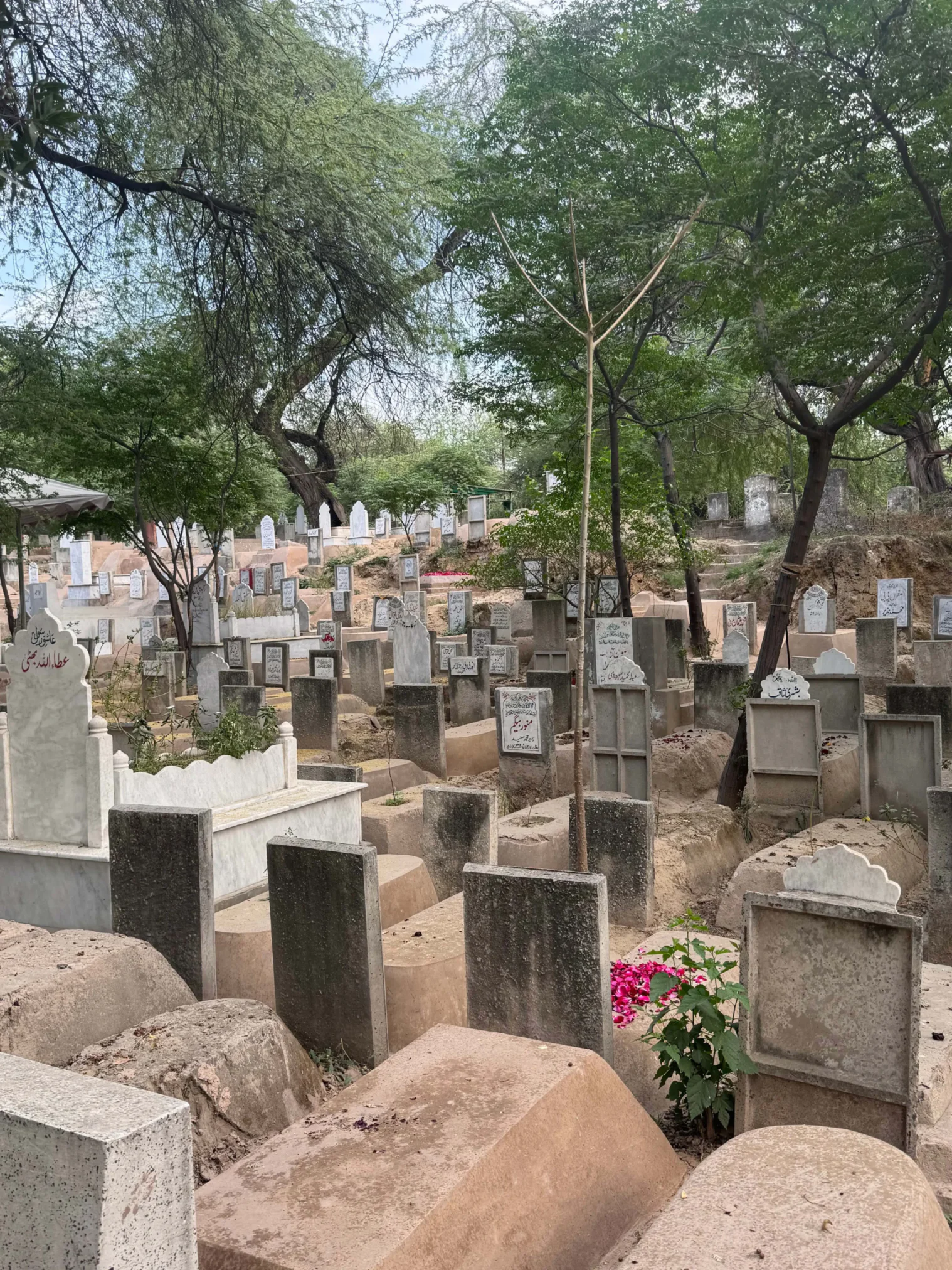
Miani Sahib Graveyard covers an estimated 1,206 kanals of land, which translates to approximately 150 acres, making it the largest graveyard in Lahore and one of the biggest urban cemeteries in Pakistan. This massive land area has developed gradually since the Mughal era, expanding organically as Lahore’s population grew over centuries.
The scale of Miani Sahib Graveyard is such that it functions almost like a small township, with its own internal divisions, pathways, mosques, and service structures.
Boundaries & Roads Passing Through
One of the most distinctive features of Miani Sahib Graveyard is that major roads pass through it, a rare phenomenon for a historic cemetery. The graveyard is bordered by:
- Lytton Road on one side
- Bahawalpur Road, which passes through sections of the graveyard
In addition to these, there are 7 internal link roads that connect different sections of the qabristan. These roads developed due to Lahore’s urban expansion and increased traffic demands, gradually cutting through the graveyard while keeping it functional.
Internal Division: 8 Main Areas
For administrative and navigational purposes, Miani Sahib Graveyard is divided into 8 main areas. These sections help manage burials, maintenance, and visitor movement. Each area has its own clusters of graves, walkways, and service points, reflecting different periods of expansion.
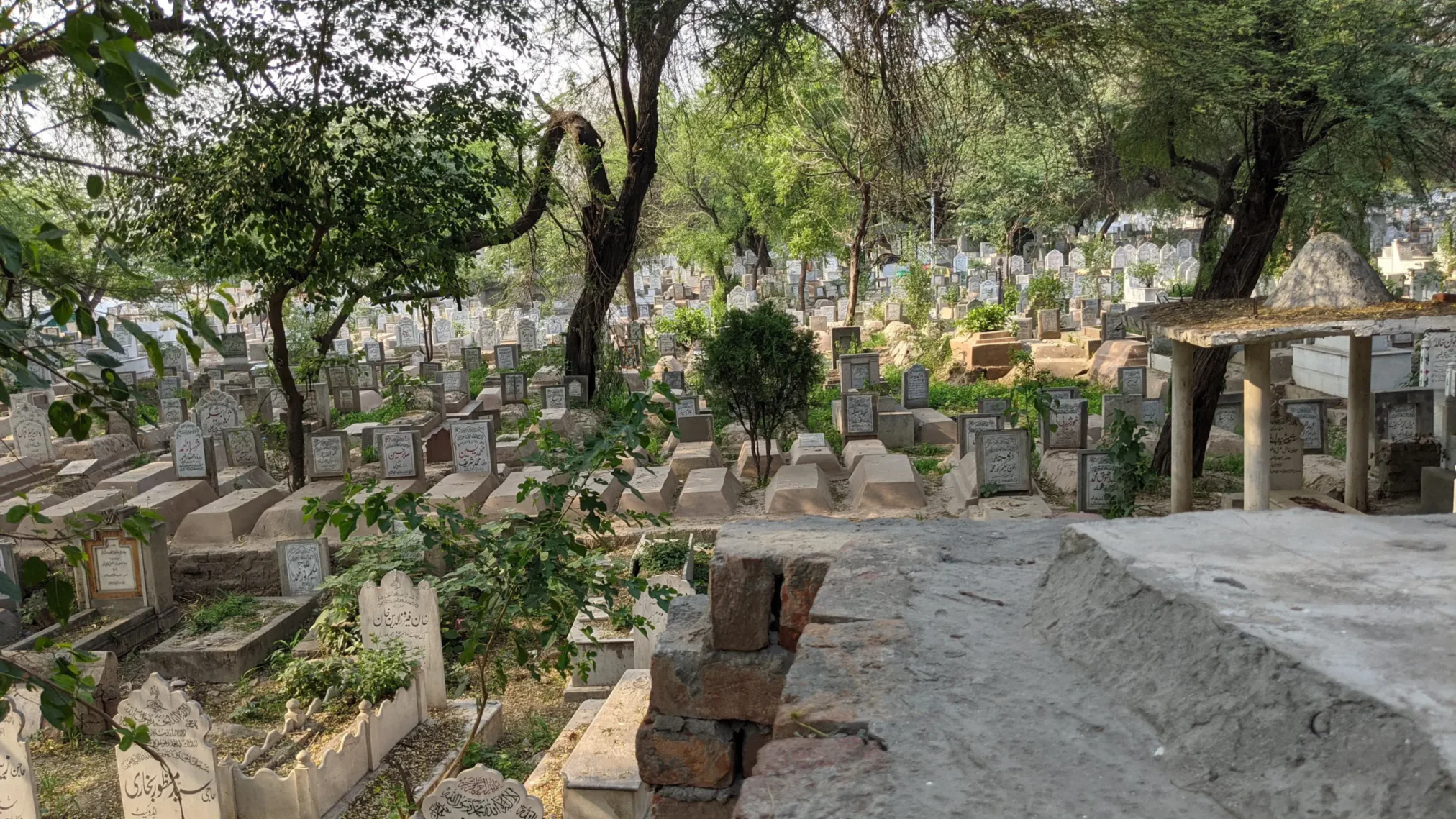
Some sections are visibly older, with weathered tombstones and traditional grave markers, while newer areas feature tiled or marble-covered graves.
Funeral Grounds (Janazah Gah)
Miani Sahib Graveyard contains 3 large funeral grounds, which are used for Namaz-e-Janazah (funeral prayers). These grounds are essential due to the high number of daily burials taking place at the site.
Recently, these Janazah facilities have been significantly upgraded, including:
- Proper parking arrangements
- Marble and tiled flooring
- Covered and roofed prayer areas
These upgrades ensure that funeral prayers can be offered in a clean, dignified environment, even during rain or extreme weather conditions.
Mosques & Religious Structures
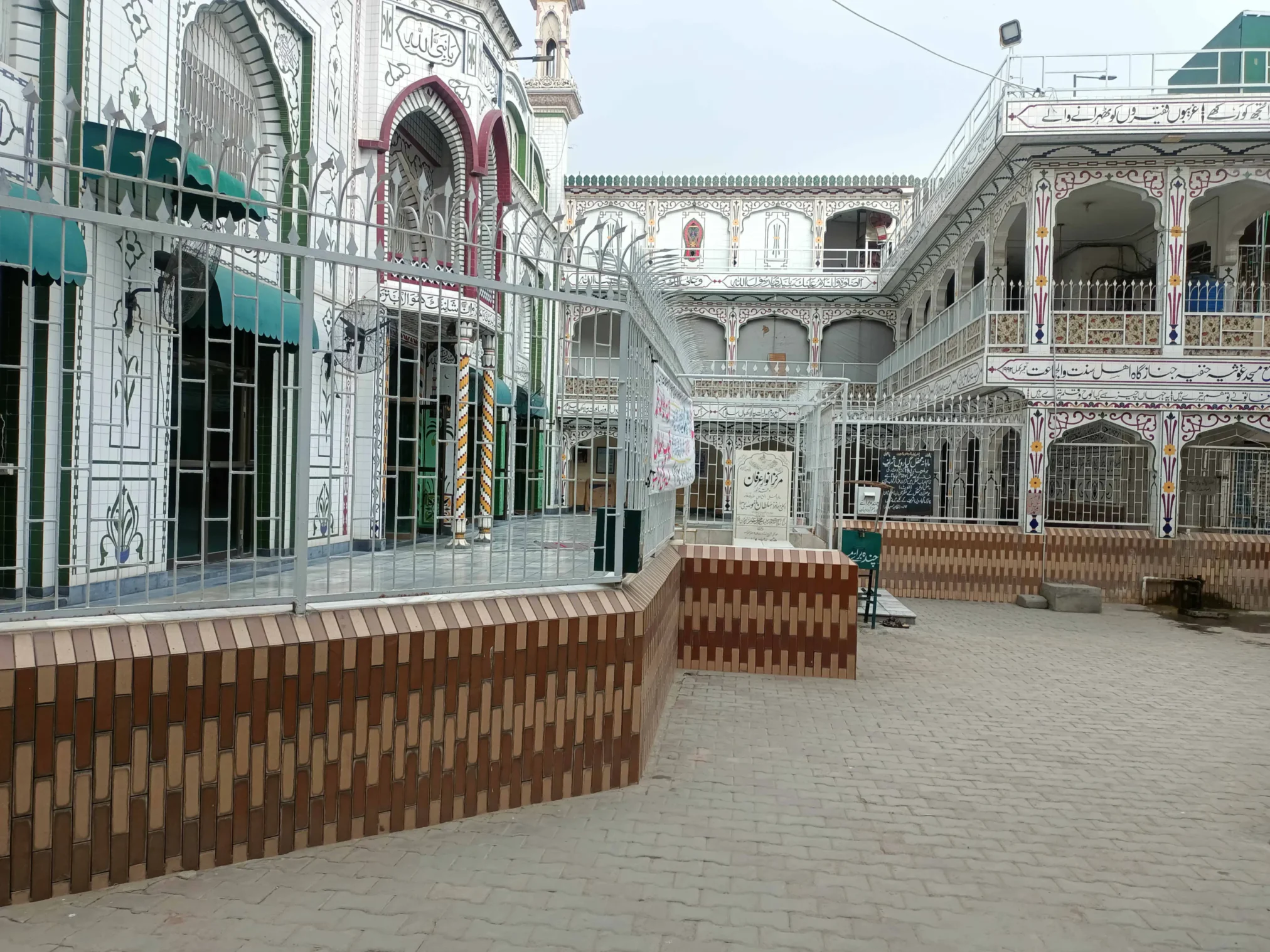
There are 7 mosques located within Miani Sahib Graveyard. These mosques serve mourners, graveyard staff, and visitors, and are used for daily prayers as well as funeral-related religious rites.
The presence of multiple mosques reflects the graveyard’s continuous use and its importance as a religious space rather than merely a burial site.
Service Infrastructure
To support daily operations, the graveyard includes:
- 21 shops, providing funeral-related items such as shrouds (kafan), flowers, and religious necessities
- 32 thrones (traditional resting or ceremonial platforms)
- 17 water tanks, ensuring water availability for ablution, cleaning, and maintenance
This infrastructure allows Miani Sahib Graveyard to function efficiently despite its enormous size and daily activity.
Architectural Character
Architecturally, Miani Sahib Graveyard presents a blend of styles:
- Simple earthen graves from older Mughal-era sections
- Traditional brick-lined graves
- Colonial-era tombstones
- Modern marble and tiled graves
This architectural diversity reflects the changing social, economic, and cultural landscape of Lahore across centuries.
Number of Graves, Burial Capacity & Demographic Scale of Miani Sahib Graveyard
Estimated Number of Graves
Miani Sahib Graveyard is estimated to contain approximately 300,000 graves, making it not only the largest graveyard in Lahore but one of the most densely used burial grounds in Pakistan. This vast number reflects centuries of continuous burials, beginning from the Mughal era and continuing uninterrupted to the present day.
The figure of 300,000 graves is widely cited due to the documented land area of the graveyard and its long-standing role as Lahore’s primary qabristan.
Miani Sahib Graveyard Burials Capacity & Urban Pressure
With a land area of about 1,206 kanals (150 acres), Miani Sahib Graveyard was originally established when Lahore’s population was far smaller. Over time, rapid urbanization has placed significant pressure on available burial space.
Despite these constraints, the graveyard continues to function due to:
- Careful reuse of older family plots where permitted
- Administrative zoning across 8 main areas
- Regulation of new burials by graveyard authorities
The sheer scale of the graveyard has allowed it to absorb demographic changes better than smaller cemeteries across the city.
Role as Lahore’s Primary Qabristan
Miani Sahib Graveyard holds a unique status as the central and most prestigious burial ground of Lahore. Many families prefer burial here due to:
- Historical and religious importance
- Presence of revered saints and martyrs
- Ancestral family graves already located within the qabristan
For many Lahoris, burial at Miani Sahib is seen as both an emotional and cultural continuation of family history.
Daily Burial Activity
Due to its size and location, Miani Sahib Graveyard witnesses daily funeral activity, often with multiple Janazah prayers taking place simultaneously across its three major funeral grounds.
The presence of multiple mosques, water facilities, and service infrastructure allows the graveyard to handle this volume without disrupting solemnity.
Demographic Representation
The graves at Miani Sahib reflect all social, economic, and professional classes of Lahore:
- Religious scholars and saints
- Freedom fighters and national heroes
- Journalists, poets, writers, and intellectuals
- Military officers and martyrs
- Ordinary citizens spanning generations
This diversity turns the graveyard into a demographic mirror of Lahore itself, representing the city’s layered social history.
Continuity Across Eras
Few burial grounds in South Asia demonstrate the same level of historical continuity as Miani Sahib Graveyard. From Mughal nobles and scholars to modern-day citizens, the qabristan has remained relevant across empires, governments, and political transitions.
This uninterrupted usage strengthens its importance not only as a burial site but as a living historical record of Lahore.
Administration, Maintenance, and Urban Challenges of Miani Sahib Graveyard
Miani Sahib Graveyard, one of the largest and oldest cemeteries in Lahore, does not only serve as a resting place for the departed but also represents centuries of urban, cultural, and historical evolution. Spanning over 1,206 kanals (approximately 150 acres), this graveyard requires careful administration to maintain its vast area, historical monuments, and daily burial operations.
Administration of Miani Sahib Graveyard
The administration of Miani Sahib Graveyard is overseen by the Miani Sahib Graveyard Committee, which operates under the framework provided by the Miani Sahib Graveyard Ordinance of 1962. This ordinance legally defined the boundaries of the cemetery and outlined responsibilities regarding burials, maintenance, and preventing encroachments.
The committee’s responsibilities include:
- Allocating burial plots: The graveyard committee manages the reservation of graves and ensures proper record-keeping for families who have purchased or reserved plots.
- Maintenance of facilities: This includes keeping pathways accessible, ensuring mosques and thrones are maintained, and monitoring the operation of water tanks for ablution and cleanliness.
- Coordination with city authorities: The committee liaises with the Lahore Deputy Commissioner and municipal authorities to address infrastructure needs, encroachment issues, and urban planning around the graveyard.
Encroachments and Urban Pressure
Despite its historical importance, Miani Sahib Graveyard has faced serious challenges over the decades due to urban expansion. Several roads, including Bahawalpur Road, cut through parts of the cemetery, and some areas have been encroached upon by illegal settlements and commercial structures.
Legal efforts have been ongoing to address these encroachments. In 2017, the Lahore High Court intervened, asking the DC and graveyard authorities to provide records of graves reserved for families and to ensure that illegal occupants vacate the land. Steps were also ordered to construct remaining boundary walls, pathways, and proper lighting.
The administration faces the challenge of balancing heritage conservation with the city’s growing need for burial space, as the graveyard is nearly full, accommodating around 300,000 graves.
Maintenance and Renovation
Recently, significant efforts have been made to renovate and modernize Miani Sahib Graveyard. Improvements include:
- Upgraded Janazah facilities: Proper parking areas, marble-tiled sections, and roofed spaces for performing funeral prayers, allowing ceremonies even in rain.
- Infrastructure maintenance: Water tanks, mosques, and thrones have been repaired or upgraded.
- Greenery and pathways: Trees have been planted, and pathways renovated to provide a serene and reflective environment for visitors.
The graveyard now features three major funeral grounds, seven mosques, 21 shops, 32 thrones, and 17 water tanks, distributed across eight main areas, making it more organized and visitor-friendly.
Importance of Administration
The efforts of the administration are crucial not just for operational purposes but also to preserve Miani Sahib Graveyard as a cultural and historical landmark. Proper governance ensures:
- Respectful treatment of the dead.
- Protection of graves of historical and national significance, including Saadat Hasan Manto, Munnu Bhai, Major Shabbir Sharif Shaheed, Ghazi Ilm Din, and Wasif Ali Wasif.
- Prevention of land misuse or illegal construction, protecting one of Lahore’s oldest heritage sites.
The Role of the Community
Community engagement also plays an important role. Visitors, families of those buried, and historians often contribute to:
- Reporting encroachments or maintenance issues.
- Participating in renovations or awareness campaigns.
- Supporting the administration in documenting notable graves and historical records, aiding efforts to prepare a comprehensive catalogue of personalities buried at Miani Sahib Graveyard.
Notable Personalities and Cultural Significance of Miani Sahib Graveyard
Miani Sahib Graveyard is more than a burial site; it is a historical chronicle of Lahore’s cultural, political, and literary evolution. Spanning approximately 150 acres with over 300,000 graves, it houses the final resting places of scholars, saints, military heroes, poets, and cultural icons, reflecting centuries of Pakistani history.
Notable Personalities Buried at Miani Sahib Graveyard
Some of the prominent figures interred in Miani Sahib Graveyard include:
- Major Shabbir Sharif Shaheed (Nishan-e-Haider): A national hero and Pakistan Army officer who displayed extraordinary valor during the 1971 Pak-India war, remembered for his sacrifice in securing strategic positions.
- Ghazi Ilm Din Shaheed: A revered figure known for his martyrdom and historical significance.
- Wasif Ali Wasif: A famous Sufi writer and intellectual, celebrated for his philosophical essays and spiritual poetry.
- Munnu Bhai: Renowned journalist, playwright, poet, and human rights activist, whose literary work and activism left a lasting legacy in Pakistan.
- Saadat Hasan Manto: Iconic Urdu writer, remembered for his short stories that captured the human condition during partition and social upheavals.
In addition to these luminaries, the graveyard houses numerous scholars, religious leaders, and local dignitaries, reflecting the diversity and richness of Lahore’s heritage.
Cultural and Historical Significance
Miani Sahib Graveyard is deeply embedded in Lahore’s cultural fabric, as it reflects:
- Historical Continuity: Established during the Mughal era, it preserves architectural styles, tomb inscriptions, and traditional burial practices.
- Religious Importance: The proximity to mosques, shrines, and the homes of Maulvis in its early history emphasizes its role in the spiritual life of the city.
- Literary and Intellectual Heritage: Many literary and journalistic figures, including Munnu Bhai, contributed to Pakistan’s cultural narrative, making the graveyard a site of pilgrimage for writers and intellectuals.
- National Remembrance: Burial sites of military heroes like Major Shabbir Sharif Shaheed highlight its importance as a place of patriotic and historical memory.
Architecture and Layout
Miani Sahib Graveyard spans eight main areas, with three major funeral grounds, seven mosques, 32 thrones, 17 water tanks, and 21 shops, reflecting a blend of traditional Mughal, colonial, and modern influences. Pathways are designed to facilitate both ceremonial processions and casual visits, with recent renovations adding roofed Namaz-i-Janazah areas, marble floors, and proper parking, ensuring a dignified environment for ceremonies.
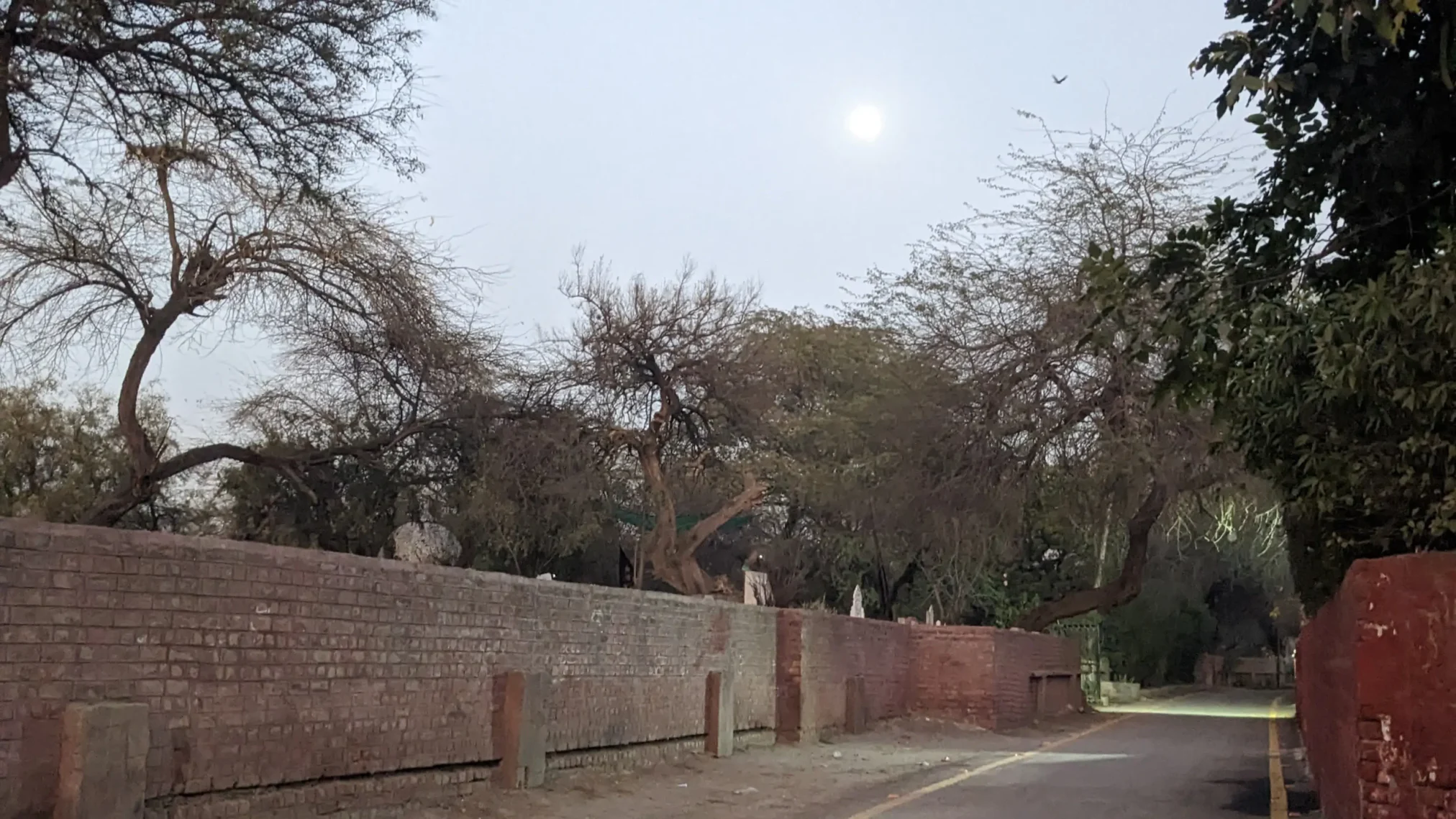
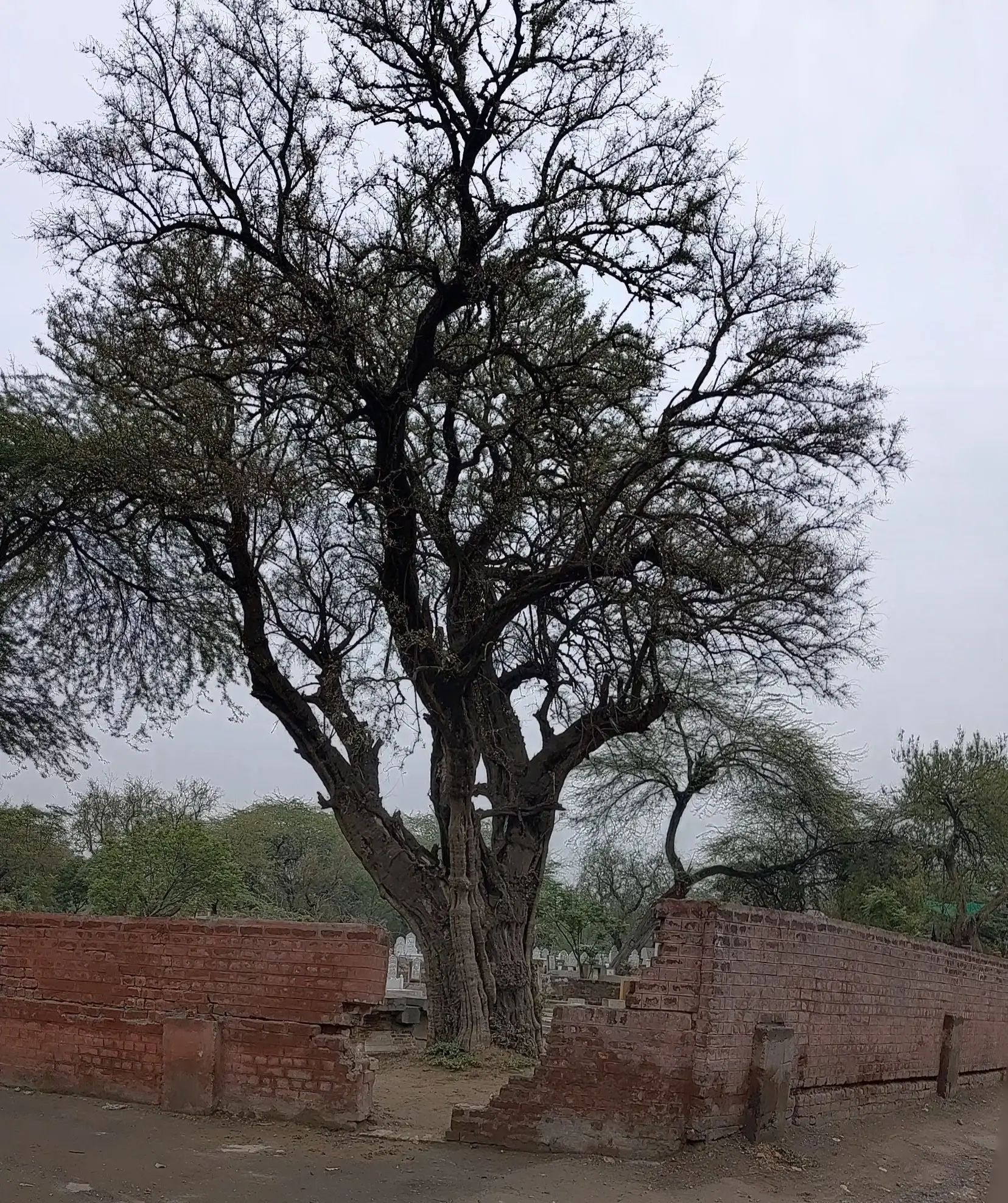
The graveyard’s lush greenery, shaded pathways, and preserved tombstones create a reflective atmosphere, where visitors can connect with Lahore’s historical and cultural narrative.
Historical Timeline, Mughal Origins, Expansion, and Preservation of Miani Sahib Graveyard
Miani Sahib Graveyard, one of Lahore’s oldest and largest cemeteries, has witnessed centuries of history. Its origins date back to the Mughal era, making it a significant site for historians, scholars, and visitors interested in Pakistan’s cultural heritage.
Mughal Origins and Early History
The graveyard’s founding traces back to the Mughal period, when Lahore served as a prominent center of administration, culture, and scholarship. It is believed that Miani Sahib, after whom the graveyard is named, was a prominent local figure, and his burial marked the beginning of the cemetery.
During the Mughal period:
- The area was surrounded by residences of Maulvis and scholars, reinforcing its spiritual and cultural significance.
- Tombs followed traditional Mughal architecture, characterized by intricate stonework, domes, and inscriptions.
- Burial practices adhered to religious and cultural norms, setting standards that would influence later expansions.
Miani Sahib Graveyard became a final resting place for scholars, saints, and nobility, reflecting Lahore’s intellectual and spiritual environment during the Mughal era.
British Era and Colonial Influence
Under British colonial rule, the graveyard expanded to accommodate growing urban populations. Several colonial-era tombs and monuments were constructed, blending Mughal artistry with European influences. Key developments included:
- Formalized pathways and sections for better organization.
- Introduction of memorial plaques and inscriptions in English alongside Urdu.
- Integration with city infrastructure, including roads passing through sections of the graveyard.
These changes allowed Miani Sahib Graveyard to maintain historical continuity while adapting to the needs of a modernizing Lahore.
Expansion and Infrastructure
Over time, Miani Sahib Graveyard grew into a vast 150-acre site covering approximately 1,206 kanals, now hosting over 300,000 graves. The infrastructure includes:
- Three large funeral grounds for ceremonies.
- Seven mosques serving spiritual needs.
- 32 thrones and 17 water tanks, enhancing functionality.
- Seven link roads and 21 shops for practical access.
- Eight main areas, carefully organized to manage the immense scale.
The expansion reflects the growing population of Lahore and the continued importance of the graveyard as a resting place for both ordinary citizens and notable figures.
Preservation and Recent Renovations
Recognizing its historical and cultural value, the authorities and management committee have undertaken massive renovation efforts in recent years. Key improvements include:
- Upgraded Janazah areas with marble flooring and roofed structures, allowing funeral prayers even during inclement weather.
- Improved parking and pathways, making access easier for visitors.
- Maintenance of tombstones, greenery, and historical inscriptions, preserving Mughal and colonial heritage.
- Efforts to prevent encroachments, safeguarding one of Lahore’s oldest historical sites.
The preservation efforts ensure that Miani Sahib Graveyard continues to serve as both a functional cemetery and a historical landmark, providing insights into Lahore’s past while meeting contemporary needs.
Cultural and National Importance
Miani Sahib Graveyard is more than a burial site; it is a repository of Lahore’s cultural, spiritual, and national memory. Its significance is enhanced by:
- Burials of national heroes such as Major Shabbir Sharif Shaheed, reflecting Pakistan’s patriotic history.
- Resting places of literary and intellectual figures, including Wasif Ali Wasif and Munnu Bhai, highlighting Lahore’s role as a cultural hub.
- Preservation of Mughal-era and colonial-era architecture, providing educational value for historians and students.
The graveyard stands as a testament to the city’s evolving history, from Mughal times to modern Pakistan, making it a must-visit site for anyone interested in the nation’s heritage.
Visiting Miani Sahib Graveyard – Guide, Ceremonies, and Modern Significance
Miani Sahib Graveyard is not only a historical site but also an active cemetery serving the people of Lahore. Understanding its practical aspects, ceremonial significance, and visitor guidelines is essential for both locals and tourists.
Visitor Guide: Location and Accessibility
Miani Sahib Graveyard is conveniently located in Lahore, bordered by Lytton Road on one side and Bahawalpur Road on the other. The graveyard’s seven link roads ensure easy entry and exit. Visitors can reach the graveyard via public transport, private vehicles, or taxis.
Key points for visitors:
- Parking: Recently upgraded parking facilities are available near the main entrance.
- Pathways: Well-maintained tiled and marble pathways allow comfortable walking throughout the graveyard.
- Accessibility: The graveyard accommodates elderly visitors with gentle slopes and shaded areas.
Ceremonial Spaces: Funeral Grounds and Mosques
Miani Sahib Graveyard has three large funeral grounds designed to host Janazahs for multiple families simultaneously. These areas are equipped with:
- Roofed structures for protection from rain or sun
- Marble flooring and seating areas for attendants
- Seven mosques for prayer, ensuring religious obligations can be performed on-site
These facilities highlight the graveyard’s commitment to providing dignity and convenience for funeral rites, reflecting centuries-old traditions adapted to modern needs.
Notable Burials and Cultural Significance
Miani Sahib Graveyard is the resting place of many national heroes, scholars, poets, and saints, making it a site of immense cultural importance:
- Major Shabbir Sharif Shaheed (Nishan-e-Haider): Celebrated for his bravery in the 1971 war
- Ghazi Ilm Din Shaheed: Recognized for his religious and national devotion
- Wasif Ali Wasif: Renowned spiritual scholar and writer
- Munnu Bhai: Influential journalist, poet, and human rights activist
Each tomb represents a story of Lahore’s historical, literary, and spiritual legacy, making the graveyard a living archive of the city’s identity.
Practical Tips for Visitors
To make the most of a visit to Miani Sahib Graveyard:
- Respect local customs: Dress modestly and maintain decorum.
- Time your visit: Early mornings and late afternoons offer serene experiences.
- Guided tours: Hiring a local historian or guide can enhance understanding of Mughal and colonial-era tombs.
- Photography: Allowed in public areas, but avoid ceremonies and private spaces.
Role in Modern Lahore
Despite being centuries old, Miani Sahib Graveyard continues to play an essential role in Lahore’s social, cultural, and spiritual life:
- It serves as the city’s largest cemetery, catering to thousands of burials every year.
- Preservation efforts ensure that historical and architectural heritage remains intact.
- It acts as an educational resource, with students and researchers studying Mughal tombs, inscriptions, and colonial monuments.
- The graveyard also hosts national ceremonies to honor heroes like Major Shabbir Sharif Shaheed, reinforcing patriotic values.
The combination of practical utility, historical richness, and cultural significance makes Miani Sahib Graveyard a unique landmark in Lahore.
FAQs – Miani Sahib Graveyard, Lahore (Unique & SEO-Optimized)
1. What is Miani Sahib Graveyard famous for?
Miani Sahib Graveyard is famous for being one of Lahore’s oldest cemeteries and the final resting place of national heroes, writers, scholars, and martyrs from the Mughal era to modern Pakistan.
2. Is Miani Sahib Graveyard open to the public?
Yes, the graveyard is open to the general public. Visitors include families of the deceased, historians, students, and tourists interested in Lahore’s heritage.
3. Where is Miani Sahib Graveyard located in Lahore?
It is located near Chauburji, Lahore, with main access points from Lytton Road and Bahawalpur Road, making it easily reachable from central areas of the city.
4. How old is Miani Sahib Graveyard?
The graveyard dates back to the Mughal period, making it several centuries old and one of the most historically significant burial grounds in Punjab.
5. How large is Miani Sahib Graveyard?
Miani Sahib Graveyard covers about 150 acres (1,206 kanals) and contains hundreds of thousands of graves, making it the largest cemetery in Lahore.
6. Who are the most notable personalities buried here?
Prominent burials include Major Shabbir Sharif Shaheed, Ghazi Ilm Din Shaheed, Saadat Hasan Manto, Wasif Ali Wasif, and Munnu Bhai, among many others.
7. Are funeral (Janazah) facilities available inside the graveyard?
Yes, the graveyard has three major Janazah grounds equipped with covered structures, marble flooring, and nearby mosques for funeral prayers.
8. How many mosques are inside Miani Sahib Graveyard?
There are seven mosques within the graveyard, used for daily prayers as well as funeral and visitation purposes.
9. Is parking available for visitors and funeral attendees?
Yes, recent development work has improved parking arrangements to accommodate visitors and large funeral gatherings.
10. Can visitors take photographs inside Miani Sahib Graveyard?
Photography is generally allowed in open areas, but visitors are advised to avoid taking photos during funerals and to respect privacy and religious sensitivities.
11. Who manages and maintains Miani Sahib Graveyard?
The graveyard is administered by the Miani Sahib Graveyard Committee, which oversees burials, maintenance, renovations, and protection against encroachments.
12. Are guided tours available at Miani Sahib Graveyard?
Yes, local historians and cultural guides can be hired to provide informative tours explaining the historical tombs, notable graves, and architectural features.
13. What architectural styles can be seen in Miani Sahib Graveyard?
The cemetery contains Mughal-era, colonial-period, and modern graves, reflecting centuries of evolving funerary architecture in Lahore.
14. Why is Miani Sahib Graveyard culturally important today?
It remains a symbol of Lahore’s spiritual, literary, and national heritage, serving both as an active burial ground and a living historical site.
15. Is Miani Sahib Graveyard only important religiously?
No, beyond its religious role, it holds educational, historical, and cultural value, attracting researchers, students, and heritage enthusiasts.