
The world of ethnic jewelry is a vibrant tapestry woven with history, symbolism, and the meticulous skill of artisans who have passed their craft down through generations. From the rugged mountain passes of Afghanistan to the bustling workshops of Pakistan and the serene valleys of Nepal, traditional adornment is more than just a fashion statement—it is a wearable archive of culture. Among the various silhouettes that define this aesthetic, jhumka earrings stand out as perhaps the most beloved and enduring design, representing a harmonious blend of architectural structure and rhythmic movement.
The Eternal Allure of Jhumka Earrings
The term “Jhumka” refers to the traditional bell-shaped earring that has been a staple of South Asian and Central Asian jewelry boxes for centuries. Historically, these pieces originated as part of temple jewelry, used to adorn deities and classical dancers, where the tinkling sound of the metal bells—known as ghungroos—added an auditory dimension to every movement. Today, jhumka earrings have evolved into a global fashion icon, embraced by both traditionalists and modern style enthusiasts for their ability to add instant drama and cultural depth to any ensemble.
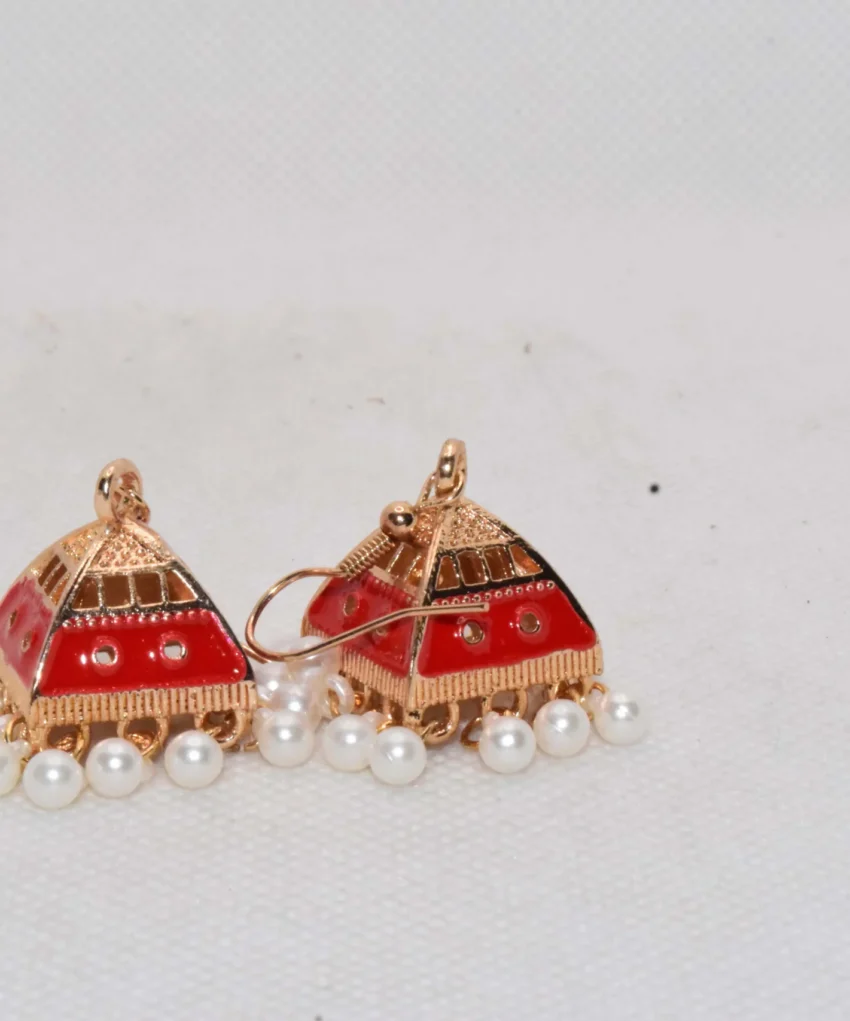
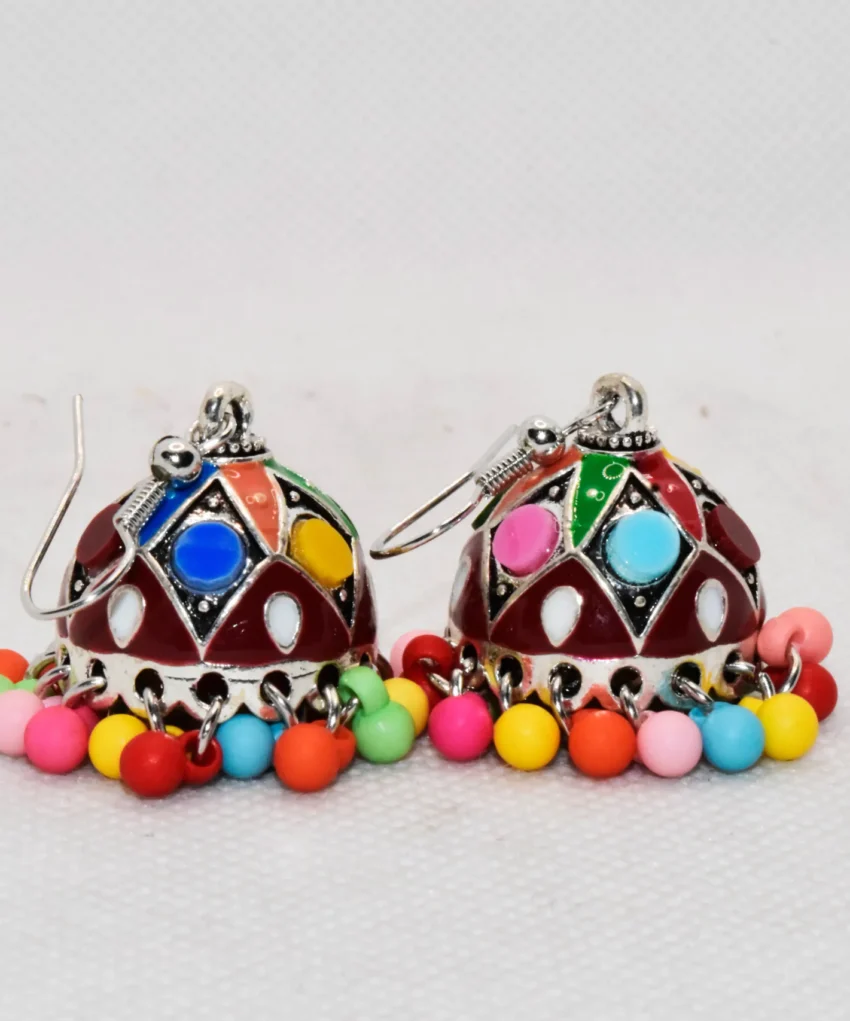
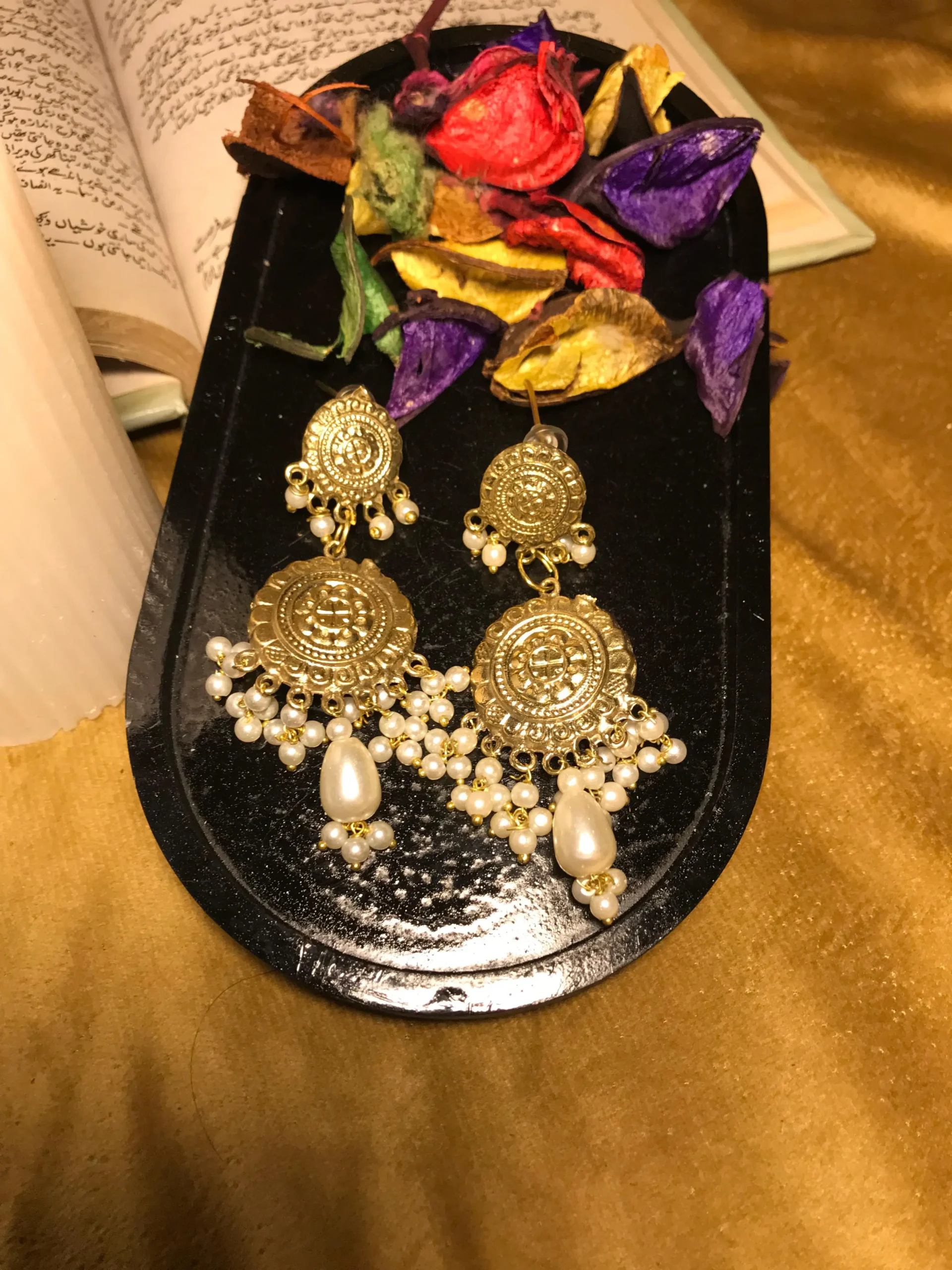
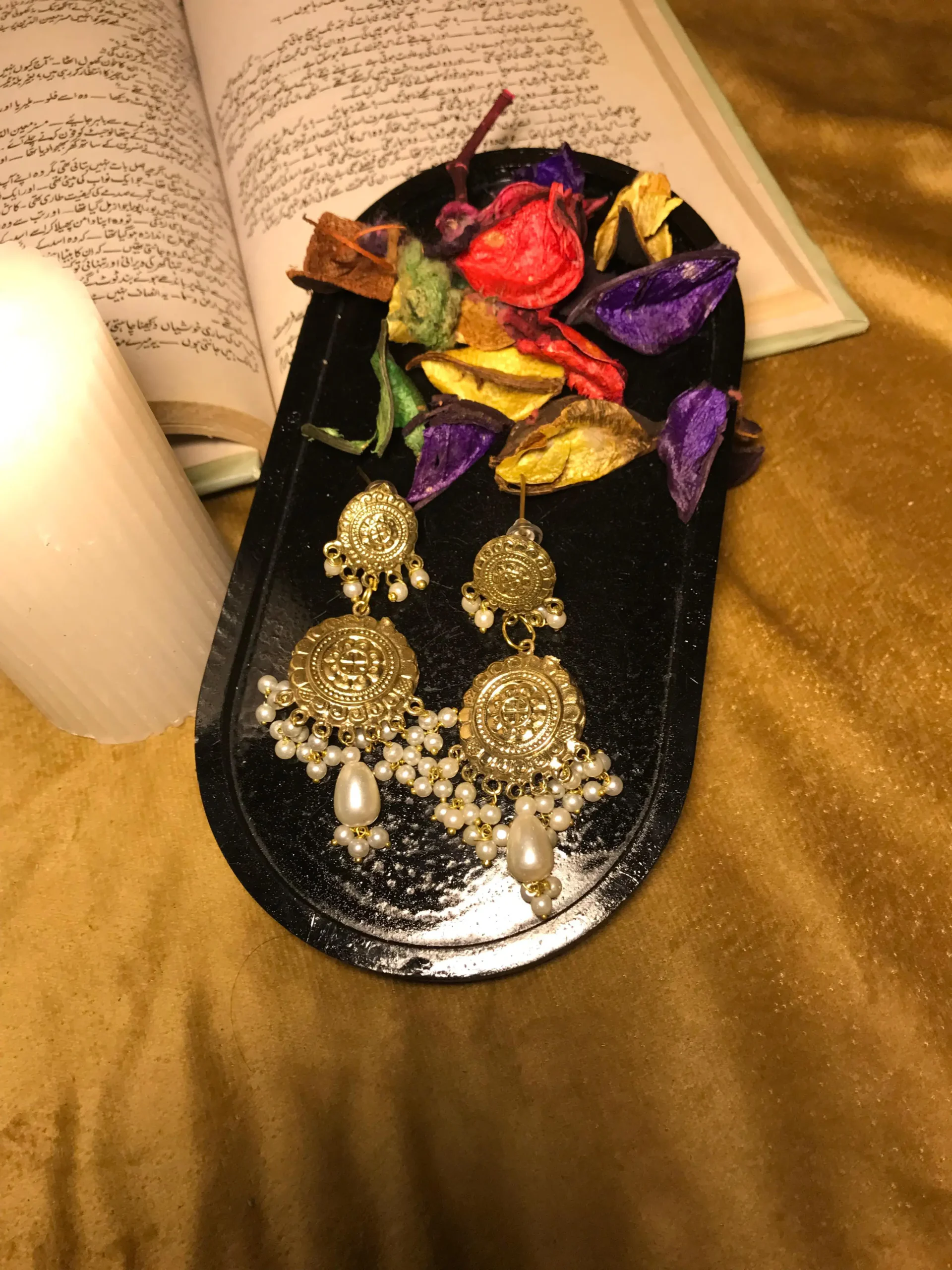
In the collection of images provided, we see a diverse range of these accessories, each telling a unique story through its materials and motifs. Whether it is the oxidized silver of a tribal piece or the polished gold tone of an ornate festive drop, the fundamental bell shape remains a constant symbol of feminine grace and heritage.
Architectural Marvels: The Tribal Jhumka
While many are familiar with the perfectly rounded gold bells of modern jewelry, the tribal and nomadic versions of jhumka earrings often lean toward more geometric and rugged forms. A striking example can be seen in the third image, which features cylindrical drops rather than the standard dome.
These earrings are a masterclass in nomadic Kuchi craftsmanship. The silver-toned cylinders are densely packed with a mosaic of small, shimmering glass shards and accented with marquise-cut stones in vibrant emerald green and deep crimson. The base of each cylinder is finished with a heavy fringe of small metallic balls that create a rhythmic sound with every turn of the head. This specific style of jhumka earrings highlights the “more is more” philosophy of tribal adornment, where jewelry was traditionally a form of portable wealth and spiritual protection.
The Symbolism of Sound and Shape
One of the most distinctive features of this jewelry is its tactility. These are not silent pieces; they are designed to be heard. The ghungroos attached to the bottom of the bells are more than decorative; in many cultures, the sound was believed to ward off negative energy and announce the graceful presence of a woman.
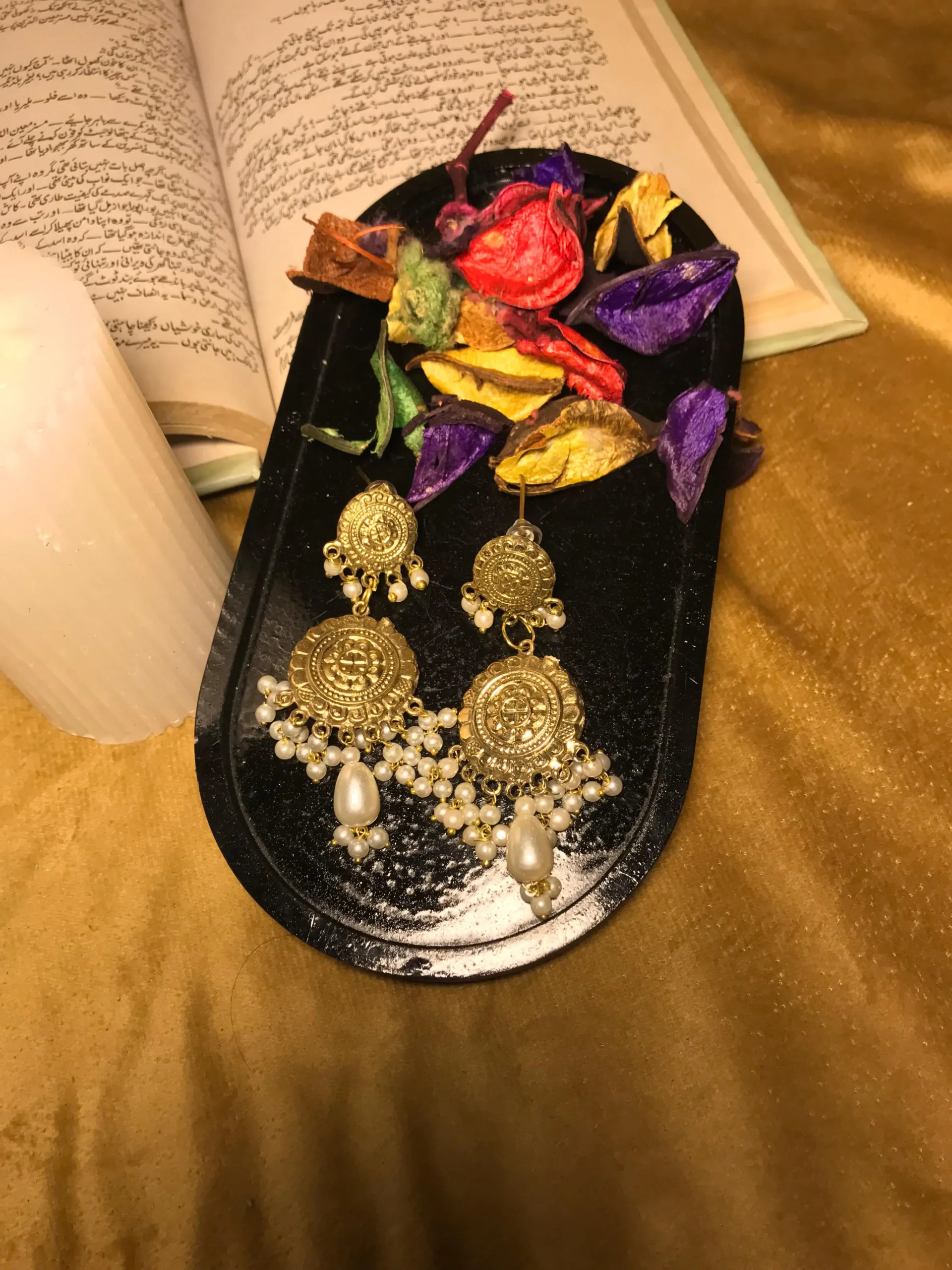
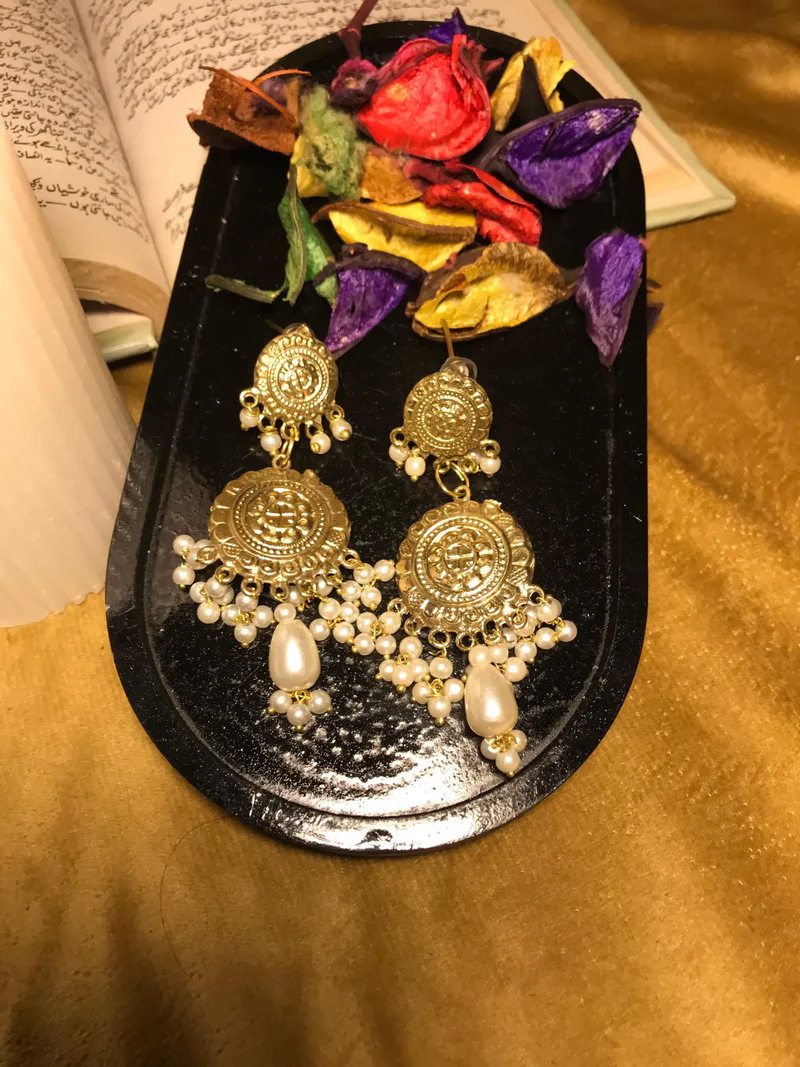
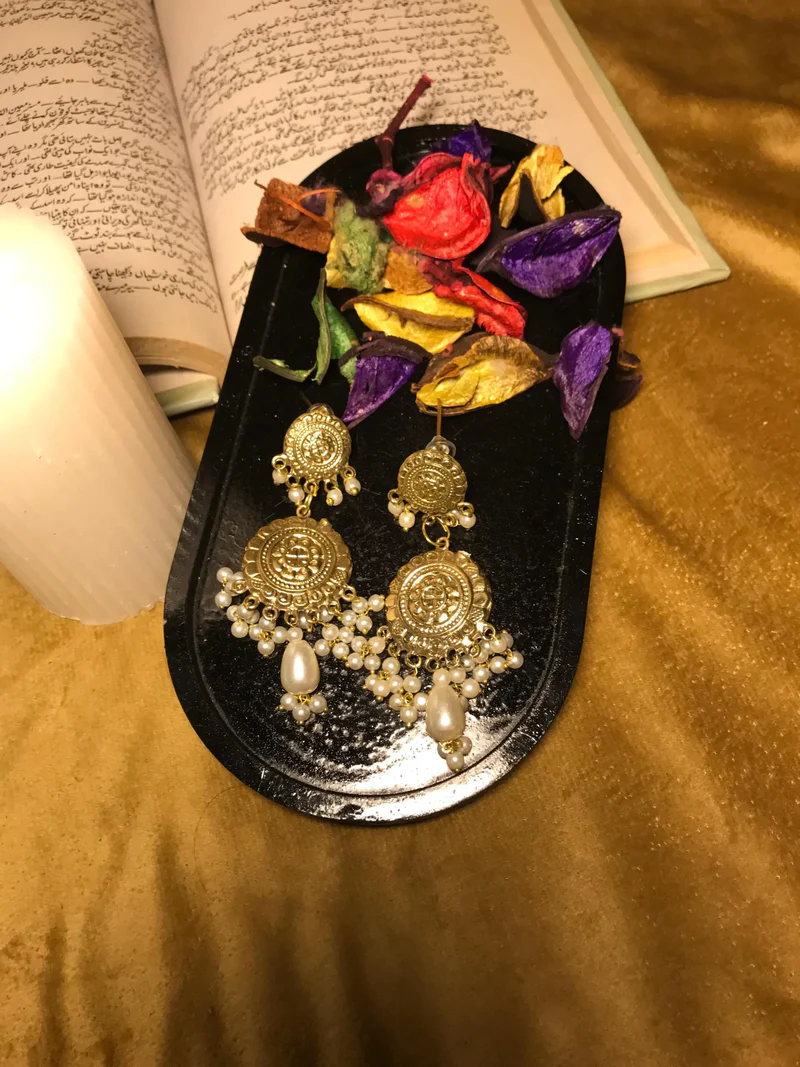
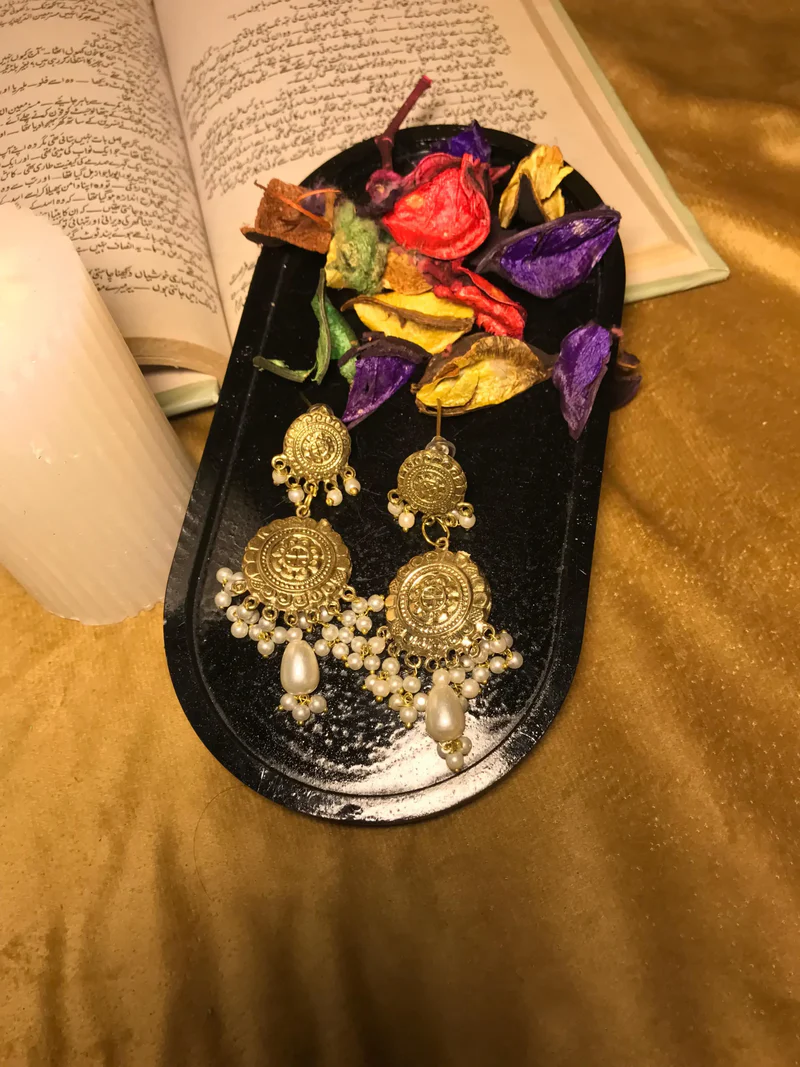
The gold-toned earrings in the final images take a more polished approach, utilizing embossed heart-shaped and circular studs. These pieces are heavily laden with tiered fringes of white seed pearls and finished with bold, teardrop-shaped beads in black, blue, or white. While they may not have the rugged cylindrical form of the tribal pieces, they still belong to the family of jhumka earrings because of their tiered, bell-like structure and the way they sway with the wearer’s movements.
Modern Styling for the Global Nomad
Integrating such bold, traditional pieces into a contemporary wardrobe is an art in itself. In 2026, the trend of “Ethno-Modernism” has made these accessories more popular than ever.
The Minimalist Canvas: To let the intricate metalwork of jhumka earrings truly shine, pair them with a simple, high-collared black turtleneck or a crisp white linen button-down.
Bohemian Layering: For a more eclectic look, layer the Nepal necklace over a denim jacket and finish the look with the colorful Chand Bali crescents.
Festive Fusion: The pearl-fringed gold drops are ideal for weddings, where they can be paired with silk sarees or heavily embroidered tunics to draw out the richness of the gold tones.
Preserving Handcrafted Heritage
Every piece shown in these images—from the embossed Afghan coin pendant on a black cord to the most complex jhumka earrings—is a testament to the endurance of manual labor. In an era dominated by mass production, these items celebrate “perfect imperfections.” The slight variations in the enamel work of the colorful crescents or the hand-set nature of the mirror shards in the cylindrical drops are what give the jewelry its “soul.”
To preserve these treasures, they should be stored in dry, lined boxes—like the wooden chests seen in the background of the photos—to prevent the metal from oxidizing or the delicate seed pearls from becoming loose. By choosing to wear authentic, tribal-inspired pieces, we are not just following a fashion trend; we are participating in the preservation of an endangered art form that spans continents and centuries.