
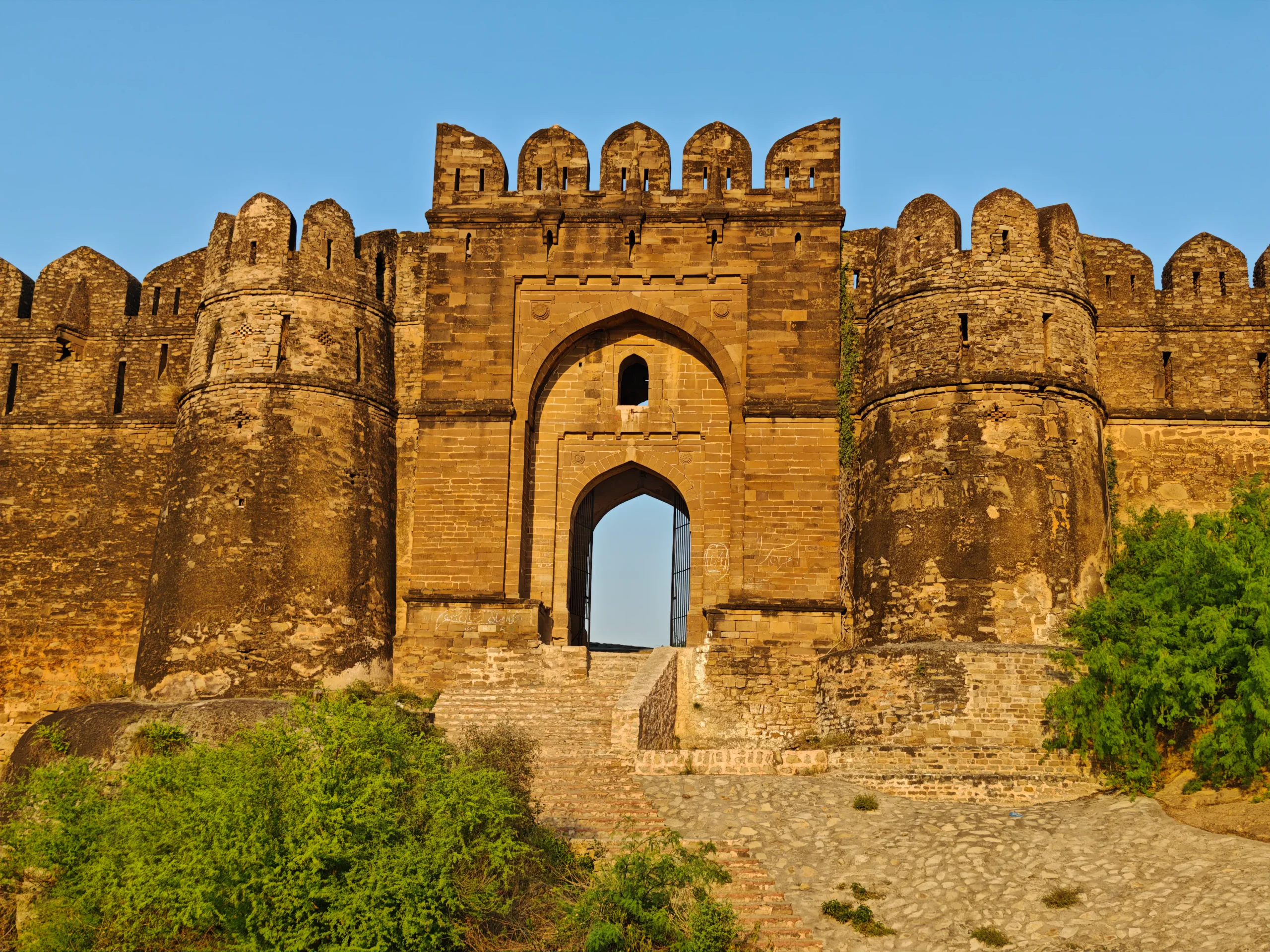
A Fortress That Was Never Meant to Be Beautiful
Rohtas Fort, locally known as Qila Rohtas, is not a fort that charms at first glance. It does not welcome visitors with ornamental palaces, mirrored halls, or lush Mughal gardens. Instead, it confronts them. Rising abruptly from the rocky terrain of northern Punjab near the city of Jhelum, Rohtas Fort announces itself through sheer scale, mass, and authority. Its walls do not decorate the landscape; they dominate it.
This is precisely what Rohtas Fort Jhelum was designed to do.
Built in the mid-16th century by the Afghan ruler Sher Shah Suri, Rohtas Fort represents one of the most powerful examples of pure military architecture in South Asia. It was never intended to be a royal residence, a pleasure retreat, or a symbol of courtly refinement. It was a weapon — constructed in stone — meant to suppress rebellion, block imperial rivals, and project irreversible power.
Today, Rohtas Fort stands as one of Pakistan’s most important historical monuments and has been recognized as a UNESCO World Heritage Site since 1997. Remarkably preserved, it remains one of the few forts in the subcontinent that has survived largely in its original form, unaltered by later dynasties. Walking through its gates is like stepping directly into the military mindset of the 16th century.
To understand Rohtas Fort, one must first understand why it was built, what political crisis demanded its construction, and why its architecture breaks so sharply from Mughal traditions. This opening chapter lays that foundation.
Geographical Setting: Why Rohtas Stands Where It Does
Rohtas Fort is located in the Jhelum District of Punjab, Pakistan, approximately 16 kilometers northwest of the city of Jhelum. It sits on a rugged plateau near the Kahan River, a tributary of the Jhelum River, overlooking routes that historically connected:
- Central Asia and Afghanistan
- The Potohar Plateau
- The plains of northern India
Rohtas Fort location was not chosen for beauty or comfort. It was selected for control.
The terrain surrounding Rohtas Fort is naturally defensive. Steep ravines, rocky outcrops, and uneven ground make large-scale assaults extremely difficult. By placing the fort on elevated land, Sher Shah Suri ensured visibility across vast distances, allowing defenders to detect enemy movement long before an attack could materialize.
Equally important was the fort’s proximity to the Grand Trunk Road (GT Road) — the most critical military and trade artery of the subcontinent. Whoever controlled this route controlled movement, commerce, and armies. Rohtas Fort was positioned like a lock on this strategic corridor.
The Political Storm Behind the Stone Walls
The construction of Rohtas Fort cannot be understood without examining the power struggle between Sher Shah Suri and the Mughal emperor Humayun.
In 1539, Sher Shah Suri defeated Humayun at the Battle of Chausa, followed by another decisive victory at the Battle of Kanauj in 1540. These defeats forced Humayun into exile and temporarily ended Mughal rule in northern India.
However, Sher Shah Suri knew that exile did not mean defeat forever.
Humayun still had allies, legitimacy, and ambition. There was a real and constant threat that he would attempt to reclaim his throne by returning through the northwestern routes — the very routes Rohtas Fort would later dominate.
At the same time, Sher Shah faced resistance closer to home. The Gakhar tribes of the Potohar region were fiercely independent and openly hostile to Suri authority. They had historically supported the Mughals and posed a continuous threat to any Afghan ruler attempting to consolidate power in Punjab.
Sher Shah Suri needed a solution that was permanent, intimidating, and impossible to ignore.
Rohtas Fort was that solution.
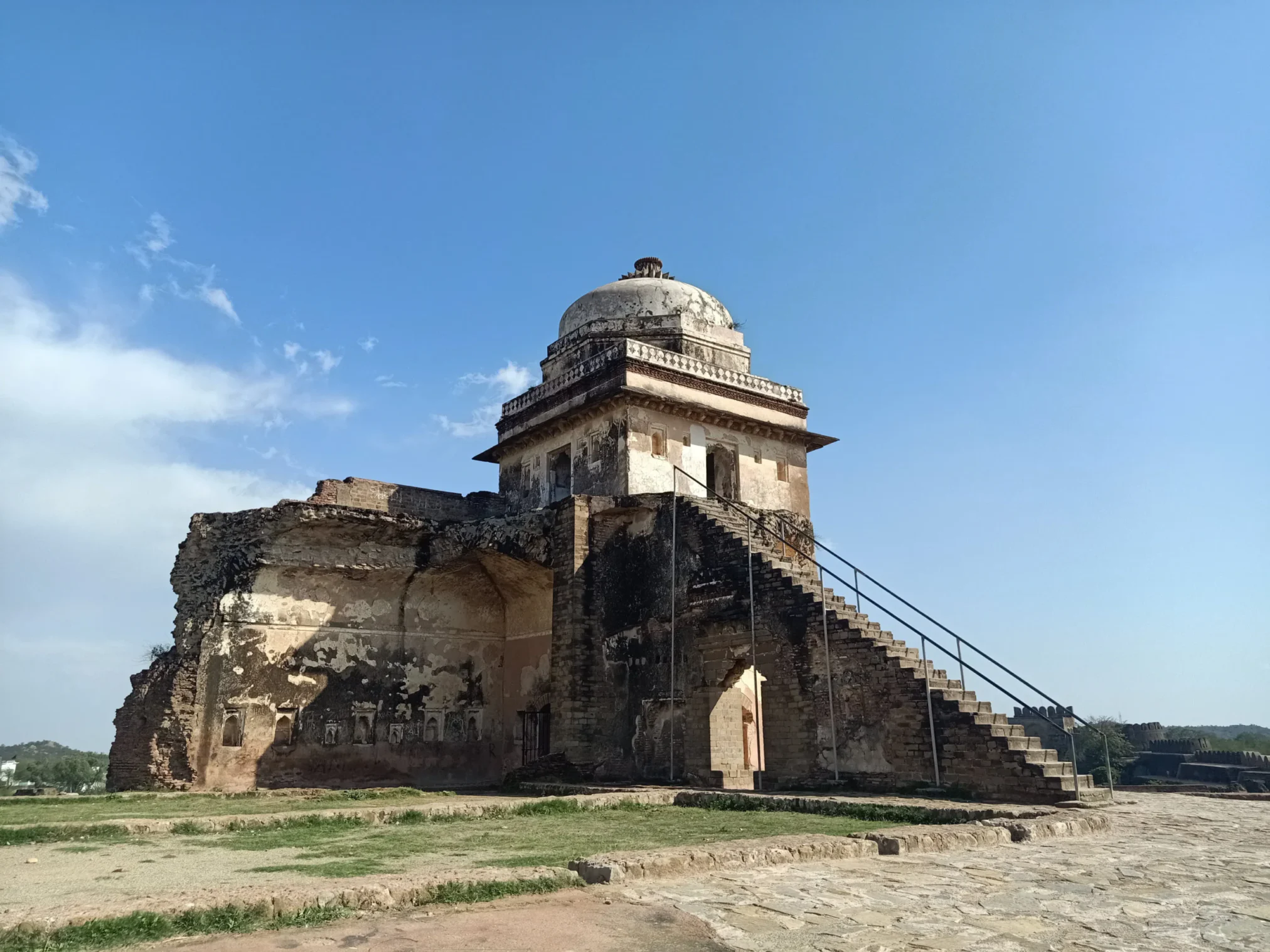
Why Rohtas Fort Was Built: Three Core Objectives
Rohtas Fort was constructed between 1541 and 1548, under the supervision of Todar Mal Khatri, Sher Shah Suri’s revenue and administrative officer. The fort served three primary purposes, each deeply rooted in the political realities of the time.
1. Blocking the Return of Humayun
The most critical objective of Rohtas Fort was to prevent Humayun from re-entering India through the northwest. The fort acted as a massive military checkpoint, capable of housing tens of thousands of soldiers and withstanding prolonged sieges.
Unlike earlier forts that protected cities, Rohtas Fort protected routes. Its presence alone discouraged large armies from attempting passage without confronting overwhelming resistance.
2. Suppressing the Gakhar Tribes
The Gakhars were local chieftains who refused to submit to Sher Shah’s authority. They controlled the surrounding hills and often harassed supply lines and communication routes.
Rohtas Fort was deliberately placed in their territory as a symbol of domination. Its scale sent an unmistakable message: resistance was futile. From this fortress, Sher Shah’s forces could monitor, intimidate, and suppress tribal uprisings with ease.
3. Consolidating the Suri Empire
Sher Shah Suri ruled for only a brief period (1540–1545), but he was a visionary administrator. Rohtas Fort was part of a broader strategy to centralize power, secure borders, and impose order through infrastructure.
The fort embodied the Afghan military philosophy: strength first, aesthetics second.
Who Built Rohtas Fort: Sher Shah Suri’s Vision
Sher Shah Suri was not born into royalty. Rising from humble origins, he became one of the most capable rulers the subcontinent had ever seen. His reign, though short, introduced reforms in:
- Revenue administration
- Road construction
- Postal systems
- Military organization
Rohtas Fort reflects Sher Shah’s personality: pragmatic, disciplined, and uncompromising.
The actual construction was overseen by Todar Mal Khatri, who later served under the Mughals. Interestingly, Todar Mal reportedly faced resistance from local laborers, who initially refused to work on the fort due to its association with oppression. To overcome this, extremely high wages were offered — evidence of how politically sensitive and controversial the project was even during its construction.
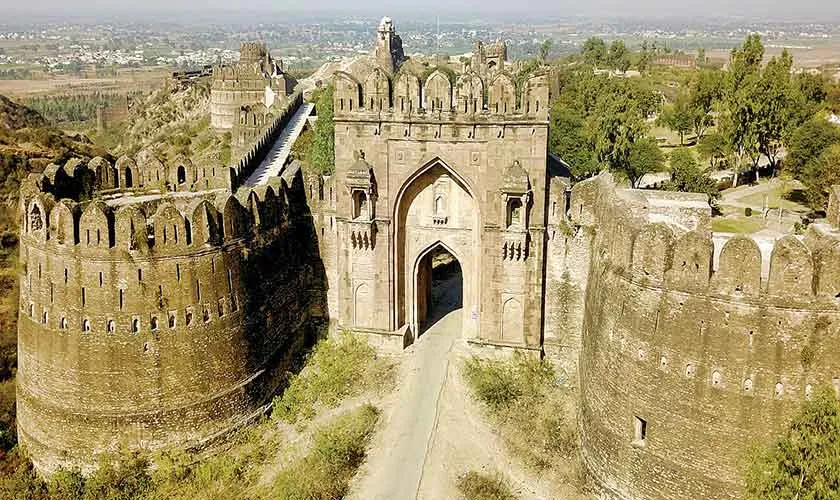
A Fortress Without a Palace: What Makes Rohtas Unique
One of the most striking aspects of Rohtas Fort is what it lacks.
There are:
- No grand royal palaces
- No pleasure gardens
- No elaborate residential quarters
This is almost unheard of in South Asian forts.
Rohtas Fort was not designed for kings to live in comfort. It was designed for soldiers to endure hardship. Even structures like Rani Mahal and Haveli Man Singh were later additions from the Mughal period and were not part of Sher Shah’s original plan.
This makes Rohtas Fort an exceptional example of Afghan-Persian military architecture, distinct from Mughal aesthetics. Its design prioritizes:
- Thick walls over decorative facades
- Bastions over balconies
- Kill zones over courtyards
Every architectural decision was rooted in warfare.
Military Scale and Capacity
Rohtas Fort was designed to accommodate an estimated 30,000 troops at a time. Its massive perimeter walls stretch over 4 kilometers, with heights ranging between 10 and 18 meters.
The fort contains:
- 68 bastions
- 12 monumental gates
- Multiple baolis (stepwells)
- Storage areas for grain, arms, and supplies
This scale ensured that the fort could remain operational even during long sieges without reliance on external support.
From Military Stronghold to Historical Monument
After Sher Shah Suri’s death in 1545, the Suri Empire weakened rapidly. In 1555, Humayun returned and reclaimed the Mughal throne. Ironically, Rohtas Fort — built to stop him — eventually fell under Mughal control.
However, the Mughals never fully embraced the fort. Its harsh military character did not suit their lifestyle. Over time, its role shifted from a frontline fortress to an administrative outpost.
During the Sikh period in the early 19th century, Maharaja Ranjit Singh used the fort for administrative purposes. Later, under British rule, its importance declined further.
Despite this, Rohtas Fort avoided extensive modification, allowing it to survive as an almost untouched relic of 16th-century military engineering.
UNESCO Recognition and Global Importance
In 1997, Rohtas Fort was inscribed as a UNESCO World Heritage Site, recognized for:
- Its exceptional military architecture
- Its fusion of Afghan and Persian construction techniques
- Its role in shaping South Asian political history
UNESCO described Rohtas Fort as a unique example of a fortress built purely for military dominance rather than royal display.
Why Rohtas Fort Still Matters
Rohtas Fort is not just a tourist destination. It is a historical document written in stone. It tells the story of:
- A ruler who challenged an empire
- A region shaped by conflict and resistance
- An architectural philosophy rooted in survival
For modern visitors, Rohtas offers something rare: authenticity. There is no romantic reconstruction here. What stands today is what stood nearly five centuries ago.
Architectural Philosophy & Military Design of Rohtas Fort (Qila Rohtas)
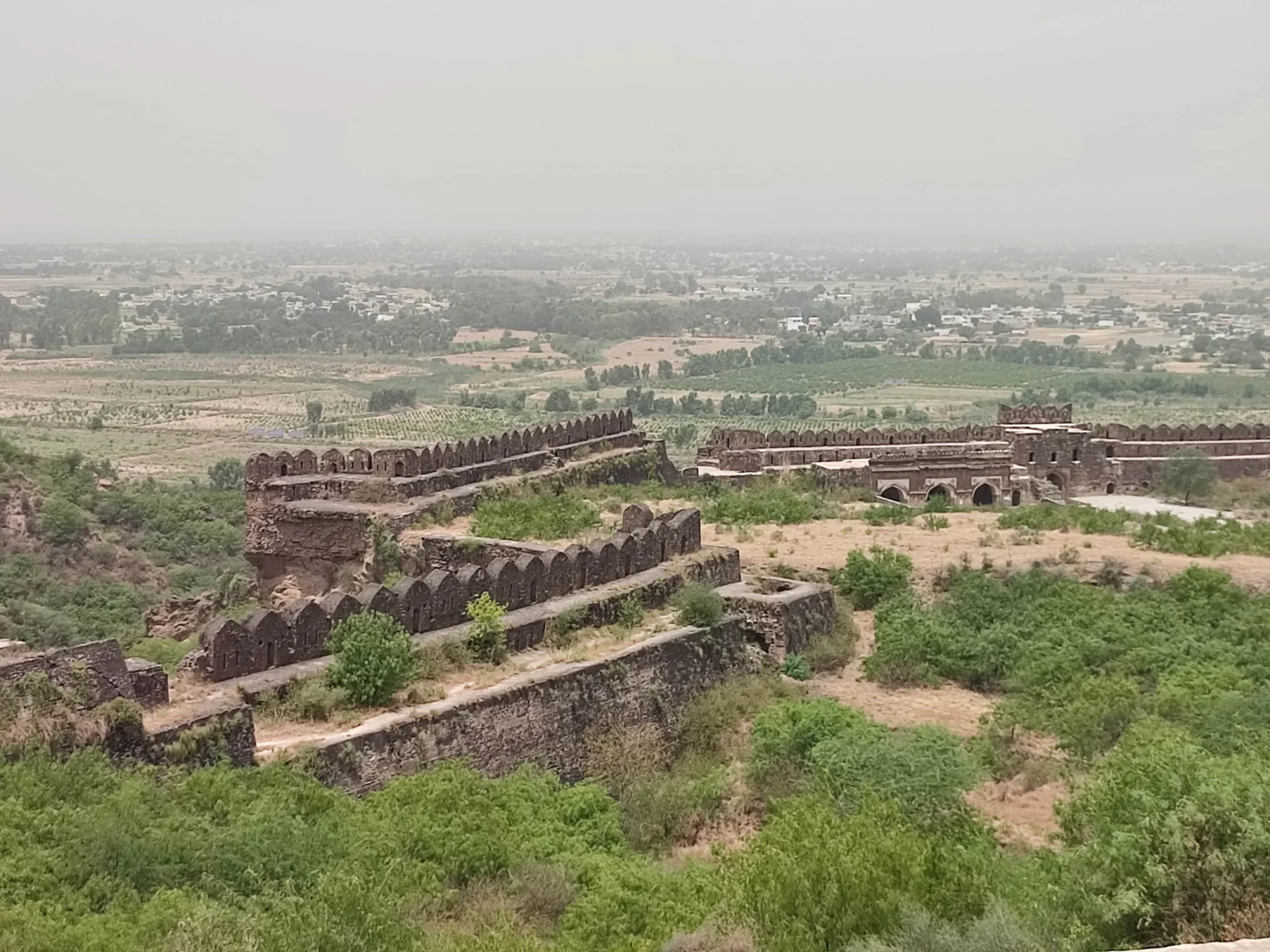
Architecture as a Weapon, Not an Ornament
Rohtas Fort was not built to please the eye — it was built to overpower the mind.
In South Asia, forts are often remembered for their beauty: marble pavilions, carved balconies, painted halls, and symmetrical gardens. Rohtas Fort rejects all of this. Its architecture is severe, muscular, and unapologetically functional. Every wall, gate, and bastion exists for one reason only: defense.
This architectural philosophy places Rohtas Fort in a category of its own. It is not Mughal. It is not Rajput. It is not decorative Islamic architecture. Instead, Rohtas represents a rare and nearly unmatched example of Afghan–Persian military architecture, transplanted into the subcontinent at a moment of political crisis.
To understand Rohtas Fort is to understand how architecture can become an extension of military doctrine.
The Afghan Military Mindset Behind Rohtas Fort
Sher Shah Suri and his Afghan commanders approached architecture with the same logic they applied to warfare:
- Control terrain
- Anticipate enemy movement
- Maximize endurance
- Minimize vulnerability
Afghan military culture had been shaped by centuries of warfare in harsh landscapes — mountains, deserts, and narrow passes. Survival depended not on luxury, but on fortification, discipline, and adaptability.
This mindset is visible throughout Rohtas Fort. Unlike Mughal forts, which often evolved into royal residences, Rohtas Fort was conceived entirely as a frontline garrison. Its design assumes constant threat.
There is no architectural softness here. No space is wasted. No structure exists without a tactical purpose.
Integration with Natural Terrain
One of the most brilliant aspects of Rohtas Fort’s design is how seamlessly it integrates with the surrounding landscape.
Rather than flattening the terrain to impose symmetry, the fort’s walls follow the natural contours of the hills and ravines. This approach achieves several military advantages:
- Attackers are forced to move uphill on uneven ground
- Siege engines become difficult to deploy
- Natural ravines act as defensive moats
- Defenders gain superior elevation and visibility
The fort appears almost organic, as if it has emerged from the earth itself. This is deliberate. Afghan military architecture prioritized terrain exploitation, and Rohtas Fort is a masterclass in this principle.
Massive Defensive Walls: The First Line of Power
The walls of Rohtas Fort are its most dominant feature.
- Length: Over 4 kilometers
- Height: Between 10 and 18 meters
- Thickness: Wide enough in places for mounted patrols
Constructed from massive ashlar stone blocks, bonded with lime mortar, these walls were designed to withstand artillery fire, battering rams, and prolonged sieges.
Unlike Mughal walls, which often emphasize proportion and decoration, Rohtas walls emphasize mass. Their sheer thickness absorbs impact, while their height denies attackers any meaningful advantage.
The walls are not uniform. They rise and fall with the terrain, ensuring that no section becomes a weak point. This irregularity confuses attackers and prevents predictable assault strategies.
Bastions: The Backbone of Defense
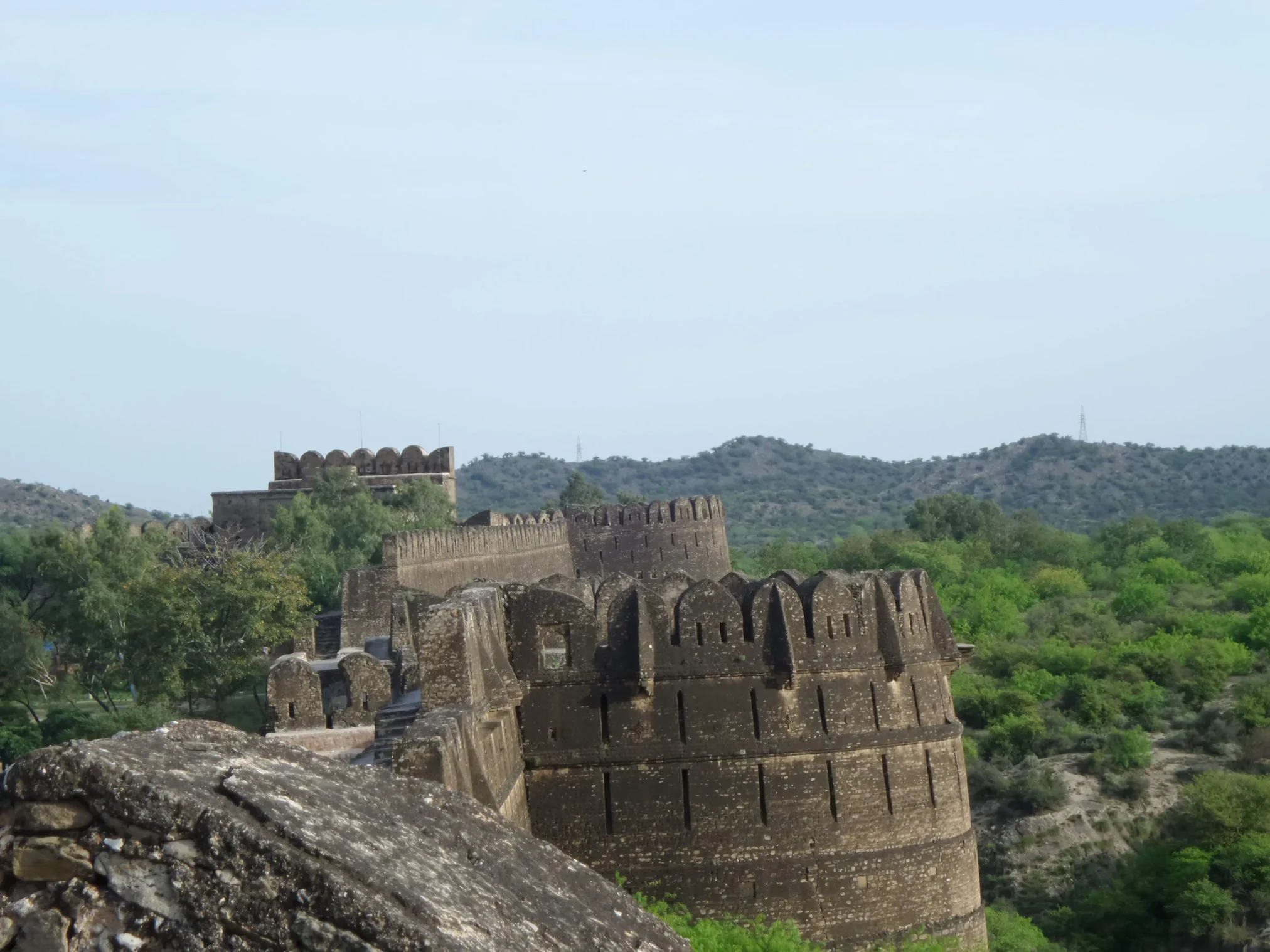
Rohtas Fort contains 68 bastions, placed at regular intervals along the walls. These bastions are rounded rather than angular — a design choice that offers multiple advantages:
- Deflects artillery fire
- Allows defenders to fire in multiple directions
- Eliminates blind spots along the walls
Each bastion functioned as an independent defensive unit, capable of holding troops, weapons, and supplies. From these elevated positions, defenders could rain arrows, stones, boiling liquids, or gunfire onto attackers below.
The placement of bastions ensures overlapping fields of fire, creating lethal kill zones where attackers would be exposed from multiple angles simultaneously.
Gates as Traps, Not Entrances
In many forts, gates are ceremonial focal points. In Rohtas Fort, gates are controlled vulnerabilities — carefully engineered traps.
Rohtas has 12 gates, each designed with layered defenses:
- Narrow passageways
- Right-angled turns
- Multiple doorways
- Bastions overlooking entrances
These features force attackers to slow down, break formation, and expose themselves to defenders positioned above.
Even the main gates, such as Sohail Gate and Khwas Khani Gate, prioritize defense over grandeur. Their imposing scale is meant to intimidate, but their internal design is meant to kill.
No gate opens directly into the heart of the fort. Every entry path is indirect, ensuring that even if a gate is breached, attackers remain vulnerable.
Absence of Palatial Architecture
One of the most telling aspects of Rohtas Fort’s architectural philosophy is the absence of royal palaces.
Sher Shah Suri did not intend to live here. He intended to command from here.
Unlike Mughal forts such as Lahore Fort or Agra Fort, which contain elaborate residential quarters, Rohtas Fort includes only essential structures:
- Barracks
- Storage areas
- Water systems
- Defensive platforms
Later additions like Rani Mahal and Haveli Man Singh belong to the Mughal period and stand out precisely because they clash with the original Afghan design ethos.
This absence reinforces the fort’s identity as a purely military installation.
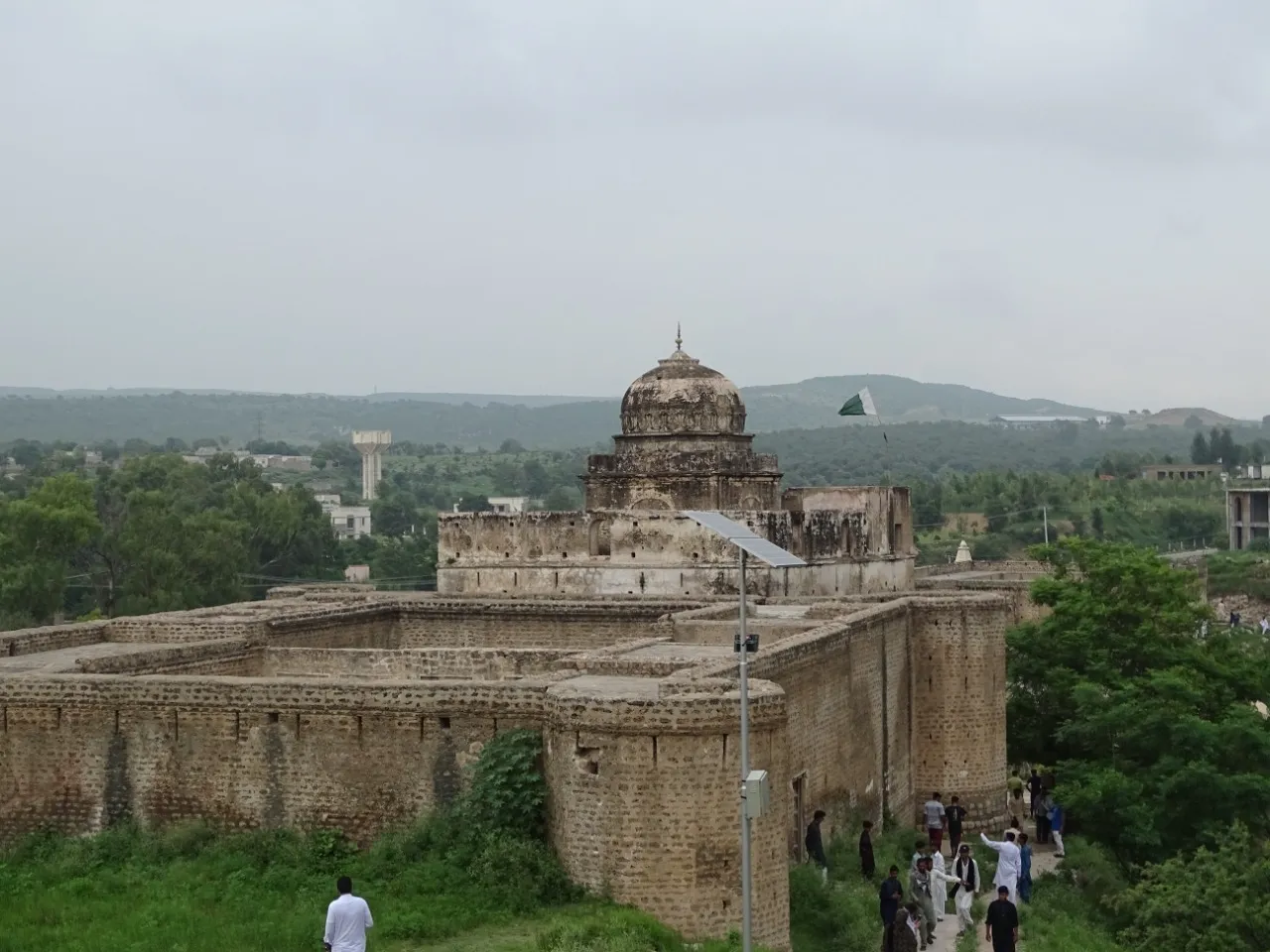
Water Management: Survival Under Siege
A fortress is only as strong as its water supply. Rohtas Fort addresses this through a sophisticated system of baolis (stepwells).
There are three major baolis within the fort:
- Central Baoli – for soldiers and animals
- Royal Baoli – reserved for elite use
- Sar Gate Baoli – serving perimeter guards
These stepwells are carved deep into the rock, ensuring access to water even during prolonged sieges. Wide steps allow multiple users simultaneously, while stone-lined walls prevent contamination and collapse.
Water security ensured that Rohtas Fort could remain operational independently for extended periods — a critical factor in its military design.
Construction Materials and Techniques
Rohtas Fort was constructed using:
- Sandstone and limestone blocks
- Lime mortar, mixed with traditional binding agents
- Locally sourced stone, reducing supply vulnerability
Ashlar masonry — finely cut stone blocks laid with precision — gives the walls both strength and durability. The use of lime mortar allows flexibility, absorbing shocks rather than cracking under pressure.
This construction method explains why Rohtas Fort has survived earthquakes, weathering, and centuries of neglect better than many later structures.
Persian Influence Without Ornamentation
While Rohtas Fort lacks decorative luxury, it does carry subtle Persian architectural influences:
- Proportional balance in gateways
- Calligraphic inscriptions (notably at Shishi Gate)
- Geometric clarity in layout
These elements are restrained, purposeful, and symbolic rather than decorative. Even inscriptions serve political messaging rather than aesthetic indulgence.
Contrast with Mughal Fort Architecture
Comparing Rohtas Fort with Mughal forts highlights its uniqueness:
| Feature | Rohtas Fort | Mughal Forts |
|---|---|---|
| Purpose | Military dominance | Royal residence + defense |
| Decoration | Minimal | Extensive |
| Layout | Terrain-driven | Symmetrical |
| Materials | Heavy stone | Stone + marble |
| Philosophy | Endurance | Display of power |
Rohtas Fort represents a hard power approach, while Mughal forts combine hard power with cultural expression.
Why Rohtas Fort Was Never Taken by Storm
Historical records suggest that Rohtas Fort was never captured through direct assault. Its design made such an attempt impractical.
- Impenetrable walls
- Deadly gate systems
- Self-sufficient supplies
- Strategic location
Any army attempting to take Rohtas by force would suffer catastrophic losses before even reaching the walls.
Architecture That Still Commands Respect
Even today, Rohtas Fort feels intimidating. Visitors often remark on:
- The overwhelming scale
- The silence and austerity
- The sense of controlled power
This psychological impact is part of the architecture itself. Sher Shah Suri understood that a fortress must defeat the enemy before battle begins.
Rohtas Fort does exactly that.
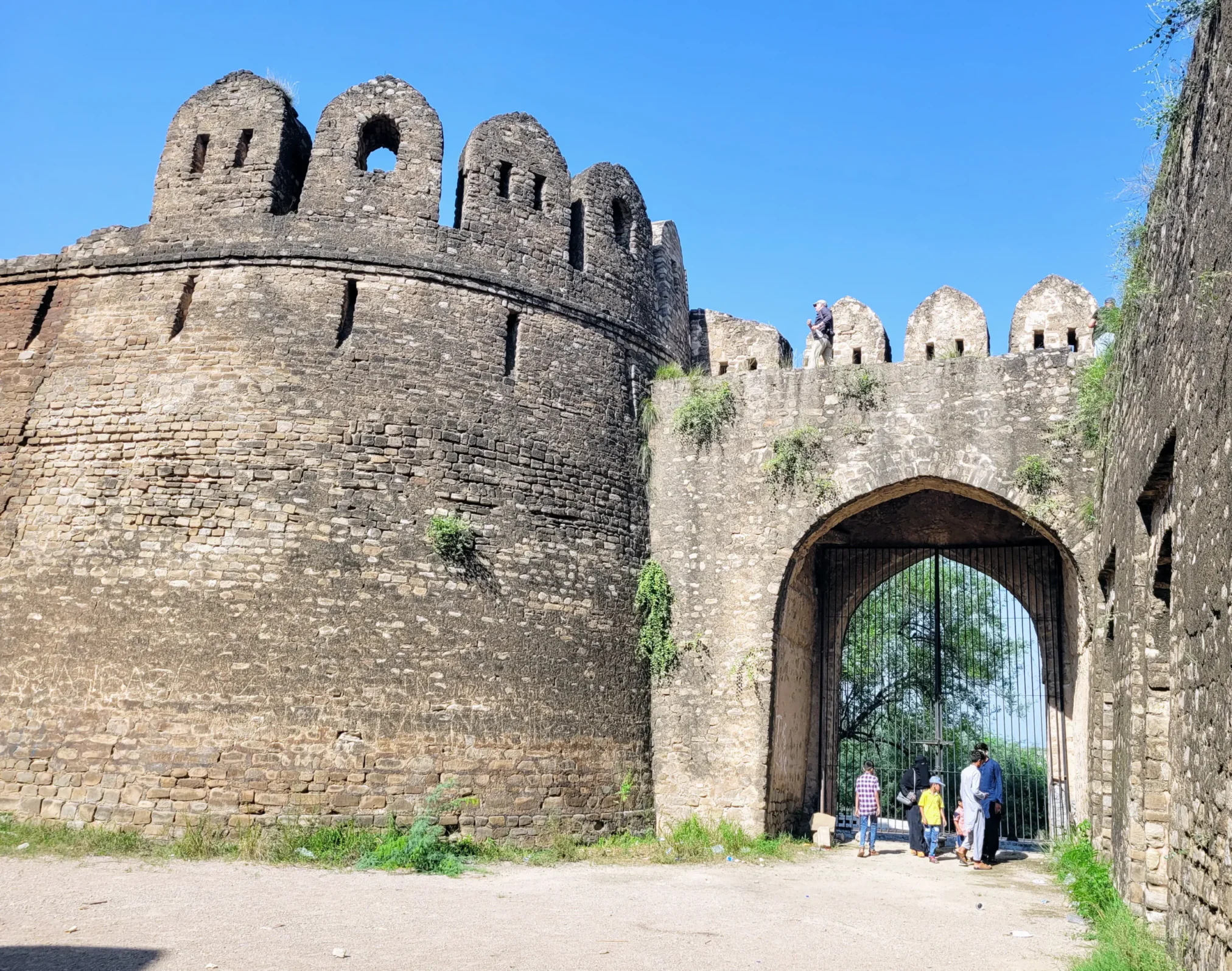
The Twelve Gates of Rohtas Fort — Design, Strategy, and Symbolism
Gates as Battlefields, Not Doorways
In most historic forts of South Asia, gates are places of ceremony. They welcome kings, receive ambassadors, and frame the grandeur of royal processions. At Rohtas Fort, gates serve a very different purpose. Here, a gate is not an invitation — it is a calculated risk.
Sher Shah Suri understood that the most vulnerable point of any fortress is its entrance. Instead of hiding this vulnerability behind decoration, Rohtas Fort confronts it with brutal engineering. Every gate is designed as a defensive mechanism, engineered to exhaust, confuse, expose, and destroy an attacking force.
Rohtas Fort contains twelve gates, each distinct in orientation, structure, and tactical role. Together, they form a layered security system that turns access into a deadly challenge.
Architectural Principles Governing the Gates
Before examining individual gates, it is essential to understand the shared principles behind their design:
- No straight entry paths — attackers are forced to turn, slow down, and break formation
- Double gates — outer and inner gates create trapping zones
- Elevated bastions — defenders attack from above
- Machicolations and loopholes — allow projectiles to be dropped or fired downward
- Massive wooden doors — reinforced with iron spikes to resist elephants and battering rams
These principles transform gates into kill corridors, where attackers are compressed into narrow spaces under constant fire.
1. Sohail Gate – The Ceremonial Yet Deadly Entrance
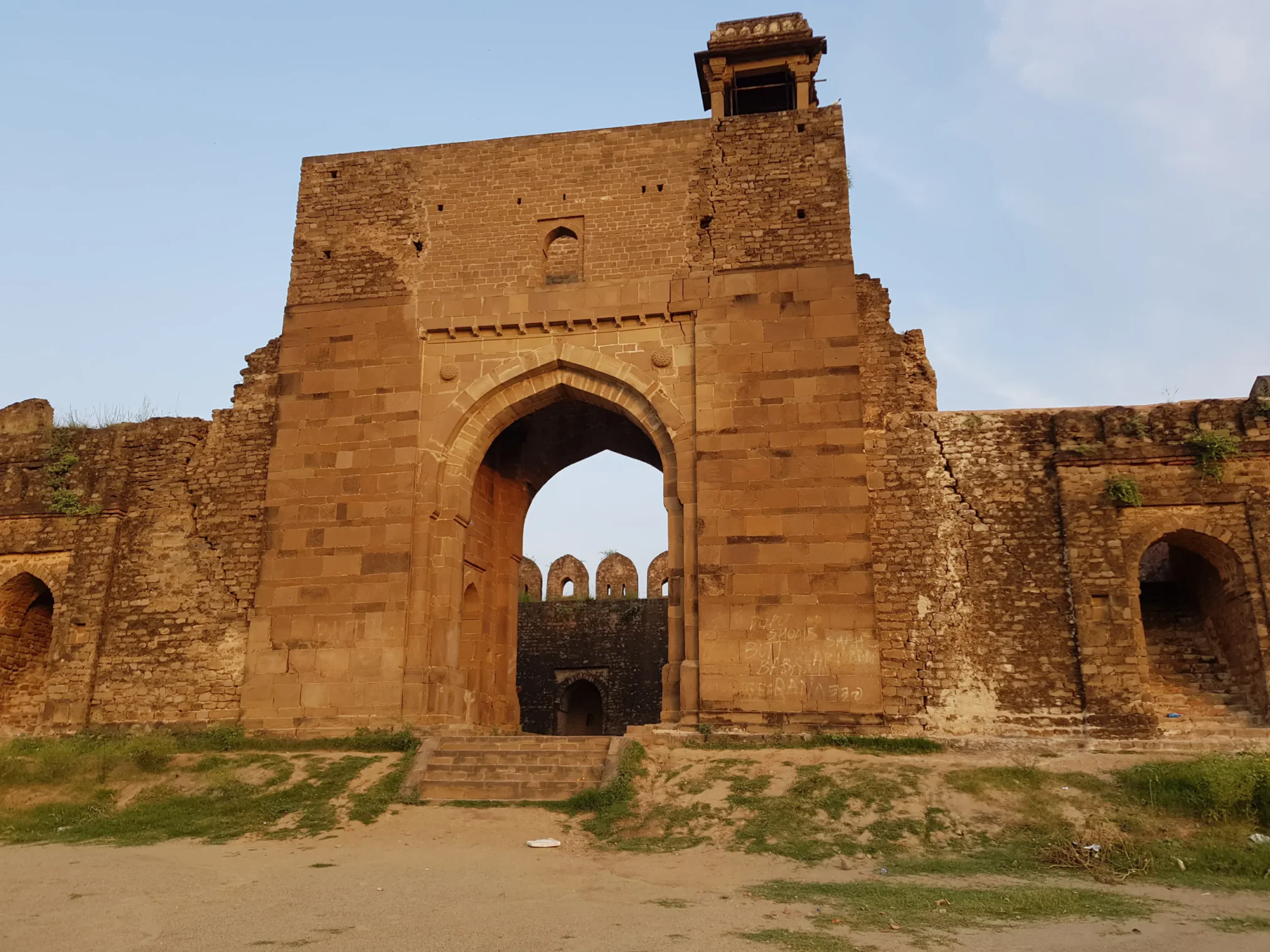
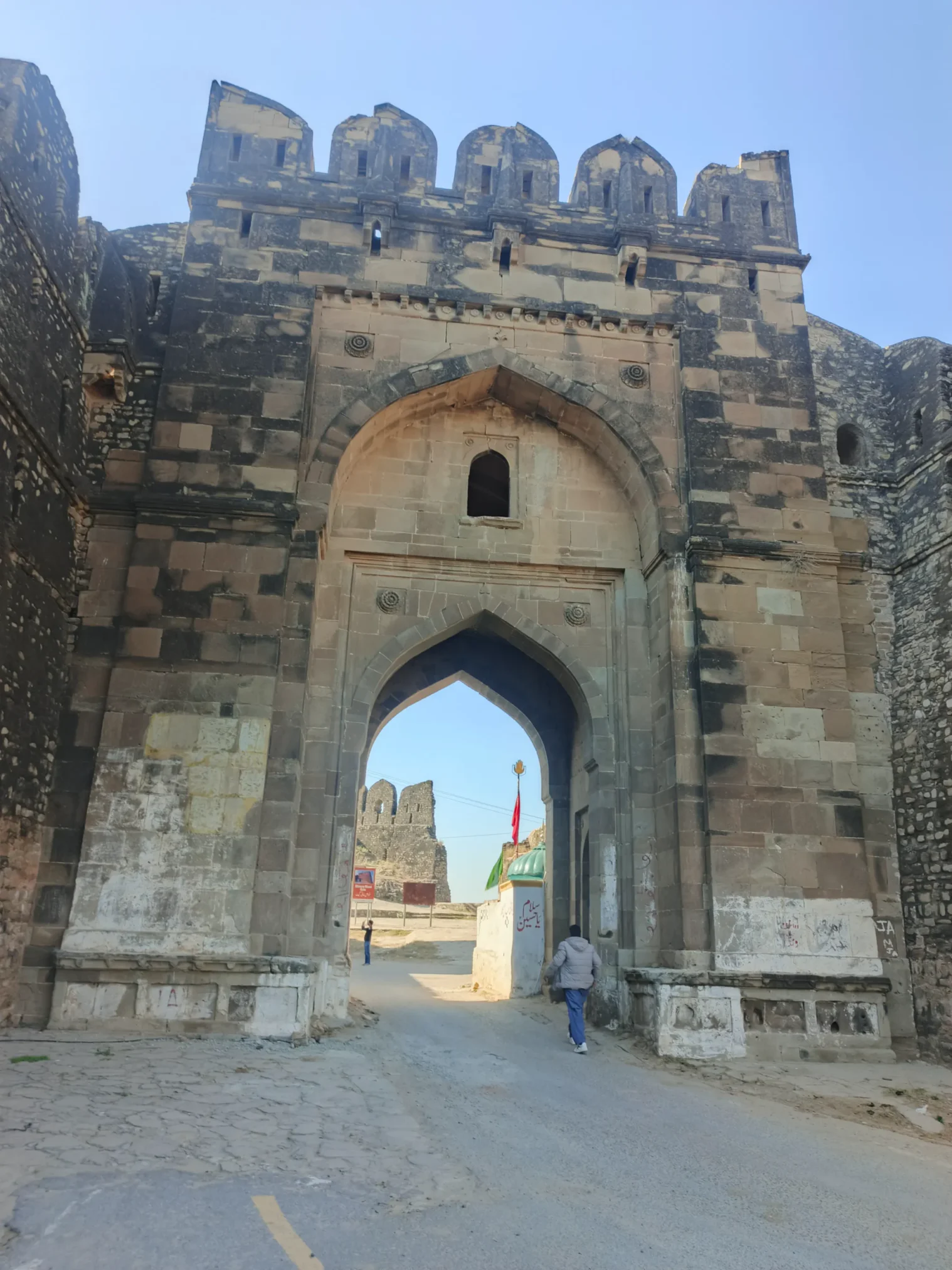
The Sohail Gate is the most monumental gate of Rohtas Fort and often regarded as its main entrance.
- Height: Approximately 21.3 meters
- Width: Around 20.7 meters
- Depth: Nearly 15 meters
Despite its ceremonial appearance, Sohail Gate is a fortress in itself. Its massive rectangular form, ashlar masonry, and imposing scale project authority from a distance.
The gate is named after Sohail Bukhari, a local saint whose tomb lies near the gate. This association with a religious figure added a layer of symbolic protection and legitimacy.
Defensively, Sohail Gate includes:
- Floral motifs that mask structural joints
- Upper chambers for soldiers
- Seven battlements overlooking the approach
- A narrow central archway designed to funnel attackers
Even as a “main” gate, Sohail Gate never compromises security.
2. Shah Chandwali Gate – The Gate of Loyalty and Sacrifice
The Shah Chandwali Gate connects the citadel (Ander Kot) with the main fort.
Its name comes from Shah Chandwali, a laborer who reportedly refused wages for his work on the fort and died during its construction. His burial near the gate transformed it into a symbol of devotion and sacrifice.
Architecturally, this gate consists of:
- An outer gate accessed from the citadel
- A simple inner archway leading into the main fort
Unlike other gates, Shah Chandwali Gate is less monumental but highly symbolic. It represents the internal organization of the fort rather than external defense.
3. Kabuli Gate – The Northern Watchpoint
The Kabuli Gate faces northwest, towards Kabul, signaling Rohtas Fort’s strategic orientation beyond the subcontinent.
This gate was constructed in two phases and includes:
- An inner gate
- An outer gate
- A stepwell (baoli) within its structure
Two massive bastions flank the entrance, and its opening is relatively narrow, measuring around 3.15 meters. This restricted width prevents large groups from entering simultaneously.
The Shahi Mosque, located near this gate, has led many to refer to it as Shahi Darwaza, though its military purpose remains dominant.
Today, Kabuli Gate houses a museum and visitor information center, making it one of the most visited sections of the fort.
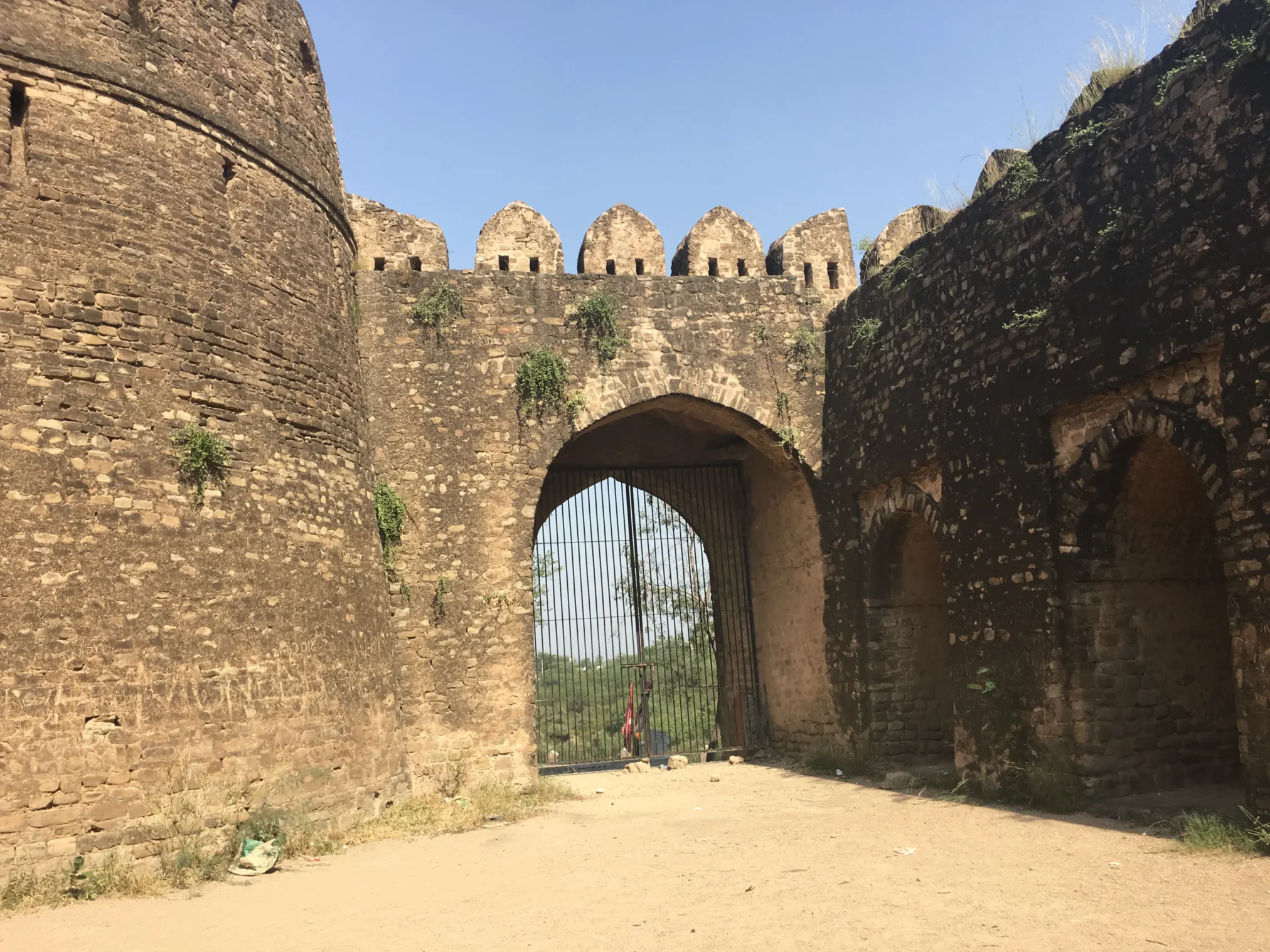
4. Shishi Gate – Beauty with Authority
The Shishi Gate is unique among Rohtas Fort’s gates due to its decorative elements.
It derives its name from the glazed blue tiles embedded in its outer arch — among the earliest examples of this technique in the region.
A Persian inscription on this gate records the fort’s construction date, stating that the fort was completed during the reign of Sher Shah Suri.
Despite its beauty, Shishi Gate remains militarily robust:
- Thick stone construction
- Controlled entry path
- Defensive loopholes
The decorative tiles serve not luxury but imperial messaging, announcing the power and legitimacy of the ruler.
5. Langar Khani Gate – Logistics and Defense Combined
The Langar Khani Gate is a double gate that rises to approximately 15.25 meters.
This gate leads to a langar khana (mess or canteen), indicating its role in sustaining troops.
Defensive features include:
- Two bastions housing kitchens and storage
- A water well within the gate complex
- An L-shaped entry path forcing a sharp right turn
The design ensures that anyone entering must slow down and reorient — a fatal disadvantage during an attack.
6. Talaqi Gate – The Gate of Omen
The Talaqi Gate carries a name rooted in tragedy.
According to tradition, Prince Sabir Suri entered through this gate and fell ill, dying shortly afterward. The incident was considered a bad omen, and the gate became associated with misfortune.
Architecturally, Talaqi Gate is:
- 15.25 meters high
- 13.8 meters wide
- Flanked by two massive bastions
Despite superstition, the gate remains structurally formidable and fully integrated into the defensive network.
7. Kashmiri (Mori) Gate – The Northern Passage
Facing towards Kashmir, the Kashmiri Gate, also known as the Mori Gate, serves as a controlled northern access point.
It opens into a chamber that leads further into the fort, preventing direct access to key areas.
This gate reflects Rohtas Fort’s attention to regional geography and strategic orientation.
8. Khwas Khani Gate – The Original Main Entrance
The Khwas Khani Gate is one of the most historically significant gates.
Named after Khawas Khan Marwat, one of Sher Shah Suri’s trusted generals, this gate served as the primary entrance from the Grand Trunk Road.
Features include:
- Double gate structure
- Five battlements equipped with loopholes
- Massive defensive walls surrounding the entrance
Its design emphasizes intimidation and control over trade and military movement along the GT Road.
9. Gatali Gate – The River Crossing Gate
The Gatali Gate is a single gate, approximately 9.15 meters high.
It derives its name from the nearby village and serves as a key crossing point for travelers moving towards the Kashmir Valley via the Jhelum River.
Though smaller, its strategic importance is immense due to its role in controlling river access.
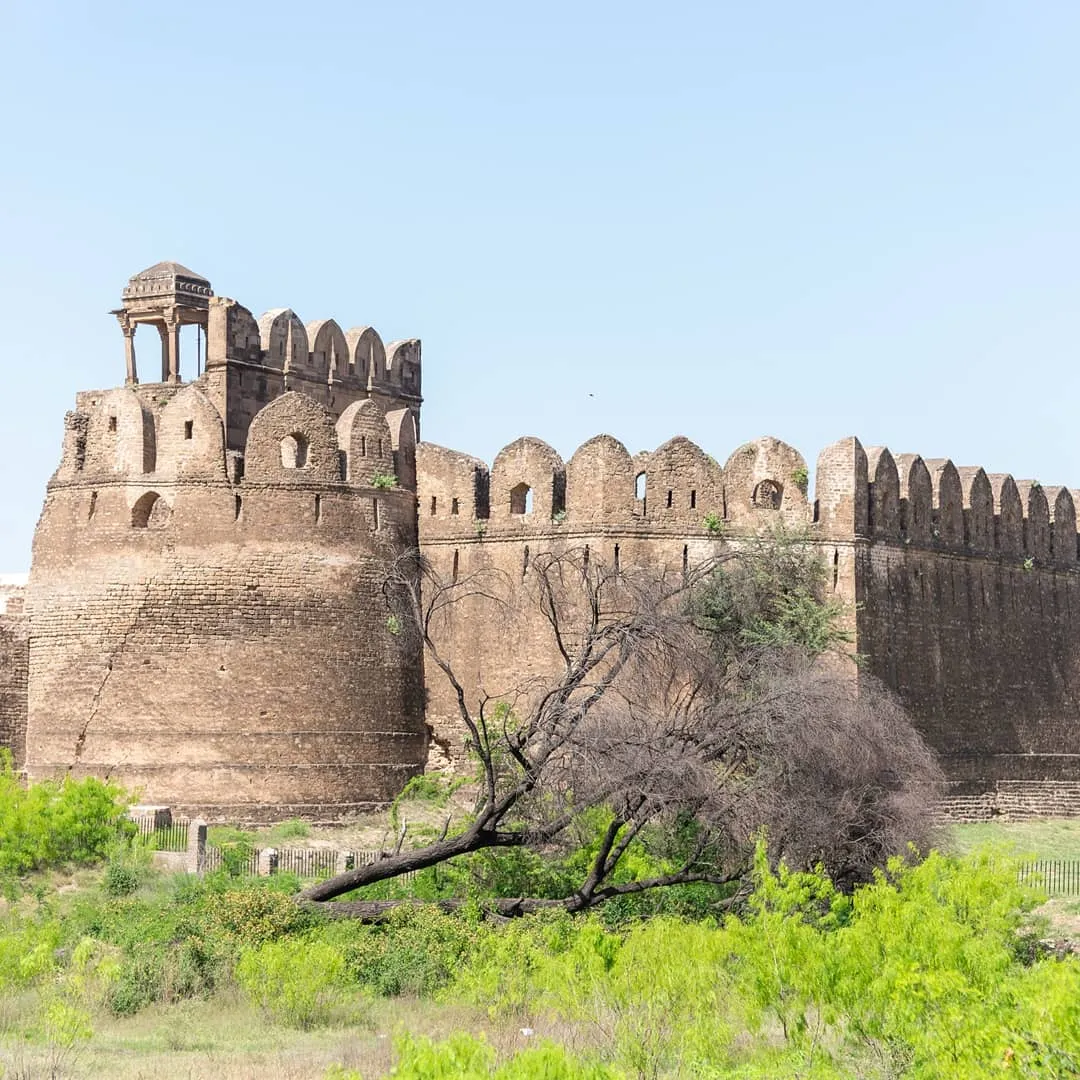
10. Tulla Mori Gate – The Eastern Entry
The Tulla Mori Gate is a relatively small entrance located on the eastern side of the fort.
With an entrance width of around 2 meters, it was likely used for controlled movement rather than large-scale entry.
Its size makes it easy to defend and difficult to breach.
11. Pippli (Pipalwala) Gate – Minimal Yet Functional
The Pippli Gate is another small gate, measuring approximately 1.13 meters in width.
Its limited size suggests use by guards or messengers rather than troops.
Like other minor gates, it prioritizes containment over access.
12. Sar Gate – The Water Gate
The Sar Gate derives its name from a water pond (sar) located nearby.
Built by local inhabitants, this gate connects internal water resources with the outer areas.
A bastion near the gate and surrounding jungle enhanced its defensive value.
Gates as Psychological Warfare
Beyond physical defense, Rohtas Fort’s gates served a psychological function.
- Their size intimidated visitors
- Their complexity discouraged attackers
- Their inscriptions reinforced imperial authority
An approaching army would face not one barrier, but twelve layered challenges, each designed to drain morale before battle began.
Rohtas Fort (Qila Rohtas) Walls, Bastions, Step-Wells, and Internal Military Structures
Rohtas Fort, an unparalleled fortress in the northern Punjab region of Pakistan, is widely celebrated not only for its sheer scale and twelve monumental gates but also for the complexity and ingenuity of its walls, bastions, step-wells, and internal military installations. Constructed in the mid-16th century by the Afghan ruler Sher Shah Suri, the fort was designed to withstand sieges, secure critical trade routes, and consolidate the power of the Suri dynasty against both the Mughal forces and resistant local tribes, particularly the Gakhar tribes of Potohar. In this section, we explore the defensive architecture and engineering brilliance that made Rohtas Fort a formidable stronghold, as well as its role in sustaining a large garrison over time.
The Fort’s Massive Walls: An Architectural Marvel
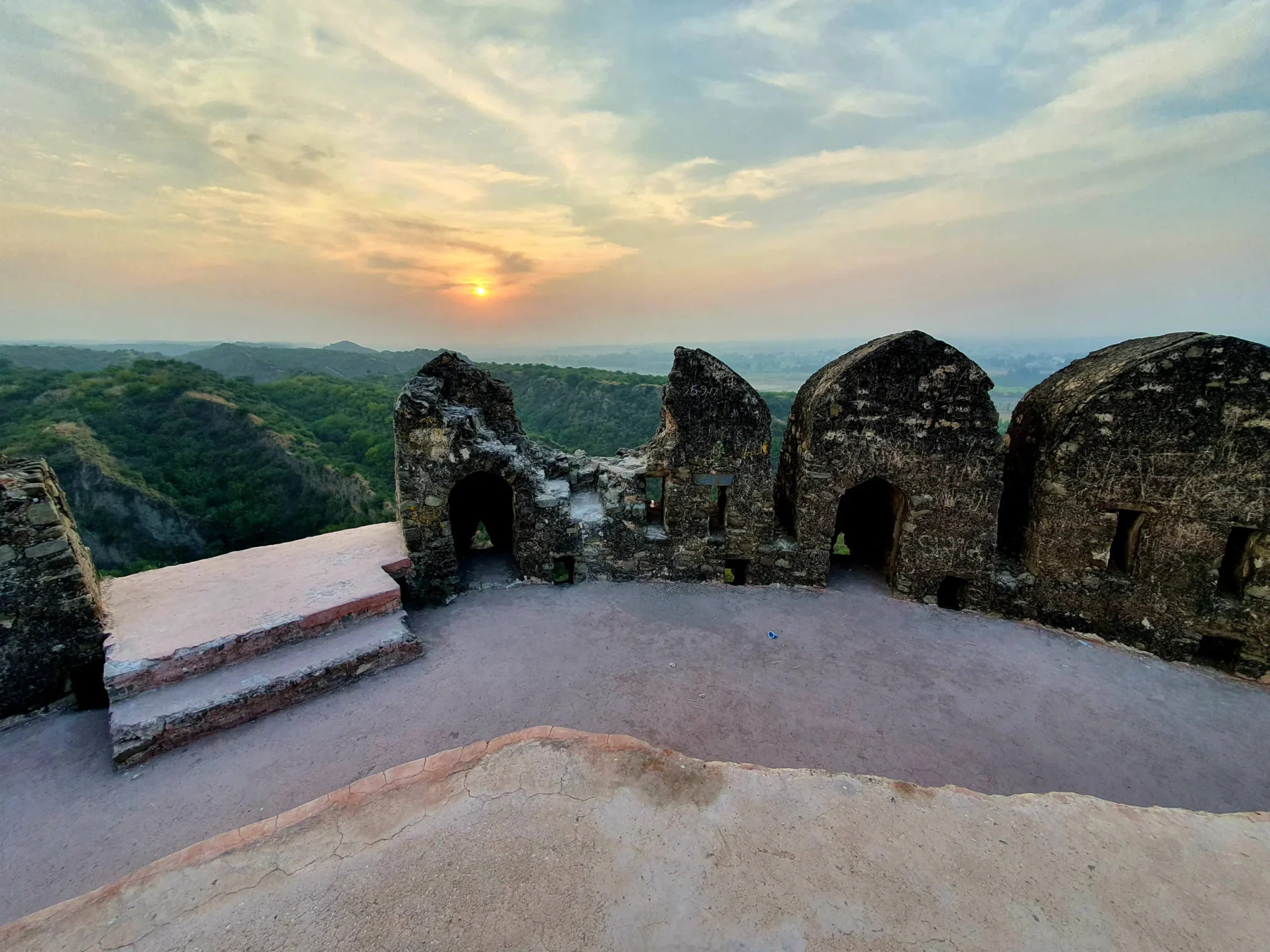
One of the first aspects that captivates visitors is the fortification walls, which extend approximately 4 kilometers in length, enclosing a roughly triangular terrain adapted to the local hills and escarpments. The walls vary in height from 10 to 18 meters (33–59 feet) and are constructed from large ashlar stones bound with lime mortar, a testament to both durability and aesthetic precision. Unlike simple stone walls seen in many regional forts, Rohtas walls are reinforced with tapered bases and battered slopes, making direct assaults difficult and absorbing the impact of cannon fire.
The construction methodology is particularly noteworthy. Local sandstone and limestone were quarried from nearby hills, ensuring both logistical efficiency and a harmonious visual integration with the natural landscape. The lime mortar, a mixture of burnt limestone, sand, and water, was used not only for its adhesive properties but also for its slight flexibility, which allows the walls to withstand minor seismic activity without cracking. Modern conservation studies have confirmed that the walls’ original materials and methods remain remarkably intact, providing an enduring lesson in 16th-century engineering.
Defensive Philosophy Embedded in the Walls
Sher Shah Suri’s Afghan military background influenced the fort’s defensive philosophy. The walls are punctuated with 68 bastions, cylindrical or semi-cylindrical towers that project outward to provide 360-degree coverage. These bastions were strategically spaced to allow crossfire and eliminate blind spots. Unlike earlier Indian forts, where bastions often served as decorative symbols of power, Rohtas bastions were purely functional. Soldiers could mount archers, musketeers, and artillery simultaneously, creating a layered defensive network against both infantry and cavalry.
The walls also integrate loopholes and machicolations, openings specifically designed to allow defenders to fire upon attackers while remaining shielded. Narrow vertical slits accommodated arrows and early firearms, while machicolations—stone projections with openings in the floor—allowed defenders to drop projectiles or boiling substances on enemies attempting to scale the walls. This combination of vertical and angled defense demonstrates a sophisticated understanding of siege warfare.
Bastions and Towers: The Fort’s Sentinel Structures
Each bastion at Rohtas Fort was carefully designed to fulfill multiple defensive and surveillance functions. The bastions vary in size and height, with some rising over 16 meters, providing a vantage point to monitor the surrounding Potohar plateau. Their rounded exteriors minimize the impact of projectiles, while the interiors housed storage for ammunition and provisions.
Certain bastions were reinforced with underground chambers that served as safe storage for gunpowder and other explosives. These chambers also functioned as shelters for soldiers during prolonged sieges. Archaeological surveys have revealed that some bastions contained hidden stairways, allowing troops to move vertically along the walls without exposing themselves to attackers—a tactic designed to maintain operational flexibility during combat.
In addition to their defensive role, bastions also contributed to symbolic power. Their imposing scale, visible from kilometers away, projected the might of Sher Shah Suri’s empire. The combination of functional engineering and visual intimidation reflects a dual purpose: to protect and to dominate.
Step-Wells (Baolis): Engineering for Sustainability
Within Rohtas Fort, step-wells, or baolis, are among the most fascinating architectural features, combining functionality with intricate stonework. Water supply was critical for a fortress expected to house tens of thousands of soldiers, and Rohtas Fort includes at least three major baolis:
- Central Baoli – Located within the main fort area, this baoli supplied water for soldiers and livestock. It features a series of stone steps descending deep into the reservoir, allowing access even during dry seasons. The walls are reinforced with finely dressed stone to prevent erosion and collapse.
- Royal Baoli – Situated in the Ander Kot residential area, this step-well was reserved for the royalty and higher-ranking officers. Unlike the utilitarian Central Baoli, the Royal Baoli exhibits decorative stonework, with carved niches and geometrical patterns, demonstrating a blend of utility and aesthetic refinement.
- Sar Gate Baoli – Positioned near the Sar Gate, this baoli served the perimeter guards. Its strategic location ensured that the soldiers stationed at the gate could maintain hydration and hygiene without leaving their posts.
These step-wells were also integrated with a rainwater harvesting system, collecting runoff from the fort’s terraces and gates. This system ensured a reliable water supply during sieges or droughts, exemplifying Sher Shah Suri’s foresight in military logistics.
Internal Military Structures: Ander Kot and the Citadel
The Ander Kot, or inner citadel, formed a semi-independent military complex within the fort. It included residential quarters for officers, ammunition stores, armories, and watchtowers. The layout was deliberately compartmentalized to isolate different functional zones, making it easier to defend against internal breaches or coordinated attacks.
Ammunition and Armory
The armories were strategically placed within bastions and the Ander Kot to ensure quick access to weapons while remaining secure from enemy fire. Archaeological evidence suggests that the armories included matchlocks, swords, shields, and small cannons, with stone racks and reinforced wooden doors for protection.
Barracks and Soldier Accommodation
The fort was designed to accommodate around 30,000 military personnel. Barracks were simple but functional, with raised platforms to protect against damp conditions. Communal areas included mess halls and storage for rations, integrated with nearby kitchens, particularly around the Langar Khani Gate.
Defensive Roadways and Stairs
Inside the fort, narrow winding staircases and L-shaped pathways were incorporated deliberately to slow down invading forces if they breached the gates. Soldiers familiar with these internal routes could quickly mobilize to threatened sectors, ensuring a flexible and adaptive defense.
Material Science: Stones, Mortar, and Timber
Rohtas Fort demonstrates a sophisticated understanding of material durability. The walls, bastions, and gates primarily use ashlar sandstone, known for its compressive strength and resistance to weathering. Lime mortar, as previously noted, binds the stones and allows slight expansion, preventing structural failure under load.
Timber was used selectively in roofing, door frames, and scaffolding during construction. Evidence indicates that deodar and other locally available hardwoods were preferred for their resilience against decay and termites. The fort’s enduring condition suggests that Sher Shah Suri’s builders understood how to combine local materials with durable architectural techniques to create a fortress that could last centuries.
Strategic Importance of the Walls and Bastions
The placement of walls and bastions at Rohtas was not arbitrary. The fort overlooks the Jhelum River and the surrounding plains, giving defenders a commanding view of approaching forces. Its elevated terraces allowed archers to fire downward, taking advantage of gravity, while bastions enabled crossfire. This elevated vantage also allowed early detection of Mughal or local insurgent movements, which was crucial for maintaining control over the region.
Moreover, the defensive network was integrated with the fort’s twelve gates, each acting as a controlled chokepoint. Gates like the Sohail Gate and Kabuli Gate had massive outer walls and bastions, while smaller gates like Tulla Mori and Pippli Gate provided strategic access without compromising defense.
Rohtas Fort (Qila Rohtas) Residential and Ceremonial Structures, Courtyards, Terraces, and Water Systems
While Rohtas Fort is widely celebrated for its formidable walls and twelve gates, its internal structures—palaces, havelis, mosques, and step-wells—offer equally fascinating insights into 16th-century architecture, military planning, and lifestyle of the elite. These buildings were not designed for opulence alone; they served practical, ceremonial, and administrative functions while reflecting the artistic and cultural ethos of the Sur Empire.
1. Rani Mahal: The Queen’s Palace
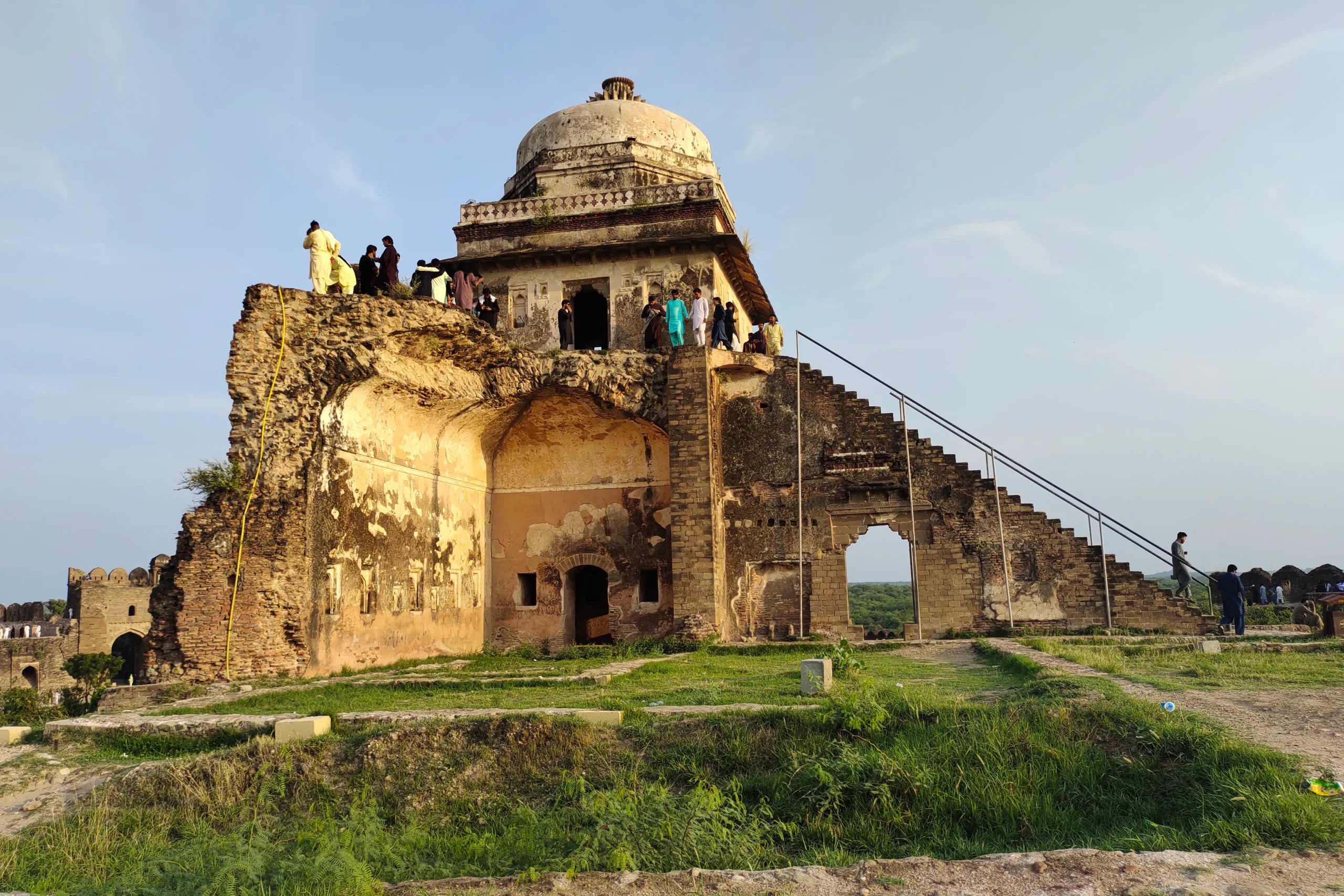
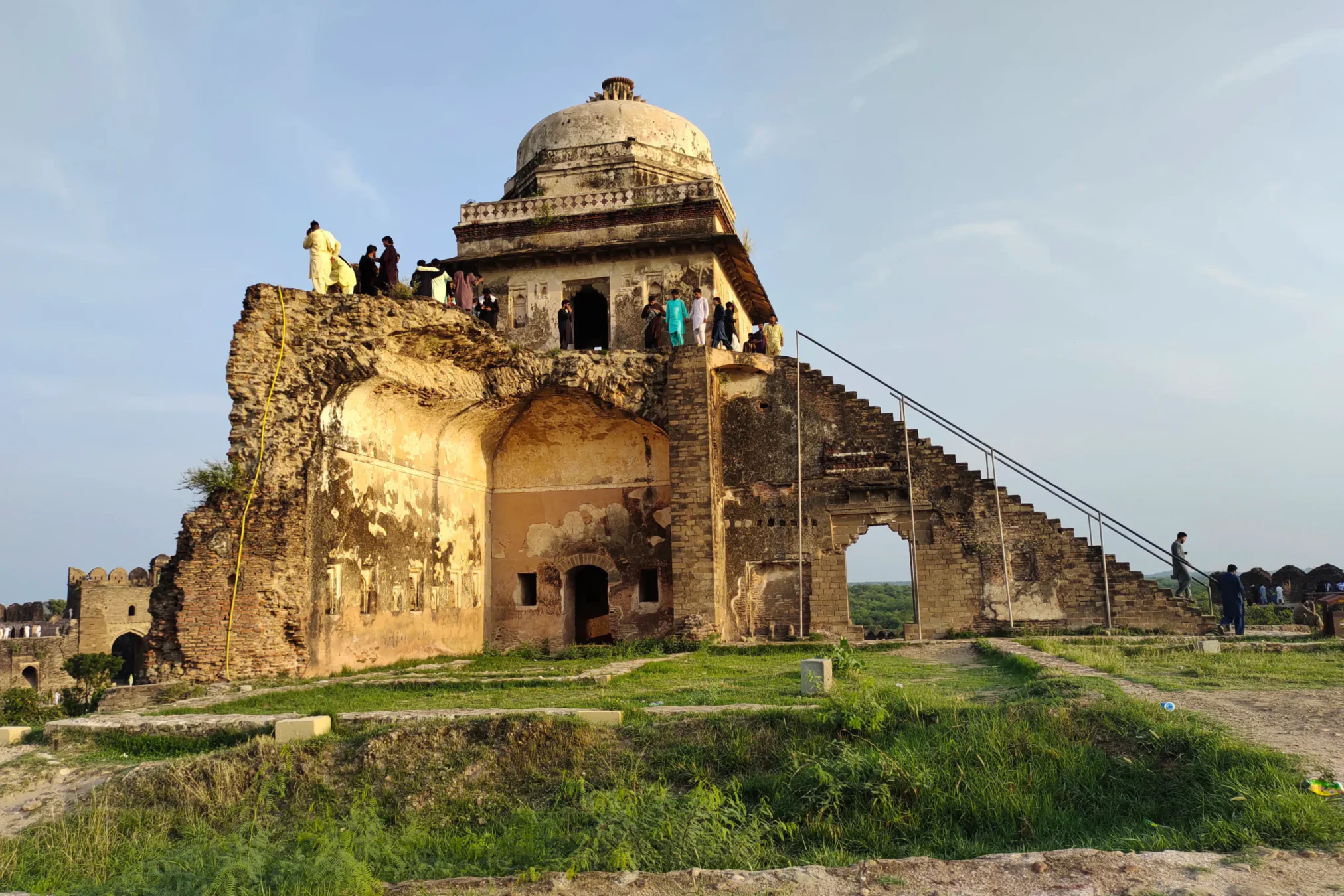
The Rani Mahal, literally “Queen’s Palace,” is one of the few residential structures within Rohtas Fort. Unlike Lahore Fort or other Mughal palaces with elaborate royal quarters, Rani Mahal is relatively modest but strategically positioned and architecturally sophisticated.
Architectural Details:
- Single-storey structure originally comprising four rooms, of which one remains intact.
- Room dimensions: approximately 8 x 8 meters, with 20-foot-high ceilings.
- Features a domed roof decorated with geometric patterns, false windows, and ornamental stonework.
- Constructed using local sandstone and lime mortar, reinforced to withstand earthquakes and potential attacks.
- Large arched doorways provided natural light and ventilation, while elevated terraces offered a panoramic view of the fort and surrounding plains.
Historical Significance:
- Believed to have housed royal women, though there is limited evidence of permanent habitation.
- Its presence emphasizes the integration of domestic spaces within a military complex, highlighting a balance between security and comfort.
Visitor Insights:
- Visitors often remark on the intimate scale of Rani Mahal compared to massive fort walls.
- The preserved domed ceiling and geometric decorations are considered rare surviving examples of Sur-period interior design.
2. Haveli Man Singh: The General’s Residence
The Haveli Man Singh, named after a prominent Mughal general, stands in contrast to Rani Mahal with more expansive architectural detailing.
Key Features:
- Built with a combination of Afghan military architecture and Mughal decorative style.
- Contains stone-carved balconies, intricately patterned doorways, and multi-level rooms.
- The main structure, although partially ruined, shows evidence of courtyards and audience halls, likely used for administrative and ceremonial functions.
Strategic Role:
- Served as a residence for high-ranking officials or generals.
- Allowed oversight of barracks, gates, and outer walls, blending residential comfort with tactical advantage.
Visitor Experience:
- Tourists often climb the haveli’s terraces for uninterrupted views of the fort walls and surrounding Jhelum landscape.
- The fusion of Hindu-Muslim architectural motifs provides a tangible link to the cultural synthesis of the 16th century.
3. Shahi Mosque: Religious Architecture Within a Fortress
The Shahi Mosque, located near Kabuli Gate, is one of the fort’s most iconic religious structures. Unlike many Mughal mosques with large courtyards, this mosque was compact, functional, and strategically sited.
Architectural Features:
- Prayer hall with a single dome and three mihrabs (prayer niches).
- Small open courtyard allowing congregational overflow and ventilation.
- Stairs connecting the mosque to Kabuli Gate facilitated quick evacuation during attacks, highlighting its military context.
- Carvings on exterior walls feature Islamic calligraphy and geometric patterns, typical of Sur-period religious architecture.
Historical Role:
- Served the garrison and administrative staff, combining spirituality with daily fort life.
- Represents the integration of religious practice into a fortified urban plan.
Visitor Observations:
- Modern visitors note the mosque’s pristine geometric design and calm atmosphere, contrasting with the imposing walls around it.
- It is considered a prime example of early Mughal architectural influence in a military setting.
4. Phansi Ghat: Justice and Order in a Military Fortress
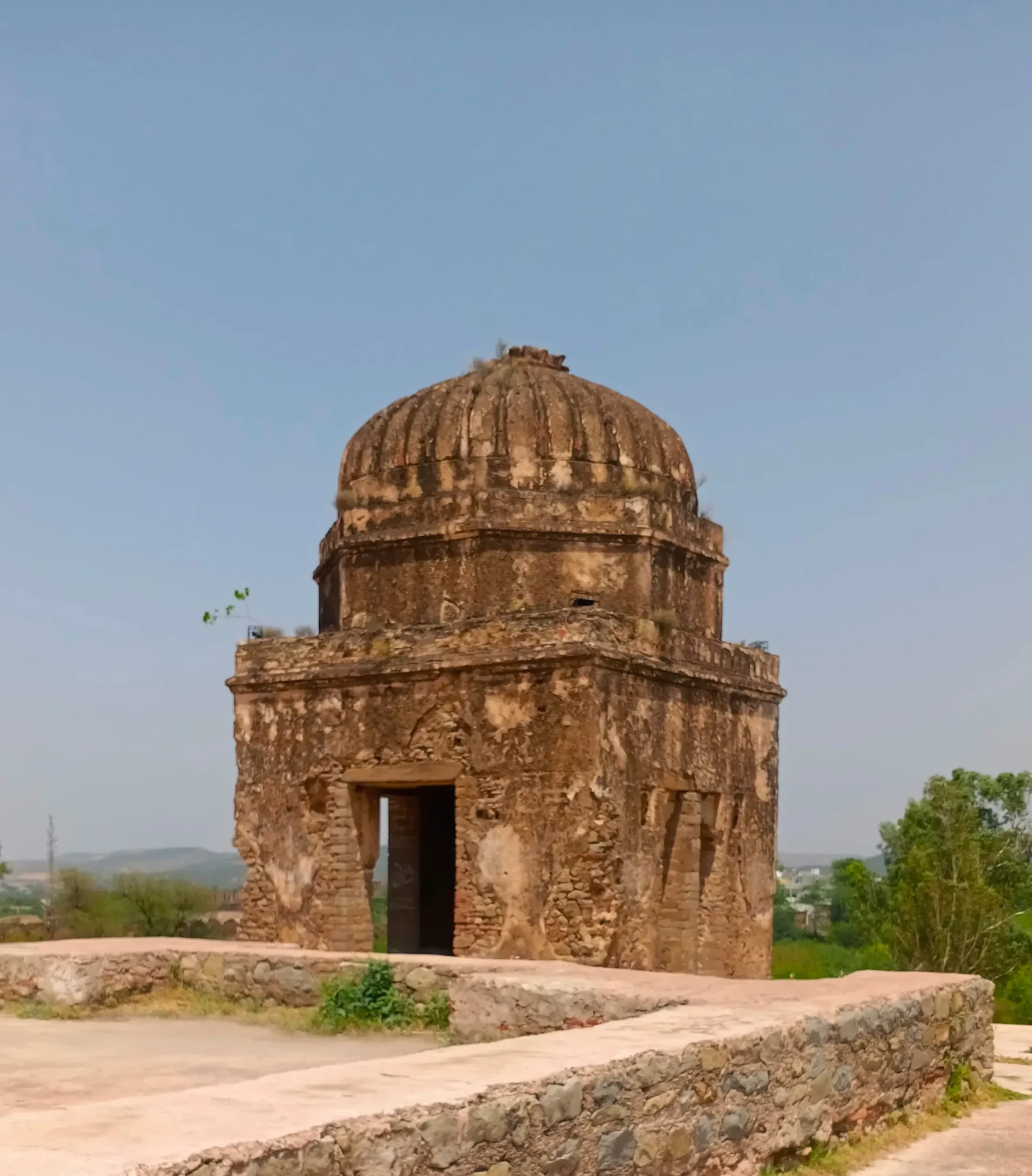
The Phansi Ghat, literally “gallows area,” reflects the fort’s judicial and punitive role.
Design and Function:
- An open, elevated area where executions were conducted, intended as both a deterrent and enforcement of law.
- Constructed with solid stone terraces and proximity to walls for security and observation.
- Historically, it underscores the discipline and hierarchical control within the fort.
Visitor Experience:
- While somber, visitors appreciate the fort’s historical realism, understanding that Rohtas was a working military installation, not just a ceremonial space.
5. Internal Courtyards: Planning and Function
Rohtas Fort features two primary internal zones—the Main Fort and Ander Kot (citadel)—each containing courtyards that served multiple purposes:
Courtyard Functions:
- Administrative: Areas where officials conducted official business and managed garrison logistics.
- Residential: Small courtyards allowed ventilation, light, and water access to adjoining structures.
- Military Drill: Open spaces where soldiers practiced maneuvers, maintained equipment, and coordinated defenses.
Architectural Details:
- Courtyards are rectangular and open to the sky, surrounded by arcades or colonnades.
- Flooring made from smooth stone slabs, allowing drainage during rains.
- Some courtyards integrated with step-wells or water channels, essential for daily life and firefighting.
6. Terraces and Defensive Platforms
Rohtas Fort’s terraces, built atop walls and bastions, played critical military roles:
Features:
- Wide enough to accommodate soldiers armed with spears, bows, or early firearms.
- Terraces were reinforced with machicolations for dropping projectiles on attackers.
- Provided 360-degree visibility, enabling the garrison to anticipate enemy movement across the surrounding plains.
Visitor Insights:
- Modern tourists often climb terraces to imagine soldiers patrolling the walls, with expansive views of the Jhelum River and surrounding hills.
- Photography and panoramic tours are popular, particularly near Sohail and Shah Chandwali gates.
7. Water Systems: Step-Wells and Baolis
Water management was essential for sustaining a 30,000-strong garrison in a fort of this scale. Rohtas Fort features three main step-wells (baolis):
7.1 Royal Baoli (Ander Kot)
- Reserved for the royalty and elite, possibly including Rani Mahal residents.
- Constructed from ashlar stone with carved steps descending to the water level.
- Served as both bath and ceremonial water access.
7.2 Central Baoli (Main Fort)
- Supplied water to soldiers and livestock.
- Connected with storage cisterns and channels for distribution across courtyards.
7.3 Sar Gate Baoli
- Likely used by guards stationed at Sar Gate.
- Ensured immediate access to water for troops at perimeter walls.
Engineering Significance:
- Step-wells reflect advanced knowledge of hydraulics and masonry.
- Maintained water quality and supply throughout the year, crucial in siege conditions.
8. Material and Construction Techniques
Internal structures at Rohtas Fort highlight consistent use of durable materials:
- Ashlar stone blocks: Carefully cut and fitted, providing longevity and earthquake resistance.
- Lime mortar: High-quality mortar with clay, lime, and sand, ensuring structural integrity and flexibility.
- Tilework and carved stone: Used for both decorative and protective purposes, particularly in Shishi Gate and mosque interiors.
- Roofing: Domed and flat terraces optimized for heat regulation and rainwater runoff.
Architectural Philosophy:
- Sur Empire architecture favored practicality over ornamentation, yet incorporated symbolic aesthetics.
- Buildings were designed to blend defensive needs with social and ceremonial functions, reflecting a holistic approach to fort design.
9. Visitor Management and Maintenance
The Jhelum authorities oversee regular maintenance and visitor management to preserve these delicate internal structures:
- Annual inspections focus on structural reinforcement, cleaning, and minor repairs.
- Signage educates visitors on historical and architectural context.
- Guided tours provide insights into Rani Mahal, Haveli Man Singh, Shahi Mosque, and step-wells, enhancing visitor engagement.
- Seasonal tourism peaks during spring and autumn, with ~250,000–300,000 annual visitors.
Visitor feedback emphasizes:
- The immersive experience of walking through courtyards and terraces.
- Appreciation for preserved water systems, illustrating daily life in a 16th-century military fort.
- Educational value for students, historians, and tourists interested in South Asian heritage.
The internal structures of Rohtas Fort—Rani Mahal, Haveli Man Singh, Shahi Mosque, Phansi Ghat, courtyards, terraces, and step-wells—reveal a carefully planned, multi-functional fortress. Beyond its military might, the fort reflects administrative efficiency, cultural integration, and architectural sophistication. These elements not only served practical purposes for the garrison but also showcase the genius of Sher Shah Suri’s urban and military vision, offering modern visitors a comprehensive glimpse into 16th-century fort life.
Rohtas Fort (Qila Rohtas) Preservation, Visitor Management, and Modern Conservation
Rohtas Fort, while a 16th-century military marvel, is also a living heritage site requiring constant care. Its preservation and visitor management highlight how historical architecture can be sustainably integrated with modern tourism. The fort’s enduring structure, its 12 grand gates, internal buildings, terraces, and water systems remain intact largely due to concerted conservation efforts led by the Jhelum authorities, federal agencies, and UNESCO guidelines.
1. UNESCO World Heritage Status and Conservation Guidelines
In 1997, UNESCO inscribed Rohtas Fort as a World Heritage Site, recognizing it as:
- An exceptionally preserved example of military architecture in South Asia.
- A site demonstrating the defensive ingenuity of Afghan and Sur-period construction.
- A cultural landscape reflecting the integration of strategic military needs with administrative and ceremonial spaces.
UNESCO’s Conservation Principles:
- Authenticity: Maintaining original structures without over-restoration.
- Integrity: Protecting the fort’s walls, bastions, gates, and internal buildings.
- Community Involvement: Encouraging local stakeholders in preservation and tourism management.
- Sustainable Tourism: Ensuring visitor flow does not damage heritage sites.
Under these principles, Rohtas Fort has benefited from periodic structural assessments, restoration projects, and protective legislation.
2. Annual Maintenance and Restoration Practices
Maintaining a 500-year-old fortress is complex, involving multiple aspects: structural, environmental, and visitor-related.
2.1 Structural Maintenance
- Wall inspections: Regular checks for cracks, erosion, and displaced stones.
- Gate reinforcement: Each of the 12 gates receives special attention, especially Sohail Gate, Khwas Khani Gate, and Shishi Gate, which face higher visitor traffic.
- Roof and terrace stabilization: Rani Mahal and Haveli Man Singh terraces are reinforced to prevent collapse due to rainfall or visitor weight.
2.2 Material Conservation
- Ashlar stones and lime mortar are cleaned and repaired using traditional techniques to maintain authenticity.
- Tile and stonework: Shishi Gate’s glazed tiles and mosque carvings undergo careful cleaning and occasional replacement with historically accurate materials.
- Water systems: Step-wells are cleared seasonally to prevent siltation and ensure functional water flow.
2.3 Environmental Management
- Vegetation removal: Jungle encroachment near Sar Gate and bastions is controlled to prevent root damage.
- Drainage systems: Rainwater channels are cleared to avoid erosion along walls and terraces.
- Pest control: Measures prevent termite or rodent damage to wooden elements and masonry joints.
3. Visitor Management
Rohtas Fort attracts both local and international tourists, making visitor management a critical part of preservation.
3.1 Entry and Ticketing
- Ticket pricing: Local visitors pay PKR 20, while foreign tourists pay around PKR 500. Passport verification may be required for non-Pakistanis.
- Guided tours: Local guides offer historical, architectural, and anecdotal insights, charging roughly PKR 100 per hour.
3.2 Visitor Flow
- Popular entrances like Sohail Gate, Kabuli Gate, and Khwas Khani Gate are monitored to prevent overcrowding.
- Peak tourist months are March–May and September–November, coinciding with mild weather and festive periods.
- Special provisions for school trips, heritage walks, and cultural events are coordinated with local authorities.
3.3 Safety and Security
- Guards patrol walls, gates, and terraces to ensure visitor safety.
- Restricted zones, particularly near fragile terraces and step-wells, are clearly marked.
- Emergency plans are in place for accidents or structural emergencies.
4. Seasonal Tourism Patterns
Rohtas Fort experiences distinct seasonal visitation trends:
| Season | Visitor Trends | Highlights | Maintenance Focus |
|---|---|---|---|
| Spring (Mar–May) | Peak | Lush green surroundings, panoramic views | Landscaping, terrace clearing |
| Summer (Jun–Aug) | Moderate | Warm weather, low humidity | Shade provision, water supply management |
| Autumn (Sep–Nov) | Peak | Mild climate, cultural festivals | Restoration projects, guided tours |
| Winter (Dec–Feb) | Low | Cool, misty vistas | Structural inspections, minor repairs |
Visitor statistics suggest:
- ~250,000–300,000 annual visitors
- Domestic tourists constitute ~70%, international ~30%
- Educational trips contribute to heritage awareness among youth.
5. Local Authority and Community Engagement
The Jhelum district administration plays a pivotal role in fort preservation:
5.1 Administrative Oversight
- Fort management is a joint responsibility of local heritage departments and federal antiquities agencies.
- Funding covers maintenance, restoration, signage, guides, and security.
5.2 Community Participation
- Local artisans contribute to tile restoration, stone carving, and masonry repairs.
- Residents benefit from tourism-driven employment, including guides, transport services, and souvenir sales.
5.3 Educational Programs
- Schools and colleges frequently organize heritage tours.
- Awareness campaigns emphasize responsible tourism and fort preservation.
6. Conservation Challenges
Despite careful management, Rohtas Fort faces persistent challenges:
6.1 Environmental Threats
- Heavy rains can cause erosion along terraces and walls.
- Vegetation growth threatens masonry integrity.
6.2 Visitor Impact
- Overcrowding, especially near Sohail and Shishi Gates, can stress structural elements.
- Graffiti and littering require continuous monitoring.
6.3 Resource Limitations
- Limited funding can delay long-term restoration projects.
- Reliance on traditional materials makes sourcing and skilled labor challenging.
6.4 Encroachment and Urban Pressure
- Unauthorized construction near outer walls has historically posed a risk, requiring strict regulatory enforcement.
7. Restoration Success Stories
Several key initiatives have preserved Rohtas Fort for future generations:
- Shishi Gate tilework: Restored using historically accurate glazed tiles, showcasing early Persian-influenced decorative techniques.
- Khwas Khani Gate battlements: Repaired to maintain defensive integrity and visitor safety.
- Step-well conservation: Cleaning and stone repairs ensured the water systems remain functional and accessible for interpretation.
- Haveli Man Singh stabilization: Reinforced terraces allow safe visitor exploration while protecting remaining carvings and masonry.
These efforts highlight a delicate balance between accessibility, authenticity, and preservation.
8. Visitor Reviews and Experiences
Modern visitors frequently highlight:
- The immersive historical atmosphere as they walk along battlements and terraces.
- Panoramic views of the Jhelum River, surrounding hills, and nearby towns.
- The blend of military and residential architecture, demonstrating how defense and daily life coexisted.
- The educational value, particularly for students of architecture, history, and archaeology.
Many reviews stress the need for better signage, shaded rest areas, and interpretive guides, which are gradually being addressed by Jhelum authorities.
9. Integration with Cultural Tourism
Rohtas Fort contributes to regional cultural tourism, forming a network with:
- Mehar un-Nisa Maqbara
- Jalalpur Sharif archaeological sites
- Nearby forts such as Ramkot Fort, Ranikot Fort, and Derawar Fort
This integration boosts local economies and promotes heritage awareness on a national and international scale.
FAQs – Comprehensive Visitor & Heritage Guide
General Information
- Where is Rohtas Fort located?
Rohtas Fort is located near Jhelum city in Punjab, Pakistan, on the east bank of the Jhelum River. - Who built Rohtas Fort and when?
It was built by Sher Shah Suri, the Afghan ruler, between 1541 and 1548 CE. - Why was Rohtas Fort built?
The fort was built to prevent Mughal emperor Humayun’s return, control the Potohar tribes, and safeguard the Grand Trunk Road. - What is the architectural style of Rohtas Fort?
The fort showcases Afghan military architecture, blended with Persian and Hindu influences. - How large is Rohtas Fort?
The fort covers approximately 70 hectares with walls extending over 4 km and 68 bastion towers.
Gates of Rohtas Fort
- How many gates does Rohtas Fort have?
Rohtas Fort has 12 grand gates, each with unique designs and historical significance. - Which is the main gate of Rohtas Fort?
Sohail Gate is the ceremonial main entrance, featuring floral motifs and impressive masonry. - What is special about Shishi Gate?
Shishi Gate is adorned with early Persian glazed tiles and carries a Persian inscription dating back to 1541. - Which gate leads to Kashmir?
The Kashmiri Gate (also called Mori Gate) faces north towards Kashmir. - Which gate served as the original entrance?
Khwas Khani Gate was the original entrance from the old GT Road side. - Which gate is associated with a bad omen?
Talaqi Gate, named after Prince Sabir Suri’s untimely death, is historically associated with a bad omen. - Which gate houses a museum today?
Kabuli Gate now serves as a visitors’ information center and museum.
Architecture and Internal Structures
- What is Rani Mahal?
Rani Mahal, or the Queen’s Palace, is a single-storey structure built by Raja Man Singh for royalty visiting the fort. - What is Haveli Man Singh?
Haveli Man Singh is a residential complex inside Ander Kot, showcasing a blend of Hindu and Muslim architecture. - Are there step-wells inside the fort?
Yes, three main step-wells (baolis) exist for water storage: Royal Baoli, Central Baoli, and Sar Gate Baoli. - Is there a mosque in Rohtas Fort?
Yes, the Shahi Mosque near Kabuli Gate is a prime example of early Mughal architecture. - What are the bastions used for?
The 68 bastions along the walls were used to defend against invaders, allowing coverage from multiple angles.
Visitor Information
- Is Rohtas Fort open to visitors?
Yes, it is open from 9 am to 5 pm daily. - Is there an entrance fee?
Local visitors pay PKR 20, while foreign visitors pay PKR 500. - Are guided tours available?
Yes, local guides are available for historical and architectural tours at around PKR 100 per hour. - How can I reach Rohtas Fort?
Visitors can take GT Road or N-5 and follow Rohtas Fort Road to the site. Parking is available nearby. - Are there facilities for tourists?
Basic facilities include rest areas, parking, and signage, with future improvements planned for shade, cafes, and interpretive displays. - When is the best time to visit?
Spring (March–May) and Autumn (September–November) are ideal for pleasant weather and panoramic views. - Can school trips visit Rohtas Fort?
Yes, educational visits are encouraged, with guides providing historical context and heritage education. - Is photography allowed?
Photography is permitted, but drone usage may require permission from local authorities.