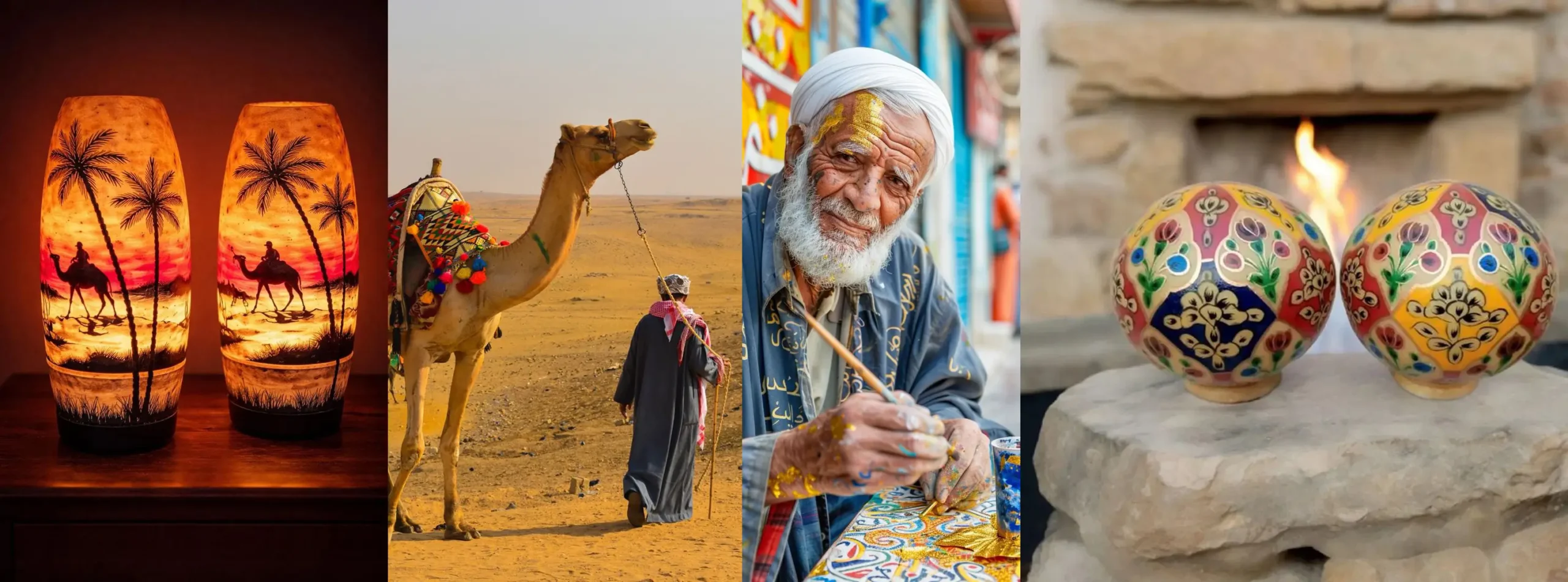
Long before electricity, before glass bulbs and modern lighting, human survival depended on simple, intelligent solutions. In the scorching deserts of southern Punjab and the ancient city of Multan, people needed light that could survive heat, travel, dust, and time. From this need emerged one of Pakistan’s most unique cultural creations: the camel skin lamp.
Today, camel skin lamps are admired as decorative art pieces, sold in galleries and exported worldwide. But their origins were not decorative. They were born from necessity, environment, and resourcefulness, shaped by desert life, spirituality, and centuries of tradition.
The Cradle of Craft and Civilization
Multan is one of the oldest living cities in the world, with a history spanning over 5,000 years. Located near the Cholistan Desert, Multan has always been a crossroads of:
- Trade caravans
- Sufi saints and scholars
- Artisans and craftsmen
- Desert nomads and settlers
The city’s extreme climate — intense heat, dry winds, and dusty nights — directly influenced the crafts developed here. Everything made in Multan had to be functional, durable, and adaptable.
Camel skin lamps are a direct outcome of this environment.
Life in the Desert and the Importance of Camels
To understand camel skin lamps, one must first understand the camel’s role in desert culture.
In Cholistan and surrounding regions, camels were not just animals — they were lifelines. They provided:
- Transportation across deserts
- Milk and meat for survival
- Leather for tools, shoes, and containers
- Skin for tents, drums, and lighting
Nothing went to waste. Using camel skin was not cruelty; it was sustainable living, practiced long before the modern concept of eco-friendliness existed.
When camels died naturally or were slaughtered for food, their skins were preserved and repurposed. One such repurpose became the camel skin lamp.
Why Camel Skin? The Material That Made It Possible
Camel skin has unique properties that made it ideal for lighting:
- Translucency – When cleaned and thinned, camel skin allows light to pass through softly
- Heat Resistance – It does not crack or burst like glass in high temperatures
- Durability – It is flexible, unbreakable, and long-lasting
- Availability – Easily accessible in desert regions
Early desert communities realized that when stretched and dried properly, camel skin produced a warm, glowing light, perfect for nights in harsh environments.
The Original Need: Why Camel Skin Lamps Were Invented
The invention of camel skin lamps was driven by four major needs:
1. Night Illumination in Extreme Heat
Oil lamps made of metal overheated. Glass lamps shattered easily. Camel skin lamps stayed cool and intact.
2. Mobility for Travelers
Caravans traveling between Multan, Sindh, Rajasthan, and Central Asia needed portable, lightweight lighting.
3. Religious and Spiritual Use
Multan’s shrines required soft, continuous light for:
- Night prayers
- Urs ceremonies
- Meditation and zikr
Harsh light was avoided; camel skin produced a calming glow.
4. Resource Efficiency
Using available camel skin reduced waste and aligned with local ethics of sustainability
Early Forms: Simple, Plain, and Functional
The earliest camel skin lamps were not decorative.
They were:
- Plain white or off-white
- Roughly shaped (round or square)
- Hung from ropes or wooden stands
- Used with oil lamps or candles inside
Their beauty came from function, not design.
Decoration came later — with cultural evolution.
The Role of Artisans
As Pakistan grew as a spiritual and cultural center, craftsmen began refining everyday objects. Slowly, camel skin lamps transitioned from tools to artifacts.
This transformation involved three traditional artisan communities:
1. Dabgar (Leather Processor)
Responsible for cleaning and preparing camel skin.
2. Kumhar (Clay & Mold Maker)
Created limestone and clay molds to shape lamps.
3. Naqash (Painter)
Hand-painted designs using natural colors.
These craftsmen worked together, passing skills from father to son for generations.
Spiritual Influence: Light as “Noor”
In Islamic and Sufi philosophy, light symbolizes divine presence (Noor).
In Pakistan, Multan, known as the “City of Saints,” embraced this symbolism deeply. Camel skin lamps began appearing in:
- Dargahs
- Khanqahs
- Mosques
- Sufi gatherings
The soft glow was considered spiritually uplifting — neither harsh nor distracting.
This spiritual association elevated the lamp’s status from a household object to a sacred artifact.
From Necessity to Identity
By the late medieval period, camel skin lamps had become part of Pakistan’s identity.
They represented:
- Desert wisdom
- Sustainable living
- Spiritual aesthetics
- Artisan collaboration
What began as survival lighting slowly turned into a cultural symbol
Why the Craft Stayed in Pakistan

Many regions had camels, but camel skin lamps remained uniquely Pakistani because:
- Pakistan had skilled Naqashi painters
- The city had a strong shrine culture
- Trade routes spread Multani crafts abroad
- Artisans specialized over centuries
This specialization prevented the craft from becoming widespread, preserving its authenticity
Attraction Even in Early Times
Travelers visiting Multan during the Mughal and pre-Mughal periods often mentioned:
- Unusual glowing lamps
- Painted skin artifacts
- Night-lit shrines with soft illumination
These lamps fascinated outsiders long before modern tourism exist
From Utility to Art: History, Naqashi Painting, and the Cultural Evolution of Camel
Camel skin lamps were born out of necessity — a practical response to desert life, heat, and darkness. But history rarely stops at survival. As societies stabilize, function transforms into expression, and that is exactly what happened in Pakistan
Multan as a Cultural Melting Pot
Multan was never an isolated city. For centuries, it stood at the intersection of:
- Central Asian trade routes
- Persian cultural influence
- Indian subcontinental craftsmanship
- Islamic spirituality
Merchants, scholars, Sufi saints, and travelers passed through Multan, leaving behind ideas, colors, symbols, and artistic sensibilities. These influences gradually shaped local crafts — including camel skin lamps.
The Shift from Plain Lamps to Decorated Forms
Initially, camel skin lamps were undecorated. However, as they began appearing in shrines and homes of affluent families, artisans started experimenting.
This shift occurred for three main reasons:
1. Spiritual Symbolism
Shrines demanded beauty. Lamps symbolized divine light, and plain surfaces felt incomplete.
2. Patronage
Wealthy families, traders, and shrine custodians commissioned decorative lamps.
3. Artisan Pride
Craftsmen sought recognition beyond utility — they wanted their work to be admired.
Thus began the transformation from functional lighting to visual storytelling.
Birth of Naqashi Art in Multan
What Is Naqashi?
Naqashi is a traditional form of hand-painting that combines:
- Floral motifs
- Geometric patterns
- Islamic symbolism
- Persian miniature influences
The word “Naqashi” literally means ornamental painting.
Ustad Abdullah Naqash: The Man Who Defined the Craft
The turning point came in 1910, when Ustad Abdullah Naqash introduced refined Naqashi techniques to camel skin lamps.
His Background
- Master painter trained in Persian and Mughal decorative styles
- Worked on mosque ceilings, shrines, and manuscripts
- Experimented with unconventional surfaces
He recognized camel skin as a living canvas — flexible, luminous, and organic.
Integration of Naqashi onto Camel Skin
Applying Naqashi to camel skin was not easy.
Camel skin:
- Absorbs paint differently than paper or wood
- Requires breathable pigments
- Changes tone when illuminated
Ustad Abdullah adapted traditional Naqashi methods using natural dyes derived from:
- Flowers
- Leaves
- Minerals
- Vegetables
This innovation made camel skin lamps both durable and visually alive when lit.
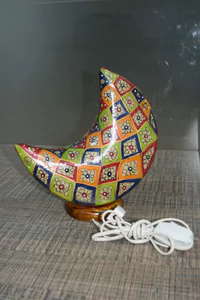
Common Naqashi Motifs on Camel Skin Lamps
Over time, certain patterns became standard:
Floral Designs
Symbolizing life, paradise, and renewal.
Creepers & Vines
Representing continuity and spiritual growth.
Geometric Borders
Inspired by Islamic architecture and mosque ceilings.
Mughal Color Palette
- Reds
- Greens
- Blues
- Earth tones
These designs reflected Multan’s architectural heritage, including shrines like:
- Shah Rukn-e-Alam
- Bahauddin Zakariya
- Shams Tabrez
Expansion During the Mughal and Colonial Periods
During the Mughal era, Multani crafts gained royal attention. Camel skin lamps were:
- Used in royal camps
- Gifted to visiting dignitaries
- Displayed during festivals
Under British colonial rule, the craft entered exhibitions and museums, attracting international curiosity.
The Rise of Artisan Families
As demand grew, camel skin lamp production became family-based.
Skills were passed down through generations:
- Father to son
- Master to apprentice
Entire neighborhoods in Multan became known for Naqashi and lamp-making.
By mid-20th century:
- Over 50 artisan families practiced the craft
- Each family had unique design signatures
Cultural Identity and Regional Pride
Camel skin lamps became a symbol of Multan, much like:
- Blue pottery
- Sohan halwa
- Sufi shrines
They were bought as:
- Wedding gifts
- Religious offerings
- Diplomatic souvenirs
Owning one was a matter of cultural pride.
Why Camel Skin Lamps Became Famous
Their fame spread because they were:
- Visually unique – no other lamp glowed the same way
- Handmade – each piece carried human touch
- Culturally rich – deeply connected to history
- Durable – unlike fragile glass lamps
- Spiritually meaningful – associated with light and peace
Travelers often carried them abroad, introducing the craft globally.
Attraction for Tourists
By the late 20th century, camel skin lamps became a tourist attraction.
Visitors to Multan:
- Watched artisans paint live
- Bought lamps as souvenirs
- Visited workshops near shrines
The lamp became both memory and artifact.
Decline and Challenges
Despite fame, the craft faced challenges:
- Industrial lighting
- Plastic decor
- Rising material costs
- Fewer apprentices
Many artisans abandoned the craft, leaving only a handful of families today.
From Skin to Light: The Complete Step-by-Step Process of Making a Camel Skin Lamp
A Craft That Cannot Be Rushed
The making of a camel skin lamp is not a single-man job and not a quick process. It is a collective craft, refined over centuries, involving patience, precision, and respect for natural materials.
Every lamp passes through multiple hands, each belonging to a specialized artisan. Even today, no machines can fully replace this process without destroying the soul of the craft.
Step 1: Sourcing the Camel Skin
Camel skin is never taken from animals killed solely for lamps.
Traditionally:
- Skins are sourced after natural death or lawful slaughter for meat
- This follows ethical, religious, and sustainable practices
The raw camel skin is thick, coarse, and unsuitable in its natural state. It must go through extensive preparation.
Step 2: Initial Washing to Remove Dirt and Impurities
Once the skin reaches the artisan:
- It is soaked in clean water
- Mud, blood, hair, and dust are removed manually
- This washing process may be repeated multiple times
At this stage, the skin still has multiple layers and an uneven texture.
Step 3: Removing the Upper Layer to Achieve White Skin
After initial cleaning:
- The outer rough layer of the camel skin is carefully removed
- This reveals a whiter, finer layer underneath
This step is critical because:
- Thick skin blocks light
- Uneven skin creates dark patches
Only experienced hands can judge how much layer to remove without tearing the skin.
Step 4: Second Washing with Detergent
Once thinned:
- The skin is washed again
- Mild detergent is used to remove oil and odor
- This ensures cleanliness and long-term durability
The skin is then rinsed thoroughly to remove any residue.
Step 5: Drying the Prepared Skin
The cleaned skin is:
- Spread under the sun
- Dried naturally, without artificial heat
Sun drying strengthens the fibers and prevents fungal growth.
At this point, the skin becomes:
- Light
- Flexible
- Semi-translucent
Preparing the Limestone Mold (Kumhar’s Work)
While the skin dries, the Kumhar (mold maker) prepares the mold.
Designing the Shape
The artisan decides:
- Shape (round, square, oval, cylindrical)
- Size
- Pattern depth
Creating the Mold
- Limestone or clay is mixed with water
- A designed mold is formed
- The mold has separate detachable parts to allow easy removal later
Step 7: Applying Limestone Paste as a Separator
Before applying camel skin:
- A thin layer of limestone paste is applied to the mold
- This acts as a separator, preventing the skin from sticking permanently
This step ensures:
- Smooth surface
- Easy breaking of mold later
Step 8: Drying the Mold
The limestone mold is:
- Left to dry naturally
- Hardened until it holds the desired lamp shape
Once dried, the mold becomes the temporary skeleton of the lamp.
Step 9: Cutting Camel Skin into Small Pieces
The prepared camel skin is then:
- Cut into small pieces
- Further sliced into fine, long layers
This allows even grinding and smooth texture.
Step 10: Grinding the Skin into Fine Paste
The sliced skin is:
- Placed into a grinder
- Ground with water to create a fine, smooth paste
This paste is:
- Free of lumps
- Even in consistency
- Ready for molding
This stage determines the lamp’s final strength.
Step 11: Applying the Paste onto the Mold
The camel skin paste is:
- Applied evenly over the limestone mold
- Spread uniformly by hand
- Thickness is carefully controlled
Uneven application can cause:
- Weak spots
- Uneven lighting
Experienced artisans ensure perfect balance.
Step 12: Sun Drying the Molded Lamp
Once coated:
- The mold is placed under the sun
- Left to dry for one to two days
Natural drying is essential. Artificial heat causes cracking.
As it dries:
- The paste hardens
- The shape becomes permanent
Step 13: Breaking the Outer Limestone Mold
After complete drying:
- The outer limestone mold is broken by hand
- This reveals the camel skin lamp shell
This is a delicate moment. Too much force can damage the lamp.
Once removed, the lamp is:
- Hollow
- Lightweight
- Fully formed
Step 14: Surface Finishing and Smoothing
The raw lamp shape is:
- Inspected for cracks or uneven edges
- Smoothed gently
- Trimmed if necessary
Only flawless shells move to the painting stage.
Step 15: Hand Painting by Naqashi Artists
Now the lamp reaches the Naqash (painter).
Painting Process:
- Designs are drawn freehand
- Natural pigments are used
- Multiple layers of color are applied
Motifs include:
- Flowers
- Leaves
- Geometric borders
- Cultural symbols
Each lamp takes several days to paint.
Step 16: Final Drying and Inspection
After painting:
- The lamp is dried again
- Colors are checked under light
- Weak spots are repaired
Only then is it ready for use.
The Result: A Living Object
When a candle or bulb is placed inside:
- Light passes gently through the skin
- Colors glow from within
- No two lamps look identical
This glow is what makes camel skin lamps unforgettable.
The Hands Behind the Light: Artisan Families, Skills, and Living Heritage of Camel Skin Lamps
Crafts Survive Through People, Not Objects
Camel skin lamps exist today not because of museums or markets, but because people refused to let the craft die. Behind every glowing lamp stands a lineage of artisans whose lives are intertwined with this heritage.
The Three Artisan Pillars of Camel Skin Lamp Making
The craft survives through three interconnected artisan roles, each dependent on the other.
1. Dabgar – The Leather Specialist
The Dabgar handles the most physically demanding stage.
Responsibilities include:
- Cleaning raw camel skin
- Removing upper layers
- Washing and deodorizing
- Preparing skin suitable for molding
This work requires:
- Strength
- Precision
- Deep understanding of leather behavior
Mistakes at this stage ruin the entire lamp.
2. Kumhar – The Mold Maker
The Kumhar is responsible for form and structure.
Tasks include:
- Designing lamp shapes
- Preparing limestone or clay molds
- Creating detachable mold parts
- Applying separator paste
The Kumhar decides:
- Size
- Thickness
- Stability
A poorly made mold leads to cracking or collapse.
3. Naqash – The Painter
The Naqash is the visual storyteller.
Responsibilities include:
- Hand-painting designs
- Mixing natural pigments
- Ensuring balance under illumination
This role demands:
- Artistic vision
- Steady hands
- Cultural knowledge
The Naqash gives the lamp its soul.
Family-Based Craft Transmission
Camel skin lamp making is not taught in schools.
Traditionally:
- Skills are passed from father to son
- Children begin observing at age 7–10
- Hands-on training begins early
Artisan homes double as workshops.
Multan’s Craft Neighborhoods

Certain areas of Multan became synonymous with this craft.
Features include:
- Small workshops
- Open courtyards for drying
- Walls lined with finished lamps
Tourists often visit these neighborhoods to see artisans at work.
Women’s Contribution to the Craft
Although men handle heavy labor, women contribute significantly:
- Preparing pigments
- Assisting in painting
- Managing finishing work
Their role is often invisible but essential.
Daily Life of a Camel Skin Lamp Artisan
Artisan life is disciplined and repetitive.
A typical day includes:
- Early morning preparation
- Sun-dependent scheduling
- Long hours of handwork
Despite skill, income remains modest.
Economic Challenges
Modern challenges include:
- Rising material costs
- Cheap factory decor
- Declining tourist footfall
Many artisans abandon the craft for labor jobs.
Decline in Artisan Families
Once:
- Over 50 families practiced the craft
Today:
- Fewer than 10 remain
This decline threatens extinction.
Pride and Identity
Despite hardship, artisans take pride in:
- Preserving heritage
- Global appreciation
- Cultural identity
Many consider their work a form of worship.
International Recognition
Camel skin lamps have appeared in:
- International craft fairs
- Museum exhibitions
- Cultural expos
Yet recognition rarely translates into stable income.
Youth and the Future
Younger generations face a dilemma:
- Continue tradition with uncertainty
- Seek modern careers
Preservation depends on:
- Fair trade
- Tourism
- Awareness
Why the World Loves Them: Fame, Attraction, Tourism, and Global Demand of Camel Skin Lamps
When Local Craft Becomes Global Fascination
Many crafts remain confined to their regions of origin. Camel skin lamps did not. What began in the deserts around Multan slowly traveled across borders, continents, and cultures.
The First Admirers: Pilgrims and Travelers
Before tourism, camel skin lamps caught the attention of:
- Pilgrims visiting Sufi shrines
- Traders passing through Multan
- Scholars and travelers
Visitors were intrigued by:
- The soft glow
- Painted skin surfaces
- Unbreakable nature
Many carried lamps back as souvenirs, spreading awareness organically.
Light That Feels Alive
Unlike glass or metal lamps:
- Camel skin diffuses light
- Colors appear warmer
- Patterns glow from within
This creates an emotional connection rather than mere illumination.
People often describe camel skin lamps as:
- Calm
- Spiritual
- Comforting
Cultural Storytelling Through Design
Each lamp tells a story:
- Floral motifs symbolize paradise
- Geometric patterns reflect balance
- Colors carry cultural meanings
Buyers feel they own a piece of history, not just décor.
Appeal to Tourists
Tourists are drawn to:
- Live artisan demonstrations
- Hand-painted uniqueness
- Cultural authenticity
Watching a lamp being painted enhances its value.
Role in Tourism Economy
Camel skin lamps contribute to:
- Craft tourism
- Cultural branding of Multan
- Artisan livelihoods
They are often featured in:
- Souvenir shops
- Cultural festivals
- Heritage exhibitions
Global Market Demand
Major buyers include:
- Europe
- Middle East
- North America
They appeal to:
- Interior designers
- Cultural collectors
- Ethical consumers
Export Recognition
Camel skin lamps have been showcased at:
- International craft fairs
- Cultural expos
- Trade exhibitions
They are admired for:
- Sustainability
- Handmade quality
- Cultural depth
Why They Stand Out in a Crowded Market
They are:
- Handmade, not factory-made
- Eco-conscious
- Rare
In an age of mass production, rarity increases value.
Modern Interior Appeal
They suit:
- Bohemian interiors
- Traditional spaces
- Modern minimalist homes
Designers use them as accent pieces.
Souvenir vs Art Piece
For some, they are souvenirs.
For others, they are collectibles.
Either way, emotional attachment remains strong.
Challenges in Global Demand
Issues include:
- Limited production
- Fragile export logistics
- Imitations
Authenticity remains key.
From Shrines to Homes: Current Uses, Modern Adaptations, and Contemporary Relevance of Camel Skin Lamps
A Traditional Craft in a Modern World
Crafts survive only when they adapt. Camel skin lamps, once limited to shrines and desert homes, have found new life in modern spaces without losing their soul. Today, they exist at the intersection of heritage and contemporary design.
This series explores how camel skin lamps are used today, how artisans have adapted designs, and why the craft still matters in the 21st century.
Continued Religious and Spiritual Use
Camel skin lamps still play an important role in spiritual spaces.
Shrines and Dargahs
They are used during:
- Urs celebrations
- Night prayers
- Religious gatherings
The soft glow aligns with spiritual calm and reflection.
Ramzan and Eid
During Ramzan:
- Lamps decorate mosques and homes
- Used in night prayers and gatherings
On Eid:
- Displayed as festive décor
- Gifted as meaningful cultural items
Domestic Use in Modern Homes
In contemporary homes, camel skin lamps are used as:
- Bedside lamps
- Table lamps
- Ambient corner lighting
- Living room accent pieces
They create:
- Warm atmosphere
- Cultural depth
- Calm environments
Interior Design Trends
Interior designers value camel skin lamps because they:
- Complement minimalist spaces
- Add warmth to modern interiors
- Blend with traditional décor
They are often paired with:
- Wooden furniture
- Neutral walls
- Handwoven textiles
Adaptation in Shapes and Sizes
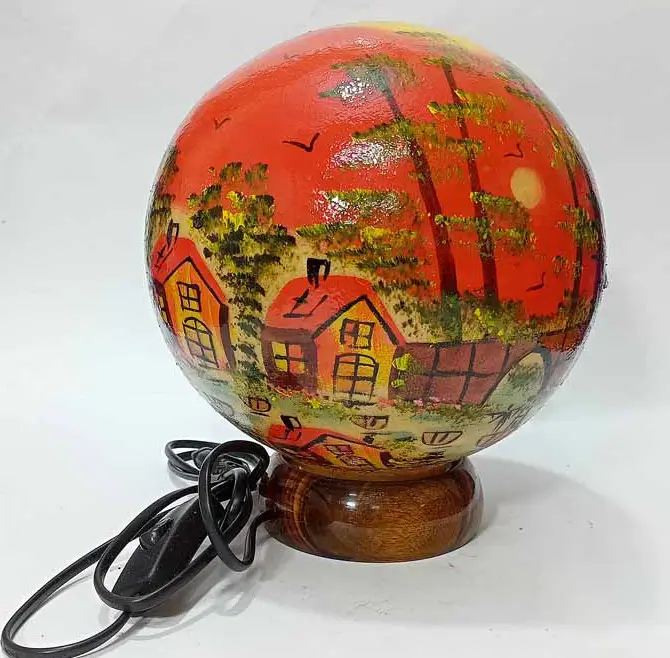
To meet modern demand, artisans now create:
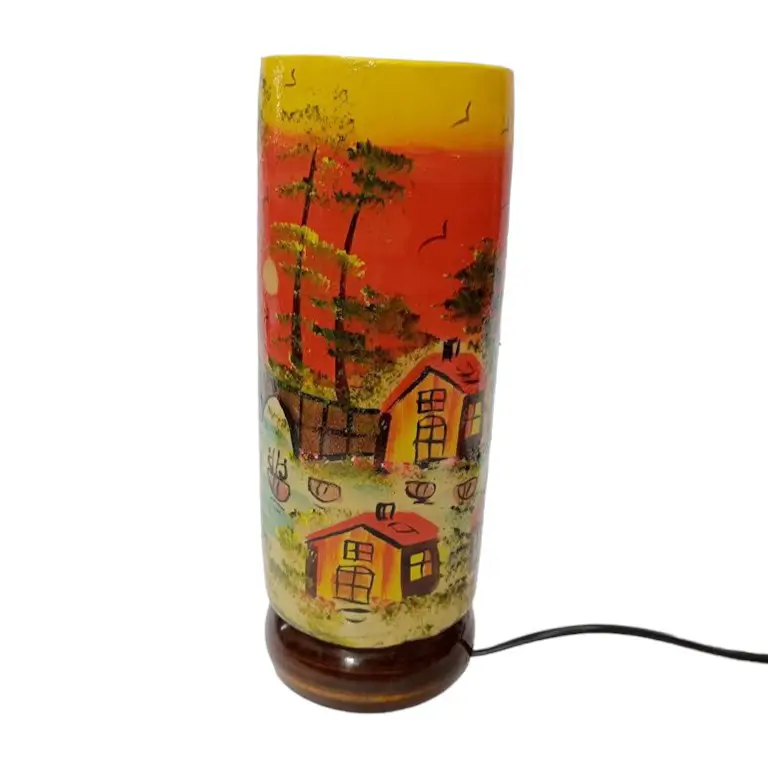
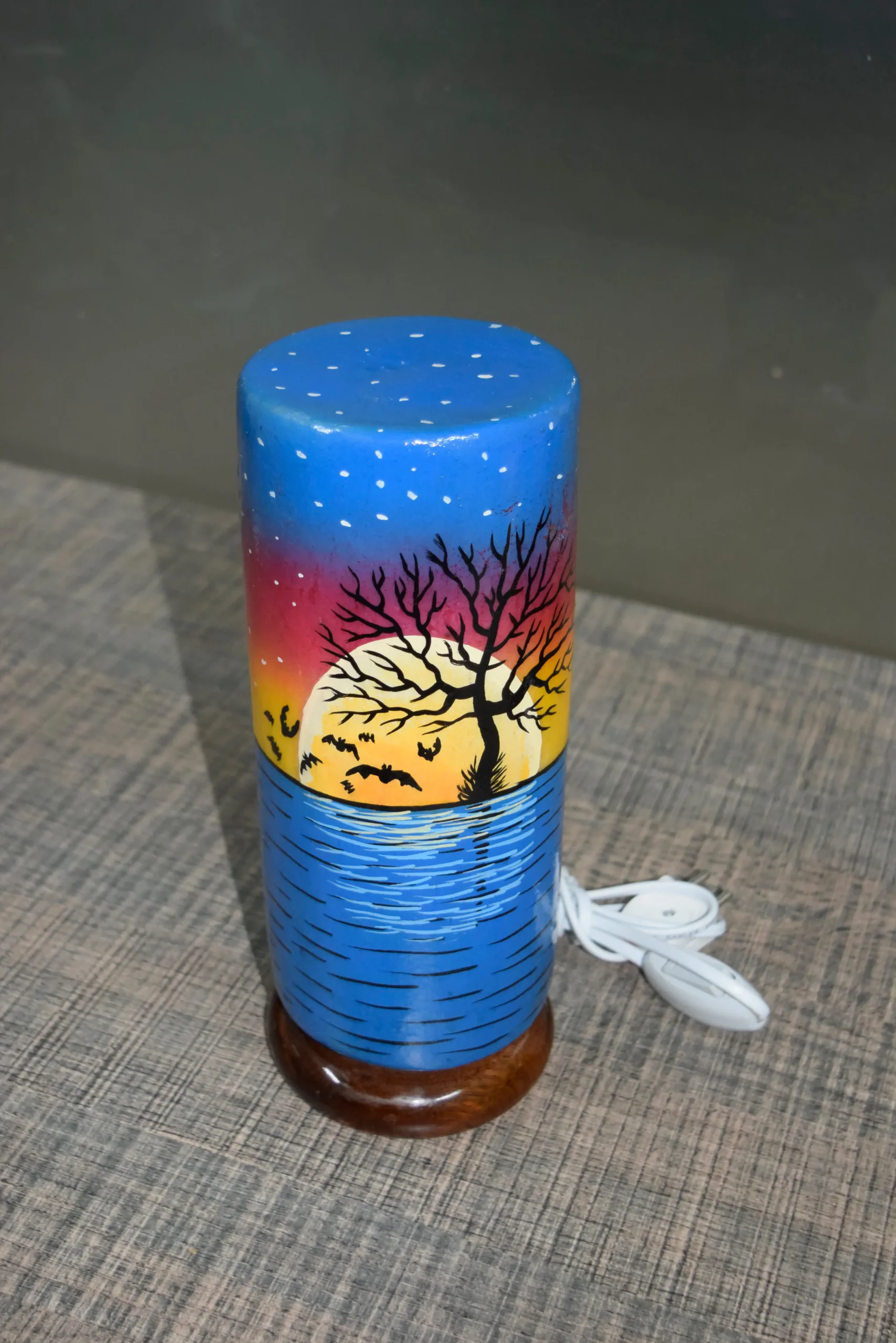
- Cylindrical lamps
- Tall floor lamps
- Small table lamps
- Custom sizes
Despite new forms, the traditional process remains unchanged.
Electric Adaptation
Originally oil-lit, lamps now support:
- Electric bulbs
- LED lighting
Artisans ensure:
- Heat-safe fittings
- Proper ventilation
This adaptation increased usability without harming authenticity.
Eco-Friendly and Sustainable Appeal
Modern consumers value sustainability.
Camel skin lamps are:
- Biodegradable
- Handmade
- Low-energy
They align with ethical consumer values.
Role in Cultural Gifting
Camel skin lamps are popular gifts for:
- Weddings
- Housewarmings
- Corporate cultural gifts
They symbolize:
- Light
- Blessings
- Heritage
Use in Hospitality Industry
Hotels and cultural resorts use them to:
- Enhance ambiance
- Showcase local heritage
- Offer authentic experiences
They are often displayed in:
- Lobbies
- Suites
- Courtyards
Educational and Cultural Institutions
Museums and universities display camel skin lamps as:
- Examples of sustainable craft
- Cultural heritage artifacts
They are used to teach:
- Traditional techniques
- Artisan economies
Challenges of Modern Adaptation
Adaptation comes with risks:
- Over-commercialization
- Loss of authenticity
- Cheaper imitations
Balancing tradition and demand is crucial.
Artisans and Innovation
Some artisans:
- Experiment with subtle modern patterns
- Use softer color palettes
- Collaborate with designers
Innovation helps survival.
Cultural Preservation Efforts
NGOs and craft councils support:
- Artisan training
- Fair pricing
- Global exposure
Yet support remains limited.

Why Camel Skin Lamps Still Matter Today
They matter because they represent:
- Human touch
- Cultural continuity
- Sustainable living
They remind us that beauty can be slow-made.
Preserving the Glow: Future, Challenges, and the Cultural Responsibility to Protect Camel Skin Lamp Craft
When a Craft Stands at the Edge of Time
Camel skin lamps have survived deserts, empires, and modernity. Yet today, they face their greatest challenge — being forgotten. The survival of this craft no longer depends on raw materials or skill alone, but on awareness, respect, and responsibility.
This final series examines the future of camel skin lamps, the threats they face, and why preserving them is not optional — it is essential.
The Fragile State of the Craft Today
Despite global admiration, camel skin lamp making is critically endangered.
Key concerns include:
- Fewer than 10 artisan families actively practicing
- Limited income opportunities
- Lack of institutional support
- Competition from cheap imitations
Without intervention, the craft risks disappearing within a generation.
Why Young Artisans Are Leaving
Younger generations hesitate to continue because:
- Income is uncertain
- Work is labor-intensive
- Social recognition is limited
Many skilled youth migrate to:
- Factory jobs
- Daily wage labor
- Overseas work
This breaks generational chains.
Loss Beyond Objects: What Disappears with the Craft
If camel skin lamps vanish, we lose:
- Centuries-old techniques
- Environmental wisdom
- Cultural storytelling
- Community identity
A lamp can be reproduced. A tradition cannot.
The Role of Tourism in Preservation
Tourism can be a lifeline.
When visitors:
- Visit workshops
- Buy directly from artisans
- Learn the story
They contribute to survival, not charity.
Government and Institutional Responsibility
Preservation requires:
- Artisan grants
- Craft schools
- Export facilitation
- Heritage recognition
Camel skin lamps deserve protection as intangible cultural heritage.
Ethical Consumer Power
Buyers play a powerful role.
Choosing:
- Handmade over mass-produced
- Authentic over imitation
- Fair trade over cheap
Creates sustainable demand.
Branding Multan Through Its Crafts
Camel skin lamps can:
- Represent Multan globally
- Strengthen cultural tourism
- Create artisan employment
They are cultural ambassadors.
The Importance of Documentation
Writing, filming, and archiving:
- Protect knowledge
- Educate future generations
- Preserve techniques
Innovation Without Compromise
The future lies in:
- Respectful adaptation
- Designer collaborations
- Modern utility with traditional soul
Change must support, not erase, heritage.
A Shared Cultural Responsibility
Preserving camel skin lamps is not only an artisan’s duty.
It belongs to:
- Citizens
- Buyers
- Institutions
- Storytellers
Culture survives when people care.
Final Reflection: More Than Light
A camel skin lamp is:
- Desert wisdom
- Artisan patience
- Spiritual symbolism
- Cultural memory
When lit, it carries centuries of human experience.
Conclusion of the Entire Series
From desert necessity to global admiration, camel skin lamps represent the intelligence of tradition. Their survival depends on conscious choices made today.
To protect them is to protect history, humanity, and light itself.
Frequently Asked Questions (FAQs) about Camel Skin Lamps
1. What are camel skin lamps?
Camel skin lamps are decorative lighting pieces handcrafted from natural camel hide. The skin is treated, shaped, and hand-painted with intricate designs, creating a warm, ambient glow when illuminated.
2. Where do camel skin lamps come from?
They are a traditional handicraft from Multan and surrounding desert regions in Pakistan, reflecting the artistry and cultural heritage of local artisans.
3. How are camel skin lamps made?
The process typically involves soaking and cleaning the camel hide, molding it over a base (often clay or wood), and hand-painting traditional motifs before assembling it with lighting components.
4. Why is camel skin used instead of other materials?
Camel skin is durable, naturally translucent, and flexible after treatment — allowing it to diffuse light beautifully and resist breakage, unlike glass or ceramic.
5. Are camel skin lamps eco-friendly?
Many craftsmen use natural, chemical-free dyes and sustainable practices, making these lamps a more eco-friendly décor option.
6. What designs are common on camel skin lamps?
Traditional patterns often include floral motifs, geometric designs, and cultural symbols inspired by local heritage and desert landscapes.
7. How long does it take to make a camel skin lamp?
Because each lamp is handcrafted and hand-painted, crafting one can take several days to complete, depending on size and detail.
8. Are these lamps fragile?
Unlike glass, camel skin lamps are relatively resilient and not easily breakable, thanks to the leather’s natural toughness.
9. Can camel skin lamps be used indoors?
Yes — they are ideal as ambient indoor lighting for living rooms, bedrooms, or decorative spaces.
10. Do camel skin lamps support artisan communities?
Purchasing these lamps often helps sustain traditional craftsmanship and local artisans, preserving a centuries-old cultural art form.