
The allure of traditional jewelry lies in its ability to transcend time, carrying the stories of craftsmanship and culture through generations. Among the most iconic silhouettes in South Asian and Central Asian adornment is the “Jhumka”—a bell-shaped earring that has evolved from a simple ritual ornament into a global fashion statement. When we discuss Big Jhumka Earrings, we are exploring a world of architectural beauty, rhythmic movement, and deep-seated heritage.
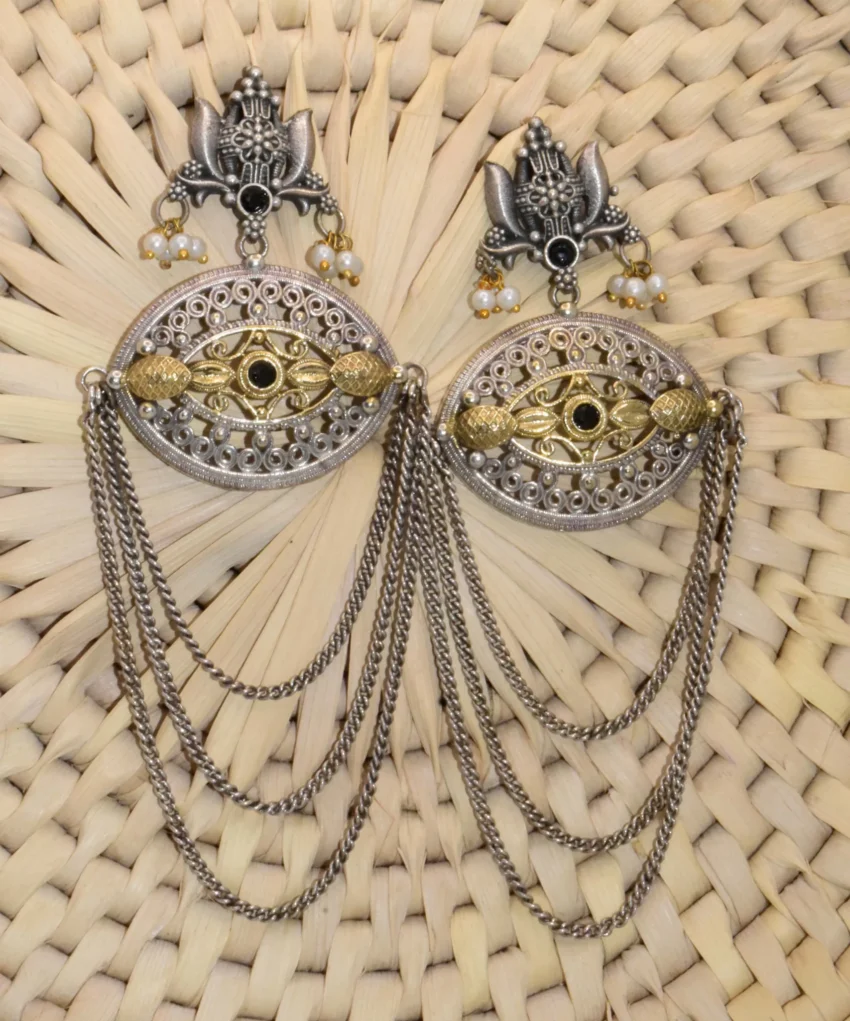
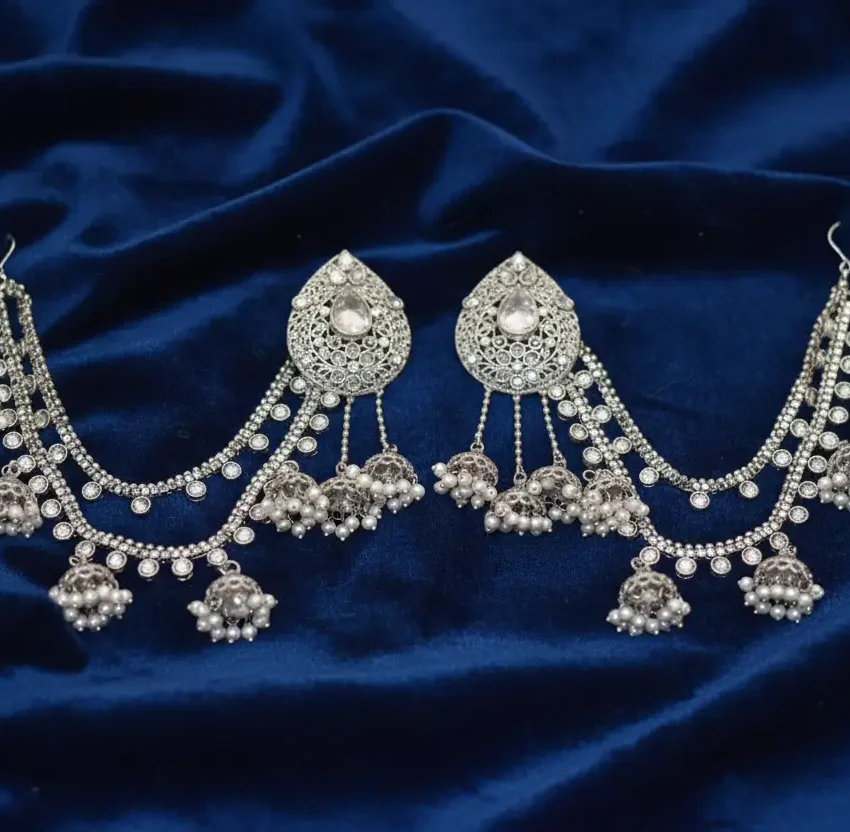
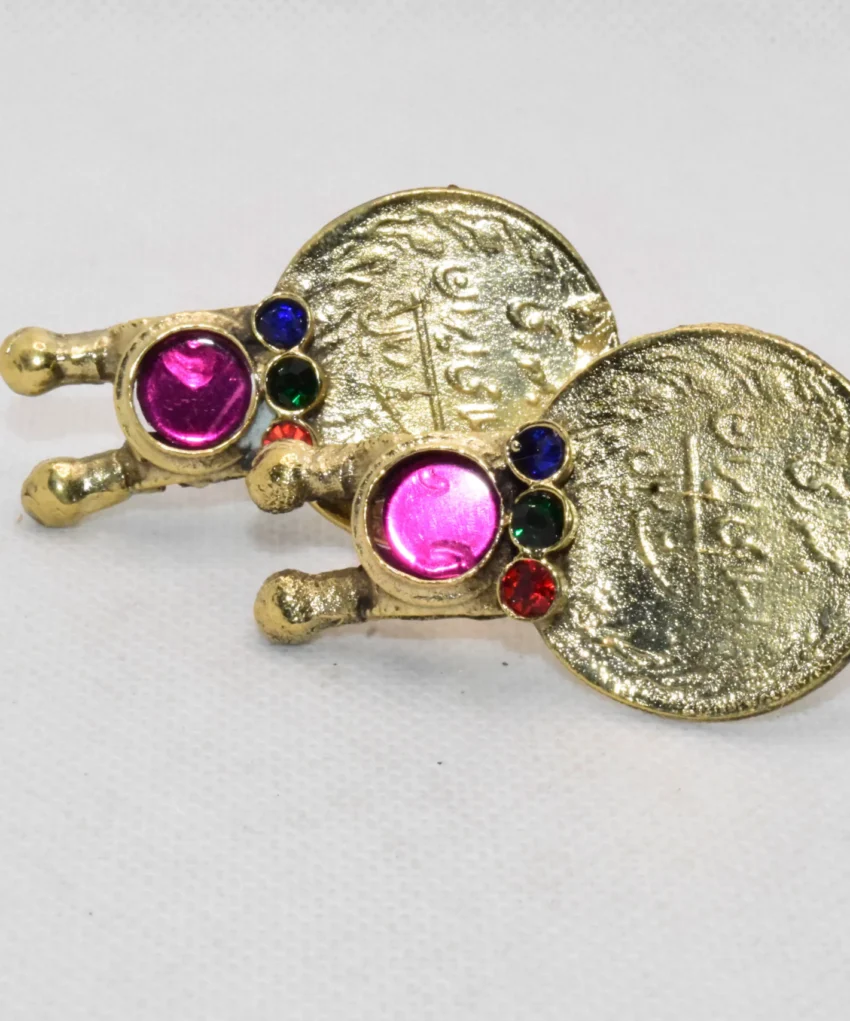
Whether they are crafted from oxidized silver, vibrant enamel, or polished gold tones, these pieces serve as the ultimate focal point for any traditional ensemble. The collection of images provided showcases a stunning array of these statement accessories, each offering a unique perspective on the nomadic and tribal aesthetics of the Silk Road.
The Architecture of the Jhumka
The quintessential feature of Big Jhumka Earrings is the hollow, bell-shaped drop that dangles from a stud or a hoop. This structure is not merely for aesthetics; it is designed to catch the light and create a gentle tinkling sound as the wearer moves. In the tribal variations seen in this collection, the “bell” often takes on a more geometric and rugged form.
For instance, one pair of earrings features a cylindrical drop rather than the traditional rounded dome. These pieces are heavily embellished with a mosaic of small, silver-toned shards and accented with marquise-cut stones in vibrant red and green. At the base of these cylinders, a dense fringe of small metallic balls—known as ghungroos—adds both visual weight and a rhythmic auditory element. This architectural approach to Big Jhumka Earrings highlights the influence of Afghan and Kuchi nomadic styles, where jewelry was often built to be substantial and protective.
Materiality and Craftsmanship
The materials used in traditional jewelry tell a story of regional availability and artisan skill. While fine jewelry often utilizes precious metals and gemstones, tribal-inspired Big Jhumka Earrings frequently rely on “German Silver” or brass alloys that have been oxidized to create a vintage, antiqued finish.
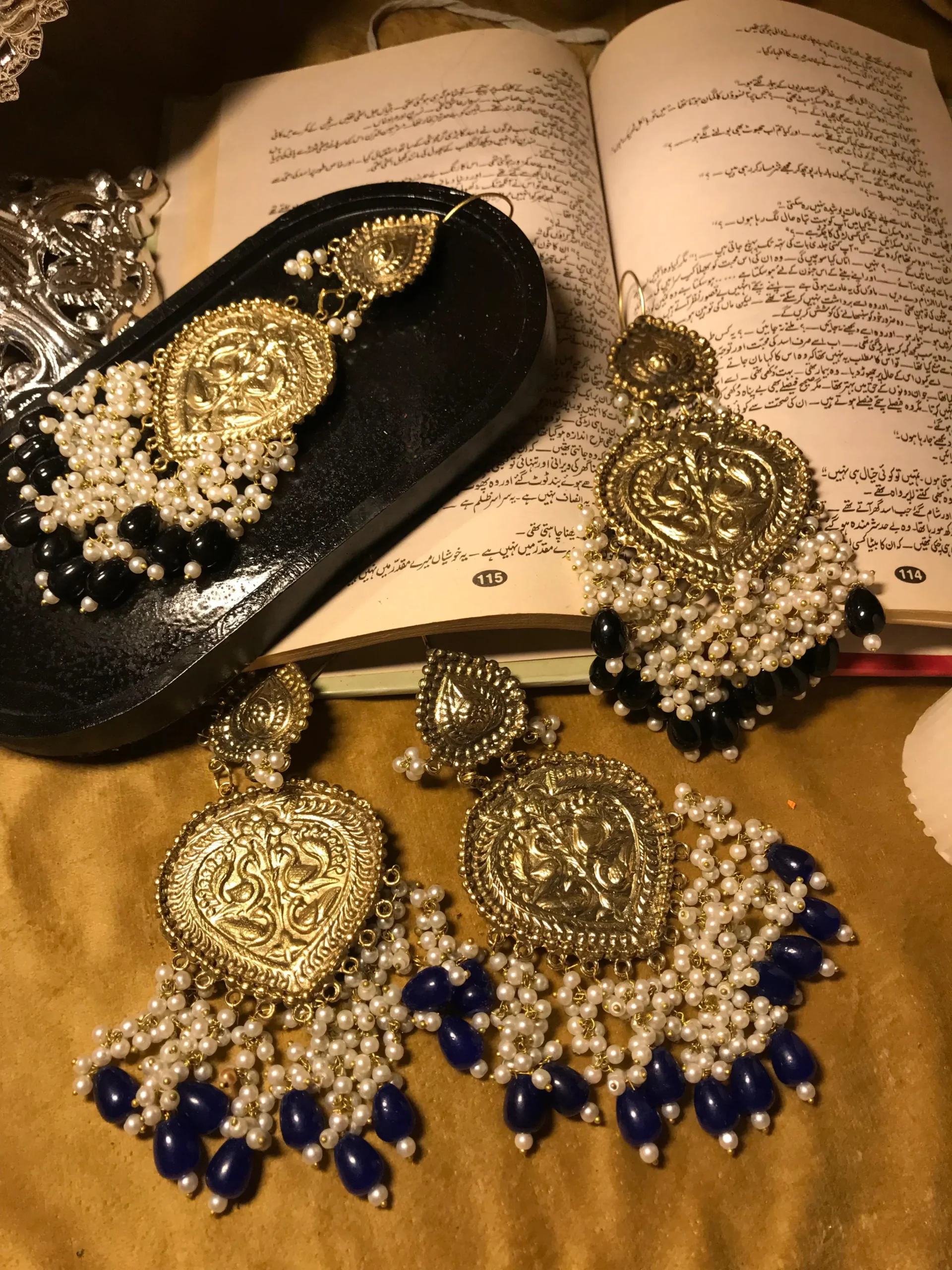
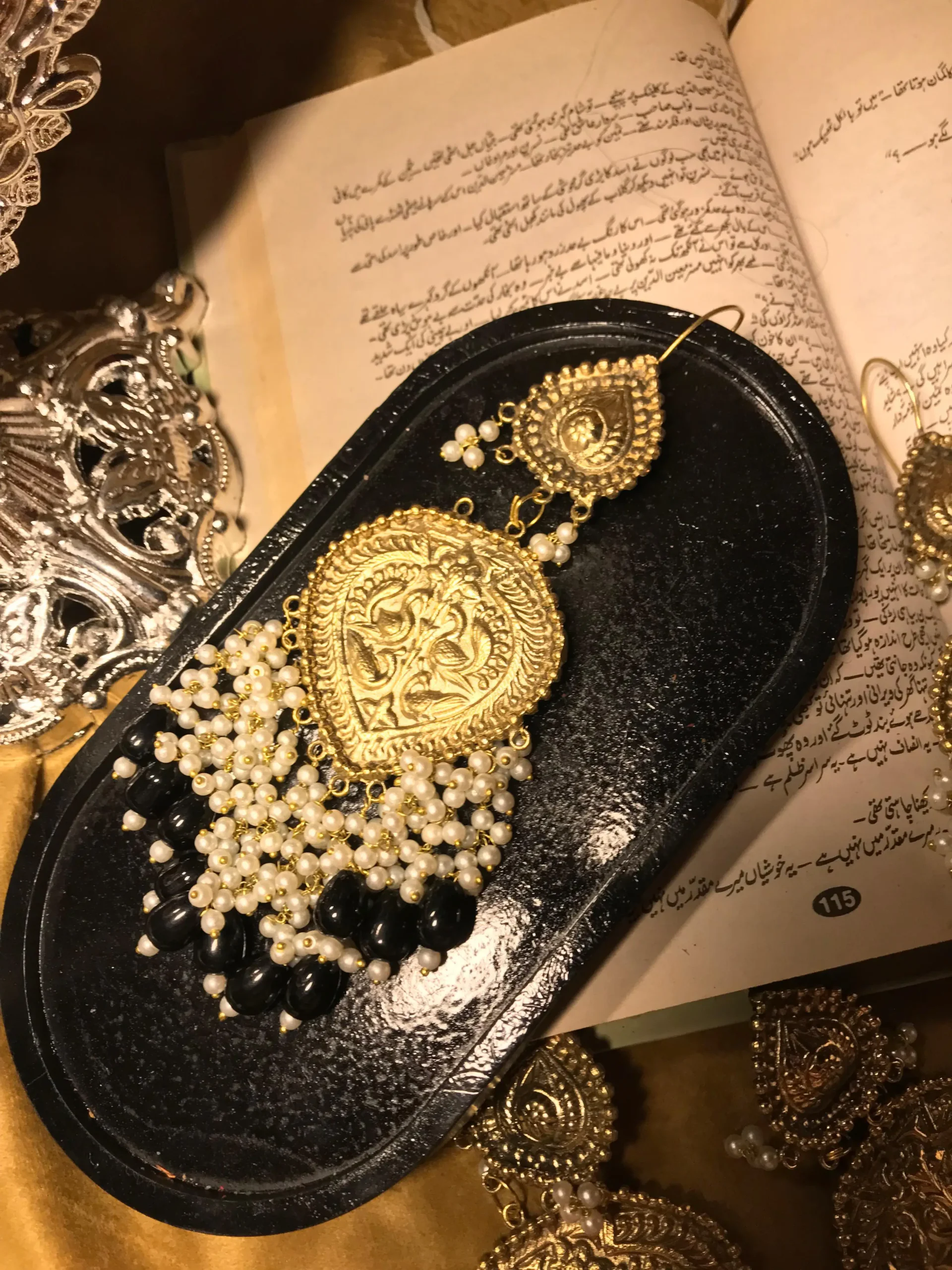
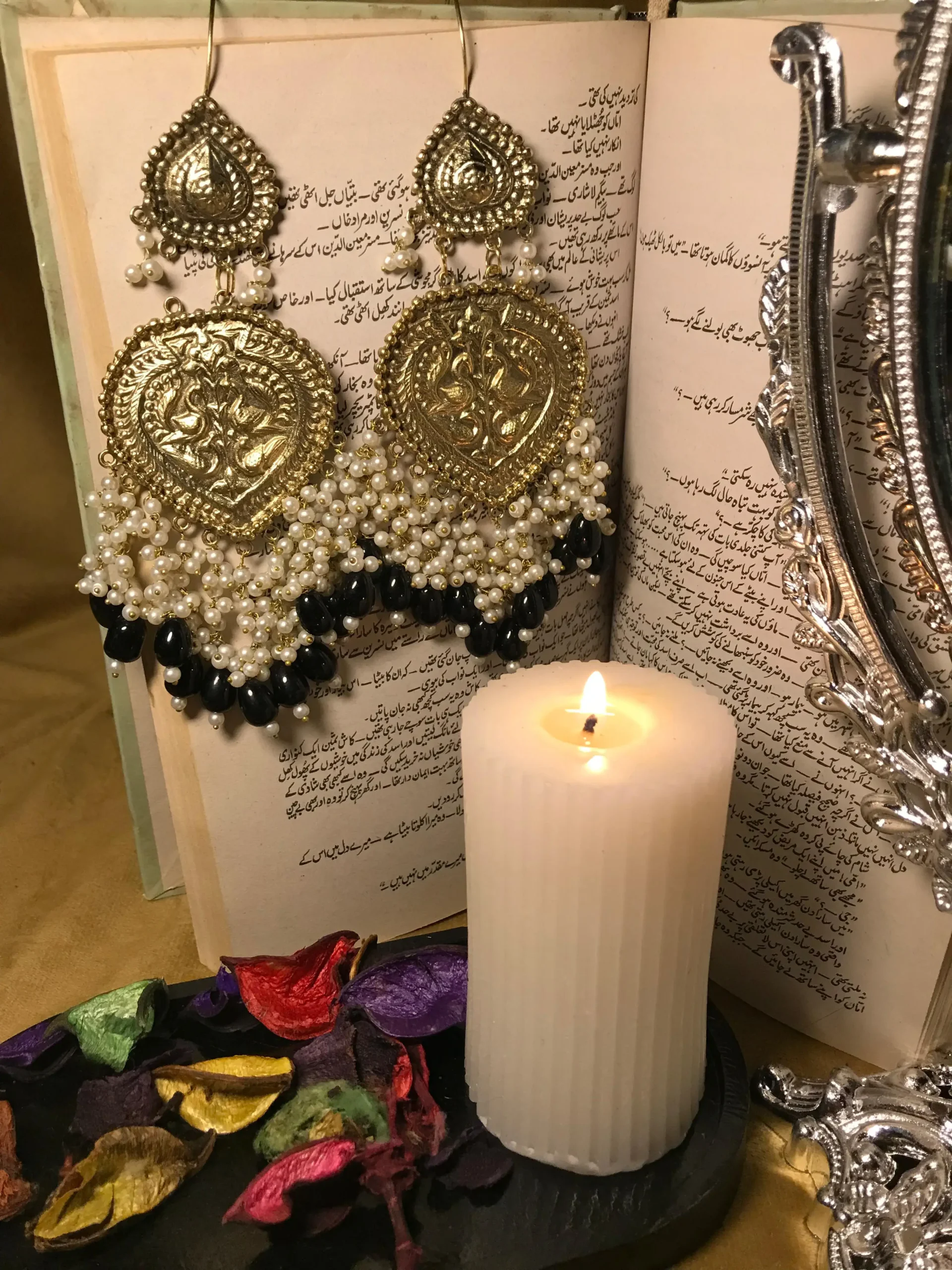
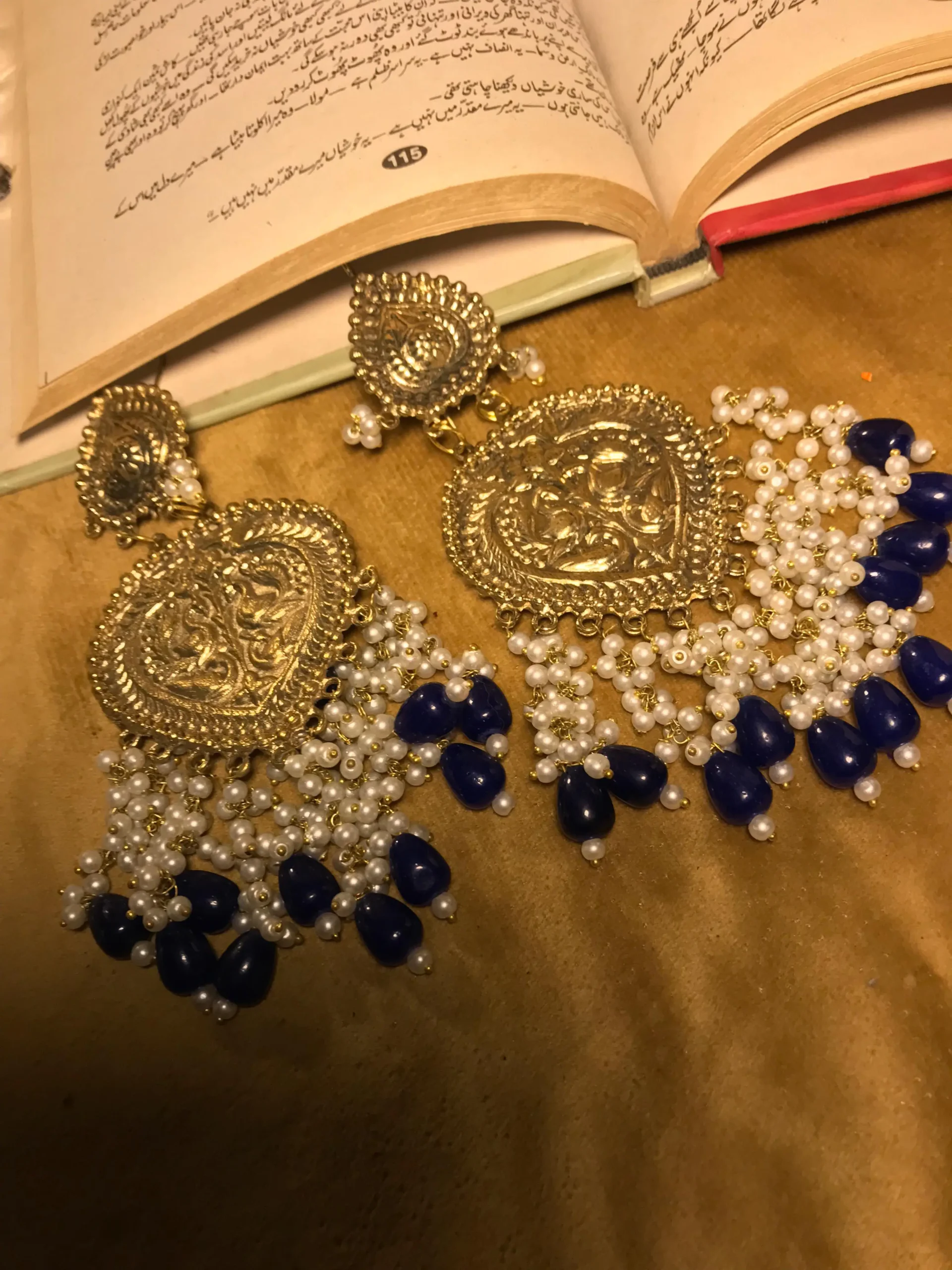
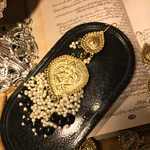
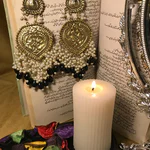
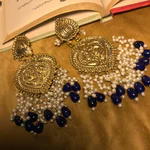
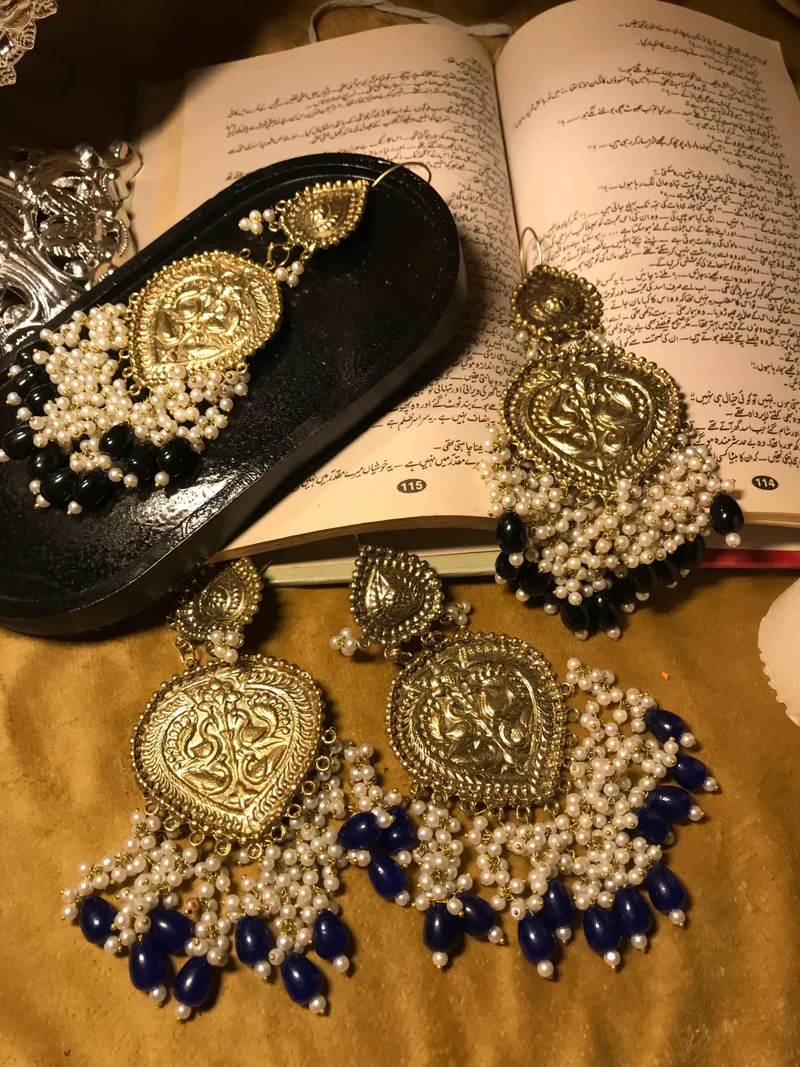
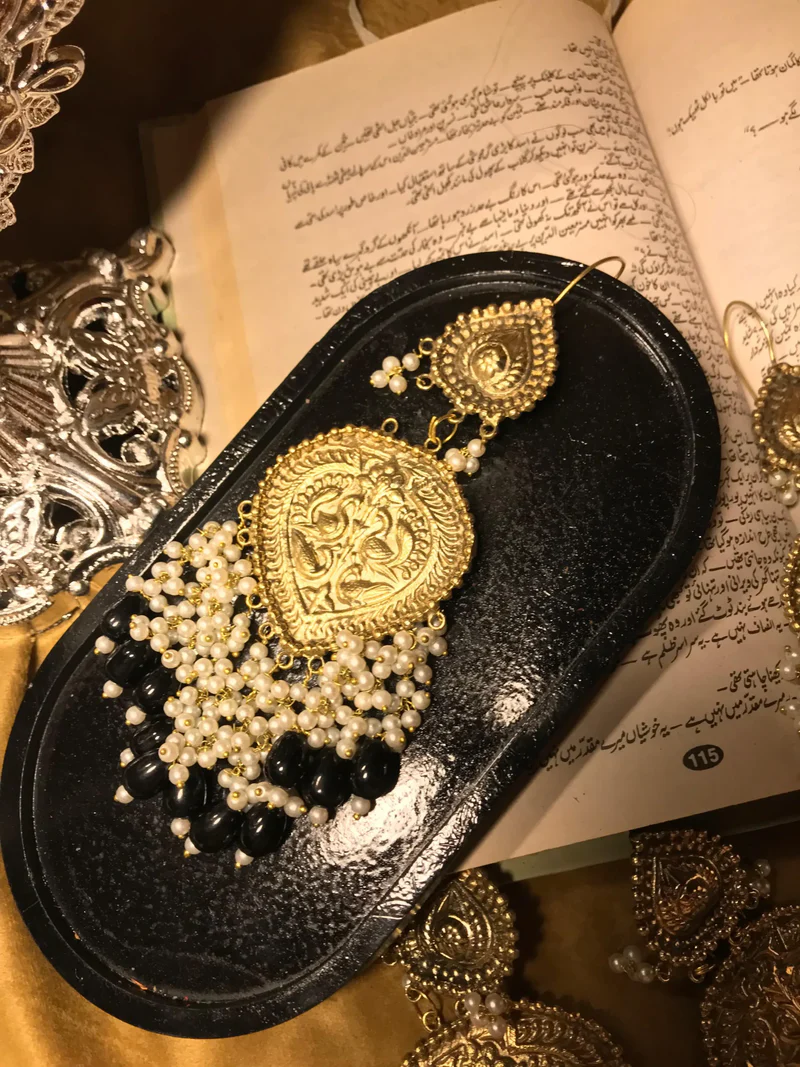
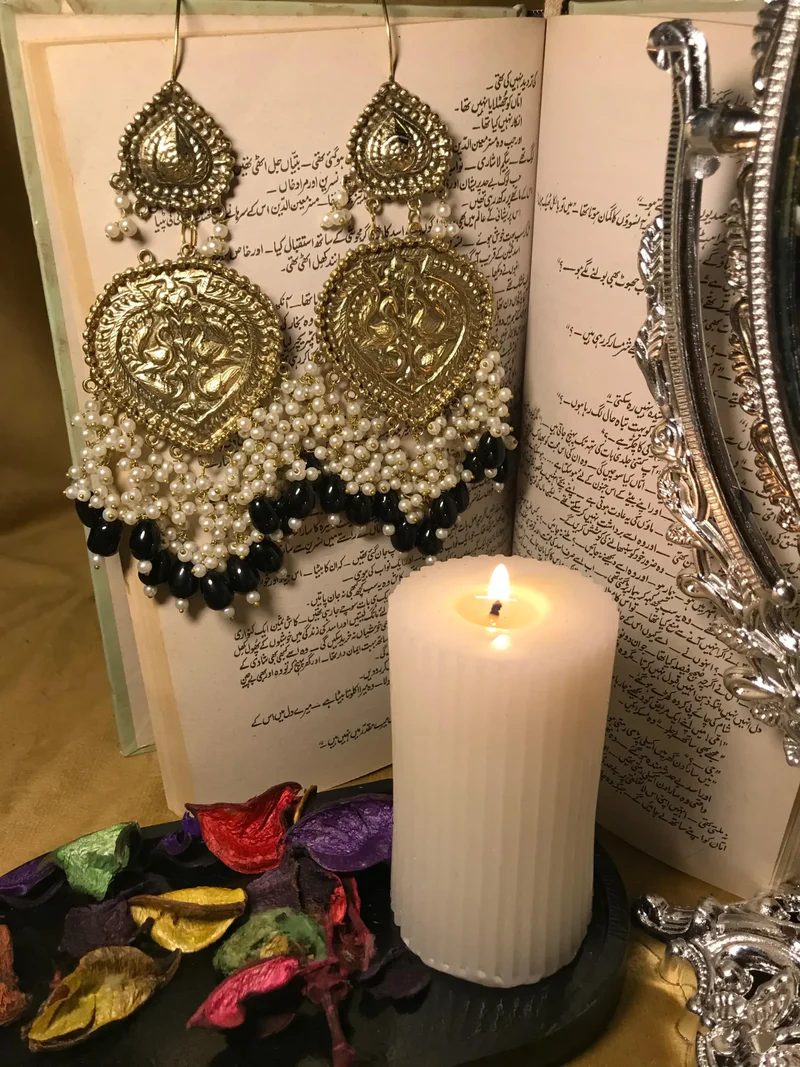
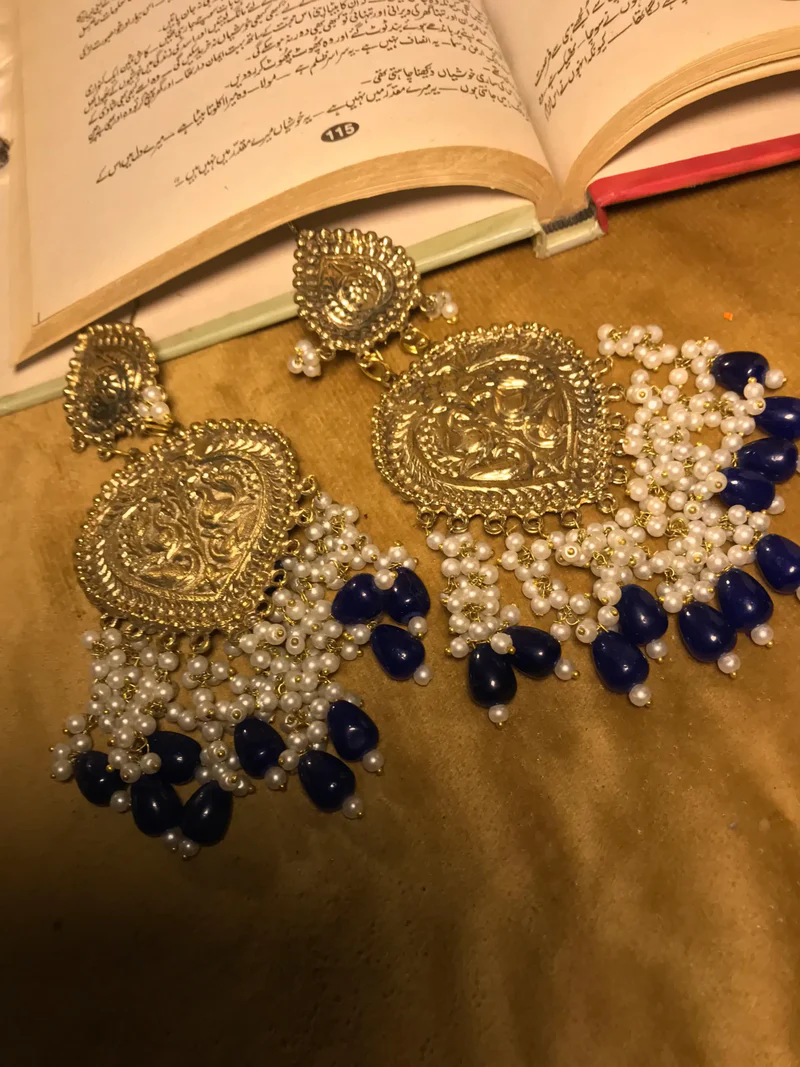
In another variation, we see a more ornate, gold-toned aesthetic that leans toward the “temple jewelry” style. These pieces feature large, heart-shaped or circular studs with high-relief embossing of floral and avian motifs. The fringe of these Big Jhumka Earrings is composed of multiple tiers of white seed pearls, finished with bold black or deep blue teardrop beads. The contrast between the polished gold metal and the delicate beadwork creates a sophisticated look that is perfect for festive occasions.
The Tribal Synergy: Necklaces and Earrings
To truly understand the impact of Big Jhumka Earrings, one must look at how they interact with other traditional pieces like the “bib” necklace. The collection features a heavy tribal necklace composed of silver-toned plates inlaid with coral-colored stones. The necklace is connected by rows of small pink beads and finished with a robust chain and hook.
When wearing a substantial piece like this tribal bib necklace, the choice of earrings is crucial. A pair of Big Jhumka Earrings provides the necessary verticality to balance the horizontal weight of the necklace. This combination is a hallmark of Himalayan and Nepalese styles, where adornment is meant to be bold and layered. The red stone inlays in the necklace often find a companion in the red stones of the earrings, creating a cohesive, curated aesthetic.
Symbolism in Design: Chand Tara and Chand Bali
While the Jhumka is a bell, other celestial motifs often share the stage in a woman’s jewelry collection. The “Chand Tara” (Moon and Star) and “Chand Bali” (Crescent Moon) are two such designs that complement the bold presence of Big Jhumka Earrings.
Chand Tara Earrings: These feature a silver-toned crescent moon cradling a five-pointed star, surrounded by delicate filigree work. The addition of pearl clusters at the bottom gives them a soft, feminine finish that contrasts with the ruggedness of tribal metalwork.
Chand Bali Earrings: These are wide, crescent-shaped hoops decorated with colorful enamel in shades of pink, green, blue, and orange. These earrings utilize vibrant colors to frame the face, offering a more playful alternative to the structured look of Big Jhumka Earrings.
The inclusion of these motifs alongside the Jhumka highlights the cultural reverence for the celestial world, where the moon and stars serve as symbols of guidance and beauty.
Styling Your Statement Jewelry
Because Big Jhumka Earrings are so visually dominant, they require a thoughtful approach to styling. In a modern context, these pieces are often used to create a “Fusion” look.
The Monochromatic Canvas: Pairing large, oxidized silver earrings with an all-black or all-white outfit allows the intricate metalwork and stone inlays to stand out without distraction.
Festive Elegance: For weddings or traditional celebrations, the gold-toned pearl-fringed earrings are the ideal choice. They pair beautifully with silk sarees or heavily embroidered lehengas.
The Modern Nomad: For a daily bohemian look, one might wear a simple Afghan coin pendant on a black cord and pair it with smaller, yet still prominent, Big Jhumka Earrings. This creates a layered, “found object” aesthetic that feels authentic and personalized.
Preservation and Heritage
Maintaining the beauty of these handcrafted treasures is essential for their longevity. Traditional jewelry, especially pieces with intricate beadwork or delicate enamel, should be kept away from moisture and harsh chemicals. Storing them in a dry, lined box—like the wooden chests seen in the background of many of these images—prevents the metal from tarnishing and the stones from becoming loose.
By investing in and wearing Big Jhumka Earrings, fashion enthusiasts are doing more than following a trend; they are participating in the preservation of an endangered art form. Each piece, from the embossed Afghan coin to the pearl-laden gold drops, represents hours of manual labor and centuries of tradition.
Conclusion: A Timeless Adornment
The “Jhumka” remains one of the most beloved silhouettes in the world of jewelry for a reason. Its ability to adapt to different materials—whether it be the rugged, cylindrical silver of the Afghan hills or the polished, pearl-decked gold of the subcontinent’s royal courts—makes it incredibly versatile.
Ultimately, Big Jhumka Earrings are a celebration of the feminine spirit—bold, rhythmic, and deeply rooted in history. They are the crowning jewel of any collection, a reminder that true style is not just about what is “in,” but about what carries a soul.
Would you like me to help you curate a specific outfit for one of these pieces, or perhaps explain the meanings behind the floral motifs embossed on the gold-toned earrings?