
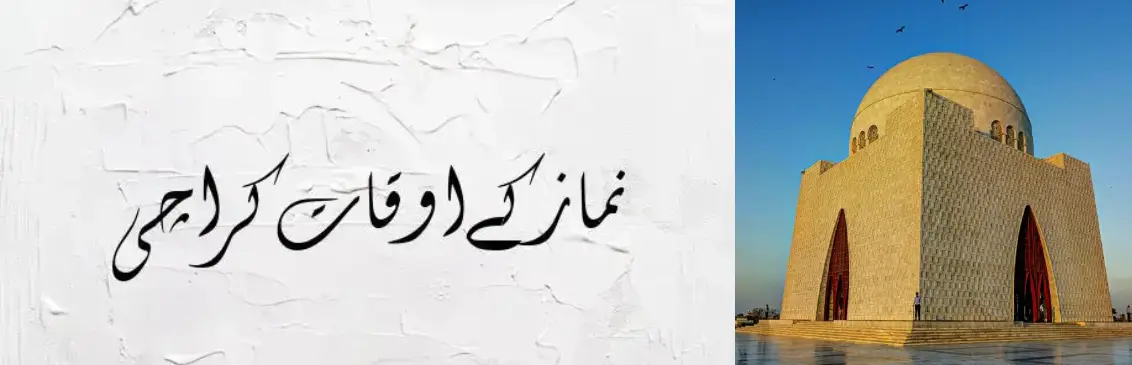
Namaz Time in Karachi
Namaz (Islamic prayer) times in Karachi change throughout the year due to astronomical, geographical, and seasonal factors, all of which are deeply connected to the movement of the sun and the Earth’s natural cycles. For the millions of Muslims living in Karachi—a coastal мегacity near the Arabian Sea—being aware of these changing prayer times is essential for maintaining daily worship, spiritual discipline, and religious identity. Understanding why and how Namaz times change not only helps believers pray on time but also highlights the harmony between Islamic worship and the natural order created by Allah.
The Central Role of Namaz in Daily Life
In Islam, five daily prayers are obligatory and must be offered within specific time windows:
- Fajr – before sunrise
- Dhuhr – after midday
- Asr – late afternoon
- Maghrib – immediately after sunset
- Isha – after nightfall
These prayers structure a Muslim’s day spiritually and practically. In Karachi, prayer times influence work schedules, school routines, business hours, mosque activities, and family life. The sound of the Azan echoing across neighborhoods—often amplified by the city’s coastal air—serves as a daily reminder of faith amid urban life.
Why Namaz Times Are Not Fixed
Unlike modern clock-based schedules, Namaz times are not constant throughout the year. They are determined by the sun’s position in the sky, which changes daily due to the Earth’s rotation, tilt, and orbit around the sun. Because of this natural movement, prayer times shift gradually—sometimes by one or two minutes each day.
Karachi’s location at approximately 24.9° North latitude plays a major role in how noticeable these changes are. While the city does not experience extreme daylight variation like regions farther north, the changes are still significant enough to affect prayer schedules throughout the year.
The Scientific Basis: Movement of the Sun
The Earth rotates on its axis once every 24 hours, causing day and night, and revolves around the sun once a year. Due to the 23.5-degree tilt of the Earth, the sun’s apparent path across the sky changes with the seasons. This directly impacts:
- Time of sunrise
- Time of sunset
- Length of twilight
- Angle of shadows
Since each prayer is linked to one of these solar phenomena, Namaz times naturally shift.
How Each Prayer Time Is Determined and Why It Changes
Fajr (Dawn Prayer)
Fajr begins at true dawn, when the first horizontal light appears in the sky before sunrise. Scientifically, this occurs when the sun is at a specific angle below the horizon.
- In summer, dawn appears earlier, making Fajr very early
- In winter, dawn appears later, delaying Fajr
In Karachi, summer Fajr times can begin well before 5:00 AM, while in winter they may start closer to sunrise. This prayer shows the greatest seasonal variation, requiring believers to adjust sleep and daily routines.
Dhuhr (Midday Prayer)
Dhuhr starts when the sun reaches its highest point in the sky, known as solar noon. This is when the sun stops moving upward and begins its descent.
- Dhuhr changes less dramatically than other prayers
- Slight shifts occur due to the Earth’s elliptical orbit and the equation of time
Because Karachi lies near the Tropic of Cancer, the sun appears almost overhead during certain times of the year, slightly affecting the exact Dhuhr timing.
Asr (Afternoon Prayer)
Asr is determined by the length of shadows cast by objects. Different Islamic schools of thought use slightly different criteria, but all rely on shadow measurement.
- As the sun’s angle changes with seasons, shadow length changes
- In summer, Asr occurs later
- In winter, Asr arrives earlier in the afternoon
This makes Asr a prayer that requires careful calculation and local accuracy.
Maghrib (Sunset Prayer)
Maghrib begins immediately at sunset, when the sun fully disappears below the horizon.
Karachi’s coastal location influences Maghrib slightly:
- The flat sea horizon allows relatively clear sunset observation
- Humidity and atmospheric refraction can affect the exact perceived moment
In summer, Maghrib is late due to longer days; in winter, it occurs much earlier, sometimes before evening traffic settles.
Isha (Night Prayer)
Isha begins when twilight completely fades and darkness sets in. This depends on how long the sun’s residual light remains in the sky.
- In summer, twilight lasts longer → Isha is late
- In winter, twilight fades quickly → Isha is earlier
This prayer, like Fajr, shows noticeable seasonal variation and is closely watched during Ramadan.
Seasonal Changes and Their Impact – Namaz Time in Karachi
Karachi experiences four general seasons, each affecting Namaz times differently:
- Summer: Long days, early Fajr, late Maghrib and Isha
- Winter: Short days, late Fajr, early Maghrib and Isha
- Spring & Autumn: Moderate, gradual shifts
These changes are gradual but continuous, requiring updated prayer timetables.
Role of the Islamic (Hijri) Calendar – Namaz Time in Karachi
The Hijri calendar is lunar and about 10–11 days shorter than the Gregorian year. This means Islamic months move through all seasons over time.
As a result:
- Ramadan may occur in extreme summer heat or cool winter days
- Fasting hours vary significantly year to year
- Prayer routines adapt to changing daylight conditions
This lunar movement reinforces why prayer times must be recalculated daily.
Karachi’s Coastal Influence
Being near the Arabian Sea gives Karachi:
- Slightly moderated temperatures
- Higher humidity
- Clearer horizons for sunrise and sunset
While these factors do not drastically alter prayer calculations, they can influence local observation, especially for Fajr and Maghrib.
Community, Mosques, and Technology
In Karachi, prayer times are announced through:
- Mosque loudspeakers
- Printed timetables
- Mobile apps and websites
- Television and radio
Mosques often follow locally accepted calculation methods to maintain unity in congregational prayer. Despite technological accuracy, many people still rely on mosque announcements to stay aligned with community practice.
Spiritual Wisdom Behind Changing Times
The changing Namaz times reflect a deeper Islamic wisdom: worship is tied to nature, not convenience. Adjusting prayer times teaches discipline, patience, and awareness of time. Whether waking early for summer Fajr or breaking fast late at Maghrib, believers are reminded that devotion adapts to Allah’s creation.
Conclusion
Namaz times in Karachi change throughout the year because they are rooted in the movement of the sun, the Earth’s seasonal cycles, and the lunar Islamic calendar. Karachi’s geographic location near the Arabian Sea further shapes these variations. By understanding why and how prayer times change, Muslims can better appreciate the balance between faith, science, and nature. These daily shifts are not an inconvenience but a reminder that Islamic worship remains dynamically connected to the natural world—guiding believers in Karachi through every season of the year with purpose and devotion.



%20times%20in%20Karachi%20change%20throughout%20the%20year%20due%20to%20astronomical,%20geographical,%20and%20seasonal%20factors,%20all%20of%20which%20are%20deeply%20connected%20to%20the%20movement%20of%20the%20sun%20and%20the%20Earth’s%20natural%20cycles.%20For%20the%20millions%20of%20Muslims%20living%20in%20%5B…%5D&media=https://nigarcraft.com.pk/wp-content/uploads/2025/08/Latest-Namaz-Time-in-Karachi.webp)
Comments are closed.