Pakistan is a land defined by its profound history, and nowhere is that legacy more vivid than in Pakistani handicrafts. Walk through any bazaar, from the bustling lanes of Karachi to the mountain villages of Gilgit, and you are immediately immersed in a riot of colour and craftsmanship. These aren’t just beautiful objects; they are tangible narratives—the Sindhi Ajrak telling tales of the Indus, the Multani Blue Pottery reflecting a Mughal-Persian heritage, and the glorious Truck Art turning highways into moving galleries.
Every thread, knot, and painted motif represents an ancient skill, passed down by ustads (masters) who are the custodians of the nation’s artistic soul. Join us on a comprehensive journey to explore this rich cultural tapestry, understand the skills behind these masterpieces, and learn how conscious patronage keeps the vibrant heart of Pakistani handicrafts beating.
The Soul of the Land – Textiles and Ceramics of Sindh & Punjab
The Pakistani handicrafts are not merely decorations; they are the vibrant, tangible narratives of a civilization stretching back to the Indus Valley. Every knot in a carpet, every block print on a shawl, and every stroke of cobalt blue on a ceramic vase is a skill passed down through generations—an unbroken link to the land’s ancient heritage. The Sindh and Punjab journey explores the textile arts of Sindh and the distinctive pottery of Multan, the ‘City of Saints,’ showcasing Pakistani handicrafts that define the country’s soul.
I. Sindh: The Living Canvas of the Indus
The province of Sindh, nourished by the mighty Indus River, is a cradle of Pakistani culture and one of the world’s oldest centres for textile arts. This Pakistani handicrafts are characterized by deep, rich colours and intricate geometric patterns that speak of tribal identity and respect for nature. The two most enduring textile legacies from this region are Ajrak and Ralli.
A. Ajrak: The Geometry of Respect
Ajrak is far more than a block-printed cloth; it is a symbol of Sindhi culture and honour. The name itself, derived from the Arabic word azrak (blue), hints at its most dominant colour, indigo.
1. The Block Printing Process
The creation of an authentic Ajrak is a labour of intense patience, involving 14 to 16 meticulous steps of washing, dyeing, and printing that can take weeks to complete.
- Natural Dyes: The characteristic colours—deep indigo blue (for the sky/universe), madder red (for the earth/fire), black (for darkness), and white (for light)—are traditionally derived from natural sources, such as indigo plants, iron compounds, and madder root.
- Resist Technique: The process is a form of resist dyeing. Pakistani Artisans apply a paste (the resist) to parts of the cloth to prevent the dye from penetrating those areas. This process is repeated for each color.
- The Wooden Blocks: The patterns are stamped using finely carved wooden blocks, with separate blocks for the background, the outlines, and the interior patterns. The motifs are deeply geometric, often featuring tiny repeating stars, borders, and interconnected patterns, some of which are believed to trace their lineage back to the motifs on ancient Indus Valley seals and pottery.
2. Cultural Significance
An Ajrak is central to Sindhi life. It is presented to honoured guests (Ajrak dena) as a gesture of respect and welcome, draped over shoulders at weddings, given on Eid, and used as a bedspread or turban. Owning an Ajrak is a clear affirmation of cultural identity.
B. Ralli Quilts: Stitching Stories and Resilience
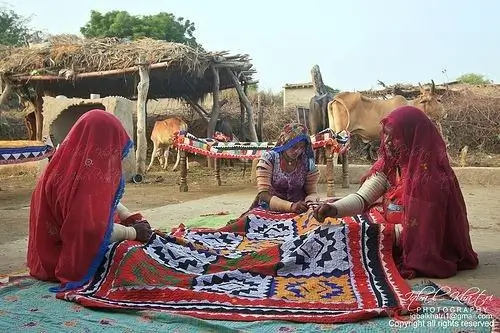
The Ralli quilt is a masterpiece of women’s handiwork, originating in the rural and desert areas of Sindh, Balochistan, and southern Punjab. The word Ralli comes from the local term ralanna, meaning to mix or connect, perfectly describing its patchwork nature.
1. The Craft of Connection (Ralli)
The Ralli is traditionally created from scraps of cotton fabric, often recycled from old shalwar kameez or other worn textiles. This act of recycling underscores the craft’s humble, sustainable origins and the resourcefulness of the women who make them.
- Three Main Styles:
- Patchwork Ralli: Made from small pieces of cloth torn into squares, triangles, or diamonds and stitched together, creating bold checkerboard and geometric patterns (Tukrin wari Ralli).
- Appliqué Ralli: Involves intricate cutting of patterns from one fabric and sewing them onto a contrasting base fabric (Tuk wari Ralli).
- Embroidered Ralli: Patterns formed primarily through stitching on a solid background.
- Symbolic Patterns: The women who create Rallis rely on their “mental portfolio” of patterns, passed from mother to daughter without the use of paper or stencils. These patterns, like the interlocking circles, cones, and stepped square motifs, are incredibly diverse and often mirror geometric designs found in ancient pottery and desert tomb carvings of the region.
2. Ralli’s Social and Cultural Role
Beyond its function as bedding, a Ralli is an essential item in a girl’s dowry and is made for special occasions like weddings and as gifts to holy men. The collective creation of Rallis brings women together, creating a space for community, shared stories, and economic empowerment in rural areas.
II. Punjab: The Artistry of Fire and Fine Grain
Punjab, the heartland of Pakistan, showcases a contrasting set of artistic skills, dominated by Pakistani Handicrafts that require precision, heat, and sophisticated surface treatments.
A. Multani Blue Pottery (Kashigari): The Cobalt Legacy
Multani Blue Pottery, or Kashigari, is a stunning example of cultural fusion. Its iconic deep cobalt blue, turquoise, and white palette is instantly recognizable.
1. A Fusion Art Form
The art’s lineage is epic, tracing its way from Kashgar in China (hence, Kashigari) through Persia to Multan, brought by artisans who accompanied Islamic conquerors like Muhammad Bin Qasim in the 8th century, and later flourishing under the Mughals.
- Architectural Heritage: This pottery is deeply connected to religious architecture, with the vibrant glazed tiles adorning the centuries-old shrines and mausoleums of Multan, such as the Mausoleum of Shah Rukn-e-Alam.
- The Process: Artisans use special river clay which is molded, filtered, and baked at high temperatures. The unique blue color is achieved using cobalt oxide, historically sourced from places like Kashan in Iran. Designs feature local flora (like mango leaves and grapes), intricate Islamic geometry, and calligraphy, all painted on a white base before the final, high-temperature glazing.
2. Status in Modern Life
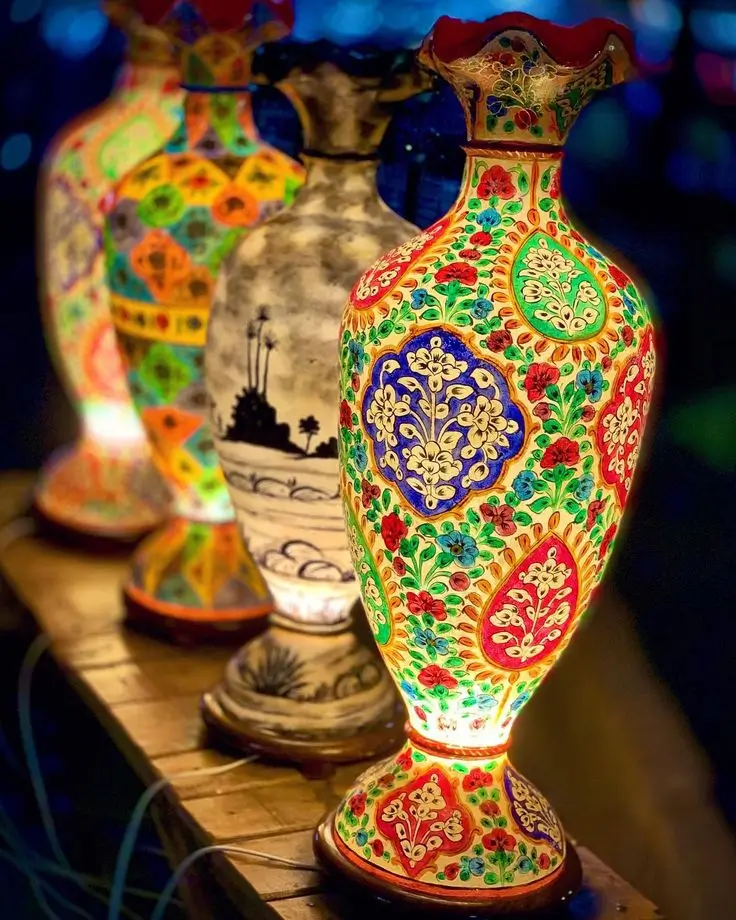
While its original grand canvas was a shrine wall, today’s Blue Pottery is adapted into highly sought-after home decor: vases, dishes, tiles, and the famous Camel Skin Lamps. Despite facing challenges from mass-produced goods, master artisans continue the painstaking hand-made process to preserve this ancient art.
B. Khussa Footwear: Walking on Tradition
Khussa are traditional, hand-stitched leather shoes, particularly popular in Punjab. They are known for their intricate embroidery and distinctive pointed or curled front.
- Meticulous Craftsmanship: The process involves multiple specialized artisans: one to cut the leather, one to stitch the sole to the upper (a process called talla), and highly skilled women who perform the intricate embroidery.
- The Embellishments: The upper part of the Khussa is a riot of colour and detail, often embellished with colourful threads, fine golden or silver wire (tilla work), beads, and tiny mirrors (sheesha). They are created in styles for both men and women, featuring traditional motifs that range from floral to geometric.
- Modern Blending: While traditionally worn with shalwar kameez, the Khussa is a powerful example of modern blending, now paired fashionably with jeans or Western attire, ensuring its cultural relevance endures.
III. Keeping the Pakistani Culture Alive
These Pakistani Handicrafts—Ajrak, Ralli, Blue Pottery, and Khussa—are the artistic backbone of Pakistan. They are cultural touchstones that carry the heritage of the entire nation in their threads, clay, and colours. When you buy these items, you are not just acquiring a beautiful object; you are directly supporting the ustads (masters) and their families, ensuring the knowledge travels to the next generation.
To explore the work of these artisans and bring a piece of this rich history into your home, you can find a curated collection of these items—from Ajrak hoodies to Multani ceramics—on various online platforms dedicated to Pakistani craft, such as the online store Nigar Craft and many others that partner directly with village makers.
The Fire, The Metal, and The Moving Canvas – From KPK’s Carving to Truck Art
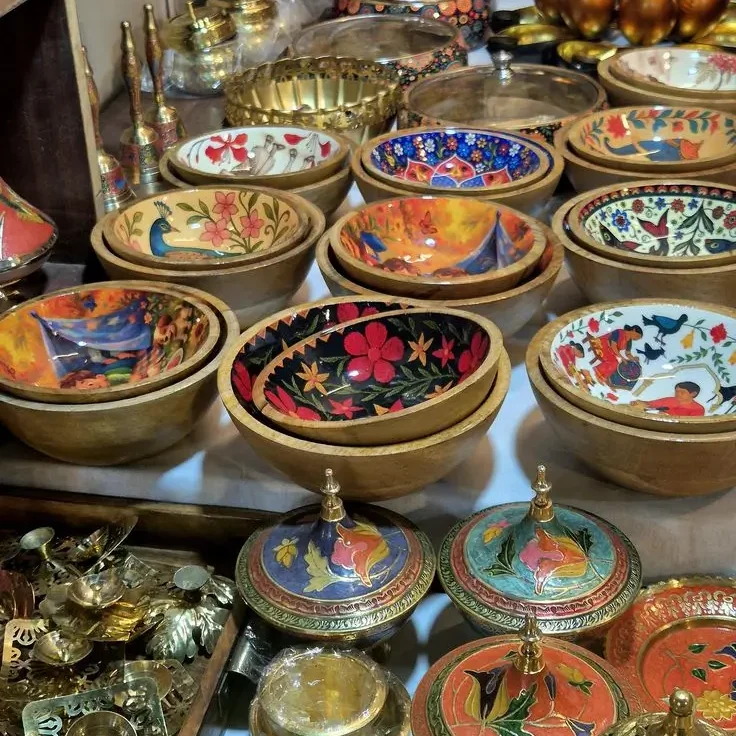
While exploring the foundational textiles and ceramics of the Indus plains, this segment journeys north to the rugged mountains of Khyber Pakhtunkhwa (KPK) and Gilgit-Baltistan (GB), focusing on the durable Pakistani handicrafts of wood, metal, and stone. Crucially, we will immerse ourselves in Pakistan’s most globally recognized Pakistani folk art: the vibrant, storytelling tradition of Truck Art.
IV. The Artistry of the North: Wood, Stone, and Metal
The northern regions, surrounded by forests and rich mineral deposits, inspire Pakistani Handicrafts that are durable, intricate, and deeply rooted in both Buddhist and Islamic architectural traditions.
A. Wood Carving: The Enduring Legacy of Chiniot and Swat
Wood carving is a sophisticated art form in Pakistan, transforming mundane furniture into heritage pieces. The craft thrives in two distinct regions: Chiniot (Punjab) and the Swat Valley (KPK).
1. The Chinioti Masterpiece
Chiniot is renowned for its furniture carving, particularly using dense woods like Sheesham (Indian Rosewood). The carving here is incredibly detailed, often featuring complex floral, vine, and rosette patterns that cover the surface. This style often incorporates elements of Mughal design, giving the pieces a grand, royal, and enduring aesthetic. The woodworkers often employ chip carving and relief carving, working line-by-line to etch patterns into the wood that make a room feel warm and special.
2. The Swati Tradition
In the Swat Valley, the tradition is ancient, influenced by the region’s history as a cradle of Gandhara Buddhist art. Today’s woodworkers, inheriting the skill of the ancient stone carvers, focus on durable, locally sourced woods like walnut and deodar. The traditional Swati style favors symmetrical, grid-like alignment of dense floral and geometric patterns, meticulously carved into residential doors, house fronts, and smaller decorative items. This art is a cultural preservation act, with artisans passing down pattern repertoires from father to son.
B. Brass and Copper Pakistani Handicrafts: Forged in Fire
Metalworking has been essential in the subcontinent since the Bronze Age. In modern Pakistan, centers like Peshawar (KPK) and Lahore (Punjab) are famed for transforming sheets of brass (a copper-zinc alloy) and copper into highly functional and decorative items.
1. Techniques of the Misgar (Metalworker)
The Pakistani artisans, known as Misgars (in Peshawar), use intensive, multi-step processes to shape the metal:
- Beating and Heating: The metal is hammered into shape, requiring multiple stages of heating to maintain malleability.
- Repoussé (Chatrai): This is a key technique where the artisan hammers the metal from the reverse side to create a low-relief design on the front.
- Engraving and Chasing: Fine tools are used on the front surface to cut lines, add texture, and sharpen the details of the designs, which often include intricate Islamic calligraphy, natural scenery, or Persian motifs.
2. The Misgaran Bazaar Legacy
The Misgaran Bazaar in Peshawar remains a primary hub where these bright, durable copper and brass bowls, trays, samovars (tea urns), and jugs are crafted and sold. Historically, copper was preferred by Muslim communities for cooking vessels (periodically re-plated with tin to prevent corrosion), while brass was used for decorative and ceremonial pieces, blending utility with powerful aesthetic appeal.
C. Stone Jewelry and HandiCrafts: The Gems of Gilgit-Baltistan
The mountainous regions of Gilgit-Baltistan (GB) are rich sources of precious and semi-precious stones. This geological wealth has fostered a tradition of exquisite stone jewelry and craftsmanship.
- Stones of the North: Pakistani Artisans in GB work with locally sourced materials like turquoise, lapis lazuli, rubies, and emeralds.
- Tribal Designs: The jewelry—including rings, bangles, and heavy necklaces—often incorporates designs inspired by local tribal styles. The stones are carefully cut, polished, and set into silver and sometimes gold, creating pieces that are worn with pride at festivals and weddings.
V. Truck Art: The Mobile Masterpiece of Pakistan
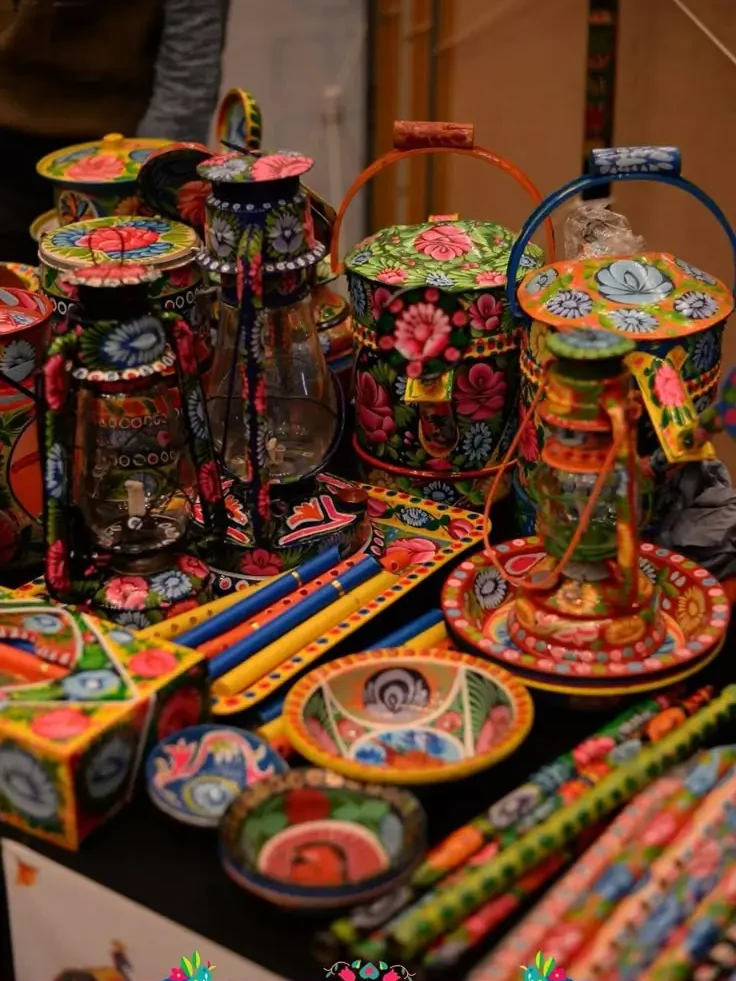
No discussion of Pakistani handicrafts is complete without the roaring, rolling masterpiece that is Truck Art. This unique, maximalist, and dynamic form of Pakistani folk art transforms transport vehicles into magnificent, highly personalized canvases, and is perhaps the most visible and globally recognized craft from Pakistan.
A. Origins and Cultural Philosophy
The tradition began simply in the 1920s as a means for drivers to identify their vehicles, but it quickly evolved into a competitive art form.
- The Driver’s Pride: For the long-haul driver, the truck is not just a job; it is their ‘home on wheels’ and often referred to as their ‘Rani’ (queen or bride). Decorating it is an expression of deep affection and a way to carry symbols of home and protection on the lonely roads.
- Talismanic Protection: Much of the elaborate decoration is protective, intended to ward off the ‘evil eye’ (nazar) or bring good fortune. Motifs include images of Sufi saints, mosques, or explicit talismanic symbols like the ‘eye’ itself.
- Mobile Narratives: The decorations are a public form of storytelling and communication, serving as mobile billboards for the driver’s personality, political leanings, regional affiliation, and beliefs. In the days before mass media, they often depicted current events or national heroes.
B. The Elements and Techniques
Truck Art is a complex fusion of several specialized crafts, making it a one of the true Pakistani handicrafts conglomerate. The total decoration can cost thousands of dollars and often requires a team of ustads (masters) specializing in different materials:
| Element | Technique & Location | Description |
| Painting | Rawalpindi and Peshawar styles; oil-based paints. | The body features large, vibrant paintings of idealized landscapes, flowers (peacocks, lions, eagles), Pakistani folk heroes, and mythical horses like Buraq. |
| Metalwork | Karachi’s Chamak Patti (shiny stickers). | Thin sheets of metal are cut, embossed, and covered with colourful vinyl stickers, creating a shiny, reflective, and textured surface. |
| Wood Carving | Typically on the large wooden hood above the cabin. | Detailed carvings often adorn the doors and the ornate wooden structure that extends the cabin, echoing the finer woodwork of Chiniot. |
| Ornamentation | Clinking Chains and Mirrors | The use of dangling chains, elaborate reflectors, and small mirrors (like a Sheesh Mahal – palace of mirrors) adds visual sparkle, movement, and a distinctive “jingle” sound as the truck moves. |
C. Blending and Commodification
The sheer vibrancy of Truck Art has elevated it from a highway phenomenon to a global cultural icon. This has led to remarkable blending with modern trends:
- Product Adaptation: The bold, cheerful aesthetic is now replicated on daily use items like phone covers, mugs, laptop skins, helmets, and stationery.
- Global Fashion: International brands and designers have been inspired by its unique colour palettes and floral patterns, using it in fashion and design.
The conversion of these designs onto smaller, accessible items like blue pottery mugs and truck art phone covers is key to their modern viability, making them readily available in physical artisan stalls and on specialized online stores like Nigar Craft, which help extend the reach of the artisans.
Preservation, Prosperity, and Patronage – Securing the Future of Pakistan’s Artisans
We have travelled across Pakistan, from the block-printed majesty of the Sindhi Ajrak and the intricate geometry of the Ralli quilt, to the fire-forged metalwork, detailed wood carving, and the roaring, mobile art of the decorated truck . Now explores why these Pakistani handicrafts are more than just aesthetically pleasing objects; they are critical carriers of national history and crucial cogs in the rural economy.
VI. Cultural Significance and The Transmission of Skill
The value of Pakistani handicrafts extends far beyond their monetary price; they embody cultural values, social rituals, and generational knowledge.
A. Objects as Cultural Narratives
Every major craft mentioned—from the Khussa footwear to the Kashmiri shawl—is embedded in daily life and celebration:
- Ajrak in Sindh is given as a symbol of profound respect and is central to tribal identity.
- The Phulkari (flower work) embroidery of Punjab, often seen on a dupatta, is an offering of joy and a prayer for a happy life at weddings.
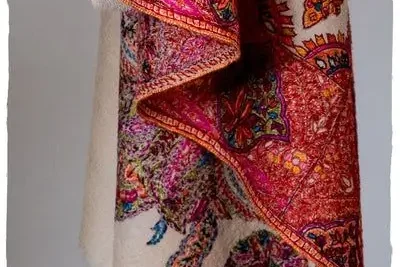
- A Pakistani handmade Kashmiri shawl, soft and warm, feels like the care and warmth of a family member during winter.
These items transform life events—Eid, weddings, festivals (mehndi)—into tangible, memory-rich experiences. They are not merely purchased goods; they are gifts of rozi (sustenance) to the maker and an exchange of values between people.
B. The Ustad and the Apprentice: Generational Knowledge
The continuity of these diverse Pakistani Handicrafts is ensured through a traditional, highly personal system of education:
- Ustad-Shagird System: The master Pakistani artisan (ustad) teaches the apprentice (shagird) over many years, often within the same family. This ensures the meticulous, non-standardized techniques—such as the specific knotting method for a Balochi carpet or the preparation of natural dyes for Ajrak—are passed down accurately and organically.
- Regional Specialization: Entire families and villages specialize in one craft (e.g., Multan for pottery, Chiniot for carving), leading to a high degree of perfection and a distinct regional style that enriches the national art portfolio.
VII. Blending Tradition with Modern Trends
To survive the modern economic landscape, where mass-produced goods dominate, Pakistani artisans and designers are skillfully adapting traditional techniques and aesthetics for contemporary use. This blending ensures the Pakistani Handicrafts remain cool, relevant, and commercially viable.
A. Adaptations for the Modern Consumer
The application of traditional motifs to new forms creates synergy between the past and the present:
| Traditional Craft | Modern Adaptation | Why it Works |
| Ajrak Block Printing | Hoodies, tote bags, bedsheets, and contemporary fashion accessories. | Transfers the iconic, rich patterns onto daily-wear fabrics, appealing to a younger, fashion-conscious demographic. |
| Truck Art Motifs | Phone covers, keychains, notebooks, and small furniture. | Takes the bold, maximalist aesthetic and applies it to small, globally popular consumer items. |
| Multani Blue Pottery | Espresso mugs, coasters, plant pots, wall art. | Converts large decorative ceramics into small, functional home décor items suitable for apartment living. |
| Khussa Footwear | Khussa with subtle embroidery, paired with jeans or office wear. | Maintains comfort and leather quality but offers streamlined, modern embroidery that integrates into Western and casual clothing. |
B. Sustainability and Longevity
Many traditional Pakistani Handicrafts inherently align with modern demands for sustainability:
- They utilize natural materials (wood, cotton, camel bone, wool).
- They often employ natural dyes (Ajrak).
- Pakistani Handmade items are durable and long-lasting, directly opposing the ‘fast fashion’ culture and disposable nature of machine-made goods.
VIII. Challenges and The Call for Preservation
Despite their cultural richness, these Pakistani handicrafts face significant economic and social threats that require dedicated national and global patronage.
A. Threats to Survival
- Industrial Competition: Cheap, mass-produced replicas and low-quality synthetic goods undercut the market, forcing artisans to lower their prices to unsustainable levels.
- Decline of Skilled Artisans: The low wages and unstable income generated by selling Pakistani handicrafts discourage younger generations from taking up the lengthy shagird (apprenticeship) required to master the trade. They seek more secure employment, leading to a break in the generational chain of knowledge.
- Market Access and Fair Pricing: Many village-level Pakistani artisans lack direct access to urban or international markets, forcing them to sell through exploitative middlemen who capture the majority of the profit.
B. Preservation and Promotion Efforts
To combat these threats, several initiatives are in place:
- NGOs and Foundations: Organizations like the Indus Crafts Foundation (ICF) and various government-backed craft councils work to train village makers, secure fair wages, and connect them directly to reliable markets.
- Cultural Hubs: Institutions like the Lok Virsa Museum Shop in Islamabad act as curated platforms, guaranteeing the authenticity and fair pricing of crafts from across all regions, including Gilgit-Baltistan and Balochistan.
- Online Marketplaces: Digital platforms are revolutionizing market access. Stores like Nigar Craft and other online vendors specialize in connecting Pakistani artisans—who might live in remote areas—directly with buyers in major cities and internationally. These platforms often emphasize the story behind the product and ensure transparency regarding material sourcing and fair compensation for the ustads.
IX. Guide to Authentic Patronage
To truly honour Pakistan’s cultural heritage and empower its artisans, conscious buying is essential.
A. Quick Buying Tips
- Ask Who Made It: Inquire about the Pakistani artisan or the collective that produced the item. A genuine seller should know the provenance.
- Verify Materials: Ask specifically if natural or synthetic dyes/materials were used, especially for textiles like Ajrak and Ralli.
- Prioritize Fair Prices: Resist the urge for ‘very cheap’ crafts. A reasonable price ensures the artisan is paid fairly for their immense skill and time.
- Buy from Trusted Channels: For gifts, the safest bets are museum shops (like Lok Virsa), NGO platforms (like ICF), or reputable online stores that focus on artisan welfare, such as those that feature collections from regions like Sindh and KPK, including Nigar Craft.
B. Where to Connect
| Type of Outlet | Example | Best For |
| Online Marketplace | Nigar Craft, ArtCraft.pk | Convenience, customisation, and reaching remote artisans. |
| Museum Shop | Lok Virsa Museum Shop, Islamabad | Authenticity, curated selection, and high quality. |
| Traditional Bazaar | Anarkali Bazaar (Lahore), Zainab Market (Karachi) | The sensory experience of discovery and bargaining for metalwork, textiles, and wood crafts. |
| Paksitani Artisan Village | Art & Craft Village, Shakarparian (Islamabad) | Direct interaction with the artisan and custom work. |
The act of choosing Pakistani handmade is an affirmation of Pakistani culture. It is a commitment to the people who keep these ancient skills alive. By supporting the production of Multani Blue Pottery, the stitching of a Ralli quilt, or the vibrant painting on a truck, we ensure that the colours, stories, and the immense soul of Pakistan continue to enrich the world.
Conclusion: The Living Legacy of Pakistan and Pakistani Handicrafts
The journey through Pakistani handicrafts reveals an artistic landscape as diverse and resilient as the land itself. From the indigo-dyed patterns of the Sindhi Ajrak that connect us to the Indus Valley Civilization, and the resourceful patchwork of the Ralli quilt, to the intricate Kashigari of Multan and the flamboyant, mobile narratives of Truck Art—each craft is a living, breathing testament to an unbroken chain of generational skill.
These creations are not stagnant relics; they are dynamic forms of Pakistani cultural currency. They have adapted gracefully, blending traditional motifs onto modern items like phone covers and contemporary apparel, securing their place in the 21st-century home and wardrobe. Yet, the masters, the ustads, who perpetuate this heritage face continuous threats from industrialization and unfair market practices.
The future of these traditions—the durability of Chinioti wood carving, the elegance of Kashmiri embroidery, and the vibrancy of the Khussa—rests squarely on conscious patronage. By seeking out authentic items, whether in the bustling lanes of Anarkali Bazaar or through ethical online platforms like Nigar Craft, you do more than decorate a space; you provide rozi (sustenance) to an Pakistani artisan and become a vital link in the preservation of Pakistan’s rich, colourful soul. To choose Pakistani handmade is to invest in history, to celebrate skill, and to keep the stories of the land alive.
FAQs – Pakistani Handicrafts: The True Colors of Culture
- What are Pakistani handicrafts and why are they culturally important?
Pakistani handicrafts are handcrafted art forms—like textiles, pottery, leatherwork, and metalwork—that reflect centuries of tradition, cultural narratives, and regional identities across Pakistan. - Which traditional textiles are iconic in Pakistani handicrafts?
Iconic textiles include Sindhi Ajrak, known for its deep indigo and geometric patterns, and Ralli quilts, which are colorful patchwork quilts traditionally made by women artisans. - What is Ajrak and what does it represent in Sindhi culture?
Ajrak is a block-printed cotton cloth with indigo, red, black, and white motifs, symbolizing respect, identity, and heritage; it’s often presented as a gift on special occasions. - What makes Ralli quilts special in Pakistani handicrafts?
Ralli quilts are handmade patchwork textiles, usually created from recycled fabric scraps, reflecting geometric designs and community traditions passed down through generations. - Where does the famous Multani blue pottery come from and what are its features?
Multani blue pottery originates from Multan and is known for striking cobalt blue, turquoise, and white glazes featuring floral and geometric motifs inspired by centuries-old artistic exchanges. - What is Khussa footwear and why is it significant in Pakistani handicrafts?
Khussa is traditional handcrafted leather footwear from Punjab and Sindh, known for intricate embroidery and embellishments, symbolizing ethnic pride and artisanal skill. - How does Truck Art reflect Pakistan’s cultural identity?
Truck Art is a mobile folk art form where trucks are ornately painted with vibrant patterns, calligraphy, and symbols representing personal stories, protection motifs, and regional pride. - What materials do Pakistani artisans use for metal and wood handicrafts?
Craftspeople work with brass, copper, and wood (like Sheesham and walnut) to create decorative metal trays, engraved copperware, and intricately carved furniture, each reflecting regional styles. - How do Pakistani handicrafts contribute to local economies today?
Handicrafts support rural livelihoods by preserving traditional skills and providing income through marketplaces, bazaars, and online platforms that connect artisans with national and international customers. - How can people ensure they are buying authentic Pakistani handicrafts?
To support genuine artisans, buyers should verify craftsmanship origin, choose natural or traditional materials, and buy from trusted sources like curated bazaars, cultural hubs, or ethical online marketplaces.