
The world of South Asian jewelry is a rich tapestry woven with threads of history, religion, and nomadic tradition. Among the most cherished designs is the “Chand Tara,” or Moon and Star motif, which holds deep cultural and national significance. In the collection of images provided, we see a masterful display of this heritage, ranging from heavy tribal necklaces to the delicate and symbolic Chand Tara Earrings Pakistan. These pieces are not merely accessories; they are artifacts that tell the story of the Silk Road and the artisanal hands that kept these traditions alive through generations.
The Symbolism of the Moon and Star
The “Chand Tara” is perhaps the most recognizable symbol in the region, representing light, guidance, and the divine. In Pakistan, this motif is more than a decorative element—it is a central part of the national identity, mirrored in the country’s flag and architectural history. When artisans craft Chand Tara Earrings Pakistan, they are tapping into a design language that has been refined over centuries in the workshops of Lahore, Peshawar, and the remote mountain valleys of the North.
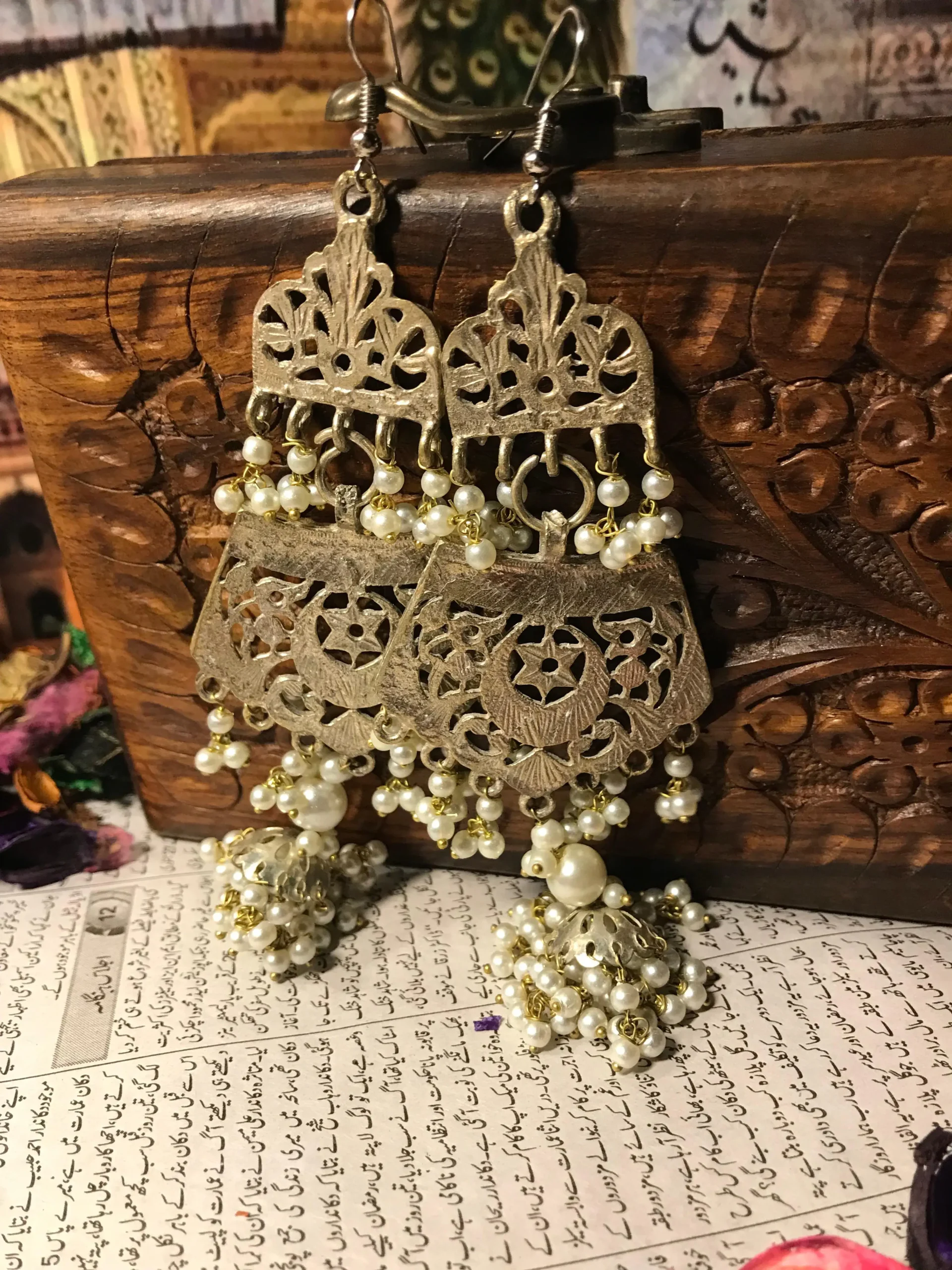
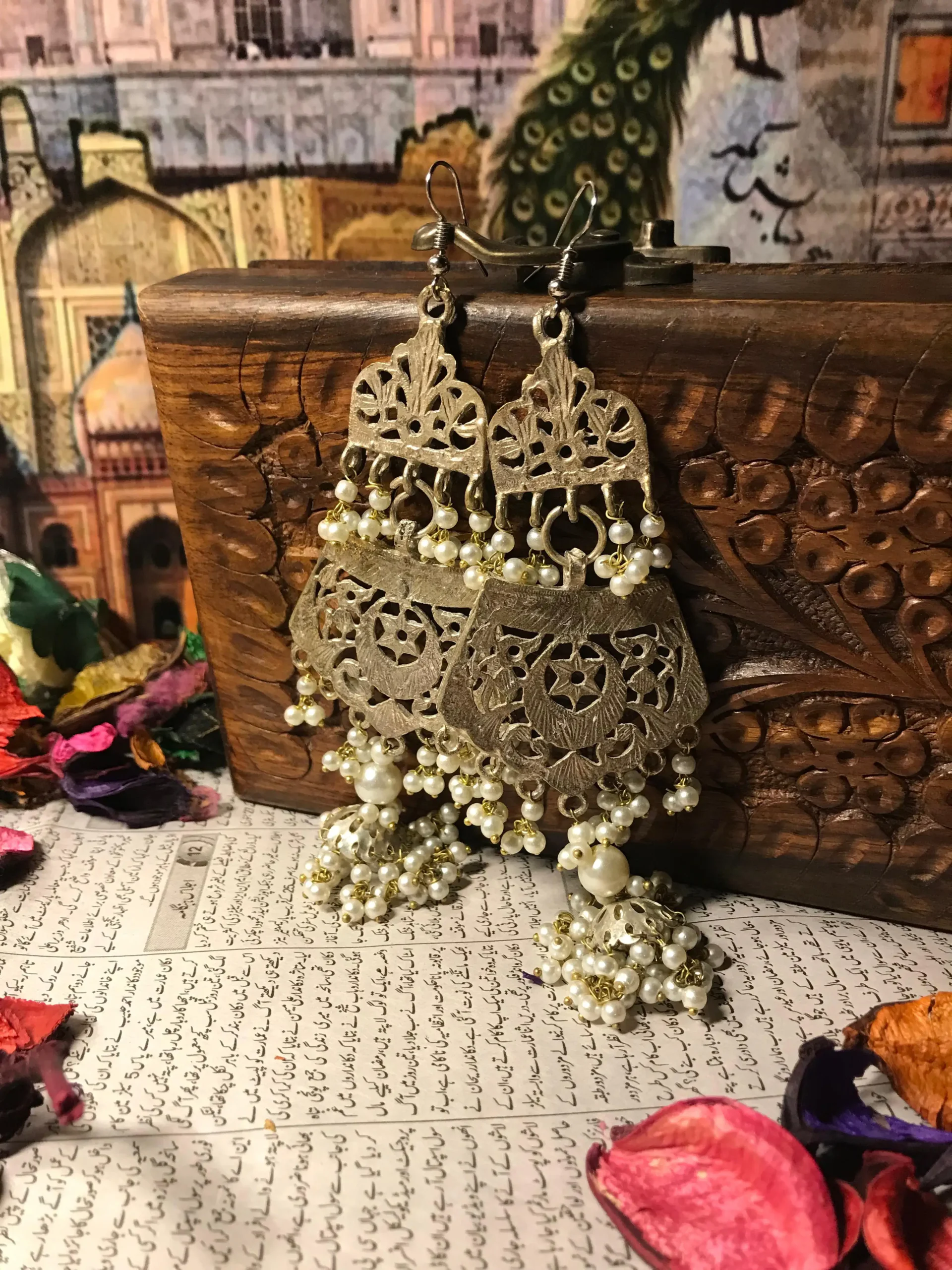
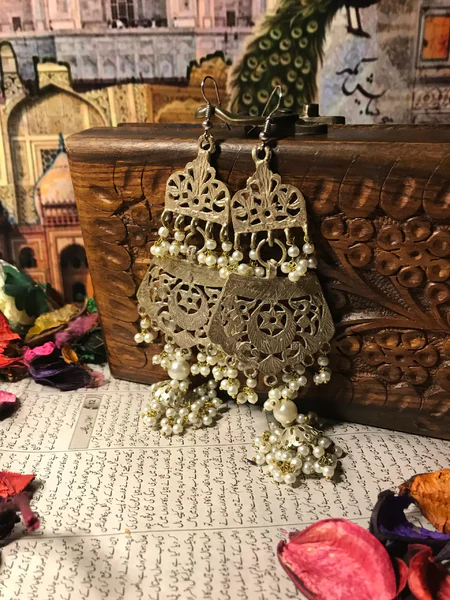
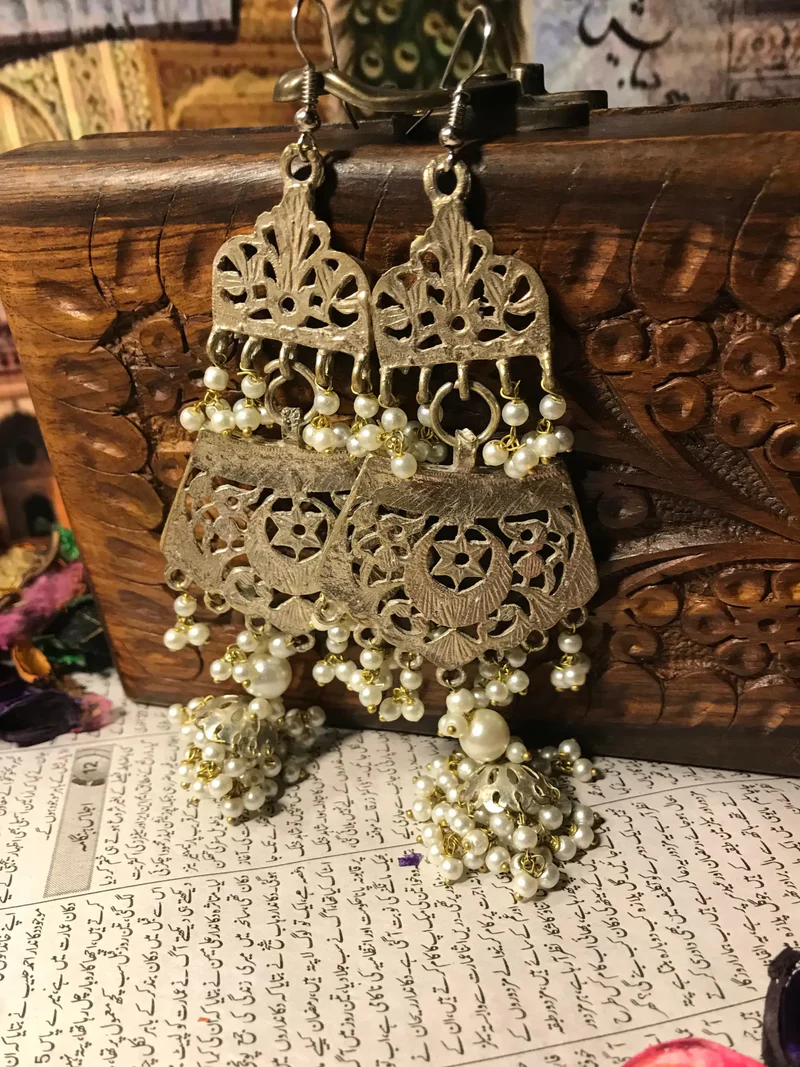
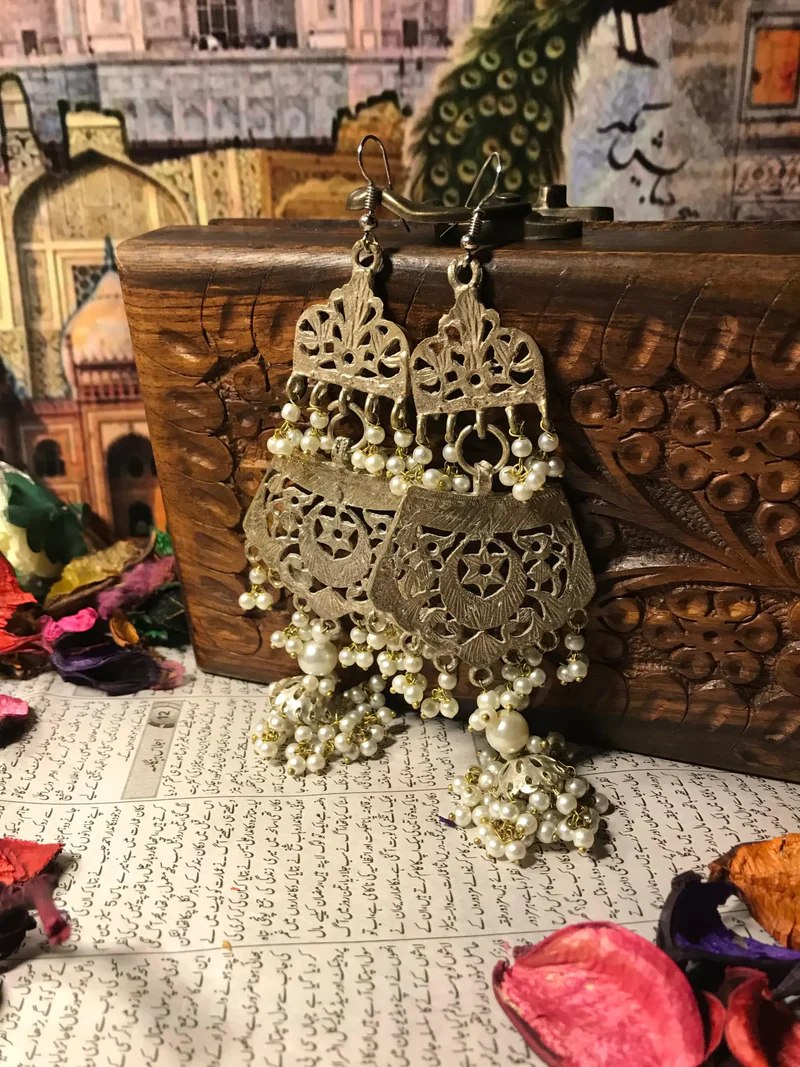
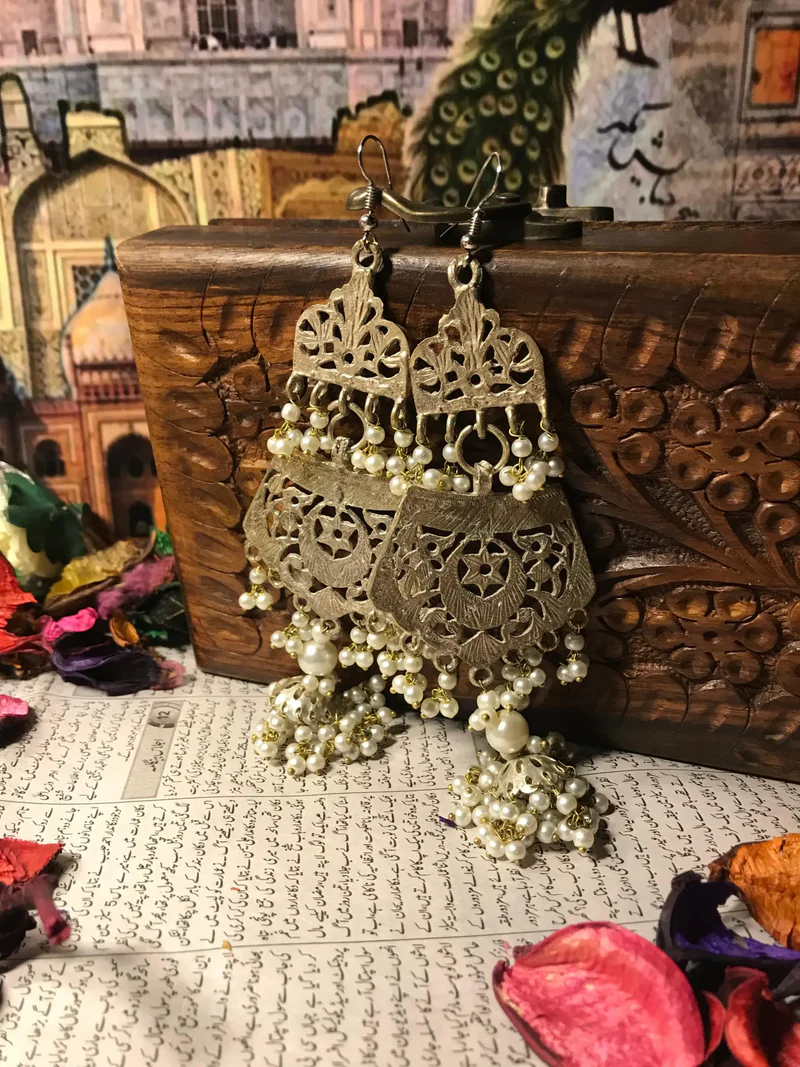
The fourth image in this collection provides a stunning example of this motif. These silver-toned earrings feature a prominent crescent moon (Chand) cradling a five-pointed star (Tara) within an intricate filigree frame. The open-work metal creates a lace-like effect, allowing light to pass through the design, while clusters of white, pearl-like beads dangle below to add movement and grace.
The Art of Filigree and Metalwork
Crafting a pair of Chand Tara Earrings Pakistan requires a high level of technical skill, particularly in the art of filigree. Filigree involves twisting and soldering fine wires of metal into complex patterns. In the silver-toned earrings shown, the artisan has used this technique to create floral and scrollwork motifs that surround the central Moon and Star. This style is particularly popular in the craft hubs of Pakistan, where metalworking is often a family trade passed down from father to son.
The weight and texture of these pieces are characteristic of “German Silver” or tribal alloys, which are favored for their durability and the beautiful, matte patina they develop over time. Unlike mass-produced modern jewelry, these handcrafted items celebrate “perfect imperfections,” where every curve of the wire reflects the deliberate touch of the maker.
A Fusion of Regional Styles: From Kabul to Kathmandu
While the Chand Tara Earrings Pakistan represent a specific cultural intersection, the broader collection showcases the fluidity of tribal design across the borders of Afghanistan, Pakistan, and Nepal.
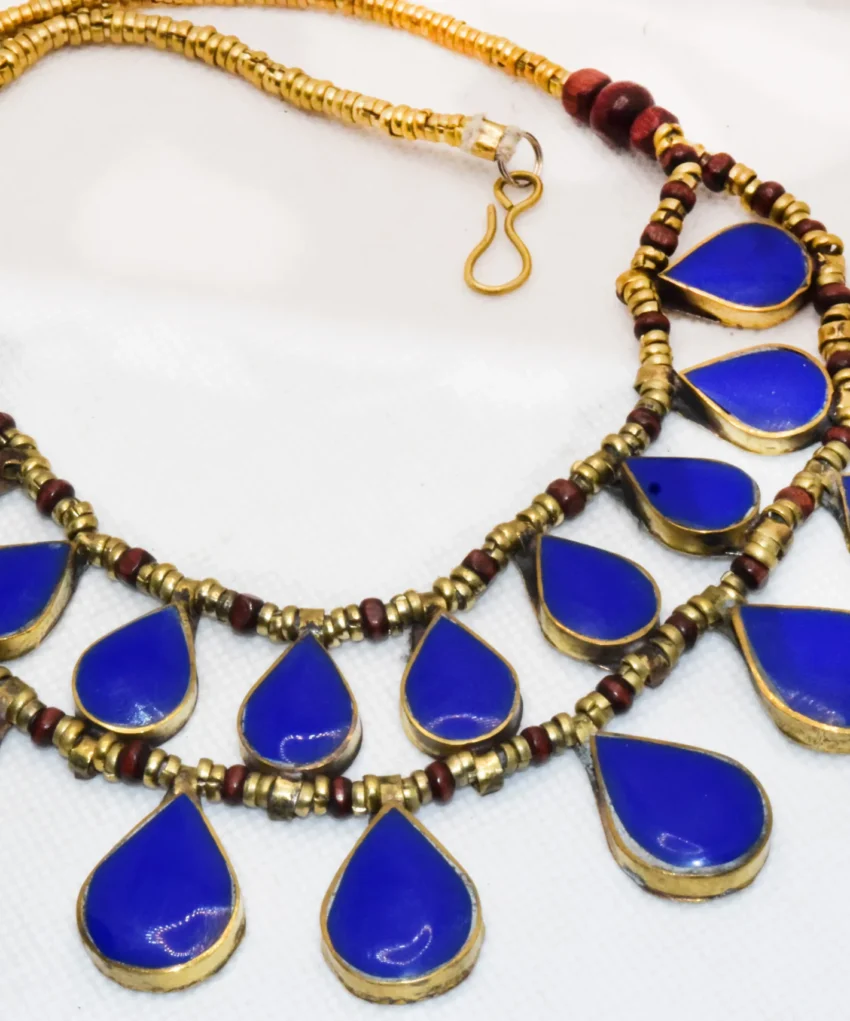
The Nepal Necklace: The first image displays a heavy “bib” style necklace that is a staple of Himalayan jewelry. It features ornate silver-toned plates with embossed floral patterns and vibrant red inlays that mimic the look of coral. The use of multiple strands of pink beads to connect the heavy metal plates ensures that the piece is both structurally sound and comfortable to wear.
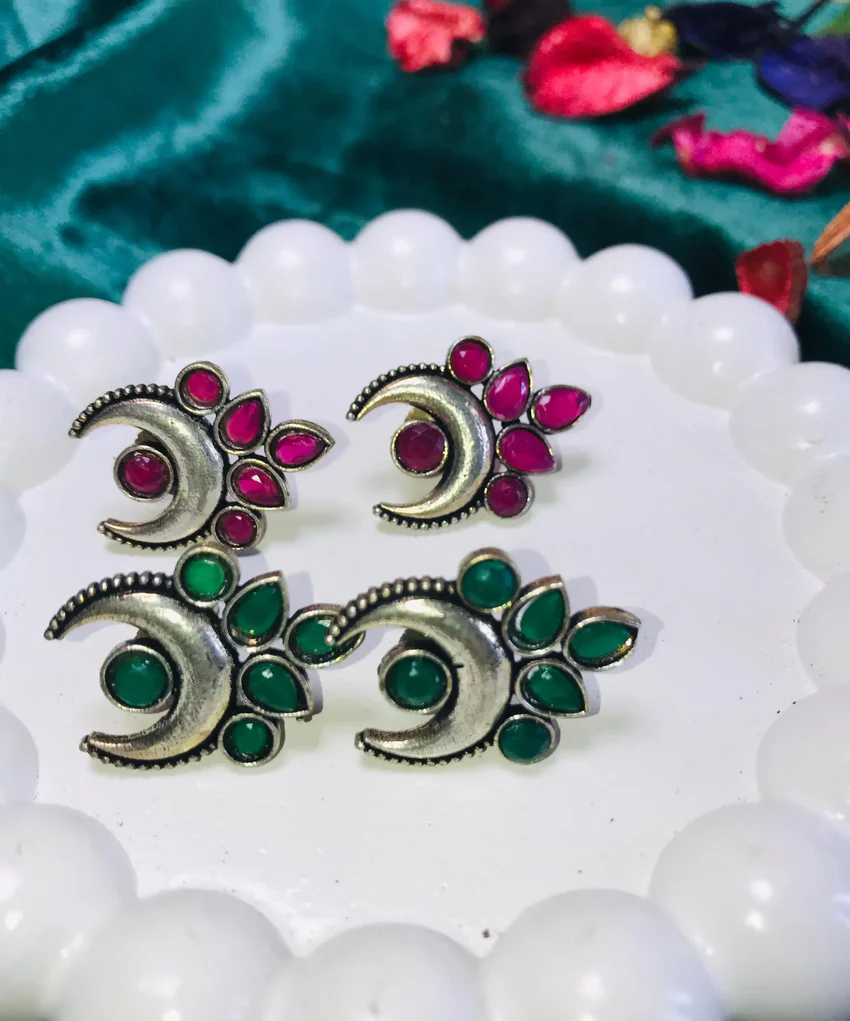
The Afghan Cylindrical Drops: In the second image, we see a different geometric approach. These earrings utilize cylindrical forms adorned with small glass or mirror shards and vibrant red and green stones. The dense cluster of small silver balls at the base creates a rhythmic “ghungroo” sound, typical of nomadic Kuchi jewelry.
The contrast between the flat, symbolic nature of the Chand Tara Earrings Pakistan and the three-dimensional, architectural style of the Afghan drops highlights the incredible diversity within South Asian jewelry traditions.
Color and Movement in Tribal Adornment
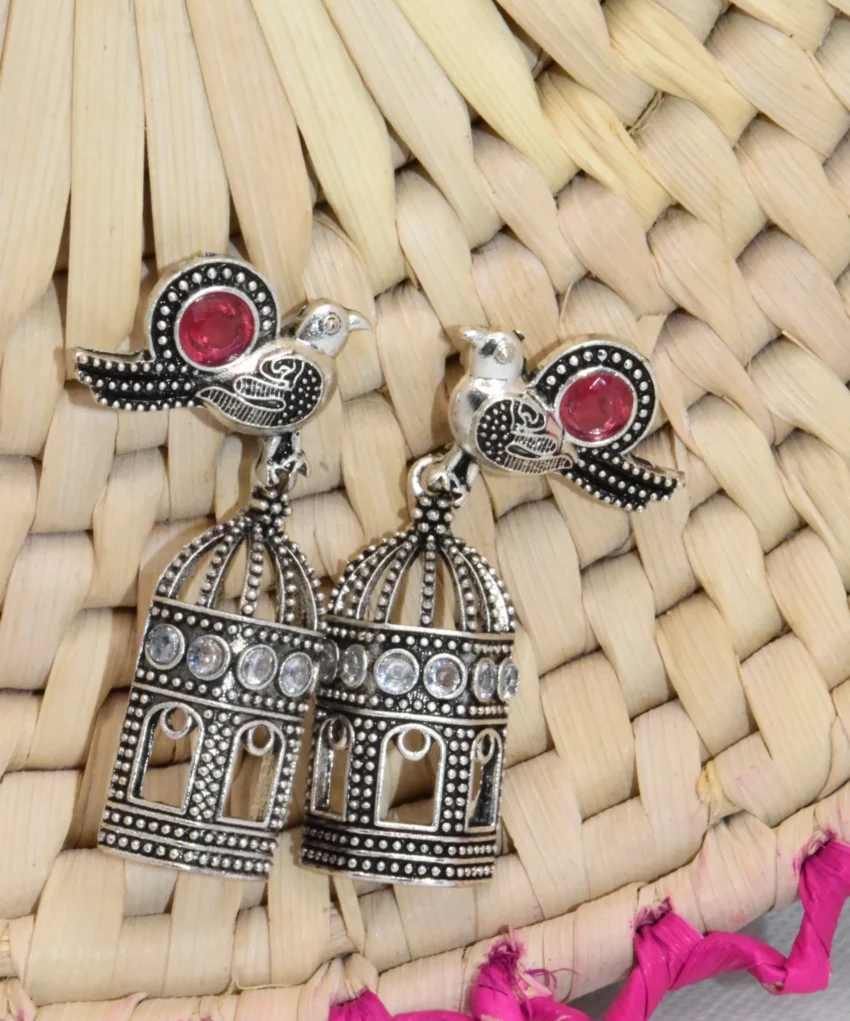
Movement is a crucial element of traditional jewelry. Whether it is the soft tinkling of the metal beads on the Afghan drops or the swaying of the pearls on the Chand Tara Earrings Pakistan, these pieces are designed to be dynamic. This is also evident in the third image, which showcases colorful crescent-shaped “Chand Balis”. These earrings use vibrant enamel—in shades of emerald green, deep blue, pink, and red—to fill in the metalwork.
The “Chand Bali” is a cousin to the Chand Tara Earrings Pakistan, both sharing the lunar silhouette but diverging in their decorative techniques. While the Chand Balis rely on the brilliance of color and enamel, the Chand Tara pieces often lean toward the elegance of monochrome silver and the symbolic clarity of the star.
The Aesthetic of the Background: Urdu and Antiquity
The photography of these pieces adds another layer of depth to their story. By placing the jewelry on pages of Urdu text, the images create a dialogue between literature and craft. The Urdu script, known for its calligraphic beauty, complements the flowing lines of the Chand Tara Earrings Pakistan. The presence of wooden boxes, candles, and dried petals suggests a sense of nostalgia and the preservation of an heirloom.
This staging reminds the viewer that these pieces are often part of a woman’s “sandook” or trousseau—a collection of treasures that represent her family’s history and her own identity. When a woman wears Chand Tara Earrings Pakistan, she is literally carrying a piece of her heritage with her.
Styling the Modern Nomad
In 2026, the trend of “Global Nomad” fashion has brought these traditional pieces into the spotlight once again. The beauty of Chand Tara Earrings Pakistan lies in their versatility.
For Formal Wear: They are the perfect accompaniment to a traditional shalwar kameez or saree, where the silver filigree can catch the light during evening festivities.
For Modern Fusion: Pairing these tribal earrings with a simple white linen shirt or a dark turtleneck creates a sophisticated “East-meets-West” aesthetic. The detailed metalwork acts as a statement piece, requiring little else in the way of accessories.
Layering: The Nepal necklace from the first image can be layered over structured jackets, while the Chand Tara Earrings Pakistan provide a delicate, feminine balance to the heavy metal of the bib.
Care and Preservation of Tribal Jewelry
Because these pieces are often made from alloys rather than pure gold or silver, they require specific care to maintain their “vintage” charm. For a pair of Chand Tara Earrings Pakistan, the following steps are recommended:
Avoid Moisture: Keep the earrings away from water and perfume, as chemicals can react with the metal and dull the shine of the pearl-like beads.
Storage: Store them in a dry, lined box—like the wooden chests seen in the images—to prevent the delicate filigree from getting bent or tangled.
Cleaning: Use a soft, dry cloth to gently wipe away oils after wear. Do not use harsh chemical cleaners, as they can remove the intentional oxidation that gives the pieces their antique look.
The Sustainable Value of Handmade Craft
In an era of fast fashion, collecting items like Chand Tara Earrings Pakistan is an act of supporting local artisans and preserving endangered crafts. Each piece represents hours of labor—from the smelting of the metal to the hand-setting of each stone or bead. By choosing these authentic pieces over factory-made imitations, collectors ensure that the cultural soul of Pakistan’s jewelry industry continues to thrive.
The Chand Tara Earrings Pakistan are not just a purchase; they are an investment in a legacy. They represent a bridge between the moon-lit deserts of the past and the vibrant, fashion-forward world of today