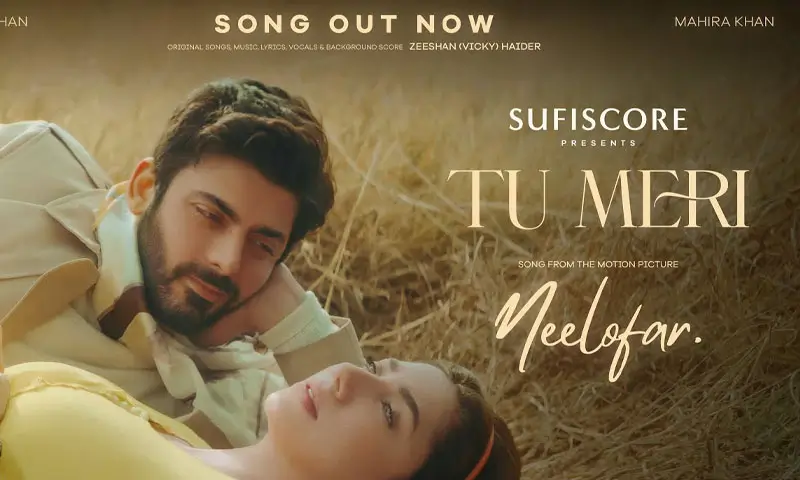
Introduction: Why Neelofar Mattered Before It Even Released
There are few cinematic events in Pakistan that stir as much anticipation as the reunion of beloved on-screen pairings. When the news broke that Fawad Khan and Mahira Khan — arguably the country’s most iconic romantic duo — would return to the big screen together in a film titled Neelofar, fans celebrated. Hope rose high. Expectations soared.
Why all the buzz? Because this was more than just a movie comeback. It was a nostalgic promise — of soft gazes, Urdu poetry, emotional gravitas and cinematic romance reminiscent of an older cinematic era, when films moved more slowly, felt deeper, and loved harder. Neelofar didn’t just promise a love story; it promised a return to soulful cinema, a return to emotion, to subtlety, to feeling.
As soon as the release date was announced, the chatter began: Would Neelofar live up to the hype? Could it reclaim that lost poetry of Pakistani cinema? This blog dives deep into the film — its promise, its execution, and whether it truly delivered.
Background & Build-up: The Long Wait for the Reunion
Neelofar’s journey to the screen has been a long and winding one. Written and directed by Ammar Rasool, the film wraps together decades of longing from fans of Fawad and Mahira. Originally, shooting began before the COVID-19 pandemic — but the delays, postponements, and global turmoil pushed its release back several times
As the duo teased fans with glimpses — first a poster, then a teaser — nostalgia mixed with curiosity. The official poster, released in October 2025, portrayed something soft, melancholy, personal. Hands gently touching, eyes closed, unspoken longing. The teaser opened with Fawad’s voice: “Neelofar naam hai uska” (“Her name is Neelofar”), immediately setting a poetic, heartfelt tone.
Moonlit nostalgia, intimate visuals, quiet romance — the mood was set. For many, it felt like an invitation to slow down, unscroll, and feel again.
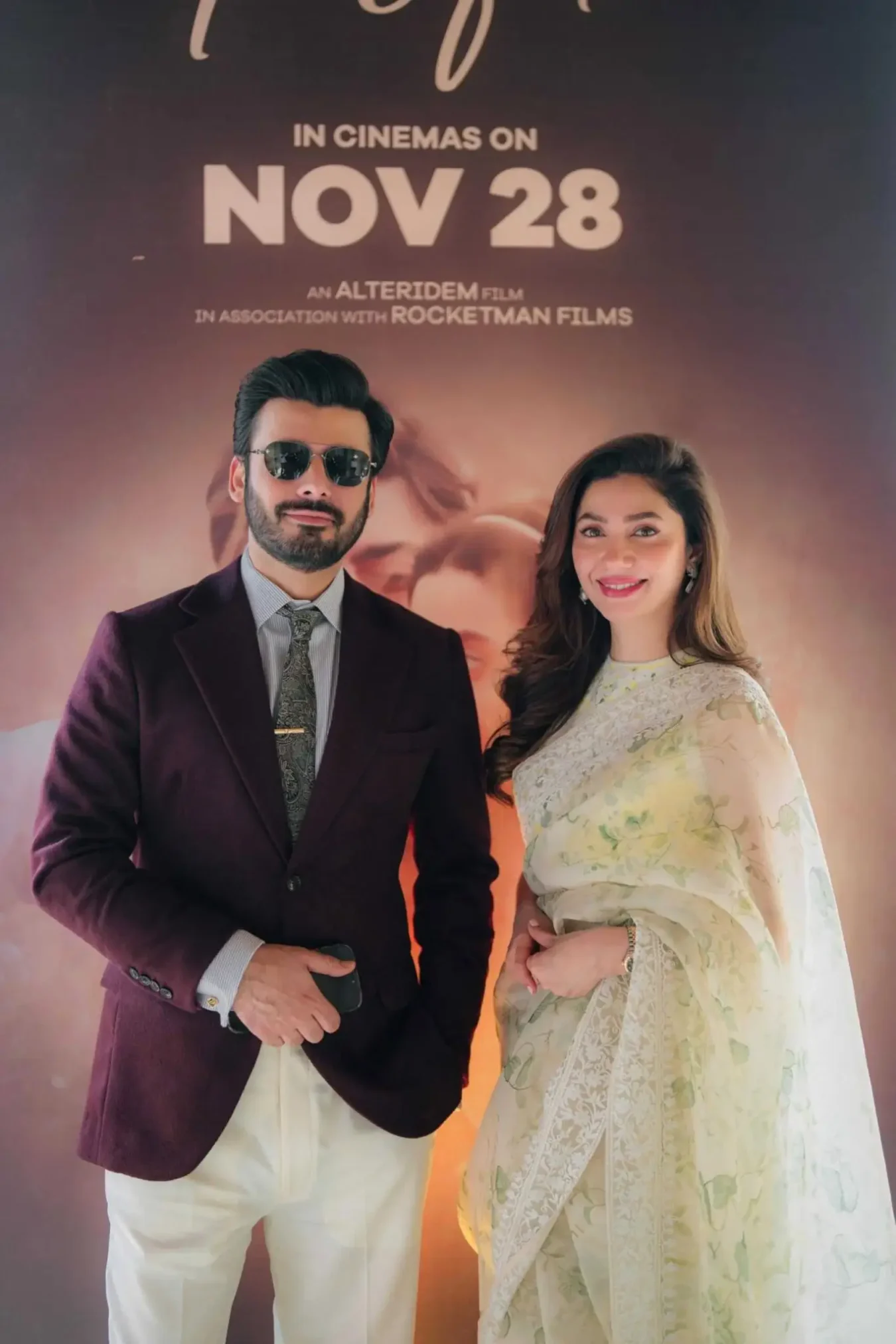
Synopsis: What Happens in Neelofar
At its core, Neelofar tells the story of love beyond sight: a poignant, slow-burn romance between a writer and a woman who sees the world differently.
- Fawad Khan plays Mansoor Ali Khan — a reserved, thoughtful novelist whose life is shaped by loss, memory, and introspection.
- Mahira Khan plays Neelofar — a visually impaired young woman whose perception of the world transcends vision; she senses emotion, hears hesitation, feels presence and absence, and experiences reality through sound, touch, and intuition.
Their worlds collide in Lahore — a city depicted not just in colour and light, but as a living, breathing emotional landscape. As Mansoor returns to Lahore for a book tour, he meets Neelofar. Their bond slowly deepens — not through dramatic gestures, but through silence, shared glances, soft conversations, and unspoken understanding. What follows is a delicate journey of love, introspection, social pressure, emotional honesty — and the price of perception in a visually-obsessed world.
Without spoilers: the film refuses to warp love into melodrama. It resists big plot twists, and instead leans on presence, longing, subtle emotional shifts, and inner conflict. It asks its audience not for spectacle — but for patience.
The Players: Cast & Crew — What Makes Them Special
Lead Actors
- Fawad Khan — As Mansoor Ali Khan, Fawad brings with him decades of charisma, quiet confidence, emotional restraint. His star power gives the film gravitas; his performance anchors it in introspective calm.
- Mahira Khan — As Neelofar, Mahira steps into a challenging role: not as a glamorous heroine but as a woman defined by inner vision. Her challenge is to convey emotion without the primary tool of sight — and she largely succeeds. Critics have praised how she uses voice, body language, tactile gestures to “see” through her character.
Supporting Cast & Crew
- Supporting actors such as Behroze Sabzwari, Madiha Imam, Atiqa Odho, Gohar Rasheed, and others add texture — though some critics feel their roles are underutilised.
- Ammar Rasool — As writer and director, Rasool makes a bold choice: to forego loud drama and instead build a slow, reflective love story rooted in emotion and perception rather than spectacle.
- Music by Zeeshan Vicky Haider — The soundtrack, launched with fanfare in Lahore, adds lyrical depth and emotional layering to the film. The music event itself was described as poetic and heartfelt, hinting that the film’s heart beats as much in its songs as in its silence.
This combination — experienced actors, sensitive storytelling, soulful music — promised something rare in Pakistani cinema: a romance that gives space to feeling rather than flash.
Themes & Motifs: Love, Vision, Silence and Perception
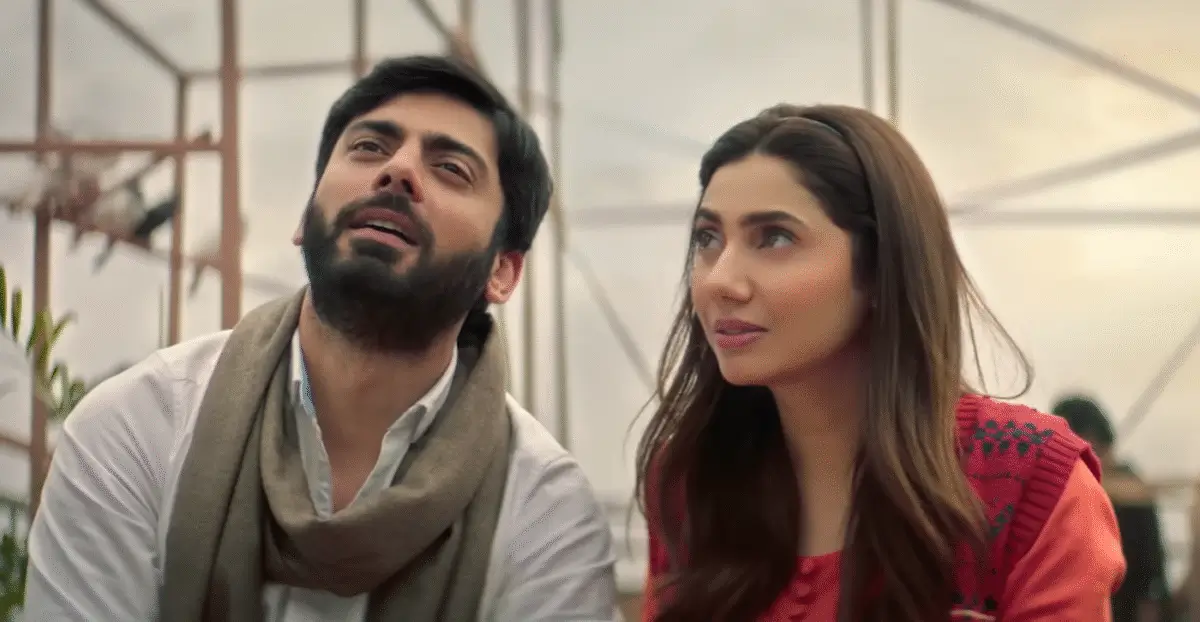
Love Beyond the Visual
The central motif of Neelofar is — how do we love when sight isn’t the basis? By presenting Neelofar as visually impaired, the film asks us to question what it means to “see” someone: Is love about looks, or about presence? Emotion? Intuition? Understanding?
Neelofar’s blindness isn’t portrayed as a burden or a dramatic device. Rather, it becomes a lens for introspection. She senses the world through sound, texture, tone; she hears hesitation, feels emotion, senses breath. Through her, the film shows that vision is not the only — or even the best — way to understand reality.
Silence, Intimacy & Emotional Texture
Neelofar thrives in silence. Long pauses, unspoken glances, the weight of quiet — these become its cinematic vocabulary. The film uses minimal dialogue in many scenes, letting emotions surface through body language, lighting, background sound, and music. For viewers tired of loud dialogues, dramatic climaxes and constant visual stimulation, this is a breath of fresh air.
Nostalgia, Memory & the City as Character
The city of Lahore is more than just a location — it breathes, gives mood, evokes memory, nostalgia, longing. The cinematography and setting lean into old streets, textured walls, moonlit rooftops, memory’s hush. Through this, “place” becomes part of the emotional journey.
The Cost of Visibility in a Visible World
Neelofar subtly critiques contemporary obsession — with appearance, image, visibility. In an era dominated by social media, curated looks, and instant judgments, the film wonders: what does it mean to truly see someone, to feel them, to know them? Can silence be louder than spectacle? Can empathy be deeper than a glance?
These themes — love beyond sight, silence over spectacle, memory over moment — make Neelofar ambitious. It doesn’t just aim to tell a romance. It tries to make us feel, sense, and reflect.
Visuals & Sound: Cinematography, Setting, Music — The Film’s Soul
For a film that invests so much in perception over vision, it’s fitting that Neelofar’s visuals and sound design become its soul.
Cinematography & Setting
The film paints Lahore not in neon gloss or cinematic glam, but in soft moonlight, textured walls, shadows and memory. Rooftops, old buildings, narrow lanes — the city becomes a canvas for emotion. Many reviews call this depiction “poetic,” “soulful,” “nostalgic.”
The visual tone matches the narrative tone: restrained, measured, contemplative. Instead of loud colour or sweeping shots, we get close-ups, lingering frames, quiet streets. The result: a mood that feels intimate, reflective, emotionally grounded.
Sound & Music
If visuals are the film’s skin, music and sound are its heartbeat. The soundtrack by Zeeshan Vicky Haider — unveiled at a music-launch event in Lahore — is reportedly filled with haunting melodies and soft vocals that mirror the internal rhythm of the story.
In a film about seeing without sight, sound becomes more than background — it becomes sensory fiction. Rain tapping on rooftops, footsteps in silent alleys, distant voices, ambient noise, musical sighs — all combine to create an emotional landscape where feeling matters more than looking.
This sensory design invites viewers to slow down, to absorb, to feel. It’s a cinematic gamble: not everyone likes slow cinema; not everyone appreciates nuance. But when it works — it can linger long after the credits roll.
Performances: Strengths and Subtle Limitations
Mahira Khan as Neelofar
Portraying a blind character demands more than acting — it demands presence, sensitivity, nuanced physical expression. By many accounts, Mahira rises to the challenge. Reviewers note that she doesn’t over-dramatize; instead, she uses voice, posture and subtle gestures to convey Neelofar’s internal world — her senses, her strength, her vulnerability.
Moments like tactile mapping — where she identifies objects through touch, or senses emotions through small shifts — are handled delicately. In a regional film industry where disability is often used for melodrama or pity, Neelofar’s portrayal feels dignified and real.
Fawad Khan as Mansoor Ali Khan
Fawad brings his trademark calm charisma. His restrained performance — soft dialogue delivery, measured expressions, emotional quiet — fits the film’s mood. Critics praise how he delivers conversations naturally, with ease and emotional weight.
He doesn’t rely on dramatic outbursts; instead, he lets silence speak, longing linger, eyes say what words can’t. In moments of intimacy — a gentle touch, a quiet conversation — he becomes more than a star: he becomes a believable, everyday man — flawed, emotional, human.
Supporting Cast & Missed Potential
Some supporting actors — like Behroze Sabzwari — add warmth and depth. But several critics and audience members feel the film underuses its ensemble. Certain subplots feel thin; some characters don’t get enough screen time or emotional arc.
Given the strong main cast, this feels like a missed opportunity — but not a dealbreaker for a film that prioritizes intimacy over ensemble drama.
What Worked: Moments Where Neelofar Truly Shines
- Scenes of intimacy without spectacle — The understated love scenes, the soft conversations, the silent glances — these linger. For viewers tired of loud drama, this quietness is refreshing.
- Portrayal of disability with dignity — Neelofar doesn’t exploit blindness for drama. Instead, it treats it as a different way of experiencing the world. The result: a character with depth, empathy, and agency.
- Sensory storytelling — Cinematography + sound + music combine to create mood. The film feels more like a poem than a story — for some, that’s its biggest charm.
- Nostalgia and cultural texture — Lahore’s architecture, old-world charm, Urdu poetry, slow romance — these details make Neelofar feel rooted in a cultural tradition that many long for.
- Performances rooted in nuance — Fawad and Mahira’s chemistry, individually and together, doesn’t need fireworks to be felt. Their emotional restraint gives the film its emotional core.
For viewers open to slow, quiet cinema — Neelofar offers a moving, sensory experience.
What Didn’t: Critiques — Pacing, Plot, Emotional Depth
Yet, Neelofar is not without flaws. And many of its criticisms are fair.
Pacing & Narrative Momentum
One of the recurring complaints: the film is slow — perhaps too slow for many modern audiences. Some viewers reportedly even walked out before the end.
The second half, especially, draws criticism. Reviewers note abrupt plot shifts, underdeveloped subplots, and story arcs that don’t fully land. What begins as soulful and poetic somewhere slips into territory that feels directionless or half-baked.
Emotional Depth & Character Development Issues
While the leads are strong, some observers feel that the film reduces Neelofar — the character — to a “silent, soft, emotionally available” woman. Her inner turmoil, frustrations, vulnerabilities — especially those connected to her disability — are underexplored. Some critics argue that the film uses disability more as a symbolic device than a lived reality.
Supporting characters — who could have added richness: jealous colleagues, societal pressures, conflicting relationships — end up underwritten. Their potential emotional arcs remain largely unexplored.
Uneven Storytelling & Mixed Execution
From plot holes to technical oversights — some reviewers note awkward script choices, inconsistent tone, underwhelming editing, and a soundtrack that occasionally feels mismatched.
In short: Neelofar sometimes seems torn between being a poetic art film and a conventional romance. This tension — if not handled carefully — leaves it hanging somewhere in between.
Audience & Critical Reception: Mixed Reactions and Why
Since the premiere, reception to Neelofar has been divided — maybe more so than the filmmakers expected.
Voices of Praise
- Some viewers describe the film as “spellbinding,” “nostalgic,” “emotional,” and “poetic.” The return of Fawad and Mahira after years — on the big screen, in a soulful story — felt magical to many
- Others appreciate its slower pace, gentle love story, subtle visuals, and the dignity with which disability and emotion are portrayed. For people keen on feeling rather than spectacle, Neelofar offers a cinematic breather.
Critics & Disappointed Viewers
- A common critique calls it a “stunning showreel” but “narratively hollow,” praising production value but lamenting weak storytelling.
- Pacing issues and plot weaknesses have caused disengagement. Some viewers reportedly walked out before the end.
- Many feel the emotional core — especially the inner life of the blind character — wasn’t explored enough. The romance sometimes feels like surface attraction rather than deep connection.
What This Divide Reflects
The mixed reception highlights a broader tension in contemporary Pakistani cinema (and global cinema): between spectacle and subtlety, between instant gratification and slow-building emotion. Neelofar doesn’t cater to everyone — but it knows exactly who it does.
Neelofar in Context: Where It Stands in Modern Pakistani Cinema
Pakistani cinema has been on a rollercoaster — from commercial masala films to bold art-house experiments, from loud dramas to introspective stories. In that spectrum, Neelofar occupies a unique middle ground: not exactly commercial, not fully art-house.
It’s a romantic drama that attempts to be poetic, slow-paced, emotionally driven. It leans on star power but tries to subvert the typical glamour by valuing inner vision over surface appeal.
In that sense, Neelofar is experimental — a gamble that shows there is space in Pakistani cinema for slow-burn stories, sensory cinema, emotional subtlety. It’s not perfect. But its ambition is significant.
If Pakistani cinema is to diversify — to go beyond comedies, action, loud romance — films like Neelofar matter. They show filmmakers willing to take risks; they show audiences open to feeling rather than just watching.
Final Verdict: For Whom This Film Works — and For Whom It Doesn’t
This film will most likely appeal to you if:
- You appreciate slow, contemplative cinema and are willing to sit with silence, longing, subtlety.
- You care about mood, emotion, atmosphere — not just plot twists or blockbuster spectacle.
- You admire the lead actors and want to see them explore quieter, more introspective roles.
- You value nuanced portrayals of disability and understated love stories rooted in empathy rather than drama.
But perhaps steer clear if:
- You prefer fast-paced storytelling, dramatic highs and climactic resolutions.
- You expect intense chemistry, conventional romance drama, or a bright, polished, high-energy film.
- You expect character arcs to be fully resolved or find comfort in typical romance tropes.
Verdict: Neelofar is not a perfect film. It stumbles — in pace, in narrative ambition, in occasional shallow character treatment. But when it works — it truly moves. For the right viewer, it’s a cinematic poem. For others, it’ll feel like a somber, understated lullaby that never crescendos.
Implications: What Neelofar Means for Future Filmmaking
Even if Neelofar doesn’t become a commercial blockbuster, its importance may lie elsewhere.
- It signals willingness among filmmakers to take risks — to trust emotion over spectacle, to invest in subtlety, to explore disability sensitively.
- It challenges audiences to slow down, listen deeply, feel more — to consume cinema not as entertainment, but as experience.
- It expands what Pakistani romance films can be: not just glamorous, not just dramatic — but thoughtful, introspective, poetic.
- It may inspire more filmmakers to explore themes of perception, memory, identity, and social pressure in unconventional ways.
In a film industry often driven by quick returns and visible glamour, Neelofar’s quiet ambition — for all its flaws — is a hopeful sign.
Conclusion
Neelofar doesn’t arrive with fireworks. It doesn’t shout. It doesn’t claim to be bigger than life. Instead, it whispers. It holds your hand. It invites you to breathe, to feel. It asks you to see not with your eyes — but with your heart.
For every viewer chasing cinematic spectacle, Neelofar may disappoint. For every one chasing emotional honesty, gentle romance, quiet depth — it may become a cherished memory.
This film won’t rewrite the rules of mainstream cinema. It might not change box office charts. But it reminds us why we fell in love with cinema in the first place: not for the loudest scenes, the grandest moments, or the flashiest effects — but for the silent ones, the tender ones, the ones that stay long after the screen goes dark.
If you go in with an open heart, with patience, and with a willingness to feel — Neelofar just might be worth your time.
Famous / Notable Dialogues from Neelofar
- “میرا قلم وکیل ہے اور دل گواہ” — This line, delivered by Mansoor (played by Fawad Khan), carries strong emotional weight when he is asked about writing a personal story.
- “Hero بن جاتے ہیں لیکن Hero رہنے نہیں دیتے” — A line by another character (played by Gohar Rasheed) criticizing fame, public pressure and the loss of personal identity.
Great — here are original Urdu poetry lines (غزل نما اشعار) inspired by the themes, emotions, and ambiance of Neelofar.
These are NOT from the movie, but written to match its poetic tone, love-beyond-sight theme, and emotional depth.
You are free to use them anywhere.
Neelofar-Inspired Original Urdu Poetry
آنکھوں سے تو میں دنیا دیکھتا رہا
پر دل نے تجھے پہچان کر ہی روشنی پائی
تیری خاموشیوں میں ایک ایسی صدا ہے
جو روح تک اتر کر، مجھے مکمل کر جاتی ہے
اندھیری رات میں بھی تیرا چہرہ دکھائی دیتا ہے
شاید محبت کو روشنی کی ضرورت نہیں ہوتی
تو میرا راستہ بھی ہے، تُو ہی میرا سفر بھی
جو سامنے نہ ہو پھر بھی میرے ساتھ چلتی ہے
لفظوں کی بھیڑ میں تیرا نام سب سے الگ لگا
جیسے کوئی خوشبو بغیر ہوا کے بھی محسوس ہو جائے
میں نے چاہا کہ تجھے لفظوں میں بیان کر دوں
پر تو تحریر نہیں… ایک احساس ہے، جو لکھا نہیں جاتا
تیرے لمس کی یاد میں اتنی گرمی ہے
کہ سرد ترین دن بھی دل کو جلا دیتے ہیں
محبت اگر دیکھنے سے ہوتی
تو اندھے لوگ کبھی عاشق نہ بنتے
تو نے چھو کر دیکھا تھا… اور میں پگھل گیا
شاید میرا وجود مٹی کا نہیں — تیری چاہت کا بنا ہوا ہے
کسی سے کہہ نہ سکا کہ تُو میرے دل میں بستی ہے
لوگ سمجھتے ہیں کہ گھر صرف دیواروں سے بنتے ہیں
تیرے نام نے میرے اندر ایک تجربہ جگا دیا
کہ محبت محسوس کی جاتی ہے، سمجھی نہیں جاتی
تو چلی گئی… مگر میری دنیا روشن ہو گئی
لگتا ہے محبت روشنی بانٹتی ہے، مانگتی نہیں