
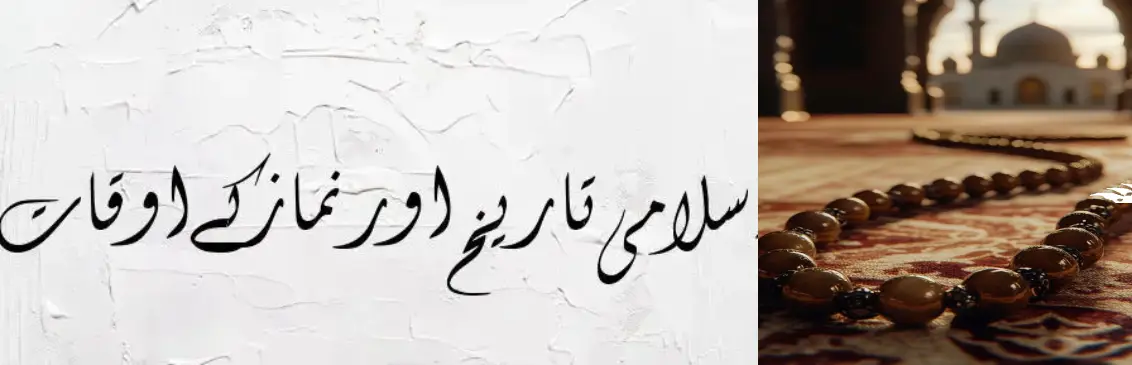
Prayer time in Pakistan is a central pillar of daily Muslim life, shaping routines, social rhythms, and spiritual awareness across the country. From bustling cities like Lahore, Karachi, and Islamabad to remote villages, the call to prayer (Azan) punctuates the day and reminds believers of their connection to Allah. These prayer times are not fixed clock hours; rather, they are divinely linked to natural phenomena, the movement of the sun, and the Islamic (Hijri) calendar, which together explain why prayer timings change throughout the year.
Importance of Prayer Times in Daily Life
Islam mandates five daily prayers (Salah), each assigned a specific time window. Observing prayer at its proper time is considered an act of obedience and discipline. In Pakistan, prayer times influence not only individual worship but also work schedules, school routines, market hours, and family life. Many offices allow prayer breaks, businesses pause briefly at Maghrib during Ramadan, and households structure meals and rest around Salah.
The five daily prayers are:
- Fajr – Dawn prayer
- Dhuhr – Midday prayer
- Asr – Afternoon prayer
- Maghrib – Evening prayer
- Isha – Night prayer
Each prayer corresponds to a distinct position of the sun in the sky, which makes prayer timing both scientific and spiritual.
Scientific Basis of Prayer Time Calculation
Prayer times are calculated using astronomical principles based on the Earth’s rotation, tilt, and orbit around the sun. Because the Earth is tilted at approximately 23.5 degrees and revolves around the sun, the length of day and night changes throughout the year. Pakistan’s geographic position—roughly between 24° and 37° North latitude—means it experiences significant seasonal variation, especially in Fajr and Isha timings.
Here is how each prayer is defined scientifically:
- Fajr begins at true dawn, when the sun is a specific number of degrees below the horizon and light spreads horizontally.
- Dhuhr starts when the sun reaches its highest point in the sky (solar noon).
- Asr begins when an object’s shadow reaches a certain length, which differs slightly between Islamic schools of thought.
- Maghrib starts immediately at sunset.
- Isha begins when twilight completely disappears and darkness sets in.
Because these conditions shift daily, prayer times in Pakistan change by a few minutes every day.
Why Prayer Time in Pakistan changes
There are several reasons why prayer times are not constant:
1. Seasonal Changes – Prayer Time in Pakistan
In summer, days are longer and nights are shorter. As a result:
- Fajr occurs very early
- Maghrib and Isha are later
In winter, the opposite happens:
- Fajr becomes later
- Maghrib and Isha occur earlier
2. Geographical Location – Prayer Time in Pakistan
Prayer times vary between cities like Karachi, Lahore, Peshawar, and Quetta due to differences in latitude and longitude. For example, sunset in Karachi occurs earlier than in Lahore on the same day.
3. Atmospheric Conditions – Prayer Time in Pakistan
Factors like atmospheric refraction slightly affect sunrise and sunset times, particularly for Fajr and Maghrib.
4. Islamic Calendar (Hijri Calendar) – Prayer Time in Pakistan
The Islamic calendar is lunar, consisting of 12 months of 29 or 30 days. Since the Hijri year is about 10–11 days shorter than the Gregorian year, Islamic months move through all seasons. This means Ramadan may fall in summer one year and winter years later—significantly affecting fasting hours and prayer routines.
Role of the Hijri Calendar in Prayer and Worship
The Hijri calendar plays a crucial role in determining religious observances in Pakistan. It begins from the Hijrah (migration) of Prophet Muhammad ﷺ and is based on the sighting of the moon. Important events like Ramadan, Eid-ul-Fitr, Eid-ul-Adha, Ashura, and Shab-e-Barat are all fixed according to Hijri dates.
During Ramadan, the connection between prayer times and the Hijri calendar becomes especially evident:
- Fajr marks the start of fasting (Sehri ends)
- Maghrib marks the breaking of the fast (Iftar)
As Ramadan moves across seasons, fasting duration changes, sometimes lasting over 16 hours in summer and around 11 hours in winter. This makes Pakistanis particularly attentive to both prayer times and Islamic dates.
Moon Sighting and Local Practice in Pakistan
Pakistan traditionally relies on moon sighting rather than purely astronomical calculations to determine the beginning of Hijri months. The Ruet-e-Hilal Committee officially announces new months. Because of this, Islamic dates—and therefore religious schedules—may differ slightly from other countries.
This practice strengthens the importance of checking locally verified prayer times and Islamic dates rather than relying solely on global calendars.
Community and Cultural Dimensions
Prayer times in Pakistan are also deeply communal. Mosques announce Azan five times daily, creating a shared spiritual environment. In rural areas, Azan serves as a timekeeper for daily life. In cities, it provides a moment of pause amid busy schedules.
Religious gatherings, sermons, Quran classes, and charity distributions are often organized according to prayer schedules. Major Islamic months bring visible changes to public life—Ramadan alters eating habits, business hours, and social behavior across the country.
Technology and Modern Access
Today, prayer times in Pakistan are easily accessible through mosque timetables, mobile apps, television channels, and websites. These tools use precise astronomical data adjusted for local conditions. However, many people still cross-check timings with mosques to align with community practice, especially during Ramadan and Eid.
Spiritual Wisdom Behind Changing Prayer Times
The changing prayer times reflect a deeper Islamic philosophy: worship adapts to the natural order created by Allah. The variation teaches patience, discipline, and awareness of time. Praying at dawn in summer or breaking fast late in the evening fosters endurance, while shorter winter days offer ease—both seen as part of divine balance.
Conclusion
Prayer times in Pakistan are far more than a schedule—they are a framework for spiritual life, deeply connected to nature, science, and the Hijri calendar. Their daily and seasonal changes arise from the Earth’s movement, Pakistan’s geography, and the lunar Islamic calendar. By observing these times, Muslims align their lives with divine rhythms, maintain religious identity, and strengthen communal bonds. Whether through the early call of Fajr, the serenity of Maghrib, or the quiet reflection of Isha, prayer times continue to guide millions across Pakistan in faith, discipline, and devotion.




%20Quick%20info%20—%20—%20Timezone:%20Asia/Karachi%20Widget%20powered%20by%20AlAdhan%20•%20Refreshes%20automatically%20Prayer%20time%20in%20Pakistan%20is%20a%20central%20pillar%20of%20daily%20Muslim%20life,%20shaping%20%5B…%5D&media=https://nigarcraft.com.pk/wp-content/uploads/2025/08/Latest-Prayer-Time-in-Pakistan-1.webp)