
INTRODUCTION — When Karachi Became the Cultural Capital of the World
From October 30 to December 7, 2025, Karachi was not just a megacity; it transformed into a global cultural republic. For 39 unforgettable days, the Arts Council of Pakistan, Karachi (ACP), sent a message to the world:
“Pakistan is not just participating in cultural dialogue — Pakistan is leading it.”
The World Culture Festival (WCF) 2025 became one of the largest, longest, and most diverse cultural festivals on Earth, featuring:
- 140+ countries
- 1,000+ artists
- Hundreds of performances & screenings
- Workshops, exhibitions, symposiums & theatre acts
- Music concerts, folk showcases & fine arts exhibitions
Arts Council of Pakistan President Muhammad Ahmed Shah, the architect of this monumental event, called it:
“A moment when Karachi stepped onto the world stage with dignity, creativity, and unmatched artistic spirit.”
The Karachi cultural events did not merely host artists; it built bridges—between cultures, nations, languages, histories, and creative philosophies.
THE GLOBAL VISION — How a Pakistani Festival Became a World Phenomenon
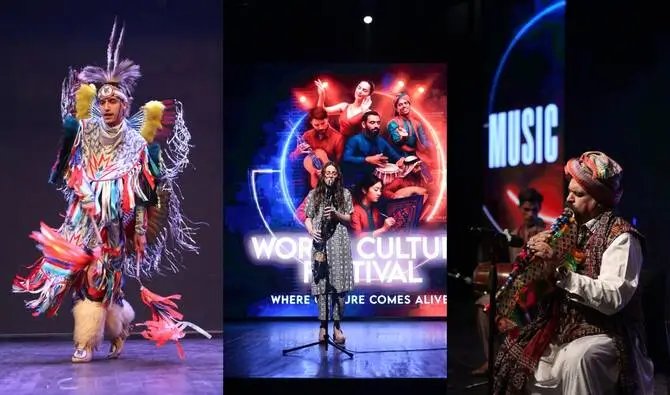
The World Culture Festival is not just an entertainment event; it’s a Karachi cultural diplomacy mission, using art as the ultimate universal language.
The 2025 edition reached unprecedented levels:
- 140+ participating nations
- Delegates from Europe, Africa, Asia, Middle East, Latin America & North America
- Performances representing heritage, identity & unity
- Workshops bringing together scholars, artists, filmmakers & designers
The World Culture festival’s magnitude impressed even global dignitaries like:
- Cultural ministers
- Foreign delegates
- Consuls General
- International choreographers
- Visual art masters
- Award-winning filmmakers
- Theatre pioneers
Each day became a living documentary of cultural exchange.
THE ATMOSPHERE — Karachi’s Heartbeat Transforms
Visitors described the Arts Council during these 39 days as:
- A mini United Nations of art
- A living museum
- A global village
- A creative parliament
- A music & theatre metropolis
Languages heard across the hallways included:
- Arabic
- French
- Spanish
- German
- Persian
- Sinhalese
- Swahili
- Turkish
- Korean
- Uzbek
- Urdu
- Sindhi
- Punjabi
Every corridor smelled of different cultures:
- Italian coffee
- Pakistani karak chai
- Sri Lankan spices
- Turkish desserts
- African perfumes
- Desi snacks
- Freshly painted canvases
- Theatre props & costumes
The Arts Council campus was lit with:
- Flags of 140+ countries
- LED screens broadcasting live performances
- Outdoor stages glowing with spotlights
- Artists practicing in open spaces
- Folk musicians tuning their instruments
- Dancers stretching in the courtyards
Each day, each hour, each event strengthened Karachi’s claim to being South Asia’s cultural heart.
OPENING DAYS — World Culture Festival – ACP Karachi Events of Global Harmony Begins
The opening days set the tone. The festival unveiled:
- Parade of flags
- International folk dance medley
- Fusion music sequences
- Speeches by cultural figures
- Art installations
- A curated fine arts showcase
International artists spoke highly of Pakistan’s hospitality. One of the earliest voices was:
Sharlene Campbell — Renowned Choreographer
She praised Pakistan’s:
- Warmth
- Cultural richness
- Organizational excellence
- Artistic talent
- Youth enthusiasm
Her statement was repeated across newsrooms:
“Pakistan is becoming a powerful cultural hub. The world is watching.”
THE POLITICAL & DIPLOMATIC DIMENSION — Culture as Soft Power
This year, the festival held special significance due to geopolitical tensions in South Asia.
When asked about the absence of Indian artists, Ahmed Shah clarified boldly:
“Pakistan has always believed in peaceful coexistence. But cultural exchange requires respect.”
His message was strong, diplomatic, and widely quoted.
Despite tensions, the Karachi cultural events succeeded in bringing together more than 140 nations, proving:
Art is stronger than politics.
Culture is more enduring than conflict.
Creativity is universal.
A FESTIVAL OF FIRSTS — Expanding the Artistic Horizon
This year’s World Culture Festival was historic for introducing:
- International painters
- Sculptors
- Filmmakers
- Digital artists
- Graphic designers
- Media students from multiple countries
Over 20 countries contributed to the fine arts segment, making it the most globally diverse exhibition in Pakistan’s cultural history.
THE ARTS COUNCIL’S ROLE — A Legacy of Cultural Leadership
Arts Council of Pakistan has spent years building itself into:
- A premier cultural institution
- Pakistan’s most versatile multi-arts complex
- A national hub for global arts dialogue
Ahmed Shah highlighted:
“Our alumni are now representing Pakistan globally.”
The institution continues to expand:
- Urdu Conference
- Theatre Festival
- Youth Festival
- Music Festival
- Fine Arts projects
- International collaborations
Artists often say:
“Once you perform at ACP, you never want to leave.”
DAY-BY-DAY EVOLUTION — The World Culture Festival Blossoms
As November progressed, the World Culture Festival intensified. Each day brought:
- New performers
- New audiences
- New cultural experiences
- New workshops
- New collaborations
Karachi’s weather turned pleasant, and the evenings became magical with Karachi Cultural Events.
On any given day, a visitor could simultaneously witness:
- A Cuban film
- A Sri Lankan theatre performance
- A German dancer’s workshop
- A Cameroonian choreographic session
- A Pakistani folk recital
- A Tajik-Iranian cinematic story
- A global art exhibition
It was sensory overload in the most beautiful way.
THE FESTIVAL AS A PLATFORM FOR EMERGING TALENT
One of the powerful statements came from Rahat Fateh Ali Khan, the festival’s first brand ambassador:
“If more academies existed, many more Rahat Fateh Ali Khans would emerge.”
This struck a chord with young Pakistani artists.
The festival offered students:
- Hands-on workshops
- Access to global masters
- Film discussions
- Scriptwriting labs
- Theatre training
- Dance intensives
- Music jam sessions
The youth energy became the beating heart of the festival.
THE ARRIVAL OF INTERNATIONAL DELEGATIONS
One of the important diplomatic engagements was:
Meeting with the Consul General of Sri Lanka
H.E. Sanjeewa Pattiwila met Arts Council of Pakistan President Ahmed Shah to discuss:
- Cultural exchange
- Potential collaborations
- Future Sri Lankan participation
- Strengthening global artistic ties
Such meetings reflect Arts Council of Pakistan’s growth into a cultural diplomacy institution, not just an arts venue.
THE FIRST HALF OF THE FESTIVAL ENDS — AND THE JOURNEY GETS BIGGER
By mid-November, the World Culture festival felt like it had already achieved greatness—but the best was yet to come:
- Mega Music Concert 4.0
- Dance Night 4.0
- Theatre masterworks
- Sri Lankan storytelling plays
- Iranian documentary screenings
- Brazilian circus narratives
- Italian design workshops
- Powerful theatrical adaptations
- Sindhi literary performances
- Closing ceremony preparations
The energy only intensified as December approached with ACP Karachi events.
A Festival Built on Learning: Global Workshops Ignite the Arts Council
If the concerts were the heartbeat of the festival, then the workshops were its intellectual backbone—quiet, focused, and profoundly transformative. From 1st November to 7th December, the Arts Council of Pakistan Karachi became a global classroom. Artists, students, young professionals, and curious citizens all flocked to these learning sessions, eager to absorb new skills, new ideas, and new Karachi cultural perspectives.
The workshops were not merely additional activities; they were the soul of the World Culture Festival. Each one created a bridge between Pakistan’s artistic heritage and the creative practices of the world’s leading cultural communities.
🇮🇹 Italy’s Visual Storytelling Workshop: The Art of Seeing
The Italian-led workshop quickly became one of the most anticipated sessions of the entire World Culture Festival. Guided by an experienced Italian instructor known for his work in European cinema and contemporary art, participants learned the fundamentals of:
- framing scenes
- using light as a narrative tool
- understanding human expressions
- capturing social stories through visual metaphors
The instructor used examples from Italian neorealism, comparing them to modern Pakistani cinema. He emphasized that great visual storytelling does not require expensive equipment, only an observant eye and a willingness to engage deeply with human emotion.
Participants spent hours photographing Karachi’s streets, documenting:
- chai vendors
- rickshaw drivers
- children playing cricket
- elderly men reading newspapers
- women preparing food on rooftops
By the end of the workshop, a mini-exhibition showcased 40 photographs taken during the training. The audience was amazed at the emotional depth seen in the images—proof that creativity grows when cultures collaborate.
The Italian Consulate later praised the workshop as an example of “art as diplomacy,” where shared creativity strengthens international friendship.
🇸🇾 Syria’s Theatre Laboratory: Storytelling Through Movement
Syria’s contribution to the festival came through a powerful theatre laboratory that explored the emotional weight of storytelling. Syrian performers—trained in physical theatre, mime, and expressive movement—introduced Pakistani participants to the idea of narrating stories without words.
The Syrian instructor emphasized:
“In theatre, silence is not empty. Silence speaks.”
Participants learned:
- body awareness
- breathing rhythms
- communicating emotion without dialogue
- ensemble coordination
- building tension through stillness
At the end of the multi-day workshop, the group performed a 10-minute, wordless piece titled “Echoes of Home.”
It showed migration, loss, resilience, and hope—universal themes that connected Pakistan and Syria deeply.
The audience was visibly emotional. Some wiped tears. And many commented on how the performance reminded them of stories from Pakistan’s own displaced communities.
This workshop reinforced that art, especially theatre, transcends language and borders.
🇨🇲 Cameroon’s Rhythmic Universe: Drums, Culture & Identity
One of the most lively and energetic workshops belonged to the artists from Cameroon. The room vibrated with the beat of African drums even before the session officially began.
The Cameroonian instructors demonstrated how rhythm expresses:
- community identity
- spiritual connection
- historical memory
- celebration & resistance
Participants were given African drums and taught:
- basic polyrhythms
- call-and-response patterns
- body percussion
- group synchronization
The hall turned into a symphony of multicultural energy. Pakistani participants, many with roots in classical tabla and dhol rhythms, immediately connected with the African beats. This created an exciting blend—African drumming layered over South Asian rhythmic patterns.
The workshop ended with a cultural exchange circle where participants introduced their own beats, and Cameroonian artists responded with matching energy.
It was more than a lesson.
It was a celebration of rhythm as a universal human language.
🇱🇰 Sri Lanka’s Traditional Dance Workshop: Movements of Nature & Spirituality
When the Sri Lankan artists entered the Arts Council studio, dressed in traditional costumes with intricate beadwork and vibrant colors, the audience instantly knew they were in for a special treat.
Sri Lankan dance is rooted in:
- spirituality
- nature
- ancient rituals
- storytelling through hand gestures (mudras)
Participants were taught:
- the symbolic meanings behind movements
- rhythmic foot patterns
- how dance reflects Sri Lankan mythology
- costume significance
- the emotional connection between performer and audience
Many attendees were dance students from Karachi, and the workshop was especially beneficial for them. They asked questions about:
- choreography
- costume design
- stage presentation
- fusion dance opportunities
The Sri Lankan dancers encouraged Pakistani students to create cross-cultural performances in the future, mixing Kathak, Bharatanatyam, and Sri Lankan traditional forms.
This workshop also strengthened cultural ties leading to the Consul General of Sri Lanka later visiting Arts Council of Pakistan, KHI for a formal meeting.
Visual Arts Exhibition: A Gallery of Global Perspectives
- Iran
- Turkey
- Palestine
- China
- Egypt
- Sri Lanka
- France
- Pakistan’s own emerging artists
The collection included:
- oil paintings
- digital art
- sculptures
- calligraphy
- experimental installations
- textile art
- photography
The Themes That Dominated the Exhibition
- Identity — Artists explored who they are in a globalized world.
- Migration — Reflecting global displacement and homeland yearnings.
- Women’s Rights — A powerful section highlighting struggles & triumphs.
- Environment — From melting glaciers to urban pollution.
- Faith & Spirituality — Art representing Sufi traditions, Buddhism, Christianity, and Islam.
The gallery remained packed throughout the festival, especially during weekends. Visitors, influencers, students, and tourists all gathered to take inspiration.
Best of all, many young Pakistani artists said this exhibition was the first time they saw their work displayed alongside international creators—an emotional and empowering experience.
A Meeting of Cultures: Consul General of Sri Lanka Visits ACPKHI
Midway through the festival, an important diplomatic moment took place. The Consul General of Sri Lanka visited the Arts Council of Pakistan, Karachi, to formally engage in a cultural dialogue.
Welcomed by:
- President Mohammad Ahmed Shah
- Arts Council board members
- Representatives of Sri Lankan artists
The meeting discussed:
- expanding Pakistan–Sri Lanka cultural exchange
- future dance, theatre & music collaborations
- student exchange programs
- joint exhibitions
- South Asian creative diplomacy initiatives
To honor the visit, the Sri Lankan troupe performed a short, mesmerizing traditional dance. In return, Pakistani artists showcased a contemporary fusion piece.
Both sides expressed a shared vision:
Art as a bridge between nations.
The visit marked a milestone in the festival’s history, showing that Arts Council of Pakistan, Karachi, and Karachi cultural events are not merely a venue—it is becoming a global cultural institution.
Film Screenings: Cinema From Iran, Brazil, Cuba, Tajikistan & More
The festival’s film segment was one of the most diverse in South Asia. The Arts Council auditorium transformed into an international cinema hall, screening films from:
- Iran – poetic realism, emotional drama
- Brazil – vibrant social narratives
- Cuba – political reflections & human stories
- Afghanistan – raw portrayals of survival
- Tajikistan – nature, folklore, and spiritual symbolism
- Pakistan – indie films, documentaries, shorts
Each film brought a completely different world to Karachi and Karachi cultural events.
Why the Film Section Stood Out
- Diverse storytelling styles
- Post-screening Q&A sessions with directors and producers
- Audience discussions on cinematography and scripts
- Cultural comparisons between countries
- Youth participation from film schools
Iranian films, in particular, drew massive crowds—proof of Pakistan’s longstanding admiration for Iranian cinematic excellence.
Pakistani youth filmmakers expressed excitement after watching films from Brazil and Cuba, noting how differently these regions portrayed everyday life.
For many attendees, this was the first time they experienced such a global cinematic journey in one festival.
A Month of Creativity: Everyday Life at the Arts Council
Beyond the scheduled events, what truly defined the festival was the daily atmosphere inside the Arts Council.
The entire campus felt alive:
- Cafés filled with artists discussing ideas
- Students sketching the architecture
- Poets sitting under trees writing verses
- Filmmakers shooting short clips
- Musicians practicing their performance pieces
- Volunteers guiding guests from hall to hall
- Tourists taking photos of the installations
- Children attending art activities
Families visited on weekends, influencers filmed reels, and journalists documented everything.
It felt like stepping into a creative universe—something Karachi often craves but rarely receives for such an extended period.
The festival beautifully displayed how art has the power to:
- unite people
- heal communities
- inspire the younger generation
- celebrate diversity
- challenge stereotypes
- build hope
A Celebration of Karachi’s Cultural Identity
This festival did not just entertain.
It redefined Karachi’s position in the global cultural map.
International delegates praised the city’s:
- hospitality
- creative energy
- organizational excellence
- multicultural spirit
Many commented that they felt completely at home in Karachi—even safer and more welcomed than expected.
The Arts Council of Pakistan, Karachi’s leadership, repeatedly emphasized that Pakistan has the talent, passion, and potential to become a regional cultural powerhouse.
And this festival proved it
THEATRE, DANCE & MUSIC: THE FESTIVAL’S MOST ELECTRIFYING MOMENTS
While the workshops and exhibitions formed the intellectual core of the Arts Council of Pakistan, Karachi’s November-to-December celebrations, the performing arts created its emotional pulse. The festival’s lineup of theatre productions, dance shows, and concerts offered audiences a journey through emotions, cultures, stories, and pure artistic brilliance.
THEATRE PERFORMANCES: WHERE STORIES CAME ALIVE

Karachi has always had a deep-rooted love for theatre. From classical Urdu dramas to contemporary experimentation, Karachi’s audiences recognize good theatre instantly—and they respond with passion.
This year’s festival featured a rich variety of plays that represented different genres, cultures, and languages.
1. “Behrupiya” — A Celebration of Transformation & Identity
One of the most fascinating performances of the festival was “Behrupiya”, a theatrical masterpiece inspired by the ancient South Asian tradition of disguise, transformation, and character shifting.
The play explored:
- the masks society forces us to wear
- identities we hide
- roles we perform daily
- the fluid nature of personality
The lead character—a multi-talented performer—switches between different personas:
- a king
- a beggar
- a dancer
- a soldier
- a lover
- a saint
Each transformation carried symbolic weight and social commentary.
What Made the Play Special
- Stunning costume changes in seconds
- Traditional instruments woven into the soundtrack
- Maya-like lighting creating dreamlike atmospheres
- Audience gasping at each unpredictable transition
People walked out saying they had never seen such a blend of mythology, psychology, and theatrical skill on a Pakistani stage.
2. “Kheltay Raho” — A Children’s Theatre Triumph
“Kheltay Raho” brought joy, innocence, and laughter to both young audiences and adults. This play, created specifically for children, delivered moral lessons wrapped in humor, music, and colorful storytelling.
Themes included:
- honesty
- teamwork
- courage
- responsibility
The actors interacted directly with the children, asking questions, inviting them on stage, and even letting them decide small parts of the story.
Audience Experience
The hall echoed with:
- children’s giggles
- parents capturing photos
- teachers applauding the educational message
It became clear that children’s theatre is not only entertaining but essential for nurturing creative young minds.
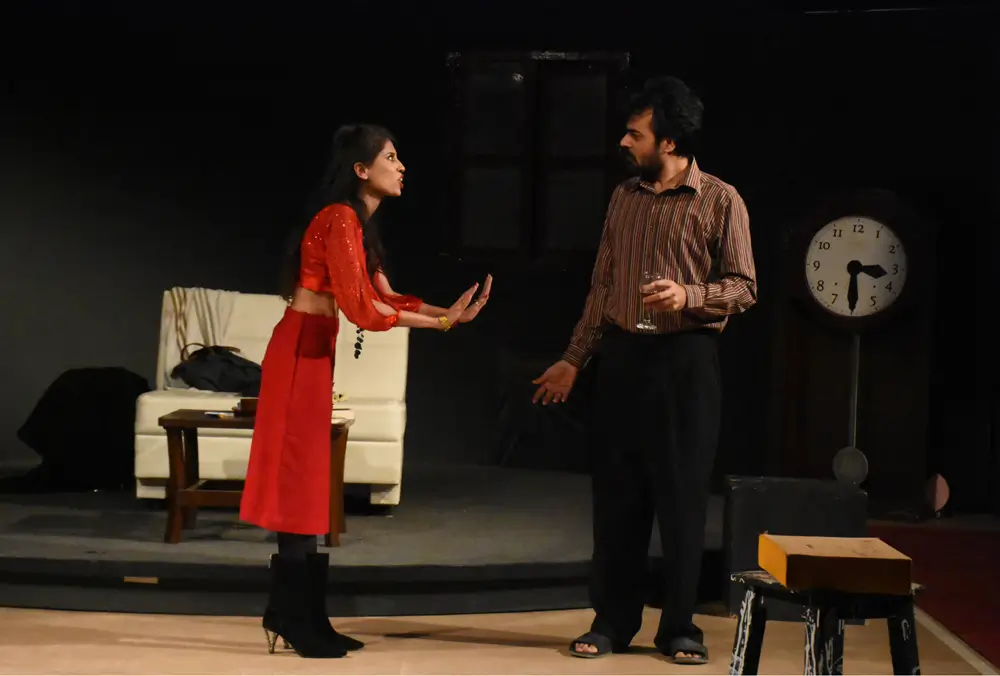
3. “Gathering Dust” — A Thought-Provoking Contemporary Drama
One of the most powerful plays of the festival was “Gathering Dust”, a modern, hard-hitting performance that explored themes of:
- grief
- emotional suppression
- memory
- the pressure of urban life
- loneliness in crowded cities
The stage design was minimalist:
A single chair.
A window frame.
A pile of dust representing the weight of forgotten memories.
Each scene represented a different moment from the protagonist’s life, narrated through fragmented monologues and symbolic movement.
Why the Play Stood Out
- Subtle acting
- Beautiful metaphors
- Quiet yet intense storytelling
- A realistic portrayal of mental exhaustion
Audiences described the experience as “emotionally raw” and “artistically brave”—a reminder that theatre can be a mirror to society’s deepest wounds.
4. “Art” — Sindhi Adaptation of a World-Famous Play
One of the festival’s most intellectual endeavors was the Sindhi adaptation of the globally acclaimed play “Art”.
The story revolves around three friends whose relationships begin to fracture because one of them buys an expensive piece of modern art—a completely white canvas.
Translating this existential comedy into Sindhi was a bold choice, but it worked beautifully.
Why the Adaptation Was Brilliant
- The humor was localized without losing the philosophical core
- Sindhi dialogues added warmth and cultural depth
- The theme of friendship resonated powerfully with local audiences
- A new demographic was introduced to a world classic
The Sindhi theatre community praised the production for its courage and creativity.
The hall remained full for every show.
DANCE NIGHT 4.0 — AN UNFORGETTABLE SPECTACLE OF RHYTHM

If one event truly defined the energy of this festival, it was Dance Night 4.0.
The moment the lights dimmed, the hall filled with an electricity so intense that the audience could feel the excitement pulsing through the air.
The Night Featured:
- Contemporary dance
- Classical Kathak
- Folk performances
- Cultural fusions
- Hip-hop & modern choreography
- International collaborations
The stage became a colorful mosaic of movement, emotion, and expression
The Grand Opening: A Tribute to World Cultures
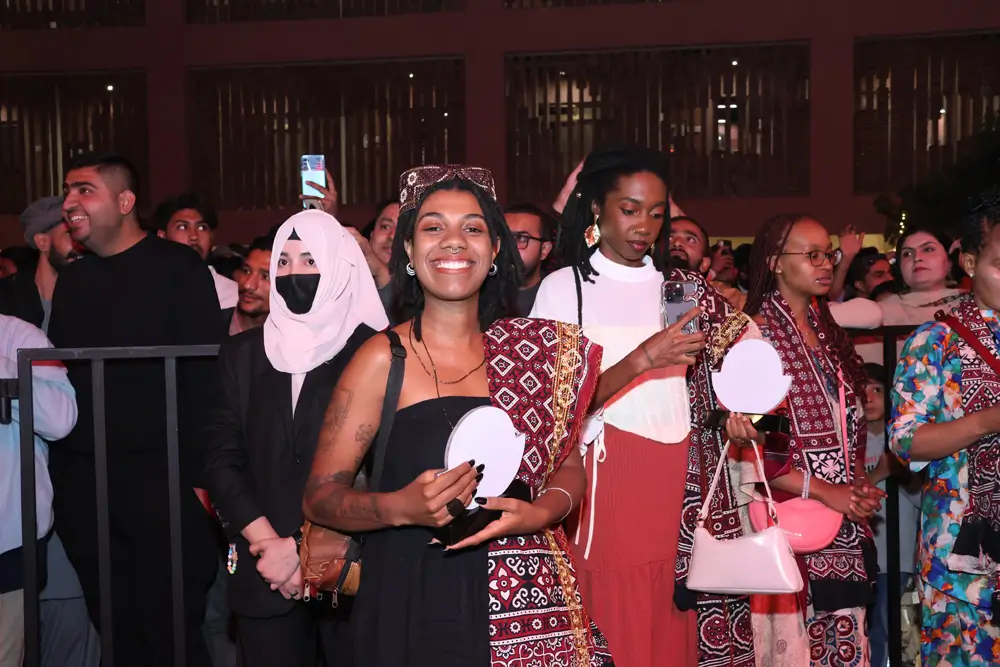
The night began with a breathtaking fusion piece featuring dancers from multiple countries. They blended:
- Sri Lankan hand movements
- African footwork
- Pakistani sufi spins
- Middle Eastern rhythmic patterns
The result was a visual poem celebrating global unity.
Audience members gasped when the dancers shifted from one cultural beat to another seamlessly.
Children clapped.
Adults recorded every second.
The hall was alive.
Solo & Duet Performances
Several standout performances left the audience speechless:
1. Contemporary Solo — “Unbound”
A dancer dressed in shades of grey portrayed the struggle of breaking free from societal expectations. The choreography was raw, emotional, and technically flawless.
2. Kathak Duet — “Raag-e-Ishq”
Two Pakistani dancers performed a classical routine with intricate footwork, ghungroo rhythms, and expressive storytelling.
The audience applauded mid-performance—always a sign of true excellence.
3. African-Pakistani Fusion
Cameroonian dancers collaborated with local artists to create a spectacular fusion routine that brought the hall to its feet.
It was a cultural dialogue expressed through movement—a highlight of the festival.
The Emotional Finale: A Tribute to Peace
The finale of Dance Night 4.0 was a performance dedicated to global peace.
The choreography symbolized:
- wars tearing nations apart
- communities rebuilding
- hope rising again
The final scene—where all dancers stood together under a single spotlight—left the audience in complete silence before the hall erupted into applause.
People cried.
People hugged.
People felt united.
Dance Night 4.0 was not just a show.
It was a message
MEGA MUSIC CONCERT 4.0 — WHEN KARACHI TURNED INTO A GLOBAL STAGE

Just when people thought the festival couldn’t get better, Mega Music Concert 4.0 proved them wrong.
The event was simply monumental — a night where thousands sang together, danced together, and celebrated music without boundaries.
The concert featured a mix of:
- Pakistani mainstream artists
- international musicians
- emerging talent
- live bands
- cultural ensembles
The stage was decorated with massive LED screens, immersive lighting, and a sound system that could rival international festivals.
Opening Act: The Rise of Young Pakistani Talent
The night began with young Pakistani artists who delivered energetic performances that instantly won the crowd’s affection. Their sets included:
- pop
- rap
- sufi rock
- indie music
The audience appreciated seeing new talent uplifted at such a massive platform.
International Music Collaborations
One of the unique features of this concert was global collaborations. Musicians from:
- Cameroon
- Sri Lanka
- Turkey
- Iran
joined Pakistani instrumentalists on stage.
The most memorable collaboration was a fusion of:
- Pakistani tabla
- African drums
- Turkish flute
- Sri Lankan rhythmic vocals
The crowd shouted, danced, and waved flags.
It felt like a world festival happening right in the heart of Karachi.

Audience Reactions: A Night of Joy & Celebration
People described the concert as:
- “historic”
- “magical”
- “the best event of the year”
- “a cultural miracle”
Families, influencers, students, and tourists all enjoyed the show together.
It was truly a night to remember.
BEHIND THE SCENES THE REAL MAGIC – World Culture Festival
What audiences see on stage is magnificent.
But what happens behind the curtains is equally extraordinary.
Backstage areas were filled with:
- costume racks
- makeup artists
- lighting technicians
- sound engineers
- stage managers
- volunteers running with scripts and props
- choreographers guiding last-minute rehearsals
Actors encouraged each other.
Dancers stretched and warmed up.
Musicians tuned their instruments.
Technicians checked every light and cable.
The atmosphere was chaotic yet beautifully organized, like a beehive where every individual knew their role.
These unsung heroes played an essential part in making each event flawless
GLOBAL DIALOGUE, LOCAL CELEBRATION: INTERNATIONAL DELEGATIONS & DAILY FESTIVAL LIFE
The World Culture Festival 2025 was not just a celebration of art, music, and theatre—it was a platform for global cultural exchange, where diplomats, artists, students, and audiences interacted, learned, and shared experiences. Each day of the festival unfolded new layers of creativity, education, and collaboration.
International Delegations: Art Beyond Borders
Artists and delegates from over 140 countries attended the festival, making it one of the most diverse cultural gatherings in South Asia. Countries represented included:
- Asian nations: Bangladesh, Sri Lanka, Nepal, Thailand, Iran, Tajikistan, Afghanistan, China
- European nations: France, Italy, Germany, Spain, Switzerland, Ukraine
- African nations: Cameroon, Kenya, South Africa, Eswatini, Nigeria
- Americas: Cuba, Brazil, Argentina, Mexico, Canada
These delegates were not only performers but also cultural ambassadors, bringing traditions, innovations, and stories from their homelands.
Diplomatic Engagements
Several countries’ Consulates and Cultural Centers actively participated:
- Sri Lanka – Consul General H.E. Sanjeewa Pattiwila engaged in cultural exchange discussions with Arts Council of Pakistan leadership.
- Iran – Cultural Attaché Dr. Saeed Talebi Nia attended art exhibitions and facilitated workshops with Iranian artists.
- Italy – Delegates led film, theatre, and visual arts workshops, bridging European and South Asian artistic traditions.
Discussions focused on:
- Cross-cultural collaboration
- Art-based diplomacy
- Future exchange programs
- Youth arts initiatives
The festival proved that art is not limited by borders—it can open dialogue even where politics cannot.
Daily Life at the Festival
Every day at the Arts Council was packed with events across multiple venues. Here’s a glimpse of a typical day:
- Morning:
Workshops, rehearsal sessions, and art installations. Young artists prepared for performances, students attended skill-building sessions, and volunteers helped organize schedules. - Afternoon:
Film screenings, theatre workshops, panel discussions with international artists, and live art demonstrations. Audiences included university students, families, and tourists. - Evening:
The main performances—music concerts, theatre plays, dance nights—drew huge crowds. By night, the festival grounds buzzed with excitement and cultural energy.
The festival seamlessly blended learning, entertainment, and cultural diplomacy every day.
Audience Stories: Karachi’s Cultural Embrace
The festival did not only attract artists—it attracted the people of Karachi in record numbers. Visitors shared heartfelt stories:
- A schoolteacher said, “I brought my students here to expose them to global art. They’ve never seen such diversity in one place.”
- An aspiring filmmaker commented, “Watching international films and discussing techniques with the directors is a dream come true.”
- A family of four shared, “We came for the theatre, stayed for the music, and left inspired to explore art ourselves.”
- Young dancers said, “We learned rhythms and movements that we didn’t know existed. It feels like Karachi is finally on the world stage.”
Audience engagement was consistent. From standing ovations to active participation in workshops, Karachiites demonstrated a thirst for cultural connection.
Special Karachi Art Exhibitions and Mini-Festivals
Beyond the main festival, Arts Council of Pakistan hosted mini-festivals and satellite ACP Karachi events to cater to niche audiences:
Theatre Highlights of Daily Life
Theatre performances were staged almost every day, each presenting unique narratives and cultural perspectives:
- “Monsieur et Madame O” – French-inspired comedy performed in Urdu adaptation.
- “When?” – Egyptian theatre play exploring time and existential questions, blending mime, dialogue, and movement.
- “Behrupiya” – Musical and comic Urdu theatre play highlighting the theme of disguise and societal roles.
- “Art” – Sindhi adaptation of French classic, exploring friendship, art, and interpretation.
Theatrical innovation was visible in:
- Stage design – Minimalist yet symbolic sets
- Lighting & projection – Enhanced emotional storytelling
- Acting styles – Blending traditional South Asian methods with international techniques
These performances brought Karachi’s audience closer to global theatre trends, inspiring local artists and students.
Music Highlights
The Mega Music Concert 4.0 and other music ACP Karachi events brought together:
- Ustad Noor Bakhsh – Folk fusion magic
- Taj Mastani – Contemporary Pakistani music
- Veronika & Kenta Shoji – International jazz & classical fusion
- Farah Baba Ammi & Sultana Chaudhuri – Traditional and Sufi music collaborations
- Jay C Val x SOVAPA Students – Cross-cultural collaborations bridging Cameroon & Pakistan
Key audience reactions:
- Standing ovations during solos
- Spontaneous dance participation
- Young musicians inspired to learn new instruments
Music bridged cultural gaps and reinforced the festival’s mission of global unity through art.
Cultural Diplomacy & Artistic Exchange
The festival functioned as a soft power initiative. Through artistic exchange:
- International artists interacted with Pakistani counterparts
- Students and emerging artists learned from global experts
- Cultural ambassadors showcased their countries’ traditions
- Delegates discussed long-term collaboration projects
Arts Council of Pakistan, Karachi, leadership emphasized:
“Art transcends politics. Our festival shows that Pakistan is ready to lead in global cultural diplomacy.”
The festival also hosted private delegations for networking dinners, discussions on co-productions, and exchange programs.
Behind-the-Scenes: The Unsung Heroes of Arts Council of Pakistan, Karachi
While the spotlight shone on performers, the festival’s success relied on hundreds of staff:
- Volunteers guided attendees across multiple venues
- Technicians managed lights, sound, and projection
- Stage managers coordinated rehearsals and timing
- Event coordinators handled hospitality, security, and guest relations
The level of coordination was remarkable, especially for a 39-day festival with over 1,000 artists from 140 countries.
Many international delegates remarked that Arts Council of Pakistan’s organizational excellence was comparable to major global festivals.
Preparations for the Grand Closing Ceremony
As the festival approached December 7, the anticipation grew exponentially. Preparations included:
- Stage design – Multi-level stages for dance, music, and theatre
- Seating arrangements – For VIPs, media, artists, and general audience
- Lighting & sound checks – Extensive rehearsals to avoid glitches
- Special performances – Collaborative acts combining international and Pakistani artists
- Media coordination – Global press coverage, live streaming, and social media campaigns
The closing ceremony was set to be a culmination of 39 days of creativity, celebrating art, music, theatre, dance, and visual arts.
Impact on Karachi’s Cultural Future
Even before the festival ended, its impact was clear:
- Boosted Karachi’s global cultural reputation – The city hosted international artists and media attention.
- Encouraged youth participation – Workshops, performances, and exhibitions inspired students.
- Strengthened cultural diplomacy – Consulates, cultural centers, and embassies collaborated with Arts Council of Pakistan.
- Enhanced local art industries – Galleries, performance spaces, and small cultural businesses benefited.
- Created a blueprint for future festivals – Organizers now have experience managing large-scale, multi-disciplinary events.
Artists and visitors left Karachi with a sense of belonging to a global artistic community, with memories that would last a lifetime.
After 39 days of non-stop cultural immersion, Karachi prepared to witness the culmination of the World Culture Festival 2025. From December 6 to 7, the city’s Arts Council was transformed into a global stage of music, theatre, dance, and art.
World Culture Festival Closing Ceremony: A Celebration of Art and Unity
The festival concluded with a grand closing ceremony, reflecting the richness, diversity, and vibrancy of the past 39 days.
Key Highlights:
- Opening Address by Arts Council of Pakistan President Muhammad Ahmed Shah
- Emphasized the festival’s role in cultural diplomacy
- Highlighted participation from over 140 countries and 1,000 artists
- Shared plans for next year’s festival
- Special Cultural Segments
- Folk performances representing every province of Pakistan
- International dance groups collaborating with local performers
- Music ensembles combining Eastern and Western instruments
- Tributes and Recognitions
- Appreciation certificates for international artists
- Special awards for emerging Pakistani talent
- Recognition of volunteers, technicians, and festival staff
The event exemplified cohesion and celebration, with a packed audience of Karachiites, foreign delegates, and media representatives.
Rahat Fateh Ali Khan Exclusive Concert
Although the main festival ended on December 7, the exclusive Rahat Fateh Ali Khan concert became the highlight of post-festival celebrations.
- Date & Time: December 14, 2025, at 6:30 PM
- Audience: Arts Council members and families only (FREE entry)
- ACP Annual General Body Meeting: Held the same day at 5:30 PM
Concert Highlights:
- Performance Magic
- Rahat Fateh Ali Khan performed soulful qawwalis, contemporary hits, and sufi classics
- Accompanied by an orchestra combining tabla, sitar, violin, and Western percussion
- Audience Engagement
- Standing ovations after each song
- Families sang along, creating a unique emotional bond
- Members shared their delight on social media, amplifying the festival’s reach
- Cultural Diplomacy through Music
- Rahat’s performance was attended by international guests and diplomats
- Reinforced Karachi’s image as a global hub for music and culture
Audience & Artist Testimonials
Audience Reflections
- Students & Young Artists:
“This festival inspired us to explore multiple art forms and collaborate internationally.” - Families & Tourists:
“We traveled from other cities just for the closing ceremony—it was worth every mile.” - Local Professionals:
“We witnessed international standard performances right here in Karachi. It gives hope for the city’s cultural future.”
Artist Reflections
- International Artists:
“The warmth of Karachi’s audience and the organization of ACP is unparalleled. We hope to return next year.” - Pakistani Artists:
“Performing alongside global artists pushed us to new creative heights. This festival motivates all of us to raise the bar.”
These testimonials highlighted how the festival bridged cultures, nurtured talent, and inspired creativity
World Culture Festival – Media Coverage Highlights
The festival received extensive local and international media attention:
- Daily newspaper coverage featuring event highlights, artist interviews, and photo spreads
- Television channels broadcasting live performances and backstage stories
- Social media campaigns showcasing dance workshops, concerts, and theatre performances
- International press praising Karachi as a hub for global cultural dialogue
Media outlets consistently emphasized the festival’s scale, diversity, and successful execution, elevating Karachi’s profile worldwide.
Festival Legacy: Beyond the 39 Days – Arts Council of Pakistan, Karachi
The World Culture Festival 2025 left an indelible mark on Karachi. Its legacy includes:
- Cultural Exchange & Diplomacy:
- Partnerships between Pakistan and over 140 countries
- Workshops and collaborations creating opportunities for long-term artistic projects
- Education & Skill Development:
- Young artists learned international techniques in theatre, dance, and music
- Students gained exposure to film production, visual arts, and performance design
- Tourism & Economic Impact:
- Surge in domestic and international visitors
- Local businesses, hotels, and artisans benefited economically
- Social Cohesion & Inclusivity:
- Families, students, and diverse communities participated together
- Highlighted Pakistan’s cultural diversity and unity
- Inspiration for Future Festivals:
- Arts Council of Pakistan set a benchmark in event management and artistic excellence
- Other cities and cultural organizations were encouraged to replicate this success
Long-Term Cultural Impact
The festival’s influence extended beyond the Arts Council:
- Emerging Artists:
- International collaborations opened doors to global performance circuits
- Students showcased their talent on a prestigious platform
- Art Infrastructure:
- Investment in theatre, dance, and exhibition spaces
- Enhanced audience engagement through interactive workshops and performances
- Global Recognition:
- Karachi featured prominently in cultural reports worldwide
- Festival established as one of South Asia’s largest cultural events
Future Prospects for Arts Council of Pakistan & Karachi
Following the success of World Culture Festival 2025, Arts Council of Pakistan announced:
- Next Year’s Festival:
- Plans to include more countries, art forms, and workshops
- Focus on emerging artists and youth programs
- Annual Cultural Calendar:
- Monthly performances in theatre, music, dance, and visual arts
- Continuous engagement with schools, universities, and communities
- International Collaborations:
- Invitations to renowned global artists for residencies and masterclasses
- Strengthening Karachi’s position as a hub for global cultural exchange
- Sustainability & Accessibility:
- Efforts to make festivals inclusive, affordable, and environmentally sustainable
- Free workshops and community engagement programs
The festival set a new standard for arts, culture, and education in Pakistan, inspiring a long-lasting cultural renaissance.
World Culture Festival – Final Thoughts
The World Culture Festival 2025 at the Arts Council of Pakistan, Karachi was more than an event—it was:
- A celebration of human creativity and collaboration
- A platform for international cultural dialogue
- A source of inspiration for young artists and audiences
- A showcase of Karachi’s potential as a global cultural city
From the heart-pounding Dance Nights to the soul-stirring music concerts, from the thought-provoking theatre to the vibrant Karachi art exhibitions, every moment left an imprint on Karachi and its citizens.
The festival demonstrated that art has the power to unite, educate, and transform society, positioning Karachi as a beacon of culture, talent, and creativity in the 21st century.
As Arts Council of Pakistan looks forward to the next edition, the memories of World Culture Festiva 2025 remain vivid: 1,000 artists, 140 countries, 39 days of immersive culture, and countless inspired lives.
CONCLUSION
The World Culture Festival 2025 has set a benchmark in global cultural events:
- 39 days of continuous celebration
- Over 1,000 artists from 140+ countries
- Diverse showcases in music, theatre, dance, film, and visual arts
- International workshops and collaborations
- Massive audience engagement and media coverage
It reinforced Karachi’s role as a hub of global art and cultural diplomacy. The festival is a testament to the vision, passion, and leadership of the Arts Council of Pakistan and its president Muhammad Ahmed Shah, leaving a legacy that will inspire generations.
Karachi is no longer just a city—it is a living, breathing canvas of global culture.


,%20sent%20a%20message%20to%20the%20world:%20“Pakistan%20is%20not%20just%20participating%20in%20cultural%20%5B…%5D&media=https://nigarcraft.com.pk/wp-content/uploads/2025/12/World-Culture-Festival-2025-8.webp)