TDF Ghar Karachi: A Love Letter to a City That Once Was
Karachi is a city that rarely pauses. It rushes, collides, rebuilds, demolishes, and reinvents itself at a pace that leaves little room for reflection. Old neighbourhoods disappear quietly, their stories erased beneath layers of concrete, billboards, and flyovers. Yet, every once in a while, a space emerges that forces the city to slow down—to remember. TDF Ghar is one such space.
Today, it is one of the most Insta-friendly landmarks in Karachi. Chances are you have already seen it—perhaps casually scrolling through your Instagram feed. A pastel backdrop behind a model in identical summer prints. A lifestyle commercial with overenthusiastic housewives endorsing groceries. A fashion shoot styled to evoke nostalgia without context. TDF Ghar has become visually recognisable, even if its deeper meaning remains unexplored by many who pass through its doors.
But beyond its social-media fame, TDF Ghar tells a layered story—of Karachi’s past, its architectural elegance, its forgotten middle class, and the urgent need for genuine public spaces in a city that is constantly running out of them.
This is not just a heritage house. It is a question posed quietly to the city: What kind of Karachi do we want to preserve?
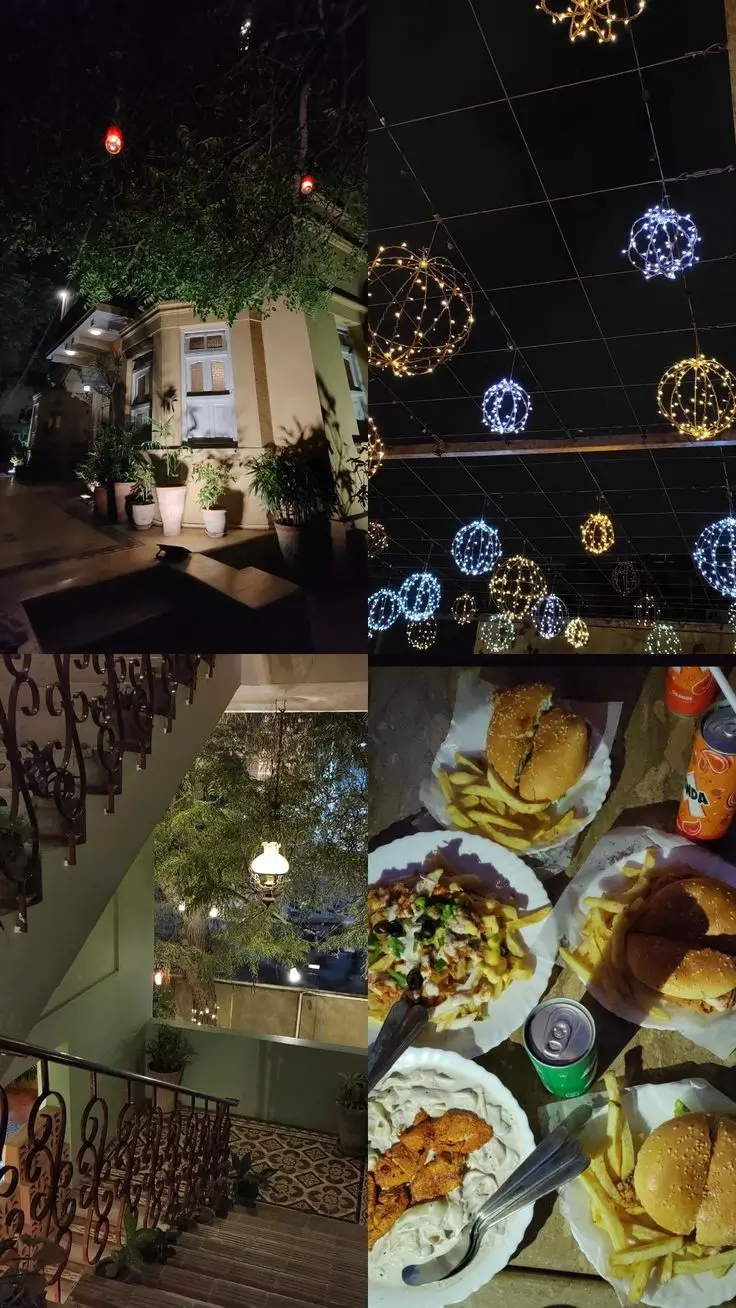
What Is TDF Ghar?
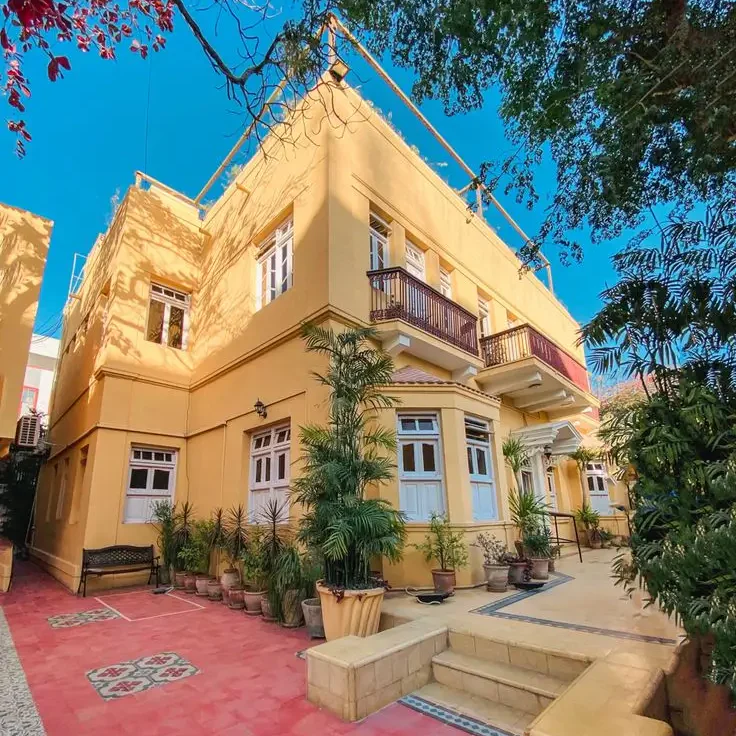
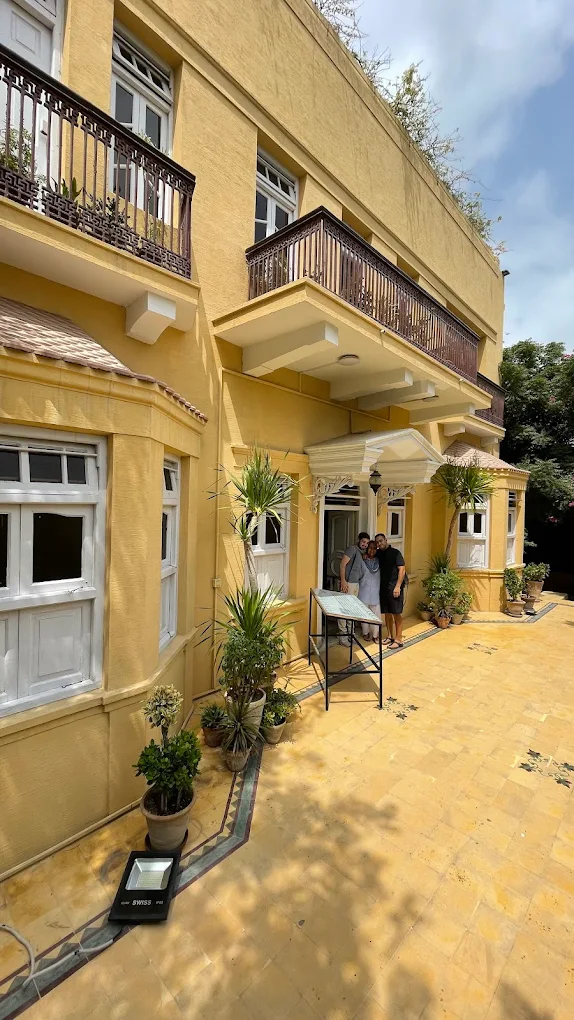
TDF Ghar is a restored 1930s heritage house, lovingly revived by The Dawood Foundation Ghar (TDF) and opened to the public as a cultural and informal learning space. Located in Jamshed Quarters, just off M.A. Jinnah Road, the house stands amid relentless traffic, a neighbouring petrol pump, and the looming presence of urban infrastructure that seems determined to swallow it whole.
The word “Ghar” translates to home “and means” The Dawood Foundation Ghar —and that is precisely what the foundation intended to create: not a cold museum, not a commercial venue, but a lived-in space that evokes memory, intimacy, and belonging.
The Instagram Phenomenon: How TDF Ghar Entered the Public Eye
Before many Karachiites knew what TDF Ghar represented, they recognised how it looked.
The muted walls.
The mosaic tiles.
The vintage furniture.
The old-world charm that photographs beautifully without effort.
In an era where aesthetic often precedes understanding, TDF Ghar found itself becoming a visual symbol—used repeatedly for photo shoots, fashion campaigns, and lifestyle commercials. These productions often feature:
- Models draped in repetitive summer prints
- Nostalgia used as a prop rather than a narrative
- Carefully framed shots that strip the space of its social context
While this visibility brought attention to the building, it also raised an important concern: Is TDF Ghar being seen—or merely consumed?
A House With a Past: The Origins of TDF Ghar
To understand TDF Ghar, one must first understand its origins.
The house was built in the 1930s, a period when Karachi was evolving rapidly under British India. It originally belonged to Hanibai Motiram, a member of the city’s diverse pre-Partition community. Later, the property was sold to the ancestors of the Dawood family, who would go on to play a significant role in Pakistan’s philanthropic and educational landscape.
Unlike many heritage properties that were either abandoned or demolished, this house survived—though not without risk. Its survival is significant not because of its grandeur, but because of what it represents: the everyday life of Karachi’s early middle class.
Jamshed Quarters: A Vision for the Middle Class
The house is located in Jamshed Quarters, an area envisioned by Jamshed Nusserwanjee Mehta, Karachi’s first mayor and a noted philanthropist. His vision was radical for its time.
Jamshed Quarters was designed as:
- A residential neighbourhood for the growing middle class
- A space that encouraged community living
- An area where architectural beauty was accessible, not exclusive
At one point, the locality was home to Muslims, Hindus, Parsis, Christians, and Jews—a cosmopolitan fabric that defined Karachi’s early identity.
Even today, traces of this past remain. Old houses with high ceilings, shaded verandas, and intricate tile work still line some streets. Yet many are disappearing fast, replaced by commercial buildings or sacrificed for infrastructure projects meant to support an ever-expanding city.
The Courage to Build a Public Space Here
What makes TDF Ghar especially remarkable is where it exists.
- A busy petrol pump sits right next to it
- M.A. Jinnah Road, one of Karachi’s most congested arteries, roars constantly outside
- A flyover is being constructed alarmingly close to its entrance
In such conditions, investing in a public cultural space is not convenient—it is courageous.
The surrounding chaos highlights a larger urban contradiction: while the city prioritises speed and expansion, spaces for reflection, culture, and dialogue are shrinking. TDF Ghar exists almost defiantly, insisting that heritage and public life still matter.
TDF Ghar Timings
Visit TDF Ghar Karachi to experience the city’s rich cultural and architectural heritage. The venue is open from Tuesday to Sunday, 10:00 a.m. to 10:00 p.m., while Mondays remain closed. TDF Ghar offers a welcoming environment for informal learning, cultural exploration, and heritage appreciation.
TDF Ghar Ticket Price in Karachi
Begin your cultural journey at TDF Ghar Karachi with an entry ticket priced at Rs. 100 per person. Explore the beautifully restored 1930s heritage house and immerse yourself in the timeless charm and history of old Karachi.
TDF Ghar Contact Number
To plan your visit to TDF Ghar, advance reservations are recommended. For bookings and inquiries, call 0301-8447051. Pre-booking ensures a smooth and convenient experience while exploring one of Karachi’s most iconic heritage landmarks.
Stepping Inside: A Shift in Time and Mood
Cross the threshold, and something changes.
The noise softens.
The air feels calmer.
The city, though still present, feels distant.
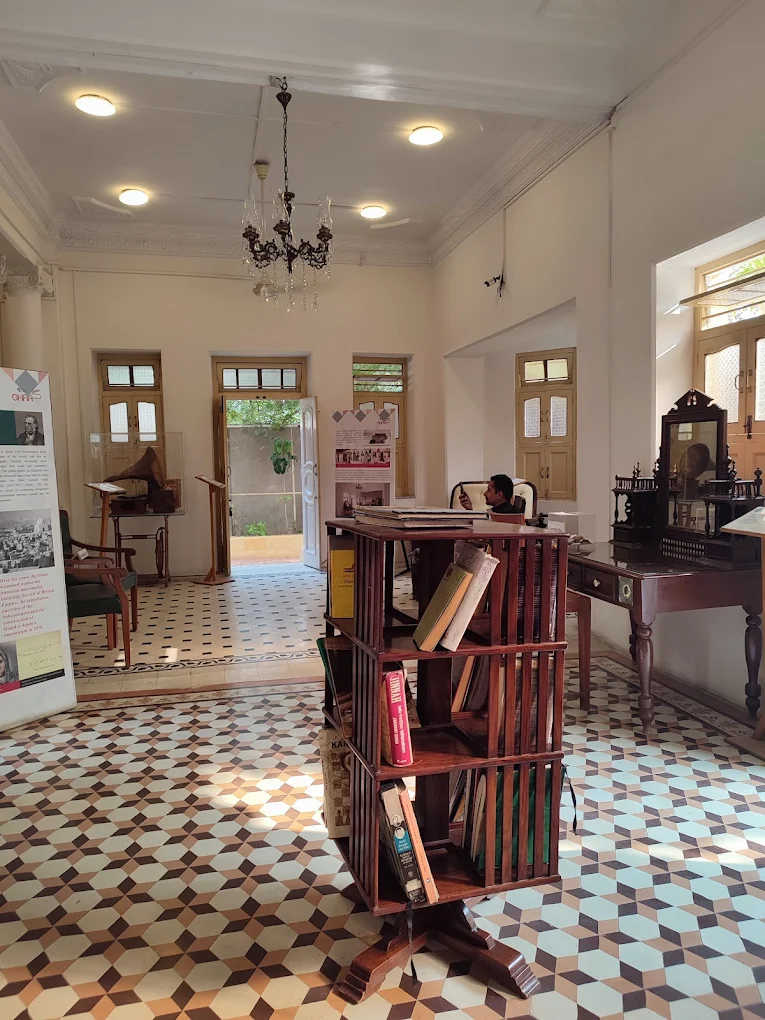
The Living Room on the ground floor is where this transformation begins.
The Living Room: Curated Nostalgia Done Right
The living room is not cluttered, nor is it theatrical. Instead, it is carefully composed to recreate the rhythm of pre-modern urban life.
Inside, you will find:
- Period-appropriate furniture
- A typewriter, once a symbol of professional aspiration
- A chess set, suggesting leisure and thought
- Vintage books that hint at intellectual life beyond screens
Together, these objects create an atmosphere that feels familiar even to those who never lived in that era. It is nostalgia without exaggeration—an invitation rather than a performance.
What makes this space compelling is its restraint. It does not overwhelm the visitor with information panels or curatorial text. Instead, it allows the imagination to fill in the gaps.
From Living Room to Sehan: A Subtle Transition
As you step out of the living room, you enter Sehan Café, located in the courtyard.
The mood shifts again.
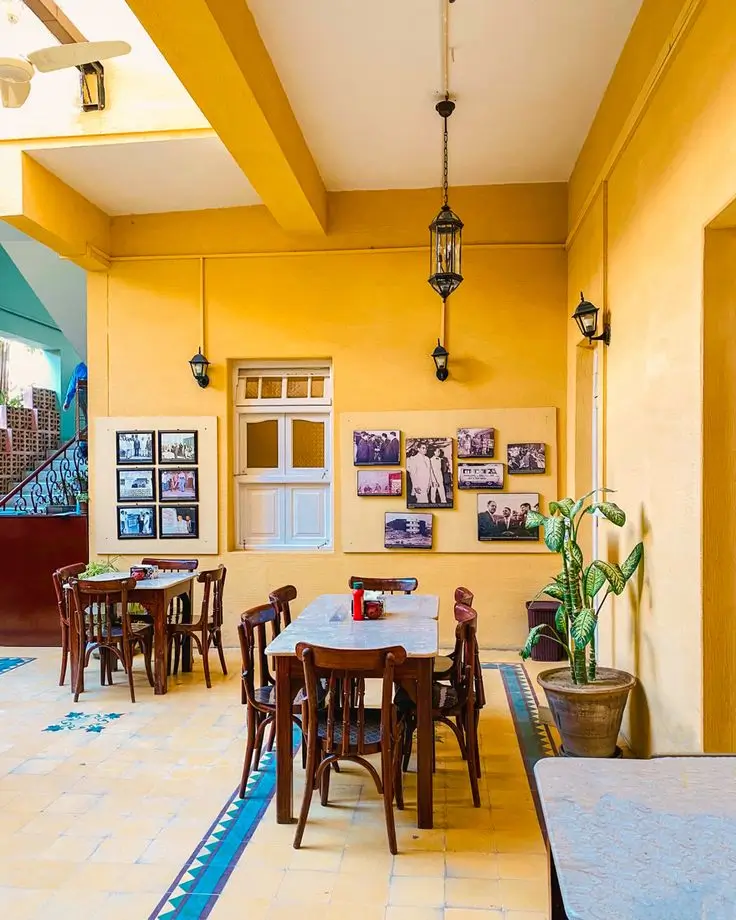
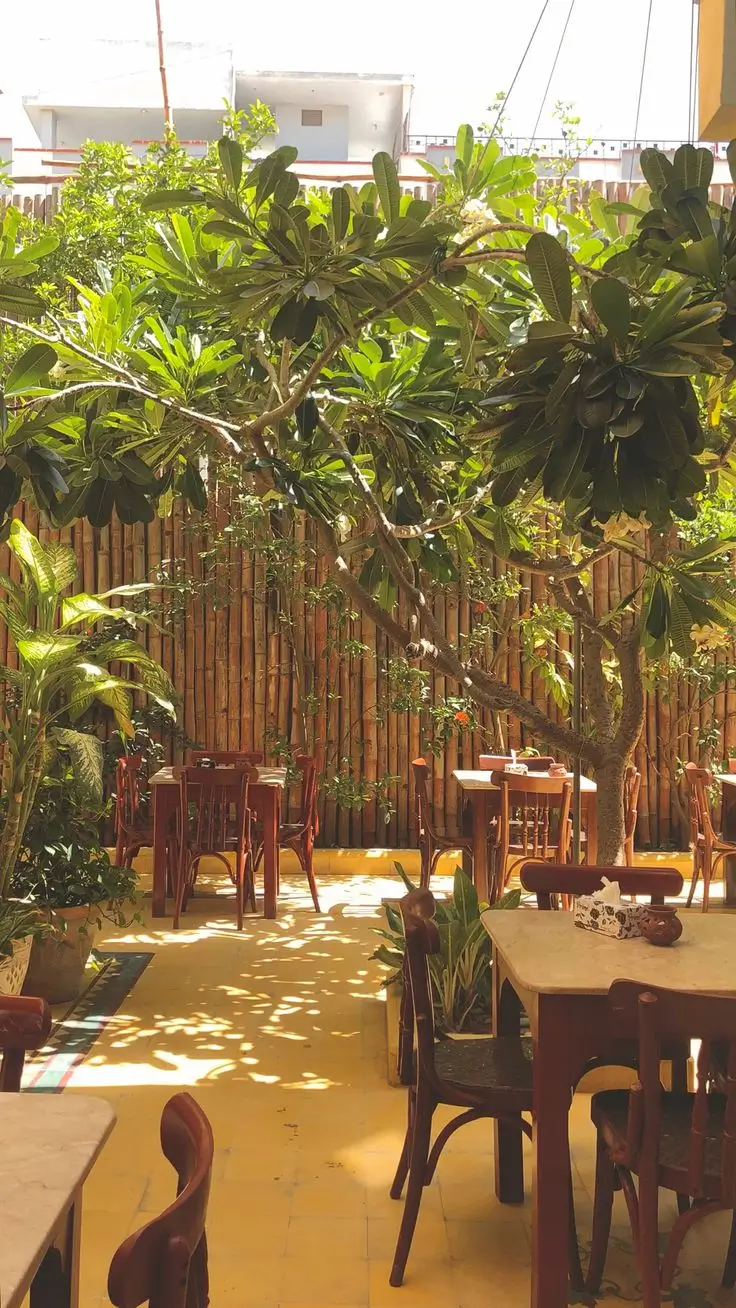
Here, the space opens up. Natural light filters in. Bentwood chairs and marble-top tables recall a café culture that once thrived in Karachi. The design is intentional—simple, functional, and unpretentious.
On weekends, the café serves traditional breakfast, most notably halwa puri. This choice is significant. Rather than offering an internationalised menu, Sehan Café grounds the experience firmly in local culture.
It is not about novelty—it is about memory.
Why Spaces Like Sehan Café Matter
Cafés in Karachi often prioritise speed, branding, and consumption. Sehan Café does something quieter.
It allows:
- Conversations without pressure
- Sitting without obligation
- Presence without urgency
In a city starved of safe, affordable, non-commercial public spaces, this is no small achievement.
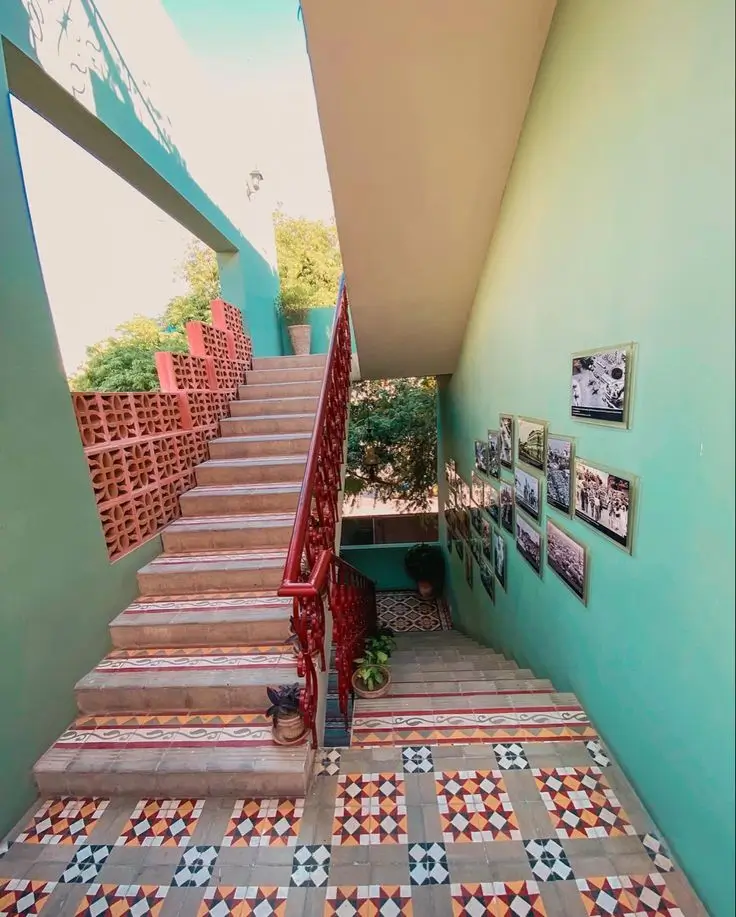
Ascending the Staircase: An Unfinished Story
A narrow staircase leads upward.
The first floor contains several rooms—mostly empty, with only a few benches scattered throughout. Architecturally, the floor remains faithful to the original design:
- High ceilings
- Large windows
- Colourful mosaic tiles
The emptiness here feels intentional, yet unresolved. It suggests possibility, but also hesitation. The space seems to be waiting—for programming, for people, for purpose.
The Rooftop: Where the City Finally Breathes
Then comes the rooftop.
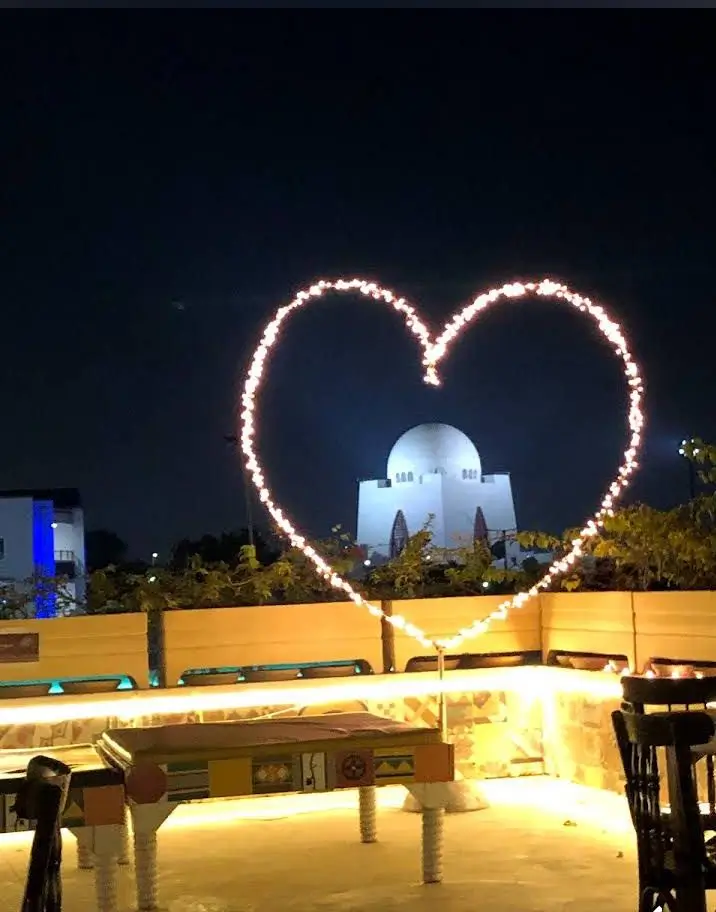
From here, the view is unmistakable: a clear sightline to Quaid-e-Azam’s Mausoleum. As evening approaches, the mausoleum glows softly, framed against Karachi’s restless skyline.
It is here that TDF Ghar feels most complete.
The rooftop offers:
- Visual relief from congestion
- A moment of quiet perspective
- A reminder of Karachi’s layered history
It is, arguably, the most powerful space in the entire house—and one that begs to be used more meaningfully.
TDF Ghar’s Promise—and Its Challenge
There have been discussions and plans to use TDF Ghar for cultural activities. Talks, performances, exhibitions, and dialogue-driven programming are often mentioned as future possibilities.
And they are desperately needed.
While TDF Ghar has succeeded in:
- Creating visual impact
- Reviving a heritage structure
- Generating public curiosity
It has yet to fully answer one critical question:
Why should people return?
Karachi does not lack beautiful spaces. It lacks active, inclusive, non-commercial public life.
Why This Matters for Karachi
Karachi is in dire need of spaces that:
- Encourage conversation over consumption
- Value culture over commerce
- Allow people to exist without buying
If TDF Ghar aims to generate dialogue—and it should—then it must evolve beyond being a backdrop. It must become a living, breathing cultural node.
Visitor Information (Quick Overview)
- Timings: 10:00 a.m. – 10:00 p.m.
- Entry Fee: Rs. 50
- Location: Jamshed Quarters, near M.A. Jinnah Road
TDF Ghar Karachi: Between Preservation and Performance
Stepping inside TDF Ghar and understanding what it is, then must ask the more difficult question: what does it do for Karachi—and what could it do better?
In a city that constantly negotiates between memory and survival, heritage spaces are rarely neutral. They are political, social, and deeply emotional. TDF Ghar exists at this crossroads, carrying both promise and responsibility.
Heritage in Karachi: A City That Forgets Too Quickly
Karachi’s relationship with heritage is complicated.
Unlike cities that preserve their past as a form of pride, Karachi often treats its old buildings as inconveniences—obstacles in the path of progress. Entire neighbourhoods are erased with little documentation. Architectural details vanish overnight. Streets lose their names, and houses lose their stories.
In this environment, heritage survival is an act of resistance.
TDF Ghar’s restoration stands out not because it is the only heritage project in Karachi, but because it chose inclusion over isolation. Instead of becoming a gated monument or a private club, it opened its doors to the public.
Yet, preservation alone is not enough.
The Risk of “Aesthetic Heritage”
One of the biggest dangers facing heritage spaces today is what might be called aesthetic preservation.
This happens when:
- Buildings are restored beautifully
- Spaces photograph well
- Visual nostalgia is prioritised
—but the deeper social function is left underdeveloped.
TDF Ghar occasionally risks falling into this category.
It has become:
- A backdrop for fashion shoots
- A trendy Instagram location
- A visually recognisable landmark
But heritage is not meant to be consumed passively. It is meant to be questioned, engaged with, and lived inside.
Public Spaces vs. Commercial Spaces in Karachi
To understand why TDF Ghar matters, we must look at Karachi’s broader public-space crisis.
Karachi has:
- Malls instead of parks
- Cafés instead of community centres
- Private venues instead of public squares
Most places where people gather require spending money. Access is determined by affordability, appearance, and class.
TDF Ghar challenges this model by:
- Charging a minimal entry fee
- Allowing long stays without pressure to buy
- Providing seating, WiFi, and open access
This alone makes it rare.
Why Entry Fees Matter (And Rs. 50 Is Symbolic)
The Rs. 50 entry fee may seem insignificant, but it plays an important role.
It signals that:
- The space has value
- Visitors are participants, not just passers-by
- The house is maintained collectively
At the same time, it remains accessible to students, artists, families, and casual visitors. This balance is crucial for any genuine public space.
The Empty Rooms Upstairs: Missed Opportunities or Strategic Pauses?
One of the most striking aspects of TDF Ghar is the emptiness of its upper-floor rooms.
Architecturally stunning, these spaces remain largely unused—containing little more than benches and open floor plans. The emptiness can be interpreted in two ways:
1. A Missed Opportunity
The rooms could host:
- Community-led workshops
- Free lectures
- Reading circles
- Storytelling sessions
- Local history exhibits
Their current underuse makes the building feel incomplete.
2. A Strategic Pause
Alternatively, the emptiness could be intentional—a refusal to over-program before understanding community needs.
But in a city like Karachi, silence is quickly filled by irrelevance.
Cultural Programming: Why It Must Be Non-Commercial
Karachi already has plenty of:
- Ticketed events
- Brand-sponsored festivals
- Invite-only art openings
What it lacks are consistent, non-commercial cultural activities.
For TDF Ghar to truly succeed, it must host:
- Open-access talks
- Community archives
- Oral history projects
- Low-budget performances
- Youth-led discussions
These do not need elaborate production. They need consistency.
The Role of Dialogue in a Fragmented City
Karachi is fragmented—geographically, economically, socially.
Public dialogue rarely happens organically. People live in silos. Conversations happen online, not face-to-face.
TDF Ghar has the potential to become:
- A listening space
- A debating ground
- A place for disagreement without hostility
But dialogue requires active facilitation.
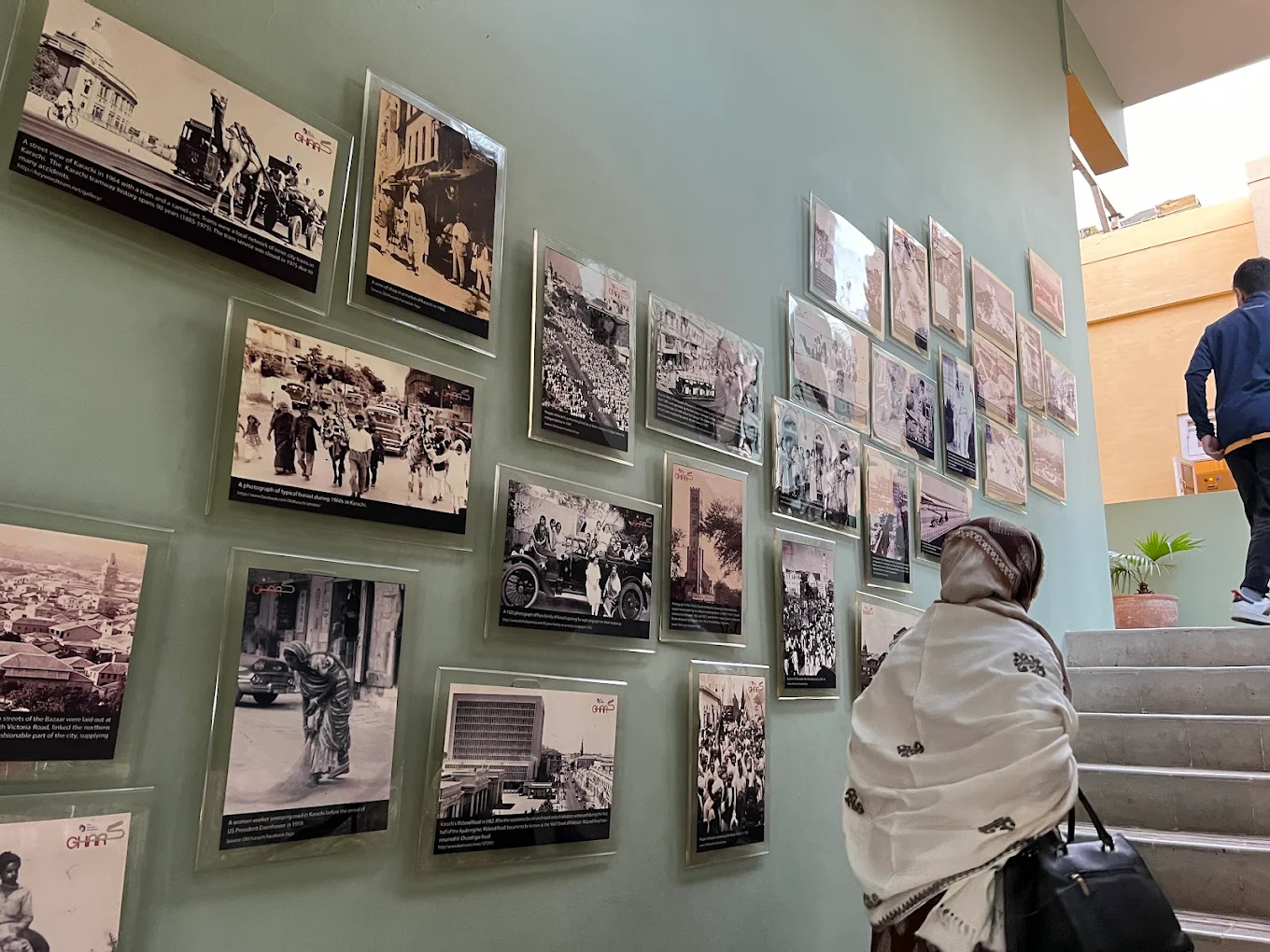
Learning Without Being Lectured
One of TDF Ghar’s strengths is that it avoids the stiffness of traditional museums.
There are no:
- Overwhelming timelines
- Dense plaques
- Academic jargon
This makes learning feel informal—but it also risks becoming vague.
The challenge is to educate without intimidating, to provide context without turning the house into a classroom.
Karachi’s Youth and the Need for Ownership
Karachi has a young population that:
- Craves meaningful spaces
- Is deeply visual
- Is politically aware but spatially excluded
TDF Ghar must invite youth participation, not just youth attendance.
This could mean:
- Youth-curated exhibitions
- Student research displays
- Volunteer-led tours
- Community storytelling nights
Ownership builds loyalty. Loyalty builds relevance.
Instagram vs. Intention
Social media visibility is not inherently negative. It can:
- Attract first-time visitors
- Generate curiosity
- Expand reach
But if the experience ends at the photograph, the space has failed.
TDF Ghar must ask:
- What happens after the post?
- What memory remains after the image fades?
The Rooftop as a Metaphor
The rooftop of TDF Ghar—with its view of Quaid’s mausoleum—functions as a powerful metaphor.
It represents:
- Perspective
- Reflection
- Historical continuity
Yet, like much of the building, it remains under-activated.
Imagine:
- Poetry readings at dusk
- Open-air discussions
- Film screenings
- Quiet memorial evenings
The potential is enormous.
Preservation Is Not Neutral
Choosing to preserve one house while hundreds disappear is not a neutral act.
It raises questions:
- Whose history is preserved?
- Who decides what is worth saving?
- How do we include overlooked narratives?
TDF Ghar has started this conversation—but it must continue it actively.
Why TDF Ghar Still Matters (Even If It’s Incomplete)
Despite its gaps, TDF Ghar matters because:
- It exists
- It is accessible
- It is not commercialised beyond recognition
In a city that often offers nothing between chaos and consumption, even an imperfect public space is valuable.
Looking Forward: The Urgency of Action
Karachi does not wait.
Spaces that do not evolve become irrelevant quickly. TDF Ghar has already made the “right noise.” Now it must make the right moves.
The house does not need:
- More shoots
- More branding
- More polish
It needs people, stories, and sustained activity.
TDF Ghar Karachi: From a Beautiful House to a Living City Space
By the time you leave TDF Ghar, there is a lingering feeling that stays with you—something unfinished, something hopeful, something quietly demanding more attention. It is not dissatisfaction. It is anticipation.
What should TDF Ghar become if it is to truly matter in Karachi’s future?
Heritage Is Not the Past — It Is a Tool for the Present
One of the most common misunderstandings about heritage spaces is that they exist purely to preserve memory. In reality, heritage is most powerful when it actively shapes the present.
TDF Ghar should not exist merely to remind us of:
- How Karachi once looked
- How people once lived
- How harmony once existed
It should help us understand:
- Why those systems worked
- What we lost along the way
- How we might rebuild social cohesion
Heritage without relevance becomes décor.
What Successful Public Spaces Around the World Do Right
Across the world, thriving cultural spaces share common traits, regardless of geography:
1. They Are Programmed Consistently
Not occasionally. Not seasonally. But predictably.
People return when they know:
- Wednesdays mean discussions
- Fridays mean performances
- Sundays mean families
2. They Encourage Participation, Not Consumption
Visitors are contributors, not customers.
3. They Reflect Local Realities
They do not imitate global aesthetics blindly. They speak the language of their city.
TDF Ghar already has the physical structure needed to succeed. What it needs is intentional activation.
What TDF Ghar Can Become (Realistic, Karachi-Specific Ideas)
These are not idealistic fantasies. These are practical, low-cost, community-driven possibilities.
1. Weekly Open Cultural Evenings
- Poetry
- Storytelling
- Music without amplification
- Open mics
No tickets. No sponsorship banners. Just people.
2. Karachi Memory Archive
Invite visitors to:
- Share family photographs
- Record oral histories
- Contribute neighbourhood stories
Displayed digitally or rotated physically.
3. Student-Led Heritage Labs
Architecture, history, sociology students could:
- Curate exhibitions
- Conduct guided tours
- Present research
This builds ownership and reduces operational burden.
4. Rooftop Reflection Sessions
Quiet evenings focused on:
- Karachi’s changing identity
- Partition memories
- Urban grief and resilience
Not everything needs applause.
The Importance of Staying Non-Commercial
As soon as a space becomes brand-dependent, it loses credibility.
TDF Ghar must resist:
- Corporate over-branding
- Influencer-driven programming
- Ticket inflation
Its strength lies in accessibility and trust.
Why Karachi Needs Spaces Like TDF Ghar Now More Than Ever
Karachi is:
- Overstimulated
- Under-connected
- Culturally fragmented
People are desperate for:
- Slowness
- Listening
- Meaningful gathering
TDF Ghar offers the rare chance to:
- Sit without urgency
- Speak without shouting
- Remember without romanticising
The Danger of Letting It Become Just a Landmark
Landmarks are admired.
Living spaces are loved.
If TDF Ghar remains:
- A photo stop
- A commercial backdrop
- A one-time visit
It will fade into symbolic irrelevance.
But if it becomes:
- A meeting point
- A cultural anchor
- A shared city living room
It could quietly change how Karachi imagines itself.
A House That Survived — Now It Must Speak
This house survived:
- Colonial transitions
- Partition trauma
- Decades of neglect
- Urban aggression
It did not survive just to be restored beautifully.
It survived to mean something.
Final Thoughts: Karachi Deserves Better — And This Is a Start
TDF Ghar is not perfect.
But perfection is not what Karachi needs.
It needs:
- Courage over convenience
- Dialogue over décor
- Memory with purpose
TDF Ghar has already taken the hardest step: existing.
Now, it must choose to matter.
Frequently Asked Questions (FAQ) – TDF Ghar Karachi
1. What is TDF Ghar Karachi?
TDF Ghar is a restored 1930s heritage bungalow in Karachi, transformed into a cultural space and living museum that celebrates the city’s history, architecture, and lifestyle.
2. Where is TDF Ghar located in Karachi?
TDF Ghar is located near Mazar-e-Quaid, making it easily accessible and a popular stop for heritage and cultural tourism in Karachi.
3. Why is TDF Ghar considered an Instagrammable heritage landmark?
With its vintage interiors, colonial architecture, rooftop views, and curated décor, TDF Ghar offers countless photogenic spots perfect for social media and content creators.
4. What is the history behind TDF Ghar?
The building dates back to the pre-partition era and was carefully restored by The Dawood Foundation to preserve Karachi’s architectural and cultural heritage.
5. What can visitors see inside TDF Ghar, and what are the TDF Ghar ticket prices?
Visitors can explore themed rooms, heritage furniture, archival displays, a living room museum, exhibition spaces, and traditional design elements that reflect old Karachi. Ticket prices is PKR 100
6. Is there a café inside TDF Ghar?
Yes, Sehan Café at TDF Ghar offers refreshments in a heritage setting, allowing visitors to relax while enjoying the historic ambiance.
7. Are events and exhibitions held at TDF Ghar?
TDF Ghar regularly hosts cultural events, talks, workshops, exhibitions, and private gatherings focused on art, history, and community engagement.
8. What are the visiting hours of TDF Ghar Karachi?
Visiting hours are 10:00 am – 10:00 pm, Sunday to Tuesday, with Monday it is closed. but it may vary, so it’s recommended to check the official website or social media pages of TDF Ghar before planning your visit.
9. Is TDF Ghar suitable for families and tourists?
Yes, TDF Ghar is family-friendly and ideal for tourists, students, photographers, and anyone interested in Karachi’s heritage and culture.
10. Why should tourists visit TDF Ghar when exploring Karachi?
TDF Ghar offers a unique blend of history, culture, architecture, and modern experiences—making it one of the best heritage attractions in Karachi.