
Rising like a jagged spear into the sky, K2 Mountain is not merely a peak it is a reckoning. Known globally as the “Savage Mountain,” This mountain has earned a reputation that inspires awe, fear, and reverence in equal measure. While Mount Everest may hold the title of the world’s highest mountain, K2 commands something arguably greater: absolute respect.
At 8,611 meters (28,251 feet) above sea level, K2 is the second-highest mountain on Earth, yet it is widely considered the most difficult and dangerous of all the 8,000-meter peaks. Unlike Everest, where commercial expeditions, fixed ropes, and large support teams have normalized summit attempts, this mountain remains brutally selective. It does not welcome crowds. It does not forgive mistakes. And it does not offer easy routes.
This is why elite climbers refer to K2 as the “Mountaineer’s Mountain.” Every ascent is earned through suffering, skill, and an acceptance of risk that borders on the extreme. Roughly one in four climbers who reach the summit have historically died, a fatality rate far higher than Everest’s. Even today, with modern gear and forecasting, this mountain continues to test the limits of human endurance.
Where Is K2 Moutain is Located in?
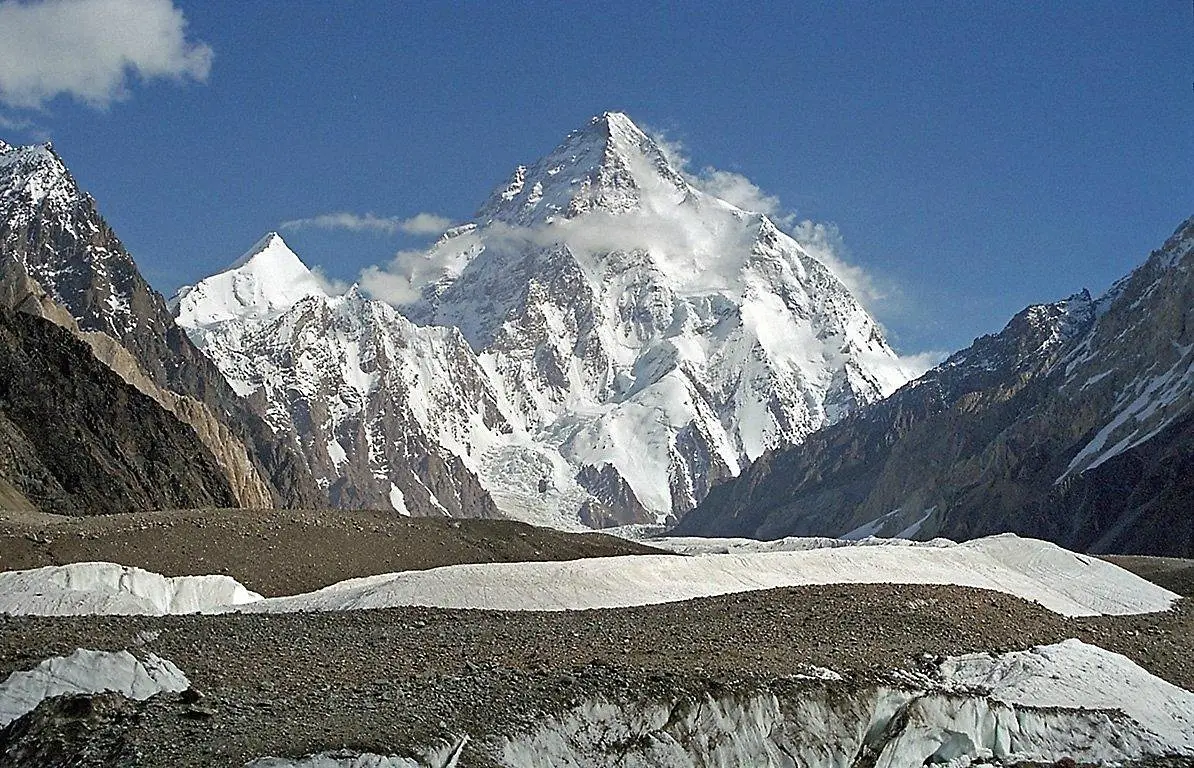
K2 Mountain is located in the Karakoram Range, one of the world’s most rugged and glaciated mountain systems. The peak sits directly on the border between Pakistan and China, specifically:
- Pakistan side: Gilgit-Baltistan (Baltoro Glacier region)
- China side: Xinjiang (Taxkorgan region)
However, nearly all climbing expeditions approach this mountain from the Pakistani side, making Pakistan the primary gateway to the mountain.
Geographic Coordinates
- Latitude: 35.8808° N
- Longitude: 76.5133° E
The Karakoram Range: Home of Extremes
The Karakoram Range is often overshadowed by the Himalayas in popular culture, yet it is arguably more severe and technically challenging. Unlike the smoother, snow-draped giants of the Himalayas, Karakoram peaks are steeper, sharper, and more heavily glaciated.
Key characteristics of the Karakoram:
- Houses four of the world’s fourteen 8,000-meter peaks
- Contains some of the largest glaciers outside polar regions
- Known for unpredictable weather systems
- Terrain dominated by rock, ice, and hanging seracs
K2 Mountain stands at the heart of this chaos, surrounded by other legendary peaks such as Broad Peak, Gasherbrum I, and Gasherbrum II.
What Does “K2” Actually Stand For?
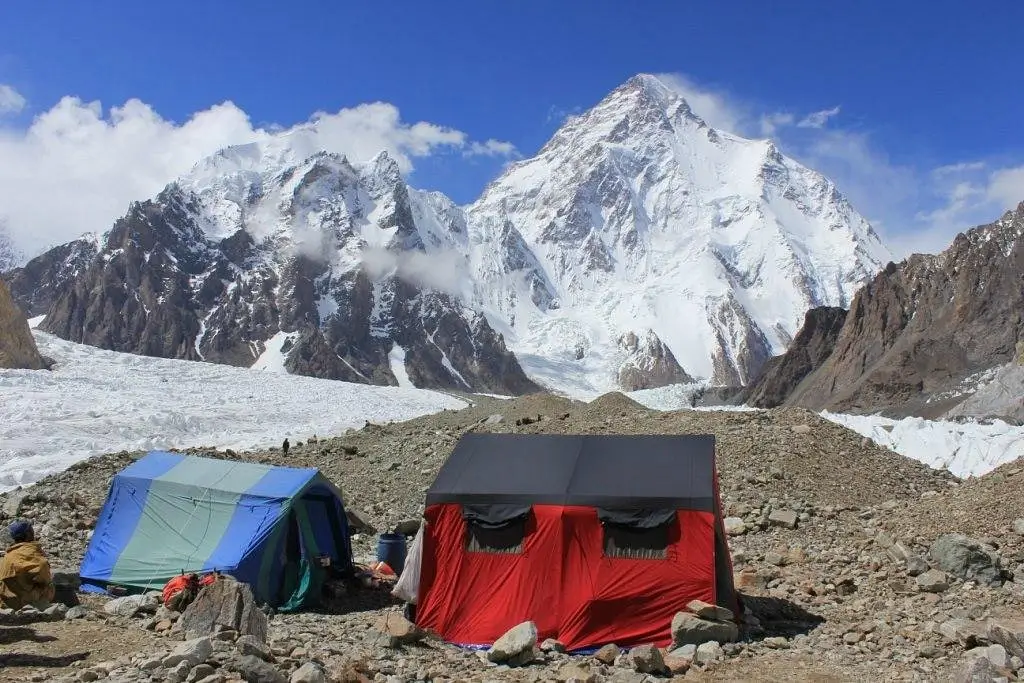
Unlike Everest (named after a British surveyor) or Nanga Parbat (“Naked Mountain”), This mountain has no poetic colonial name—and that starkness suits it. The name “K2” comes from the Great Trigonometrical Survey of India in the 1850s.
- “K” stands for Karakoram
- “2” indicates it was the second peak measured in the Karakoram Range
The mountain was officially recorded by Colonel T.G. Montgomerie in 1856.
Other Names
- Mount Godwin-Austen – Named after British geographer Henry Godwin-Austen
- Chogori – A Balti name meaning “Great Mountain”
- Dapsang Peak – An older regional reference
Despite several naming attempts, K2 endured, perhaps because it reflects the mountain’s raw, unromantic nature
K2 vs Everest : Why K2 Is Harder than Everst?
| Feature | K2 Mountain | Mount Everest |
| Height | 8,611 m | 8,849 m |
| Difference | Only 237 m shorter | — |
| Fatality Rate | ~23–25% historically | ~1–2% |
| Technical Difficulty | Extremely high | Moderate |
| Commercial Expeditions | Rare | Very common |
| Rescue Possibility | Almost none | Often possible |
| Weather Stability | Highly unstable | Relatively predictable |
Why K2Mountain Is More Dangerous Than Everest
- Steeper Slopes: K2’s faces are dramatically steeper than Everest’s South Col route.
- Technical Climbing: Requires advanced rock, ice, and mixed climbing skills.
- Unpredictable Weather: Storms can arrive without warning and last for days.
- No Easy Route: There is no “walking” section near the summit.
- Limited Rescue Options: Helicopter rescues are nearly impossible above base camp.
As legendary climber George Bell famously said after the failed 1953 American expedition:
“It’s a savage mountain that tries to kill you.” The name stuck.
Shape and Physical Structure
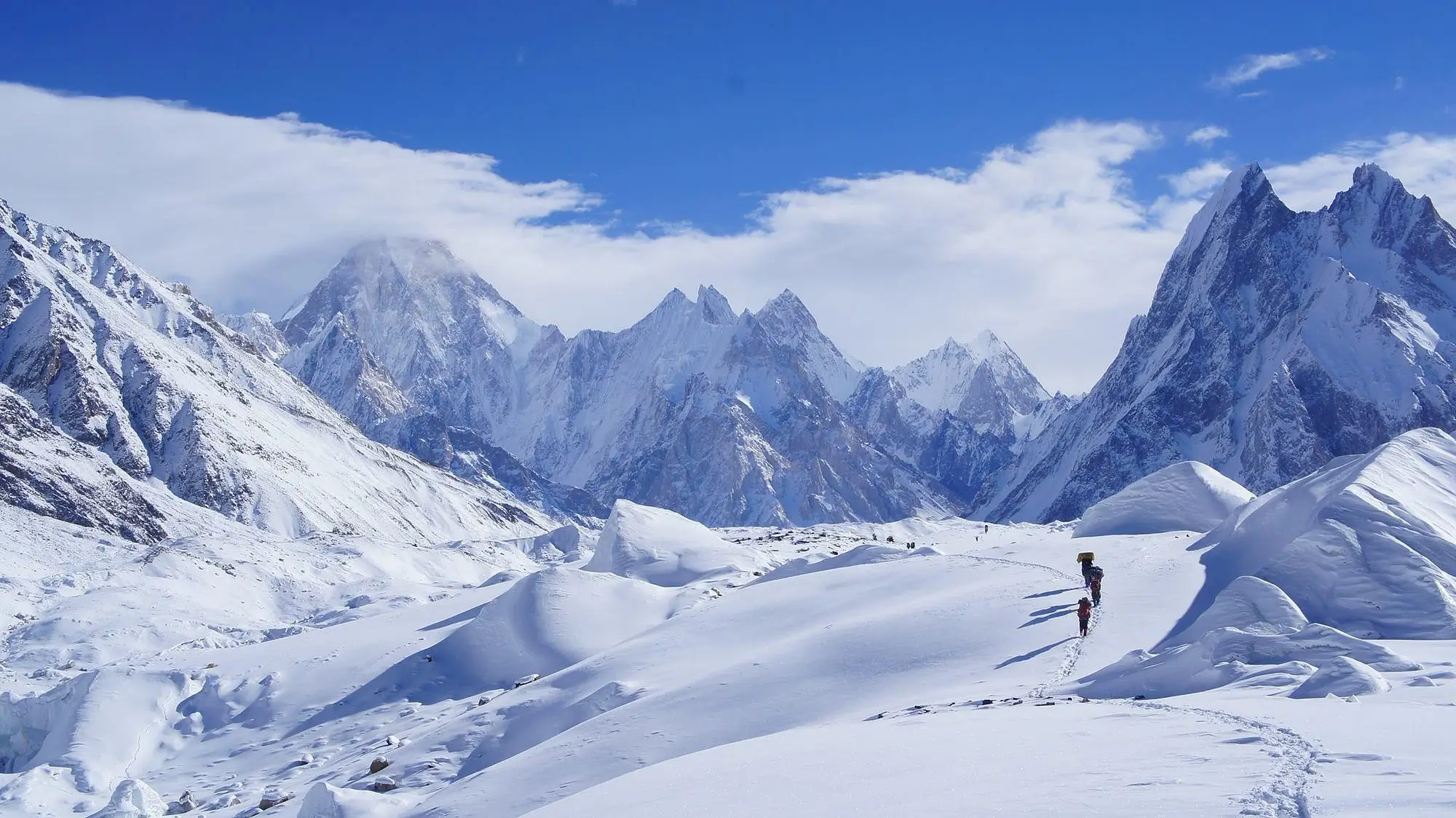
Unlike Everest’s pyramid-like symmetry, K2 rises sharply and aggressively from its surrounding terrain. It has:
- Sharp ridgelines
- Massive ice walls
- Hanging glaciers
- Vertical rock faces
K2’s topographic prominence is approximately 4,017 meters (13,179 feet)—greater than Everest’s—meaning it rises more dramatically above the surrounding landscape. This steepness contributes directly to:
- Avalanche frequency
- Icefall instability
- Technical difficulty
The Human vs Nature Drama
K2 is not conquered by ambition alone. On Everest, climbers can often wait out storms, rely on Sherpa support, or descend quickly. On the Mountain, delays can mean death. Every step above 8,000 meters—the infamous “Death Zone”—is a gamble. Here, oxygen deprivation erodes judgment. Cold freezes flesh in minutes. And a single misstep can end a life instantly. This is why K2 is not about numbers or records. It is about survival.
The History of K2 — Discovery, Early Expeditions & the First Ascent (1856–1954)
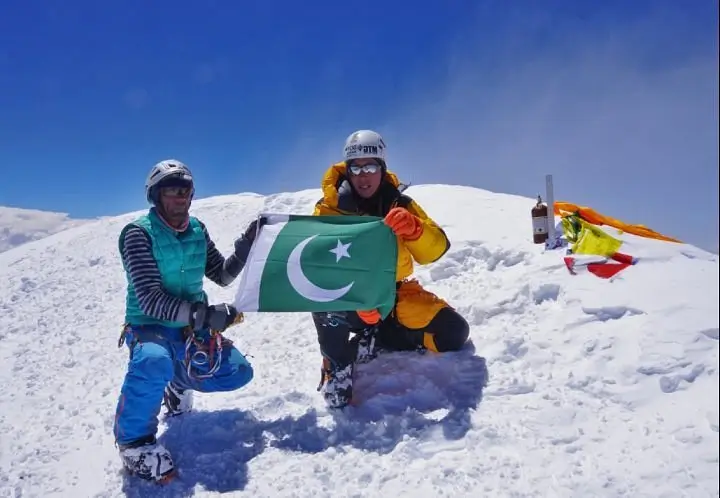
The story of this Mountain begins not with climbers, but with surveyors. In 1856, during the Great Trigonometrical Survey of India, British surveyor Colonel Thomas George Montgomerie identified a colossal peak in the Karakoram Range. From a distant vantage point near Mount Haramukh, Montgomerie labeled visible peaks alphabetically:
- K1
- K2
- K3
- K4
- K5
The label K2 was never meant to be permanent. But unlike neighboring peaks, K2 had no commonly agreed local name, so the technical designation remained. From the very beginning, K2 was known not as a destination—but as a problem.
Early Expeditions: When K2 Repelled Humanity
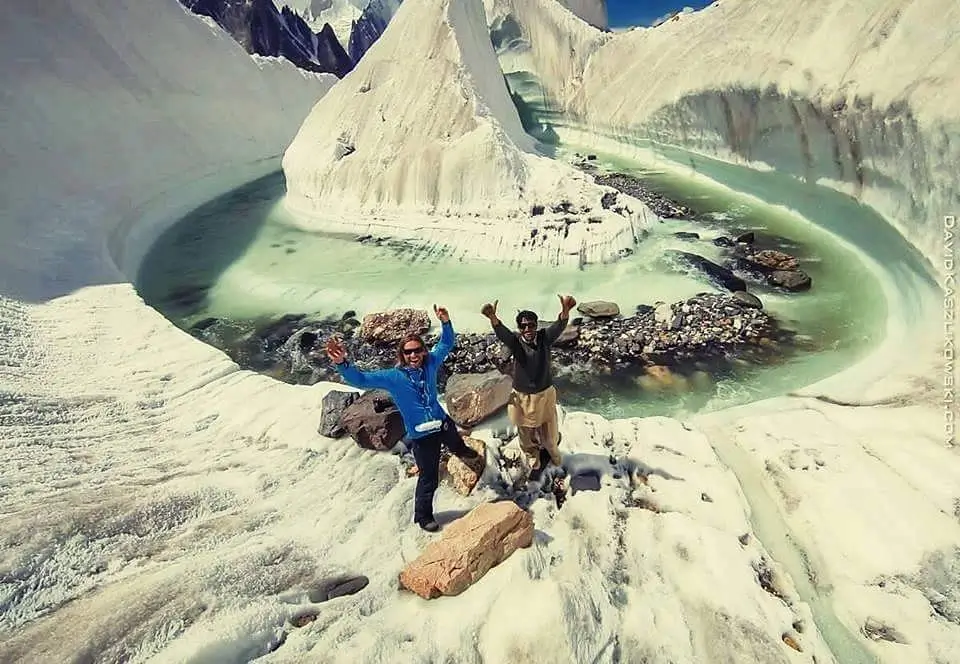
1902 Anglo-Swiss Expedition (First Attempt)
The first climbing attempt on K2 occurred in 1902, led by British mountaineer Oscar Eckenstein, accompanied by climbers including Aleister Crowley. Crowley later wrote that the mountain felt “hostile” and “unnaturally violent.”This set a pattern. Outcome:
- Reached approximately 6,600 meters
- Forced to retreat due to storms, illness, and technical difficulty
1938 & 1939 American Expeditions
The American attempts in the late 1930s were ambitious but tragic. This tragedy marked this mountain as far deadlier than Everest, even before summits were achieved.
1939 Disaster
- Several climbers trapped high on the mountain
- Dudley Wolfe died after being left behind during descent
- Rescue attempts failed due to weather and terrain
Why Early Climbers Failed: Documented Risks by Foreigners
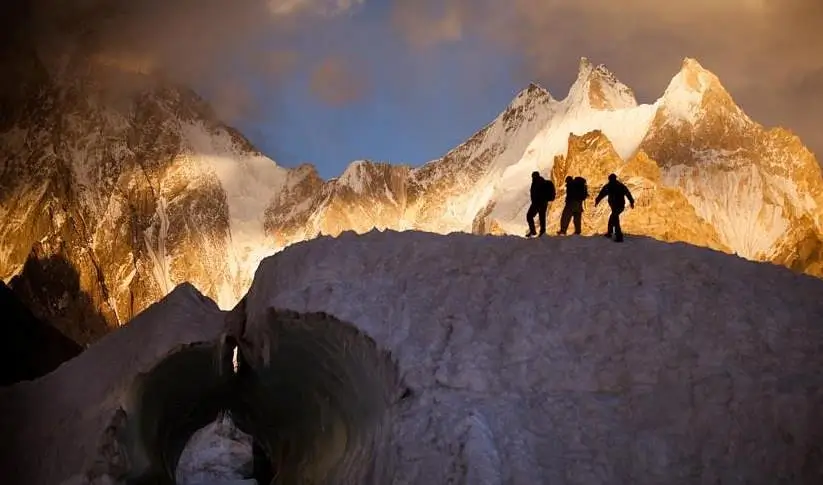
Foreign climbers consistently documented three unique dangers of K2:
1. Steepness
Unlike Everest’s gradual upper slopes, this mountain offers no relief. Climbers described it as:
“Climbing a frozen cathedral wall at extreme altitude.”
2. Weather Volatility
Storms arrive suddenly from the Karakoram jet stream. American climber Charles Houston noted:
“K2 does not warn you. It simply changes its mind.”
3. No Rescue Margin
Foreigners repeatedly warned:
“On K2, mistakes cannot be fixed.”
These warnings were ignored by many—often fatally.
The First Successful Expedition
On July 31, 1954, an Italian expedition led by Ardito Desio achieved what had seemed impossible.
Summit Team:
- Lino Lacedelli
- Achille Compagnoni
They reached the summit via the Abruzzi Spur, now the most commonly used route.
Controversy: The Bonatti Oxygen Incident
The ascent was later overshadowed by controversy involving Walter Bonatti, who carried oxygen bottles higher than planned and was forced to bivouac overnight at extreme altitude.
Bonatti survived—but suffered severe frostbite. This incident became one of mountaineering history’s most debated ethical controversies.
K2’s Most Dangerous Sections (Foreigner Risk Reports)
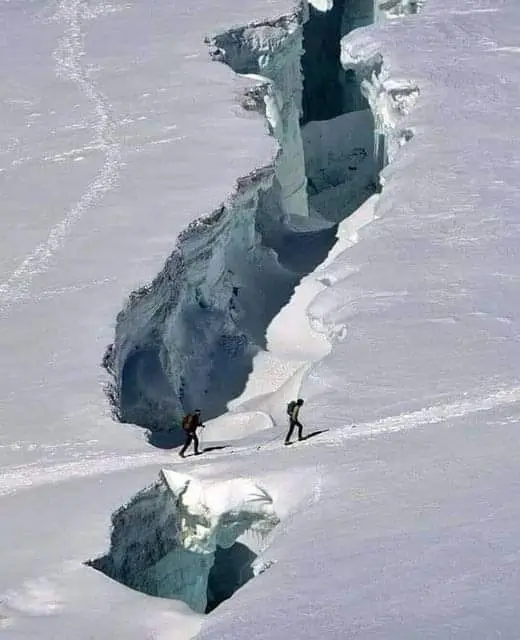
The Bottleneck (8,200 m)
Every foreign climber describes the Bottleneck with dread.
Why it’s deadly:
- Narrow traverse
- Overhung by massive ice seracs
- Constant icefall threat
Dutch climber Wilco van Rooijen (2008 survivor) wrote:
“You are walking under a loaded gun that can fire at any moment.”
The Black Pyramid
- Mixed climbing of rock and ice
- Extremely technical
- No safe bivouac zones
Many climbers turn back here—even in good weather
Major Foreign Disasters on K2
2008 K2 Disaster
- Ice serac collapse
- 11 climbers killed
- Survivors stranded above the Bottleneck
- International rescue efforts attempted—but failed above 8,000m
This disaster reshaped K2 safety protocols globally.
Common Risks Documented by Foreign Climber
- Avalanches and icefall
- Sudden storms
- Altitude sickness and hypoxia
- Technical rock and ice climbing at extreme altitudes
Pakistan’s Rescue Operations on K2 (Verified & Factual)
Who Handles Rescue on K2?
Pakistan offers one of the most structured rescue frameworks in high-altitude mountaineering, despite extreme limitations.
Key Rescue Providers:
1. Pakistan Army Aviation
- SA-315B Lama helicopters
- Capable of flying up to ~7,000 meters
- Used primarily for base camp & lower-camp evacuations
2. High-Altitude Porters (HAPs)
- Local Balti climbers
- Often risk their lives for rescues
- Among the most underrecognized heroes of K2
3. Alpine Club of Pakistan
- Coordinates international climbers
- Acts as liaison during emergencies
Limitations of Rescue
Fact-based reality:
- No helicopter rescue above ~7,000m
- Rescues above Camp 3 rely on climbers helping climbers
- Weather often grounds aircraft for days
Foreign climbers acknowledge this. American climber Nick Coghlan stated:
“Pakistan gives everything it can—but K2 decides the rest.”
Notable Successful Rescue Operations
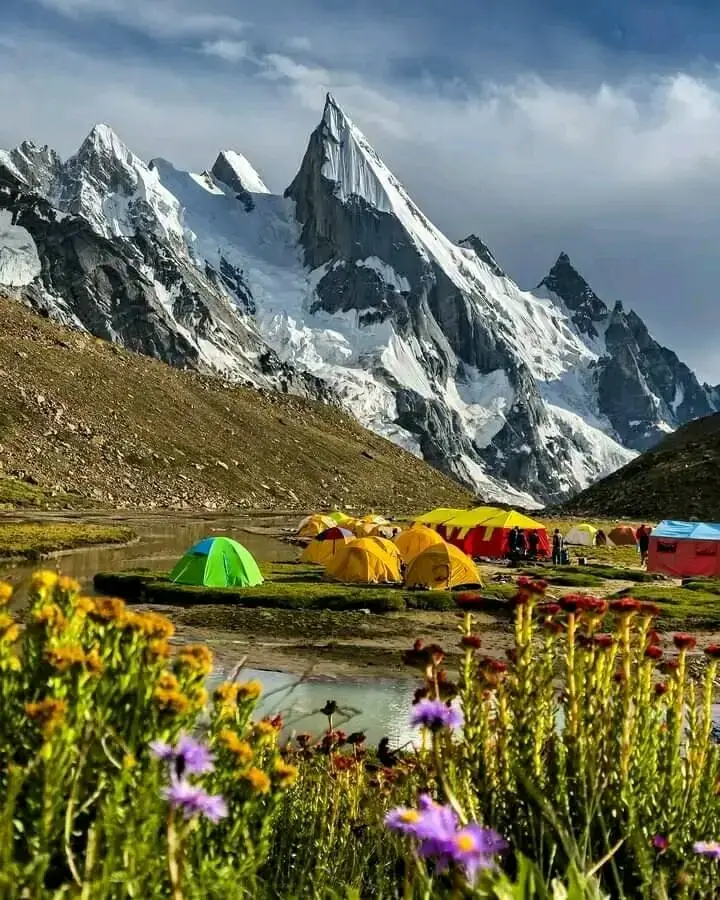
2018 Rescue of Rick Allen (UK)
- Injured during descent
- Coordinated ground rescue
- Helicopter evacuation from lower altitude
- Widely praised international cooperation
2021 Winter Expedition Support
- Pakistan Army provided logistics and base support
- Enabled historic first winter ascent by Nepali climbers
Why Foreign Climbers Respect Pakistan’s Role
Despite the danger, most foreign climbers publicly credit Pakistan for:
Open access policies
Military aviation support
Local expertise
Minimal bureaucratic obstruction
Italian climber Simone Moro said:
“Without Pakistan’s support, winter climbing history would not exist.”
K2 Is Not Negligence—It Is Reality
Foreign risk documents consistently conclude:
Deaths are not due to poor organization
- They result from objective dangers
- The mountain exceeds human control
This is why K2 remains unclimbed via many faces—including the North Face, still untouched.
K2 Geography & Climbing Routes – The Savage Mountain in Stunning Detail
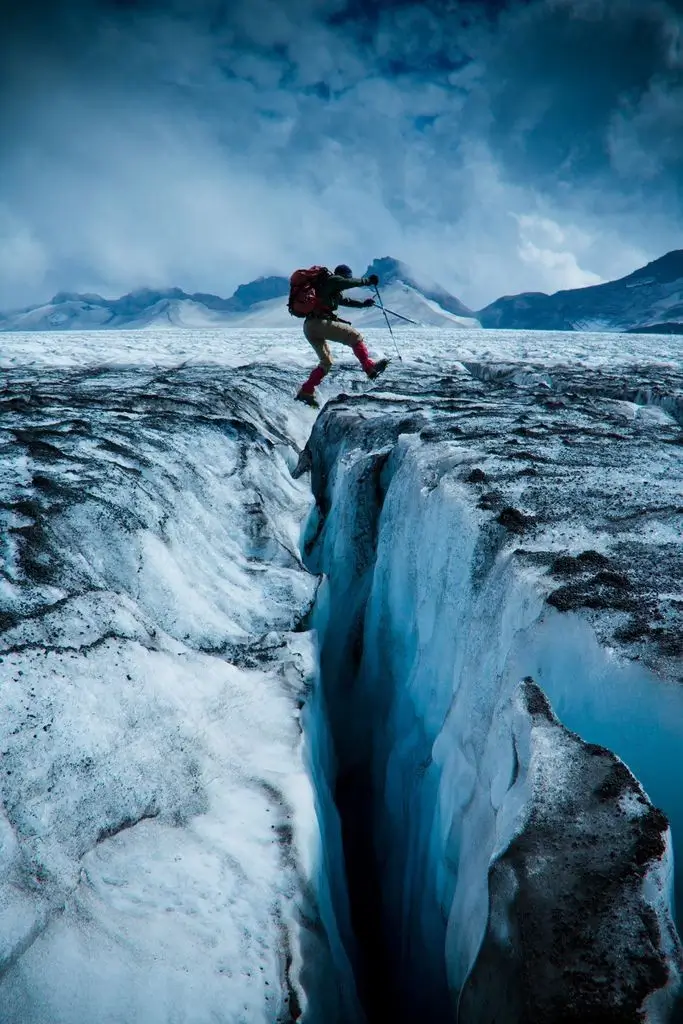
K2, the world’s second-highest mountain, is often called the “Savage Mountain”—not just for its height but for the sheer difficulty, deadly terrain, and the unpredictable forces of nature that challenge even the most experienced mountaineers. While Mount Everest is the ultimate symbol of altitude, Tthis Mountain is the ultimate test of human skill, courage, and endurance.
K2 Location and Geographic Significance
This mountain rises majestically in the Karakoram Range, straddling the China-Pakistan border in the Gilgit-Baltistan region of Pakistan. Its exact coordinates are 35.880°N, 76.515°E, and it towers at 8,611 meters (28,251 feet) above sea level—just 237 meters shorter than Mount Everest, yet far more technically challenging.
- Borders:
K2 sits on the Sino-Pakistani border, with the northern face in China and the southern, more commonly climbed face in Pakistan. The Pakistani side provides access through Skardu and the Baltoro Glacier, making it the preferred route for most expeditions. - Strategic Importance:
Beyond mountaineering, the Karakoram Range has geopolitical significance. The peaks act as natural borders, and the glaciers feed major rivers vital for the region’s ecosystem. - K2 vs. Other Peaks:
While Everest gains fame for its extreme height, this mountain is notorious for its technicality, steepness, and unpredictability. It is often compared to Everest, but climbers widely agree: K2 is the “climber’s mountain,” Everest is the “crowd mountain.”
Glaciers Surrounding K2 – Nature’s Frozen Highways
The glaciers around K2 are as much part of the climb as the mountain itself. These massive rivers of ice are critical for access, acclimatization, and survival.
a) Baltoro Glacier
- Length: ~62 km
- Significance: Main route from Skardu, used by almost all expeditions approaching K2 from Pakistan.
- Terrain: Crevasses, icefalls, and seracs make navigation challenging; climbers must rely on expert local guides.
b) Godwin-Austen Glacier
- Location: Near the famous Abruzzi Spur.
- Purpose: Provides the base for advanced climbing camps and is a natural route toward the technical sections.
c) Savoia Glacier
- Location: Northern approaches from China.
- Usage: Less frequented due to remoteness and political restrictions; highly technical ice climbing is required.
d) Concordia
- Significance: The confluence of Baltoro, Godwin-Austen, and smaller glaciers.
- Role: Acts as the base hub for climbers ascending not just K2, but neighboring peaks like Broad Peak and Gasherbrum I & II.
Base Camps – Life at the Foot of the Savage Mountain
Setting up base camps is the foundation of a safe and successful expedition. Base camps are logistical, medical, and social hubs, essential for acclimatization and preparation.
a) Pakistani Side Base Camp
- Altitude: 5,150 m (16,900 ft)
- Location: Baltoro Glacier
- Facilities: Tents, medical kits, food storage, communications
- Management: Pakistan Alpine Club and local porters ensure climbers are supported.
- Life: Harsh, windy conditions; temperatures can drop below -20°C even in summer. Climbers spend weeks here preparing mentally and physically for the ascent.
b) Advanced Camps
- Camp 1 (6,100 m): Introduces climbers to high-altitude stress. Steep rock and ice climbing begins.
- Camp 2 (6,700 m): Known for icy slopes and exposure to avalanches.
- Camp 3 (7,300 m): Thin air challenges respiration; only experienced climbers advance.
- Camp 4 (7,900 m): The death zone begins; climbers are now navigating technical walls, steep ridges, and the notorious Bottleneck.
Main Climbing Routes – Paths to Glory and Danger
K2 offers several routes, each with unique risks and challenges. Understanding these is key for SEO and climber education.
a) Abruzzi Spur – The Classic Route
- Discovered by: Prince Luigi Amedeo, Duke of Abruzzi, 1909
- Features: Steep rock walls, ice couloirs, and the infamous Bottleneck.
- Popularity: Most climbed, but still deadly.
- Technical Difficulty: Mixed rock and ice climbing, extreme exposure, risk of avalanches.
b) Cesen Route (Basque Route)
- Introduced by: Slovenian climber Tomo Cesen
- Advantages: Slightly safer from ice seracs, less exposure than Abruzzi Spur.
- Drawbacks: Longer and more technically demanding on high-altitude ice walls.
c) North Ridge (Chinese Side)
- Remoteness: Difficult access, political and logistical hurdles.
- Climbing Difficulty: Extremely technical; used by few expeditions.
- Rescue Limitations: Helicopters cannot operate effectively; self-sufficiency is crucial.
The Savage Mountain Layout – Understanding the Danger Zones
K2 earns its nickname because of specific geographic features that heighten risk:
- The Bottleneck:
- Location: Near 8,200 m
- Hazard: Overhanging ice serac; rock and ice fall common
- Fatalities: Responsible for the deaths of many climbers
- Description: Narrow passage above vertical walls; climbers cannot escape in bad weather
- Black Pyramid:
- Features: Steep rock and ice mixed terrain
- Challenge: High technical difficulty, requires advanced climbing experience
- Gradient & Steepness:
K2 is steeper than Everest on almost all faces. Altitude is not the only killer; technical climbing combined with severe weather makes it deadly.
K2 Mountain Weather, Climbing Seasons, & Survival Strategies – Battling Nature’s Extremes
| Aspect | K2 (Savage Mountain) | Everest (For Comparison) |
| Height | 8,611 m | 8,848 m |
| Fatality Rate | ~25% | ~1% |
| Technical Difficulty | Extreme | Moderate |
| Average Climbers per Year | 50–100 | 800–1,000 |
| Total Successful Summits | <500 | >6,000 |
| First Ascent | 1954, Lino Lacedelli & Achille Compagnoni | 1953, Edmund Hillary & Tenzing Norgay |
| First Woman Summit | 1986, Wanda Rutkiewicz | 1975, Junko Tabei |
| Pakistani First Ascent | 1977, Nazir Sabir | N/A |
| Pakistani First Woman | 2014, Samina Baig | N/A |
K2, standing at 8,611 meters, is infamous for its brutal weather and unpredictable climate. Unlike Everest, this mountain demands that climbers to be prepared not just for altitude but for extreme environmental challenges. In this section, we explore the weather patterns, optimal climbing season, survival strategies, and risks, making it essential for anyone planning an expedition.
The Extreme Weather of K2
K2 weather is unforgiving and highly unpredictable, even in the climbing season.
a) Temperature Extremes
- Summer (June–August): Temperatures at base camp: -5°C to 10°C; near summit: -25°C to -35°C
- Winter (December–February): Near summit: -50°C to -60°C
- Wind Chill Factor: Winds often exceed 60–100 km/h, making it feel even colder
b) Snowfall & Avalanches
- Heavy snow and ice accumulations are common
- Frequent avalanches in the Bottleneck and Abruzzi Spur
- Climbers face icefall collapses, requiring careful route selection
c) Storms
- Sudden storms can last 12–24 hours, trapping climbers in high camps
- Visibility can drop to 0 meters, increasing risk of disorientation
Best Season to Climb K2 Moutain
K2 is more technical than Everest, and weather is the primary limiting factor.
a) Summer Season (June to August) – Most Popular
- Stable weather with fewer storms
- Average summit success rates: 20–25%
- Longer daylight hours aid climbing and navigation
- High traffic can increase bottlenecks, especially near the Bottleneck
b) Winter Season (December to February) – Extreme Challenge
- First successful winter ascent: 2021 by Nepali team
- Temperatures: below -50°C, wind speed >100 km/h
- Almost no fixed ropes, requiring advanced ice-climbing expertise
- Success rate: extremely low; high risk of frostbite and hypothermia
c) Shoulder Seasons (May & September)
- Less crowded but higher avalanche risk
- Climbers need experience in mixed climbing conditions
Pro Tip: Most climbers prefer July for maximum stability and safer ascent.
Weather Forecasting & Monitoring on K2
Accurate weather information can mean life or death:
- Base Camp Stations: Monitor temperature, wind speed, and snow accumulation
- Satellite Communication: Climbers receive real-time updates from meteorologists
- Local Guides’ Experience: Pakistani guides have long-term observation knowledge of microclimate changes, often more accurate than satellite data for route planning
Interesting Fact: Some climbers carry handheld weather trackers to anticipate storms mid-ascent.
Survival Strategies – Battling K2’s Extremes
Surviving K2 requires meticulous preparation, acclimatization, and adaptability.
a) Acclimatization
- Climbers follow the “climb high, sleep low” method
- Rotation through Camp 1 to Camp 3 over weeks prevents high-altitude sickness
b) Gear Essentials
- Extreme cold-rated clothing (-40°C+)
- Double-layer sleeping bags
- Fixed ropes and ice screws for technical climbing
c) Physical & Mental Preparation
- Cardiovascular endurance is critical
- Mental resilience is tested during storm delays and bottleneck congestion
d) Use of Oxygen
- Optional above 7,500 meters, but K2 is usually climbed without supplemental oxygen, adding to its danger
e) Emergency Protocols
- Rescue helicopters coordinated by Pakistani authorities
- High-altitude first aid kits for frostbite, hypothermia, and altitude sickness
- Evacuation plans include pre-identified drop zones near base camp
Risks Specific to Weather & Season
| Risk Factor | Impact on Climbing | Survival Strategy |
| Sudden Storms | Trapped climbers, low visibility | Wait in high camp, rely on guides |
| High Winds (>80 km/h) | Frostbite, loss of balance | Proper anchoring, fixed ropes |
| Avalanche Zones | Fatalities, blocked routes | Avoid high-risk areas, monitor snow |
| Icefall Collapses | Injuries, death | Use safety lines, route knowledge |
| Extreme Cold (-50°C) | Hypothermia, frostbite | Insulated gear, oxygen support |
K2 Climbing Routes, Technical Challenges, and the Deadly Bottleneck
K2 is not just a test of endurance—it is a test of skill, strategy, and nerve. Known as the “Savage Mountain”, K2’s steep slopes, ice cliffs, and unpredictable terrain have earned it the reputation of being far more technically demanding than Everest. In this part, we explore the main climbing routes, technical challenges, and high-risk zones that every aspiring climber must understand.
The K2 Climbing routes map
While there are multiple routes, the majority of climbers use two primary paths:
a) Abruzzi Spur (Southeast Ridge) – how to climb K2 Abruzzi Spur
- Most popular and traditional route
- Starts from Base Camp at Concordia in Pakistan
- Length: ~8,611 meters, with camps at strategic points (Camp 1, 2, 3, 4)
- Features: Ice walls, rocky ridges, steep slopes
- Notable Challenge: The Bottleneck, an overhanging ice formation near the summit
b) North Ridge (China Side)
- Less frequently used due to remote access
- Starts from the Chinese side of the Karakoram Range
- Extremely harsh weather and technical ice climbing
- Only attempted by highly experienced expeditions
Other Routes:
- Cesen/West Ridge: Rarely attempted, high technical risk
- South-Southwest Pillar (Magic Line): For elite climbers, rarely completed
Technical Challenges on K2
Unlike Everest, this mountain requires climbers to navigate steep rock, ice walls, and mixed terrain:
a) Steep Slopes
- Average slope: 50–60° in critical sections
- Requires advanced ice climbing skills and fixed rope techniques
b) Icefalls & Seracs
- Moving ice formations that can collapse without warning
- Climbers must assess each day for potential hazards
c) Rockfall Zones
- Exposed ridges, particularly below Camps 3–4, are prone to falling rocks
- Helmets and careful route timing are crucial
d) High-Altitude Stress
- Above 7,500 meters is known as the “Death Zone”
- Oxygen deprivation increases risk of poor decision-making and fatigue
The Infamous Bottleneck – K2 Bottleneck death risk
The Bottleneck is K2’s most notorious section, located just 400 meters below the summit on the Abruzzi Spur:
Why It’s Dangerous
- Overhanging seracs above the climbers can collapse without warning
- Steep ice slopes with 50–60° inclines
- Narrow passageway, making congestion life-threatening
Historical Incidents: Deaths K2 Mountain
- Several deaths in 2008, 2018, and 2022 occurred here due to falling ice or climbers slipping
- Even elite climbers like Krzysztof Wielicki describe it as the ultimate test of skill and nerve
Abruzzi Spur – Camp by Camp
| Camp | Altitude (m) | Features & Challenges | Key Risk |
| Base Camp | 5,150 | Starting point, acclimatization | Avalanches, weather |
| Camp 1 | 6,065 | Ice walls, glacier approach | Falling ice |
| Camp 2 | 6,400 | Steep snow slopes | Altitude sickness |
| Camp 3 | 7,300 | Technical mixed climbing | Rockfall, exhaustion |
| Camp 4 | 7,900 | Just below Bottleneck | Extreme cold, seracs |
| Summit | 8,611 | Narrow ridges, final push | Bottleneck collapse, wind storms |
Pro Tip: Climbers often rest a full day at Camp 3 to adapt before tackling Camp 4 and the Bottleneck
Pakistan’s Role in Route Safety & Rescue
Pakistan plays a crucial role in supporting expeditions:
- Base Camp Medical Facilities: Equipped for altitude sickness, frostbite, and injuries
- High-Altitude Porters & Guides: Provide local knowledge and rope fixing
- Rescue Operations: Helicopter evacuations coordinated for emergencies
- Weather Forecasting: Local meteorologists advise teams on storm patterns
Interesting Fact: Some climbers credit Pakistani guides for saving lives by predicting micro-climatic changes and avalanche ri
K2 Fatalities, Risks, and Heroic Rescue Operations
K2 is known as the “Savage Mountain” for a reason. Its 25% fatality rate has earned it a reputation as the world’s deadliest peak for mountaineers. Unlike Everest, where thousands have successfully summited, K2 demands respect, experience, and caution. This section explores the human cost, real-life experiences of climbers, and the critical role Pakistan plays in rescue and safety
Fatalities – Numbers and Causes
K2 has claimed hundreds of lives since the first ascent in 1954. Key facts:
| Year / Event | Fatalities | Cause |
| 1954 | 0 | First successful ascent by Lino Lacedelli & Achille Compagnoni |
| 1986 | 1 | Wanda Rutkiewicz, first woman, survived; others faced frostbite |
| 2008 | 11 | Avalanches and Bottleneck collapse |
| 2018 | 3 | Falling ice and sudden storms |
| 2021 | 1 | Winter ascent by Nepali team, extreme cold |
| Total | ~91+ | Icefall, avalanches, altitude sickness, storms, exhaustion |
Key Causes of Death:
- Serac collapses and rockfall
- Sudden avalanches
- Hypothermia and frostbite
- Altitude sickness in Death Zone (above 8,000 m)
- Human error in route navigation
Fact: K2’s fatality rate (~25%) is 25 times higher than Everest’s ~1%, earning it the nickname “Mount Everest’s Savage Cousin”.
Pakistani Climbers on K2
Pakistan has a rich history of climbers conquering K2, often with heroic stories:
| Name | Year | Notable Facts |
| Hassan Sadpara | 2004 | First Pakistani to climb K2 solo without supplemental oxygen |
| Samina Baig | 2013 | First Pakistani woman to summit K2, also youngest at that time |
| Nazia Quidwai | 2016 | Expedition climber, highlighted women’s growing presence |
| Ali Sadpara | 2016 | Legendary high-altitude climber, tragically lost in winter K2 2021 attempt |
Foreign Climbers’ Experiences on K2
Many international climbers have shared raw, life-threatening stories:
- 2008 International Disaster: Eleven climbers perished near Bottleneck; survivors spoke of “ice falling like thunder” and “helplessness at 8,000 meters.”
- Krzysztof Wielicki (Poland): Described K2 as technically harder than Everest; ice walls demand constant rope fixing and vigilance.
- Expeditions from Italy, Nepal, USA, and Japan: All reported that Pakistani base camp guides were lifesavers, providing route knowledge and high-altitude support.
Lesson: Experience, teamwork, and local support are critical to surviving K2
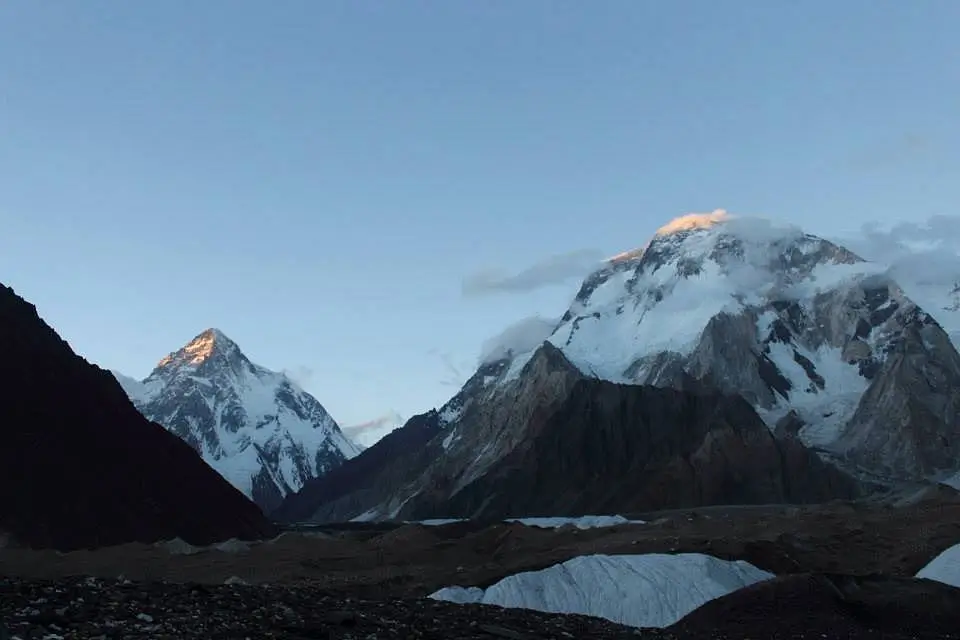
Rescue Operations on K2 – Pakistan’s Crucial Role
Pakistan has developed efficient rescue protocols to assist climbers in distress:
a) Helicopter Evacuations
- High-altitude helicopters operate from Skardu and Concordia Base Camp
- Evacuate climbers suffering frostbite, injuries, or altitude sickness
- Notable rescue in 2018 saved 2 foreign climbers trapped near Camp 4
b) Ground-Based Rescue
- Teams of Pakistani porters and high-altitude guides help with rope fixing and emergency descent
- Often risk their own lives to assist climbers in avalanches or storms
c) Medical Support at Base Camp
- Equipped for high-altitude pulmonary edema (HAPE), frostbite, and injuries
- Quick triage before helicopter evacuation
Human Angle: Many foreign climbers credit Pakistani rescue teams with saving lives in near-death situations
Key Risks Every Climber Should Know
- Bottleneck Collapse: The deadliest section, even for experienced climbers
- Weather Instability: K2 weather can shift in minutes, causing deadly storms
- Altitude and Oxygen Deprivation: Increases mistakes and exhaustion
- Crowding in Summit Push: Can lead to delays and exposure in Death Zone
- Technical Terrain: Steep rock, ice, and mixed routes require advanced mountaineering skills
Tip: Only climbers with experience on 7,000–8,000 meter peaks should attempt K2.
Planning a K2 Expedition
Successful K2 ascents require meticulous preparation:
a) Route Selection
- Abruzzi Spur: Most popular, technically demanding
- Cesen Route: Slightly less used, requires careful navigation
- North Ridge: Approached from China, extremely remote
b) Acclimatization
- Climbers typically spend 3–4 weeks ascending camps gradually
- Avoids high-altitude pulmonary edema (HAPE) and exhaustion
c) Weather Monitoring
- Satellite and local reports from Skardu are crucial
- Teams plan summit pushes around short weather windows
d) Equipment
- High-altitude tents, oxygen systems, ice axes, ropes, and avalanche gear
- Winter ascents require specialized suits for -50°C
e) Pakistani Support
- Experienced porters, guides, and rescue teams provide critical route fixing and emergency response
- Helicopters can evacuate climbers from Base Camp to Skardu in emergencies
Conclusion
K2, the second highest mountain in the world at 8,611 meters, located in Pakistan’s Karakoram Range near the China border, is famously known as the “Savage Mountain” for its extreme technical difficulty, unpredictable weather, and high fatality rate of around 25%, making it far deadlier than Mount Everest. Since its first summit in 1954 by Lino Lacedelli and Achille Compagnoni, fewer than 500 climbers have successfully reached the peak, including pioneering female climbers like Wanda Rutkiewicz. Most ascents are attempted via the Abruzzi Spur, Cesen Route, or North Ridge, with climbers facing obstacles like the infamous Bottleneck, avalanches, and high-altitude risks.
The best season to climb is late June to early August, while winter ascents remain extremely rare, with the first achieved in 2021 by a Nepali team. Pakistani climbers, led by legends like Muhammad Ali Sadpara, play a vital role in guiding, fixing ropes, and conducting high-altitude rescues, often saving foreign climbers in life-threatening conditions. K2’s allure lies in its dramatic “human vs. nature” challenge, demanding unmatched skill, courage, and survival instinct, making every successful summit a testament to both human endurance and the mountain’s unforgiving power
Frequently Asked Questions
1) Is K2 more dangerous than Everest?
Yes. K2 is considered far more dangerous than Everest due to its steep technical routes, unstable ice formations, unpredictable weather, and limited rescue options. While Everest has more climbers and infrastructure, K2’s terrain leaves little margin for error.
2) Why do fewer climbers attempt K2 than Everest?
Far fewer climbers attempt K2 because it requires elite technical climbing skills, offers short and unstable weather windows, and has a much higher risk of death. Unlike Everest, K2 does not have fixed ladders, heavy commercialization, or frequent guided expeditions.
3) Is K2 harder to climb than Mount Everest?
Yes. K2 is widely considered harder and more dangerous than Mount Everest. While Everest is taller, this mountain requires advanced technical climbing on steep rock and ice, has far more unstable weather, fewer rescue options, and a much higher fatality rate, earning it the nickname “The Savage Mountain.”
4) Why K2 Looks So Intimidating
K2 rises sharply with steeper faces, narrow ridges, and exposed climbing routes. Unlike Everest’s gradual slopes, this mountain offers no easy sections. Its infamous Bottleneck, unstable ice seracs, violent storms, and extreme cold make every step a life-or-death decision.
5) How many people have climbed K2?
Less than 500 people worldwide have successfully summited K2 since the first ascent in 1954.
6) Why is K2 more dangerous than Everest?
K2 is more dangerous due to technical climbing, steeper slopes, unpredictable weather, avalanche-prone sections, and a fatality rate of around 25%, far higher than Everest.
7) Who was the first Pakistani to summit K2?
Nazir Sabir became the first Pakistani to summit K2 in 1977.
8) Does Pakistan assist climbers in rescues?
Yes. Pakistan provides army helicopter rescues, Base Camp medical facilities, trained high-altitude porters, and coordination support during emergencies.
10) When is the best time to climb K2?
The best season to climb K2 is late June to early August, when weather conditions are relatively more stable.
11) Can K2 be climbed in winter?
Yes, but only by elite climbers. The first winter ascent was achieved in January 2021 by a Nepali team.
12) How extreme is K2’s weather?
K2 experiences temperatures as low as −50°C, winds exceeding 100 km/h, sudden storms, avalanches, and collapsing icefalls.
13) How do climbers survive K2’s harsh weather?
Survival depends on proper acclimatization, advanced technical gear, experienced local guides, and coordinated rescue support.
14) How Many People Have Climbed K2?
As of 2025, fewer than 500 climbers have reached K2’s summit.
By comparison, over 6,000 climbers have summited Mount Everest.
This stark difference highlights K2’s technical difficulty, brutal weather, and deadly sections like the Bottleneck, making it one of the most challenging mountains on Earth.
15) Is K2 harder than Everest?” (Featured FAQ)
While Mount Everest is the tallest mountain in the world, K2 is considered significantly harder and more dangerous. Everest’s routes are mostly high-altitude walk-ups, whereas this mountain requires advanced rock, ice, and mixed climbing on steep, exposed terrain. Mountain unpredictable weather, limited rescue options, and the deadly Bottleneck make it far more lethal, with a fatality rate of around 25%, compared to Everest’s 1–2%.
16) K2 vs Everest Fatality Rate
K2 has a fatality rate of approximately 25%, making it one of the deadliest mountains in the world. In contrast, Mount Everest’s fatality rate is only about 1–2%, despite being taller. This makes statistically far more dangerous than Everest.