
The Timeless Heritage of the Choker Afghani Necklace: A Scholar’s Composition
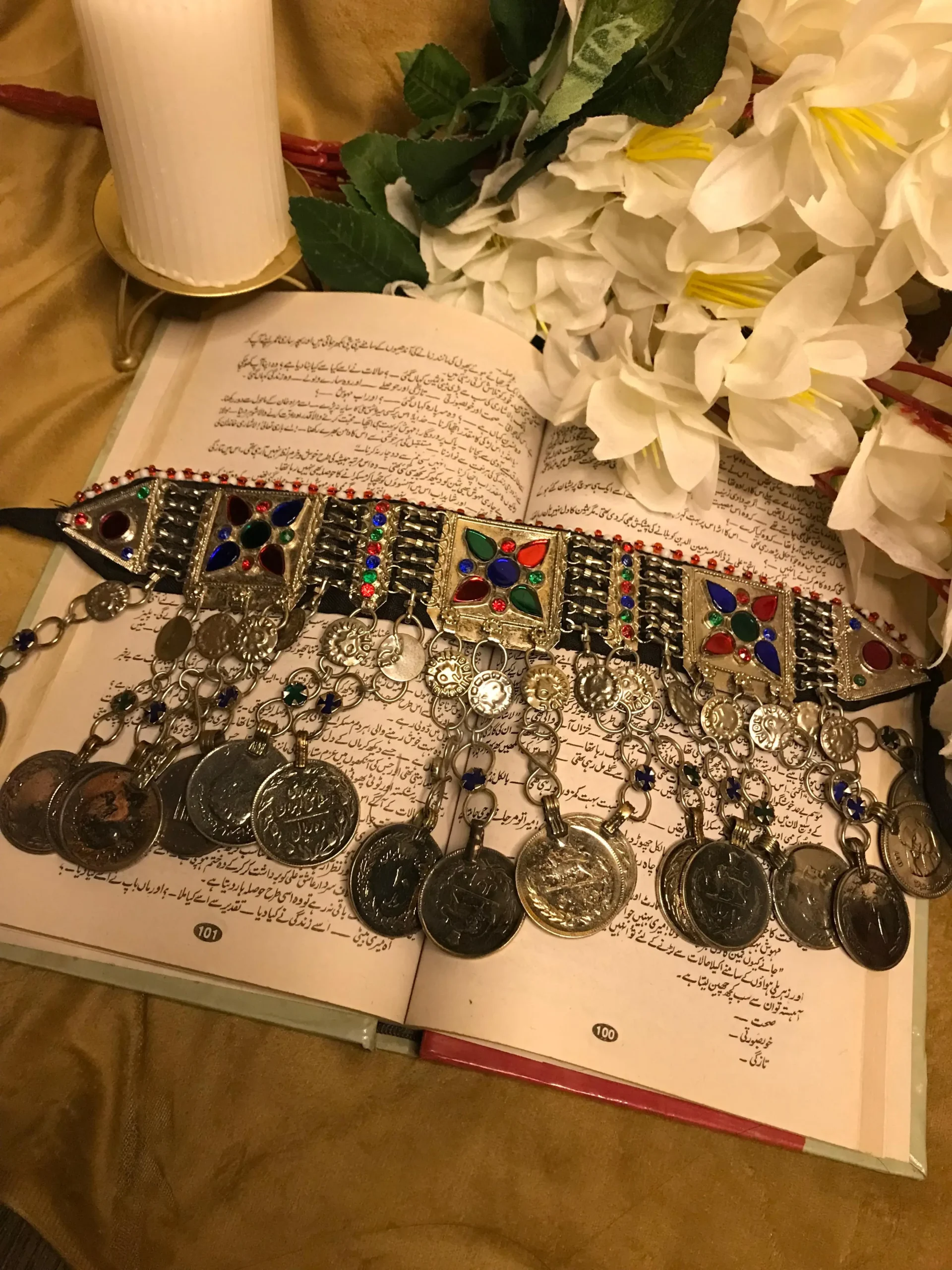
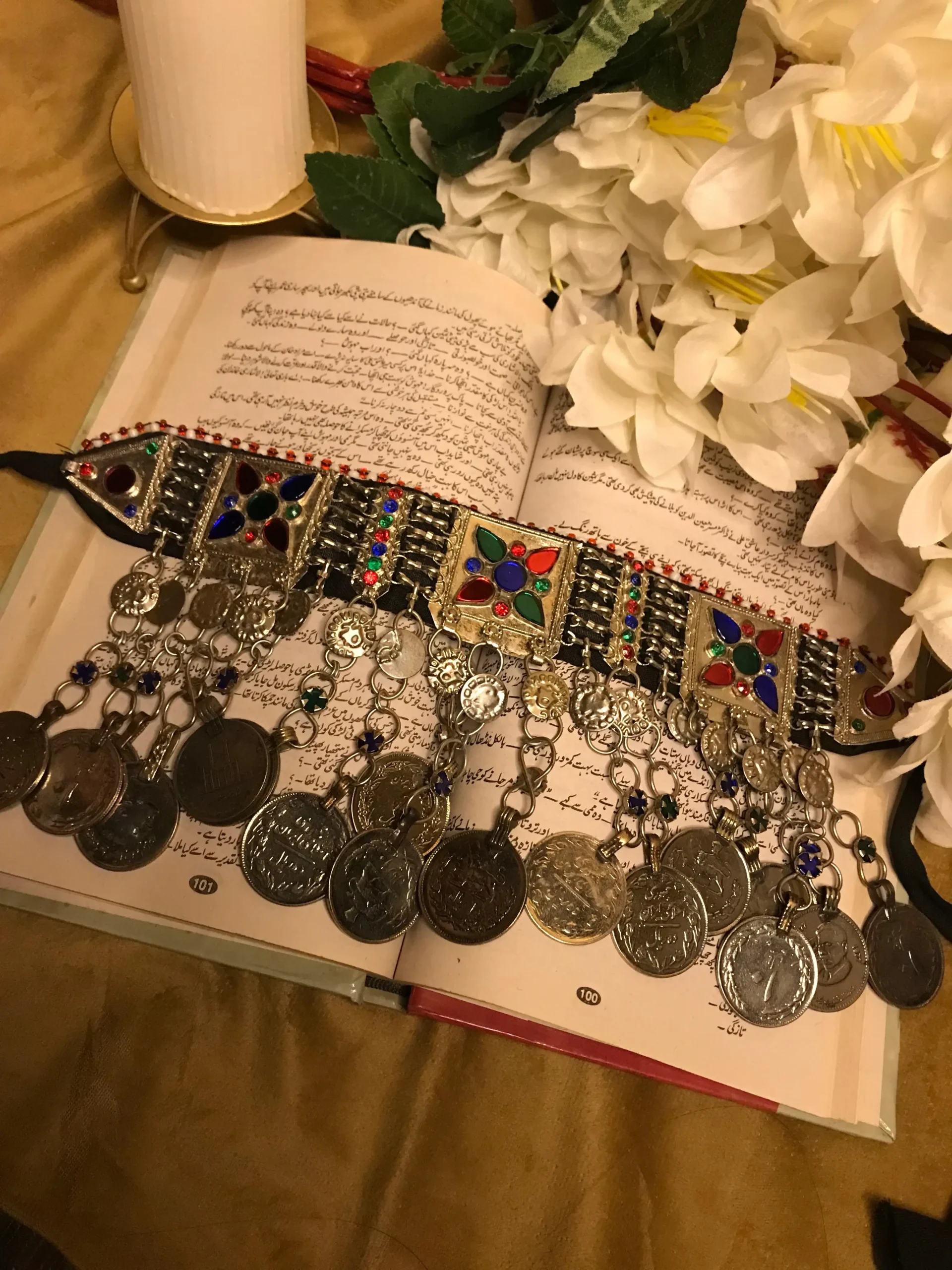
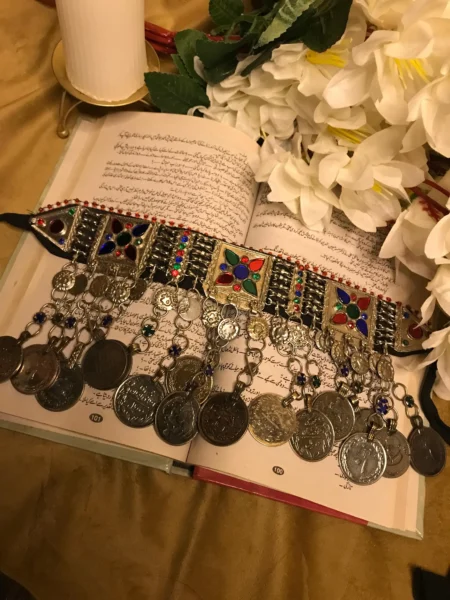
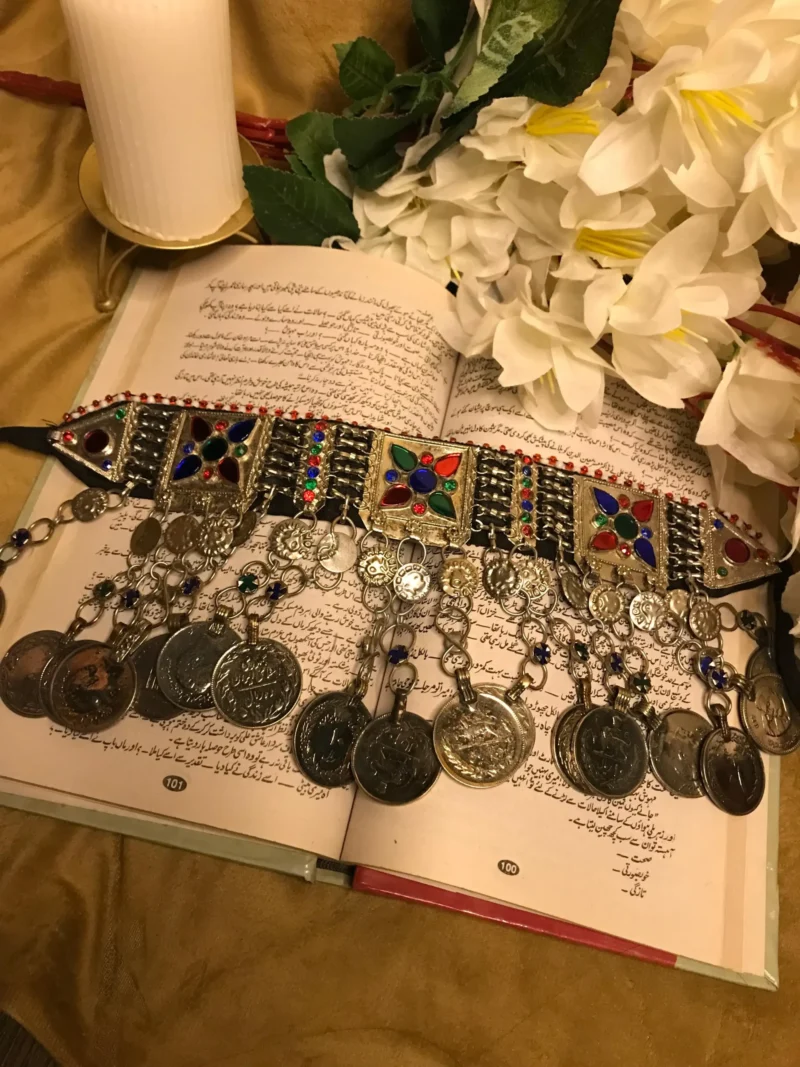
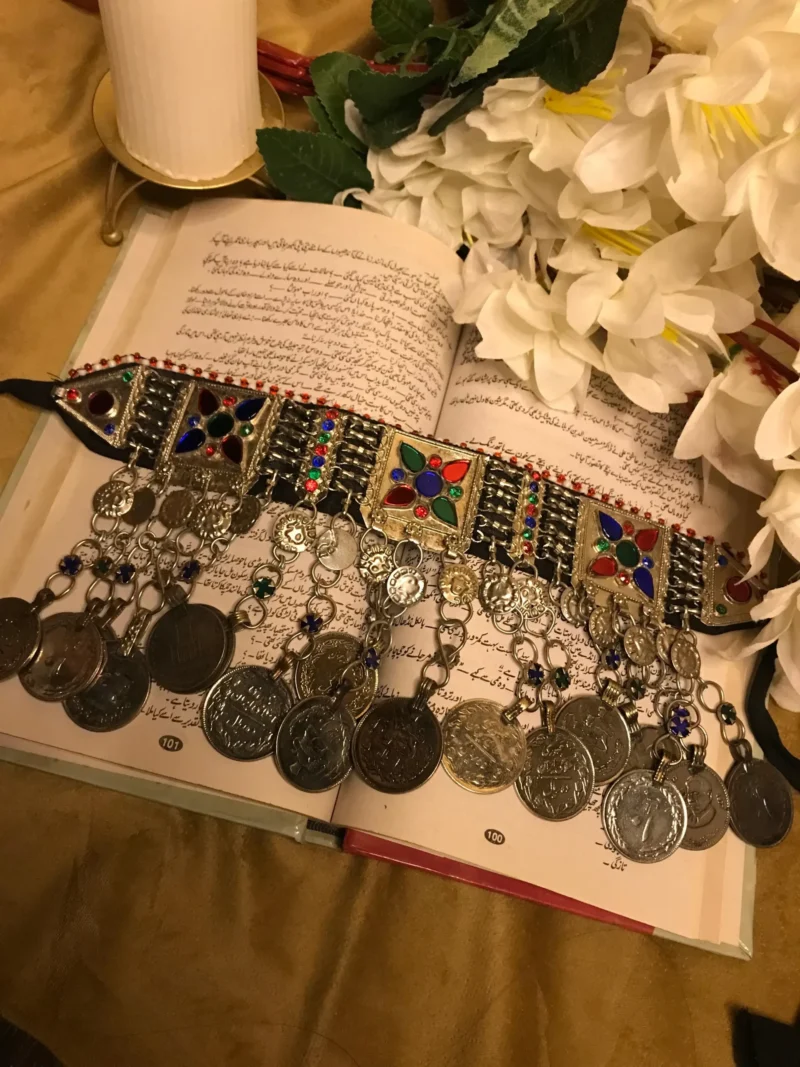
The choker afghani necklace is a masterpiece of nomadic artistry, often serving as a bridge between currency and couture. In this evocative image, the jewelry is not merely an accessory but a central character in a scene that suggests deep study, historical appreciation, and a quiet, intimate atmosphere. Draped across the pages of an open book, the necklace becomes a tactile link to a storied past.
Anatomy of the Artifact: The Coinage and Chains
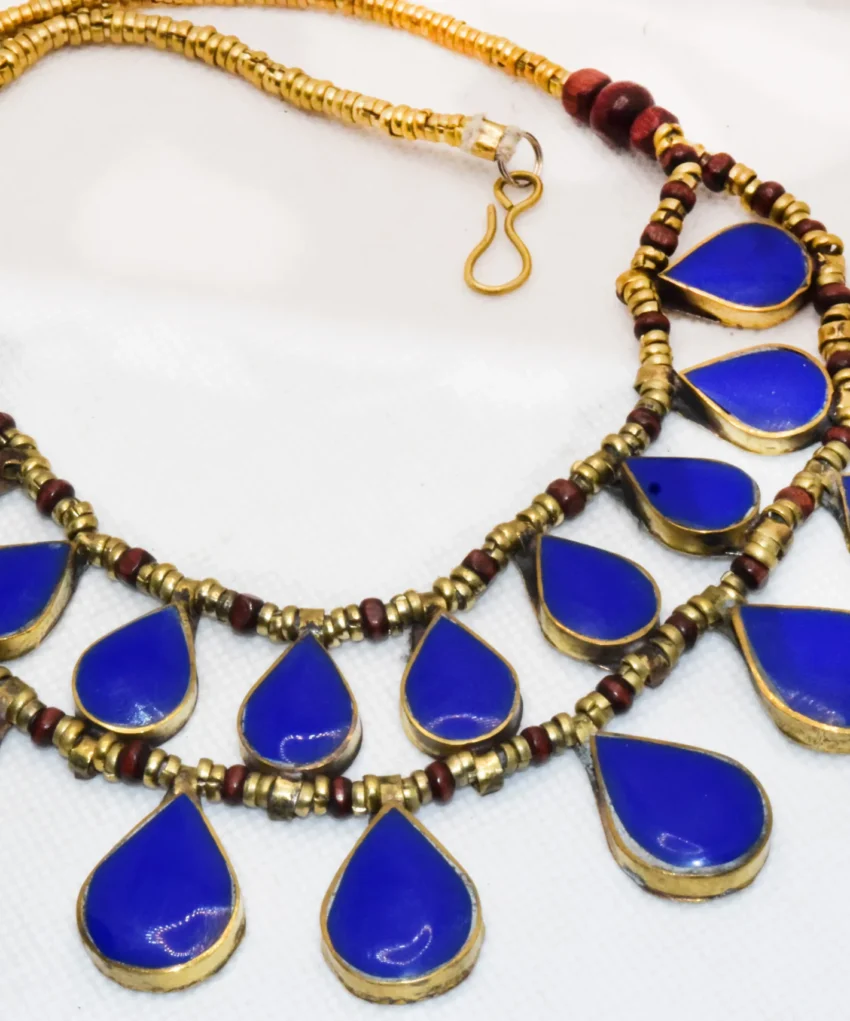
The choker afghani necklace is celebrated for its heavy, rhythmic aesthetic and its use of “living” history through currency. Unlike delicate western jewelry, this piece is bold and resonant.
Numismatic Beauty: The necklace is composed of various coins of differing sizes and shapes. These coins are often old and ornate, featuring intricate designs, geometric patterns, and inscriptions that hint at a time when wealth was worn rather than stored in a bank.
Structural Intricacy: These coins are expertly strung together on robust metal chains. As a choker-style piece, it is designed to sit high on the neckline, creating a powerful silhouette that has been a staple of Afghan and Central Asian tribal dress for centuries.
The Patina of Time: The aged appearance of the coins provides a matte, vintage texture that contrasts beautifully with the shimmering gold-colored silky fabric beneath the book.
The Scholarly Setting: A Fusion of Literature and Luxury
The placement of the choker afghani necklace on an open book elevates it from a fashion item to a historical specimen. The composition invites the viewer to imagine a scholar or collector researching the origins of each coin.
The Open Text
The necklace rests upon a book lying open on a luxurious gold silk background. The left page is filled with Arabic script—a language often found on the coinage of the Silk Road—while the right page is mostly blank, save for a few small numbers. This visual contrast emphasizes the transition from ancient lore to modern documentation.
Symbols of Focus and Craft
Two distinct elements on the left side of the image add a layer of domestic warmth:
The Spool of Thread: A small white spool with vibrant red thread sits in the top-left corner. This suggests a “maker’s” environment, perhaps hinting at the repair or assembly of the choker afghani necklace itself.
The Golden Candle: A small white candle with a gold base stands nearby. This element evokes the “midnight oil,” symbolizing a late-night study of history or a quiet moment of reflection.
Natural Accents: The Softness of White Flowers
To balance the cold metal of the necklace and the heavy intellectual weight of the book, a bunch of white flowers with yellow centers is positioned at the top-right. These blooms partially obscure the text, suggesting that nature and beauty often overlap with academic pursuit.
The presence of these organic elements brings a “resourceful” and lived-in feel to the image. It suggests that the owner of the choker afghani necklace values a life surrounded by both man-made history and natural elegance.
Cultural Significance: The Afghan Choker in Modern Fashion
Beyond the image, the choker afghani necklace (often referred to as a “Guluband” in regional dialects) has seen a massive resurgence in global fashion.
| Feature | Description |
| Material | Traditionally “Gillet” (a mix of metals including silver, nickel, and brass). |
| Common Motifs | Fish symbols for fertility, sunbursts for life, and bells for protection. |
| Styling | Often paired today with modern minimalist outfits to create a “Boho-Chic” focal point. |
The image perfectly captures the essence of this jewelry style: it is a piece that demands attention, carries the weight of history, and fits seamlessly into a life of culture and curiosity.
Conclusion: A Narrative in Metal and Ink
This composition is a serene tribute to the choker afghani necklace. By surrounding the piece with symbols of light (the candle), creation (the thread), and knowledge (the book), the image tells a story of a culture that is as resilient as the metal it crafts. It is an invitation to explore the details of the past while appreciating the aesthetic beauty of the present.