Antique Jewellery in Pakistan: A Journey Through South Asian Heritage, Craftsmanship, and Timeless Elegance
Jewellery has always been more than a decorative accessory. Across civilizations, it has symbolized identity, wealth, spirituality, social status, and artistic expression. In Pakistan, antique jewellery occupies a particularly special place because it represents centuries of cultural exchange, skilled craftsmanship, and family traditions passed from one generation to another.
Whether displayed in museums, treasured in family heirlooms, or recreated by contemporary artisans, antique jewellery continues to inspire admiration. From the intricate silver ornaments of Balochistan to the regal kundan necklaces inspired by Mughal courts, Pakistan possesses a remarkable jewellery heritage shaped by thousands of years of history.
Many people associate antique jewellery with old gold ornaments or oxidized finishes. However, true antique jewellery tells a much deeper story. Every engraved motif, gemstone setting, and handcrafted detail reflects the artistic vision of its era and the culture that created it.
Pakistan’s jewellery traditions did not emerge overnight. They evolved through ancient civilizations, Buddhist kingdoms, Persian influence, Central Asian trade routes, Islamic dynasties, and the magnificent Mughal Empire. Each civilization added its own artistic language, resulting in an incredibly diverse jewellery heritage that continues to influence modern Pakistani designs.
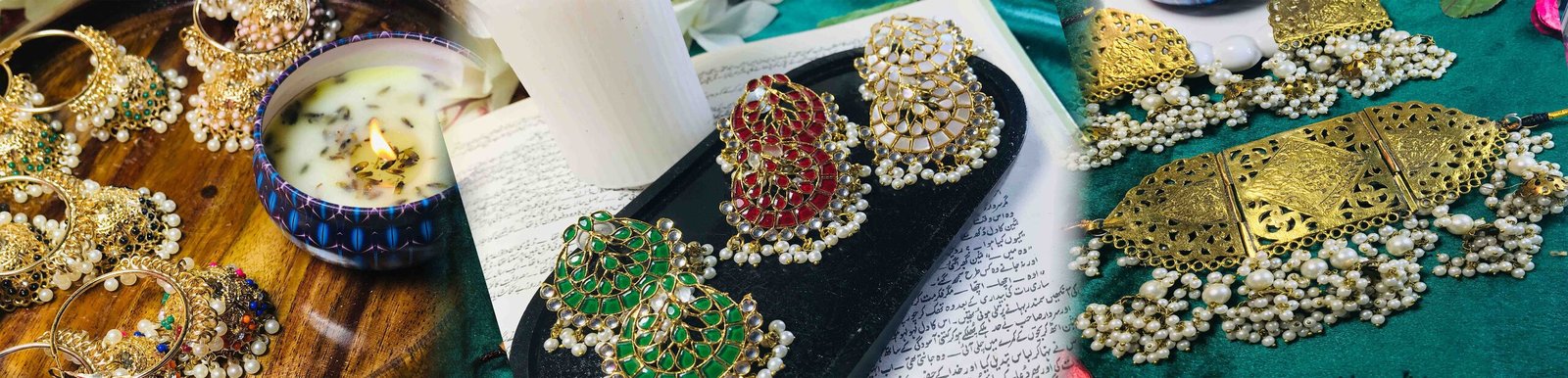
Today, antique-inspired jewellery has become increasingly popular among brides, collectors, fashion enthusiasts, and heritage lovers. Traditional jhumkas, chokers, statement necklaces, antique bangles, tribal silver ornaments, and handcrafted rings are now paired with both classic and contemporary Pakistani clothing, proving that timeless craftsmanship never goes out of style.
This comprehensive guide explores the fascinating history of antique jewellery in Pakistan, beginning with its South Asian origins and following its evolution through centuries of artistic development.
What Is Antique Jewellery?
In the strict historical sense, antique jewellery refers to jewellery that is more than one hundred years old. These pieces were handcrafted using traditional techniques and materials that reflected the artistic preferences of their period. However, within Pakistan’s jewellery market today, the term “antique jewellery” is used more broadly. It often includes:
- Genuine historical jewellery passed down through generations
- Vintage heirloom pieces
- Traditional handcrafted ornaments
- Modern jewellery designed using antique aesthetics
- Oxidized gold and silver jewellery inspired by historical designs
This broader definition allows modern artisans to recreate the elegance of historical craftsmanship while making these beautiful designs accessible to today’s jewellery lovers.
Unlike machine-produced ornaments, antique-style jewellery emphasizes handcrafted detailing, elaborate engraving, traditional motifs, and artistic individuality. Each piece appears as though it carries a story from another era.
Antique Jewellery vs Vintage Jewellery vs Antique-Style Jewellery
Many people use these terms interchangeably, but they have different meanings.
Antique Jewellery
Authentic antique jewellery is at least one hundred years old. Such pieces are extremely rare and are usually found in museum collections, private estates, or specialist antique dealers. These pieces possess historical significance in addition to monetary value.
Vintage Jewellery
Vintage jewellery generally refers to jewellery produced between twenty and one hundred years ago. Pieces from the 1950s, 1960s, or 1970s often fall into this category.
Antique-Style Jewellery
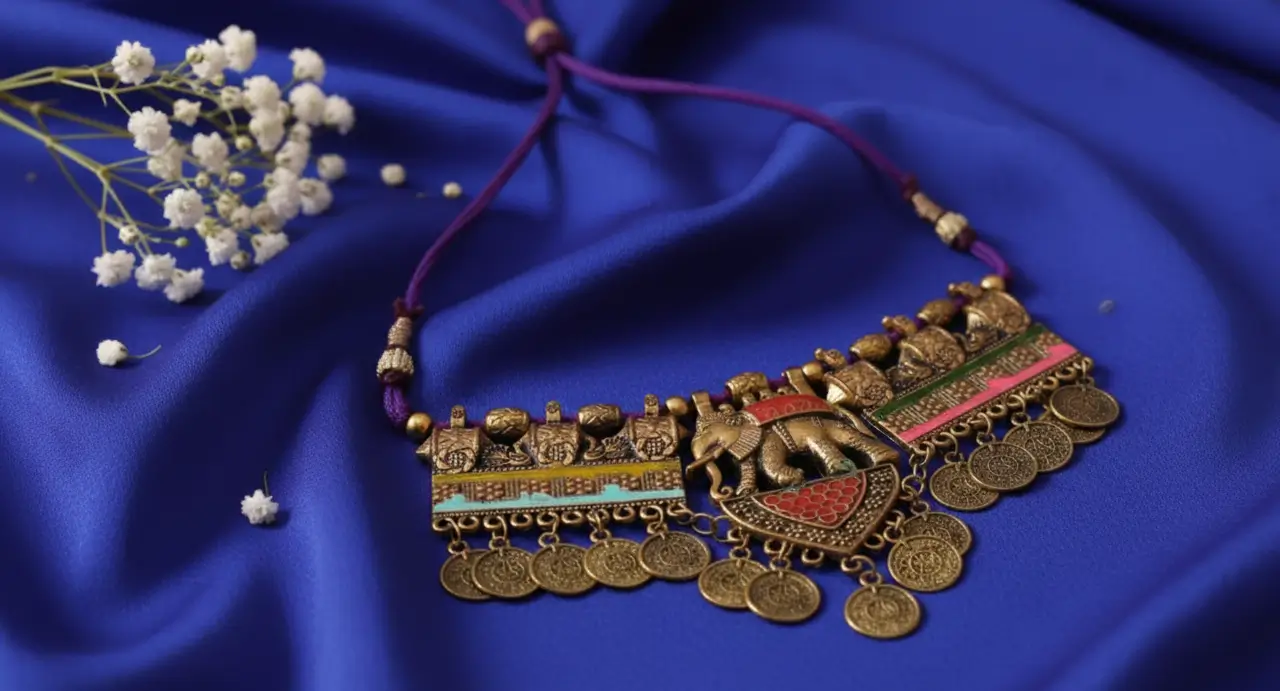
Most jewellery sold in Pakistan today belongs to this category. These pieces are newly crafted but intentionally designed to resemble jewellery from historical periods. Artisans recreate traditional engraving, oxidized finishes, kundan settings, meenakari work, floral motifs, and tribal aesthetics using modern manufacturing techniques. This allows customers to enjoy antique beauty without the extraordinary cost associated with genuine historical jewellery.
Jewellery in South Asia: A Heritage Spanning Thousands of Years
The story of Pakistani antique jewellery begins long before Pakistan itself existed. South Asia has one of the oldest jewellery-making traditions in the world, with archaeological discoveries proving that skilled artisans were producing sophisticated ornaments over five thousand years ago.
Throughout history, jewellery in this region has reflected religious beliefs, trade relationships, technological advancements, and changing artistic preferences. Every civilization contributed something unique to the jewellery traditions that eventually became part of Pakistan’s cultural identity.
The Indus Valley Civilization: The Birthplace of Sophisticated Jewellery
One of the earliest chapters of jewellery history begins in the Indus Valley Civilization, one of humanity’s oldest urban cultures. Flourishing around 2600 BCE, cities such as Mohenjo-daro and Harappa demonstrated extraordinary advances in architecture, engineering, metallurgy, and craftsmanship. Excavations have revealed remarkable jewellery collections that continue to astonish archaeologists. These discoveries include:
- Gold necklaces
- Silver ornaments
- Carnelian bead necklaces
- Shell bracelets
- Copper bangles
- Agate beads
- Lapis lazuli ornaments
- Faience jewellery
- Terracotta beads
Perhaps even more impressive than the materials themselves was the precision with which they were crafted. Tiny beads were drilled using sophisticated techniques that required remarkable technical skill.
Jewellery was worn by both men and women, indicating that ornamentation formed an essential part of daily life rather than serving only ceremonial purposes. Many motifs found in modern Pakistani jewellery—including geometric arrangements, layered bead necklaces, engraved bangles, and elaborate pendants—can trace their ancestry back to these ancient cities.
Mohenjo-daro: Pakistan’s Ancient Jewellery Capital
Located in present-day Sindh, Mohenjo-daro represents one of Pakistan’s greatest archaeological treasures. Among its most famous discoveries is the celebrated bronze figurine known as the “Dancing Girl.”
Although only around eleven centimeters tall, she wears numerous bangles stacked along one arm, demonstrating that jewellery was already an established cultural tradition more than four thousand years ago. Archaeologists have also uncovered workshops dedicated specifically to bead making. These workshops produced jewellery from:
- Carnelian
- Jasper
- Agate
- Lapis lazuli
- Shell
- Copper
- Gold
Trade routes connected the Indus Valley with Mesopotamia, Central Asia, and Persia, allowing gemstones and artistic influences to travel across continents. This exchange helped shape South Asian jewellery into one of the world’s richest artistic traditions.
Taxila: Where Civilizations Met
Another important chapter in Pakistan’s jewellery history comes from Taxila. Situated near modern Islamabad, Taxila became a major cultural crossroads linking South Asia with Central Asia, Persia, Greece, and later the Roman world.
Following Alexander the Great’s campaigns, Greek artistic influence merged with local traditions. Jewellery from Taxila demonstrates extraordinary sophistication. Archaeologists have discovered:
- Gold earrings
- Intricate necklaces
- Gemstone rings
- Decorative brooches
- Hair ornaments
- Bracelets
- Royal ceremonial jewellery
Greek naturalism blended with Indian symbolism to create elegant floral motifs, vine patterns, mythological imagery, and realistic gemstone settings. These artistic combinations later influenced Gandharan art and eventually Mughal jewellery centuries afterward.
Gandhara: Where Beauty Met Spirituality
The Gandhara civilization flourished across regions of present-day northern Pakistan and eastern Afghanistan. Although Gandhara is primarily celebrated for Buddhist sculpture, jewellery also reached remarkable levels of sophistication.
Artisans created:
- Lotus-inspired ornaments
- Floral earrings
- Sacred pendants
- Beaded necklaces
- Gold crowns
- Decorative hairpieces
Many Buddhist sculptures depict elaborate jewellery worn by princes, queens, merchants, and celestial beings. These artistic representations provide valuable insight into jewellery fashions during the early centuries of the Common Era. Even today, lotus flowers, vine patterns, and symmetrical floral motifs remain common features in Pakistani antique jewellery.
Persian Influence on Pakistani Jewellery
For centuries, Persian culture profoundly influenced South Asia through trade, literature, architecture, and decorative arts. Persian artisans introduced greater refinement in:
- Floral engraving
- Enamel decoration
- Precious stone arrangement
- Goldsmithing
- Decorative symmetry
Stylized flowers, arabesque scrollwork, cypress trees, and elegant calligraphic patterns gradually became part of local jewellery traditions. These influences remain visible in antique necklaces, bracelets, and bridal ornaments throughout Pakistan.
Central Asian Connections
Pakistan’s location placed it directly on important trade routes linking South Asia with Central Asia. Merchants brought not only precious metals and gemstones but also artistic traditions. Turquoise from Central Asia became particularly prized. Nomadic tribes introduced bold silver ornaments characterized by:
- Heavy construction
- Large pendants
- Coin decorations
- Dangling charms
- Protective amulets
These styles later influenced tribal jewellery in Balochistan and Khyber Pakhtunkhwa. Even modern Afghan-inspired jewellery sold throughout Pakistan reflects this centuries-old cultural exchange.
The Arrival of Islamic Art
Beginning in the eighth century, Islamic artistic traditions gradually blended with existing South Asian jewellery practices. Islamic aesthetics emphasized:
- Geometric balance
- Arabesque designs
- Calligraphy
- Symmetry
- Elegant floral ornamentation
Rather than replacing older traditions, Islamic artistry enriched them. Goldsmiths combined Persian refinement with indigenous craftsmanship, producing jewellery that balanced elegance with intricate detail. Many antique Pakistani necklaces still display these beautifully balanced patterns.
The Mughal Era: The Golden Age of Jewellery
No discussion of South Asian jewellery is complete without the Mughal Empire.From the sixteenth through the eighteenth centuries, Mughal emperors transformed jewellery into one of the highest forms of artistic expression.
Imperial workshops employed master craftsmen from across Persia, Central Asia, Kashmir, Rajasthan, Punjab, and other regions. Their creations became legendary. Mughal jewellery emphasized harmony, colour, luxury, and technical perfection. Among the most celebrated techniques were:
- Kundan stone setting
- Meenakari enamel work
- Polki diamonds
- Emerald carving
- Ruby settings
- Pearl arrangements
- Floral gold engraving
Although much Mughal jewellery was produced for royalty, its artistic influence gradually spread throughout society. Today’s antique bridal jewellery across Pakistan owes much of its elegance to Mughal design principles.
Lahore: A Historic Centre of Jewellery Craftsmanship
For centuries, Lahore served as one of South Asia’s most important centres of jewellery production. Royal patronage encouraged exceptional craftsmanship.
Goldsmiths specialised in:
- Bridal jewellery
- Kundan work
- Gemstone settings
- Gold engraving
- Meenakari
- Traditional necklaces
- Earrings
- Nose rings
- Bangles
The city’s famous bazaars attracted merchants from Central Asia, Persia, Kashmir, and India. Many jewellery-making families in Lahore continue practicing techniques inherited over several generations. Their work preserves traditions that date back hundreds of years.
The Rich Diversity of Pakistani Antique Jewellery
Pakistan is home to an extraordinary variety of jewellery traditions. Every province has developed its own distinctive ornaments, techniques, materials, and artistic identity over centuries. Geography, climate, trade routes, tribal customs, religion, and local craftsmanship have all influenced how jewellery evolved across different regions.
Unlike many countries where jewellery follows a relatively uniform style, Pakistan offers remarkable diversity. The elaborate gold bridal sets of Punjab differ significantly from the bold silver ornaments of Balochistan or the colourful enamel work associated with Sindh. Northern mountain communities, meanwhile, developed jewellery influenced by Central Asia, Tibet, Kashmir, and the ancient Silk Road. These regional traditions form the backbone of what is now recognised as Pakistani antique jewellery.
Antique Jewellery of Punjab
Punjab has long been considered one of the most influential centres of jewellery craftsmanship in South Asia. Cities such as Lahore, Multan, Gujranwala, and Faisalabad have been home to generations of master goldsmiths who preserved traditional techniques inherited from the Mughal courts.
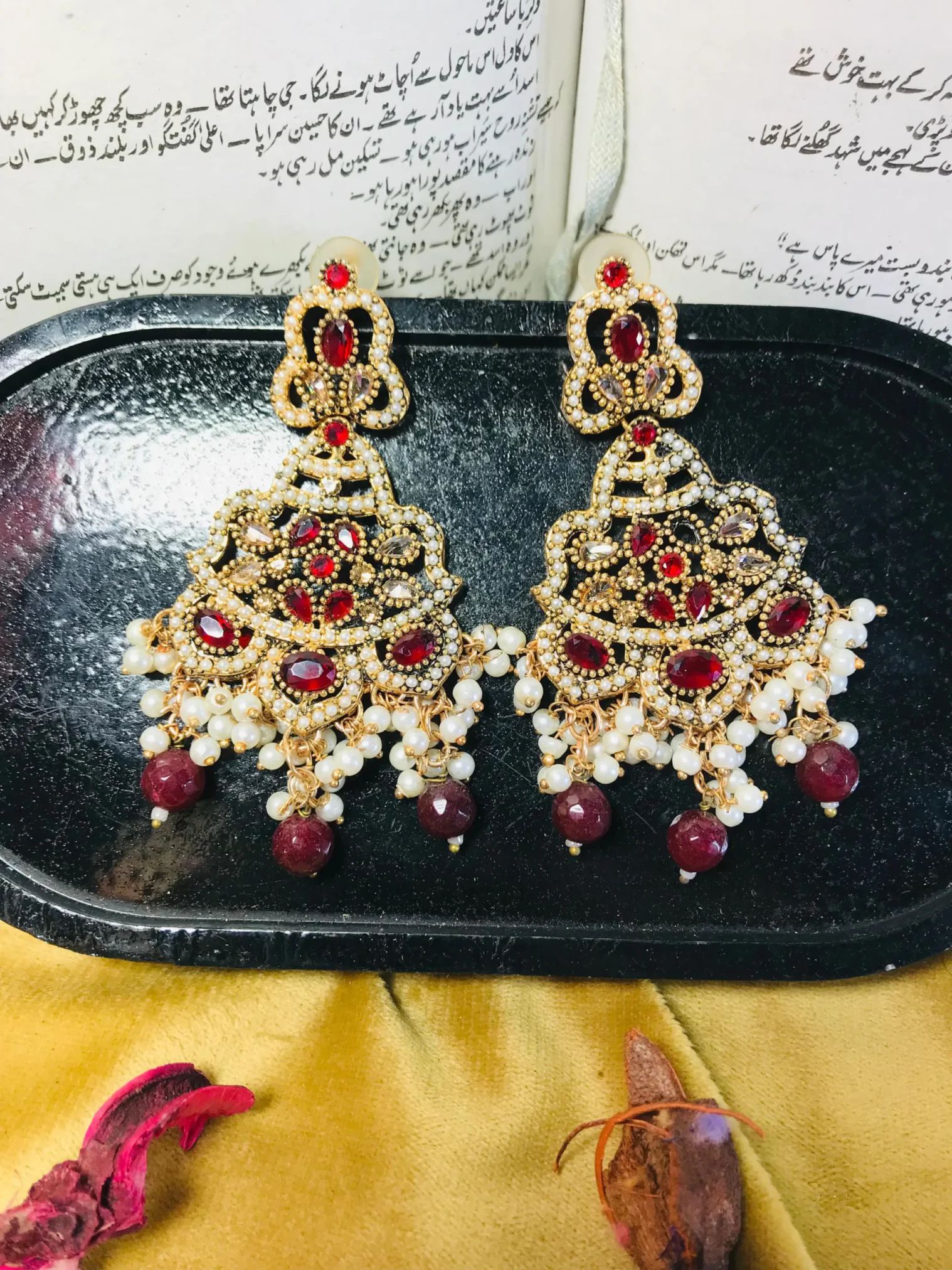
Punjabi antique jewellery is often associated with grandeur and elegance. Wedding jewellery, in particular, reflects centuries of royal influence. Common characteristics include:
- Intricate floral engraving
- Kundan stone settings
- Polki diamonds
- Meenakari enamel work
- Pearl embellishments
- Heavy gold craftsmanship
- Layered bridal necklaces
Traditional Punjabi jewellery often includes elaborate chokers paired with long necklaces, creating a regal layered appearance that remains popular among Pakistani brides today. Many heirloom pieces passed through Punjabi families continue to be treasured as symbols of heritage and family history.
Sindh’s Ancient Jewellery Legacy
Sindh possesses one of the world’s oldest jewellery traditions thanks to its connection with the Indus Valley Civilization.
Modern Sindhi jewellery still reflects this remarkable heritage while incorporating Islamic and local artistic influences developed over many centuries. Unlike the gold-dominated traditions of Punjab, Sindh is equally famous for silver jewellery. Traditional Sindhi artisans create:
- Heavy silver necklaces
- Handcrafted bangles
- Tribal earrings
- Decorative anklets
- Coin jewellery
- Nose ornaments
- Statement pendants
One distinctive characteristic of Sindhi jewellery is its detailed repoussé work, where intricate patterns are hammered into metal from the reverse side to create raised decorative surfaces. Geometric motifs, floral designs, peacocks, fish, stars, crescents, and mirrors frequently appear in antique Sindhi ornaments. These bold designs continue to inspire contemporary antique-finish jewellery collections throughout Pakistan.
Balochistan’s Tribal Jewellery Heritage
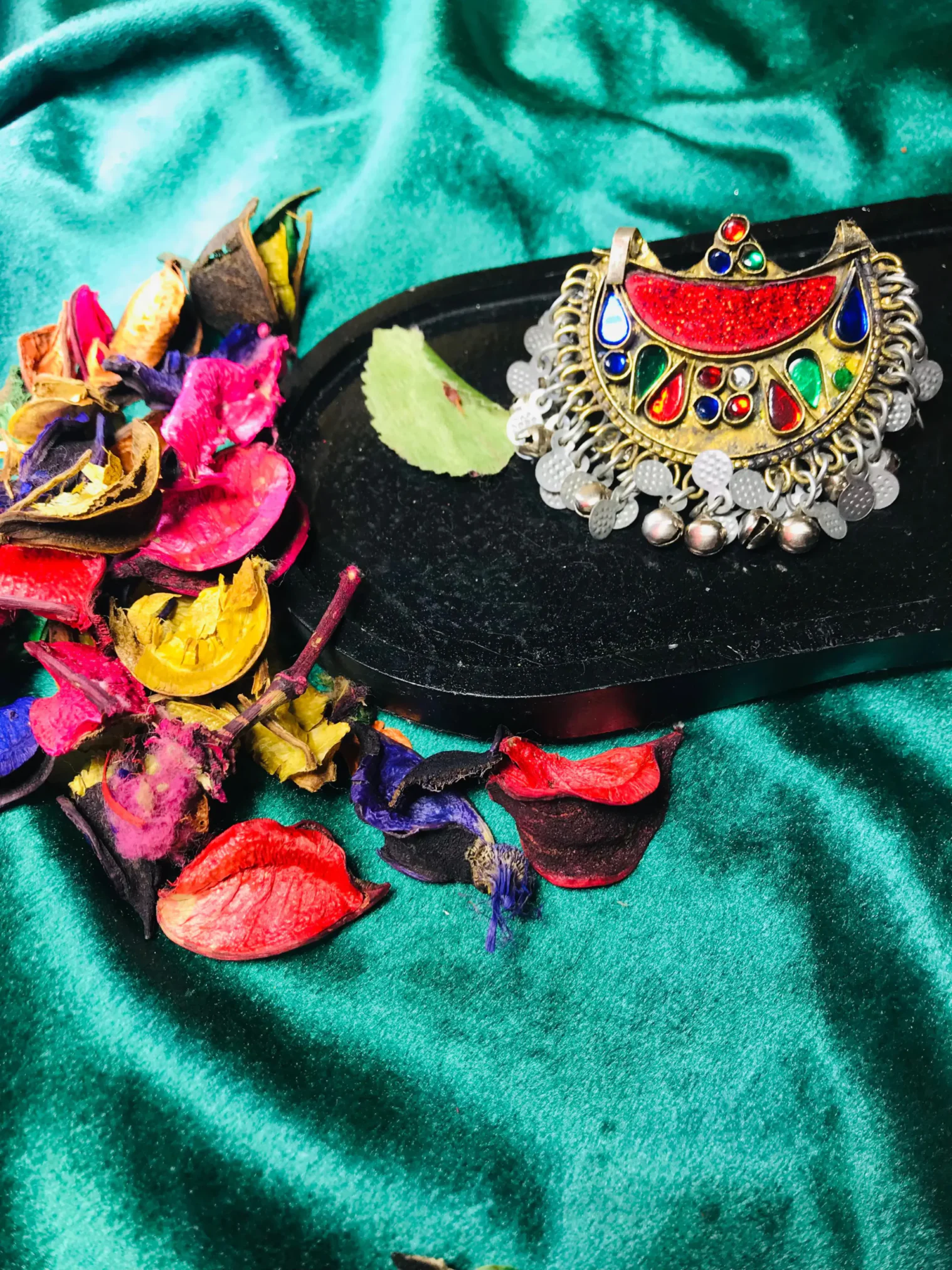
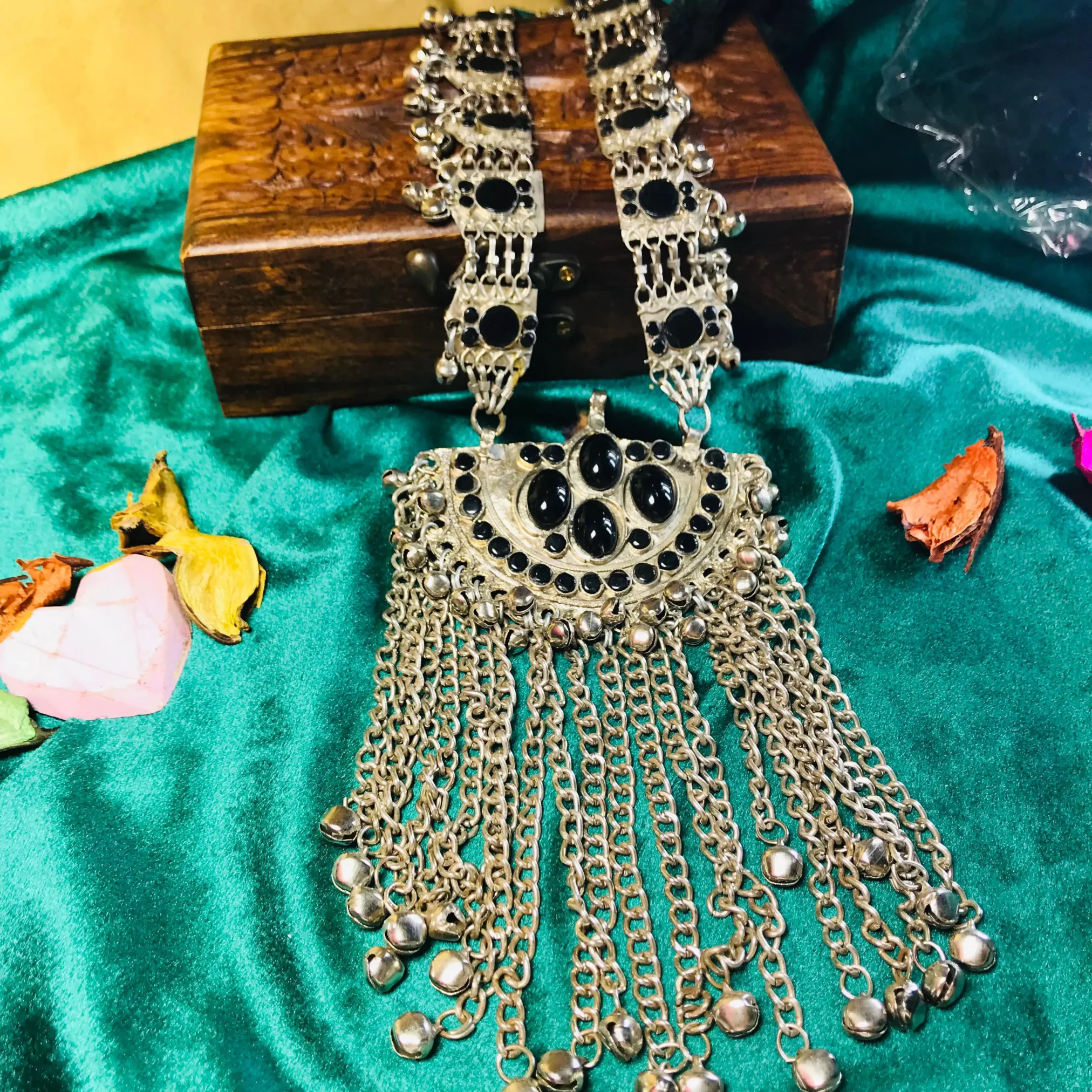
Few jewellery traditions are as distinctive as those found in Balochistan. Unlike royal Mughal jewellery designed for imperial courts, Balochi ornaments were created for tribal communities where jewellery served practical, cultural, and economic purposes. Silver dominates Balochi jewellery because historically it was more accessible than gold. Traditional pieces include:
- Massive necklaces
- Protective amulets
- Coin pendants
- Triangular breast ornaments
- Large earrings
- Heavy bracelets
- Hair ornaments
Many pieces incorporate turquoise, coral, carnelian, glass beads, and engraved silver plaques. Jewellery also functioned as portable wealth, allowing families to preserve assets that could be carried during migration or periods of conflict. The bold geometry of Balochi jewellery continues to influence modern antique collections, particularly oxidised silver necklaces and statement tribal earrings.
Jewellery Traditions of Khyber Pakhtunkhwa
The northwestern regions of Pakistan have long served as gateways connecting South Asia with Afghanistan and Central Asia. As a result, jewellery from Khyber Pakhtunkhwa combines influences from several cultures. Traditional ornaments feature:
- Thick silver construction
- Turquoise gemstones
- Coral beads
- Bells and charms
- Coin decorations
- Protective talismans
- Chain-linked pendants
Among Pashtun communities, jewellery has historically played an important role during weddings and festivals. Brides often wore elaborate head ornaments, necklaces, bracelets, and earrings that represented family honour and prosperity. Many antique Afghan-inspired jewellery styles available in Pakistan today share close similarities with traditional Pashtun designs.
Jewellery from Gilgit-Baltistan
Northern Pakistan possesses an entirely different jewellery tradition influenced by mountain cultures and ancient Silk Road trade. Jewellery from Gilgit-Baltistan is generally lighter than the heavy gold ornaments of Punjab but remains highly decorative. Popular materials include:
- Silver
- Brass
- Copper
- Turquoise
- Coral
- Agate
- Carnelian
Women traditionally wore decorative headpieces, necklaces, earrings, and pendants during festivals and weddings. Many designs display Central Asian influences, reflecting centuries of trade through the mountain passes connecting Pakistan with China and Central Asia.
Kashmiri Craftsmanship
The Kashmir region has long been celebrated for artistic excellence. Although famous worldwide for shawls and wood carving, Kashmiri artisans also developed distinctive jewellery traditions. Characteristic features include:
- Delicate engraving
- Floral motifs
- Paisley patterns
- Filigree work
- Pearl detailing
- Lightweight elegance
Traditional Kashmiri earrings, pendants, and necklaces emphasise refinement rather than excessive ornamentation. Many contemporary Pakistani antique collections incorporate Kashmiri-inspired floral engraving.
The Influence of Mughal Craftsmanship
Perhaps no artistic movement shaped Pakistani jewellery more profoundly than Mughal craftsmanship. The Mughal emperors established royal workshops where master artisans perfected techniques that remain admired today. Their jewellery combined influences from Persia, Central Asia, India, and local craftsmanship. Typical Mughal characteristics include:
- Symmetrical floral designs
- Delicate vine patterns
- Rubies
- Emeralds
- Pearls
- Uncut diamonds
- Intricate gold settings
Modern antique bridal jewellery throughout Pakistan still follows these design principles.
Why Antique Jewellery Remains Popular in Pakistan
Despite changing fashion trends, antique jewellery continues to thrive.Several reasons explain its enduring appeal. First, it reflects cultural identity. Many Pakistanis value jewellery that connects them with their heritage.
Second, antique designs possess timeless elegance. Floral engraving, kundan settings, pearls, and handcrafted detailing rarely go out of fashion. Third, antique jewellery complements both traditional and modern clothing. Brides pair heirloom-inspired necklaces with heavily embroidered lehengas, while younger women style oxidised jhumkas with kurtas, sarees, or even contemporary western outfits.
Finally, handcrafted jewellery offers individuality. Unlike mass-produced accessories, each artisan-made piece carries subtle differences that make it unique.
Preserving a Living Heritage
Pakistani antique jewellery represents thousands of years of artistic evolution rather than a single historical period. From the bead makers of Mohenjo-daro to the imperial workshops of Lahore, generations of artisans transformed precious metals and gemstones into wearable works of art.
Today’s craftsmen continue that remarkable legacy by preserving traditional techniques while adapting them for modern lifestyles. Every handcrafted necklace, engraved ring, oxidised earring, or kundan bridal set keeps Pakistan’s extraordinary jewellery heritage alive for future generations.
How to Identify Genuine Antique Jewellery
The popularity of antique jewellery has led to a growing market for antique-inspired reproductions. While many reproductions are beautifully crafted, collectors should understand the difference between authentic antique jewellery and modern designs.
Age Matters
By international definition, jewellery is considered antique if it is over 100 years old. However, in Pakistan, many people also refer to traditional heirloom jewellery and antique-finish designs as “antique jewellery,” even when newly made. If purchasing a historical piece, always ask about its provenance, previous ownership, and estimated age.
Examine the Craftsmanship
One of the easiest ways to recognize quality antique jewellery is through its craftsmanship. Traditional artisans worked entirely by hand, so slight variations are natural. Look for:
- Hand engraving instead of machine-pressed patterns
- Individual stone settings
- Fine detailing
- Balanced proportions
- Smooth finishing
- Evidence of careful hand assembly
Perfect symmetry often indicates machine production.
Study the Metal
Older jewellery usually develops a natural patina. Gold acquires a soft warm glow. Silver develops gentle oxidation rather than an artificial dark coating. Artificial antique finishes can still be attractive, but experienced collectors often recognize the difference between naturally aged metal and chemically oxidized surfaces.
Gemstone Settings
Traditional jewellery typically used:
- Kundan settings
- Closed-back settings
- Hand-cut gemstones
- Uncut Polki diamonds
- Natural pearls
Modern reproductions may use adhesives, synthetic stones, or machine-cut crystals. Always inspect how gemstones are secured.
Hallmarks
Hallmarks help identify metal purity and sometimes the workshop or maker. Older Pakistani jewellery may not always carry standardized hallmarks, particularly handcrafted family heirlooms. Modern jewellery, however, is more likely to include purity markings depending on the manufacturer.
Antique Jewellery vs Antique-Style Jewellery
Many buyers assume that antique-style jewellery is fake. In reality, these are simply different categories. Authentic antique jewellery is historically valuable because of its age. Antique-style jewellery is newly produced but intentionally designed using historical aesthetics. For many buyers, antique-style jewellery offers several advantages:
- Greater affordability
- Improved durability
- Easier maintenance
- Lighter weight
- Wider design variety
- Better availability
Both categories have their own appeal.
Buying Antique Jewellery in Pakistan
Whether shopping for heirloom-quality pieces or antique-inspired designs, careful buying is essential.
Buy from Reputable Sellers
Choose established jewellers known for traditional craftsmanship. Experienced jewellers can explain:
- Metal purity
- Stone quality
- Manufacturing techniques
- Regional influences
- Maintenance requirements
Transparency builds confidence.
Ask Questions
Before purchasing, ask:
- Is the piece genuinely antique?
- Is it antique-style?
- Which materials were used?
- Are the gemstones natural or synthetic?
- Is it handcrafted?
- What technique was used?
- Does it require special care?
Knowledge helps buyers make informed decisions.
Inspect Closely
Examine:
- Clasps
- Stone settings
- Solder joints
- Surface finishing
- Weight
- Comfort while wearing
Quality craftsmanship becomes obvious upon careful inspection.
Compare Styles
Pakistan offers remarkable diversity.
Explore designs inspired by:
- Mughal courts
- Sindhi silver
- Balochi tribal ornaments
- Pashtun jewellery
- Kashmiri floral engraving
- Punjabi bridal traditions
Each style tells a unique cultural story.
Antique Jewellery as an Investment
Collectors often wonder whether antique jewellery appreciates in value The answer depends on several factors. Historically significant pieces may increase in value because of:
- Rarity
- Provenance
- Exceptional craftsmanship
- Precious materials
- Historical importance
- Collector demand
However, not every old piece automatically becomes valuable. Condition, authenticity, and documentation all influence long-term worth. For many Pakistani families, heirloom jewellery represents emotional value that exceeds monetary value.
Caring for Antique Jewellery
Proper care ensures jewellery remains beautiful for future generations.
Storage
Store jewellery individually. Avoid allowing pieces to rub against one another. Soft fabric pouches or lined jewellery boxes help prevent scratches. Humidity should be minimized. Silica gel packets can reduce moisture.
Cleaning
Always clean gently. Use:
- Soft microfiber cloth
- Mild soap for suitable metals
- Lukewarm water when appropriate
- Soft brushes for intricate areas
Avoid:
- Harsh chemicals
- Toothpaste
- Abrasive powders
- Bleach
- Strong polishing compounds
These products may permanently damage antique finishes.
Perfumes and Cosmetics
Always apply:
- Perfume
- Makeup
- Hair spray
- Lotion
before wearing jewellery. Chemical exposure gradually damages finishes and gemstones.
Water Exposure
Remove jewellery before:
- Swimming
- Showering
- Household cleaning
- Gardening
- Sports
Water and chemicals accelerate wear.
Professional Repairs
If a gemstone becomes loose or metal bends, avoid home repairs. Traditional techniques such as Kundan or Meenakari require skilled artisans. Improper repairs may permanently reduce historical and artistic value.
Styling Antique Jewellery with Modern Pakistani Fashion
One reason antique jewellery remains fashionable is its remarkable versatility. It pairs beautifully with traditional clothing while adding character to contemporary outfits.
With Bridal Wear
Pakistani brides frequently choose antique-inspired jewellery because it complements:
- Lehengas
- Ghararas
- Shararas
- Traditional red bridal dresses
- Ivory bridal ensembles
Layered necklaces, jhoomars, chokers, and Polki sets create timeless bridal elegance.
With Sarees
Temple-inspired earrings, antique chokers, and engraved bangles beautifully complement silk, chiffon, and organza sarees.
With Shalwar Kameez
Simple antique jhumkas instantly elevate everyday ethnic clothing. Oxidized silver jewellery pairs especially well with cotton and linen kurtas.
With Contemporary Clothing
Modern fashion increasingly embraces heritage jewellery. Many women pair antique earrings or statement necklaces with:
- Blazers
- Maxi dresses
- Long coats
- Denim
- Plain black dresses
The contrast creates an elegant fusion of old and new.
Why Young Pakistanis Love Antique Jewellery
A new generation has rediscovered traditional jewellery. Several factors explain this revival.
Cultural Pride
Young people increasingly appreciate Pakistan’s artistic heritage. Wearing traditional jewellery reflects cultural identity.
Sustainable Fashion
Instead of disposable accessories, many consumers prefer timeless pieces that remain fashionable for decades. Quality antique-style jewellery aligns well with sustainable fashion principles.
Social Media
Photography platforms have introduced antique jewellery to wider audiences. Bridal shoots, fashion influencers, and cultural events showcase traditional craftsmanship in modern ways.
Handcrafted Appeal
In an age of mass production, handmade jewellery offers individuality. No two handcrafted pieces are exactly alike. This uniqueness makes antique jewellery especially desirable.
Common Myths About Antique Jewellery
Myth 1: Antique Jewellery Is Always Heavy
Many historical pieces are substantial, but delicate antique jewellery also exists.Weight varies according to region and purpose.
Myth 2: Antique Jewellery Is Too Fragile
Properly maintained jewellery can remain wearable for generationsMany heirloom pieces continue to be worn at weddings.
Myth 3: Antique Jewellery Only Suits Older People
Today’s fashion proves otherwise. Young brides, students, professionals, and designers regularly wear antique-inspired jewellery.
Myth 4: Only Gold Counts as Antique Jewellery
Silver, copper, brass, and mixed-metal jewellery all possess important historical traditions in Pakistan.
Myth 5: Antique Jewellery Cannot Be Repaired
Experienced traditional jewellers successfully restore many historical pieces while preserving their character.
Frequently Asked Questions
Is antique jewellery still fashionable?
Yes. Antique-inspired jewellery remains one of Pakistan’s most popular choices for weddings, festivals, and cultural celebrations.
Is oxidized jewellery considered antique?
Not necessarily. Oxidized jewellery imitates the appearance of aged metal but is usually newly manufactured.
Which Pakistani city is famous for traditional jewellery?
Lahore has historically been a major jewellery centre, while Karachi, Hyderabad, Peshawar, Quetta, Multan, and other cities also have thriving artisan communities.
Is silver antique jewellery valuable?
Yes. Historical silver jewellery, particularly tribal pieces, can be highly collectible depending on age, craftsmanship, and rarity.
Can antique jewellery be worn every day?
Some durable pieces can, but delicate heirlooms are generally better reserved for special occasions.
Does antique jewellery increase in value?
Authentic historical jewellery may appreciate over time, although value depends on authenticity, condition, craftsmanship, and market demand.
Which gemstones are commonly found in Pakistani antique jewellery?
Emeralds, rubies, pearls, turquoise, agate, carnelian, garnets, and other precious or semi-precious stones have long been used
Why is Mughal jewellery still popular?
Its elegant proportions, exceptional craftsmanship, floral motifs, and timeless beauty continue to influence bridal jewellery throughout South Asia.
The Future of Antique Jewellery in Pakistan
Pakistan’s jewellery heritage continues to evolve. Today’s artisans combine centuries-old techniques with contemporary design preferences, creating pieces that appeal to both traditional and modern audiences.
Educational institutions, museums, cultural festivals, and independent designers are increasingly highlighting the importance of preserving traditional craftsmanship. Digital marketplaces have also enabled artisans from different regions to introduce their work to customers across Pakistan and internationally.
As appreciation for handmade products grows, antique-inspired jewellery is likely to remain an important part of Pakistan’s creative economy. Preserving these techniques not only supports skilled craftspeople but also safeguards a significant part of the country’s cultural heritage.
Conclusion
Antique jewellery in Pakistan is far more than a fashion statement—it is a living record of history, craftsmanship, and cultural identity. From the bead makers of the Indus Valley Civilization to the master jewellers of the Mughal courts and the skilled artisans working today, each generation has contributed to a remarkable artistic legacy.
The diversity of Pakistan’s jewellery traditions reflects the country’s unique position at the crossroads of civilizations. Punjabi bridal sets, Sindhi silver ornaments, Balochi tribal jewellery, Pashtun designs, Kashmiri floral motifs, and the influences of Persian, Central Asian, and Mughal artistry together create one of the richest jewellery heritages in South Asia.
Whether preserved as cherished family heirlooms or reinterpreted in modern antique-style collections, these ornaments continue to connect people with their roots. Every engraved bangle, handcrafted jhumka, kundan necklace, or tribal pendant carries echoes of centuries of creativity, skill, and tradition.
For collectors, antique jewellery offers historical significance and investment potential. For brides, it brings timeless elegance. For fashion enthusiasts, it provides a meaningful way to celebrate heritage. And for future generations, it serves as a reminder that true craftsmanship never loses its value.
As Pakistan continues to embrace both tradition and innovation, antique jewellery remains a shining symbol of its enduring cultural legacy—beautiful not only for its appearance but also for the stories it preserves and the history it carries forward.