The Silent Revolution: Body Art and Self-Expression in a Shifting Landscape
In a nation deeply rooted in tradition, religious values, and conservative social norms, the rise of tattooing and non-traditional body piercing in Pakistan represents nothing short of a silent cultural revolution. For decades, body modification beyond the customary ear and nose piercings was either confined to indigenous communities, deemed culturally taboo, or practiced privately and discreetly.
Today, however, the landscape is rapidly transforming. Global media exposure, the influence of Pakistani and international celebrities, and a vibrant, trend-conscious youth culture have converged to bring body art into public discourse. Major metropolitan hubs like Karachi, Lahore, and Islamabad have become epicenters of modern tattoo and piercing culture, where creativity, identity, and self-expression converge in a colorful tapestry of ink and metal.
This comprehensive exploration journeys through centuries-old traditional practices, the latest aesthetic trends, social acceptance challenges, professional artistry, and the personal stories behind every tattoo and piercing. It is a story of tradition meeting modernity, piety intersecting with personality, and the indelible mark of individuality on Pakistan’s collective canvas.
Historical & Cultural Context: More Than a Trend
Body modification is not entirely a “Western import” to Pakistan. Long before the global tattoo craze, South Asian communities had their own rich traditions of permanent body marking and piercings. These practices provide critical cultural context for understanding the modern surge in tattoos and piercings.
1. The Indigenous Roots of Godna (Tattooing)
In the tribal regions of Sindh and Balochistan, permanent tattooing—locally known as Godna—has been practiced for generations.
- Symbolism and Identity: These tattoos often serve as markers of tribal identity, marital status, or spiritual protection. For example, the small cross or Ronkhri symbolizes belonging among the Kachhi and Kolhi communities, while the deer motif represents prosperity for the Mewasi. Nature-inspired designs—flora, fauna, and celestial symbols—were common.
- Traditional Technique: Historically, Godna was created using a hand-poke method. Needles, inked with natural mixtures like charcoal and goat milk, were manually applied to the skin. Unlike modern studios, this method emphasized ritualistic practice over sterility.
- Modern Day Status: Today, these ancestral traditions face extinction. Social change, urbanization, and modern tattoo culture have overshadowed Godna, and in some areas, religious interpretations discourage the practice. Yet, these ancient forms remain the authentic roots of Pakistani body art.
2. The Universal Acceptance of Piercing
In contrast to tattooing, piercing has always been culturally entrenched and widely accepted in Pakistan.
- Ear and Nose Piercing: Ear lobe piercings (kaano) are often the first body modification for children, particularly girls. Nose piercings (nath or nuth) remain a traditional sign of beauty, widely incorporated into bridal attire across South Asia.
- Mughal Influence: During the Mughal era, piercing evolved into a symbol of wealth and status. Exquisite metals and gemstones adorned piercings, merging artistry with aristocracy. This historical legitimacy has enabled modern non-traditional piercings to emerge as a natural evolution of cultural practice.
The Modern Canvas: Tattoo Trends in Pakistani Urban Centers
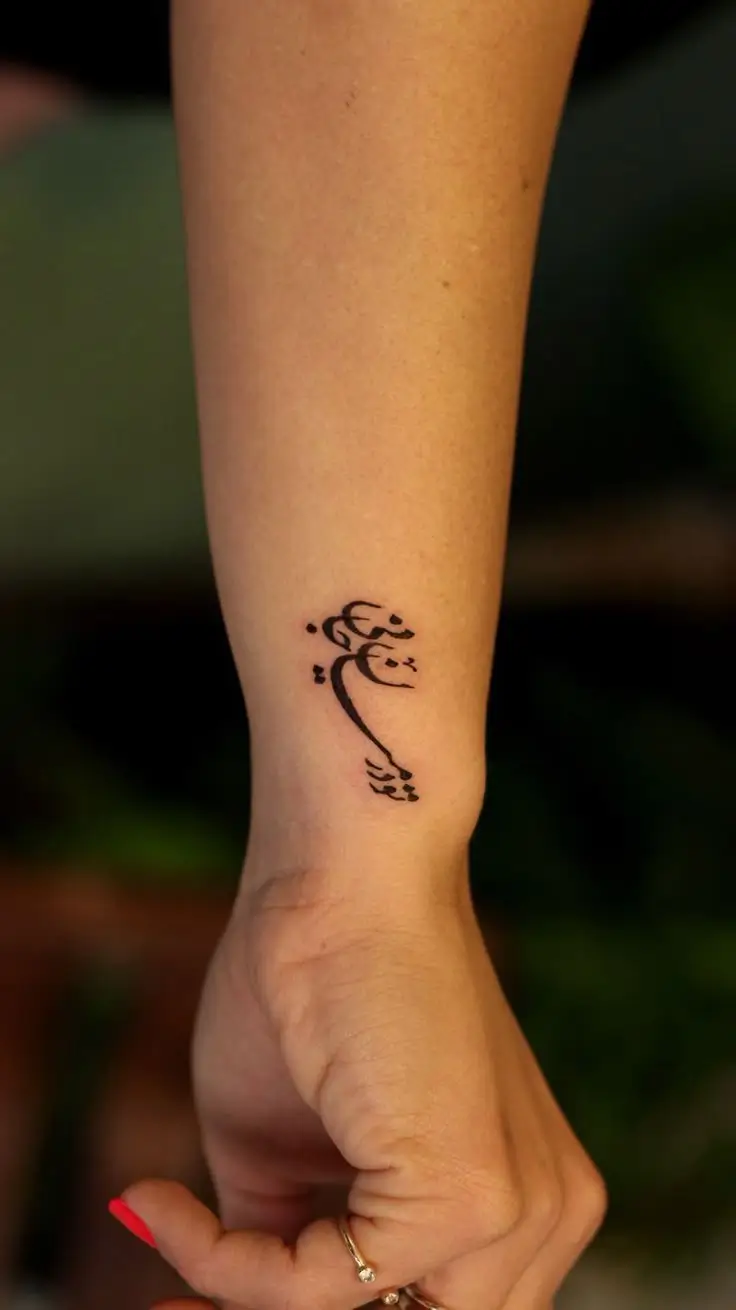
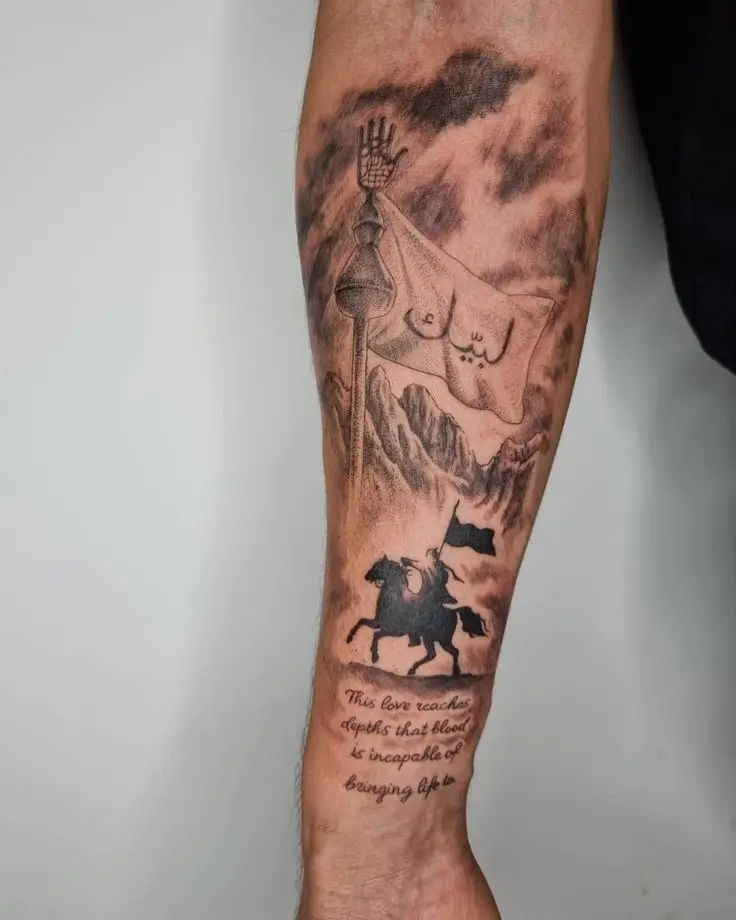
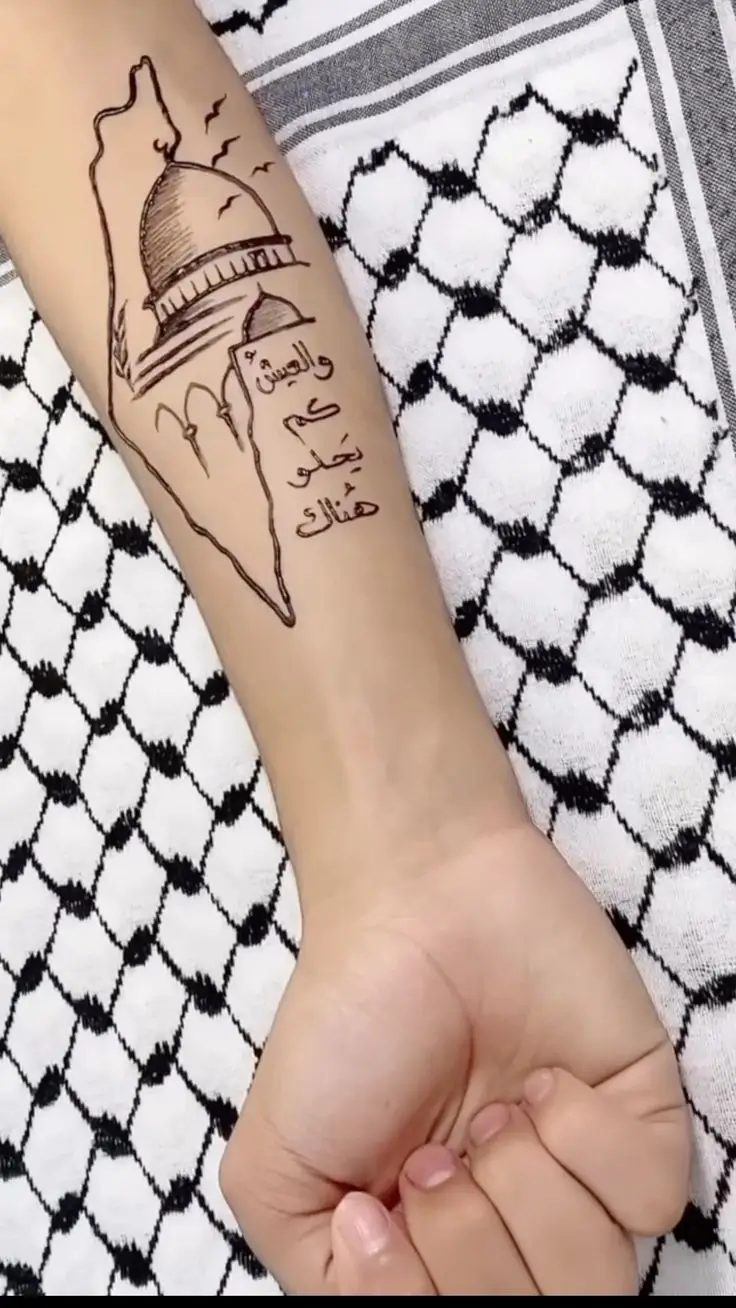
The contemporary tattoo movement is thriving among urban youth—students, artists, professionals, and globally connected individuals. Tattoos are increasingly a medium for storytelling, aesthetic expression, and identity rather than tribal markers.
1. Dominant Aesthetic Styles
The Pakistani tattoo scene blends global influences with cultural sensitivity, emphasizing subtlety, meaning, and artistry.
- Minimalist & Fine Line:
- Popularity: Favored for its elegance, discretion, and ease of concealment. Ideal for first-time clients or those navigating conservative environments.
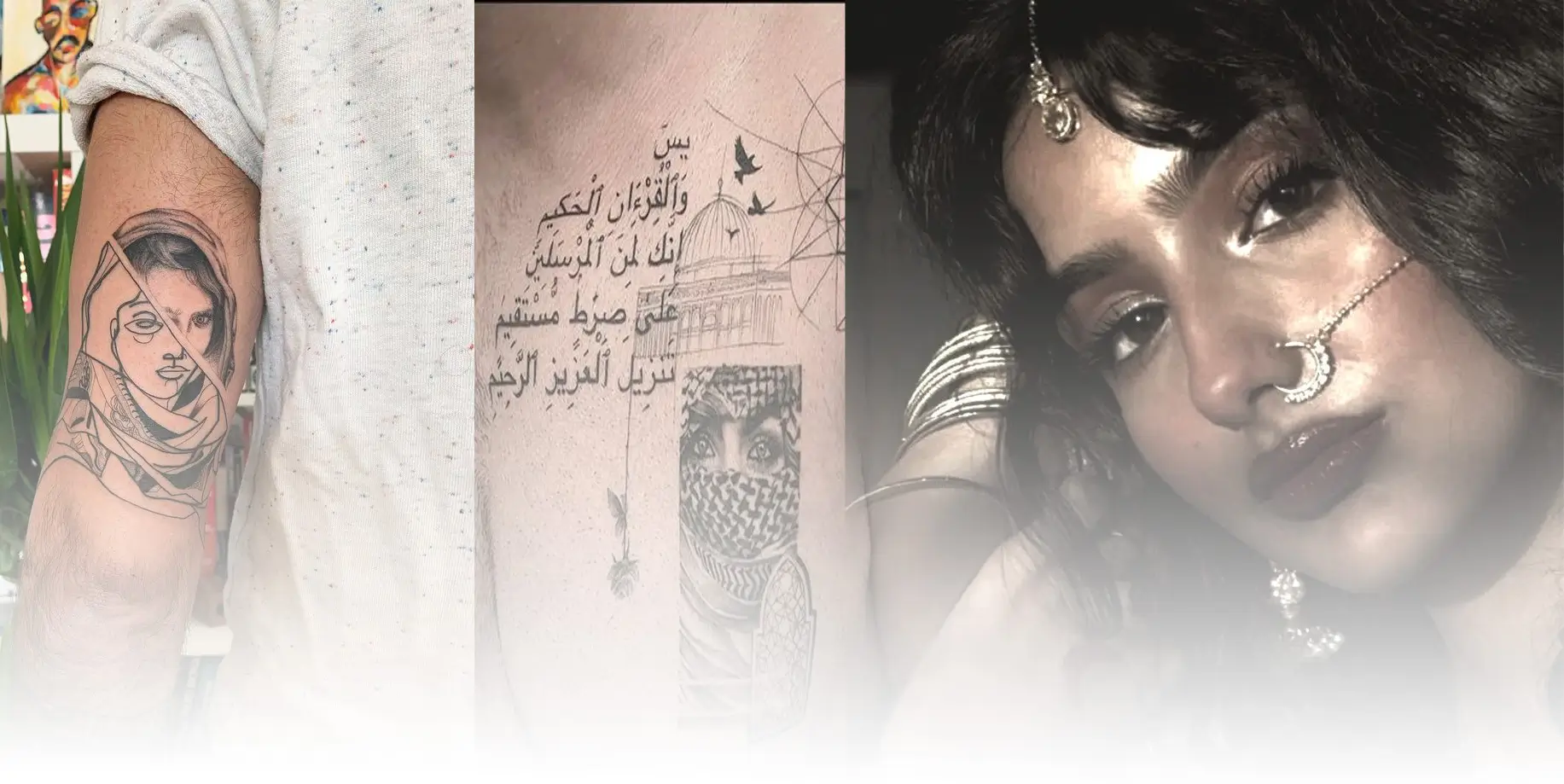
- Motifs: Small words, phrases (in English, Urdu, or Arabic calligraphy), celestial symbols, geometric shapes, and delicate florals.
- Soft Realism & Portraiture:
- Popularity: Driven by emerging skilled artists, black and grey realism is favored for memorial pieces or deeply personal symbolism.
- Motifs: Portraits of loved ones, symbolic animals (lion for strength, eagle for freedom), and intricate floral designs.
- Korean & East Asian Influence:
- Characteristics: Fine-line detailing, muted shading, soft realism, and emotional symbolism.
- Motifs: Quotes, Korean scripts, and nature-inspired imagery, inspired by K-Pop and K-Drama aesthetics.
- Geometric & Abstract Blackwork:
- Appeal: Clean, conceptual designs with dotwork shading, perfect for modern, minimalist sensibilities.
2. The Rise of Meaningful Ink
Modern tattoos are carefully curated statements, not impulsive acts.
- Personal Narrative: Tattoos now act as visual diaries, marking milestones, overcoming struggles, or expressing personal philosophies. Quote tattoos are particularly popular.
- Cultural Fusion: Many artists combine Western styles with traditional South Asian motifs, such as Urdu calligraphy or Sufi symbols.
- Gender Inclusivity: While Godna was historically female-focused, modern tattoos cater to all genders, empowering women and expanding artistic expression.
Piercing: Moving Beyond the Traditional
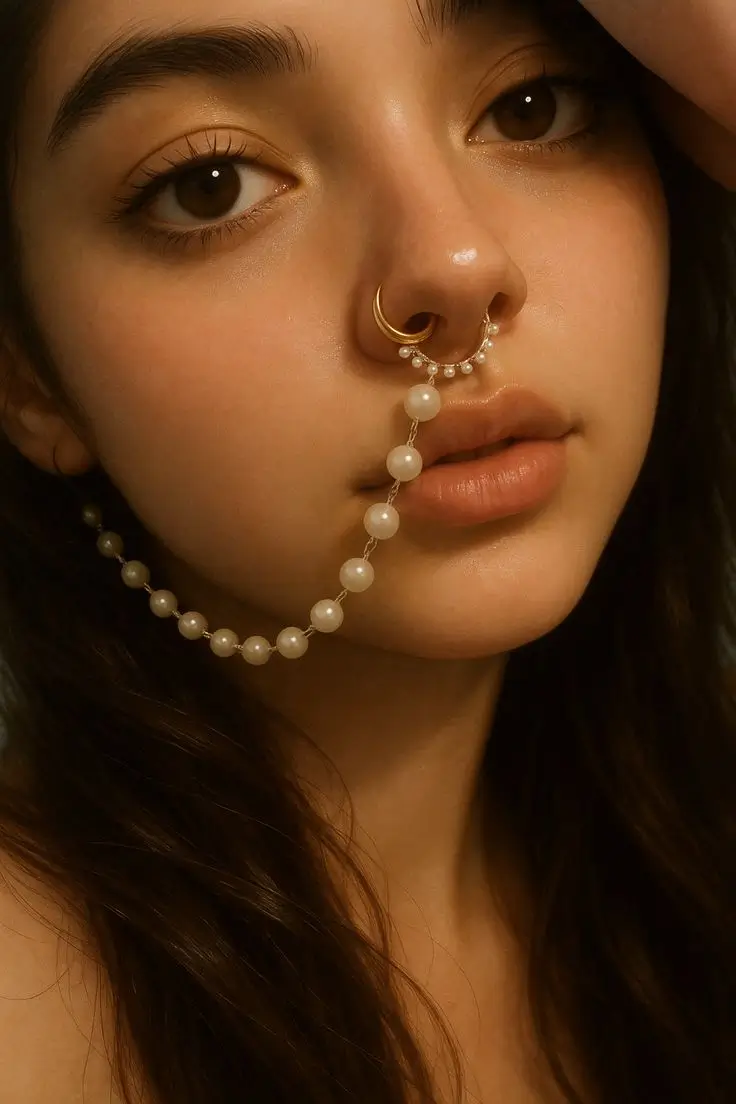
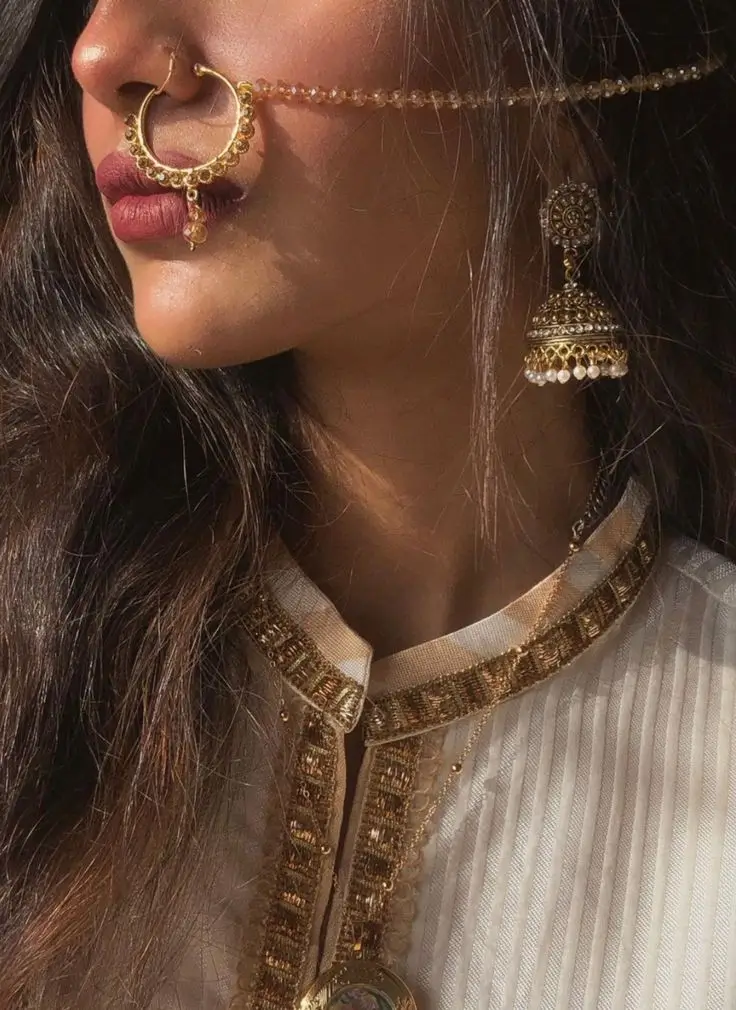
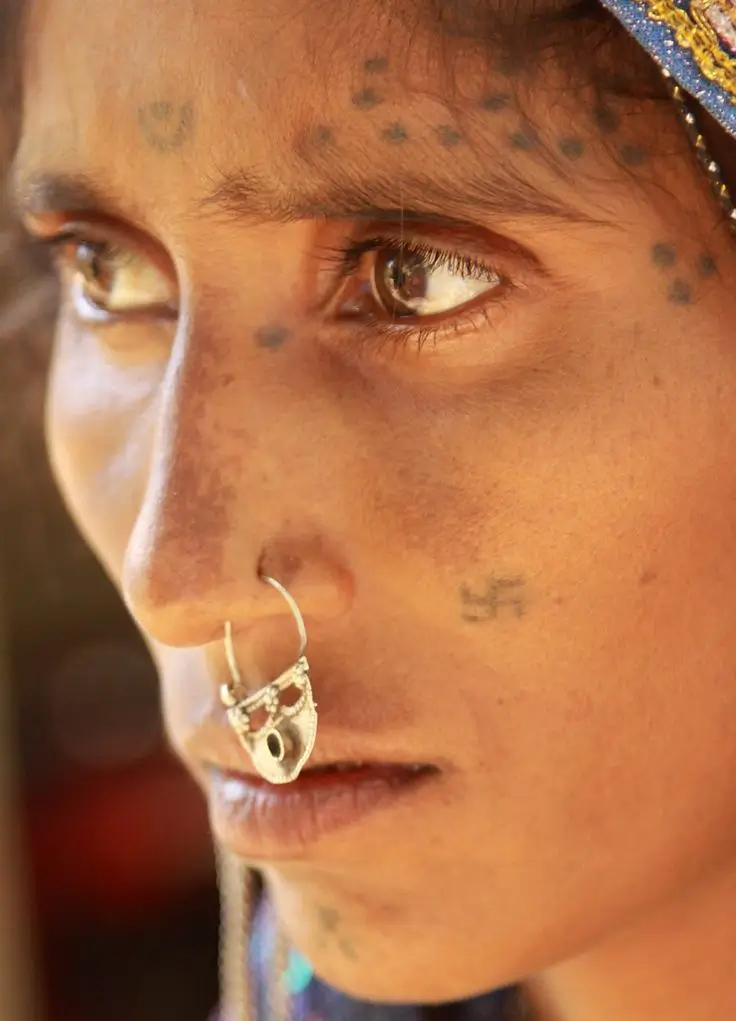
While earlobe and nose piercings remain staples, urban youth are exploring bolder, more artistic placements.
1. The Multiple Ear Piercing Craze
- Curated Ear: Aesthetic arrangements of multiple piercings along the cartilage and lobe, often blending studs, hoops, and chains.
- Popular Placements:
- Helix & Forward Helix: Upper cartilage adornments.
- Conch: Inner ear placement for bold hoops or studs.
- Tragus & Daith: Small, intricate piercings with subtle impact.
- Jewelry Trends: High-quality titanium, surgical steel, or hypoallergenic gold, often embellished with minimalistic gems or cubic zirconia.
2. Non-Traditional Piercings
- Nose: Septum and multiple nostril piercings are increasingly fashionable.
- Facial: Eyebrow, lip, and subtle facial piercings are emerging in alternative fashion circles.
- Dermal & Surface: Floating jewels embedded in the skin on collarbones or back of the neck.
- Navel: Aesthetic focal points for midriff exposure, particularly with contemporary attire.
The Socio-Cultural Tug-of-War
Body art in Pakistan exists in tension with religious, familial, and societal expectations.
- Religious Resistance: Permanent tattoos are considered haram in mainstream interpretations due to alteration of God’s creation and potential interference with ablution rituals.
- Family & Social Dynamics: Many clients navigate cultural opposition by keeping tattoos discreet. Temporary tattoos have surged in popularity as a safe compromise.
- Celebrity Influence: When Pakistani or international celebrities reveal tattoos, trends gain legitimacy, helping normalize body art.
The Business of Body Art: Professionalization & Safety
The industry has matured significantly in urban hubs.
- Professional Studios: High-quality sterilization, single-use needles, and premium inks ensure client safety.
- Artistic Specialization: Artists focus on blackwork, realism, and fine-line Korean styles, rivaling international standards.
- Female Artists: Women-run studios create safe, comfortable spaces for female clients, expanding access and challenging cultural stereotypes.
The Future Canvas: What’s Next
- Cosmetic Tattooing: Microblading, permanent eyeliner, and lip blushing are growing in popularity, bridging traditional beauty and permanent body modification.
- Neo-Traditional Fusion: Expect combinations of Sindhi tribal motifs with modern realism, producing a distinctly Pakistani signature style.
- Societal Reflection: Tattoos and piercings mirror a youth-driven desire for self-expression, globalization influences, and the resilience of art in restrictive contexts.
Expanded Map of Tattoo and Piercing Placements in Pakistan
The placements are categorized to distinguish between common, facial, and complex/less traditional areas.
I. Tattoo Placements (Permanent Ink)
| Body Area | Specific Location | Context & Trend |
| Upper Body | Upper Arm / Bicep | Classic spot, excellent for medium to large designs (e.g., tribal, realism, portraits). Easily concealable. |
| Forearm | Highly visible area, popular for script, long designs (e.g., swords), and medium-sized realism portraits. | |
| Shoulder / Outer Shoulder | Good for larger artworks (like wings or floral designs) that drape across the shoulder or shoulder blade. Less painful area. | |
| Chest / Sternum | High-visibility and symbolic location, often for large, intricate designs or delicate floral/line-work (sternum). | |
| Shoulder Blade | Ideal for larger pieces or symbols. Easily concealed. | |
| Torso & Back | Full Back / Upper Back / Lower Back | Largest canvas for expansive, detailed artworks (e.g., Japanese body suits, large realism, narrative pieces). |
| Rib Cage / Side | Often considered a painful but highly aesthetic and concealable location. Popular for quotes, script, and vertical designs. | |
| Stomach / Lower Abdomen | Versatile for private expression; allows for large designs that can be easily hidden. | |
| Extremities | Hand | Highly visible and bold. Popular for small symbols, fine-line work (e.g., arrow), and connecting designs. |
| Wrist | Highly popular for first-time or small, delicate tattoos (e.g., script, symbols). Can cover scars. | |
| Fingers / Toes | Small, personal symbols or line work (e.g., ring replacements). Known for high fading risk. | |
| Thigh (Upper/Inner) | Large canvas, popular among women for designs that wrap the hip or leg. Generally less painful. | |
| Calf / Shin | Great vertical canvas for standing pieces; less painful due to muscle cushioning. | |
| Ankle / Feet (Top of Foot) | Discreet, popular for small, delicate designs (e.g., anklets, flowers). | |
| Head & Neck | Nape of the Neck (Back of) | Discreet, easily covered by hair. Popular for small symbols or script. |
| Front of the Neck | Highly bold and visible, often chosen to make a strong statement. | |
| Behind the Ear | Very discreet and popular for tiny, minimalist designs. |
II. Piercing Placements (Metal Adornment)
| Body Area | Specific Placement | Type & Trend |
| Ears | Lobe | Traditional, most common. Often done in childhood. |
| Helix | Cartilage piercing on the upper outer rim. Highly popular. | |
| Forward Helix | Piercing on the inner upper curve of the cartilage. | |
| Tragus | Cartilage flap in front of the ear canal. | |
| Conch (Inner & Outer) | Piercing in the central cup of the ear. | |
| Daith | Piercing through the innermost cartilage fold (sometimes associated with migraine relief). | |
| Rook | Piercing through the antihelix/top ridge of the ear. | |
| Industrial | Two separate cartilage piercings connected by a single straight barbell. | |
| Face & Head | Nose (Nostril) | Traditional and modern. Can be single or multiple. |
| Septum | Through the thin tissue in the center of the nose. | |
| Rhino (Vertical Nose Tip) | Piercing that runs vertically through the tip of the nose. | |
| Eyebrow | Piercing through the skin at the brow line. | |
| Anti-Eyebrow (Teardrop) | Surface piercing placed below the eyebrow. | |
| Cheek / Dimple Piercings | Typically done in pairs to simulate or accentuate dimples. | |
| Labret | Piercing below the bottom lip, right above the chin. | |
| Vertical Labret | Piercing that passes through the bottom lip and exits under it. | |
| Philtrum (Medusa) | Piercing centered above the upper lip (in the indentation). | |
| Smiley (Scrumper) | Piercing through the upper lip frenulum (inside the mouth). | |
| Oral (Mouth) | Tongue | Vertically through the center of the tongue. |
| Tongue Web | Through the thin skin flap under the tongue. | |
| Uvula | Rare and complex piercing through the dangly structure at the back of the throat (Not recommended by professionals). | |
| Torso & Surface | Navel (Belly Button) | Very popular among young women. |
| Dermal (Microdermal) | Single-point surface piercings placed almost anywhere on the flat skin. | |
| Back Dimple Dermals | Dermals placed in the lower back (Dimples of Venus). | |
| Nipple | Piercings through the nipple. | |
| Sternum (Chest) | Microdermal piercing in the center of the chest. |
📍 Map-style List of Tattoo & Piercing Studios
Here are some well-known tattoo/piercing shops in Karachi, Lahore, and Islamabad, with addresses or approximate locations + sources.
| City | Studio / Piercing Shop | Location |
| Karachi, Multan, Faisalabad | Galima (Piercing) | Sqaure One Mall and Ocean Mall in Karachi, Mall of Multan, Multan, Lyllapur Galleria Mall & RCG Mall in Faisalabad” |
| Karachi | Inked Tattoo Art | Building 5C, 3rd Zamzama Commercial Lane, DHA Phase 5 |
| Karachi | Devil Art Studio / Devil’s Art Tattoo | Building No.21-D, Mezainne Floor khayaban e mujahid, 10th street Defence, DHA Phase 5 Karachi, |
| Karachi | Black Canvas Tattoo Studio | Plot no, 1-C Street 4، near chai wala، D.H.A Phase 6 Phase 6 Defence Housing Authority, Karachi, |
| Karachi | TattooAce Studio | 2nd Floor, Z-472 BYJCHS, Bahadurabad |
| Karachi | Ritual Piercing Studio by Farah Nigar | Block, Ocean Towers, Shop 212, Second Floor, 9, Clifton, Karachi |
| Lahore | SS Tattoo Gallery | SS Tattoo Gallery, Block F, PCHS, near DHA, Lahore. |
| Karachi, Lahore, Multan | Tattooish | Tattooish, 16M Abdul Haque Rd, Johar Town, Lahore. |
| Lahore | Sparkle Ink Tattoos & Piercing Studio | D 19, Second Floor, D, Street 18, Sector Sector D DHA Phase 6 |
| Lahore | Syinger Tattoos | MM Alam Rd, Block C1 Block C 1 Gulberg III, Lahore |
| King Austin Tattoos & Piercings | Prism Arcade 2, Phase 7 Bahria Town, Rawalpindi, | |
| Islamabad | Needle Arts Tattoo Studio | MPCHS E 11/1 E-11, Islamabad |
| Islamabad | Ink Grail Tattoo Studio | 1st Floor, Business Bay, 09-C, Bahria phase 7, Islamabad |
| Faisalabad | Silent art tattoo | 3425 Street No. 2, Farooqabad Mansoorabad, Faisalabad |
| Islamabad | Brian Horne Tattoo Studio | Phase 4, Civic Center, Bahria Town, Islamabad |
FAQs – Bold Tattoo & Piercing Trends in Pakistan
- What are the current tattoo trends in Pakistan?
Modern tattoo trends in Pakistan include minimalist fine-line tattoos, soft realism portraits, cultural fusion designs with Urdu calligraphy, and geometric blackwork, blending global aesthetics with personal meaning. - How is tattoo culture evolving among Pakistani youth?
Tattoo culture is growing rapidly among urban youth in cities like Karachi, Lahore, and Islamabad, where body art is increasingly seen as a form of identity, storytelling, and aesthetic expression. - Are piercings beyond traditional earlobe and nose becoming popular?
Yes — multiple ear cartilage piercings, conch, helix, septum, eyebrow, and dermal surface piercings are now trending among fashion-forward Pakistani youth. - What cultural history does tattooing have in Pakistan?
Permanent tattooing, locally known as Godna, has historical roots in Sindh and Balochistan as traditional body marking symbolic of identity, protection, and community belonging. - Is tattooing widely accepted in Pakistani society?
Tattoo acceptance varies — while urban youth embrace it as art and self-expression, conservative and religious views often consider permanent tattoos taboo or discouraged. - What types of tattoo placements are popular in Pakistan?
Popular placements include wrists, forearms, shoulders, back, chest, and ribs, as well as smaller areas like fingers, ankles, and behind the ear for discreet designs. - Are professional tattoo and piercing studios available in Pakistan?
Yes — major cities now have professional studios with sterilization standards, trained artists, and modern equipment, making safe body art more accessible. - What jewelry trends are seen in piercing culture?
Trendy piercing jewelry includes titanium, surgical steel, hypoallergenic metals, and minimalist gems or cubic zirconia studs and hoops. - How do celebrities influence tattoo and piercing trends in Pakistan?
Pakistani and international celebrities showcasing body art on social media help normalize tattoos and piercings among young people, boosting trend visibility. - Are there safety and hygiene considerations for tattoos and piercings?
Yes — choosing reputable studios with single-use needles, proper sterilization, and trained artists is essential to avoid infections and ensure safe body art practices