Delhi Gate Lahore: The Threshold of a 1,000-Year-Old City
To understand Lahore, one must pass through Delhi Gate.
Not metaphorically — physically.
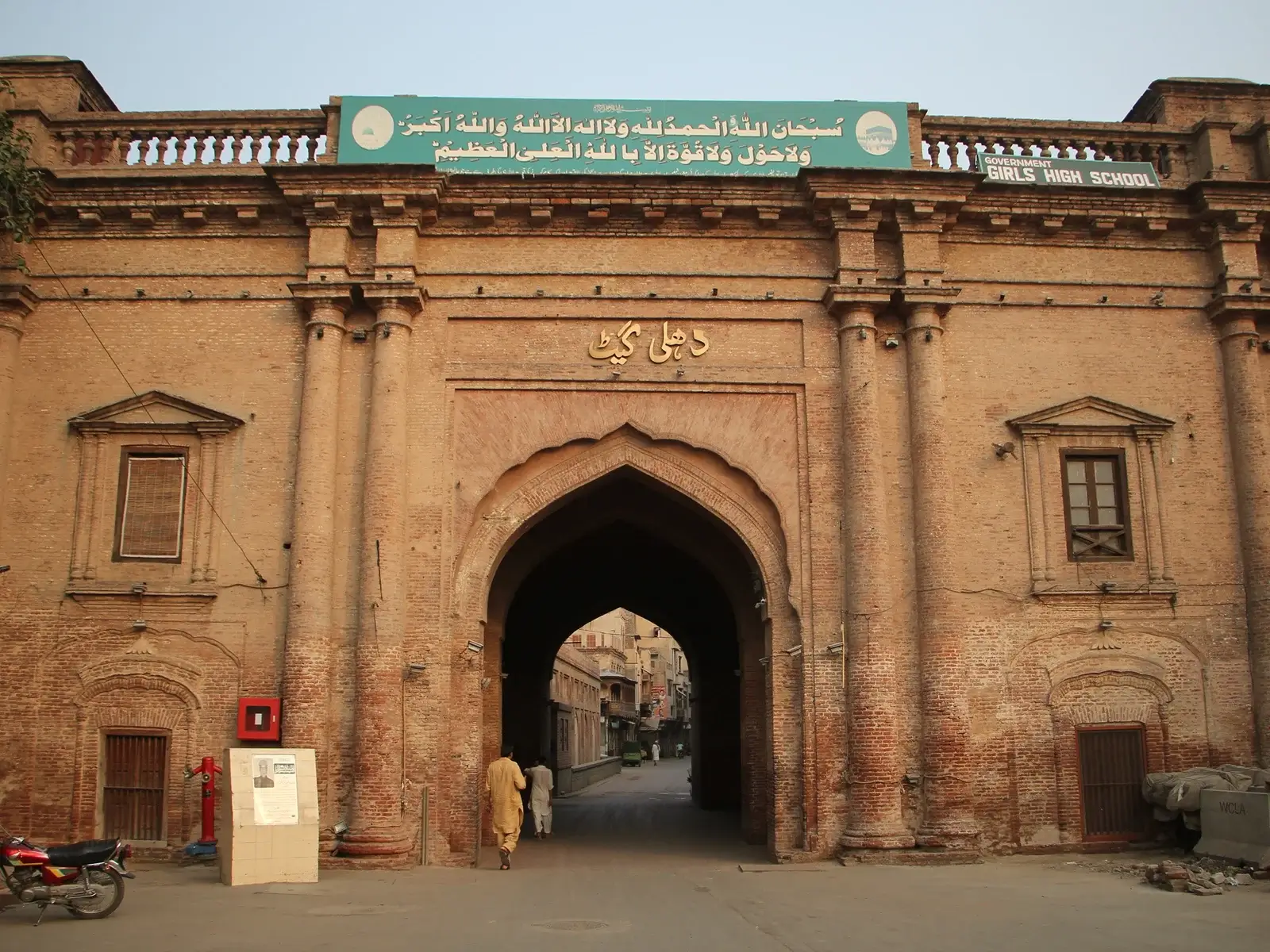
The moment you step beneath its massive arched entrance, modern Lahore dissolves. The noise changes. The light narrows. The air thickens with spice, age, and memory. What stands before you is not a monument frozen in time, but a living, breathing city that has survived empires, invasions, colonization, and modernization.
Delhi Gate is not merely one of the thirteen historic gates of Lahore.
It is the soul gate — the most active, symbolic, and culturally intact portal into the Walled City of Lahore.
The Strategic Importance of Delhi Gate
Delhi Gate faces east — toward Delhi, the former capital of the Mughal Empire. This alignment was not accidental.
During Emperor Akbar’s reign in the late 16th century, Lahore was elevated to imperial status. To protect the city, a massive brick wall was constructed with thirteen fortified gates, each serving a specific economic, military, and ceremonial function.
Delhi Gate was the royal entrance.
- Emperors entered through it
- Official delegations passed beneath it
- Trade caravans from Delhi arrived here
- Royal processions began and ended here
In Mughal urban planning, direction mattered. Facing the imperial capital reinforced Lahore’s political relevance within the empire.
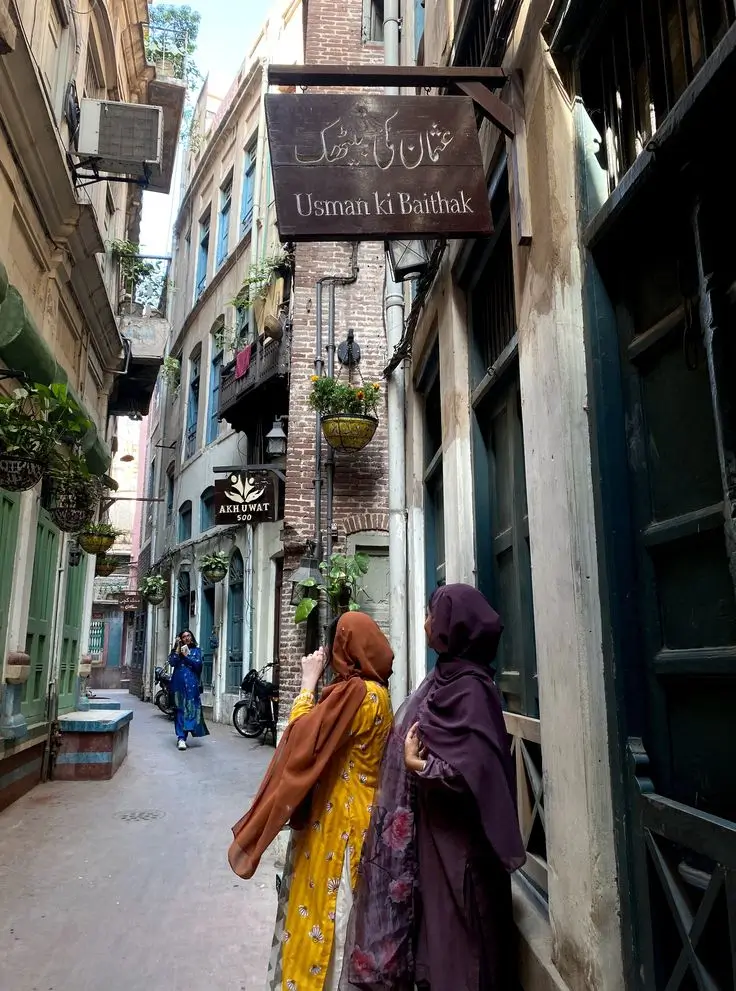
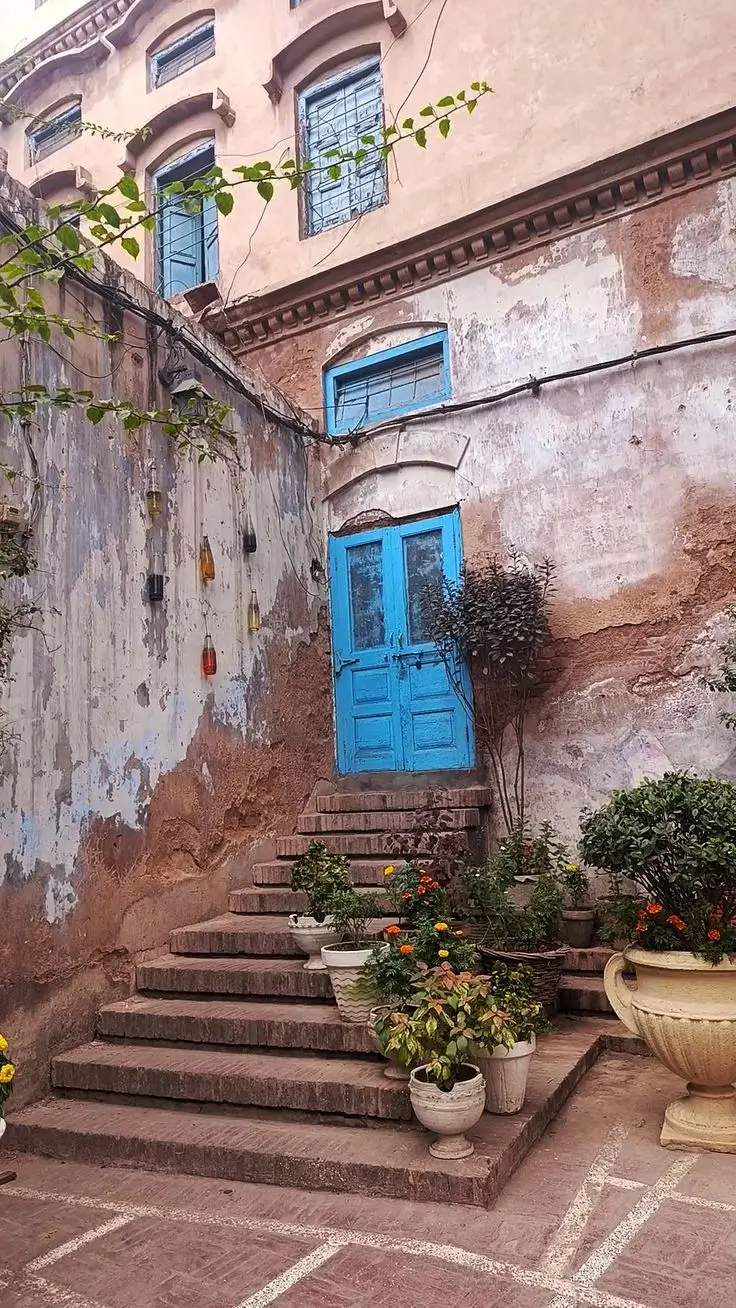
Architectural Anatomy of Delhi Gate
Delhi Gate was built as a defensive-civic hybrid — both fortress and gateway.
Key Architectural Features:
- Massive baked brick construction
- High vaulted archway designed to amplify sound
- Thick wooden doors reinforced with iron studs
- Guard chambers embedded into the gate walls
The vaulted ceiling was designed to echo hoofbeats, announcing arrivals long before they appeared. This was psychological architecture — power expressed through sound and scale.
Destruction & Resurrection
Like much of Lahore’s heritage, Delhi Gate did not survive untouched.
British Era Damage
After the annexation of Punjab in 1849, the British viewed city walls as obsolete and inconvenient. Many gates were demolished. Others were altered beyond recognition.
Delhi Gate survived — barely.
Modern Encroachments
By the late 20th century:
- Electric cables strangled the façade
- Illegal shop extensions hid frescoes
- Cement repairs suffocated Mughal brickwork
The gate existed — but its soul was buried.
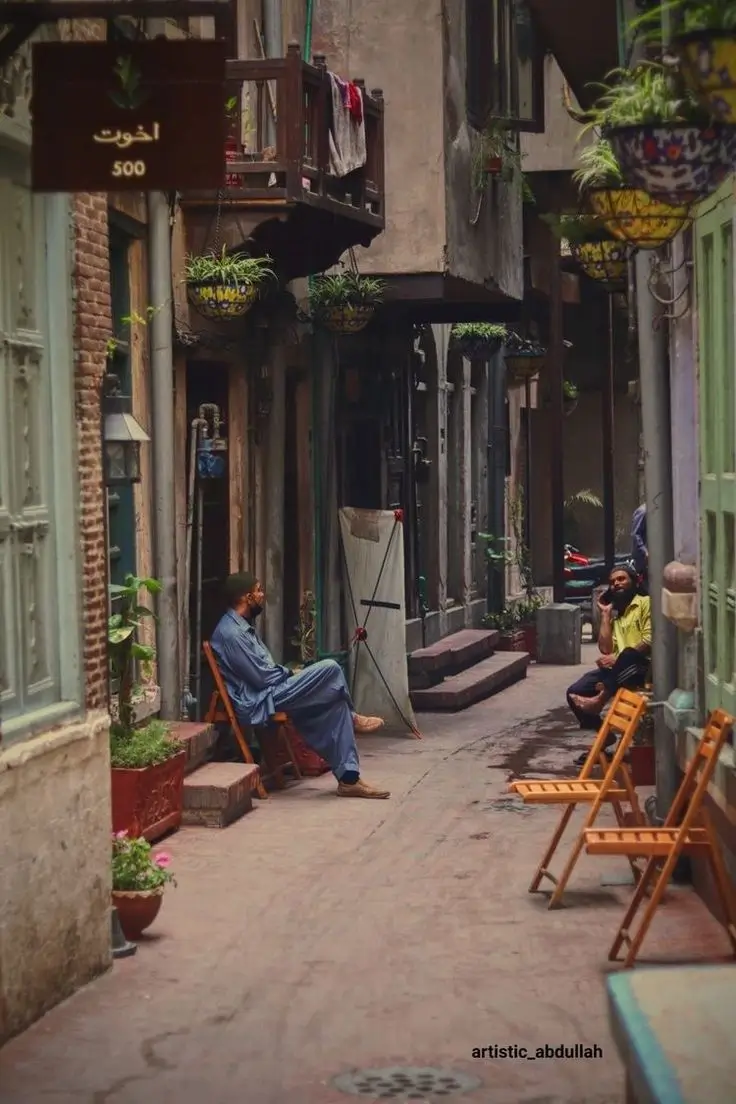
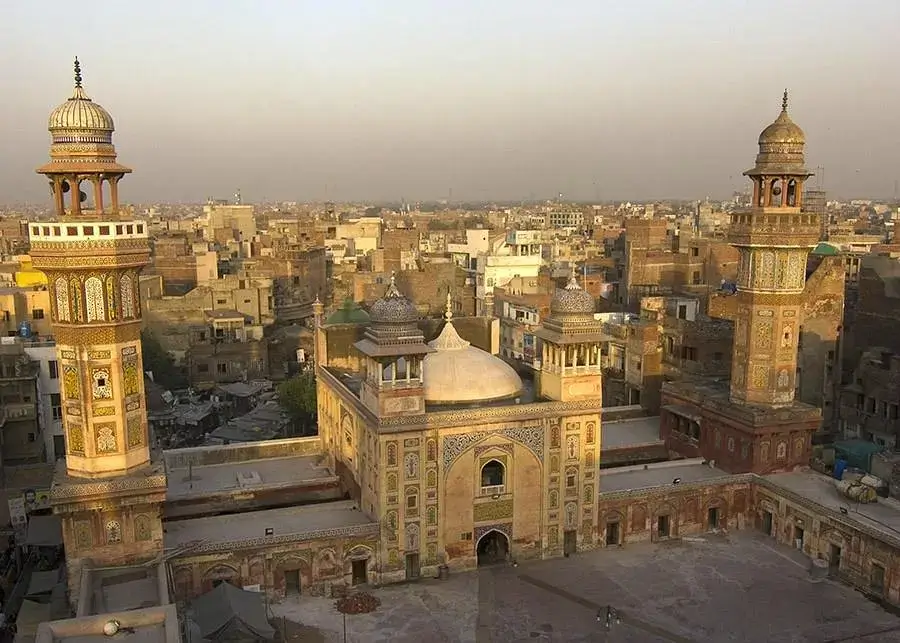
The WCLA Restoration: A Turning Point
The Walled City of Lahore Authority (WCLA) undertook a meticulous, controversial, and historic restoration project.
What made it exceptional:
- No cement — only traditional kankar lime
- Hand-crafted wooden doors
- Removal of decades of illegal encroachments
- Revival of Mughal fresco techniques
This wasn’t beautification.
It was architectural archaeology.
Today, Delhi Gate stands not as a replica — but as a resurrected original.
Why Delhi Gate Is Still Alive (Not a Museum)
Unlike sanitized heritage zones elsewhere in the world, Delhi Gate was never evacuated.
- People still live above shops
- Children still play in the alleys
- Merchants still inherit businesses centuries old
This makes Delhi Gate globally rare.
It is a heritage site with a pulse.
The Beginning of the Shahi Guzargah
Beyond the gate begins the Shahi Guzargah — the Royal Trail connecting Delhi Gate to Lahore Fort.
This path is not symbolic.
It is physical history, worn into stone by:
- Mughal emperors
- Sikh rulers
- British officers
- Generations of Lahoris
Every step forward is a step backward in time
The Thirteen Gates of Lahore & Why Delhi Gate Survived
Lahore, the historic capital of Punjab, was once enclosed by a massive fortified wall, constructed under Emperor Akbar in the late 16th century. This wall featured thirteen gates, each a portal with its own history, function, and architectural style. Walking through Delhi Gate is walking through one of the last intact witnesses of this defensive network.
The Defensive Network of the Walled City
The wall of Lahore stretched approximately 6 kilometers around the city. Every gate served multiple purposes:
- Defense – fortified entrances controlled access and provided vantage points.
- Commerce – gates were hubs for trade, linking city markets to surrounding villages.
- Ceremonial Access – certain gates, like Delhi Gate, were reserved for royal processions.
Each gate had a unique name, often referencing a city, landmark, or function.
The Names and Stories of the Thirteen Gates
| Gate Name | Meaning / Origin | Current Status |
|---|---|---|
| Delhi Gate | Faces Delhi; main ceremonial and trade entrance | Restored, fully functional |
| Lahori Gate | Named for Lahore; leads toward Walled City inner core | Partially restored |
| Bhati Gate | Named after the Bhati tribe | Exists, some sections dilapidated |
| Kashmiri Gate | Leads to Kashmir trade routes | Fragmented remains |
| Mochi Gate | Named after cobblers (Mochi) | Active market, semi-restored |
| Bhatti Gate | Residential gate of the Bhatti clan | Disappeared |
| Akbari Gate | Built during Akbar’s reign | Ruins only |
| Sheranwala Gate | Gate of lions; symbol of power | Demolished |
| Roshnai Gate | “Gate of Lights” | Exists in fragmentary form |
| Sarai Gate | Entrance to Sarai / inns | Partially demolished |
| Chitta Gate | “White Gate” | Preserved, minor restoration |
| Masti Gate | Named after local folklore | Exists in small section |
| Samman Gate | Used for ceremonial honorific entries | Lost over time |
The Rise and Fall of the Other Gates
Unlike Delhi Gate, which was continuously maintained, the other gates faced multiple challenges:
- Colonial Modification: British forces demolished gates perceived as obstacles.
- Urban Expansion: Modern roads required wider entrances; old gates were flattened.
- Neglect: Many were left to decay as the city expanded beyond its walls.
Delhi Gate survived because of its dual role as both ceremonial entrance and commercial hub. Its location on the main trade route ensured constant maintenance.
Strategic Location: Why Delhi Gate Endures
Delhi Gate faces east, linking Lahore to the historic Grand Trunk Road. Its strategic position has historically ensured:
- Military Significance: Soldiers could enter or exit rapidly.
- Economic Significance: Merchants from the Mughal capital entered here, bringing commerce and goods.
- Cultural Significance: Royal processions always passed through this gate, preserving ceremonial relevance.
Fun Fact: Travelers often confuse Delhi Gate with the city of Delhi in India. Historically, it was a directional gate, not a literal connection to Delhi city.
Architecture of the Surviving Gates
While most gates no longer exist, Delhi Gate retains key architectural features:
- Double Story Arches: Designed to allow elephants, horses, and carts.
- High-Vaulted Ceilings: For acoustic amplification.
- Defensive Chambers: Small alcoves inside the gate housed guards, now offices for WCLA.
- Mughal Brick Patterns: Unique latticework in walls, restored with kankar lime.
The surviving gates offer historians a comparative lens to study Mughal urbanism.
Lessons from the Lost Gates
The lost gates teach us about:
- Urban Resilience: Only gates that adapted commercially survived.
- Cultural Continuity: Delhi Gate remains relevant because it hosts living markets, mosques, and havelis.
- Conservation Priority: Modern restoration efforts prioritize gates like Delhi Gate as anchors of heritage tourism.
Delhi Gate as the Gateway of Memory
Walking through Delhi Gate is stepping into living history:
- Children play in alleys older than many European cities.
- Shopkeepers continue trades passed down for centuries.
- The air smells of spices, sweat, and preserved wood, creating a multi-sensory connection to the past.
No other gate can replicate this continuity of life and heritage.
Shahi Guzargah: The Royal Trail – Meter-by-Meter Journey
The Shahi Guzargah, or Royal Trail, stretches 1.6 kilometers from Delhi Gate to the Lahore Fort. Historically, this was the ceremonial route for emperors, courtiers, and merchants. Today, it’s a living artery of Lahore, bustling with shops, spice stalls, street food vendors, and artisans.
Walking this trail is like stepping back 400 years, yet the city remains alive with modern energy.
Stop 0: Delhi Gate – The Threshold (0 Meters)
- Entrance: Massive wooden doors, double-story arches, Mughal brickwork.
- Guard Rooms: Originally designed for defense; now serve as WCLA offices.
- Acoustic Design: Vaulted ceilings amplify footsteps and announcements.
Tip: Arrive early (7:30 AM) for photography; the golden light highlights the brick patterns and frescoed arches.
Stop 1: Shahi Hammam – The Royal Bath (20 Meters)
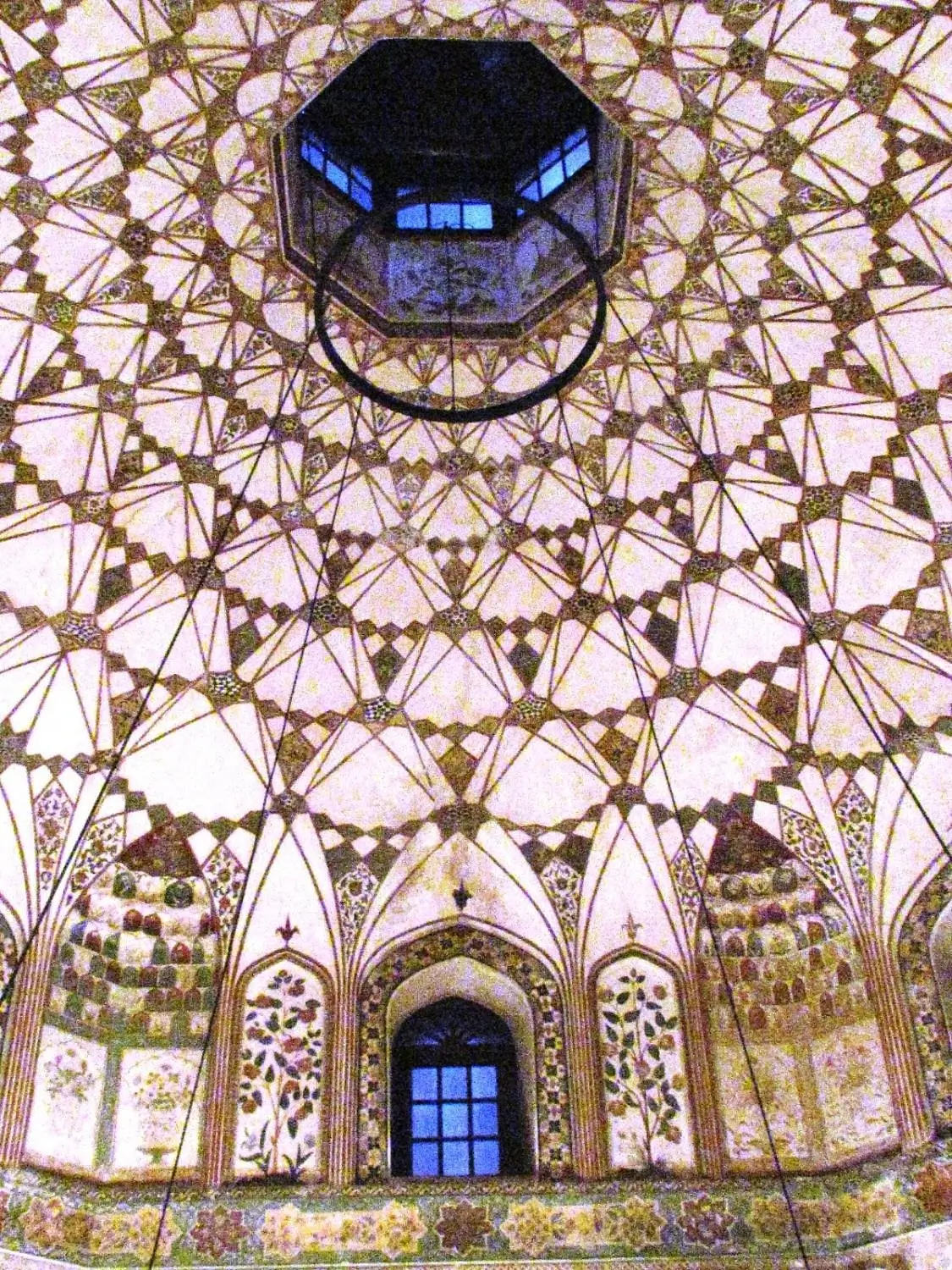
Located immediately to the left of the gate, the Shahi Hammam was built in 1635.
- Apodyterium: Changing room with preserved frescoes.
- Tepidarium & Caldarium: Warm and hot rooms; small ceiling apertures for light and steam.
- Engineering Marvel: Hypocaust heating system circulating hot air beneath marble floors.
Visitors can still see traditional Mughal floral motifs, showcasing Persian influence.
Photography Tip: Use a tripod to capture soft interior light; the frescoes glow beautifully at mid-morning.
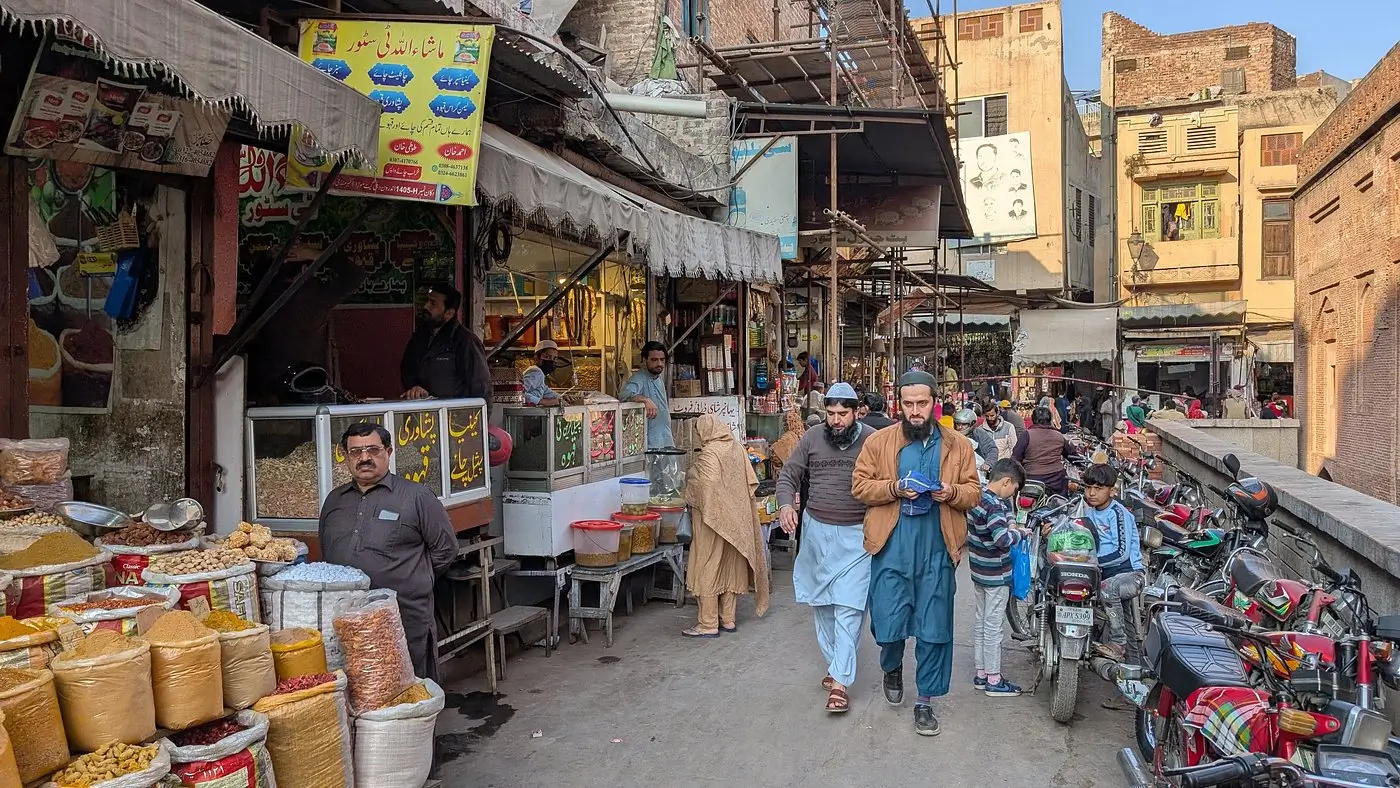
Stop 2: Akbari Mandi – The Spice Bazaar (50–150 Meters)
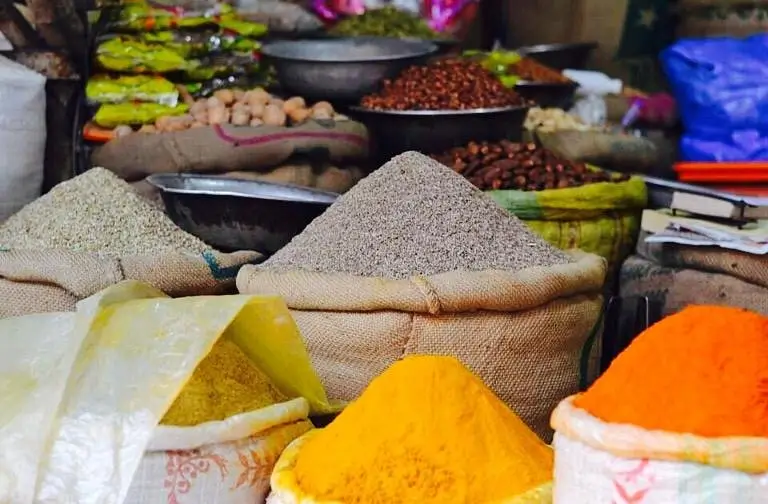
- Spices: Turmeric, red chili, saffron, cumin, and hundreds of other herbs.
- Local Legend: Vendors claim they can identify spices by smell alone.
- Commerce: One of South Asia’s oldest spice markets; still dictates regional prices.
Street Food Tip: Try Paya (trotter stew) and Halwa Puri from stalls near the bazaar.
Stop 3: Textile Alley – Gota and Bridal Fabrics (150–300 Meters)
- Shops overflowing with gold and silver lace (Gota).
- Havelis line the street; notice the intricate wooden doors with dual knockers (heavy for men, light for women).
- Craftsmanship has remained unchanged for over 200 years.
Historical Note: Many havelis served as merchant headquarters; the courtyards were used for trade negotiations.
Stop 4: Chitta Gate – The White Gate (400 Meters)
- Transition Point: Marks entrance to the inner Walled City core.
- Architecture: Preserved brickwork; minor restoration by WCLA.
- Significance: Originally a main entrance before city expansion.
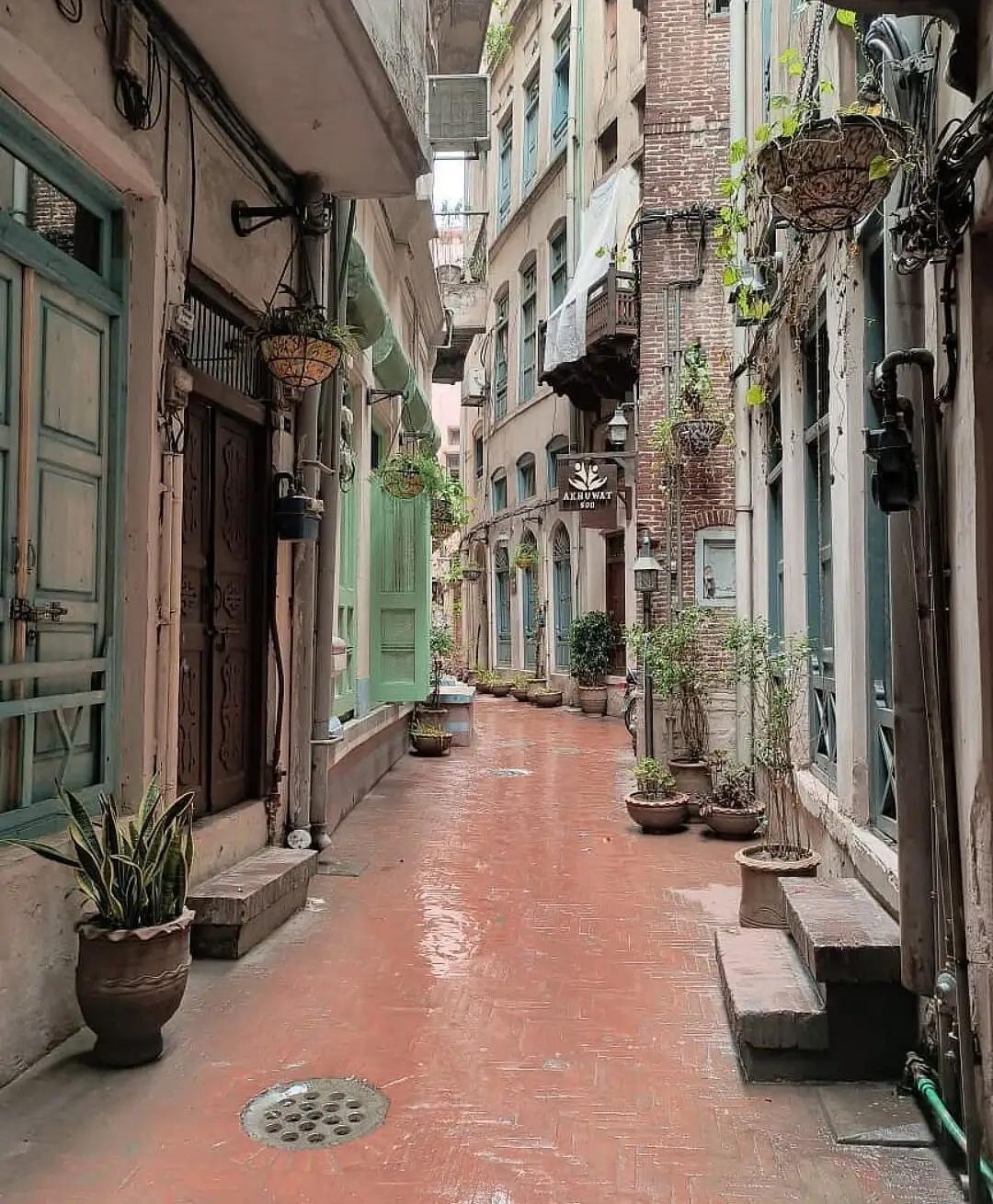
Stop 5: Hidden Havelis and Alleyway Crafts (400–600 Meters)
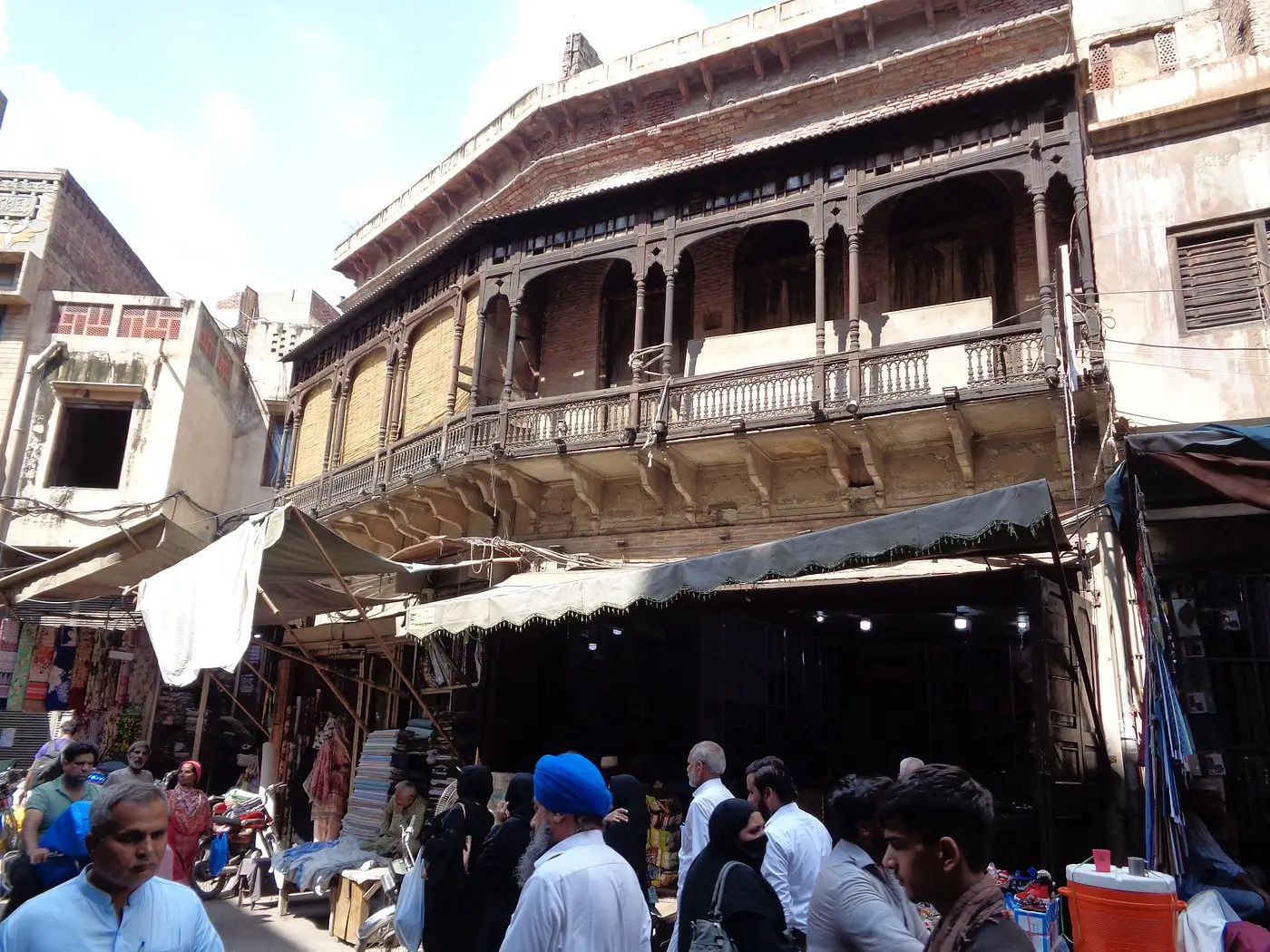
- Havelis: Multi-storied mansions with central courtyards and jharokas.
- Basements (Sard-Khanas): Cool refuge during scorching summers.
- Artisans: Calligraphers (Katibs) and copper/brass smiths continue centuries-old crafts.
Fun Fact: Many alleys are named after the trades that thrived there, e.g., Kucha Kasai (butchers’ alley), Kucha Moti (pearl merchants).
Stop 6: Street Food Alley (600–800 Meters)
- Signature Dishes: Tawa Chicken, Pathora, Nankhataai (from Khalifa Bakery).
- Cultural Insight: Food is communal, served on wooden benches; locals may offer chai for free.
- Atmosphere: Aromatic spices, sizzling woks, and bustling chatter.
Tip: Visit in the morning for breakfast (Halwa Puri) and in the evening for Dumba Karahi.
Stop 7: Literary and Cultural Alley (800–1,000 Meters)
- Bookstores: Rare Urdu poetry, Islamic texts, and calligraphy manuals.
- Historical Significance: This section was frequented by poets and intellectuals, including Allama Iqbal.
- Small Havelis: Converted into workshops for calligraphy students from NCA (National College of Arts).
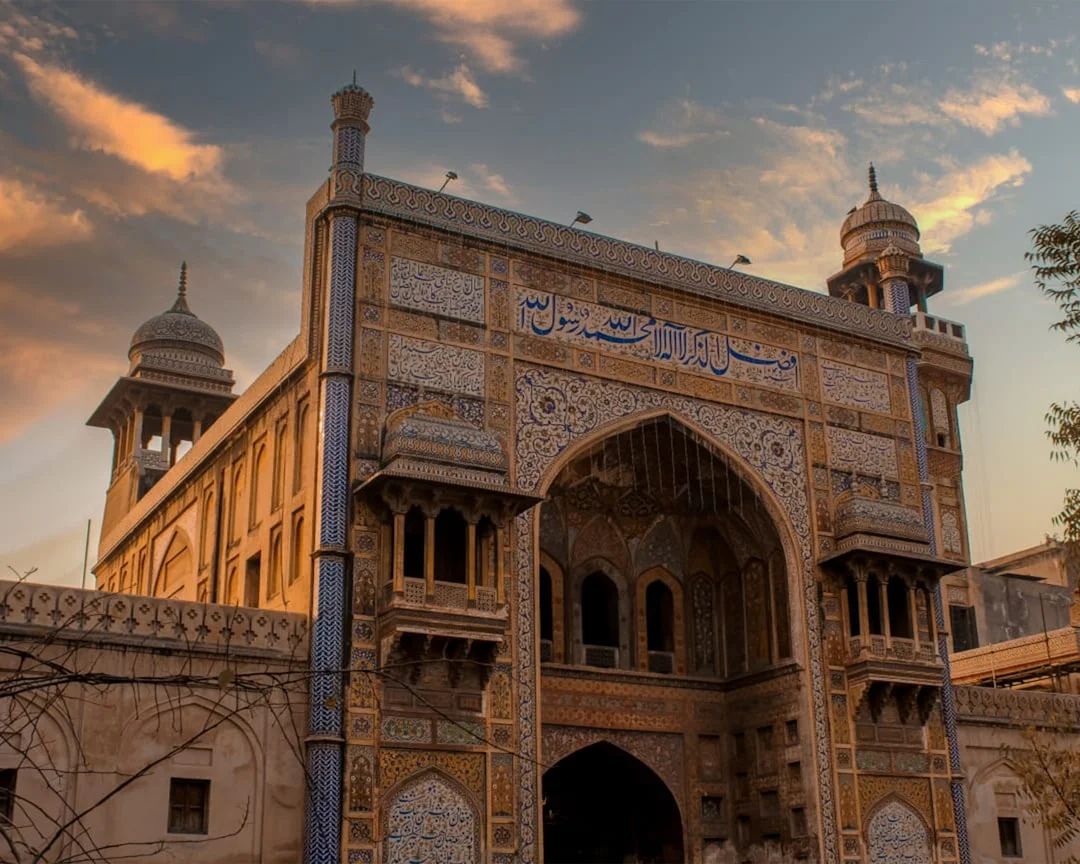
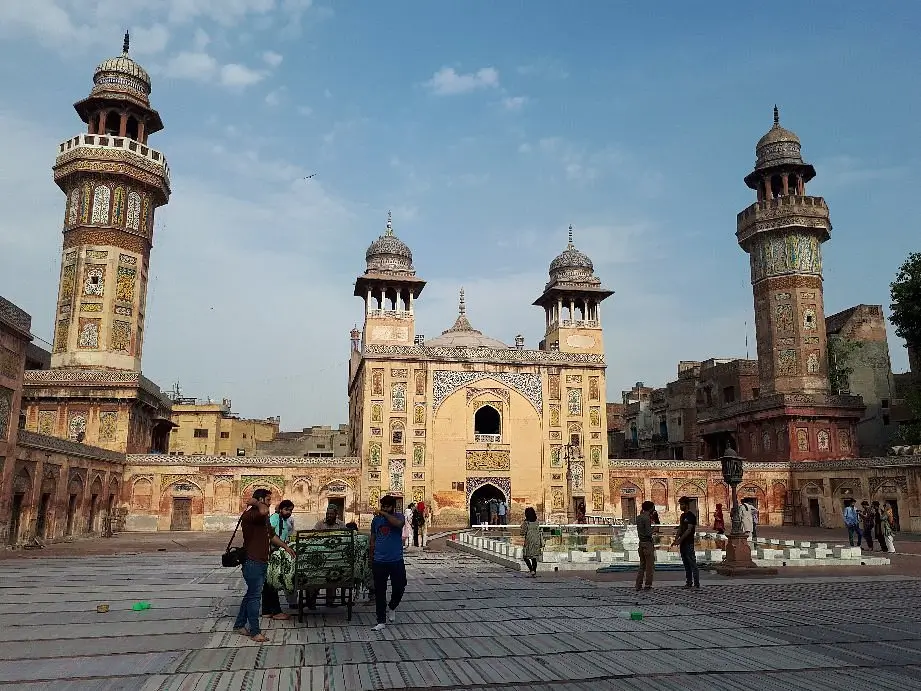
Stop 8: Wazir Khan Mosque (1,100 Meters)
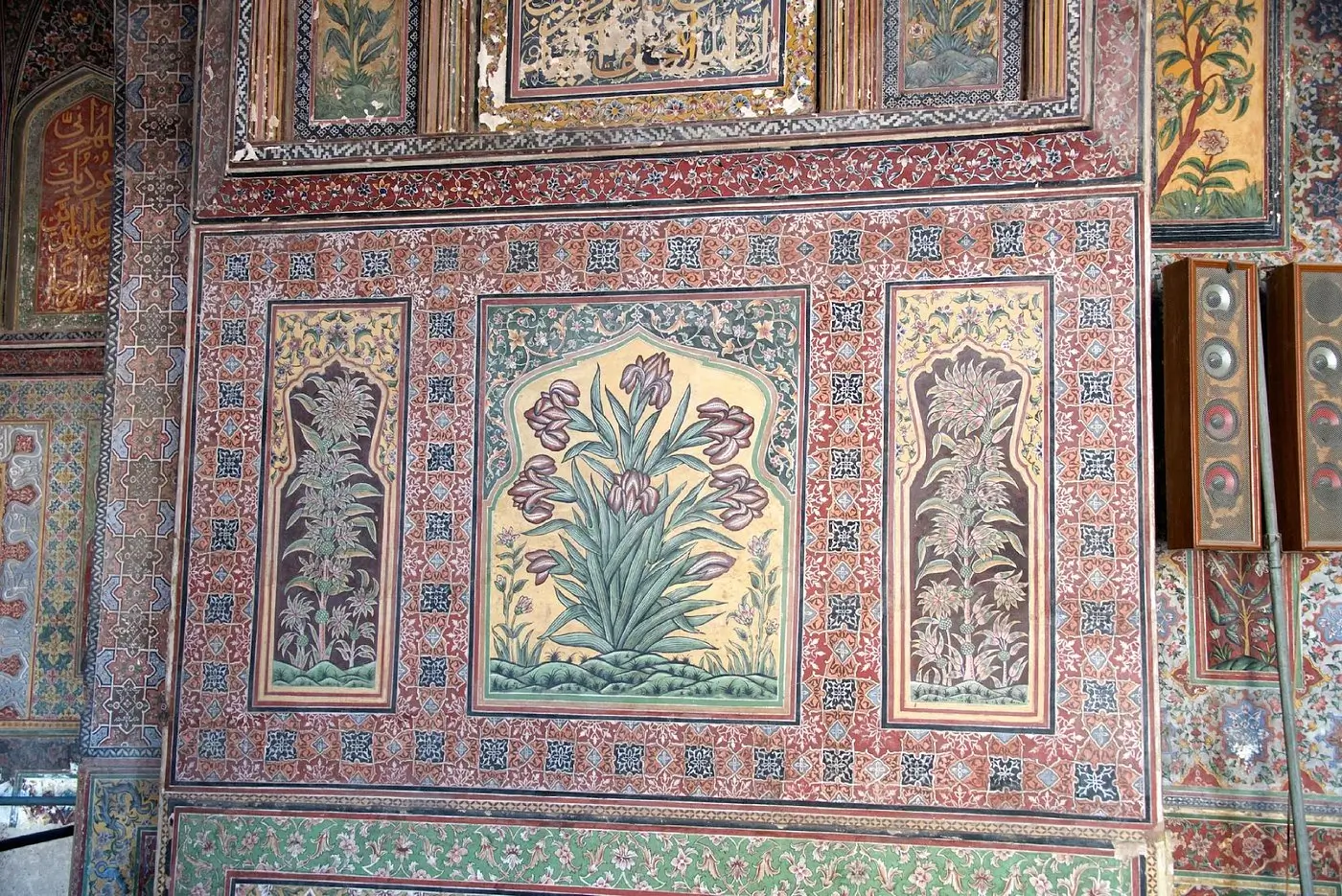
- Calligraphy: Thuluth and Nasta’liq scripts adorn every arch.
- Tile Work (Kashi-Kari): Vibrant Persian-influenced mosaics.
- Hujras: Student cells converted to artisan workshops.
- Minarets: Octagonal, slightly tilted to withstand earthquakes.
Photography Tip: Golden hour illuminates the tiles; evening lights make them glow like jewels.
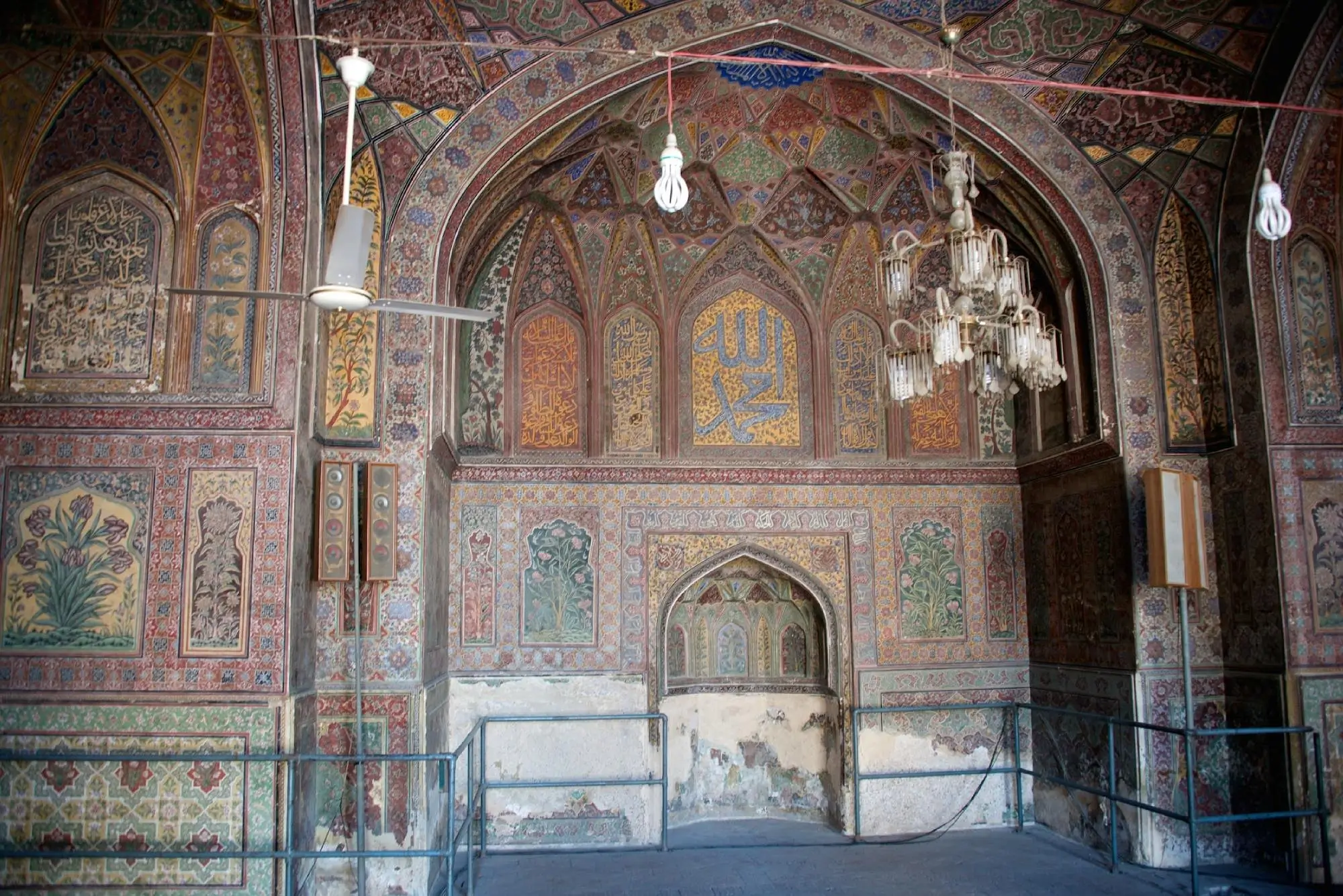
Stop 9: Chowk Wazir Khan (1,150 Meters)
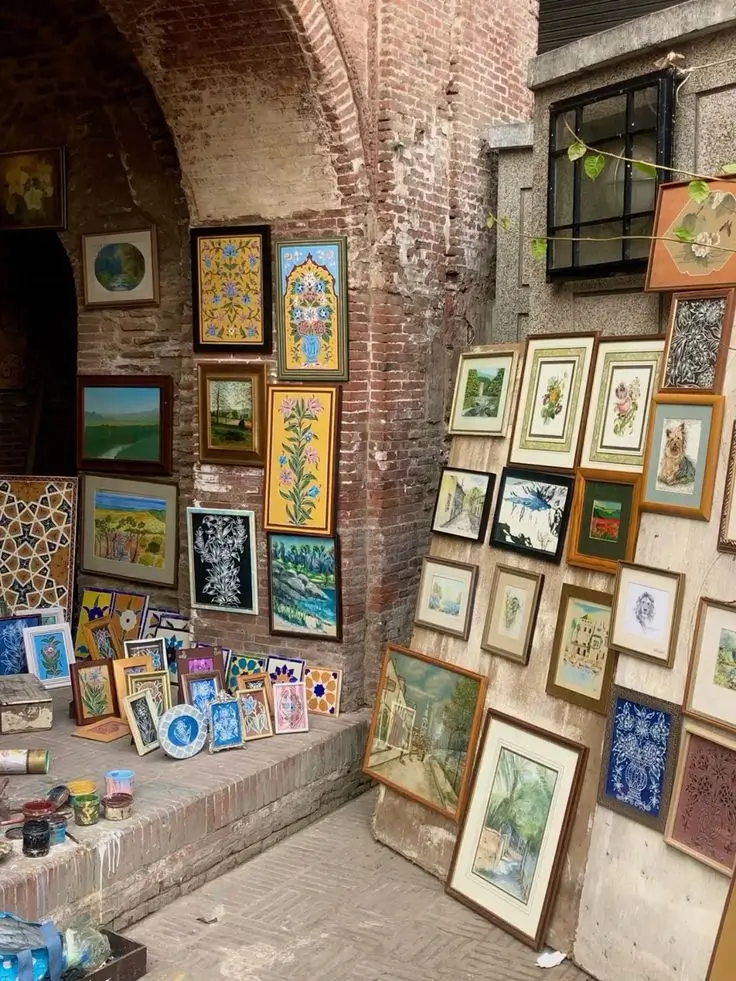
- Public Square: Hub for artists, calligraphers, and street vendors.
- Evening Life: Glow of tiled mosque + aromas of Pathora and Karahi.
- Social Fabric: The square fosters communal interaction, blending old and new.
Stop 10: Kashmiri Bazaar & Final Approach to Fort (1,200–1,600 Meters)
- Bazaar: Bookstores, fabrics, and cultural shops dominate.
- Begum Shahi Mosque (Maryam Zamani Mosque): Pre-dates Wazir Khan Mosque; early Mughal architecture.
- Lahore Fort Entrance: The Royal Trail culminates here; the fortified citadel once hosted emperors, armies, and royal parades.
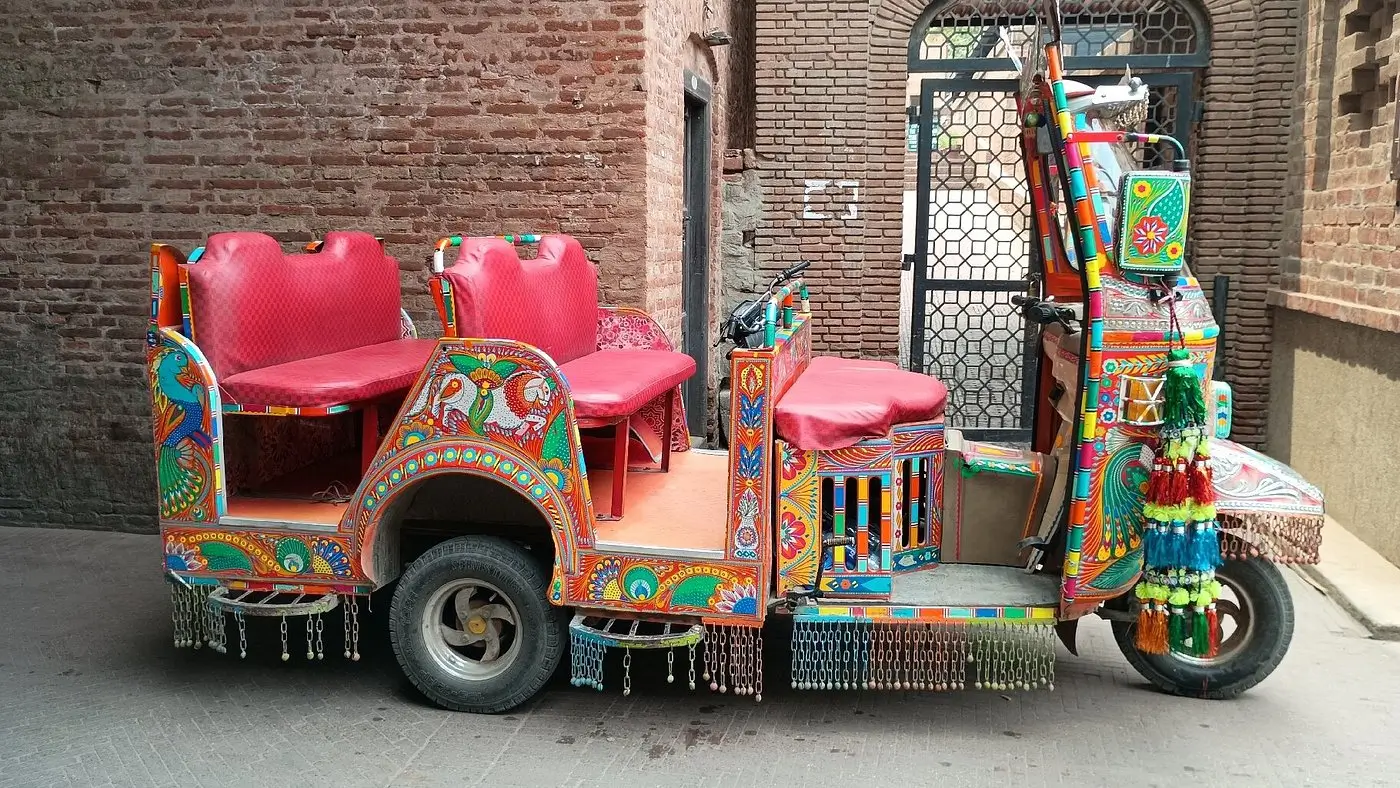
Tip: Take a Rickshaw ride from Chowk Wazir Khan to the Fort for a quick modern perspective.
Hidden Crafts and Havelis of Delhi Gate – Living Heritage
Moving beyond the bustling streets and the Royal Trail, Delhi Gate opens into a maze of alleys where history is etched into every wooden door, tiled wall, and cobblestone. These narrow passages lead to the Havelis—multi-storied mansions built by Mughal nobles, merchants, and court officials—which stand as monuments to Lahore’s elite urban culture.
Here, we explore the intersection of architecture, art, and human endeavor, revealing the heartbeat of the Walled City.
The Havelis – Skyscraper Heritage of the Mughal Era
While the Delhi Gate is a public monument, the true treasures are the Havelis hidden behind unassuming doors. These mansions reflect Mughal and Sikh urban design principles.
Architecture of Privacy and Airflow
- Central Courtyard: Acts as a natural ventilation system, cooling rooms during scorching summers.
- Jharokas (Overhanging Balconies): Allow women to observe street life without being seen.
- Basement Vaults (Sard-Khanas): Two levels below ground maintain 10–12°C lower temperatures than street level.
Fun Fact: Havelis were often designed with secret staircases and escape tunnels, connecting them to major gates or nearby mosques.
Notable Havelis Around Delhi Gate
- Haveli Baij Nath: A transitional piece between Mughal and Sikh architecture, featuring intricate frescoes and woodwork.
- Mian Khan Haveli: Built by a high-ranking Mughal official, it was so large that it functioned as a neighborhood in itself.
- Haveli Chughtai: Famous for its painted ceilings and intricate latticework, now partially converted into artisan workshops.
Photography Tip: Early morning light filters through alleys, highlighting carved doors and balconies, perfect for architectural photography.
The Craftsmen of Delhi Gate – Guardians of Dying Arts
The Havelis were home not just to families but to master artisans who provided luxury goods to the elite. Today, some trades survive in tiny workshops tucked in alleys.
The Calligraphers – Masters of Nasta’liq
- Tools: Reed pens (Qalams), soot-based ink, handmade paper.
- Specialty: Wedding invitations, religious texts, and mural inscriptions.
- Legacy: Many are descendants of Mughal-era Katibs; they preserve techniques over 400 years old.
Cultural Tip: Buying a hand-written piece from these calligraphers is considered a collectible.
Copper and Brass Smiths
- Location: Kucha Copper-smiths near the Royal Trail.
- Products: Cauldrons (Deghs), brass utensils, decorative trays.
- Process: Hammering by hand, tin-plating (Kalai), fire management using bellows.
- Observation: Sparks and rhythmic clanging create a visual and auditory spectacle.
Pro Tip: Observe the smiths in action; photographing the process during midday light highlights the metallic sheen beautifully.
Potters and Ceramic Artisans
- Traditional Kilns: Underground pits provide controlled firing for terracotta vessels.
- Design: Often painted with Mughal floral motifs or geometric patterns.
- Modern Struggle: Rising costs and competition from industrial ceramics threaten these crafts.
Folklore and Oral History in Havelis
Every Haveli has stories told by the elders (Baba-jis), blending fact and legend.
- Jinns and Guardians: Some believe gates are protected by unseen spirits.
- Haunted Basements: Secret tunnels under Havelis were used during sieges.
- Family Lineages: Many current residents can trace their ancestry back to Mughal merchants or artisans.
Tip: Sit in a courtyard and ask locals about old legends; this provides rich content for storytelling and immersive blogging.
The Social Fabric of the Mohallas
Behind each shop and Haveli lies a residential quarter (Mohalla).
- Community Bonds: Residents know each other intimately; strangers are quickly noticed.
- Rooftop Culture: Social gatherings, kite flying (Basant), and open-air meals occur on rooftops, creating a “city in the sky.”
- Generational Continuity: Families often maintain both home and business in the same Mohalla for centuries.
Cultural Insight: The Mohalla system reflects sustainable urbanism, where work, food, faith, and social life are within a few minutes’ walk.
Restoration Efforts – Walled City of Lahore Authority
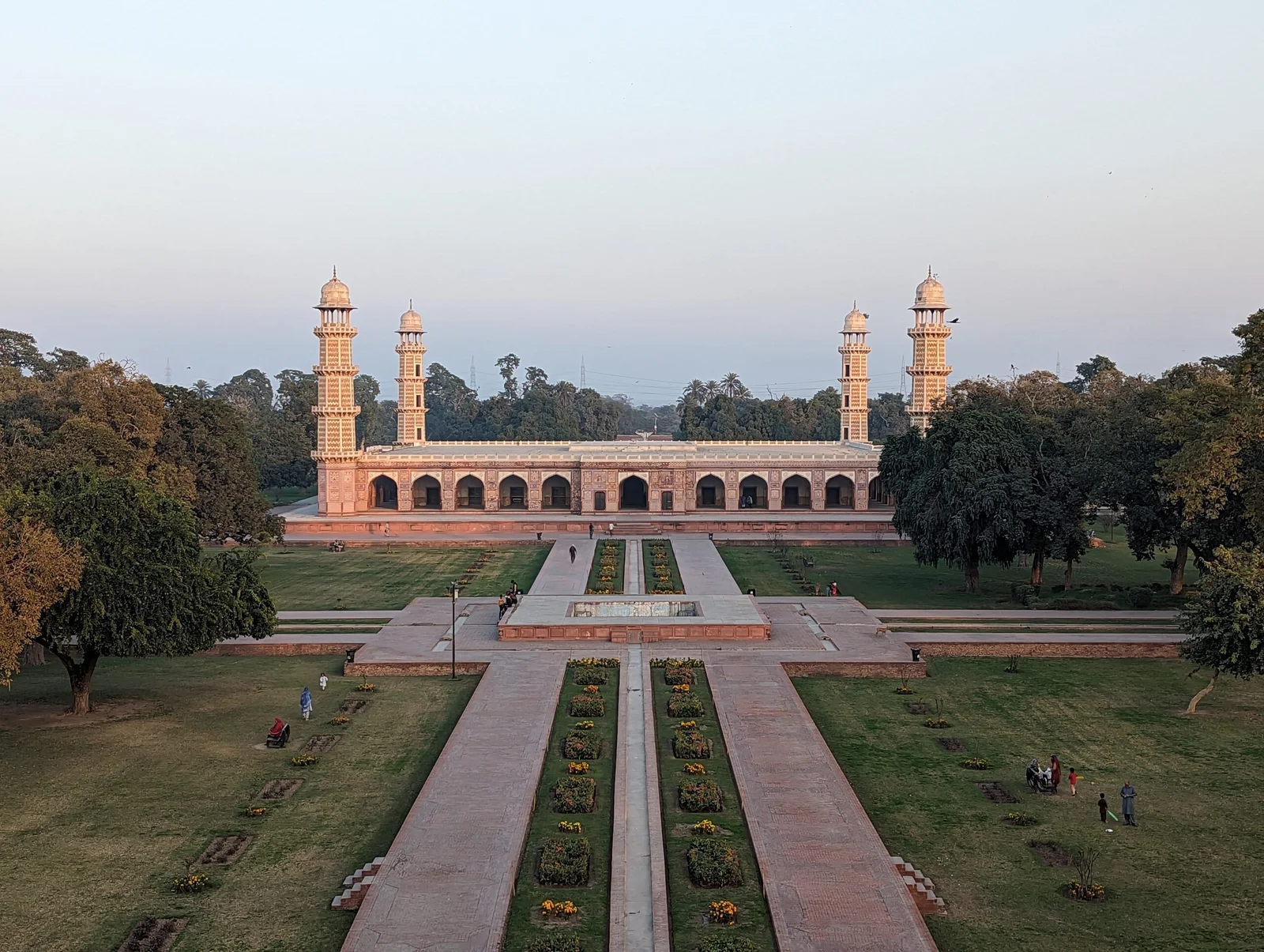
Preserving these crafts and Havelis is a delicate balance between modernization and heritage.
Encroachment and Urban Pressure
- Illegally placed power lines, gas pipes, and shop extensions obscure historical architecture.
- WCLA works to remove encroachments while keeping businesses operational.
Traditional Restoration Techniques
- Kankar Lime Mortar: Allows brickwork to “breathe,” preventing moisture damage.
- Organic Pigments: Used to restore frescoes and painted ceilings.
- Community Collaboration: Local residents are engaged to ensure restoration respects traditions.
Photography Guide for Crafts and Havelis
| Subject | Best Time | Tip |
|---|---|---|
| Carved Wooden Doors | 7:00–8:30 AM | Soft morning light enhances textures. |
| Copper and Brass Smiths | 12:00–2:00 PM | Capture the sparks and metallic reflections. |
| Courtyard Frescoes | 10:00–11:00 AM | Use a wide-angle lens to include walls and ceiling. |
| Rooftop Mohalla Life | Sunset | Golden hour light on rooftops and narrow streets. |
Gastronomy of Delhi Gate – A Living Kitchen
Walking through Delhi Gate is like entering a living kitchen where the scent of history and spices envelops you. Unlike modern food streets in Lahore’s Gulberg or DHA, the Walled City preserves authentic Mughal and Punjabi culinary traditions, passed down through generations.
This chapter explores breakfast rituals, spice markets, street food legends, and secret alleyway delicacies—the heartbeat of Delhi Gate.
Breakfast of Champions – Desi Nashta
Early morning in Delhi Gate is a ritual of aroma, sound, and color. By 7:00 AM, the air is filled with sizzling oil, bubbling pots, and the chatter of locals.
Halwa Puri Phenomenon
- Location: Near Shahi Hammam, served by family-run stalls for decades.
- Preparation: Puri is fried to golden perfection. The accompanying chickpeas (chanay) are slow-cooked overnight with secret spices, sometimes enhanced with Paya (trotter) stock.
- Experience: One plate is generous enough to satiate a hearty appetite, but the ritual is about savoring the textures, spices, and communal energy.
Lassi Culture
- Serving: A “small” lassi is a metal glass brimming with frothy yogurt, topped with Makhann (butter) or Balaee (clotted cream).
- Tradition: Consuming a lassi here is an act of immersion in Lahore culture—rich, indulgent, and surprisingly refreshing.
- Insider Tip: Best enjoyed while seated outside, watching the early bustle of the Royal Trail.
The Legendary Akbari Mandi – Engine Room of Flavors
No gastronomic journey through Delhi Gate is complete without Akbari Mandi, one of Asia’s largest spice markets.
Sights, Sounds, and Smells
- Visuals: Vibrant heaps of turmeric, chilies, cumin, and Basmati rice.
- Economics: Many vendors here supply spices nationally and internationally.
- Experience: Newcomers often sneeze from spice dust—a rite of passage known locally as the “Gate’s Welcome.”
The Art of Buying Spices
- Pro Tip: Buy raw Khara Masala (whole spices) rather than pre-packaged powders. Vendors can discern quality by sight, smell, and even by snapping a cinnamon stick.
- Cultural Tip: Haggle respectfully; it is part of the shopping ritual.
Secret Alleyway Delicacies
As you move past the spice market, narrow alleys reveal hidden culinary treasures:
Pathora
- Description: Thick, deep-fried bread made with fermented dough and lentils.
- Significance: Almost vanished from modern Lahore; thrives only in these historic alleys.
Khaatai – Mughal Biscuit
- Famous Spot: Khalifa Nan Khataai, a short walk from Delhi Gate.
- Preparation: Almond-topped, crumbly biscuits baked in traditional ovens.
- Experience: The scent of browning ghee fills the street, signaling a treat.
Tawa Chicken
- Preparation: Braised on a massive flat iron griddle with yogurt, green chilies, and ginger.
- Flavor: Juicy, spicy, and aromatic; served directly from the griddle.
The Philosophy of the Dastarkhwan
In the alleys and Havelis, food is communal:
- Shared Meals: Laborers, shopkeepers, and travelers dine side by side.
- Hospitality: Locals often offer Kashmiri Chai (pink tea) or snacks without expectation of payment.
- Cultural Insight: Meals are not just food—they are an act of social cohesion, storytelling, and identity.
Iconic Street Foods and Must-Try Dishes
| Dish | Where to Try | Best Time | Tip |
|---|---|---|---|
| Halwa Puri | Near Shahi Hammam | 7:00–10:00 AM | Pair with freshly fried Puris and sweet chutney. |
| Lassi | Akbari Mandi or nearby stalls | 7:30–10:00 AM | Ask for Makhann on top; best with breakfast. |
| Tawa Chicken | Narrow alleys toward Wazir Khan Mosque | Noon | Spicy! Best with roti. |
| Khaatai | Khalifa Nan Khataai | Morning | Take a packet for later; melts in your mouth. |
| Dumba Karahi | Chowk Wazir Khan | Evening | Signature Lahori flavor; try with naan. |
Culinary Etiquette and Tips
- Cash is King: Most stalls do not accept cards.
- Small Portions First: Taste before you commit to a plate.
- Observe Hygiene: The charm is in authenticity; wash hands before eating.
- Engage Locals: Ask vendors about recipes; they love sharing history and stories.
The Cultural and Historical Significance of Food
Food at Delhi Gate is not just culinary; it is historical:
- Mughal Influence: Many dishes trace their roots to royal kitchens of Shah Jahan’s era.
- Punjabi Traditions: Emphasis on rich, aromatic, and slow-cooked meals.
- Urban Anthropology: Street foods reflect the work-life rhythm of Lahore—from dawn laborers to late-night market activity.
The gastronomy of Delhi Gate is a multisensory experience—scent, taste, color, and history converge in every bite. From Halwa Puri breakfasts to Tawa Chicken dinners, every dish is a story, every spice a historical marker.
Folklore and Haunted Histories – The Spirits of Delhi Gate
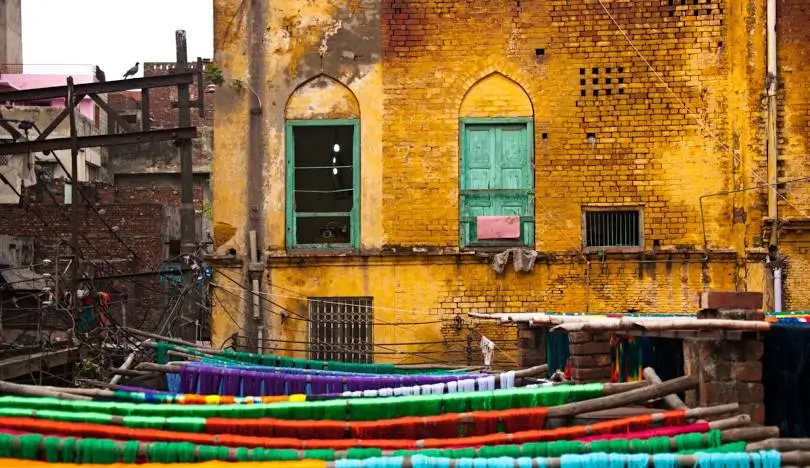
Beyond the spices, street food, and architecture, Delhi Gate holds a mystical and enigmatic aura. The narrow alleys, centuries-old brickwork, and shadowed Havelis whisper stories passed down through generations. This chapter explores ghostly legends, folklore, and oral histories—giving Delhi Gate its living, breathing soul.
The Guardians of the Gate
Local lore tells of invisible protectors that watch over Delhi Gate.
The Ghost Cavalry
- Legend: Between 3:00 AM and Fajr prayer, some locals claim to hear the sound of galloping horses and metallic clanging—unseen Mughal cavalry performing their eternal rounds.
- Historical Context: During the Mughal era, the gates were heavily guarded. The legend symbolizes the ever-present vigilance of the city’s protectors.
- Cultural Insight: These stories are told by elders as a way to instill respect for the city’s heritage in younger generations.
Shrine Guardians
- Certain small shrines and niches along the Royal Trail are believed to host benevolent spirits that bless merchants and travelers.
- Visitors often leave coins or small offerings—an unwritten tradition blending folklore with daily commerce.
The Haunted Havelis
The grand Havelis that line the alleys are more than architectural marvels; many are repositories of ghost stories.
Haveli Baij Nath
- Legend: Some say the lady of the house still roams the upper floors at night, keeping an eye on the family treasures.
- Architecture: The Jharokas (overhanging balconies) and hidden staircases add to the sense of mystery.
Mian Khan Haveli
- Stories: Late-night visitors report faint whispering in corridors and the smell of incense despite empty rooms.
- Cultural Note: These stories are often intertwined with historical accounts of Mughal and Sikh-era wealth—tales of hidden treasures, secret basements, and forbidden love.
Oral Histories – Voices of the Androon Sheher
The elders of Delhi Gate, known locally as Baba-Jis, are the living archives of Lahore.
Tales of Everyday Life
- Market Memories: Merchants recount centuries-old trade routes and agreements that still influence pricing and product availability today.
- Social Rituals: Stories of weddings, religious processions, and seasonal festivals showcase the continuity of tradition.
Historical Layers
- Mughal, Sikh, and British: Every alley has a layered history. Oral histories reveal how Delhi Gate survived sieges, floods, and colonial restructuring.
- Educational Value: Listening to elders is a free history lesson—complete with humor, gossip, and subtle lessons on morality.
Ghostly Landmarks
Certain locations are frequently mentioned in folklore and paranormal accounts:
| Landmark | Story | Modern Day Insight |
|---|---|---|
| Shahi Hammam | At night, faint sounds of running water and whispers. | Considered a place of peace; locals say spirits guard the hygiene and sanctity. |
| Akbari Mandi | Ghosts of long-dead spice traders. | Represents the city’s historical economic lifeblood. |
| Chitta Gate | Shadowy figures crossing the streets after midnight. | Possibly reflections of the British-era reconstruction laborers. |
Festivals and Folkloric Rituals
The folklore of Delhi Gate is often intertwined with festivals:
- Basant (Kite Festival): Stories of spirits watching over kite battles, ensuring fair play.
- Ramadan Nights: Elders tell tales of mysterious benefactors who leave food for fasting travelers—a blend of legend and charity.
- Shab-e-Barat: Some alleys are believed to be spirit crossroads, and locals leave lamps and offerings for ancestors.
Why Folklore Matters
- Cultural Preservation: Folklore helps preserve the oral traditions of a city that is constantly modernizing.
- Tourism Appeal: Ghost stories and legends are increasingly a cultural tourism draw, providing depth beyond architecture and cuisine.
- Community Identity: Tales of spirits, guardians, and historical personalities bind residents to place and history, reinforcing communal pride.
Experiencing Folklore as a Traveler
- Guided Night Walks: Some local guides offer evening tours of the Royal Trail highlighting haunted spots.
- Engage Elders: Visit tea stalls and chat with Baba-Jis to hear stories that aren’t in any guidebook.
- Document and Respect: Photograph, record audio, and take notes—folklore is fragile and transmitted orally.
Summary
The folklore and haunted history of Delhi Gate make it more than a physical site; it is a psychogeography of memory, myth, and meaning. The legends breathe life into every archway, alley, and Haveli, connecting the modern visitor to centuries of human experience.
Walking past the bustling streets and spice-scented alleys of Delhi Gate, one notices narrow wooden doors tucked away. Beyond these doors lie the Havelis, multi-storied mansions of the Mughal and Sikh eras, where art, architecture, and opulence converge.
These Havelis are not only architectural marvels but also repositories of dying arts, holding stories of elite families, craftsmen, and the social hierarchy of old Lahore.
The Architectural Genius of Havelis
Havelis of Delhi Gate were meticulously designed to balance aesthetics, privacy, and climate control.The Central Courtyard
- Every Haveli is structured around a central open-air courtyard.
- Functionality: It acts as a natural ventilation system, keeping rooms cool in Lahore’s scorching summers.
- Courtyards also serve as social arenas, where families gather for meals, celebrations, and storytelling.
Jharokas – Overhanging Balconies
- These intricately carved wooden balconies extend over the narrow streets, allowing women to observe the outside world without being seen, in accordance with the Purdah system.
- The craftsmanship of each Jharoka is unique, featuring floral motifs, geometric patterns, and sometimes inscriptions.
Sard Khanas – The Subterranean Cool
- Many Havelis feature basement vaults known as Sard Khanas.
- These spaces remain 10–15°C cooler than the street level, providing refuge during summer.
- Historically, they were also used to store perishables and, in some cases, as secret escape routes during sieges.
Notable Havelis Near Delhi Gate
Several Havelis still retain original frescoes, wooden carvings, and cultural aura, making them must-visit landmarks.
Haveli Baij Nath
- Built during the Sikh era, this Haveli features floral frescoes, carved balconies, and intricately decorated doorways.
- Cultural Insight: It represents a fusion of Mughal and Sikh architecture, blending Islamic motifs with Hindu decorative art.
Mian Khan Haveli
- Once home to a high-ranking Mughal court official, it’s a sprawling mansion often described as a neighborhood within a mansion.
- The Haveli showcases multi-tiered terraces, inner courtyards, and hidden staircases.
Haveli of the Copper Merchant
- Famous for brass and copper adornments, the walls and ceilings feature metallic inlays, reflecting the wealth of the merchant class.
The Artisans of Delhi Gate
The Havelis and surrounding alleys were workshops for master artisans, some of whom still practice centuries-old trades.
Calligraphers (Katibs)
- The Katibs specialized in Nasta’liq and Thuluth scripts, writing religious texts, poetry, and wedding invitations.
- Even today, you can spot elderly men with reed pens (Qalams), handcrafting exquisite calligraphy.
Copper and Brass Smiths
- In the Kucha Copper-smiths, artisans hammer massive cauldrons (Deghs) for weddings and religious ceremonies.
- The process of Kalai (tin-plating) uses bellows, ammonium chloride, and molten tin—a performance of fire, metal, and skill.
Wood Carvers and Fresco Painters
- Wooden doors, balconies, and ceiling panels are hand-carved with intricate floral and geometric patterns.
- Frescoes on walls and ceilings often depict mythological and natural motifs, preserved carefully in some restored Havelis.
Decline and Restoration
- Many Havelis suffered neglect due to urban encroachment, humidity, and changing social dynamics.
- The Walled City of Lahore Authority (WCLA) has restored several Havelis, using traditional lime plaster and organic pigments to revive frescoes and woodwork.
- Restoration emphasizes authenticity, maintaining the breathing walls that make the Havelis durable against humidity.
Experiencing Havelis Today
- Walking Tours: Guides offer access to select Havelis, explaining architectural details and stories of their residents.
- Photography: Early morning light is perfect for capturing shadows, jharokas, and carved patterns.
- Workshops: Some Havelis host craft demonstrations, letting visitors watch copper work, fresco painting, and calligraphy in action.
Summary
The Havelis of Delhi Gate are living museums of architecture, craft, and social history. They represent centuries of urban design genius, artistic skill, and cultural memory. Through them, visitors glimpse a Lahore that thrives behind closed doors, invisible yet palpably alive.
The Gastronomy of Delhi Gate – A Culinary Journey Through Old Lahore
Stepping through the Delhi Gate is not just a walk through history—it’s a journey through flavors, aromas, and centuries-old culinary traditions. Food here isn’t merely sustenance; it is ritual, heritage, and pride. From breakfast stalls to spice bazaars and secret alleyway treats, Delhi Gate offers a gastronomic experience unmatched in modern Lahore.
Breakfast of Champions – Desi Nashta
If you arrive around 7:00 AM, the air is thick with burning wood, frying oil, and simmering spices.
Halwa Puri – The Classic Start
- Vendors near Shahi Hammam prepare Puri on iron griddles, perfectly puffed and golden.
- The Chanay (chickpeas) are slow-cooked overnight with Paya (trotters) stock, black pepper, and secret spices, giving them a dark, rich flavor.
- A breakfast here is not rushed—locals often say, “After Delhi Gate breakfast, one goes back to sleep, not work.”
Lassi Culture – The Creamy Tradition
- A “small” lassi comes in a massive metal glass, topped with a thick layer of Makhann (butter) or Balaee (clotted cream).
- Lassi stalls near the Akbari Mandi are centuries-old, serving drinks that combine sweetness, tanginess, and creaminess in one sip.
The Spice Odyssey – Akbari Mandi
No discussion of Delhi Gate food is complete without the Akbari Mandi, one of South Asia’s largest spice markets.
Aromas and Vibrance
- The market is vibrantly colorful—turmeric yellows, chili reds, and saffron golds dominate.
- Walking through, the air is thick with spice dust, often causing first-time visitors to sneeze—a local rite of passage.
Buying Like a Lahori
- Forget pre-packaged spices; the secret is in the raw Khara Masala (whole spices).
- Vendors can judge the quality of cinnamon or cardamom by sight, touch, and snap.
- Popular purchases include:
- Turmeric root (Haldi)
- Dried chilies (Lal Mirch)
- Cloves and cinnamon sticks (Laung & Dalchini)
Hidden Alleyway Delicacies
As you move toward Wazir Khan Mosque, narrow alleys hide some of Lahore’s most unique street food.
Pathora – The Thick Fried Bread
- Unlike a Puri, Pathora is thicker and made with fermented dough and lentils.
- It’s a sour-savory delight that has almost disappeared from the modern city but thrives in the Walled City.
- Khaatai – Mughal Biscuit Legacy
- Khalifa Nan Khataai, near the gate, is renowned for almond-topped, crumbly biscuits.
- Baked in old-style ovens, the aroma of browning ghee is a hallmark of this landmark bakery.
Tawa Chicken – Alleyway Specialty
- Unlike charred tikka, Tawa Chicken is braised on a massive flat griddle with yogurt, green chilies, and ginger.
- Served fresh, it’s a spicy, juicy treat perfect for sampling along the Shahi Guzargah.
The Philosophy of Dastarkhwan
In the Walled City, eating is a communal act.
- Laborers, shopkeepers, and visitors share benches and meals, reinforcing social bonds.
- Hospitality is key: a cup of Kashmiri Chai (pink tea) may be offered without asking for payment, showcasing local generosity.
- Meals are slow, savory, and deeply ritualistic, connecting the modern visitor to centuries of culinary tradition.
Iconic Food Spots Around Delhi Gate
| Dish/Spot | Specialty | Tip |
|---|---|---|
| Khalifa Nan Khataai | Traditional Mughal biscuits | Go early to avoid long lines |
| Lassi Stall near Akbari Mandi | Creamy, frothy lassi | Ask for extra Balaee for richness |
| Shahi Hammam Breakfast Stalls | Halwa Puri | Try with pickled green chilies |
| Pathora Alley near Wazir Khan Mosque | Thick fried bread | Pair with spicy chickpeas |
| Tawa Chicken Gali | Braised chicken | Best eaten hot on site |
The culinary landscape of Delhi Gate is a feast for the senses. From halwa puri breakfasts to spice-laden alleys and hidden Pathora vendors, every corner tells a story of Lahore’s gastronomic legacy.
Folklore, Ghosts, and Legends of Delhi Gate – The Mystical Heart of Old Lahore
Delhi Gate is not only a gateway to history and gastronomy, but also a portal to the mysteries and folklore of the Walled City. Every stone, archway, and alley has a story—some whispered, some sung, and some haunted by time itself. To truly experience Delhi Gate, one must step beyond the physical and explore the spiritual and mystical layers that have survived centuries of Mughal, Sikh, and British rule.
The Guardians of the Gate – Spirits of the Past
Local legend says the thirteen gates of Lahore, including Delhi Gate, are protected by Jinns and unseen guardians.
- Residents report hearing phantom hoofbeats in the dead of night, between 3:00 AM and Fajr prayer.
- These sounds are believed to be the “Ghost Cavalry” of the Mughals, still patrolling their historic route.
- Traders and shopkeepers often leave small offerings (sweets or incense) at doorways for protection—a practice passed down for generations.
Fun Fact: Some elders swear that if you whisper your wishes near the inner alcove of Delhi Gate, they are heard by the spirits guarding the city.
Haunted Havelis and Secret Basements
The Havelis near Delhi Gate are not only architectural wonders but storied mansions filled with mystery:
- Sard-Khana (Cold Rooms): These subterranean chambers were used to store perishables but also served as escape tunnels during sieges. Folklore suggests some connect directly to the Lahore Fort and Shalimar Gardens.
- Haveli Baij Nath: Known for its intricate carvings, locals claim to have seen shadowy figures moving at night, especially in the upper jharokas.
- Mian Khan Haveli: Rumored to be cursed by a jealous rival centuries ago; several families report unexplained cold drafts and soft whispers in the corridors.
These stories give Delhi Gate an aura of intrigue, making it a favorite for history enthusiasts and paranormal seekers alike.
Tales from the Alleyways
The narrow streets (galis) of Delhi Gate are more than pathways—they are living oral history museums.
- Merchant Legends: It is said that the Akbari Mandi vendors inherited their recipes and trading skills from ancestors protected by the city’s spirits.
- The Well of Raja Dina Nath: Locals believe this step-well is haunted by the spirit of the minister himself, ensuring that no one pollutes the sacred water.
- Street Children Myths: Children growing up in the Walled City are told that a golden horse roams the streets on foggy nights, a symbol of prosperity for those who respect their elders.
Superstitions and Rituals
Certain traditions have survived, linking the present-day Delhi Gate to the mystical past:
- Opening Hours: Many believe that the first visitor each morning brings luck to the market.
- Offering Sweets to the Gate: Some traders leave a small plate of halwa, laddoo, or sweet rice at the base of the gate to ensure prosperous business.
- Tile Symbolism in Wazir Khan Mosque: Beyond beauty, the “Tree of Life” and floral patterns are thought to protect against evil spirits—a combination of Mughal aesthetics and local spiritual beliefs.
Famous Ghost Stories
- The Midnight Caravan: A group of tourists in 2019 reported hearing a full cavalcade of horses and soldiers passing through the Shahi Guzargah. No one else was in the street.
- The Whispering Frescoes: Some visitors claim that the Shahi Hammam frescoes seem to murmur when the wind passes through the ventilation shafts.
- The Vanishing Shopkeeper: Legend has it that a spice vendor who died in the 19th century still appears behind the counter during full moons, organizing spice sacks as he did in life.
The Cultural Significance of Folklore
- These tales are not mere entertainment—they preserve history, moral lessons, and communal identity.
- They serve as oral documentation of events that were never written down, giving Delhi Gate a multi-layered narrative that blends fact and imagination.
- Folklore enhances tourism, offering a magical perspective for visitors beyond architecture and cuisine.
Walking Tours and Mystical Storytelling
For modern travelers:
- Night Tours: Some guided tours offer evening storytelling walks, combining ghost tales with lantern-lit streets.
- Photography: The interplay of light and shadows along alleyways and Havelis provides hauntingly beautiful visuals.
- Story-Driven Exploration: By learning these legends, tourists engage more deeply with the living heritage of Delhi Gate rather than just observing it.
Summary
The mystical aura of Delhi Gate makes it more than a historical site. From phantom Mughal cavalry to haunted Havelis and legend-laden alleyways, the gate embodies the spirit, history, and imagination of Lahore. Folklore is an invisible layer that connects modern visitors to centuries of human stories, making Delhi Gate a cultural, spiritual, and mysterious treasure.
The Ultimate Travel Guide & Modern Restoration – Experiencing Delhi Gate Today
Delhi Gate is not frozen in time—it’s a living, breathing entity, where 400-year-old history meets the modern hustle of Lahore. After exploring architecture, food, folklore, and the Royal Trail, this chapter provides a practical roadmap for travelers, historians, and photographers
Restoration & Preservation: WCLA’s Mission
The Walled City of Lahore Authority (WCLA) has spearheaded a multi-decade restoration of Delhi Gate and the surrounding Shahi Guzargah.
Key Achievements:
- Structural Rehabilitation: Reinforced centuries-old brick walls, arches, and ceilings while retaining original Mughal proportions.
- Fresco Revival: Using Kankar Lime and natural pigments, artists revived frescoes in the Shahi Hammam and Havelis.
- Infrastructure Integration: Modern utilities (electricity, fiber-optics, and sewage) installed without disturbing heritage foundations.
- Public Spaces: Chowk Wazir Khan and alleyways cleared of encroachment to restore pedestrian flow and create cultural plazas.
Fun Fact: The restoration earned a UNESCO Award of Merit for blending heritage conservation with urban functionality.
The Best Time to Visit
| Season | Highlights | Tips |
|---|---|---|
| Winter (Nov–Feb) | Cooler weather, fog adds mystical ambiance | Wear layered clothing; mornings are best for photography |
| Spring (Mar–Apr) | Blossoms near courtyards and Havelis | Ideal for street photography |
| Ramadan Nights | Vibrant bazaars and food stalls | Try Iftar specials like Dumba Karahi and Pathoray |
| Summer (May–Aug) | Less crowded early mornings | Avoid mid-day heat; hydrate frequently |
Getting There & Around
- By Rickshaw: Narrow alleys require traditional rickshaws or walking; vehicles cannot penetrate the Walled City.
- Rangeela Rickshaw Tours: Guided, colorful tours along Shahi Guzargah with historical commentary.
- Walking: Best way to experience the gate, alleyways, spice markets, and Havelis up close.
Pro Tip: Start at 7:30 AM for sunrise photography and a quiet breakfast of Halwa Puri near Shahi Hammam.
Essential Delhi Gate Vocabulary
| Term | Meaning |
|---|---|
| Androon Sheher | Walled City of Lahore |
| Guzargah | Corridor or Royal Trail |
| Shahi Hammam | Mughal-era Royal Bath |
| Kashi-Kari | Tile mosaic art |
| Hujra | Study or living cell in mosques |
| Degh | Large communal cooking pot |
| Gali | Narrow alleywa |
Photography & Social Media Guide
Delhi Gate offers unlimited visual storytelling opportunities:
| Subject | Time | Tip |
|---|---|---|
| Delhi Gate Archway | 7:30 AM | Wide-angle lens for scale |
| Shahi Hammam Interior | 10:00 AM | Soft diffused light, tripod recommended |
| Spice Markets | 12:00 PM | Capture texture, close-ups of saffron, turmeric, chilies |
| Street Portraits | 4:00 PM | Golden hour shadows enhance depth |
| Chowk Wazir Khan | Sunset | Show dynamic interplay of locals, food, and mosque tiles |
Pro Tip: Use #OldLahore #DehliGate #WalledCityLahore on Instagram for higher reach.
Culinary Compass – What to Eat
- Breakfast: Halwa Puri, Chana Masala, Lassi at street-side vendors.
- Snacks: Pathora, Tawa Chicken, Khaatai from Khalifa Nan Khataai.
- Lunch/Dinner: Dumba Karahi, Nihari, and traditional Mughlai curries.
- Desserts: Jalebi, Gajar Halwa, Sheer Khurma during festive seasons.
Insider Tip: Ask locals for secret alleyway stalls—many recipes are centuries old and not found in mainstream guides.
Souvenirs & Shopping
- Spices: Raw Khara Masala, saffron, turmeric, cloves from Akbari Mandi.
- Textiles: Gota work, hand-embroidered bridal wear, traditional shawls.
- Crafts: Brass and copperware, calligraphy scrolls, miniature paintings.
Remember to haggle politely; it’s part of the local shopping culture.
Safety & Etiquette
- Cultural Sensitivity: Dress modestly, especially near mosques and Havelis.
- Crowd Navigation: Be prepared for tight alleys and busy streets.
- Local Guidance: Hiring a certified guide enhances the historical experience.
- Photography: Ask for permission when photographing locals
Conclusion: Delhi Gate — Where Lahore Still Breathes
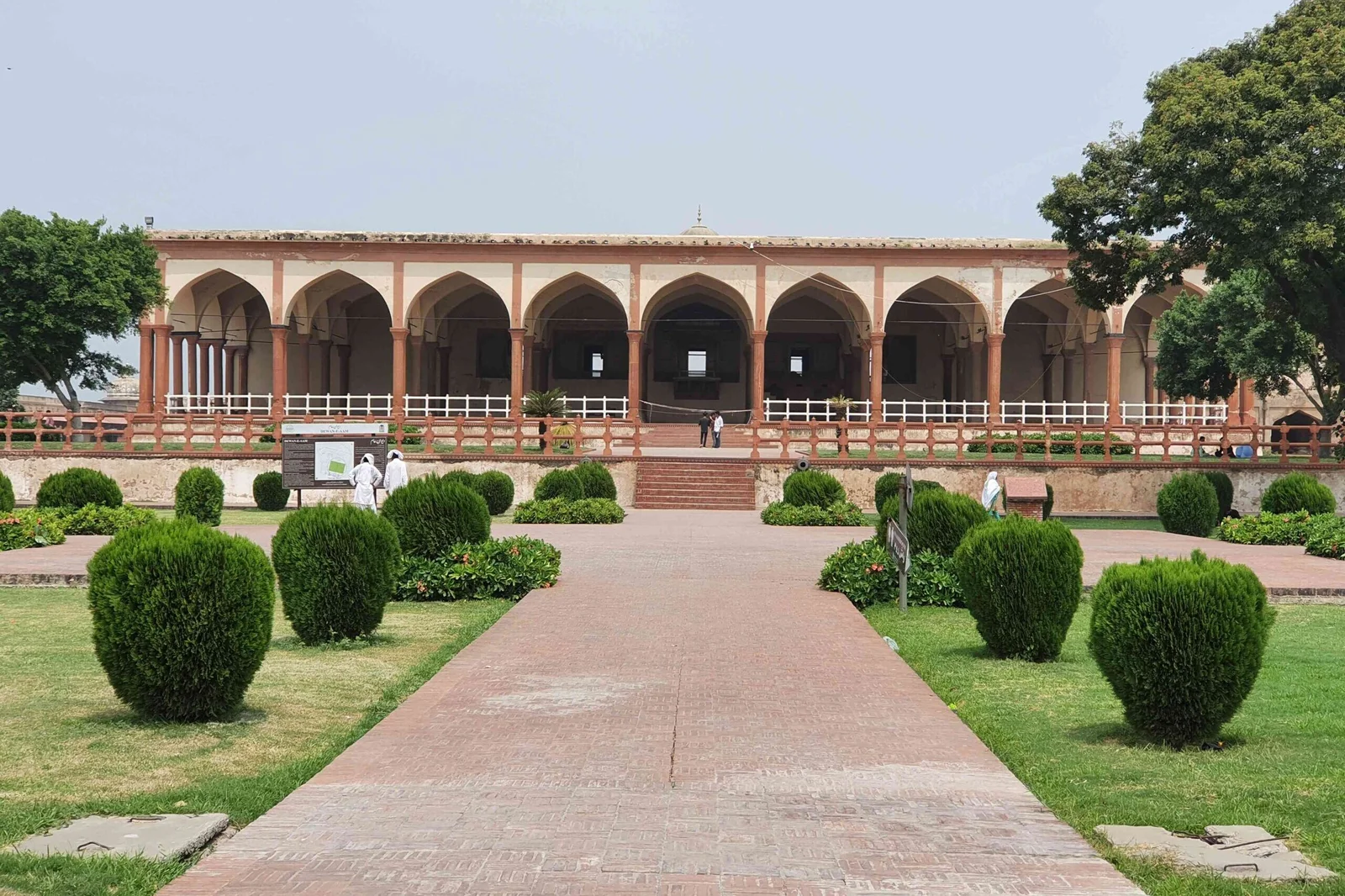
Delhi Gate is not merely an entrance to the Walled City of Lahore; it is an entrance into memory, identity, and continuity. Few places in South Asia possess the rare ability to exist simultaneously in multiple centuries, and Delhi Gate achieves this effortlessly. With every step along the Shahi Guzargah, the visitor does not observe history — they walk inside it.
From the monumental Mughal arch of the gate itself to the intimate courtyards of forgotten Havelis, Delhi Gate reveals how Lahore was designed to be lived in, not just admired. The city here was built vertically and communally, where rooftops functioned as gathering spaces, alleys acted as climate regulators, and courtyards became private universes of light and air. Long before modern urban planners spoke of sustainability, the Walled City had mastered it.
What truly elevates Delhi Gate beyond architecture is its human continuity. The spice merchants of Akbari Mandi are not reenactors; they are inheritors of knowledge passed down for centuries. The calligraphers, copper-smiths, and bakers are not preserving traditions for tourism — they are practicing livelihoods that have never stopped. In a world obsessed with novelty, Delhi Gate quietly reminds us that survival itself is a form of art.
The Shahi Hammam and Wazir Khan Mosque stand as masterpieces not only of Mughal engineering and Persian aesthetics, but of philosophy. Their frescoes, calligraphy, and spatial harmony convey a worldview where beauty was considered a civic responsibility. The written word became ornament, geometry became devotion, and public spaces became spiritual classrooms. Chowk Wazir Khan remains, to this day, the living room of the Walled City — a place where art, commerce, prayer, and conversation coexist without conflict.
Equally important is the role of modern restoration. The work of the Walled City of Lahore Authority has proven that heritage conservation does not require freezing a city in time. Instead, Delhi Gate demonstrates how historical preservation and economic vitality can coexist when approached with respect, research, and community engagement. The revival of frescoes, underground infrastructure, and public squares has not erased life — it has amplified it.
For travelers, Delhi Gate offers something no modern destination can replicate: authentic immersion. This is not a curated experience behind glass barriers or velvet ropes. It is loud, crowded, aromatic, chaotic, and deeply human. You will hear the call to prayer echo over motorbikes, smell cloves mixing with diesel, and see centuries-old doors opening to reveal modern lives unfolding within ancient walls.
For historians and urbanists, Delhi Gate is a case study in layered civilization — Mughal, Sikh, British, and Pakistani histories physically stacked atop one another. For photographers, it is a masterclass in texture, light, and human expression. For food lovers, it is a living archive of Mughal-Punjabi cuisine that refuses to be diluted.
Ultimately, Delhi Gate endures because it is useful. It feeds people, educates them, employs them, shelters them, and connects them. It is not heritage as nostalgia — it is heritage as function.
To walk through Delhi Gate is to understand Lahore not as a city that remembers its past, but as a city that never let go of it.
And that is why Delhi Gate matters — not only to Lahore, not only to Pakistan, but to anyone who believes that cities should have souls
Delhi Gate, Lahore remains one of South Asia’s most significant living heritage sites. From Mughal architecture and Wazir Khan Mosque to Akbari Mandi, street food, Havelis, and restoration efforts, the Walled City continues to define Lahore’s cultural identity. Any journey into Lahore’s history begins — and ultimately returns — to Delhi Gate
FAQs Delhi Gate Lahore — the ultimate heritage site in the Walled City of Lahore
1. What is Delhi Gate Lahore?
Answer:
Delhi Gate Lahore is a historic city gate in the Walled City of Lahore, Pakistan, originally built during the Mughal era as one of the main entrances to the fortified city.
2. Why is it called Delhi Gate?
Answer:
It’s named Delhi Gate because it faces the direction of Delhi, India, reflecting its historic role as a main route between Lahore and the Mughal capital.
3. When was Delhi Gate constructed?
Answer:
The original gate was constructed in the Mughal period in the mid-1600s under Emperor Akbar as part of the city’s fortified wall and Royal Trail (Shahi Guzargah).
4. What is the historical significance of Delhi Gate?
Answer:
Delhi Gate served as the main entrance for emperors and royal entourages entering Lahore and was central to trade, daily life, and military defense in the Walled City.
5. How many historic gates are there in the Walled City of Lahore?
Answer:
Originally there were 13 gates around the fortified city. Today, only six historic gates remain, with Delhi Gate being one of the most important surviving entrances.
6. Has Delhi Gate been restored?
Answer:
Yes — the gate and nearby landmarks like Shahi Hammam were restored in recent years by heritage authorities to conserve its architectural beauty and cultural importance.
7. What can visitors see near Delhi Gate?
Answer:
Nearby attractions include the Shahi Hammam (Royal Bath), Wazir Khan Mosque, and vibrant bazaar streets lined with traditional shops and historic buildings.
8. Is Delhi Gate still part of Lahore’s city wall?
Answer:
The original fortified walls were largely removed during British rule, but Delhi Gate remains and stands as a key heritage structure that connects visitors to the Walled City’s past.
9. Why is Delhi Gate important for tourism?
Answer:
Delhi Gate is a cultural and historical landmark that draws tourists to explore Lahore’s heritage, architecture, and nearby historic sites of the old city.
10. What makes the Walled City of Lahore special?
Answer:
The Walled City boasts centuries-old architecture, narrow alleys, traditional bazaars, mosques, havelis, and forts, showcasing Lahore’s history from the Mughal, Sikh, and British eras.