
The Allure of the Black Jhumki: A Synthesis of Moroccan Elegance and Organic Artistry
In the realm of artisanal jewelry, few pieces capture the imagination quite like the black jhumki. While the term often evokes thoughts of traditional oxidized silver or dark enamel, the piece described here reimagines the “black” aesthetic through a lens of deep, moody shadows and intricate metalwork. The composition presented is more than just a product showcase; it is a visual narrative that marries the structured precision of man-made design with the raw, untamed beauty of the natural world.
The Anatomy of the Design: Intricate Metalwork and Gemstone Brilliance
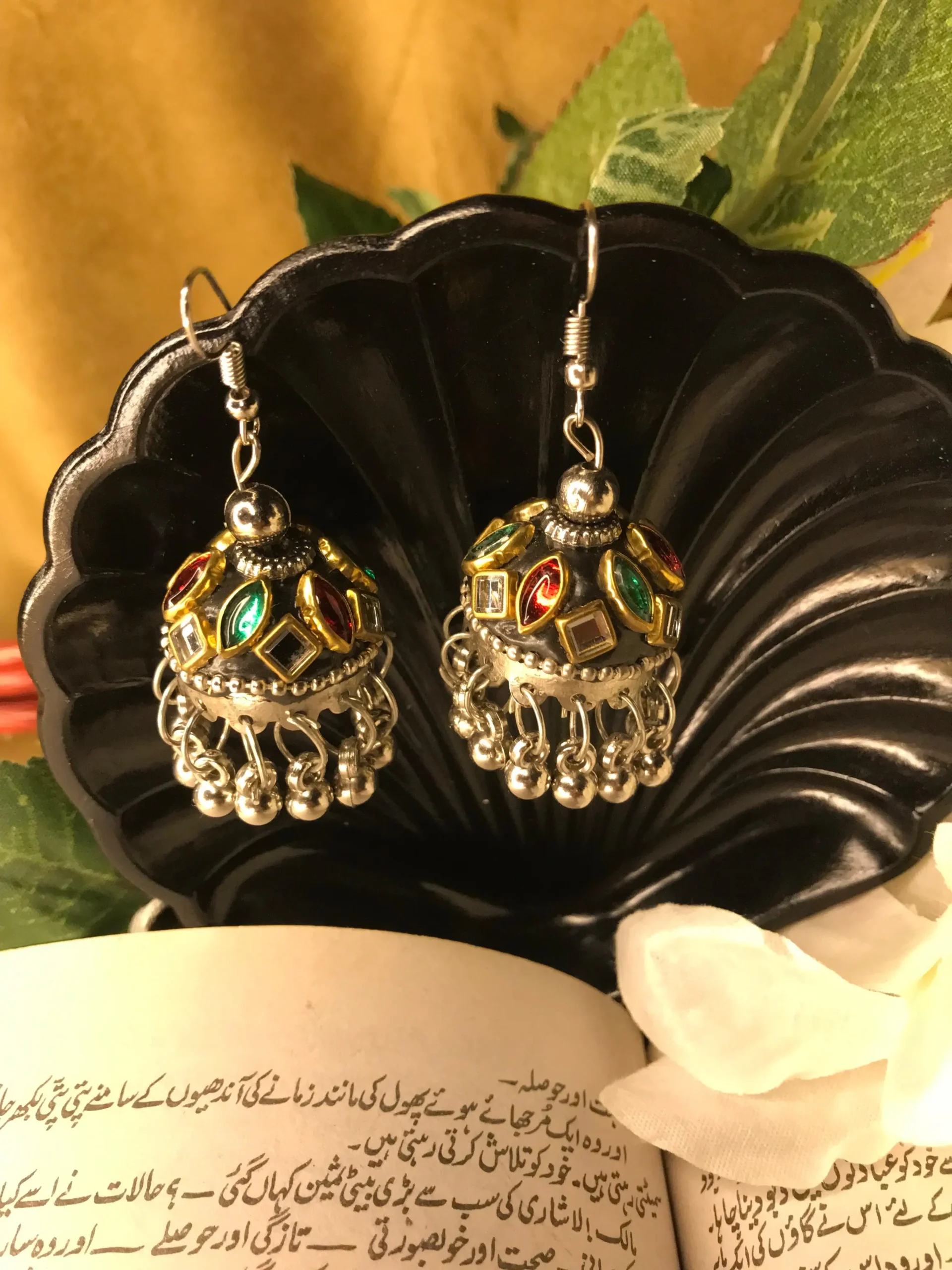
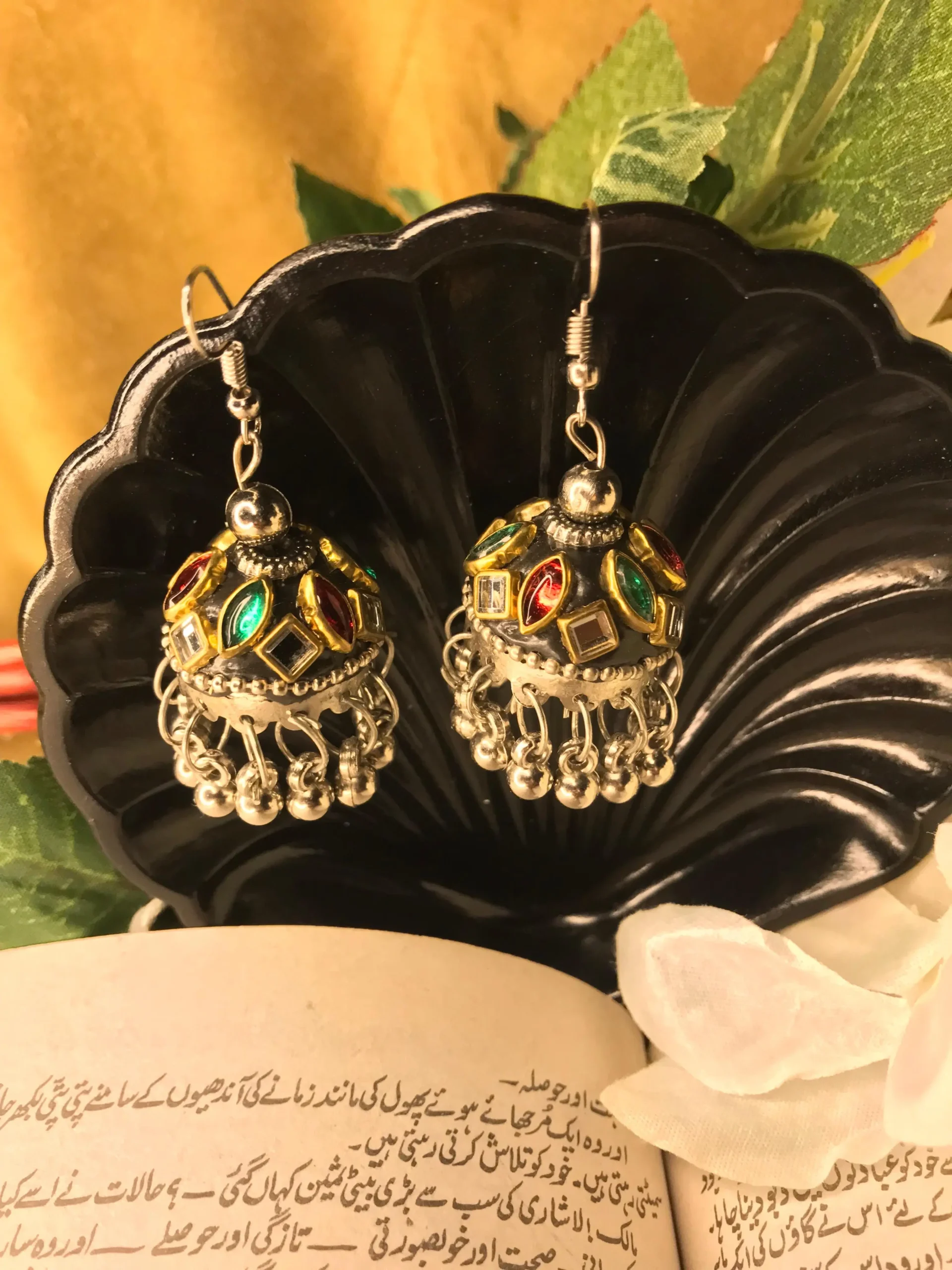
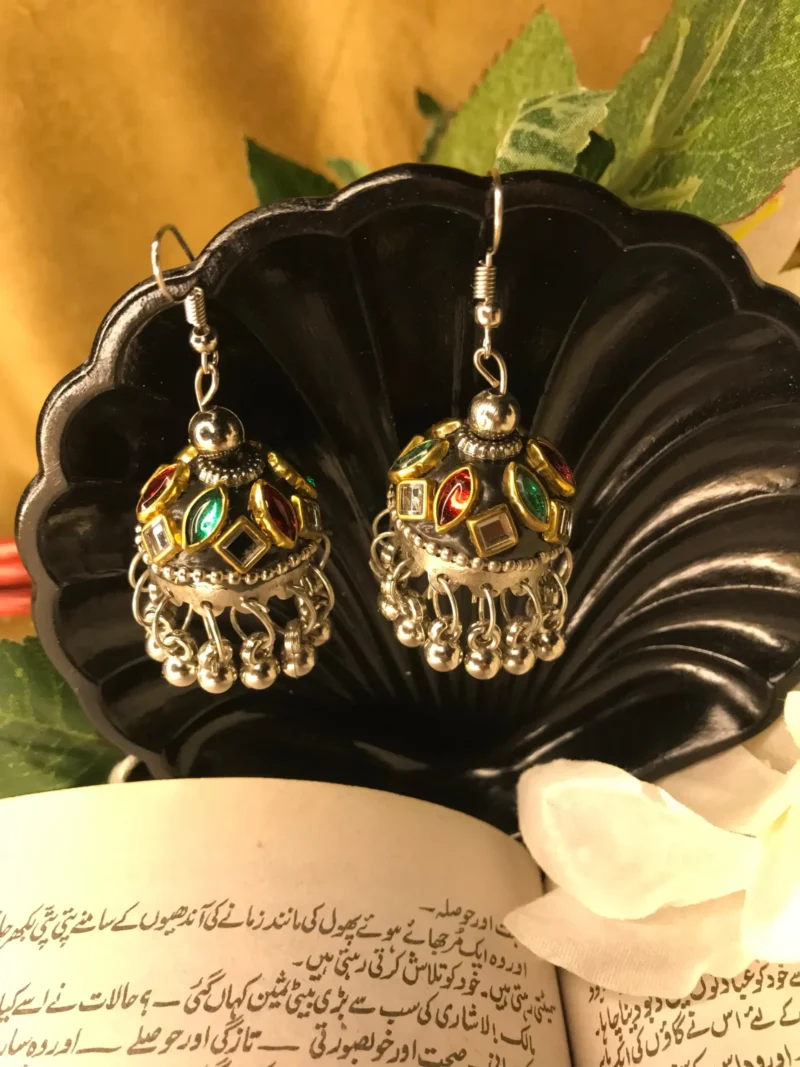
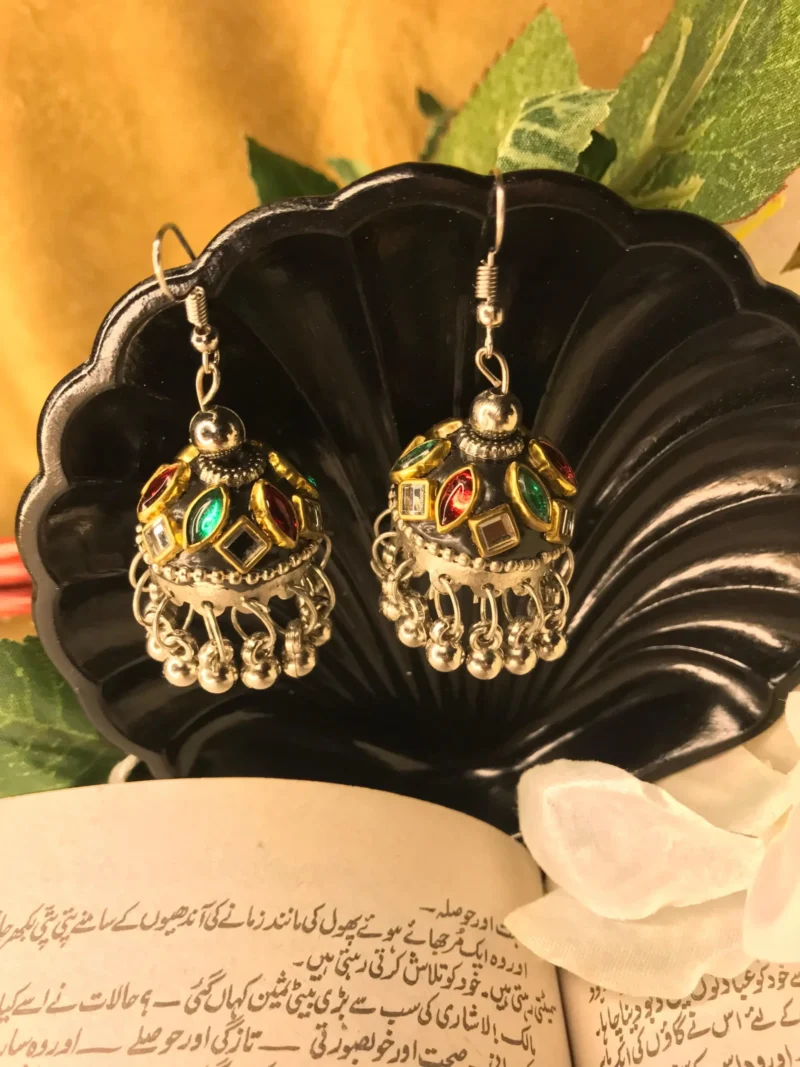
The central focus of this serene composition is a pair of dangly earrings that redefine the classic black jhumki silhouette. Rather than a solid bell shape, these pieces utilize a sophisticated architectural approach to jewelry design.
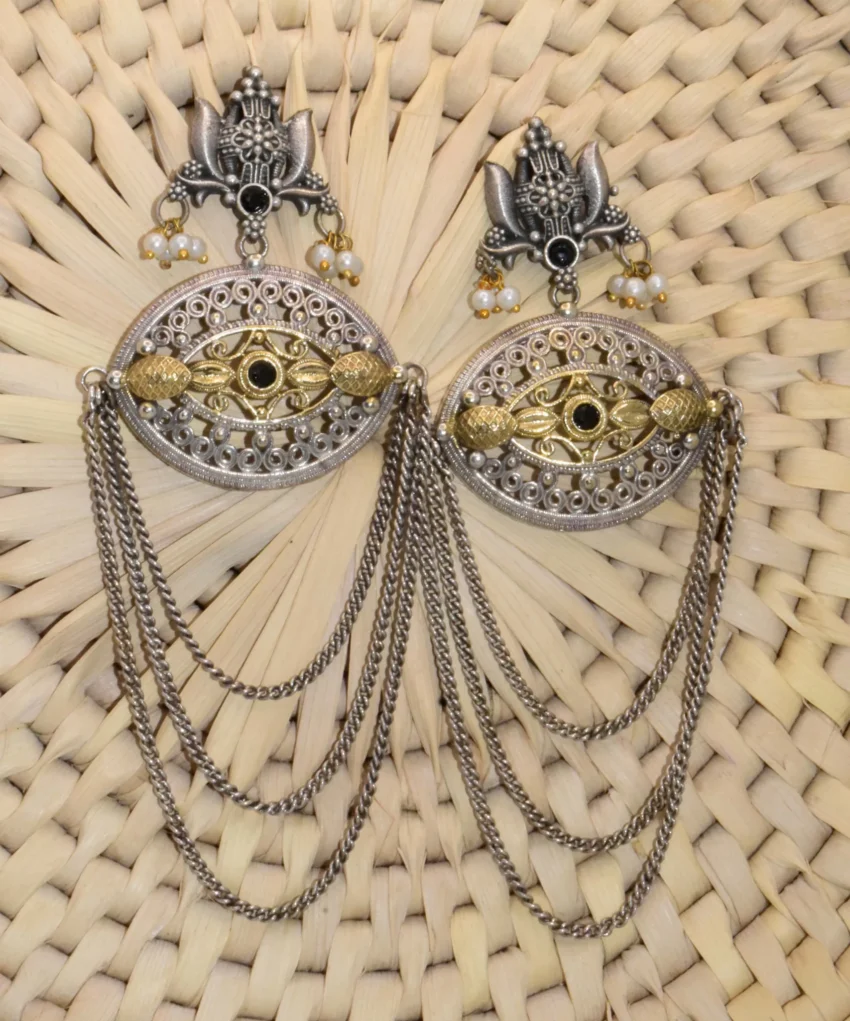
Multilayered Geometry: The earrings are crafted from a refined metalwork base, boasting a sleek silver hue accented by warm, gold-yellow highlights. The body of the earring is composed of multiple layers of small open circles, meticulously arranged in a chain-like pattern that suggests both strength and fluidity.
The Crown and Frame: At the apex, a broad, elongated square provides a sturdy foundation. Below this, a series of delicate oval shapes descend, creating a rhythmic visual flow. This structural complexity is a hallmark of high-end artisanal pieces, ensuring that the light hits every angle of the metal.
A Mosaic of Color: To contrast the dark, metallic “black” undertones of the setup, the topmost rings are embellished with irregular polygon-shaped gems. These stones—in vibrant shades of emerald green, sapphire blue, ruby red, amethyst purple, and stark white—provide a kaleidoscopic burst of energy against the silver and gold framework.
The Finishing Touches: The final ring along the top is further detailed with gold squares, adding a touch of regal opulence. The earrings are suspended from elegant silver hooks, connected by a single overarching ring that ensures they dangle with grace and movement.
The Backdrop: A Juxtaposition of Culture and Nature
What elevates this black jhumki from a simple accessory to a piece of art is the environment in which it is placed. The background is a masterclass in texture and symbolic storytelling.
The Organic Element: Shells and Foliage
Directly behind the jewelry sits a dark brown, shiny shell. Its polished surface reflects the ambient light, mirroring the luster of the earrings themselves. This shell, paired with a few large green leaves peeking out from behind, anchors the composition in the natural world. The deep greens and browns provide a grounded, earthy contrast to the shimmering metal of the jewelry, emphasizing an “organic-meets-manufactured” aesthetic.
The Intellectual Element: The Open Book
Perhaps the most striking feature of the background is the open book, featuring a central page covered in rich red Arabic script. This detail suggests a deep connection to heritage and scholarship. The inclusion of the script—likely a chapter from a significant text—adds a layer of Moroccan-inspired mysticism to the black jhumki. The book is inlaid into a medium-brown background, creating a warm, academic atmosphere that invites the viewer to wonder about the stories behind the jewels.
Cultural Resonance: A Moroccan-Inspired Narrative
The combination of the vibrant gemstones, the rhythmic metal patterns, and the Arabic calligraphy evokes a strong sense of North African artistry. The black jhumki acts as a bridge between different cultural expressions.
Resourcefulness in Design: The image exemplifies a unique resourcefulness, using natural props like shells and leaves to highlight the luxury of the earrings. It suggests that true beauty is found in the harmony between what we create and what we find in nature.
Storytelling Through Props: By choosing a book with red script as a backdrop, the designer creates a “story” for the earrings. They aren’t just objects; they are artifacts of a culture that values history, poetry, and intricate craftsmanship.
Versatility of Application: This specific aesthetic—balancing the “black” or dark-toned themes with vivid colors—is highly sought after in modern fashion. It allows the earrings to be worn as statement pieces for formal events or as eclectic additions to a bohemian wardrobe.
The Visual Impact of the “Black” Aesthetic
In contemporary jewelry photography, the concept of a black jhumki often relies on the play of light and shadow. In this composition, the “black” is not just a color but a mood. The dark shell and the shadowed creases of the open book create a high-contrast environment that makes the silver and gold of the earrings pop.
This contrast ensures that the intricate details—the open circles, the gold squares, and the polygon gems—are not lost to the eye. Instead, the dark background acts as a velvet stage, allowing the craftsmanship to take center stage. The result is an image that feels both ancient and modern, a timeless tribute to the art of the dangle earring.
Conclusion: More Than Just an Accessory
The pair of dangly earrings described is a testament to the power of thoughtful design. By placing the black jhumki in a setting filled with organic materials and cultural symbols, the composition transcends traditional product photography. It becomes an exploration of texture, color, and heritage. Whether viewed as a nod to Moroccan culture or as a study in geometric symmetry, these earrings stand as a pinnacle of elegant, resourceful artistry.
Would you like me to generate a stylistic description of how these earrings might look when paired with specific Moroccan-inspired outfits?