Introduction: The Soul of Pakistani Weddings
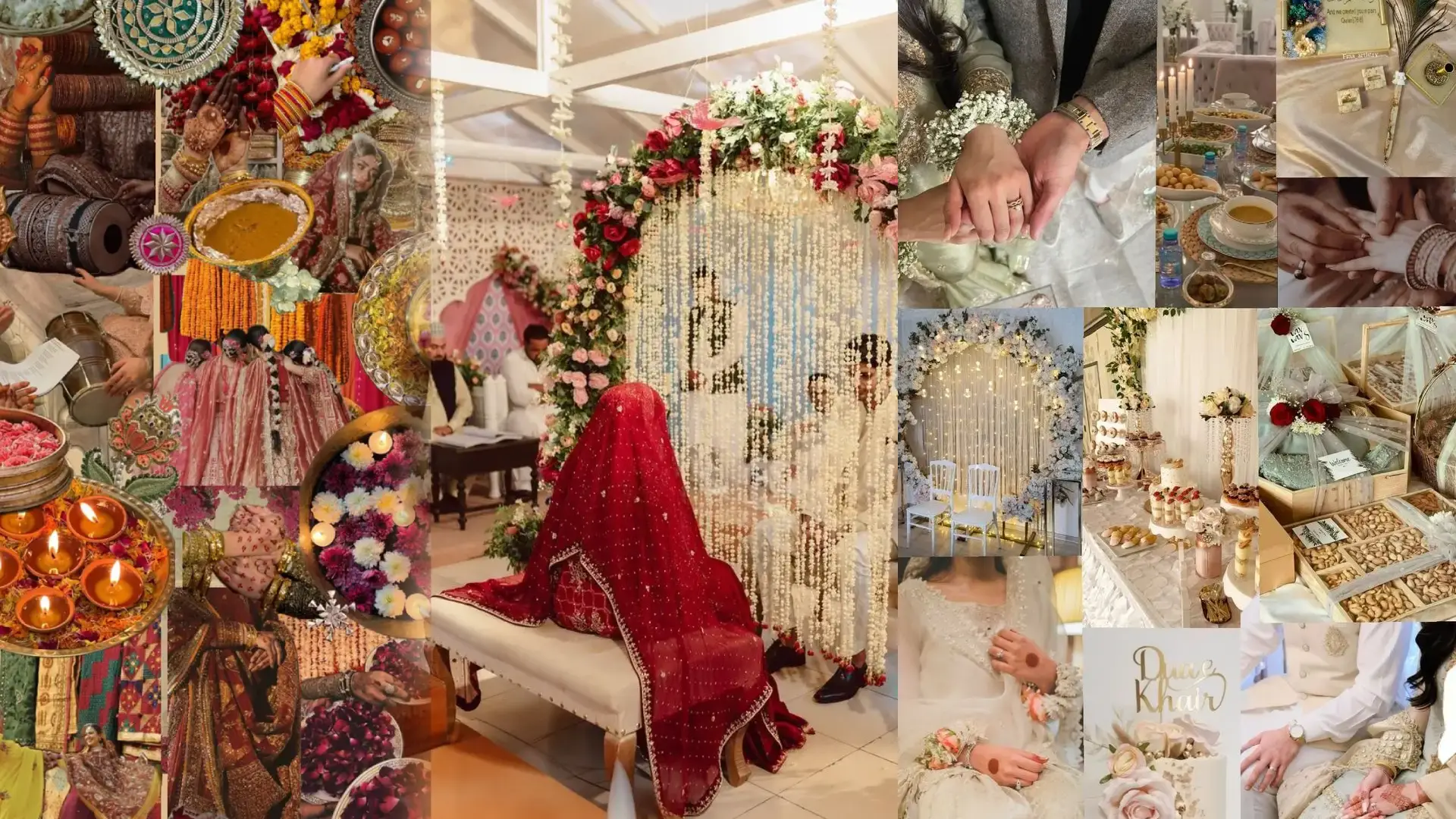
Pakistani weddings are not single-day events; they are emotional journeys that unfold over weeks or even months. Rooted deeply in Islamic values and South Asian culture, these weddings represent far more than the union of two individuals. They symbolize the merging of families, traditions, and generations.
Pre-wedding rituals play a crucial role in this journey. They set the emotional tone, strengthen family bonds, and prepare the bride and groom—mentally, spiritually, and socially—for marriage. From quiet prayers to vibrant musical nights, each ritual carries symbolism that has been passed down for centuries.
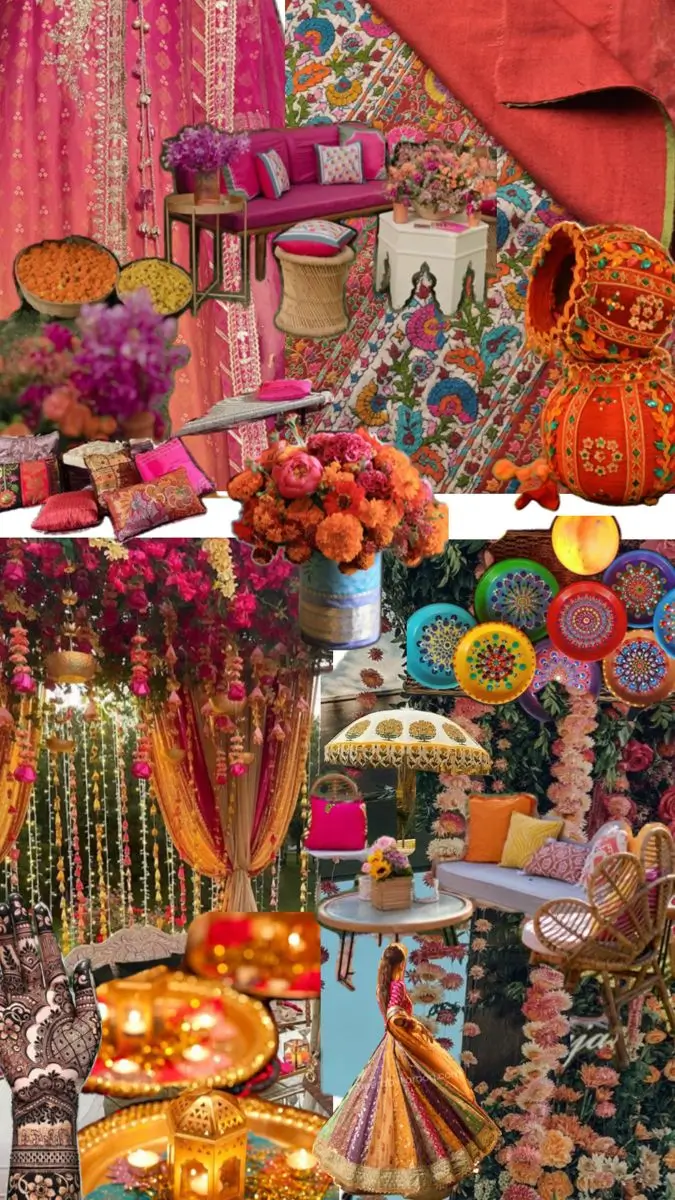
1. Rishta & Matchmaking: The First Step Toward Marriage
In traditional Pakistani culture, marriage begins with rishta, the formal proposal. Elders from the groom’s family approach the bride’s family to express interest. This process emphasizes compatibility rather than romance alone.
Families evaluate:
- Religious values and upbringing
- Family reputation and ethics
- Education and lifestyle
- Long-term compatibility
Once both families feel aligned, prayers are offered and sweets are shared to mark the positive beginning. Even in love marriages, this step remains culturally significant, reinforcing family consent and respect.
Modern shift:
Today, many couples choose their partners independently, but the rishta ceremony still exists as a respectful formality that honors tradition.
2. Mangni (Engagement): Formal Commitment Between Families
The Mangni is the official engagement ceremony and public announcement of the wedding. Traditionally held at the bride’s home, it includes:
- Exchange of rings
- Gift-giving (clothes, sweets, jewelry)
- Family prayers and blessings
Mangni represents trust and acceptance between families. It is not a religious requirement but a strong cultural milestone that signals the start of wedding preparations.
Modern Mangni celebrations may include:
- Professional décor
- Coordinated outfits
- Photography and videography
- Venue-based events
Despite modern touches, the emotional essence remains rooted in unity and mutual respect.
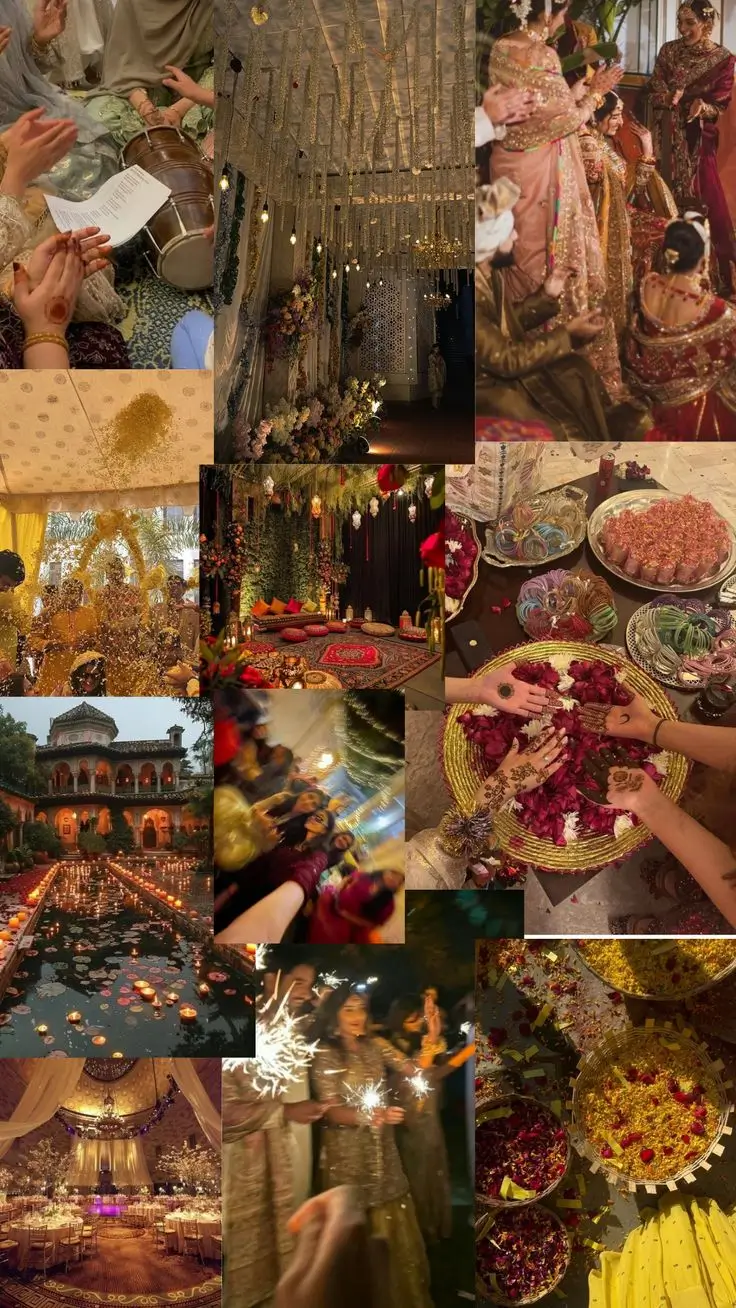
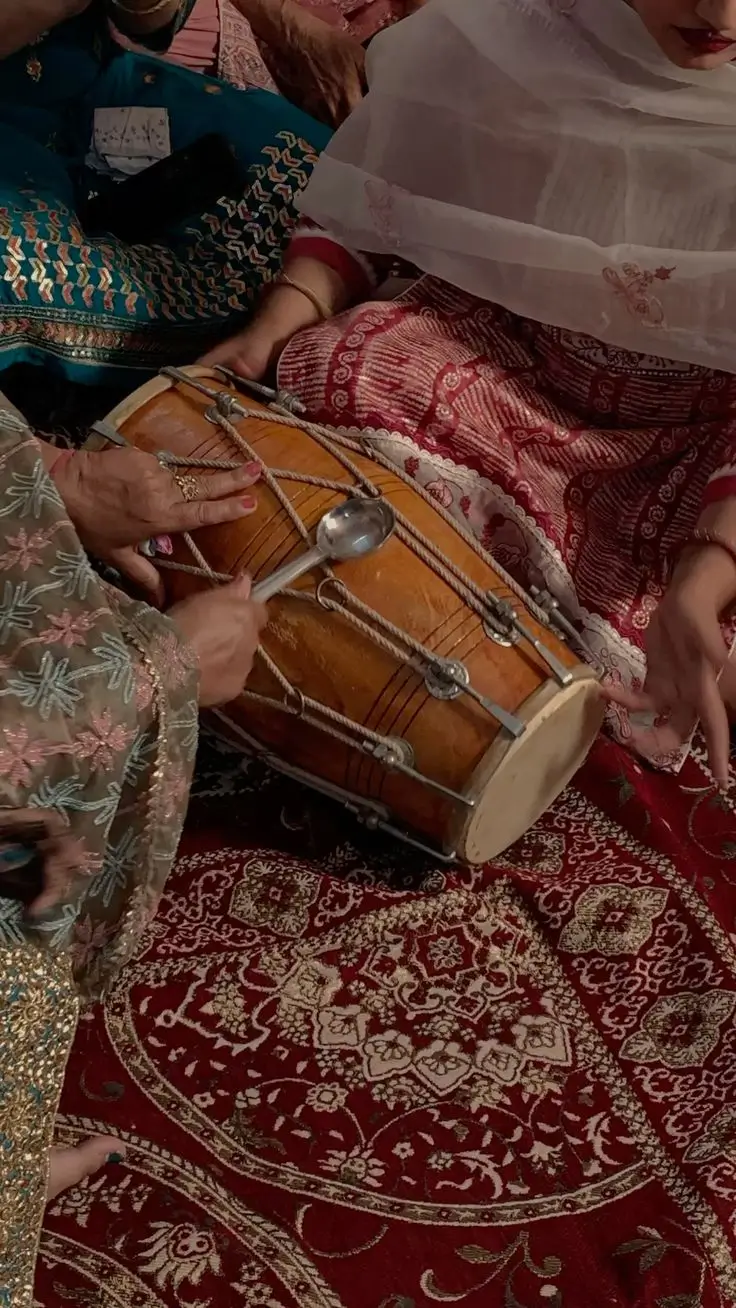
3. Dholki: Music, Laughter & Family Bonding
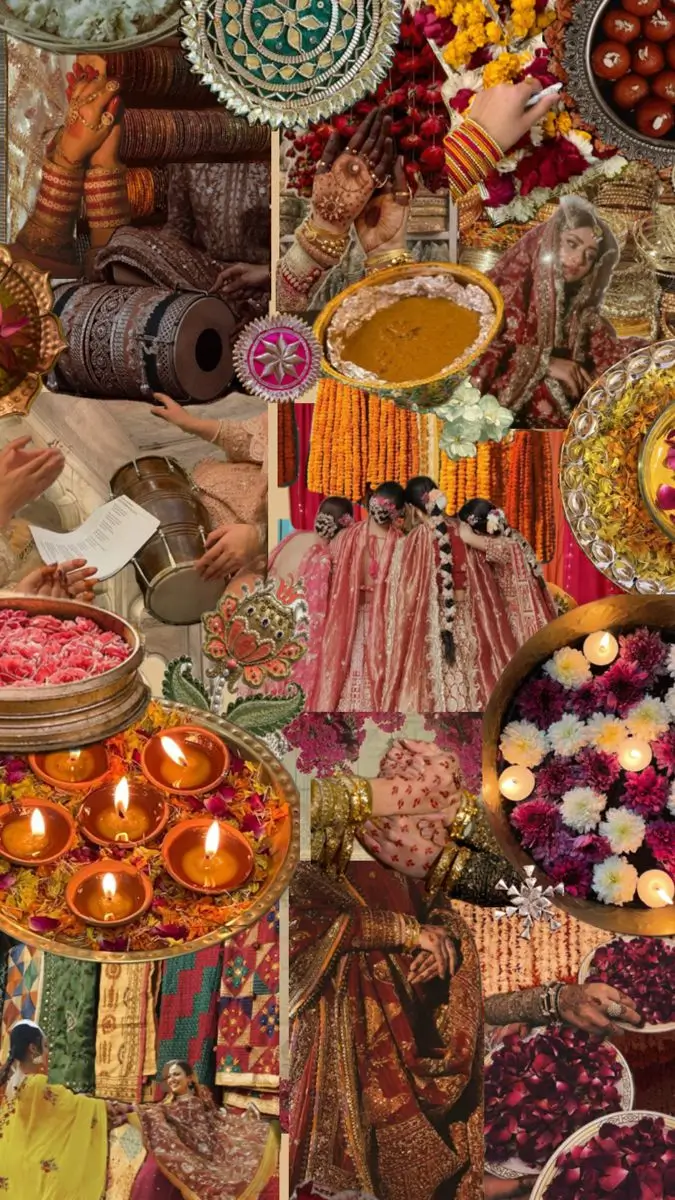
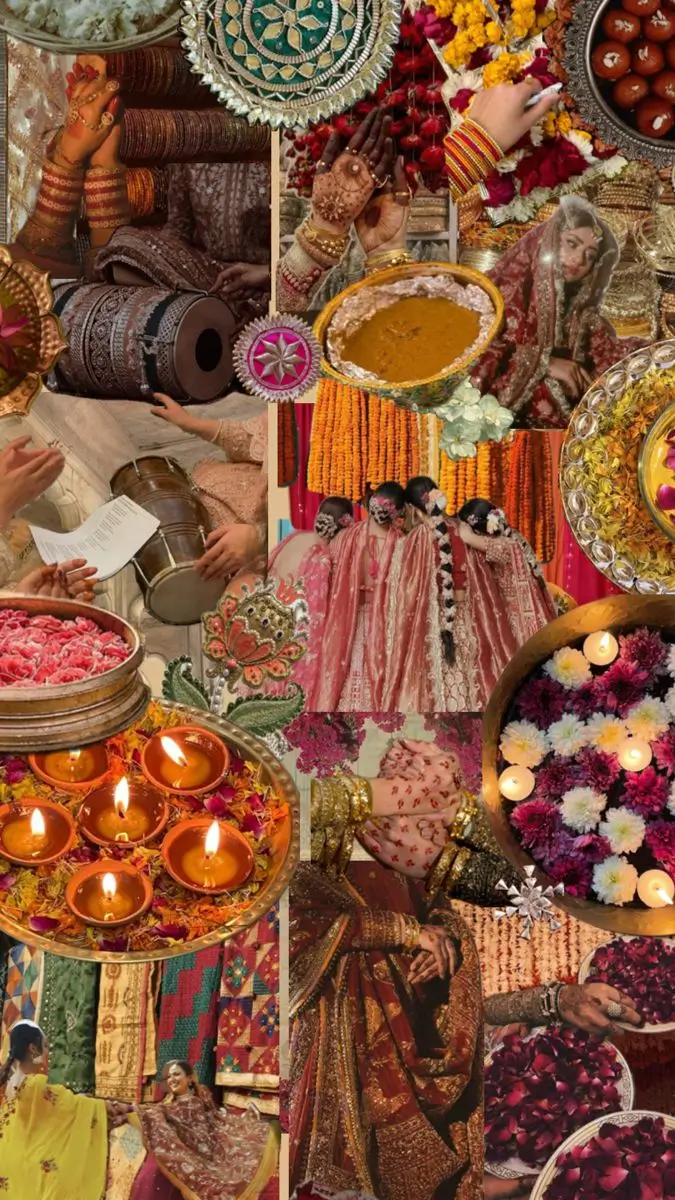
The Dholki is one of the most heartfelt pre-wedding traditions. Held at home, often for multiple nights, it is an informal musical gathering where:
- Family and friends sit on floor cushions
- Traditional wedding songs are sung
- A dholki (hand drum) sets the rhythm
- Stories, jokes, and memories are shared
Dholki nights are especially important for:
- Strengthening bonds between relatives
- Welcoming out-of-town family members
- Creating a relaxed, joyful atmosphere before formal events
Cultural value:
Unlike staged celebrations, dholki reflects the raw warmth of Pakistani family life—no filters, no formality, just connection.
4. Mayun: Seclusion, Simplicity & Spiritual Preparation
Mayun is a deeply traditional ritual that marks the bride’s symbolic withdrawal from daily life. Starting a few days before the wedding, the bride:
- Wears simple clothes
- Avoids heavy makeup and jewelry
- Stays mostly indoors
- Receives daily ubtan applications
Elders believe Mayun protects the bride from negative energy and prepares her for married life with purity and calmness.
Although modern brides often treat Mayun lightly, it remains emotionally important—especially for grandmothers and older relatives.
5. Ubtan: Beauty Rooted in Tradition
Ubtan is a natural paste made from:
- Turmeric
- Sandalwood
- Rose water
- Oils and herbs
Applied by female relatives, ubtan is believed to:
- Enhance natural glow
- Cleanse the skin
- Bring good luck and positivity
This ritual is playful yet symbolic, filled with laughter as relatives smear ubtan on the bride and sometimes on each other.
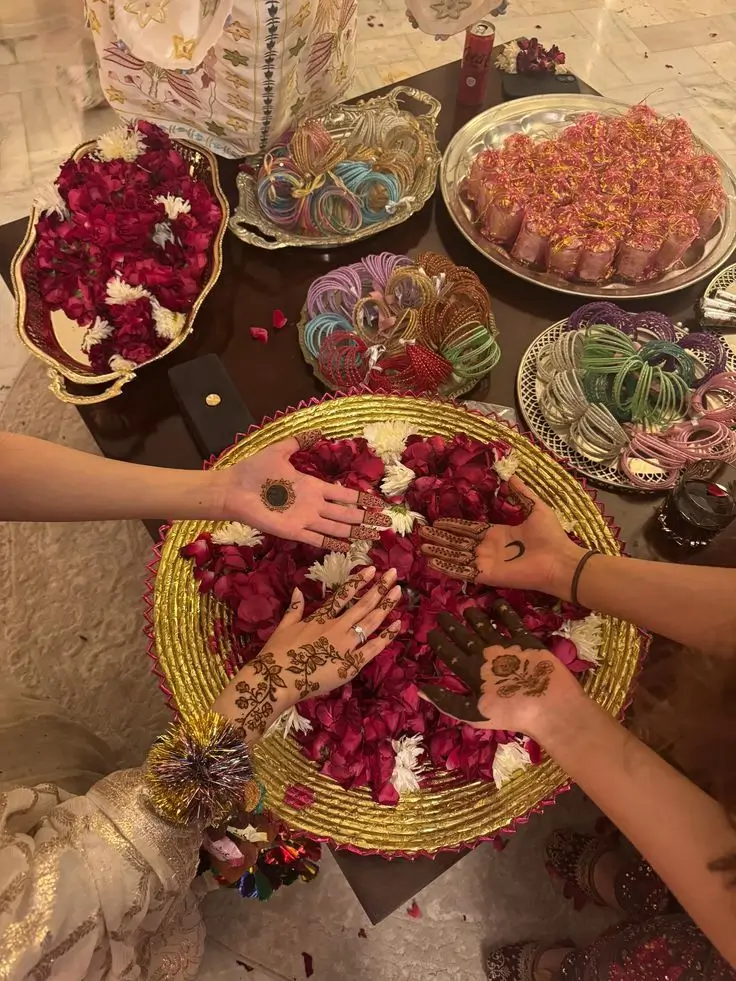
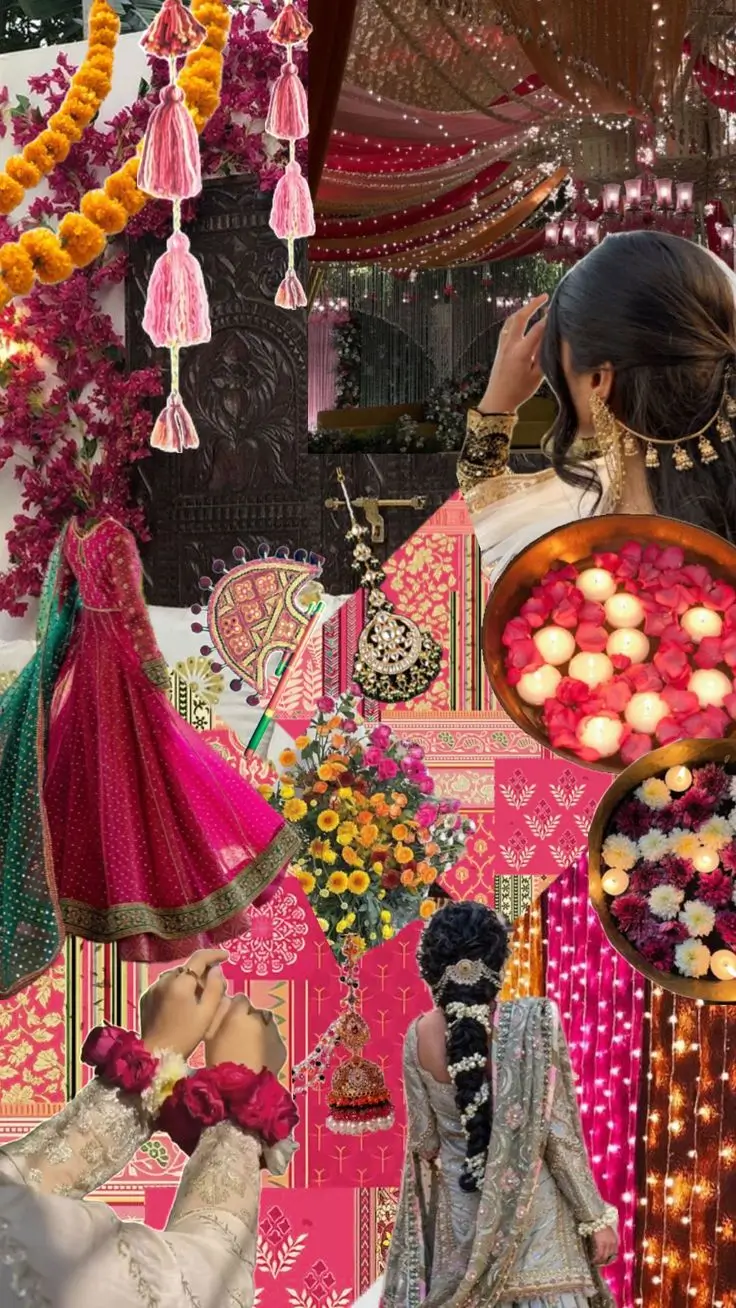
6. Mehndi (Rasm-e-Henna): Color, Joy & Blessings
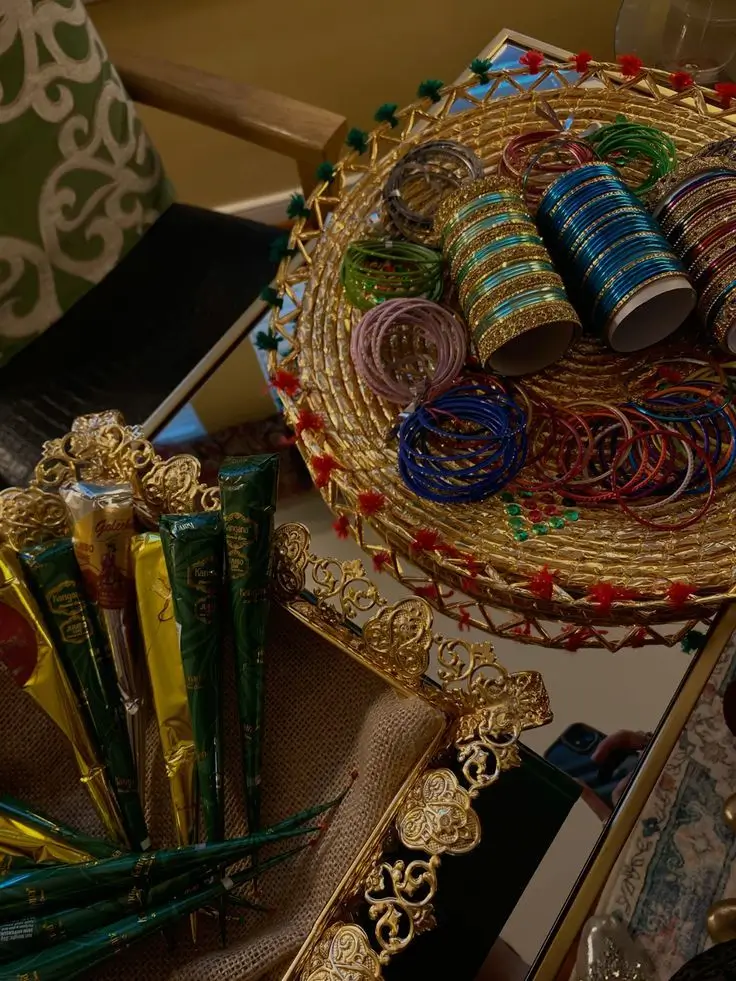
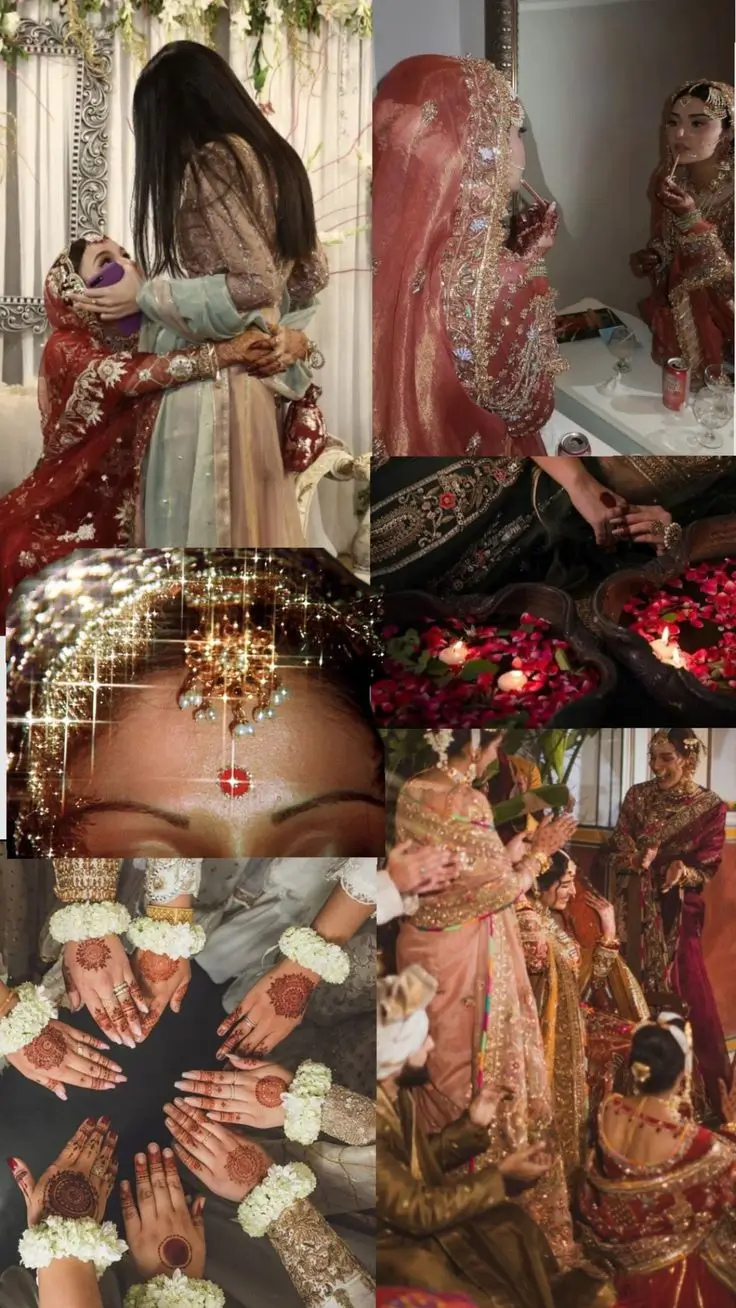
The Mehndi ceremony is the most vibrant pre-wedding event. Henna designs are applied to the bride’s hands and feet, symbolizing:
- Love and fertility
- Good fortune
- Protection from evil
- The depth of marital bond
Traditionally a women-only gathering, Mehndi has evolved into a joint celebration featuring:
- Dhol players
- Dance performances
- Bright yellow, green, and orange décor
- Coordinated outfits
The bride typically wears yellow or green, while guests embrace colorful attire. Mehndi is not just decoration—it is a joyful farewell to single life and a celebration of transformation.
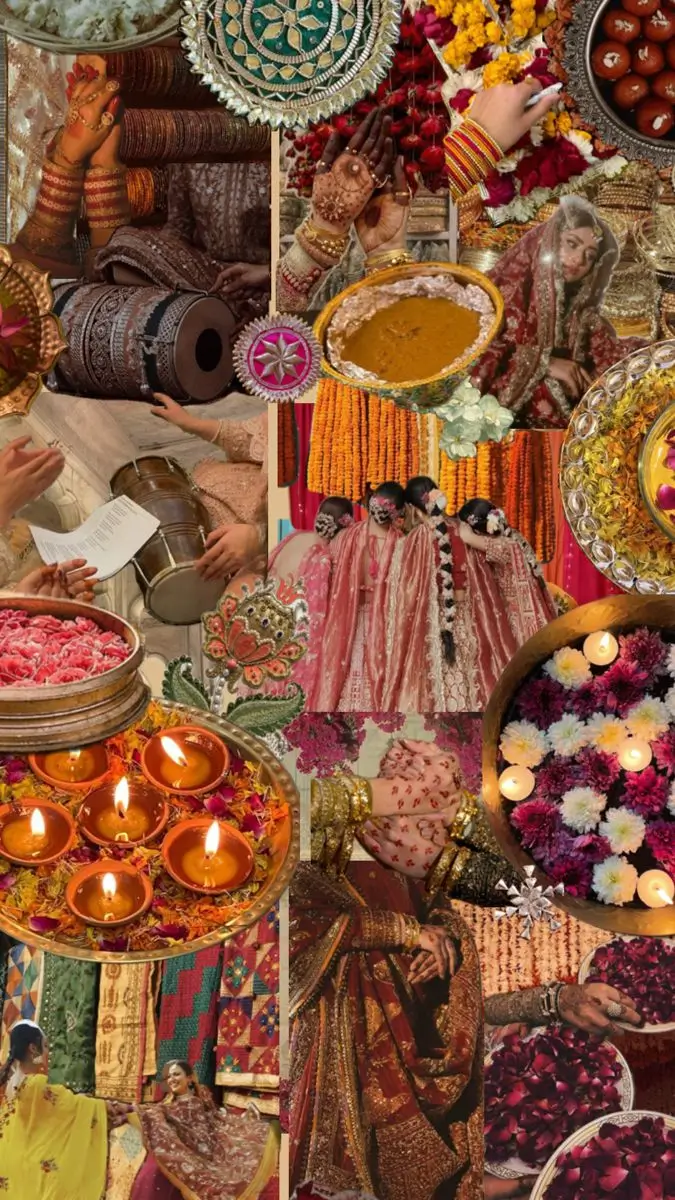
Cultural & Emotional Significance of Pre-Wedding Rituals
Pre-wedding rituals are not random festivities. Together, they:
- Ease emotional transitions
- Strengthen family unity
- Prepare the bride and groom for responsibility
- Blend spirituality with celebration
These traditions ensure the wedding does not feel rushed but unfolds gradually, allowing emotions to settle and relationships to deepen.
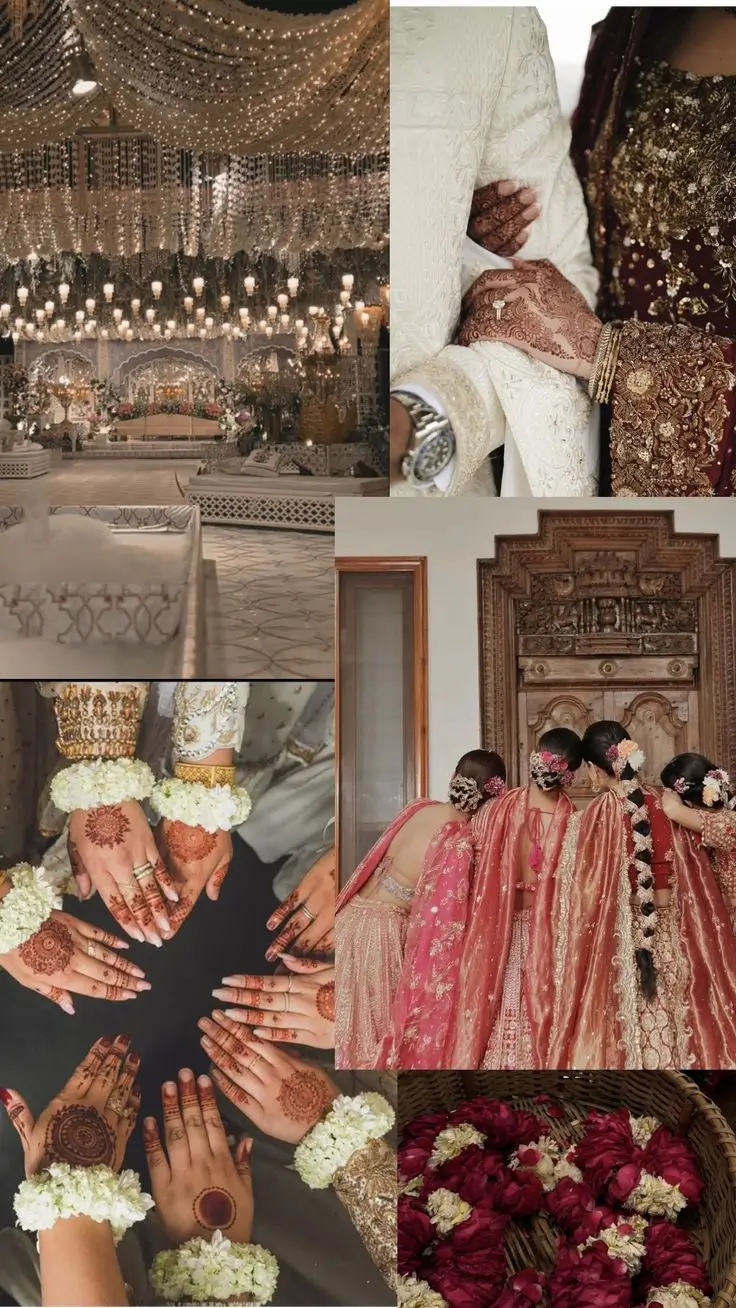
The Wedding Day: Faith, Tradition & Emotional High Points in Pakistani Weddings
Introduction: The Most Sacred & Celebrated Day
The wedding day is the heart of a Pakistani wedding. It is where faith meets festivity, and where lifelong vows are made in the presence of family, community, and God. Unlike Western weddings that focus on a single ceremony, Pakistani wedding days are layered with religious obligations, cultural customs, emotional moments, and grand celebrations.
This day is not just about beauty and celebration—it is about responsibility, commitment, and the spiritual bond of marriage.
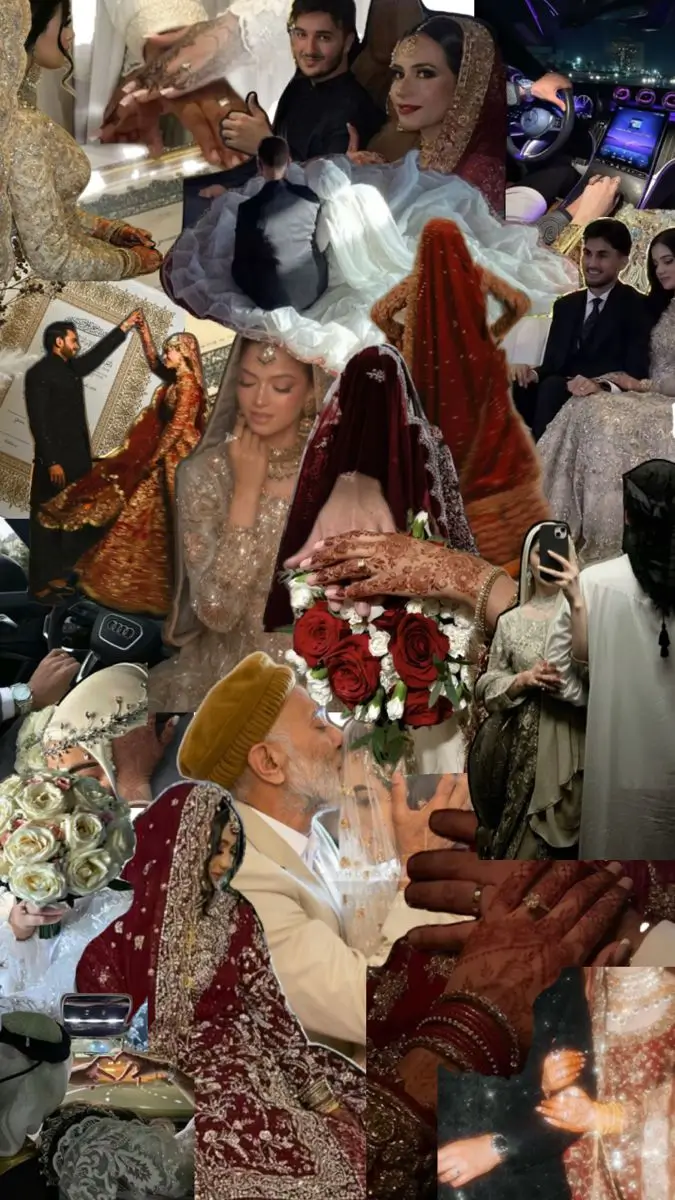
1. Nikah: The Sacred Islamic Marriage Contract
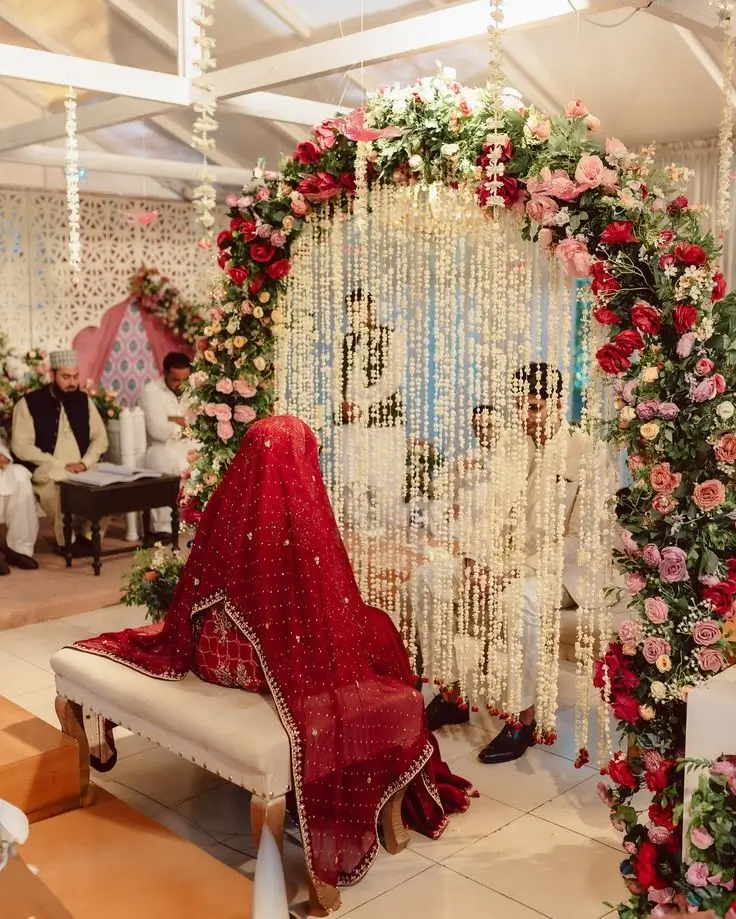
The Nikah is the most essential part of a Pakistani wedding. Without it, no marriage is valid in Islam. It is both a religious obligation and a legal contract.
Key Elements of Nikah:
- Consent of both bride and groom
- Presence of at least two witnesses
- Appointment of a Qazi or Islamic scholar
- Agreement on Mehr (mandatory gift for the bride)
During the ceremony, Quranic verses are recited, followed by the formal acceptance (Qubool Hai) from both bride and groom. The Mehr can be immediate or deferred and represents the bride’s financial right and dignity.
Setting & Atmosphere:
Nikah may take place:
- In a mosque
- At home
- At a wedding venue
Some families prefer a private Nikah with close relatives, while others host a public ceremony. Regardless of scale, the environment is respectful, modest, and spiritually focused.
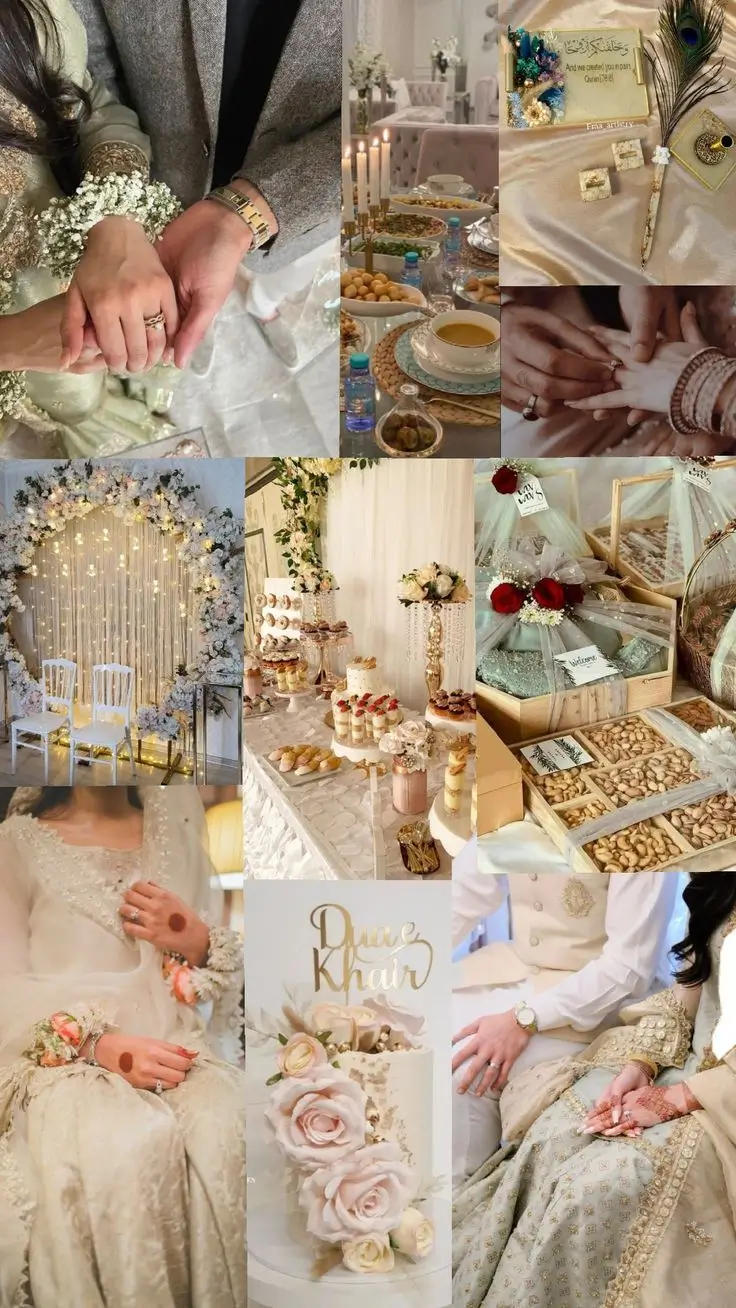
2. Dua-e-Khair: Blessings for the New Union
After the Nikah, a special prayer known as Dua-e-Khair is offered. Guests raise their hands in prayer, asking Allah to bless the couple with love, harmony, patience, and prosperity.
This moment is calm and reflective, marking the spiritual beginning of the marriage.
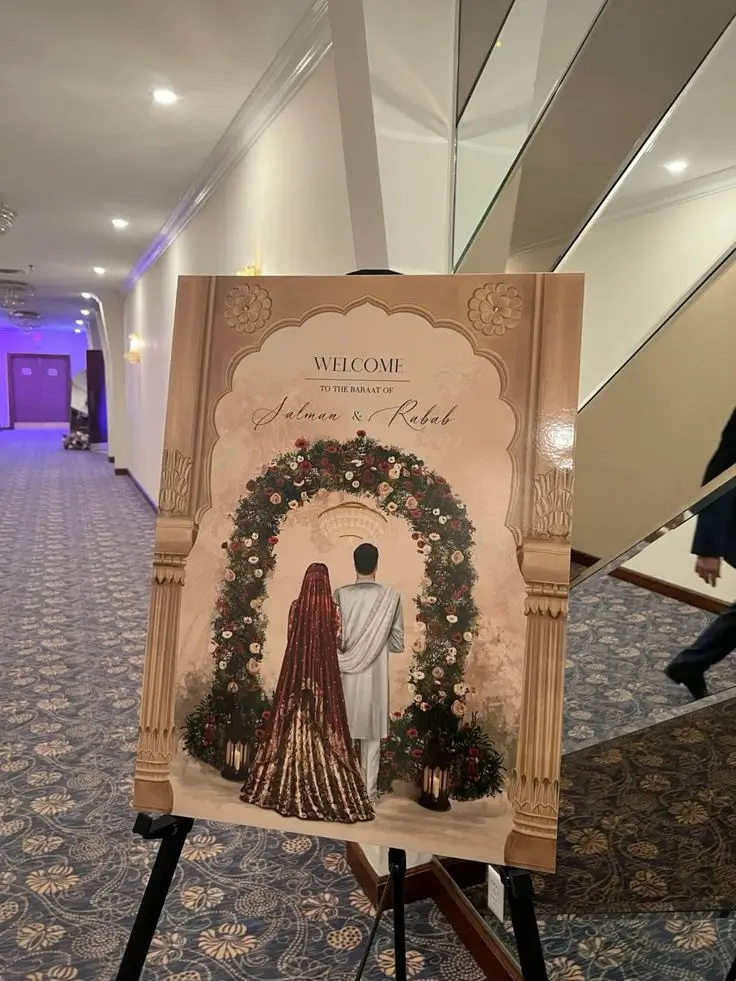
3. Baraat: The Groom’s Grand Arrival
The Baraat is the groom’s ceremonial procession to receive his bride. It is the most energetic and visually grand event of the wedding.
Traditional Features:
- Groom arrives on a decorated horse (or luxury car in modern weddings)
- Accompanied by family and friends
- Dhol, music, dancing, and fireworks
The groom usually wears a sherwani, often paired with a sehra (floral veil), symbolizing dignity and tradition.
Cultural Meaning:
Baraat represents honor, celebration, and the groom’s readiness to take responsibility for his bride.
4. Welcoming the Baraat: Hospitality & Acceptance
The bride’s family welcomes the Baraat as a sign of respect and acceptance. This moment symbolizes the merging of two families.
During this time, playful rituals take place:
Joota Chupai (Hiding the Groom’s Shoes)
The bride’s sisters and cousins hide the groom’s shoes and demand money or gifts for their return. This lighthearted tradition:
- Breaks tension
- Encourages bonding
- Adds humor to the ceremony
Doodh Pilai (Milk Ceremony)
The groom is offered milk by the bride’s sisters and must give a gift or cash in return. It symbolizes goodwill and hospitality.
5. The Bridal Entrance: A Moment of Grace
The bride’s entrance is one of the most emotional and awaited moments. Traditionally dressed in red, maroon, or gold, the bride enters accompanied by siblings or close relatives.
Her attire often includes:
- Lehenga, gharara, or sharara
- Heavy embroidery
- Dupatta draped over the head
- Traditional gold or kundan jewelry
This moment represents dignity, beauty, and the bride’s transition into married life.
6. Wedding Attire: Symbolism in Fabric & Design
Bridal Attire:
- Red symbolizes love, strength, and prosperity
- Gold reflects royalty and blessing
- Jewelry signifies family heritage and protection
Groom’s Attire:
- Sherwani or kurta with waistcoat
- Neutral or regal colors
- Turban or shawl for traditional touch
Outfits are often coordinated to reflect unity.
7. Rukhsati: The Bride’s Emotional Farewell
The Rukhsati is the most emotional part of a Pakistani wedding. It marks the bride’s departure from her parental home.
Key Traditions:
- Parents bless the bride
- Holy Qur’an is held over her head
- Rice, petals, or coins are showered
This moment reflects sacrifice, love, and faith. Tears flow freely as the bride begins a new chapter of life.
Emotional & Cultural Sensitivity on the Wedding Day
Pakistani weddings demand cultural awareness:
- Modesty during religious rituals
- Respect for elders
- Gender boundaries in conservative families
- Sensitivity during emotional moments
These values ensure dignity and harmony throughout the celebration.
The wedding day is a powerful blend of devotion and celebration. Every ritual—from the Nikah to the Rukhsati—carries emotional weight and cultural meaning, making this day unforgettable for everyone involved.
Post-Wedding Rituals in Pakistani Weddings: Welcoming, Bonding & New Beginnings
Introduction: Life After the Wedding Day
While the wedding day marks the official union of two people, post-wedding rituals are what truly ease the bride and groom into married life. These traditions focus on welcoming the bride, strengthening family relationships, and helping the couple adjust emotionally and socially to their new roles.
Pakistani post-wedding customs are deeply emotional, warm, and family-oriented. They celebrate not only the couple’s marriage but also the beginning of a new household.
1. Walima: The Groom’s Reception
The Walima is a Sunnah and an important Islamic tradition. It is hosted by the groom’s family to announce the marriage publicly and express gratitude.
Cultural & Religious Significance:
- Symbolizes public recognition of marriage
- Reflects hospitality and generosity
- Brings both families together in a relaxed setting
Unlike the Baraat, the Walima is usually more dignified and less extravagant, though modern weddings may still be lavish.
What Happens at Walima:
- Guests are welcomed with a formal meal
- The bride is officially introduced to the groom’s extended family
- The couple sits together, symbolizing unity and acceptance
Attire & Atmosphere:
- Brides often wear pastel or light-colored outfits
- Grooms opt for elegant sherwanis or suits
- Décor is subtle and graceful
The Walima marks the bride’s formal welcome into her new family.
2. Bride’s Welcome Rituals (Ghar Mein Qadam)
When the bride arrives at the groom’s home for the first time, she is welcomed with traditional rituals that symbolize prosperity and good fortune.
Common Traditions:
- The bride gently kicks a pot of rice at the entrance
- Elders bless her with prayers
- The bride may dip her feet in colored water or milk
These rituals symbolize abundance, happiness, and the bride bringing blessings into her new home.
3. Shab-e-Zifaf: The First Night
Shab-e-Zifaf marks the couple’s first night together after marriage. Traditionally, it is a private and spiritually significant occasion.
Religious Aspect:
- Couples are encouraged to pray together
- Gratitude is expressed to Allah
- Marriage is viewed as a sacred partnership
Cultural Importance:
- Family members ensure privacy
- The bride is gently guided into her new role
- Emotional reassurance is offered by elders
This moment symbolizes trust, companionship, and the beginning of married intimacy.
4. Chauthi: The Bride’s First Visit Back Home
The Chauthi takes place on the fourth day after the wedding. The bride visits her parents’ home, accompanied by her husband.
Emotional Significance:
- Reassures the bride’s family of her well-being
- Allows the bride to reconnect emotionally
- Strengthens bonds between both families
What Happens:
- Gifts and sweets are exchanged
- A small gathering or meal is arranged
- Laughter and emotional conversations fill the home
Chauthi reminds the bride that her parental home remains a place of love and support.
5. Satawro / Saat Din: A Gradual Transition
In some regions, the bride stays with her parents for a few days before permanently settling with her husband. This gradual transition:
- Reduces emotional stress
- Allows adjustment to change
- Respects traditional family values
This practice highlights the emotional sensitivity embedded in Pakistani culture.
6. Gift Exchange & Salami
Post-wedding days involve the exchange of gifts between families.
Salami:
- Cash gifts given to the couple
- Symbolize blessings, goodwill, and support
Other Gifts:
- Jewelry
- Clothes
- Household items
These exchanges strengthen relationships and signify mutual respect.
Emotional Adjustment & Family Bonding
The post-wedding phase is emotionally intense, especially for the bride.
For the Bride:
- Adjusting to a new home
- Building relationships with in-laws
- Managing emotional distance from parents
For the Groom:
- Balancing responsibilities
- Supporting his wife emotionally
- Acting as a bridge between families
Families play a vital role in offering patience, kindness, and reassurance during this transition.
Cultural Values Reflected in Post-Wedding Rituals
Post-wedding traditions reflect:
- Respect for women
- Importance of family unity
- Emotional intelligence
- Religious grounding
These rituals ensure marriage is not just a celebration, but a supported journey.
Post-wedding rituals in Pakistani culture emphasize compassion, patience, and family connection. They ensure that marriage begins with emotional stability, spiritual grounding, and mutual respect—laying the foundation for a successful married life.
Regional Traditions, Wedding Attire, Cuisine & the Modern Evolution of Pakistani Weddings
Introduction: Diversity Within Tradition
Pakistan’s cultural diversity is beautifully reflected in its weddings. While the core Islamic values remain consistent, regional customs, attire, food, and celebrations vary widely across the country. In recent years, modern influences have also reshaped how weddings are planned—without erasing tradition.
1. Regional Wedding Traditions in Pakistan
Punjabi Weddings
Punjabi weddings are lively, colourful, and full of music.
Key Features:
- Energetic Dholki nights
- Loud Baraat processions
- Playful rituals like Joota Chupai
- Dance-centered celebrations
Punjabi weddings emphasize joy, laughter, and community bonding.
Sindhi Weddings
Sindhi weddings are rich in symbolism and rituals.
Distinct Customs:
- Complex pre-wedding ceremonies
- Ajrak and Sindhi topi traditions
- Strong emphasis on hospitality
These weddings are deeply rooted in heritage and spiritual symbolism.
Pashtun Weddings
Pashtun weddings are modest and dignified.
Characteristics:
- Minimal music and dancing
- Strong adherence to religious practices
- Separate events for men and women
These weddings highlight respect, discipline, and tradition.
Balochi Weddings
Balochi weddings are community-focused.
Notable Elements:
- Extended celebrations
- Heavy involvement of elders
- Collective feasting and storytelling
They emphasize unity and cultural pride.
2. Pakistani Bridal Attire: A Symbol of Heritage
Pakistani bridal wear is internationally celebrated for its craftsmanship.
Traditional Bridal Outfits:
- Lehenga: Regal and heavily embroidered
- Gharara: Mughal-inspired elegance
- Sharara: Flowing and graceful
Colours & Symbolism:
- Red → love, strength, prosperity
- Gold → royalty and blessings
- Maroon → tradition and depth
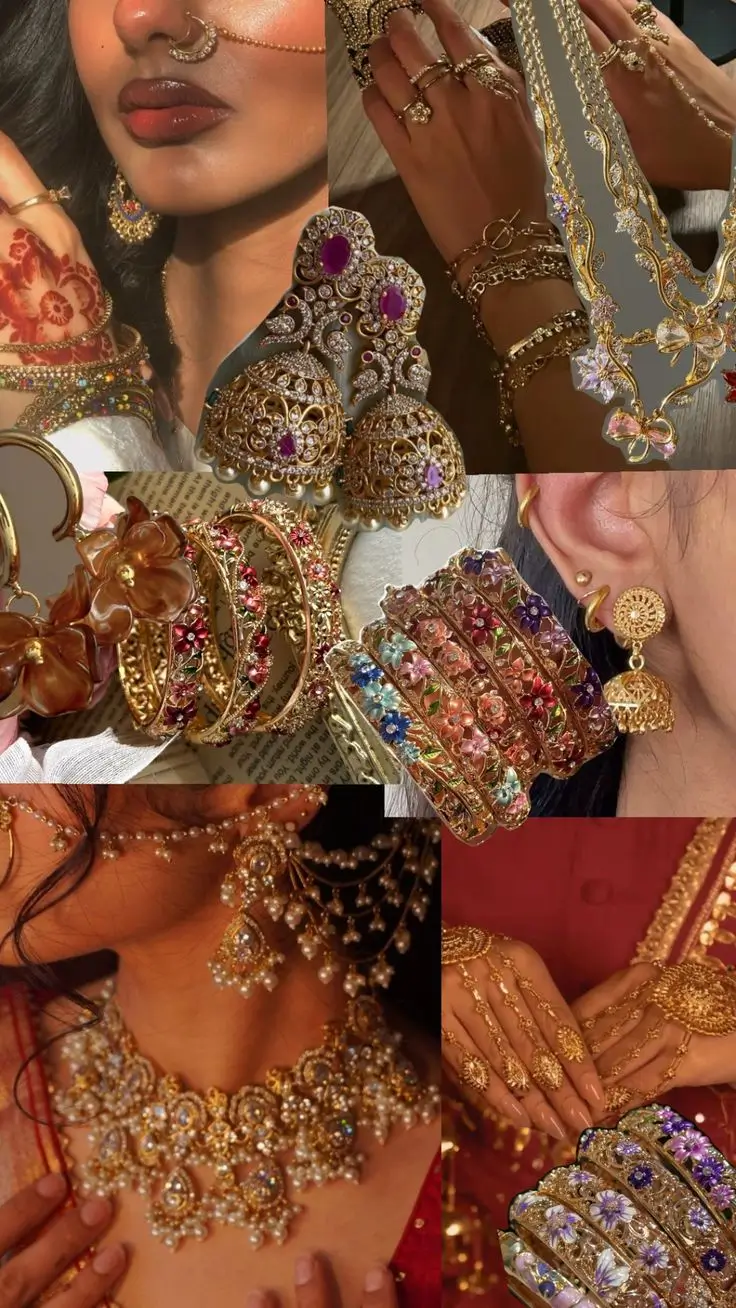
Bridal jewellery often includes:
- Jhoomar
- Matha patti
- Chokers and long necklaces
- Bangles and anklets
Each piece carries emotional and cultural significance.
3. Groom’s Attire: Dignity & Tradition
Grooms traditionally wear:
- Sherwani
- Kurta with waistcoat
- Turban or shawl
Neutral and regal colours dominate, symbolizing responsibility and strength.
4. Traditional Pakistani Wedding Cuisine
Food is central to Pakistani weddings and represents hospitality and abundance.
Popular Dishes:
- Biryani
- Nihari
- Korma
- Kebabs
Desserts:
- Kheer
- Zarda
- Gulab jamun
- Jalebi
Lavish feasts reflect generosity and respect for guests.
5. Small Traditions with Big Meaning
These customs add warmth and personality:
- Sehra Bandi: Groom’s floral veil ceremony
- Salami: Cash blessings
- Saath Supari: Symbolic exchange of commitment
- Rasm-e-Henna: Decorative henna traditions
Though small, these rituals carry emotional depth.
6. Symbolism in Pakistani Weddings
Every element has meaning:
- Dupatta over bride’s head → modesty & respect
- Qur’an during Rukhsati → divine protection
- Mehr → bride’s dignity & security
Symbolism turns weddings into meaningful spiritual events.
7. Modern Pakistani Wedding Trends
Today’s weddings blend tradition with contemporary style.
Popular Trends:
- Destination weddings
- Professional cinematography
- Themed décor
- Coordinated bridal parties
- Social media storytelling
Despite modernization, Nikah, Rukhsati, and Walima remain sacred.
8. Pakistani Weddings Abroad
Pakistani diaspora weddings retain tradition while adapting to local cultures. Time-efficient ceremonies, combined events, and modern venues are common—but rituals remain respected.
The Emotional Core of Pakistani Weddings
Beyond glamour, Pakistani weddings are about:
- Family unity
- Emotional transitions
- Spiritual commitment
- Lifelong companionship
They reflect patience, sacrifice, love, and faith.
Final Conclusion: A Celebration of Love, Faith & Identity
Pakistani weddings are not just events—they are stories passed through generations. Every ritual, prayer, tear, and smile contributes to a celebration that is as emotional as it is beautiful.
Understanding these traditions allows one to truly appreciate the depth, dignity, and soul of Pakistani weddings—making them some of the most meaningful ceremonies in the world.
Frequently Asked Questions – Pakistani Wedding Rituals & Traditions
1. What are the main traditional rituals of a Pakistani wedding?
Pakistani weddings are rich in rituals ranging from engagement (Mangni) and Mayun (turmeric ceremony) to Mehndi, Baraat procession, Nikah ceremony, and Walima reception, each celebrating cultural and religious values.
2. What is the Rasm-e-Mayun ceremony in Pakistani weddings?
The Rasm-e-Mayun is a pre-wedding ritual where the bride is adorned with a yellow dress and traditional decorations, often symbolizing beauty and spiritual preparation before the wedding day.
3. What happens during the Mehndi ceremony in a Pakistani wedding?
The Mehndi ceremony is a joyful pre-wedding event filled with music, dance, and family celebrations, where intricate henna designs are applied to the bride’s hands and feet as a symbol of beauty and good luck.
4. What is a Baraat in Pakistani wedding tradition?
Baraat is the groom’s grand procession to the wedding venue. Family and friends join in dancing and music, often with decorated vehicles or horses, marking the joyous arrival of the groom’s side.
5. What is the Nikah ceremony in Pakistan?
The Nikah is the Islamic marriage contract where the bride and groom formally consent to their union in front of witnesses and an imam, making the marriage legally and religiously valid.
6. What is the Walima reception in Pakistani culture?
The Walima is the official wedding reception hosted by the groom’s family after the Nikah, celebrating the couple’s union with extended family and friends through a festive feast and hospitality.
7. How important is henna (Mehndi) in Pakistani weddings?
Henna, known as Mehndi, plays a central role in pre-wedding festivities. It’s applied to the bride (and sometimes the groom) as a symbol of beauty, good fortune, and joy, complemented with music and dancing.
8. What playful traditions are part of Pakistani wedding celebrations?
Fun traditions like Joota Chupai — where the bride’s family hides the groom’s shoes for playful bargaining — add lively entertainment to the wedding festivities.
9. Do Pakistani wedding rituals vary by region and culture?
Yes — Pakistani weddings blend local customs across communities (Punjabi, Sindhi, Pashtun, Balochi, etc.), incorporating unique dances like Attan and varied ceremonial styles that reflect regional heritage.
10. Why are traditional wedding rituals important in Pakistan?
Pakistani wedding rituals honor family bonds, cultural heritage, and religious significance, turning the wedding into a memorable celebration that strengthens social ties and preserves age-old traditions.