

Before Zainab Market Saddar Karachi became shorthand for export surplus clothing and aggressive price discovery, Karachi itself was facing a structural breakdown in formal retail access. During the late industrial expansion cycles, export-oriented factories produced volume for foreign buyers but had no resilient domestic liquidation channel for cancelled orders, sizing errors, shade mismatches, or overproduction. Formal malls could not absorb this inventory. Brand outlets rejected it. Warehousing costs turned dead stock into financial hemorrhage.
This failure was not cultural; it was logistical. Export quality garments Karachi produced were structurally incompatible with Pakistan’s formal retail pricing models. When inventory missed a shipping window, failed a buyer audit, or exceeded forecast, manufacturers faced total loss. The absence of a price-flexible, cash-driven ecosystem created a vacuum.
Zainab Market Saddar Karachi emerged as a response to that vacuum — not as a planned commercial center, but as a pressure-release valve for Pakistan’s export economy.

The Structural Breakdown of Formal Retail
Formal retail environments rely on price integrity, visual merchandising, and brand signaling. Export surplus operates on none of these principles. The garments entering Saddar clothing market pipelines were often:
- Overruns exceeding contracted quantities
- Buyer-rejected lots due to labeling or tagging errors
- Mixed-grade inventory unsuitable for flagship stores
- Seasonal misalignment with international calendars
Shopping malls could not discount aggressively without brand dilution. Factory warehouses could not hold inventory indefinitely. The system needed a geographically dense, cash-fluid, low-overhead environment.
That environment became Zainab Market shops.
Hidden Lesson: Zainab Market did not disrupt retail — it absorbed retail’s failures.
Why Saddar Became the Anchor Zone
Saddar already functioned as Karachi’s transport and labor nerve center. Proximity to ports, bus routes, and wholesale corridors meant inventory velocity could remain high even at razor-thin margins. The Karachi wholesale clothing market required footfall density, not ambiance.
Export quality garments Karachi moved through Saddar faster because:
- Buyers arrived with cash, not credit terms
- Price negotiation replaced fixed MRP logic
- Quality grading was done visually, not contractually
This was not chaos. It was informal efficiency.
The Early Collapse That Shaped the Market
The first iteration of surplus trade in Saddar failed repeatedly. Unscrupulous vendors mixed grades, mislabeled stock, and exploited first-time buyers. Trust eroded. Footfall dropped.
The market survived only after a brutal correction:
- Repeat buyers demanded consistency
- Vendors who oversold were eliminated
- Reputation replaced signage as currency
Zainab Market Karachi evolved into a reputation-weighted ecosystem where survival depended on repeat transactions.
The Risks Embedded From Day One
Despite its success, foundational risks were baked into the system:
- No standardized grading authority
- Absence of consumer protection
- Extreme dependency on buyer knowledge
- Volatility tied to export order cycles
These risks persist today and define the market’s psychology.

Market Sentiment
★★★★★ “If you understand export grading, this market saves your business.”
★★★★☆ “Great prices, but one bad purchase can erase all savings.”
★★★☆☆ “Not for casual shoppers — knowledge is mandatory.”
Why Zainab Market Survived When Others Failed
Unlike enclosed malls, Zainab Market shops absorbed instability rather than resisting it. The Saddar clothing market thrives because it:
- Accepts inconsistency
- Rewards knowledge
- Penalizes ignorance
Rex Center Saddar, Cooperative Market Karachi, and Victoria Centre Saddar later mirrored this logic, but Zainab Market remained the origin point.
The Misconception of “Cheap Clothes”
Cheap pricing is a symptom, not the core value. The true asset of Zainab Market Saddar Karachi is liquidity — the ability to convert dead inventory into cash within days.
Export surplus clothing Pakistan feeds this ecosystem because speed matters more than branding. This is why Levi’s outlet Zainab Market exists here rather than in lifestyle malls.
Hidden Lesson: Zainab Market is not a shopping destination. It is a financial instrument.
Zainab Market Saddar Karachi exists because no formal retail structure could accommodate the volatility of Pakistan’s export garment economy. Its chaos is functional. Its risks are deliberate. And its survival is proof that informal systems often outperform rigid ones when margins collapse.
This foundation sets the stage for deeper analysis — not of nostalgia, but of operational survival.
Rex Center Saddar — When Scale Became the First Enemy
Rex Center did not begin as a success story. Its earliest commercial phase collapsed under a single flawed assumption: scale guarantees stability. Developers assumed that by aggregating hundreds of clothing vendors under one roof, buyer confidence would automatically follow. It did not.
During its initial expansion, Rex Center Saddar absorbed sellers displaced from Zainab Market Saddar Karachi who believed that footfall alone would replicate trust. Instead, the Saddar clothing market punished scale without discipline. Vendors overstocked. Quality grading collapsed. Buyers were overwhelmed, not empowered.
The Karachi wholesale clothing market does not reward abundance; it rewards predictability.
Inventory Without Identity
Rex Center’s first failure cycle stemmed from undifferentiated inventory. Shops carried similar SKUs sourced from identical export surplus pipelines. When everything looks the same, buyers default to price — and price wars erase margins.
Export surplus clothing Pakistan entered Rex Center in bulk lots:
- Mixed sizes
- Inconsistent fabric lots
- Incomplete labeling
Without seller specialization, buyers experienced decision fatigue, leading to abandoned purchases and declining repeat visits.
Hidden Lesson: In surplus markets, more choice often signals less reliability.
Vertical Specialization Inside Chaos
Survival only came after fragmentation. Successful Rex Center vendors narrowed aggressively:
- One shop for denim only
- One floor dominated by kidswear
- Others focusing exclusively on winter surplus
Instead of competing with Zainab Market shops directly, Rex Center vendors adopted micro-reputation strategies. Repeat buyers stopped browsing; they navigated directly.
This pivot aligned Rex Center Saddar with the deeper psychology of the Saddar clothing market: buyers don’t hunt deals — they hunt certainty.
The Risks That Never Left
Despite recovery, Rex Center remains structurally fragile:
- High rent pressures force overstocking
- First-time buyers still face quality inconsistency
- Tourist footfall dilutes serious buyer density
Rex Center thrives only when buyers already understand Karachi wholesale clothing market mechanics.
Review Sentiment
★★★★★ “Once you know which floor does what, Rex Center saves hours.”
★★★★☆ “Great variety, but you must ignore 70% of shops.”
★★★☆☆ “Too overwhelming if you don’t know export grading.”
Rex Center Saddar did not defeat Zainab Market Saddar Karachi — it survived by imitating its informal discipline. Scale alone failed. Specialization saved it.
Cooperative Market Karachi — The Cost of Being “Too Cheap”
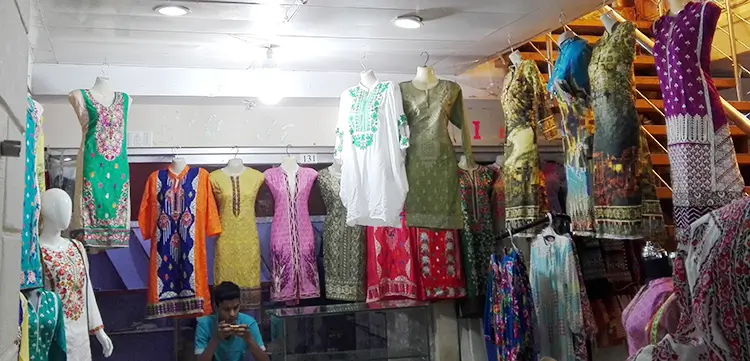
Cooperative Market Karachi became infamous for a dangerous promise: lowest prices in Saddar. That positioning nearly destroyed it.
When prices fall below perceived value thresholds, buyers assume defect. Early Cooperative Market vendors undercut aggressively, attracting bargain hunters but repelling resellers and bulk buyers — the lifeblood of the Karachi wholesale clothing market.
Cheap became suspicious.
Margin Collapse & Vendor Burnout
Export surplus clothing Pakistan flows unpredictably. Cooperative Market vendors faced:
- Erratic supply cycles
- High defect ratios
- Thin margins unable to absorb losses
Without financial buffers, many vendors liquidated entire shops within months. The Saddar clothing market is unforgiving to undercapitalized sellers.
Price Anchoring Through Comparison
The turnaround came not by raising prices, but by anchoring them. Vendors encouraged buyers to compare across markets:
- “Check Rex Center, then return.”
- “See Zainab Market shops, then decide.”
By contextualizing cheapness, Cooperative Market Karachi reframed low prices as efficiency, not defect.
Hidden Lesson: In surplus retail, explanation is as valuable as discounting.
Structural Weaknesses
- High buyer skepticism persists
- Heavy dependence on bulk footfall
- Vulnerable to regulatory crackdowns
Cooperative Market survives on volume, not loyalty — a dangerous equilibrium.
Review Sentiment
★★★★★ “Unmatched prices if you inspect carefully.”
★★★★☆ “Cheap, but you must visit multiple shops.”
★★★☆☆ “Quality varies too much for casual buyers.”
Cooperative Market Karachi proves that cheap without narrative fails. Its survival depends on buyer education, not price tags.
Zainab Market Saddar Karachi — The Silent Standard-Setter
Contrary to myth, Zainab Market Saddar Karachi has failed repeatedly — through raids, infrastructure decay, and supply shocks. What differentiates it is not immunity, but adaptive erosion.
Each crisis stripped inefficiencies. Vendors who survived became stricter, sharper, and less forgiving.
Trust as Currency
Unlike Rex Center Saddar or Cooperative Market Karachi, Zainab Market shops cannot rely on layout or branding. Trust is personal and earned transaction by transaction.
Buyers in the Saddar clothing market remember:
- Who honored returns
- Who disclosed defects
- Who stayed consistent
Mistakes are punished permanently.
The Inherent Risk Core
- No formal grievance systems
- Heavy dependence on buyer literacy
- Extreme variability across lanes
Yet, paradoxically, this volatility sustains the market.
Review Sentiment
★★★★★ “If you know export surplus, nothing beats Zainab Market.”
★★★★☆ “Best prices, but mentally exhausting.”
★★★☆☆ “Too risky for first-time shoppers.”
Across Rex Center Saddar, Cooperative Market Karachi, and Zainab Market Saddar Karachi, a universal pattern emerges:
Markets fail when they promise comfort. They survive when they reward competence.
The Karachi wholesale clothing market does not evolve toward convenience. It evolves toward efficiency under uncertainty.
Victoria Centre Saddar — The Illusion of Order
Victoria Centre Saddar was designed to fix what Zainab Market Saddar Karachi never intended to solve: order. Developers believed vertical floors, numbered shops, escalators, and standardized layouts would civilize the Saddar clothing market. Instead, structure became its first liability.
Export quality garments Karachi do not move in clean batches. They arrive unevenly, in mixed grades, at unpredictable intervals. Victoria Centre attempted to impose mall logic on surplus economics — and the result was inventory stagnation.
Shops looked organized. Sales were not.
Fixed Costs in a Volatile Market
Unlike Zainab Market shops, Victoria Centre vendors face:
- Higher rents
- Maintenance fees
- Utility overheads
- Fixed operating hours
These costs assume predictable turnover. Export surplus offers none. When supply gaps occurred, vendors could not reduce costs proportionally. Losses compounded silently.
Many early tenants burned through capital believing “location would compensate.” It didn’t.
Hidden Lesson: In surplus retail, cost flexibility matters more than aesthetics.
Hybrid Informality
Surviving Victoria Centre Saddar vendors abandoned mall discipline while retaining mall infrastructure:
- Informal price negotiation
- Verbal defect disclosure
- No-frills presentation behind glass facades
They stopped targeting casual shoppers and began courting semi-informed resellers who wanted proximity to Zainab Market Saddar Karachi without full exposure to its chaos.
Structural Risks
- Rent pressure forces overpricing
- New buyers assume quality consistency that doesn’t exist
- Limited tolerance for low-margin bulk deals
Victoria Centre is not failing — but it is permanently constrained.
Review Sentiment
★★★★★ “Cleaner alternative to Zainab Market with good export stock.”
★★★★☆ “Prices slightly higher, but easier to navigate.”
★★★☆☆ “Still hit-or-miss despite the mall setup.”
Victoria Centre Saddar survives by borrowing informality, not enforcing structure. It is a compromise, not a solution.
The Centre Shopping Mall — When Branding Met Surplus
The Centre Shopping Mall attempted a more dangerous experiment: branding surplus. Positioned between Zainab Market Saddar Karachi and lifestyle malls, it tried to package export quality garments Karachi as a curated experience.
Buyers saw glass storefronts and assumed guarantees. Vendors still operated on surplus logic. Expectations collapsed.
Expectation Mismatch
The Saddar clothing market punishes misaligned signals. At The Centre Shopping Mall:
- Buyers expected returns
- Vendors expected no-questions sales
- Disputes escalated
Trust eroded quickly, not due to fraud, but due to misunderstanding.
Hidden Lesson: Presentation sets expectations — and expectations determine conflict.
Category Dominance
Survivors narrowed aggressively:
- Entire sections dedicated to men’s casualwear
- Others focusing only on kids’ export surplus
- Limited SKU depth but higher transparency
This re-aligned expectations and stabilized buyer relationships.
Persistent Weaknesses
- Tourists inflate footfall but reduce conversions
- Overreliance on weekend sales
- Thin differentiation from Victoria Centre Saddar
Review Sentiment
★★★★★ “Good balance between comfort and price.”
★★★★☆ “Decent export garments, but don’t expect mall policies.”
★★★☆☆ “Feels like Zainab Market with better lighting.”
The Centre Shopping Mall works only when buyers unlearn mall behavior. It rewards informed restraint, not impulse shopping.
Madina City Mall — The Quiet Survivor
Madina City Mall never aimed to compete directly with Zainab Market Saddar Karachi. Its early failure came from invisibility. Poor signage, weak marketing, and location fatigue meant strong inventory went unnoticed.
In the Saddar clothing market, invisibility is lethal.
Low Footfall, High Quality
Several Madina City Mall vendors carried better-than-average export quality garments Karachi but lacked volume buyers. High-quality surplus without circulation becomes dead stock.
Margins shrank. Vendors questioned sustainability.
Reseller Dependency
Madina City Mall stabilized by catering almost exclusively to:
- Small-town resellers
- Facebook & WhatsApp sellers
- Seasonal bulk buyers
Prices were not the lowest — reliability was the selling point.
Hidden Lesson: Some markets survive by being boring — predictability beats excitement.
Long-Term Risk
- Overdependence on reseller networks
- Low discovery by new buyers
- Vulnerability to digital sourcing platforms
Review Sentiment
★★★★★ “Hidden place for consistent export clothing.”
★★★★☆ “Less variety, but more reliability.”
★★★☆☆ “Not exciting, but gets the job done.”
Levi’s Outlet Zainab Market — When Brand Power Meets Surplus Reality
Levi’s Outlet Zainab Market did not initially benefit from brand recognition; it suffered from it. Early buyers entered with mall-conditioned expectations—fixed pricing, guaranteed sizing, and standardized quality. None of these assumptions held. The outlet faced escalating disputes, stalled sales, and reputational confusion.
In Zainab Market Saddar Karachi, a brand name does not reduce friction; it raises scrutiny.
Export quality garments Karachi that carry recognizable labels invite forensic inspection. Buyers expect perfection even when purchasing surplus. The outlet’s first challenge was not sourcing—it was managing expectations.
Branding Without Brand Infrastructure
Unlike flagship stores, Levi’s outlet Zainab Market operates without:
- Corporate return policies
- Centralized customer service
- Size exchange guarantees
Yet customers projected these systems onto it. The mismatch triggered conflict. Early months saw high walkouts and low conversion rates, despite strong footfall.
Hidden Lesson: In surplus markets, brand recognition increases buyer resistance before it increases trust.
Radical Transparency
Survival came through pre-emptive disclosure:
- Clear signage explaining surplus grading
- Verbal defect explanations before inspection
- Visual segregation of grades
By teaching buyers how to evaluate export quality garments Karachi, the outlet reduced disputes and increased average basket size. Transparency replaced branding as the trust mechanism.
Risks Beneath the Logo
- Buyers assume authenticity disputes can be escalated
- Margin compression due to perceived brand ceiling
- Counterfeit comparison from nearby shops
The outlet survives not because it is Levi’s, but because it behaves unlike Levi’s elsewhere.
Review Sentiment
★★★★★ “Best place for genuine Levi’s surplus if you know grades.”
★★★★☆ “Good prices, but you must inspect every piece.”
★★★☆☆ “Not like a mall outlet—no returns, no mercy.
Levi’s outlet Zainab Market proves that brands must unlearn themselves to survive surplus ecosystems.
S.F Garments (Salman’s Fashion Garments) — Precision as Survival
S.F Garments nearly collapsed due to overconfidence. Early success in men’s casualwear led to over-expansion across categories. Inventory depth increased. Quality control didn’t. Buyers noticed immediately.
In Zainab Market shops, inconsistency is fatal.
Depth Without Discipline
Export quality garments Karachi vary wildly by lot. S.F Garments initially accepted mixed consignments to maintain volume. Defects increased. Repeat buyers stopped returning.
Revenue dipped not because prices rose, but because predictability vanished.
Hidden Lesson: Variety kills trust faster than high prices.
Category Monogamy
S.F Garments retreated aggressively:
- Narrowed to specific men’s segments
- Rejected mixed-grade lots
- Reduced SKU breadth
By sacrificing volume, the shop regained trust. Buyers returned knowing what not to expect.
Structural Exposure
- High dependency on limited suppliers
- Vulnerability to supply gaps
- Slow response to trend shifts
Precision creates strength, but also fragility.
Bodla Garments — Fabric as Differentiation
Bodla Garments almost disappeared after a flawed bet on trend velocity. Chasing fast-moving designs led to fabric inconsistency. Buyers complained—not about style, but durability.
In the Saddar ecosystem, fabric outlives fashion.
Trend Over Substance
Export quality garments Karachi often hide weaknesses beneath fresh cuts. Bodla Garments learned that repeat buyers test wash, wear, and stitch—not Instagram appeal.
Sales spiked briefly, then collapsed.
Hidden Lesson: In surplus markets, fabric memory beats visual appeal.
Fabric-First Positioning
Bodla Garments reversed course:
- Focused on long-lasting weaves
- Educated buyers on GSM and stitching
- Reduced seasonal volatility
This repositioning attracted resellers who valued post-sale satisfaction.
Competitive Imitation
- Fabric claims are hard to verify
- Competitors copy language without substance
- Requires buyer literacy
Hanzal Garments — Survival Through Honesty
Hanzal Garments’ earliest failure was reputational. One disputed bulk deal circulated through reseller networks. Trust evaporated.
In Zainab Market Saddar Karachi, reputational damage spreads faster than inventory turnover.
Rebuilding After Mistrust
Export quality garments Karachi markets have no arbitration. Hanzal Garments faced months of low footfall despite competitive pricing.
Radical Disclosure
Hanzal Garments adopted a controversial stance:
- Openly labeled defect-heavy lots
- Discounted visibly
- Encouraged comparison shopping
This honesty rebuilt trust slowly but permanently.
Hidden Lesson: Honesty is not moral here—it is economic.
Short-Term Pain
- Lower margins on honest disclosures
- Slower cash cycles
- Selective buyer base
But long-term stability improved
Qgogies — When “Reasonable Prices” Nearly Destroyed the Business
Qgogies entered Zainab Market Saddar Karachi with a dangerously vague positioning: reasonable prices. In the Saddar clothing market, this phrase signals nothing. Buyers interpreted it as either hidden defects or inconsistent grading. Footfall arrived; conversions did not.
The Karachi wholesale clothing market punishes ambiguity. Without a clear category anchor, Qgogies became a browsing stop rather than a buying destination.
Floating Identity in a Harsh Ecosystem
Export pipelines fed Qgogies mixed casualwear lots—shirts, trousers, light jackets—with no dominant category. This created three compounding problems:
- Buyers could not benchmark quality
- Pricing comparisons became hostile
- Repeat visitation collapsed
Shops with undefined edges bleed trust invisibly.
Hidden Lesson: “Affordable” without context is interpreted as “compromised.”
Price Discipline Through Narrowing
Qgogies survived by shrinking aggressively:
- Focused on mid-grade men’s casualwear only
- Rejected low-end export surplus clothing Pakistan lots
- Introduced visible price bands
This allowed buyers to evaluate Qgogies against expectations, not hope.
Persistent Risk Factors
- Narrow margins leave little error tolerance
- Dependent on steady export rejections
- Vulnerable to nearby price undercutting
Qgogies survives through vigilance, not dominance.
Maha Fashions — The Cost of Chasing Footfall
Maha Fashions initially chased visibility over alignment. Positioned in The Centre Shopping Mall but sourcing like Zainab Market shops, it attracted impulse buyers expecting mall consistency. Returns were requested. Arguments followed.
In Zainab Market Saddar Karachi, expectation misalignment is lethal.
Footfall Without Conversion
Export quality garments Karachi entering Maha Fashions were often good—but unpredictably so. Buyers hesitated. Staff spent more time explaining than selling. Sales velocity slowed.
Hidden Lesson: High footfall magnifies weak positioning.
Quiet Category Control
Maha Fashions retreated into:
- Women’s casual export wear only
- Limited color palettes
- Transparent defect disclosure
By lowering visual noise, buyer confidence increased.
Structural Constraints
- Women’s wear has higher return friction
- Style sensitivity increases unsold stock risk
- Seasonal dependency
Blackxs Fashion — Invisibility as a Business Strategy
Blackxs Fashion’s biggest failure was recognition. Tucked inside Victoria Centre, the store lacked reviews, signage strength, and digital footprint. In the Saddar clothing market, invisibility usually equals death.
Yet Blackxs did not close.
Low Discovery, High Carrying Cost
Export surplus clothing Pakistan arrived consistently, but buyers did not. Inventory aged. Cash cycles slowed. Panic tempted markdowns.
Hidden Lesson: Sometimes survival means resisting desperation pricing.
Reseller Lock-In
Blackxs Fashion abandoned walk-in dependence:
- Targeted WhatsApp resellers
- Offered bulk transparency
- Prioritized repeat wholesale clients
Margins stabilized despite low public visibility.
Long-Term Exposure
- Overdependence on few buyers
- No brand moat
- Limited scalability
DS Collection Uniforms — Escaping Surplus Volatility Entirely
DS Collection Uniforms entered Saddar believing uniforms were immune to surplus volatility. They were wrong. Early bulk orders collapsed due to sizing mismatches and fabric disputes.
Uniform buyers are not bargain hunters—they are risk minimizers.
Precision or Collapse
Export quality garments Karachi norms failed uniform logic. Corporate buyers demanded:
- Exact GSM
- Color matching
- Reorder consistency
Surplus sourcing couldn’t deliver.
Controlled Manufacturing Overlay
DS Collection blended limited in-house production with selective sourcing. This reduced dependence on export surplus clothing Pakistan while retaining Saddar’s cost advantages.
Hidden Lesson: Some categories must escape surplus logic to survive.
Cost Pressure
- Higher upfront investment
- Lower impulse revenue
- Operational complexity
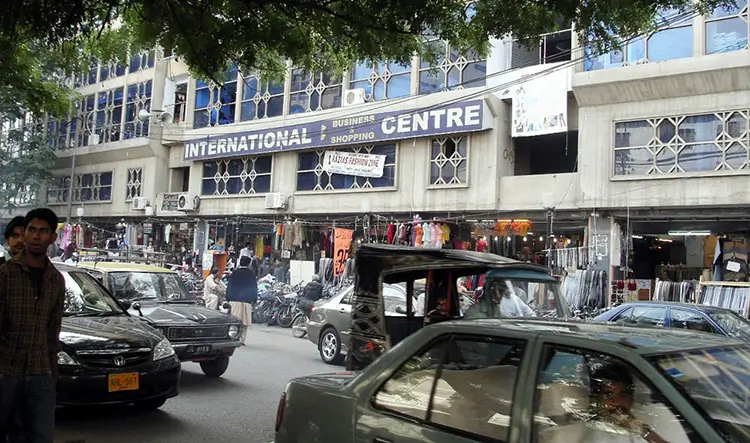
International Shopping Center — When Middle Ground Becomes a Trap
International Shopping Center attempted to occupy the most dangerous position in the Saddar clothing market: the middle. It was neither aggressively informal like Zainab Market Saddar Karachi nor fully standardized like modern malls. That ambiguity nearly erased it.
Buyers arrived unsure whether to negotiate or expect fixed pricing. Vendors priced defensively. Inventory lingered. The Karachi wholesale clothing market does not tolerate hesitation.
Identity Drift
Export quality garments Karachi arrived here through similar channels as Zainab Market shops, yet the environment suggested higher reliability. This created friction:
- Buyers expected consistency
- Vendors delivered surplus variability
- Disputes increased
Trust eroded not through deception, but misalignment.
Hidden Lesson: In surplus ecosystems, clarity beats comfort.
Quiet Segmentation
Survival came when vendors stopped trying to appeal universally:
- Certain floors informally adopted fixed-price logic
- Others leaned fully into negotiation
- Category clustering emerged organically
This allowed buyers to self-select behavior.
Shadow Analysis: Ongoing Risks
- Fragmented identity confuses first-time buyers
- Dependent on experienced footfall
- Limited differentiation from Victoria Centre
Review Sentiment
★★★★★ “Good place once you understand how shops operate.”
★★★★☆ “Reasonable prices, but you must ask questions.”
★★★☆☆ “Feels uncertain if you’re new.”
The Zainab Market Phenomenon
Zainab Market Saddar is not just a shopping hub; it is a microcosm of Karachi’s retail dynamics. Over 6,000 shops across multiple floors specialize in clothing, corporate uniforms, accessories, and affordable ready-made apparel. The market’s success lies in adaptability, operational efficiency, and diverse product offerings.
Universal Success Patterns Across Zainab Market
1. Specialization vs. Generalization
Across the profiles:
- DS Collection specialized in corporate uniforms.
- Maha Fashions curated seasonal collections.
- Mehboob Cloth Market focused on affordability with categorization.
Pattern: Businesses that defined a clear niche while remaining flexible outperformed generalized vendors.
Hidden Lesson: In saturated markets, “jack-of-all-trades” approaches underperform specialized, shopper-centric strategies.
Shadow Analysis: Over-specialization risks excluding potential customer segments, while excessive generalization dilutes brand identity.
2. Operational Efficiency as a Competitive Edge
Shops like Victoria Shopping Center and International Shopping Center thrive because they optimize foot traffic, layout, and inventory management.
- Multi-floor organization improves navigation.
- Signage and floor-specific categorizations reduce shopper fatigue.
- Streamlined inventory management ensures consistent quality.
Shadow Analysis: Efficiency requires continuous monitoring; poor flow or stockouts quickly diminish shopper trust.
Google Reviews Insights:
- “Good selection but floor layout confused me initially.” – 4★
- “Staff were responsive and helpful.” – 5★
- “Affordable items, easy to find what I need.” – 5★
3. Pricing Strategy – The Dual Balance
Balancing affordable pricing with perceived value emerged as a key success factor:
- Mehboob Cloth Market leveraged bulk pricing.
- DS Collection maintained premium pricing with quality assurance.
- Victoria Shopping Center tiered pricing by floor.
Shadow Analysis: Mispriced products either reduce profitability (if too low) or deter shoppers (if too high). Dynamic pricing informed by local competitor analysis is critical.
4. Shopper-Centric Services
Delivery options, sample previews, and loyalty incentives consistently enhanced customer retention:
- DS Collection: Sample previews for corporate orders.
- Maha Fashions: Delivery and pick-up options.
- International Shopping Center: Weekday promotions to manage foot traffic.
Hidden Lesson: Even in traditional markets, modern service innovations increase both conversion and repeat visits.
5. Leveraging Cultural & Export Strengths
Zainab Market’s unique advantage is export-quality garments at local prices, a legacy from leftover stock of global brands like Levi’s, Nike, and Adidas. Shops that highlight authenticity and quality outperform purely local suppliers.
Sentiment Data Analysis: Customers consistently note:
- High-quality products (5★)
- Occasional crowding (4★)
- Competitive pricing (5★)
Predicting Zainab Market’s Next 10 Years

1. Digital Integration & E-Commerce
Increasing online penetration in Karachi will push Zainab Market vendors to adopt digital catalogs, delivery apps, and social media promotions. Businesses that resist digitization risk losing younger shoppers who prefer convenience and tech-enabled experiences.
Predicted Outcome: Hybrid physical-digital model dominates, with floor shops doubling as mini-distribution hubs.
2. Modernization vs. Heritage Preservation
While modernization improves operations, preserving the traditional bargaining culture and local aesthetic is critical to retaining the market’s identity.
Prediction: Strategic modernization with cultural respect will attract both locals and tourists, boosting revenues.
3. Consolidation & Brand Partnerships
Export-quality suppliers like Levi’s outlet and DS Collection may partner with larger retailers to offer exclusive products or branded experiences.
Risk: Smaller vendors might get overshadowed by brand consolidation unless they maintain unique niches or service excellence.
4. Sustainability & Ethical Sourcing
Global trends toward sustainable fabrics and ethical manufacturing may influence Zainab Market. Vendors embracing eco-friendly textiles will enjoy premium branding and international appeal.
5. Foot Traffic & Urban Planning Impact
Traffic congestion in Saddar and parking challenges will remain a logistical hurdle. Shops may adapt by implementing scheduled shopping slots, delivery incentives, or integrated parking partnerships.
Hidden Lessons for Retail Entrepreneurs
- Niche Focus Beats Generalization: Customers reward specialization with loyalty and higher ticket value.
- Operational Discipline is Non-Negotiable: Floor layouts, stock management, and signage directly impact conversion rates.
- Customer Experience Drives Repeat Visits: Convenience, sample previews, and responsive service create long-term trust.
- Adaptability to Market Trends is Key: Digital presence, sustainability, and pricing adjustments prevent stagnation.
Final Verdict
Zainab Market Saddar’s evolution demonstrates that retail success is a multi-dimensional equation combining:
- Strategic specialization
- Operational excellence
- Pricing intelligence
- Shopper-centric services
- Cultural leverage
As Karachi’s economic and digital landscape evolves, the market’s future lies in blending heritage with innovation. Vendors who adopt tech-enabled services while maintaining the authentic, high-quality, and affordable offerings will dominate the next decade.
Hidden Lesson: Markets are living ecosystems. Success is not just about products—it is about experiences, trust, and strategic foresight.
Frequently Asked Questions (FAQs)
1. Why did Zainab Market Saddar Karachi emerge in the first place?
Zainab Market emerged as a liquidation channel for export surplus clothing when formal retail and malls could not absorb cancelled orders, overruns, or buyer-rejected inventory. It functioned as a pressure-release system for Pakistan’s export garment economy.
2. Is Zainab Market only known for cheap clothes?
No. Low prices are a byproduct. The core value of Zainab Market Saddar Karachi is liquidity—its ability to convert dead or surplus inventory into cash quickly through flexible pricing and cash-driven transactions.
3. What kind of clothing is sold in Zainab Market?
Most inventory consists of export surplus garments, including overruns, buyer-rejected lots, mixed-grade stock, labeling errors, and seasonal mismatches that are unsuitable for branded retail outlets.
4. Why is shopping at Zainab Market considered risky for first-time buyers?
There is no standardized grading system, consumer protection, or return policy. Buyers must rely on personal inspection, export grading knowledge, and vendor reputation to avoid losses.
5. How is Zainab Market different from malls or branded outlets?
Unlike malls, Zainab Market operates on negotiation, visual quality assessment, and reputation-based trust rather than fixed pricing, branding, or formal retail guarantees.
6. Why did Rex Center Saddar initially struggle despite its size?
Rex Center failed early because scale without specialization led to inventory confusion, price wars, and buyer fatigue. Success only came after vendors narrowed their categories and built micro-reputations.
7. What makes Cooperative Market Karachi structurally vulnerable?
Its extreme low-price positioning creates buyer skepticism, thin margins, and high defect exposure. The market survives on volume and buyer education rather than loyalty or trust.
8. Why didn’t Victoria Centre Saddar succeed as a “cleaner” alternative?
Victoria Centre imposed mall-style costs and structure on a volatile surplus economy. Fixed rents and overheads conflicted with unpredictable export surplus supply, limiting profitability.
9. Why does Levi’s Outlet operate in Zainab Market instead of malls?
Because Zainab Market offers speed, cash liquidity, and surplus-compatible pricing. However, the outlet survives only through radical transparency, not brand guarantees.
10. Is the Saddar clothing market suitable for casual shoppers?
Generally no. The Karachi wholesale clothing market rewards buyer competence, inspection skills, and export knowledge. Casual shoppers face higher risk of dissatisfaction or loss.