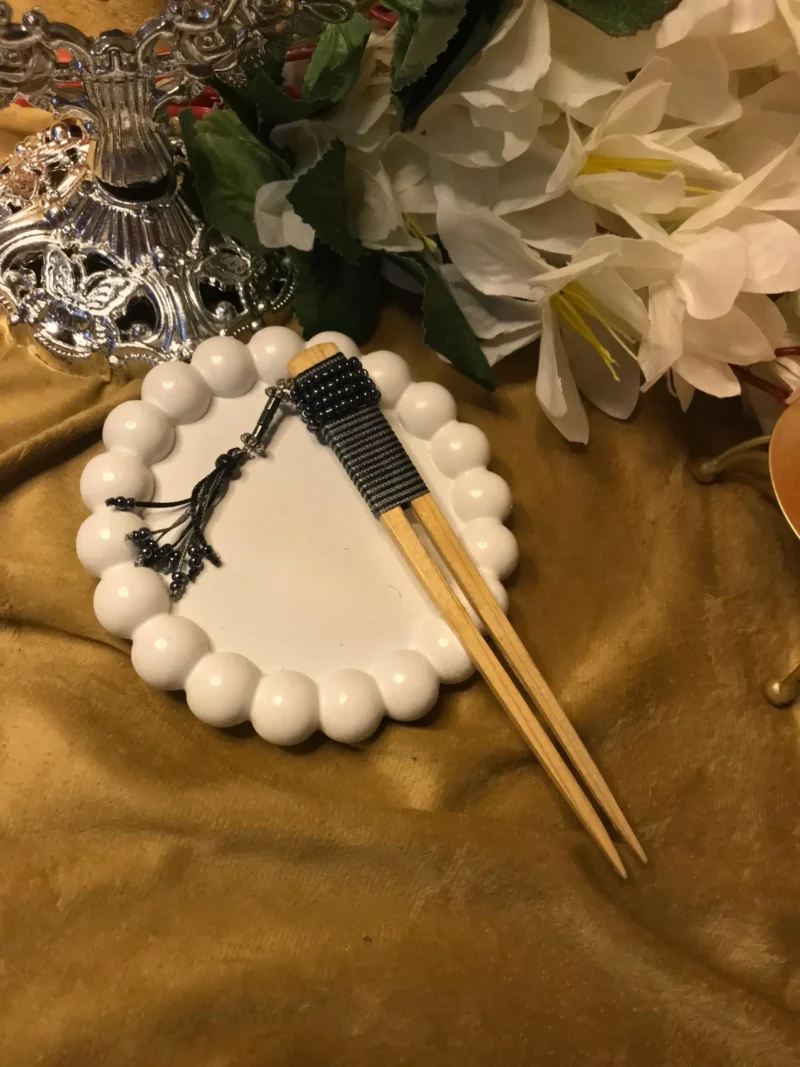

The intersection of traditional grooming and modern product photography often yields breathtaking results, particularly when exploring the cultural depth of the chinese hair pin Bun styling. The image described is a surreal, “dreamy filtered” still life that transforms functional grooming tools into an avant-garde artistic display. By blending rich textiles, ornate metalwork, and delicate floral accents, the arrangement celebrates the complexity of the “BUN” aesthetic—a hairstyle that has remained a symbol of poise for centuries.
The Anatomy of a Chinese Hair Pin Bun Arrangement
Creating a perfect chinese hair pin Bun requires more than just a single stick; it involves a symphony of accessories that secure, decorate, and elevate the hair. The central focus of this composition is a masterful blend of “hard” and “soft” elements, mimicking the structure of a high-fashion updo.
The Foundation: Beaded Textures and Shell Bases – chinese hair pin Bun
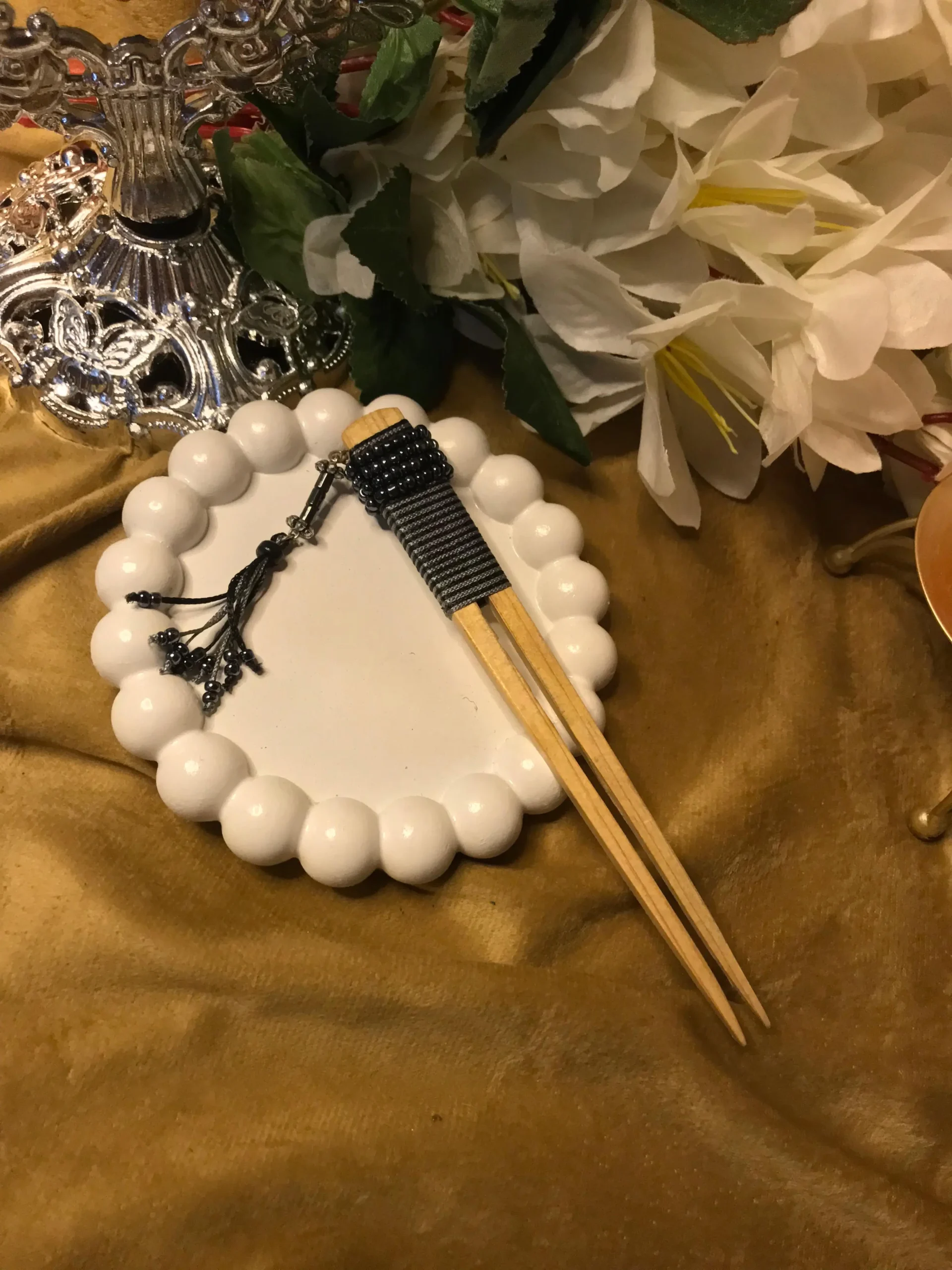
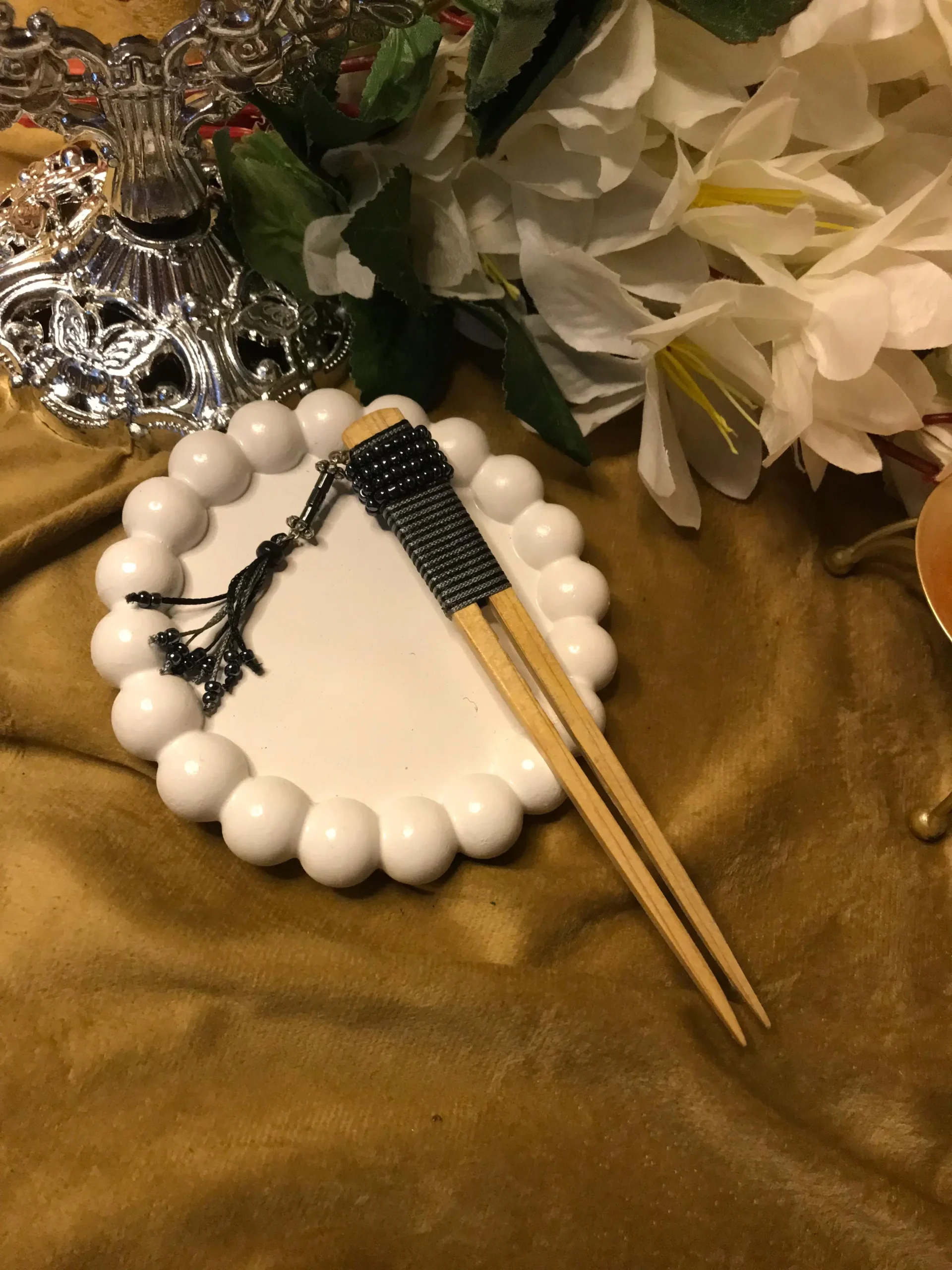
The necklace, which serves as the primary visual anchor, rests on a white circular base shaped like a shell. This “shell” evokes the organic curves of a perfectly coiled hair bun. Surrounding this are “sunglasses-flat” lines of white pearl-like balls, providing a clean, luminous periphery. In the context of hair styling, pearls are the ultimate “BUN” embellishment, offering a timeless contrast to darker hair tones.
The Tassel and the “Stitcher Drill” Tool
Transitioning from the center is a black beaded tassel that leads to a fascinating mechanical element: wire holding “stitcher drill needles” on a compact beige-and-brown metal tool. While this appears to be a specialized textile or jewelry tool, its presence in a hair-focused still life highlights the precision required for chinese hair pin Bun artistry. The metal tool, appearing to attach to a finger, suggests the “handcrafted” nature of these traditional styles.
Symbolism in Motion: Wood Chopsticks and “Foot” Illusions
A defining feature of the image is the pair of wood chopsticks emerging from the tassel point. These are the literal “sticks” in a chinese hair pin bun, but here they are arranged to create the illusion of a foot resting within the beads.
Wood vs. Metal: The use of natural wood for the sticks provides a rustic, grounded texture that contrasts with the “ornate silvery thing” in the top left.
The Tassel Connection: Tassels are frequently attached to the end of hair sticks to add movement. As the wearer walks, the tassel sways, drawing attention to the intricate architecture of the bun.
Pink Floral Accents: Tiny pink flowers nestled around the chopsticks add a soft, romantic touch, breaking up the dominant brown and white color palette.
The Aesthetic Environment: Floral Invasions and Silk Backgrounds
The background of the image is a “solid-bodied silky brown fabric,” which provides a sophisticated, low-contrast canvas. However, the edges of the frame are “invaded” by a variety of textures that suggest a lush, overgrown sanctuary.
The “Headstone” Bouquet and Arched Vines
In the upper right corner, an arrangement of white plastic flowers and bows creates a shape reminiscent of a headstone. This “arch” of vines and flowers mimics the way floral pins are often used to “frame” a chinese hair pin Bun . The stocky darker brown elements invading from the upper right add a sense of shadow and depth, preventing the white elements from becoming too stark.
Ornate Silver and Dreamy Filters
The top left corner is occupied by an “ornate silvery thing”—likely a large filigree hair comb or a decorative base for a hair stick. This piece absorbs the light, acting as a secondary focal point. The bottom of the image features a “dreamy filtered” effect with wrinkled fabric emanating from the edge, giving the entire scene a hazy, ethereal quality reminiscent of ancient Chinese paintings.
The Versatility of the “BUN” Style in Modern Fashion
The chinese hair pin BUN is a style that has transcended its historical origins to become a favorite in global “Slow Fashion.”
Protective Styling: Unlike elastic bands that can snap hair, wood and metal sticks secure a bun through tension and friction, making it a “healthier” choice for long hair.
Architectural Beauty: As seen in the “goblet-like” layered lines of the still life, a bun secured with a decorative stick creates a 360-degree visual interest.
Formal Elegance: The combination of pearls and tassels mentioned in the image makes this style a top choice for weddings, galas, and formal dining events.
Craftsmanship and Textile Analysis
For those interested in decorative textile analyses, this image offers a wealth of information. The “beige-and-brown metal tool” and the “stitcher drill needles” suggest that this chinese hair pin stick set is a product of high-level craftsmanship.
Beadwork Precision: The transition from a black beaded tassel to delicate wire-work shows the complexity of modern artificial jewelry.
Layered Lines: The mention of “layered lines of brown” within the arrangement suggests a depth of texture that can only be achieved through the mixing of silk, wood, and metal.
Color Theory: The use of “peeking white” in the bottom left serves as a “bet on white,” a highlight that brings the viewer’s eye back to the central pearl-like beads.
Conclusion: A Masterful Blend of Tradition and Art
Whether this image is viewed as a high-end product shot for a chinese hair pin Bun set or a standalone decorative still life, it successfully captures the “captivating visual experience” of traditional accessories. The combination of the “sunglasses-flat” pearls, the wood chopsticks, and the “floral invasion” creates a harmonious yet complex atmosphere.
By reimagining the hair stick not just as a tool, but as a part of a “plush, luxurious setting,” the photographer elevates the cultural significance of the chinese hair pin stick. It is a reminder that beauty lies in the details—the wire stitchers, the pink flowers, and the silky brown fabric that holds it all together.