Arshad Nadeem, Pakistan’s most celebrated javelin thrower, was born on January 2, 1997, in the small rural village of Mian Channu, located in the Khanewal District of Punjab, Pakistan. From an early age, Arshad demonstrated exceptional athletic ability, although his first love was not javelin but cricket, the most popular sport in South Asia. The third of eight siblings, he grew up in a humble household where his father, Muhammad Ashraf, worked as a mason to provide for the family. Despite financial hardships, Arshad’s natural athletic talent became evident in school sports, where he often outperformed older children in running and throwing events.
While cricket was initially his main focus, Arshad’s athletic journey took a significant turn when his father suggested he try javelin throw. His first experiences with the sport were improvisational: lacking proper equipment, he fashioned his own javelins using long eucalyptus branches fitted with iron tips. These early makeshift javelins became the tools that honed his skill and taught him the fundamentals of trajectory, grip, and release. The open fields of Mian Channu served as his first training ground, where he practiced tirelessly under the blazing sun and during the cool evening hours.
Despite these early challenges, Arshad’s dedication to athletics was unwavering. His family and the local community played a crucial role in his development. Neighbors and relatives would often pool small amounts of money to fund his travel to competitions in Lahore and other cities. It was a collective effort born out of pride and belief in his potential. His father, recognizing his talent, often made sacrifices to ensure that Arshad could continue his training even when resources were scarce.
Arshad’s first formal coaching experience came under Rashid Ahmad Saqi, who spotted the raw potential in the young athlete. Saqi began training him in 2011, introducing Arshad to the technical aspects of javelin throwing, including proper stance, body mechanics, and conditioning routines. The transition from improvised javelins to professional equipment was gradual. Before receiving his first official javelin, Arshad and his brothers devised creative training methods, using iron rods, concrete-filled canisters, and homemade weights to build strength and technique. These resourceful methods not only strengthened his body but also instilled a mindset of resilience and innovation that would define his career.
By 2014, Arshad’s growing reputation earned him a spot at the Punjab Youth Festival in Lahore, an annual sports event designed to showcase young talent across the province. Although he did not perform exceptionally in his initial attempts, his determination caught the attention of Syed Hussain Bukhari, a five-time national javelin champion. Under Bukhari’s mentorship, Arshad refined his throwing technique, learning to harness his height, strength, and flexibility to maximize distance. Within a few months of intensive training, he secured a retainer agreement with WAPDA (Water and Power Development Authority), marking the beginning of his professional athletics career.
In 2015, Arshad Nadeem became the national champion of Pakistan in javelin throw for the first time. This early victory was a pivotal moment, confirming his potential to compete on an international stage. It also highlighted a significant aspect of Pakistan athletics: talent often exists in remote regions but requires recognition, mentorship, and community support to flourish. Arshad’s story became a symbol of how determination, family backing, and local encouragement could overcome the limitations imposed by lack of infrastructure and financial resources.
Beyond training and competitions, Arshad’s early life in Mian Channu instilled in him values that would later define his public image. Growing up in a close-knit village, he learned humility, respect for elders, and the importance of giving back to the community. Even as he rose to national prominence, he has often credited his hometown and family for laying the foundation of his success. “Without my village and my family, I wouldn’t be standing here today,” he said in interviews, acknowledging that his journey was never solitary.
Arshad’s early challenges also included battling societal expectations and the preference for cricket in Pakistan. Choosing athletics, especially a niche event like javelin throw, required courage and foresight. His decision reflected an intrinsic understanding that excellence often comes from dedication to one’s unique strengths rather than following popular trends. The commitment to javelin throw, despite the allure of cricket and other mainstream sports, set the stage for his later achievements on the Commonwealth, Asian, and Olympic stages.
The seeds sown in these formative years were critical to his remarkable journey. They prepared him for the rigorous demands of international competitions, where precision, technique, and mental fortitude are as important as raw power. Arshad Nadeem’s story demonstrates that world-class athletes often emerge from humble beginnings, supported not by state-of-the-art facilities alone but by the unwavering belief of family, mentors, and community.
Arshad Nadeem’s early life in Mian Channu is a testament to resilience, creativity, and determination. From improvised eucalyptus javelins to national recognition, his journey underscores the power of grassroots support and relentless practice. The foundations laid during these years propelled him toward becoming Pakistan’s most celebrated javelin thrower and set the stage for his historic victories on the international stage.
Rise in National and Regional Competitions of Arshad Nadeem
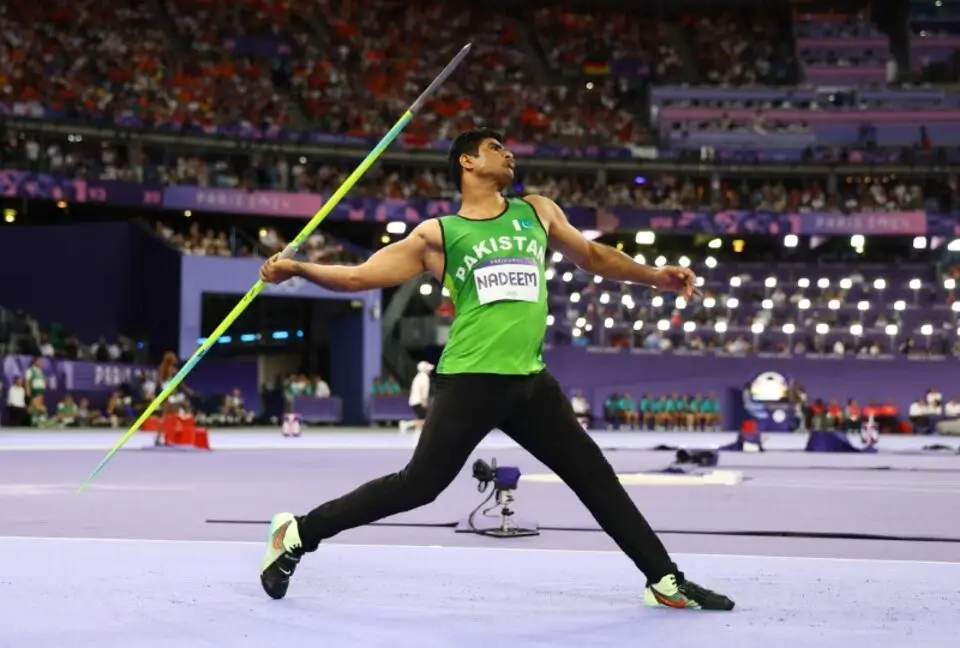
After his formative years in Mian Channu, Arshad Nadeem’s journey from a promising village athlete to a national champion truly accelerated. His early victories in local competitions quickly drew attention from Pakistan’s athletics community, particularly because of his natural combination of height, strength, and precision—critical traits for a javelin thrower. By 2015, after training under Syed Hussain Bukhari, Arshad clinched his first national title while representing WAPDA, establishing himself as a dominant figure in Pakistan athletics.
National Games and WAPDA Athlete Success
Arshad’s rise in the domestic circuit was marked by consistency. Competing for WAPDA, he not only won multiple national titles but also set record throws that stood unmatched for years. His performances were pivotal in putting javelin throw on the map in Pakistan, a country traditionally obsessed with cricket.
Arshad’s success in national events also provided him with the exposure and resources necessary to compete internationally. WAPDA, recognizing his potential, provided him with specialized coaching, travel arrangements, and access to international-standard javelins—resources that were scarce in his village. Despite these improvements, Arshad’s journey was far from smooth. He had to overcome recurring injuries, limited infrastructure, and occasional administrative hurdles in Pakistani athletics, all of which tested his resolve and commitment.
Breakthrough at Regional Competitions
Arshad’s first international appearance came at the 2016 South Asian Games in Guwahati, India, where he secured a bronze medal with a throw of 78.33 meters. Though modest by international standards, this achievement marked him as a rising star in Pakistan track and field athletics. It also reflected his ability to adapt to competitive pressure and foreign conditions—skills that would become invaluable in his later career.
In 2018, Arshad participated in multiple Asian athletics events, where he consistently threw beyond 80 meters, a benchmark that placed him among Asia’s elite javelin throwers. These regional competitions served as crucial training grounds, allowing him to refine his technique, mental preparation, and strategic approach to international-level throws.
Commonwealth Games 2022 – A Game-Changer
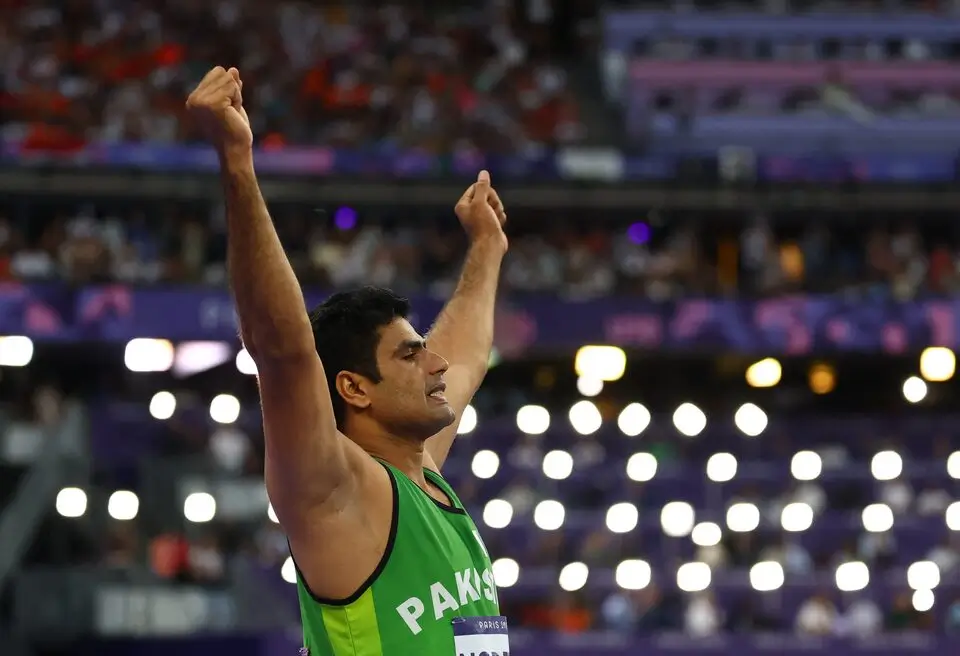
Arshad’s first major international breakthrough came at the 2022 Commonwealth Games in Birmingham, England. There, he achieved a personal best of 90.18 meters, clinching the gold medal. This performance was not only a milestone for Arshad personally but also a historic moment for Pakistan athletics, as it marked one of the few instances where a Pakistani track-and-field athlete excelled at such a prestigious international event.
The Birmingham Games showcased Arshad’s precision, endurance, and ability to perform under pressure. Observers noted his refined technique, improved speed on the runway, and powerful release—all results of years of improvisational training combined with professional coaching. The victory in Birmingham elevated his profile, attracting media attention both nationally and internationally, and inspired countless young athletes in Pakistan to consider javelin throw as a serious sporting career.
World Athletics Championships 2023
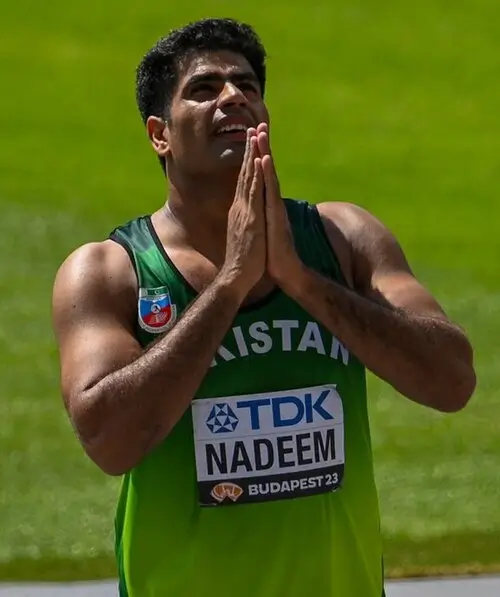
Building on his Commonwealth success, Arshad participated in the 2023 World Athletics Championships in Budapest. Competing against top-tier athletes, including India’s Neeraj Chopra, Arshad secured a silver medal with a throw of 87.82 meters. This achievement further solidified his status as one of Asia’s premier javelin throwers and highlighted Pakistan’s growing presence in international athletics.
His rivalry with Chopra garnered significant attention, not just for the competition but also for the sportsmanship and mutual respect displayed between the two athletes. Media coverage emphasized how their friendship transcended national rivalries, sending a positive message about sports diplomacy and the power of athletics to unite people across borders.
Asian Athletics Championships and Islamic Solidarity Games
In 2025, Arshad continued his ascent by winning gold at the Asian Athletics Championships in South Korea, followed by another gold at the Islamic Solidarity Games in Riyadh, Saudi Arabia. While he admitted that his throws at Riyadh were slightly below his usual Olympic standards due to calf surgery recovery, his dominance was undeniable.
These regional victories demonstrated Arshad’s consistency and resilience, reinforcing his image as Pakistan’s track-and-field icon. They also highlighted the importance of continuous training, rehabilitation, and tactical planning in a sport that demands both strength and precision.
Challenges and Triumphs
Arshad’s rise was not devoid of obstacles. From early financial struggles in Mian Channu to navigating the bureaucratic complexities of Pakistani sports administration, he faced numerous hurdles. Training with old, worn-out equipment and improvising makeshift weights were common in his formative years. Even later, injuries and administrative bans for his coach, Salman Butt, required quick problem-solving and determination.
Despite these challenges, Arshad’s mental fortitude became his distinguishing trait. His ability to focus, adapt to changing circumstances, and maintain high performance under pressure allowed him to excel internationally. Moreover, his rise inspired a generation of Pakistani athletes, demonstrating that success in less popular sports is achievable with perseverance, talent, and community support
The Historic 2024 Paris Olympics – Arshad Nadeem’s Olympic Glory
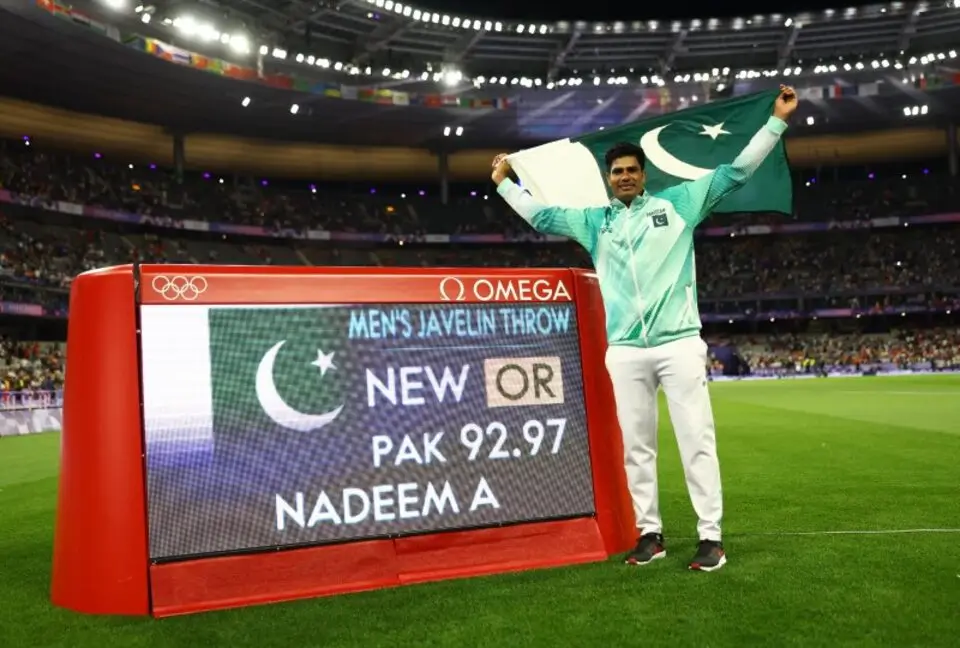
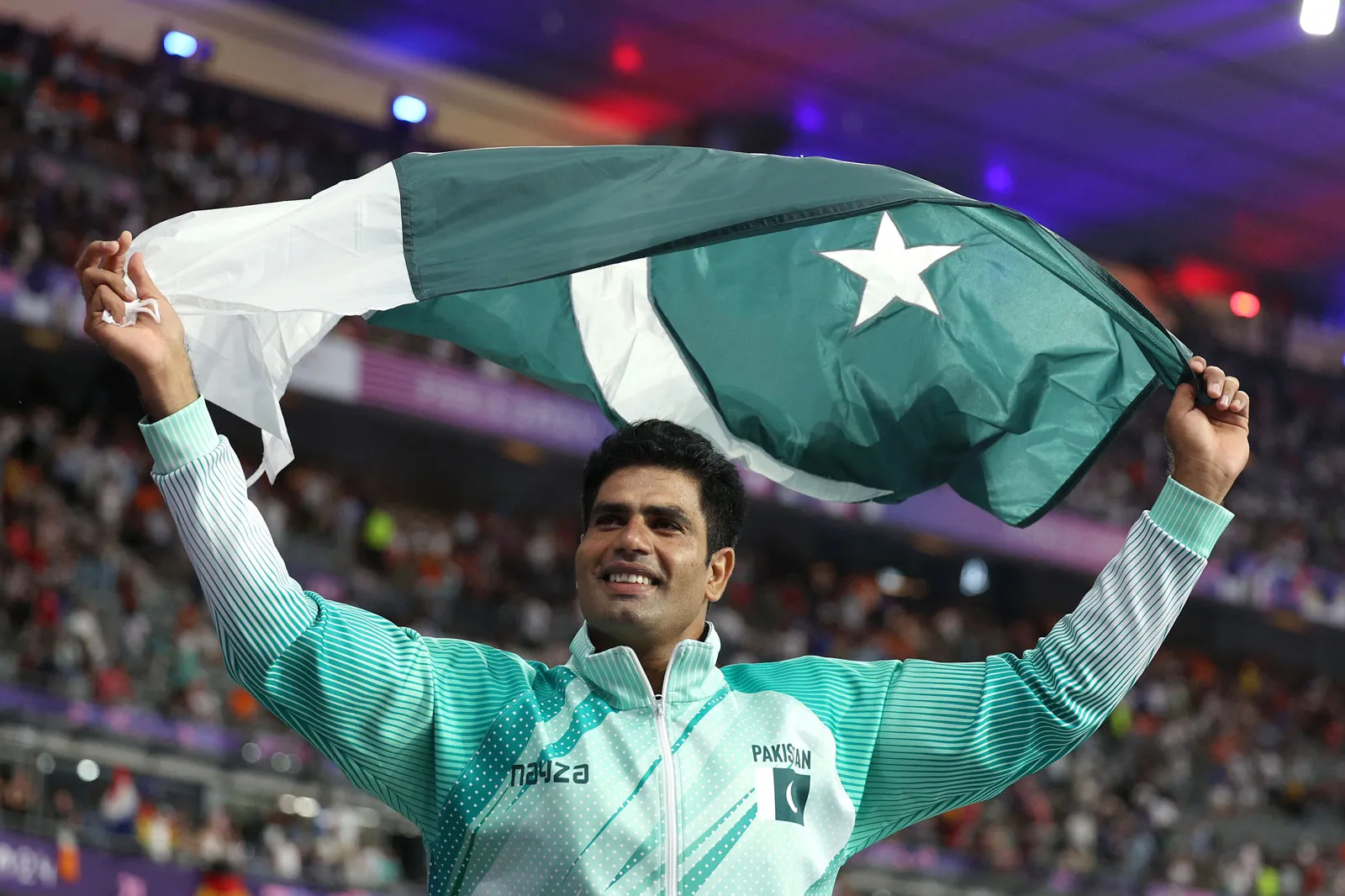
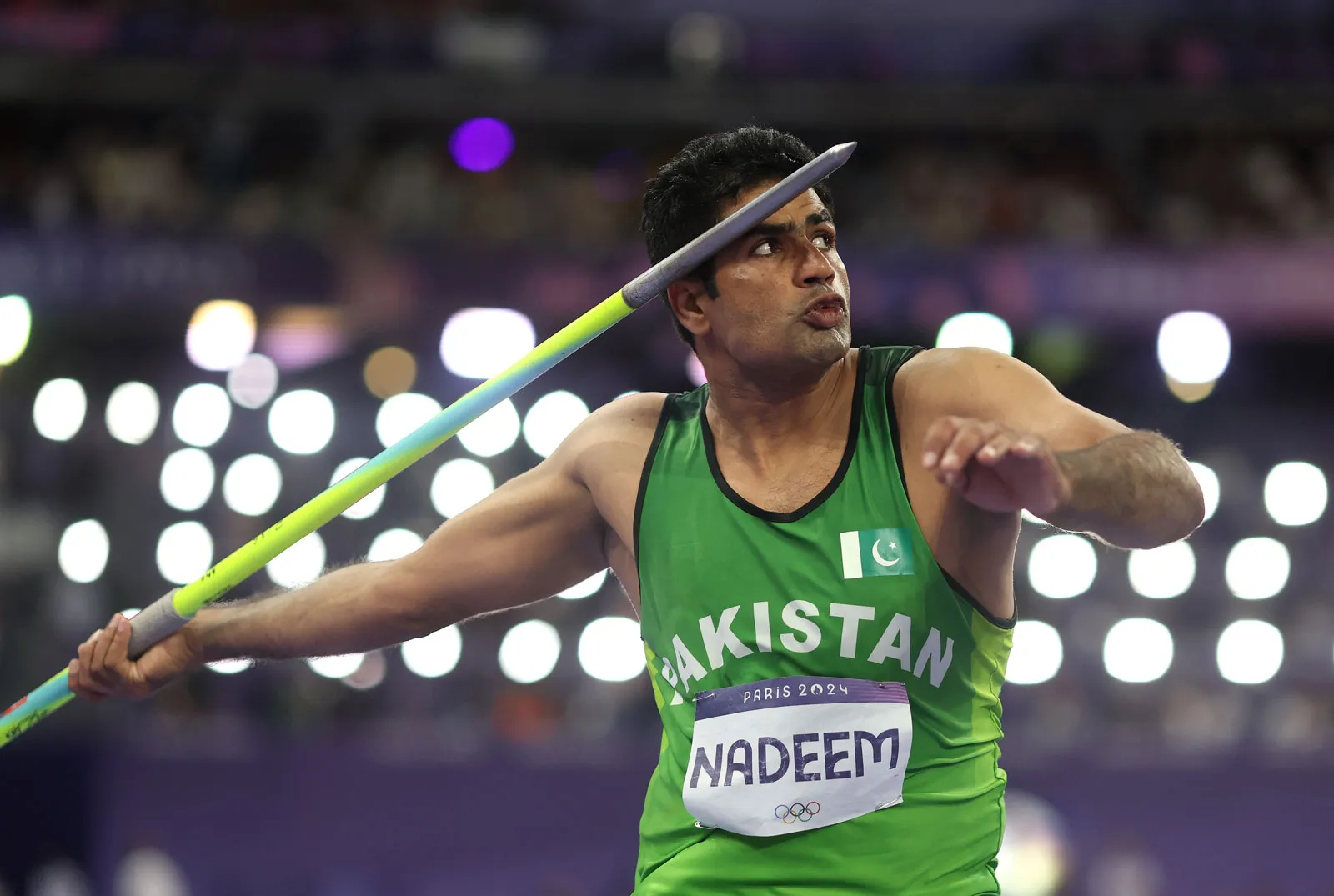
The pinnacle of Arshad Nadeem’s career came at the 2024 Paris Olympics, where he transformed from a regional champion into a global athletics icon. On August 8, 2024, the 27-year-old athlete from Mian Channu, Pakistan, etched his name in history by becoming the first Pakistani to win an individual Olympic gold medal in any sport. His 92.97-meter javelin throw not only secured the gold but also shattered the previous Olympic record of 90.57 meters, held by Norway’s Andreas Thorkildsen since the 2008 Beijing Games.
Road to the Olympics
Arshad entered the Paris Games after a series of international successes, including gold at the 2022 Commonwealth Games (90.18 meters) and silver at the 2023 World Athletics Championships (87.82 meters). Despite these achievements, the path to Olympic glory was far from smooth.
Arshad had undergone knee surgery in early 2024, which limited his training. Additionally, his equipment situation was challenging; he had been practicing with a damaged seven-year-old javelin, which made his preparation even more remarkable. Support from his village, family, and Pakistani sports authorities allowed him to overcome these obstacles, highlighting his resilience and determination.
The Competition: Neeraj Chopra and Global Contenders
The men’s javelin final at the Paris Olympics was one of the most competitive in recent history. Arshad faced defending champion Neeraj Chopra of India, along with Grenada’s two-time world champion Anderson Peters and other elite javelin throwers from Europe and Asia.
Neeraj Chopra, the 2020 Tokyo Olympic champion, threw 89.45 meters, narrowly missing a repeat victory. Anderson Peters achieved 88.54 meters, securing bronze. Despite stiff competition, Arshad’s 92.97-meter throw on his second attempt decisively took the gold, leaving spectators and competitors awestruck.
Breaking the Olympic Record
Arshad’s throw surpassed the previous Olympic record by 2.40 meters, setting a new benchmark for future generations. This monumental achievement marked the second time an Asian athlete surpassed the 90-meter mark in Olympic history, following Cheng Chao-tsun from Chinese Taipei. The throw demonstrated his flawless technique, explosive speed, and mental fortitude under immense pressure.
Historic Significance for Pakistan
Arshad’s victory ended a 40-year Olympic gold drought for Pakistan, the last gold coming from the men’s hockey team in Los Angeles, 1984. Furthermore, his win was Pakistan’s first Olympic medal in track-and-field, ending a 32-year dry spell since the men’s hockey team won bronze in Barcelona, 1992.
The victory had a profound impact on Pakistani sports, bringing global attention to athletics in Pakistan. Schools and training centers reported a surge in interest in javelin throw, inspiring a new generation of athletes to consider careers beyond cricket.
Celebrations Across Pakistan
Arshad’s hometown of Mian Channu erupted in celebrations. Thousands of supporters watched his performance live on projectors set up in the village. A water cannon salute greeted him in Lahore, and garlands were placed around his neck at airports and public events. His family, especially his brother Shahid Nadeem, expressed pride in the athlete who had trained with improvised javelins and makeshift weights to achieve global glory.
The Pakistani government also honored him by naming a road in Islamabad after him. Additionally, his father-in-law gifted him a buffalo, symbolizing cultural and practical value, as buffalo milk is considered a source of sustenance and prosperity in Punjab.
Sportsmanship and Friendship
Arshad’s friendly rivalry with Neeraj Chopra became a symbol of sportsmanship transcending national tensions. Despite representing nations with a historical rivalry, both athletes displayed mutual respect. Their post-competition embraces and acknowledgment of each other’s efforts showcased the power of sports in building bridges between communities.
Impact on Pakistan Athletics
Arshad’s Olympic gold has redefined the perception of track-and-field in Pakistan. Previously overshadowed by cricket, athletics now receives unprecedented attention and investment. Arshad’s story—from a village athlete to Olympic champion—has become a blueprint for developing sports talent in rural areas, emphasizing perseverance, community support, and innovative training methods.
Post-Olympics Triumphs, Awards, and Rehabilitation Challenges
Keywords used: Arshad Nadeem latest news, Pakistan javelin star, Olympic champion rehabilitation, Islamic Solidarity Games 2025, Arshad Nadeem awards, Pakistan sports achievements
After his historic Olympic gold medal win at the 2024 Paris Games, Arshad Nadeem continued to dominate the international javelin scene while also facing the realities of injury recovery and maintaining peak performance. His post-Olympic journey illustrates not only his athletic excellence but also his resilience and determination to stay at the top of the sport.
Islamic Solidarity Games 2025 – Riyadh Victory
In November 2025, Arshad traveled to Riyadh, Saudi Arabia, to compete in the Islamic Solidarity Games. Despite still recovering from calf surgery in July 2025, he managed to secure the gold medal in men’s javelin throw, with a throw of 83.05 meters.
While the performance was below his Olympic record, the victory showcased Arshad’s technical mastery and mental toughness, proving he could compete at the highest level even when not fully fit. His coach highlighted that Arshad’s smooth rehabilitation program and disciplined training schedule were key factors in achieving this win.
Challenges at the 2025 World Championships
Before his Riyadh success, Arshad faced disappointment at the 2025 World Championships in Tokyo, finishing in 10th place. This was a rare setback for the Pakistani star and was attributed to post-surgery recovery and limited training opportunities.
Arshad candidly expressed that he was still regaining full strength in his calf, which affected his throwing distance and consistency. Nevertheless, he turned this challenge into motivation, focusing on careful rehabilitation to ensure full fitness by early 2026.
Awards and Recognitions
Arshad Nadeem’s extraordinary achievements have been recognized both nationally and internationally. After the Paris Olympics, he received widespread acclaim from Pakistani leaders, sports authorities, and fans:
- Prime Minister Shehbaz Sharif publicly congratulated him on social media, calling his victory a source of national pride.
- The Islamic Solidarity Games gold further cemented his status as Pakistan’s premier javelin thrower.
- Several international accolades recognized him as a trailblazer in Asian athletics, inspiring young athletes across the continent.
His hometown of Mian Channu plans to build a sports facility named after Arshad, ensuring his legacy continues to inspire rural youth.
Rehabilitation and Training
Arshad’s ongoing journey includes a structured rehabilitation program for his calf. Conducted under the supervision of sports medicine specialists, the program focuses on gradual strength rebuilding, flexibility, and throwing mechanics.
Despite setbacks, Arshad remains optimistic, stating, “Winning gold in Riyadh proves I’m on the right track, but my goal is to return to peak form and aim for world records again.” His recovery involves balancing high-intensity javelin training with physiotherapy, ensuring he avoids further injuries while improving his throwing distance.
Impact on Pakistan’s Athletic Infrastructure
Arshad’s post-Olympics performances have shed light on the need for world-class facilities and equipment in Pakistan. His success, despite a lack of elite training infrastructure, underscores the untapped potential in rural regions.
Sports experts emphasize that investing in modern tracks, javelin equipment, and physiotherapy programs can produce more athletes like Arshad, elevating Pakistan’s presence in global athletics.
Global Influence and Role Model Status
Arshad has become more than just a sports figure; he is a symbol of perseverance and excellence. His international presence fosters goodwill, especially through friendly competition with Indian javelin star Neeraj Chopra. Both athletes have demonstrated mutual respect and sportsmanship, serving as role models for youth in South Asia and beyond.
His story—from training with eucalyptus branch javelins in his village to becoming a world champion—highlights the power of community support, family encouragement, and relentless self-belief.
Looking Ahead
Arshad Nadeem is already planning his next steps, focusing on:
- Regaining peak physical condition post-surgery
- Competing in the 2026 Asian Games and World Athletics Championships
- Expanding his influence to mentor and inspire young Pakistani athletes
- Advocating for better sports infrastructure in Pakistan
His journey emphasizes that even Olympic champions face ongoing challenges, but determination, discipline, and support systems are the keys to sustaining elite performance.
Legacy, Cultural Impact, and Inspiring the Next Generation
After breaking records and earning international fame, Arshad Nadeem’s legacy is not just measured by medals but by the inspiration he has sparked in Pakistan and beyond. His rise from a small village in Punjab to the Olympic podium has reshaped perceptions of athletics in a country traditionally focused on cricket.
Arshad Nadeem’s Cultural Impact
Arshad’s achievements have transcended sports. In Pakistan, he is celebrated not just as an athlete but as a symbol of hope, determination, and national pride. After his historic Olympic win:
- Roads and public spaces were named in his honor in Islamabad and Punjab.
- Villagers in Mian Channu threw traditional celebrations, using kheer (rice pudding) and garlands to honor his achievement.
- His story has been widely covered in international media, highlighting Pakistan’s emerging presence in track and field events.
In addition, Arshad has been praised for his humility and connection to his roots, often attributing his success to family support, community encouragement, and faith. His father-in-law’s gift of a buffalo after his Olympic victory became a cultural anecdote, symbolizing rural traditions and values intertwined with global success.
Inspiring the Next Generation
Arshad’s journey has ignited interest in athletics among Pakistan’s youth. Children and teenagers now see that:
- World-class success is achievable, even from rural areas.
- Dedication and resourcefulness—like training with homemade equipment—can overcome infrastructural challenges.
- Friendly international competition can foster mutual respect and diplomacy, exemplified by his camaraderie with India’s Neeraj Chopra.
Sports academies in Pakistan are using Arshad’s story to encourage diverse athletic participation, emphasizing javelin, discus, and other track-and-field events alongside traditional sports like cricket. Schools in Punjab are introducing athletic development programs, and local authorities are investing in better training facilities to nurture future champions.
Global Recognition and Role Model Status
Arshad has emerged as a role model across Asia, representing perseverance, sportsmanship, and resilience. International media frequently cite him in discussions about:
- Breaking barriers for athletes from underrepresented nations.
- Overcoming injuries and resource constraints to achieve Olympic excellence.
- Promoting positive rivalry and cultural exchange through sports.
His story also inspires athletes globally, showing that discipline, focus, and mental toughness can elevate a competitor from humble beginnings to record-breaking success.
Contributions to Pakistani Athletics
Beyond personal accolades, Arshad is actively advocating for:
- Better sports infrastructure in Pakistan, including modern javelin training facilities.
- Investment in physiotherapy, coaching, and equipment, ensuring future athletes face fewer obstacles than he did.
- Raising awareness about the importance of sports as a tool for national pride and youth development.
His victories have already prompted policy discussions within Pakistan’s sports authorities, emphasizing long-term investment in track and field programs. This could eventually transform Pakistan into a regional hub for athletics excellence.
Balancing Sports with Personal Life
Despite international fame, Arshad remains deeply connected to his family and hometown. Married with children, he emphasizes:
- Maintaining family values while pursuing global goals.
- Giving back to his community through mentorship and support for young athletes.
- Representing Pakistan on the global stage with integrity and humility.
His balanced approach has inspired a culture of respect, encouraging other athletes to value both personal and professional growth.
The Future for Arshad Nadeem
Looking ahead, Arshad Nadeem’s focus is on:
- Regaining full fitness post-calf surgery.
- Preparing for the 2026 Asian Games, World Athletics Championships, and Paris 2028 Olympics.
- Expanding his influence in sports education and mentoring programs.
- Encouraging Pakistan’s youth to pursue careers in athletics and embrace the discipline needed for international success.
Arshad’s story underscores a powerful message: greatness emerges not just from talent but from resilience, community support, and unwavering dedication.
FAQ: Arshad Nadeem: Pakistan’s Olympic Javelin Hero
1. Who is Arshad Nadeem?
Answer:
Arshad Nadeem is a Pakistani javelin thrower and one of the country’s most celebrated athletes, known for winning historic medals at the Olympics, Commonwealth Games, and World Championships.
2. When and where was Arshad Nadeem born?
Answer:
He was born on January 2, 1997, in Mian Channu, Punjab, Pakistan.
3. What historic Olympic achievement did Arshad Nadeem make?
Answer:
Nadeem won gold in the men’s javelin throw at the 2024 Paris Olympics, setting a new Olympic record with a throw of 92.97 m — Pakistan’s first individual Olympic gold medal and the country’s first track-and-field Olympic medal.
4. What is Arshad Nadeem’s personal best throw?
Answer:
His personal best and Olympic record throw is 92.97 meters, achieved at the 2024 Paris Olympics.
5. Which major international medals has Arshad Nadeem won?
Answer:
He has won:
- Olympic Gold (2024)
- Commonwealth Games Gold (2022)
- World Athletics Championships Silver (2023)
making him one of Asia’s top javelin throwers.
6. How did Arshad Nadeem’s early life shape his career?
Answer:
Growing up in a modest family, Nadeem initially played cricket before discovering javelin in school. He overcame limited resources and training facilities to become a world-class athlete.
7. What records does Arshad Nadeem hold?
Answer:
He holds the Olympic record with 92.97 m and was the first South Asian to break the 90-meter barrier in javelin — a feat he first achieved at the 2022 Commonwealth Games.
8. How has Arshad Nadeem impacted Pakistani athletics?
Answer:
His achievements have put Pakistan on the global athletics map, inspiring new generations to pursue track and field sports beyond traditional favorites like cricket.
9. Which organizations support Arshad Nadeem’s career?
Answer:
He represents WAPDA (Water and Power Development Authority) in national competitions and trains under professional coaches to compete internationally.
10. What makes Arshad Nadeem a symbol of national pride?
Answer:
Arshad’s rise from a small town with limited facilities to becoming an Olympic champion and record-holder resonates deeply with sports fans across Pakistan, highlighting resilience and sporting excellence.