Hadiqa Kiyani: The Inspiring Journey of Pakistan’s Iconic Singer, Actress, & Philanthropist
Introduction: The Voice That Became the Heart of Pakistan
Few artists in South Asia have left as profound an impact on both culture and compassion as Hadiqa Kiani. For over three decades, she has stood as one of Pakistan’s most beloved singers, songwriters, and philanthropists, a woman whose artistry and humanitarian spirit have touched millions.
In 2024, Kiani’s remarkable journey reached another global milestone when she was named among BBC’s 100 Women, an annual list celebrating inspiring women from around the world. Her inclusion places her alongside global icons like astronaut Sunita Williams and Nobel laureate Nadia Murad, reflecting her deep influence both as an artist and as a humanitarian.
But long before she became a household name, Hadiqa Kiani was a young girl from Rawalpindi, guided by her poet mother, dreaming not only of melodies but of making a difference.
Early Life and Musical Beginnings
Born on 11 August 1972 in Rawalpindi, Punjab, Pakistan, Hadiqa Kiani was the youngest of three siblings. Her father passed away when she was just three years old, leaving her mother, Khawar Kiani, to raise the family. Khawar, a respected poet and educationist, recognized Hadiqa’s talent early on and encouraged her to pursue music.
At a young age, Hadiqa Kiani joined the Pakistan National Council of the Arts (PNCA), where she trained under Nargis Naheed. She represented Pakistan at international children’s festivals in Turkey, Jordan, Bulgaria, and Greece, earning medals and recognition even before her teenage years.
She later moved to Lahore, where she continued her classical music training with Ustad Faiz Ahmed Khan and Wajid Ali Nashad. Alongside her musical pursuits, she earned a Bachelor’s degree in Psychology from Kinnaird College for Women and a Master’s degree from Government College University, Lahore — a rare combination of intellect and artistic talent.
Her early exposure to both art and education shaped Hadiqa Kiani into a thoughtful artist — one who understood the emotional power of music and its ability to heal and unite.
The Rise of a Pop Sensation: The 1990s Era
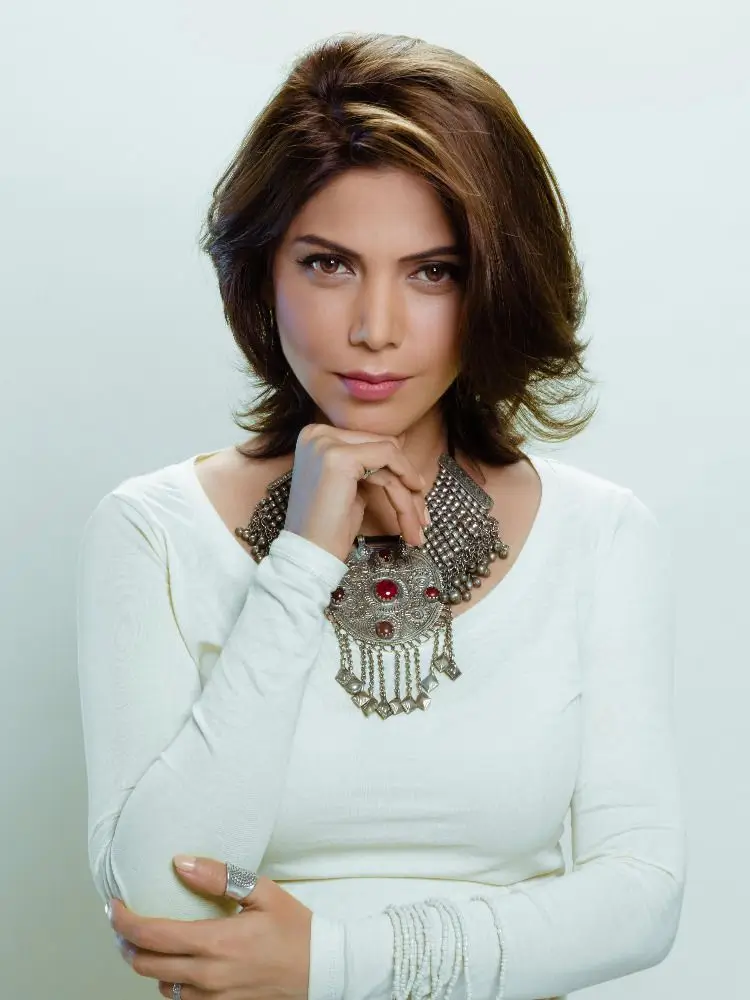
Hadiqa Kiani’s professional journey began in the early 1990s when she hosted “Angan Angan Taray”, a children’s music program on PTV. During its 3½-year run, she sang over 1,000 songs, earning her the title of “A+ Artist” from Pakistan Television — joining the ranks of legends like Noor Jehan and Naheed Akhtar.
Her breakthrough came in 1995 with her debut album Raaz, which immediately became a hit. Songs like Jeevan, Dil Kee Lagi, and Raaz (The Secret) introduced Pakistan to a new kind of pop — modern, fresh, and feminine.
But it was her second album, Roshni (1998), that turned her into a national sensation. The album included the timeless classic “Dupatta”, a song that remains one of Pakistan’s biggest pop anthems. Its upbeat rhythm, youthful energy, and Hadiqa’s effortless charm made her the voice of a generat
Albums That Defined a Generation
Over the years, Hadiqa Kiani released a series of successful albums that not only showcased her versatility but also mirrored the evolution of Pakistani pop and folk music.
- 1995: Raaz – The debut that marked her arrival as a pop star.
- 1998: Roshni – Featured Dupatta and cemented her place in music history.
- 2002: Rung – Blended pop with regional sounds, featuring Janan, which gained cross-border fame in Afghanistan and Central Asia.
- 2007: Rough Cut – A collaboration with Aamir Zaki, exploring soft rock influences.
- 2009: Aasmaan – Highlighted her songwriting skills and musical maturity.
- 2017: WAJD – A spiritual folk fusion album celebrating Pakistan’s cultural heritage, released in multiple regional languages.
- 2022: VASL – A reimagination of her classics with acoustic intimacy, reinforcing her mastery of soulful expression.
Each album reflected a different phase of Hadiqa’s journey — from youthful pop star to a mature artist deeply rooted in tradition and introspection.
Cultural Impact and Musical Legacy
Hadiqa Kiani isn’t just a singer; she’s a cultural bridge. Fluent in multiple languages, she has sung in Urdu, Punjabi, Pashto, Saraiki, Turkish, Persian, and Arabic, making her one of Pakistan’s most versatile vocalists.
Her performances have represented Pakistan at prestigious international venues like Royal Albert Hall (London), The Kennedy Center (Washington D.C.), and Expo 2020 Dubai. She’s performed before world leaders, including President George W. Bush, Prince Charles, and President Erdoğan of Turkey, spreading Pakistan’s message of peace through music.
Hadiqa’s music often carries messages of hope, unity, and identity — a reflection of her belief that art can heal divides and elevate humanity.
Embraces Motherhood
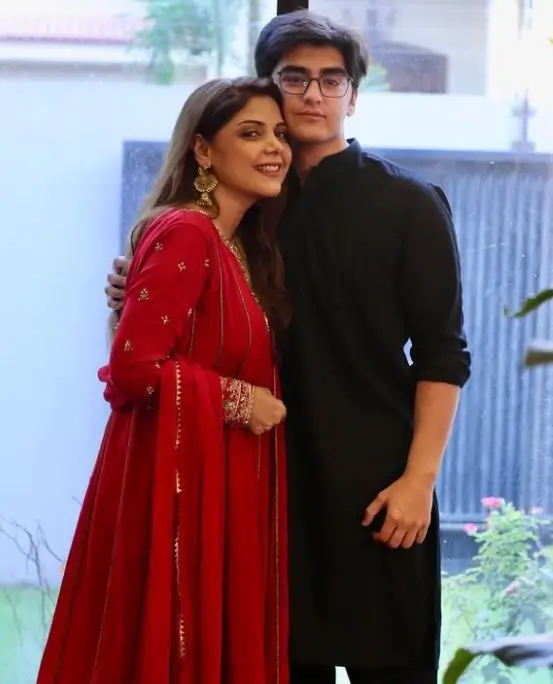
Pakistani singer Hadiqa Kiani adopted his son Naaday Ali from the Edhi Foundation after the devastating 2005 earthquake. At the time, he was a premature baby who had miraculously survived the disaster.
- In 2005, a powerful earthquake struck Pakistan, leaving many children orphaned.
- Naaday Ali was born prematurely, only two days old at the time, and was initially sent to the Edhi Foundation’s center in Islamabad for care because his family could not afford his medical treatment.
- After the earthquake, his biological parents were tragically killed. His grandfather then informed the Edhi Foundation that the baby could be put up for adoption.
- Hadiqa Kiani, inspired to adopt a child, was approached by Bilquis Edhi, who brought the baby to Karachi and handed him over.
- Hadiqa has described feeling an immediate and profound connection with the child, and said
“I felt he was my own child the minute I touched him”.
- She has raised him as a single mother and has spoken out against the stigma faced by single mothers, insisting that having a child is a privilege, not a disability. Later, Kiani has shared that the desire for a child also led to her adopting her son.
Acting Career: A New Chapter in Storytelling
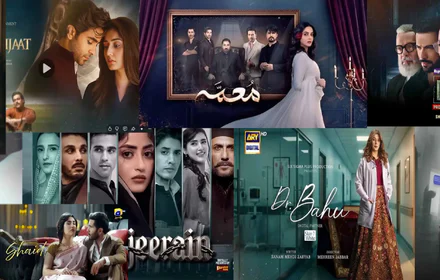
In 2021, Hadiqa Kiani transitioned gracefully into acting with her debut in Hum TV’s “Raqeeb Se”, starring alongside Nauman Ijaz, Sania Saeed, and Iqra Aziz. Her portrayal of Sakina, a woman burdened by emotional scars, won widespread critical acclaim.
She went on to star in “Dobara” (2021–2022) opposite Bilal Abbas Khan, playing Mehrunnisa, a widow who defies societal norms to find happiness again. The drama was hailed as “progressive” and “refreshingly bold,” topping television ratings.
In 2022, she appeared in “Pinjra”, the last script written by Asma Nabeel, tackling parental and societal pressures on youth. Her most recent drama, “Hadsa” (2023), portrayed a woman reclaiming strength after trauma — a reflection of resilience, both onscreen and off.
Through these roles, Hadiqa Kiani proved she isn’t confined to one art form — her storytelling extends beyond melody into emotion, empathy, and truth.
Philanthropy and Humanitarian Work
Beyond the stage and screen, Hadiqa Kiani’s heart beats for humanity. Since the early 2000s, she has dedicated herself to social causes — particularly those aiding women, children, and disaster victims.
Her humanitarian work is grounded in authenticity. As she once said,
“True service comes from being present — from showing people they are not alone.”
The 2010 Floods and Early Relief Work
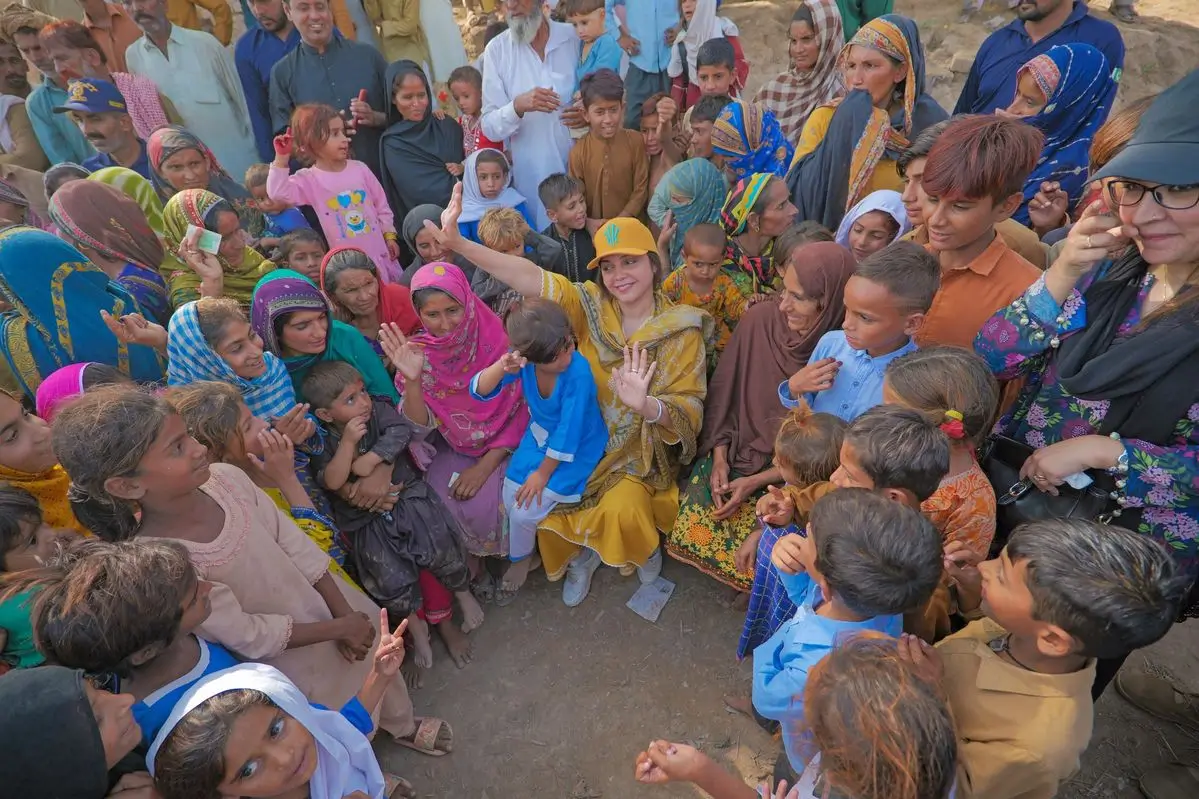
When devastating floods struck Pakistan in 2010, Hadiqa didn’t just donate — she personally visited flood-hit regions, distributed relief goods, and collaborated with the Pakistan Army to provide food, water, and shelter.
Her tireless efforts led to the construction of over 250 houses in Nowshera, earning her recognition as a United Nations Development Programme (UNDP) Goodwill Ambassador.
During the same period, she participated in the patriotic anthem “Yeh Hum Naheen”, joining artists like Ali Zafar, Shafqat Amanat Ali, and Strings to promote peace and denounce terrorism. The song became an international symbol of Pakistan’s resilience.
Vaseela-e-Raah: Rebuilding Lives After the 2022 Floods
In 2022, when unprecedented floods once again devastated Pakistan, Hadiqa founded “Vaseela-e-Raah”, a relief initiative aimed at rebuilding lives in Balochistan and South Punjab.
Through this campaign, she and her team provided food, tents, medical supplies, and anti-snake venom to affected communities. They went beyond immediate relief — focusing on sustainable rehabilitation.
By March 2023, Hadiqa Kiani had completed the construction of 100 homes, a maternity center, a primary school, and a grocery store in Naseerabad, Balochistan. By September 2023, she had surpassed her goal, completing 370 homes, 2 mosques, and multiple community facilities — all funded transparently and built with local collaboration.
Her words reflected her sincerity:
“I am doing this as a Pakistani citizen — not as a politician, not for votes. This is my civic duty, and it is yours too.”
Partnership with Alkhidmat Foundation Pakistan
In 2024, Hadiqa Kiani expanded her humanitarian reach through a partnership with Alkhidmat Foundation Pakistan, one of the country’s largest welfare organizations. Together, they continue to provide flood relief, reconstruction aid, and essential supplies to families who lost everything.
Her recent visit to Kasur showed her deep empathy — she spent time with flood-affected families, personally shopped for daily-use items, and ensured aid reached the most vulnerable.
This collaboration marks a new era in her mission — combining her public influence with institutional power to rebuild hope.
BBC 100 Women 2024: Global Recognition
The world took notice. In 2024, Hadiqa Kiani was named among BBC’s 100 Women, a list celebrating the most inspiring and influential women globally.
Sharing the spotlight with global icons like Sunita Williams and Nadia Murad, Hadiqa’s inclusion highlighted not just her musical genius but her commitment to humanitarian service.
Her recognition came alongside Dr. Maharang Baloch, another Pakistani activist, reinforcing Pakistan’s representation on the world stage as a country of strong, compassionate women.
For millions of Pakistanis, this honor wasn’t just about fame — it was validation of a life lived in service, love, and authenticity.
Awards, Honours, and National Pride
Hadiqa Kiani’s career is decorated with national and international accolades:
- Tamgha-e-Imtiaz (2006) – One of Pakistan’s highest civilian awards, for contributions to music.
- Lux Style Awards (2022) – Best TV Actress (Critics’ Choice) and Best Emerging Talent for Raqeeb Se.
- UNDP Goodwill Ambassador (2010–present) – For her humanitarian work.
- BBC 100 Women 2024 – For her dual impact in art and activism.
- Times Square Billboard (2022) – Honored in New York for her album VASL, representing Pakistan globally.
These recognitions not only celebrate her artistry but also her embodiment of Pakistan’s strength, resilience, and grace.
A Symbol of Strength and Compassion
Hadiqa Kiani stands today as one of Pakistan’s most admired figures — not just for her voice but for her vision.
Her work reminds us that celebrity can be a force for change, that fame can uplift rather than divide. Whether performing on world stages or standing in flood-hit villages, she remains the same person — humble, empathetic, and deeply connected to her people.
Her journey teaches an essential truth: the greatest songs are not sung but lived.
Legacy: A Life Beyond Stardom
From the bright lights of music videos to the muddy grounds of relief camps, Hadiqa Kiani’s life is a symphony of purpose.
She has inspired countless women to pursue their dreams, to stand firm in adversity, and to use their platforms for good. Her transition from pop sensation to humanitarian icon mirrors Pakistan’s evolving narrative — modern, resilient, and compassionate.
As she continues her mission with Vaseela-e-Raah and Alkhidmat Foundation, her story remains unfinished — still writing new verses of kindness and hope.
Conclusion: A Melody of Humanity and Hope
In a world often divided by noise, Hadiqa Kiani’s voice continues to unite — through song, service, and sincerity. Her journey from Rawalpindi’s classrooms to BBC’s global list of 100 Women is a testament to what passion, empathy, and perseverance can achieve.
She is, without doubt, the melody of Pakistan’s soul — a woman who has proven that true greatness lies not just in the power to inspire, but in the courage to serve
FAQs – “Hadiqa Kiani: From Melody to Humanity”
1. Who is Hadiqa Kiani?
Hadiqa Kiani is a celebrated Pakistani singer, songwriter, and humanitarian, widely known for her successful music career and impactful social work.
2. When did Hadiqa Kiani begin her music career?
Hadiqa rose to fame in the 1990s, releasing hit songs and albums that solidified her as one of Pakistan’s leading female pop artists.
3. What are some notable achievements of Hadiqa Kiani in music?
She has released multiple acclaimed albums, performed internationally, and contributed iconic tracks to television and film, earning her recognition as one of Pakistan’s most influential musicians.
4. What humanitarian work is Hadiqa Kiani known for?
Kiani leads major relief efforts, especially in response to devastating floods, through campaigns like Vaseela‑e‑Raah, helping rebuild homes and provide critical aid to affected families.
5. Has Hadiqa Kiani received international recognition for her work?
Yes — she was included in the BBC’s “100 Women for 2024” list for her philanthropic impact, particularly in disaster relief and community development.
6. What role does Hadiqa Kiani play with the United Nations?
In 2010, she became a Goodwill Ambassador for the United Nations Development Programme (UNDP) in recognition of her ongoing humanitarian efforts.
7. How has Hadiqa Kiani helped flood‑affected communities in Pakistan?
She has overseen extensive relief operations, including building houses, schools, and essential facilities for families displaced by floods in provinces like Balochistan and Punjab.
8. What makes Hadiqa Kiani a role model for women in Pakistan?
As an internationally acclaimed artist and a social activist, Kiani inspires many by using her platform for social good, advocating for education, relief, and community wellbeing.
9. Does Hadiqa Kiani engage with causes beyond flood relief?
Yes — her humanitarian portfolio includes participation in anti‑terror campaigns and work with charitable organizations like UNICEF and Edhi Foundation.
10. Where can I listen to Hadiqa Kiani’s music?
Her music is available on major streaming platforms, YouTube, and in her legendary albums such as Raaz, Rung, and Aasmaan, beloved by fans across generations.