
Khaliq Dina Hall and Library: A Powerhouse of Art, Music, Handicrafts, and Community Festivals
Introduction: Where Culture, Creativity, and Community Converge
In the heart of Karachi, along the endlessly busy stretch of M. A. Jinnah Road, stands a building that has become one of Pakistan’s most vibrant cultural spaces: Khaliq Dina Hall, also spelled Khaliq Deena Hall. To most Karachiites, it is more than just a hall. It is a meeting point for artists, performers, youth groups, NGOs, and heritage lovers who continue to breathe life into the city’s cultural identity.
What makes Khaliq Dina Hall unique is not just its history or architecture, but its modern rebirth as a hub of artistic expression. While many heritage buildings fade quietly into the background, this one has evolved — transforming into a dynamic venue where traditional crafts meet contemporary creativity.
Here, you are likely to find:
- Handicraft exhibitions and artisan stalls
- Live sitar and tabla performances
- Guitar sessions by young musicians
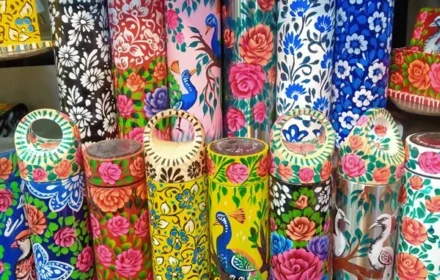
- Truck art workshops and demonstrations
- Basket-making craft displays
- Theatre rehearsals and stage shows
- Local food stalls and cultural pop-ups
- Meet-ups for creatives, students, and community groups
Every week, the hall becomes a melting pot of Pakistan’s cultural DNA — deeply traditional yet refreshingly modern.
A Quick Look at the Legacy Behind the Hall

Before exploring its cultural revival, it’s important to understand the foundation on which this space stands.
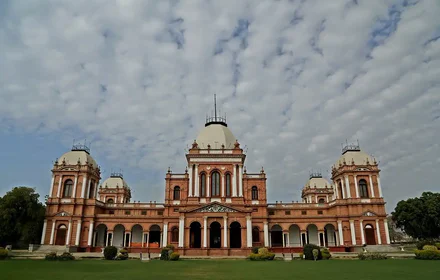
Built in 1906, the hall was financed by Ghulam Hoosain Khaliqdina, a respected businessman and philanthropist. His goal was clear: to create a dedicated space for Karachi’s Muslim population to engage in reading, literary debates, community gatherings, and recreational activities.
Over 100 years later, that vision lives on in a new form — through festivals, workshops, performances, and community engagement.
But the true charm lies in how seamlessly Khaliq Dina Hall has integrated the old and the new, allowing culture to evolve while keeping history close.
The Architectural Magnetism: A Stage for Creativity
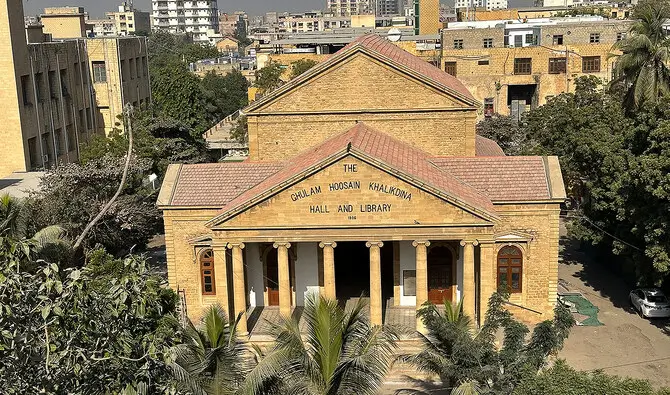
Khaliq Dina Hall’s architecture plays a huge role in its identity as a cultural arts hub.
Palladian Influence
The structure reflects Palladian architectural style — inspired by the legendary Italian architect Andrea Palladio — noticeable through:
- A triangular pediment
- Majestic Ionic columns
- Sweeping portico
- High ceilings
- Heavy teak-wood doors and windows
This powerful façade is what makes the hall instantly recognizable. It feels both grand and inviting — the perfect setting for artistic gatherings.
A Hall Designed for Community
The interior is not heavily ornamented, which actually makes it more adaptable. Whether it’s:
- A guitar circle,
- A theatre rehearsal,
- A truck art demonstration,
- Or a handicraft festival,
the hall’s neutral design lets the art take center stage.
The cool temperature (thanks to proper air conditioning), wide space, and minimal noise disturbance make it extremely function-friendly for events of every scale.
Cultural Transformation: How Khaliq Dina Became Karachi’s Artistic Playground

Today, Khaliq Dina Hall is known less for its colonial past and more for its cultural vibrancy. It has become one of the few accessible and welcoming spaces in Karachi where emerging and established Pakistani artists can showcase their talent without barriers.
Below is a deep dive into the artistic and cultural experiences that now define this historic site.
Handicrafts & Artisanal Exhibitions: Celebrating Pakistani Craftsmanship
One of the strongest cultural elements at Khaliq Dina Hall is its dedication to handmade crafts.
Visitors often find:
- Basket-making stalls
- Traditional weaving demonstrations
- Local embroidery and stitch artwork
- Clay crafts and ceramics
- Ajrak and block printing
- Tribal jewelry and accessories
- Camel-skin lamps and handmade décor
These exhibitions not only preserve Pakistani craft traditions but also create income opportunities for rural artisans — many of whom do not have access to commercial platforms.
Basket-Making Workshops
The basket-making sessions are a huge draw, showcasing:
- Ancient weaving techniques
- Use of natural materials like palm leaves and reeds
- Skillful craftsmanship passed down through generations
Visitors get to watch artisans work live, ask questions, and even try weaving their own small baskets
Truck Art Displays and Live Demonstrations
Pakistan’s iconic truck art culture finds a proud home here.
Truck art stalls at the hall include:
- Live painting sessions
- Miniature truck models
- Truck art décor pieces
- Keychains, trays, mugs, and wall art
Artisans often explain:
- Color themes
- Symbol meanings
- Motifs inspired by poetry, birds, flowers, landscapes
The hall becomes a colorful burst of creativity — the kind that instantly attracts students, photographers, tourists, and families.
Guitar Circles and Modern Music Sessions
Khaliq Dina Hall has become a popular meet-up point for young musicians, especially guitarists.
Depending on the event, you might see:
- Solo acoustic performances
- Pop and indie covers
- Fusion music circles
- Small jam sessions where strangers become collaborators
The high ceilings and open acoustics make the guitar sound crisp, warm, and soulful. The energy is a mix of:
- youth,
- music innovation,
- and cultural exchange.
It is one of the few places where Karachi’s music enthusiasts can connect freely without noise restrictions or expensive entry charges.
Classical Performances: Sitar, Tabla & Folk Fusion
Khaliq Dina Hall also supports traditional South Asian music — a cultural treasure that often struggles for space in modern settings.
Events often feature:
- Sitar performances
- Tabla solos
- Harmonium ensembles
- Folk singers accompanied by classical instruments
The ambiance adds a sense of majesty to these performances. When the sitar’s strings vibrate under the hall’s dome-like structure, the sound seems to echo through time.
Many visitors describe these evenings as:
- “spiritual,”
- “soothing,”
- “like stepping into old Karachi.”
Theatre Performances & Dramatic Arts
The hall’s stage often hosts:
- Drama workshops
- Teen theatre groups
- Social-theme theatre
- Short plays
- Storytelling sessions
The spacious hall is ideal for practice, rehearsal, and small theatre festivals. The performances often explore themes such as:
- Karachi’s heritage
- Social justice
- Youth issues
- Comedy and satire
- Folk narratives
Theatre brings a lively, interactive energy to the hall — one that attracts creative youth from across the city.
A Free Space to Meet, Connect & Communicate
One of the biggest social benefits of Khaliq Dina Hall is its open, approachable environment. The hall is:
- Not overly crowded
- Calm and well-maintained
- Safe for solo visitors
- Welcoming for students, artists, and professionals
This makes it a natural meeting spot for:
- Pakistani singles
- Creative communities
- Art groups
- Social circles
- NGO volunteers
- University students
Between the exhibitions, workshops, and music sessions, people naturally start conversations and form connections.
Food Stalls & Cultural Snacks
No Pakistani cultural event is complete without food.
Pop-up stalls often include:
- Bun kebabs
- Chai and biscuits
- Mithai
- Handmade snacks
- Popcorn and street-style treats
The aroma, the chatter, and the colors create a lively festival atmosphere.
Khaliq Dina Hall as a Cultural Sanctuary: More Than Just a Venue
While many people visit Khaliq Dina Hall for its architecture or historical significance, returning visitors quickly realize that the hall has grown into a sanctuary of culture and community spirit. It is one of the few places in Karachi where creativity feels accessible, affordable, and inclusive.
This diversity of use — arts, music, crafts, networking, literature, NGO work — makes the hall a cultural ecosystem rather than a simple event space.
Below are deeper insights into the hall’s modern-day functions and why it continues to attract so many cultural practitioners from across Karachi.
The Library: A Quiet Retreat for Readers and Researchers
Attached to the hall is the Khaliqdina Hall Library Association – Library and Reading Room, an old-world reading space that still retains its vintage charm. For book enthusiasts, the library offers:
- A quiet, peaceful reading environment
- Wooden tables and high ceilings reminiscent of pre-partition Karachi
- Shelves filled with old editions, newspapers, journals, and reference material
- A space that encourages independent study and intellectual exploration
The library’s atmosphere feels frozen in time — calm, dusty, reflective, and deeply nostalgic. Many readers describe it as:
- “A hidden gem in the middle of the city”
- “A place where you can hear history breathing through the walls”
- “The perfect escape from Karachi’s chaos”
The presence of the library strengthens Khaliq Dina Hall’s original purpose: to promote learning, reading, and critical thinking among Karachi’s communities.
NGO & Community Rooms: Empowering Social Work
One of the rooms adjoining the hall serves as the office of a local NGO, which uses the space for community outreach, youth development, and social programs. These rooms support:
- Free educational sessions
- Health awareness workshops
- Women’s empowerment training
- Volunteer coordination
- Social welfare meetings
This makes the hall more than just a venue — it becomes a social impact center where communities gather to support each other.
Khaliq Dina Hall During COVID-19: A Public Service Landmark
One of the most significant modern milestones in the hall’s journey was its transformation into a Covid vaccination center during the pandemic.
Visitors commonly reported:
- “The hall is big and well-ventilated.”
- “It wasn’t crowded — I got free in 15 minutes.”
- “The staff was polite, soft-spoken, and helpful.”
- “It was properly air-conditioned, so the experience was comfortable.”
- “Everything was organized and efficient.”
At a time when people were afraid, anxious, and uncertain, Khaliq Dina Hall became a safe, reliable public service hub. This strengthened the community’s emotional connection to the building.
After the pandemic, many Karachiites who had forgotten about the hall rediscovered it — and returned later for the cultural festivals and artistic programs that followed.
Modern-Day Cultural Events: A Celebration of Pakistani Identity
Khaliq Dina Hall hosts a wide variety of cultural activities throughout the year. These events are not limited to one age group, one social class, or one artistic style. Instead, they create a vibrant cross-section of Pakistani culture, celebrating both tradition and modernity.
Below are the major categories of events that now define the hall.
Handicraft & Artisan Festivals
These events celebrate Pakistan’s rich handicraft heritage, including:
- Basket weaving
- Truck art painting
- Sindhi and Balochi embroidery
- Ajrak block printing
- Clay pottery
- Wood-carved crafts
- Hand-painted décor items
- Camel-skin lamps
The events are interactive — visitors can touch, try, ask, and learn.
Why these festivals matter
Handmade crafts are often overshadowed by commercial markets. Festivals at Khaliq Dina Hall give space and dignity to artisans who rely on cultural preservation for their livelihood.
Live Music & Instrumental Performances
The hall’s acoustics make it ideal for intimate, warm, and soulful music performances.
Events often feature:
- Guitar performances (acoustic, pop, indie, fusion)
- Sitar live sessions
- Tabla and dholki rhythms
- Folk singers
- Eastern classical ensembles
- Young music students showcasing their skills
Music transforms the hall into a living soundscape — a place where Karachi’s musical talent finds a supportive, welcoming audience.
Why people love these events
- No noisy background
- Excellent natural acoustics
- Youth-friendly and budget-friendly
- A safe and calm environment
- A chance to meet fellow musicians
The mix of classical and modern instruments creates a cultural bridge between generations.
Theatre, Drama & Storytelling
Theatre groups from across Karachi use Khaliq Dina Hall for:
- Rehearsals
- Script readings
- Stage performances
- Social-theme plays
- Comedy skits
- Youth drama competitions
- Storytelling shows
The hall’s versatility, open floor plan, and history-inspired ambiance all enhance the experience.
Themes commonly explored
- Karachi’s heritage
- Partition history
- Social justice issues
- Gender perspectives
- Youth struggles
- Humour, satire, and everyday life
- Folktales and Sufi narratives
Theatre at Khaliq Dina Hall is not commercial — it is cultural, expressive, and community-driven.
Cultural Workshops & Creative Learning
Khaliq Dina Hall frequently hosts workshops where participants can learn:
- Origami and paper art
- Printmaking
- Handicraft creation
- Drawing and painting
- DIY décor
- Traditional music basics
- Cultural dance rhythms
These activities attract:
- Families
- Children
- University students
- Creative professionals
- Tourists
- Young hobbyists
Every workshop promotes hands-on learning, creativity, and cultural appreciation.
Food Pop-Ups & Cultural Snack Stalls
The hall’s cultural festivals often include small food stalls serving:
- Bun kebabs
- Street-style fries
- Chai
- Biscuits
- Pakoras
- Barfi, halwa, ladoo
- Lemon soda and shikanjabeen
The aroma and flavor bring a festival-like warmth to the venue.
A Community Space for Social Interaction
One of the most underrated cultural features of Khaliq Dina Hall is that it naturally brings people together.
It is a comfortable meeting spot for:
- Students
- Photographers
- Artists
- NGO workers
- Young musicians
- Pakistani singles looking to socialize in a cultural environment
- Karachiites who love art and creativity
The atmosphere is informal, open, and welcoming — encouraging strangers to talk, share ideas, and collaborate.
Many creative collaborations, friendships, and even small startups have begun through simple conversations held at the hall’s events.
Tourism and Heritage Walks
Although not a conventional tourist hotspot, Khaliq Dina Hall is becoming increasingly popular among:
- Travel vloggers
- Heritage researchers
- Architecture enthusiasts
- Foreign tourists
- Pakistani travelers exploring Karachi’s history
Heritage walk groups often include the hall as a key stop, combining cultural discussion with live craft and musical experiences.
The Emotional Value: Why Karachiites Feel Connected
People often describe Khaliq Dina Hall as:
- “A hall with a soul.”
- “A cultural heartbeat in a chaotic city.”
- “A peaceful pocket inside Karachi.”
- “A place where art feels accessible for everyone.”
The building is more than stone, pillars, or wood — it is memory, history, community, creativity, and shared experience.
Preservation & Maintenance: Keeping Heritage Alive
One of the reasons the hall still feels functional and inviting is its maintenance and recent revitalization efforts. Despite its age, visitors often comment:
- “It’s surprisingly well-preserved.”
- “The inside is clean and well-maintained.”
- “The architecture still looks fresh and strong.”
Restoration efforts have:
- Stabilized the structure
- Preserved heritage elements
- Improved accessibility
- Enhanced the event-friendly environment
This ensures that the hall can continue serving Karachi’s culture for decades to come.
Khaliq Dina Hall: A Breathing Canvas of Karachi’s Creative Soul
While many heritage buildings in Karachi stand silent, frozen in historic grandeur, Khaliq Dina Hall is alive—buzzing, singing, crafting, teaching, and storytelling every single week. It has evolved beyond a library and beyond a heritage site. Today, it is a living cultural organism, a place where Karachi’s artistic heartbeat feels strong, colorful, and inclusive.
Here, art is not just displayed—it is performed, practiced, learned, heard, touched, and experienced. From truck art demonstrations to handmade crafts, from guitar performances to theatre, and from cultural storytelling to community festivals, Khaliq Dina Hall has re-emerged as an artistic sanctuary unlike any other in the city.
Modern Cultural Vibrancy — What Happens at Khaliq Dina Hall Today
1. Handicraft Stalls & Traditional Art Revival
Khaliq Dina Hall today hosts a diverse range of Pakistani artisans—rural, urban, professional, and self-taught. The hall has become a central point for reviving traditional crafts that were once fading.
Common handicraft displays include:
- Basket weaving demonstrations (a crowd favorite)
- Multani blue pottery stalls
- Handmade jewelry & beadwork
- Camel-skin lamp makers
- Sindhi ralli quilt artisans
- Block printing & fabric dyeing artists
Basket-making, in particular, has become a symbolic element of the hall’s modern revival. Artisans sit in corners, weaving palm leaves with ancestral techniques passed down through generations. Visitors often gather around them, capturing videos, learning the method, and purchasing handmade baskets as souvenirs.
2. Truck Art—Karachi’s Boldest Identity on Display
Nothing represents Pakistani culture quite like truck art—the vibrant, loud, and poetic form of visual storytelling found on trucks, buses, and rickshaws nationwide.
At Khaliq Dina Hall, truck art exhibitions and live demonstrations are extremely popular. Usually you will find:
- Truck artists painting steel plates, miniature trucks, or name boards
- Workshops allowing adults and children to create their own truck art pieces
- Artists teaching the basics of outlining, floral motifs, and mirror work
- Stalls selling truck art keychains, trays, boxes, mugs, and canvas pieces
The hall has become a safe haven for artists who once worked only on highways and repair shops but now proudly display their artistry in a heritage space.
3. Guitar Sessions, Folk Music & Tabla Performances
It might surprise some that Khaliq Dina Hall is one of Karachi’s most accessible spots for free and open musical expression. Students, young artists, classical musicians, and folk performers all find space here.
Common musical elements include:
- Solo guitar performers practicing or performing informal sets
- Sufi singers with tabla accompaniment
- Young indie artists testing out their compositions
- Folk instrument demonstrations (sitar, flute, rubab)
The acoustics of the hall—high ceilings, old wood, thick walls—create a natural echo that enriches musical sound. Many musicians claim that playing here feels like playing in a “mini concert hall.”
And the best part?
Most events are free and open to everyone.
Khaliq Dina Hall has unintentionally become Karachi’s “street studio,” allowing young performers to gain confidence, record videos, network with other artists, and experience performing in a historic venue.
Theatre, Drama & Interactive Performances
The Stage That Birthed Voices
Khaliq Dina Hall has a long relationship with public gatherings, debates, and speeches. Today, that tradition continues as young theatre groups, student actors, and educational institutions frequently use the space for:
- Theatre plays
- Storytelling sessions
- Puppet shows
- Dramatic readings
- Interactive performance workshops
You will often find small performances happening on weekends, including:
- Children’s theatre plays centered on folklore
- Awareness-based dramas (education, social issues, women’s rights)
- Comedy improv nights
- Literary dramatizations of Urdu classics
Because the hall is affordable, spacious, and centrally located, it has become one of the few accessible platforms for emerging theatre groups in Karachi.
Festivals That Bring Karachi Together
Khaliq Dina Hall stands proudly as an active partner venue for several major festivals.
1. Karachi Literature Festival (KLF)
KLF continues to use Khaliq Dina Hall for:
- Author talks
- Book launches
- Poetry recitals
- Literary panel discussions
- Children’s storytelling sessions
Book lovers, students, families, and international visitors gather here for free literary events that uplift Karachi’s intellectual culture.
2. Pakistan Learning Festival (PLF)
The PLF transforms the hall into a buzzing space for children and families.
Common activities include:
- Printmaking workshops
- Storytelling corners
- Origami and craft stations
- Book fairs
- Art therapy activities
- Early-learning exhibitions
PLF’s presence here strengthens the hall’s role as a community learning center.
3. Community Art & Culture Festivals
Local NGOs, youth groups, and artisan communities regularly organize festivals highlighting:
- Pakistani folk crafts
- Traditional food stalls
- Rural handicraft demonstrations
- Musical evenings
- Cultural heritage displays
These festivals attract families, students, and travellers who want a taste of real Pakistani culture.
A Rare Public Space for Connection & Community
One of the most beautiful aspects of Khaliq Dina Hall is that it provides a safe, open, and welcoming environment for people to simply connect.
Why People Love Visiting:
- It is quiet and comfortable.
- The architecture makes the environment naturally calming.
- Workshops are free or very low cost.
- Artists and musicians gather here casually.
- You can meet like-minded creative people.
- The hall encourages conversation and cultural exchange.
In a city where public spaces are shrinking, Khaliq Dina Hall stands as a social sanctuary, especially for:
- Students
- Single young professionals
- Artists
- Tourists exploring Karachi
- Hobbyists looking for creative outlets
The hall gives people permission to breathe, create, learn, share, and explore without social pressure.
A Place of Accessibility & Comfort
Visitors appreciate many practical features:
1. Air-Conditioned & Well-Maintained Interior
Despite being more than 100 years old, the hall has:
- Proper air-conditioning
- Clean seating
- Good lighting
- Maintained floors and corridors
2. Not Overly Crowded
Unlike other Karachi venues, Khaliq Dina Hall:
- Is easy to walk through
- Allows you to explore freely
- Makes events comfortable and peaceful
3. Fast Entry
Usually, visitors can get inside or finish their tasks within 10–15 minutes due to minimal crowding.
4. Polite & Supportive Staff
Visitors repeatedly mention:
- Cooperative staff
- Helpful guidance
- Respectful behavior
- Smooth event management
This friendliness contributes greatly to the hall’s positive reputation.
From COVID Vaccination Center to Cultural Rebirth
The hall served a crucial purpose during COVID-19 as a major vaccination center in Karachi. Its large hall, ventilation, accessibility, and structural stability made it ideal for mass public health operations.
After COVID, as cultural life reawakened, Khaliq Dina Hall reinvented itself again—this time as a celebration of creativity, healing, and community rebuilding.
It now stands as a symbol of:
- Resilience
- Public service
- Community strength
- Cultural revival
Why Khaliq Dina Hall Remains a Cultural Treasure—Even in 2025
Despite modern malls, galleries, and event venues, Khaliq Dina Hall holds a special place in the city’s cultural map because:
✔ It is a bridge between history and modern creativity.
✔ It is affordable, making it accessible to everyone.
✔ It is central, located on M.A. Jinnah Road.
✔ It is versatile, hosting everything from festivals to musical evenings.
✔ It honors both heritage and contemporary art.
✔ It gives space to artisans and small creators who rarely get platforms.
Khaliq Dina Hall is not just a building—it is a cultural movement, an ecosystem, a community center, and a place where Karachi finds harmony between its past and its present.
A Visitor’s Guide — How to Experience Khaliq Dina Hall Today
Visiting Khaliq Dina Hall is like entering an archive of Karachi’s memory. It is not flashy. It does not announce itself. It simply stands—quiet, proud, waiting for you to step in and feel the echo of a city that has lived many lifetimes.
Here is everything you need to know before visiting.
📍 Location
The hall is located on M.A. Jinnah Road, accessible from every part of Karachi.
Google Map Coordinates: 24.8579363172862, 67.0117511632474
Its central placement makes it ideal for students, artists, researchers, and culture lovers.
Timings
Khaliq Dina Hall is generally open during:
- Morning to early evening
- Special timings during events, exhibitions, and festivals
- Public holidays depending on scheduled cultural activities
If you are visiting for a specific event, check:
- The organizer’s social media
- Festival pages (KLF, PLF, local art festivals)
Most events are free or extremely affordable, making it one of the most accessible heritage venues in Karachi.
Who Should Visit?
Khaliq Dina Hall feels like home to:
- Students
- Single young adults looking for safe public spaces
- Artists, painters, musicians
- Writers & poets
- Tourists exploring Karachi’s cultural side
- Photographers
- History and architecture lovers
- Families with children (during PLF or craft events)
It is a peaceful space where creativity flows naturally.
Tips for Photographers
Khaliq Dina Hall offers extraordinary photography opportunities:
Best angles to capture:
- The Ionic columns at the entrance
- The triangular pediment against the sky
- Warm natural light filtering through the teakwood doors
- The curve of the arched windows
- Craftsmen weaving baskets or painting truck art
- Musicians rehearsing in sunlit corners
- The long, echoing corridor of the library
The play of shadow and texture makes it a dream spot for portrait photography as well.
Tips for Artists & Creatives
Khaliq Dina Hall is one of the few spaces where:
- You can sketch freely
- Bring your guitar and practice
- Sit on steps and journal
- Paint the architecture
- Interview artisans for research
- Attend free workshops
The hall invites you to slow down and breathe with the city.
Tips for Families
If you want your children to experience real Pakistani culture:
- Attend the Pakistan Learning Festival
- Let them participate in origami, clay art & printmaking
- Show them basket weaving
- Let them watch short theatre plays
- Explore the library together
It’s safe, inclusive, and educational.
Architecture — Home of Palladian Grace
Khaliq Dina Hall is not just a cultural venue. It is a masterpiece of architectural philosophy—designed in homage to Andrea Palladio, the Venetian architect whose principles shaped Renaissance Europe.
This is why the hall feels elegant, balanced, and unexpectedly European.
1. The Grand Ionic Portico
The defining feature is the Ionic portico, with its:
- Fluted columns
- Scroll-like volutes
- Strong foundation base
- Perfect symmetry
These columns are not just decorative; they symbolize:
Strength, wisdom, and the intellectual ambition of Karachi’s early Muslim community.
2. The Triangular Pediment
Above the entrance rests a classical triangular pediment, reminiscent of ancient Greek temples. Its clean lines create a regal doorway, making the hall feel monumental from the moment you see it.
3. Teakwood Doors, Windows & Ceiling
Inside, everything whispers of the craftsmanship of the early 1900s:
- Solid Burma teak
- High ceilings for ventilation
- Thick wooden frames
- Smooth door carvings
- Brass handles that have been touched by generations
The wood has aged beautifully, glowing golden in sunlight.
4. Spacious Hall with Natural Acoustics
The main hall is wide, airy, and naturally echoes sound—perfect for:
- Musical performances
- Theatre
- Literary sessions
- Cultural talks
Its proportions follow Palladio’s principle of harmony: every space flows into the next.
5. The Library — A Time Capsule
To the left of the entrance is the Khalikdina Library, one of the oldest reading rooms in Karachi. Even today:
- Wooden bookshelves line the walls
- Old encyclopedias sit beside Urdu literature
- Dust-free tables invite readers
- The quietness feels sacred
The library is not just a room—it is a remembrance of the intellectual identity of early Karachi.
Historic Echoes — Personalities, Trials & Public Memory
Khaliq Dina Hall has not merely witnessed history—it has shaped it.
During the first half of the 20th century, it served as:
- A municipal meeting hall
- A political gathering point
- A forum for speeches, debates, and community reforms
One of its most important historical episodes is the trial of Maulana Muhammad Ali Jauhar, a key figure of the Khilafat Movement and the freedom struggle. The hall’s walls have absorbed the voices of:
- Lawyers
- British officials
- Muslim intellectuals
- Social reformers
- Writers, teachers, and activists
These echoes are not gone. If you stand in the centre of the hall, close your eyes, and listen — you can feel the memory of the city pressing gently against your heart.
Khaliq Dina Hall has lived through colonial rule, independence, migration, growth, loss, renewal, and cultural rebirth. It is not just a hall — it is Karachi’s witness.
A Poetic, Emotional Conclusion — Where History Meets the Heart
Some places are only buildings.
And then there are places like Khaliq Dina Hall — places that breathe.
Places that remember.
Places that hold the fingerprints of the past and the footprints of the present.
Places that welcome the lonely student, the wandering artist, the shy musician, the curious child, the tired parent, the forgotten craftsman, the dreamer who still believes Karachi has a heart.
Khaliq Dina Hall is that heart.
A place where:
- Truck art bursts into color
- Tabla rhythms throb like the pulse of the city
- Guitar strings tremble softly in afternoon sunlight
- Basket weavers stitch ancient silence into new stories
- Children fold paper cranes during PLF
- Readers sit in the quiet library as time slows down
- Actors rehearse lines that echo against wooden walls
- The past brushes gently against your shoulder
- And the future opens its doors to creativity, free and fearless
This hall has survived everything — time, decay, noise, neglect, political storms, and pandemics. It served as a COVID vaccination center, protecting thousands of lives. And today, it heals the city in new ways — through culture, through art, through community.
Khaliq Dina Hall is proof that Karachi still knows how to gather, how to create, how to dream together.
It stands tall not because of its Ionic columns, but because of the people who bring it to life every single day:
- The artist mixing colors
- The singer tuning his harmonium
- The child learning origami
- The elderly man browsing old books
- The NGO worker helping communities
- The visitors filling the hall with hope
Every person who steps inside becomes part of its story.
And maybe that is the real beauty of Khaliq Dina Hall — it does not just preserve heritage. It preserves humanity.
As long as this hall stands, Karachi will always have a place to gather, to learn, to create, to celebrate, to remember, and to dream.
And in a city as restless as Karachi, that is nothing short of a miracle.
FAQs – Khaliq Dina Hall, Karachi
- What is Khaliq Dina Hall in Karachi?
Khaliq Dina Hall is a historic cultural space and heritage building in Karachi that hosts arts, literary and community events while preserving colonial-era architecture and heritage. - Where is Khaliq Dina Hall located in Karachi?
The Hall is situated on M.A. Jinnah Road in central Karachi, making it accessible within the city’s heritage district. - When was Khaliq Dina Hall built and by whom?
Khaliq Dina Hall was constructed in 1906, funded largely by philanthropist Ghulam Hoosain Khaliqdina to create a space for literary and cultural pursuits. - What types of cultural activities take place at Khaliq Dina Hall?
The Hall hosts handicraft exhibitions, truck art showcases, music performances, festivals, workshops, and cultural exhibitions as part of its community engagement programming. - Is there an entry fee to visit Khaliq Dina Hall?
Many events at Khaliq Dina Hall are open to the public, and entry policies depend on specific events; general visits are often free, especially during cultural festivals. - Can visitors explore a library at Khaliq Dina Hall?
Historically it housed a public library, though in recent years the library section has been under restoration or not fully operational for public access. - Why is Khaliq Dina Hall significant historically?
Beyond being a cultural space today, the Hall has historic importance as a gathering place for public dialogue and literary discourse since the British colonial era. - What architectural style is Khaliq Dina Hall built in?
The building features colonial architectural elements reflecting early 20th-century design, contributing to its heritage significance in Karachi. - Are there regular festivals or events held at Khaliq Dina Hall?
Yes — festivals like creative and literary gatherings are held regularly, celebrating local culture, craft, and artistic expression. - How can I stay updated about events at Khaliq Dina Hall?
Updates are often shared via cultural organisations, community groups, and partners involved in its programming, as well as social media and local listings