Introduction – Traditional Silver Antique Jewellery in Pakistan
Pakistan is home to one of the world’s richest archaeological landscapes, where civilizations flourished for thousands of years and left behind remarkable artistic traditions. Among these, the Gandhara Civilization occupies a unique place in history for its extraordinary contributions to sculpture, architecture, religion, and jewellery craftsmanship. Stretching across present-day northern Pakistan and eastern Afghanistan, Gandhara became a cultural crossroads where South Asian, Persian, Central Asian, and Greek traditions met and evolved into a distinctive artistic identity.
When discussing the heritage of antique jewellery in Pakistan, Gandhara stands as one of the most influential civilizations. Its ornaments reveal a society that valued elegance, symbolism, skilled craftsmanship, and artistic expression. Archaeological discoveries from Taxila, Sirkap, Sirsukh, Shahji-ki-Dehri, Kalawan, and other ancient sites have uncovered necklaces, bracelets, armlets, rings, pendants, beads, and ceremonial ornaments that demonstrate the sophistication of ancient goldsmiths and jewellers.
Today, these discoveries continue to inspire collectors, historians, designers, museums, and jewellery enthusiasts. Many decorative traditions established nearly two thousand years ago still survive in modern jewellery-making across Pakistan, particularly in handcrafted designs that reflect the country’s deep cultural heritage. The popularity of traditional silver antique jewellery further illustrates how ancient artistic concepts continue to influence contemporary craftsmanship.
This article explores the influence of Gandhara Civilization on antique jewellery in Pakistan, tracing its historical development, artistic achievements, archaeological discoveries, and lasting legacy.
Understanding the Gandhara Civilization – Traditional Silver Antique Jewellery in Pakistan
The Gandhara Civilization flourished between approximately the 1st century BCE and the 6th century CE in a region that included present-day Taxila, Peshawar Valley, Swat, Mardan, and parts of eastern Afghanistan. Its strategic location along major trade routes connected South Asia with Central Asia, Persia, and the Mediterranean world.
Rather than developing in isolation, Gandhara became a meeting point of cultures. Merchants, monks, artists, scholars, and rulers exchanged ideas, technologies, artistic techniques, and religious beliefs. This interaction produced one of history’s most distinctive artistic traditions. The civilization is best known for Gandhara art, particularly its Buddhist sculptures carved from grey schist stone. However, beyond sculpture, Gandhara also excelled in metalworking, stone carving, bead making, ivory carving, and jewellery production.
Its jewellery demonstrates not only artistic beauty but also technological sophistication. Craftsmen mastered techniques such as stone setting, repoussé work, engraving, polishing, wire making, and delicate ornamental detailing that rivalled many contemporary civilizations.
Taxila: The Centre of Ancient Jewellery Craftsmanship – Traditional Silver Antique Jewellery in Pakistan
No discussion of Gandharan jewellery is complete without Taxila, one of the most important ancient cities of South Asia.
For centuries, Taxila served as a thriving commercial, educational, and religious centre. Traders from distant regions introduced precious stones, metals, luxury goods, and artistic influences. This exchange allowed local craftsmen to experiment with new materials while preserving indigenous styles.
Excavations at Taxila have revealed remarkable jewellery collections that illustrate the prosperity of the city. Among the most celebrated discoveries are approximately 1,800-year-old gold necklaces and bracelets crafted from exceptionally pure 24-karat gold. These ornaments feature intricate workmanship, carefully embedded stones, and refined finishing that demonstrate the extraordinary skills of Gandharan goldsmiths.
Interestingly, although the region experienced contact with several foreign powers—including the campaign of Alexander the Great in 326 BCE—the jewellery discovered at Taxila largely retained indigenous Indian artistic traditions. While Gandharan sculpture often displays Greco-Roman artistic influence, jewellery designs remained deeply rooted in local aesthetics.
This distinction makes Gandharan jewellery particularly significant. It reflects a civilization capable of embracing external ideas while preserving its own artistic identity.
Historical Influences on Gandharan Jewellery – Traditional Silver Antique Jewellery in Pakistan
Several historical developments shaped jewellery production in Gandhara.
Early Indigenous Traditions
Long before Gandhara emerged, the Indus Valley Civilization had established advanced traditions in bead making, shell ornaments, bronze casting, and precious stone craftsmanship. These early technologies provided the foundation for later jewellery production. Archaeological evidence indicates that artisans already possessed sophisticated knowledge of drilling, polishing, shaping gemstones, and producing decorative ornaments.
Persian Influence
The Achaemenid Empire introduced administrative organization, improved trade connections, and artistic exchanges that influenced luxury craftsmanship across the region. Metalworking techniques expanded, while decorative floral motifs became increasingly refined
Greek Contact
Alexander the Great’s invasion brought Greek artists, soldiers, and craftsmen into northwestern South Asia. Although Greek artistic influence transformed Gandharan sculpture, excavated jewellery demonstrates remarkable continuity in indigenous ornament design. Researchers generally observe that local jewellers adopted selected decorative ideas without abandoning traditional forms.
Kushan Dynasty
The Kushan Empire marked the golden age of Gandhara. Under Kushan rule, trade flourished through the Silk Road, connecting Gandhara with Rome, Persia, China, and Central Asia.
Luxury goods, gemstones, gold, ivory, and artistic ideas circulated widely. Jewellers benefited enormously from this prosperity, producing ornaments of exceptional quality for wealthy patrons, merchants, nobility, and religious donors.
Buddhism and Artistic Development – Traditional Silver Antique Jewellery in Pakistan
One of the defining characteristics of Gandhara was its close association with Buddhism.
Following the patronage of Emperor Ashoka, Buddhism expanded throughout the region. Monasteries, stupas, educational institutions, and artistic workshops flourished. Religious patronage encouraged skilled artisans to create sculptures, reliquaries, ritual objects, and decorative ornaments.
Although Buddha himself is often represented with simplicity after enlightenment, Bodhisattvas are richly adorned with elaborate jewellery that symbolizes compassion, wisdom, and spiritual nobility. These sculptures provide valuable evidence for understanding ancient jewellery styles because many actual ornaments have not survived.
Jewellery as a Reflection of Society – Traditional Silver Antique Jewellery in Pakistan
Jewellery in Gandharan society served many purposes beyond personal decoration.
It communicated:
- Wealth
- Social rank
- Religious affiliation
- Family status
- Cultural identity
- Artistic taste
Women frequently wore elaborate necklaces, earrings, bracelets, armlets, anklets, finger rings, and decorative hair ornaments. Men, particularly rulers, nobles, warriors, and Bodhisattva figures, also wore jewellery, including necklaces, armlets, bracelets, and signet rings.
Children likewise appear adorned with protective ornaments, suggesting jewellery had symbolic as well as decorative significance.
Materials Used by Gandharan Jewellers – Traditional Silver Antique Jewellery in Pakistan
Excavations reveal that Gandharan craftsmen employed an impressive variety of materials. Gold remained the preferred metal for elite ornaments because of its durability, beauty, and symbolic association with prosperity. Silver was also widely valued, particularly for everyday ornaments and ceremonial accessories. Precious and semi-precious stones included:
- Agate
- Carnelian
- Garnet
- Crystal
- Lapis lazuli
- Turquoise
- Quartz
Black agate beads discovered at archaeological sites demonstrate the popularity of bead jewellery. Glass beads, ivory, shell, bronze, copper alloys, and terracotta ornaments further indicate that jewellery was worn across different sections of society.
Mastery of Ancient Craftsmanship – Traditional Silver Antique Jewellery in Pakistan
The beauty of Gandharan jewellery reflects generations of accumulated technical knowledge. Ancient craftsmen possessed remarkable expertise in:
- Gold refining
- Stone cutting
- Bead drilling
- Metal casting
- Hammering
- Wire twisting
- Polishing
- Stone setting
- Decorative engraving
- Granulation
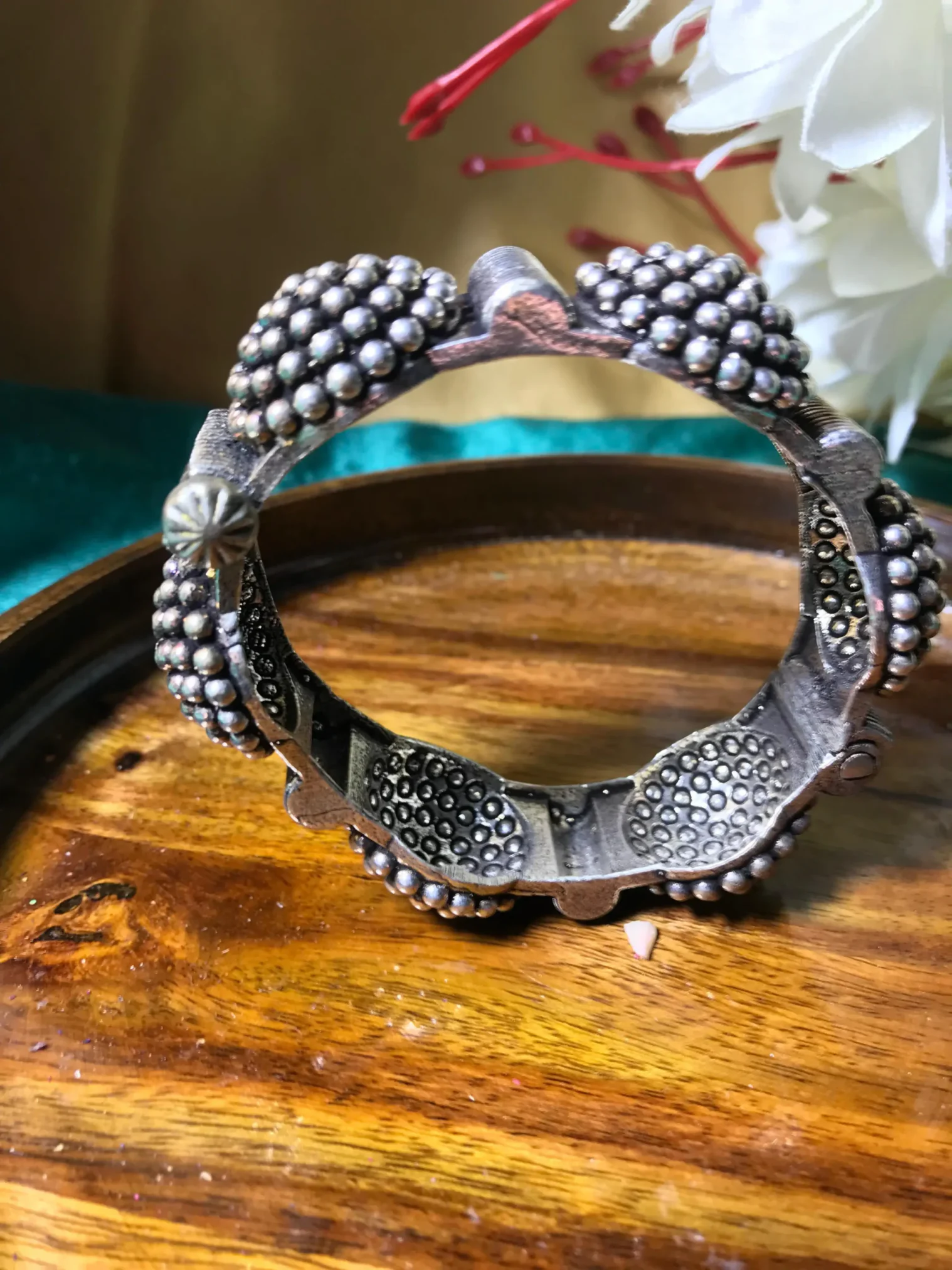
Even after nearly two millennia, many recovered ornaments exhibit exceptional precision. The symmetry of necklaces, balanced proportions of bracelets, and intricate decorative patterns continue to impress archaeologists and modern jewellers alike.
Archaeological Discoveries that Changed History – Traditional Silver Antique Jewellery in Pakistan
Excavations across Taxila have transformed our understanding of ancient jewellery traditions. Among the most celebrated discoveries are:
- Solid gold necklaces embedded with gemstones.
- Elegant bracelets demonstrating refined metalworking.
- Stone bead necklaces.
- Gold pendants.
- Decorative rings.
- Buddhist reliquaries adorned with gold leaf.
- Agate perfume holders.
- Ceremonial ornaments associated with religious sites.
These discoveries demonstrate that Gandhara possessed a highly developed luxury industry supported by prosperous trade networks and skilled artisans. Many of these priceless objects are carefully preserved in museum collections, where they continue to provide valuable insights into Pakistan’s ancient cultural heritage.
The Enduring Appeal of Traditional Silver Antique Jewellery
While gold represented wealth and prestige, silver has always occupied a special place in South Asian ornament traditions.
Over centuries, handcrafted traditional silver antique jewellery became deeply embedded in the cultural identity of communities throughout present-day Pakistan. Although excavated Gandharan treasures are often made of gold, the artistic vocabulary they established—floral motifs, geometric symmetry, intricate engraving, and handcrafted detailing—continued to influence silver jewellery traditions in later centuries.
Today, artisans in many regions of Pakistan still produce handcrafted ornaments whose decorative language echoes ancient design principles rooted in Gandharan craftsmanship. These enduring traditions demonstrate that the influence of Gandhara extends far beyond museums. It remains alive in the skills of modern craftsmen, the appreciation of collectors, and the continued popularity of heritage-inspired jewellery.
Jewellery in Gandharan Society: More Than Ornamentation – Traditional Silver Antique Jewellery in Pakistan
The jewellery of the Gandhara Civilization was far more than an expression of beauty. Every ornament reflected a combination of artistic excellence, social identity, religious symbolism, and cultural values. Whether worn by royal women, wealthy merchants, noblemen, monks before renunciation, or Bodhisattvas depicted in Buddhist art, jewellery played an important role in communicating status and identity.
Unlike modern fashion, where jewellery trends change rapidly, Gandharan ornaments were designed with permanence in mind. Craftsmen invested considerable time in producing finely balanced pieces that combined durability with aesthetic appeal. The careful selection of precious metals, gemstones, and decorative motifs demonstrates the sophistication of ancient workshops operating across Taxila and surrounding cities.
Archaeological excavations and sculptural evidence together provide an unusually complete picture of how jewellery was designed, manufactured, and worn nearly two thousand years ago.
Archaeological Discoveries That Reveal Ancient Luxury – Traditional Silver Antique Jewellery in Pakistan
Excavations at Taxila and neighbouring archaeological sites have uncovered some of Pakistan’s finest examples of ancient jewellery. These discoveries reveal a prosperous society with highly skilled artisans and access to international trade networks.
Among the most celebrated finds are:
- Solid gold necklaces decorated with carefully set gemstones.
- Elegant bracelets crafted from high-purity gold.
- Decorative pendants and lockets.
- Finger rings with refined engraving.
- Strings of agate and semi-precious stone beads.
- Gold reliquary ornaments.
- Perfume holders fashioned from agate beads.
- Ceremonial jewellery associated with Buddhist monuments.
Many of these objects date from the Kushan period, when Gandhara experienced remarkable economic prosperity. The level of craftsmanship visible in these artefacts indicates that jewellery production had become a specialized profession supported by experienced goldsmiths, stone cutters, engravers, and polishers.
The discovery of black agate beads, crystal ornaments, garnets, and other imported stones also confirms that Gandhara maintained extensive commercial links with Central Asia, India, Persia, and beyond.
Gandharan Sculpture as a Historical Record – Traditional Silver Antique Jewellery in Pakistan
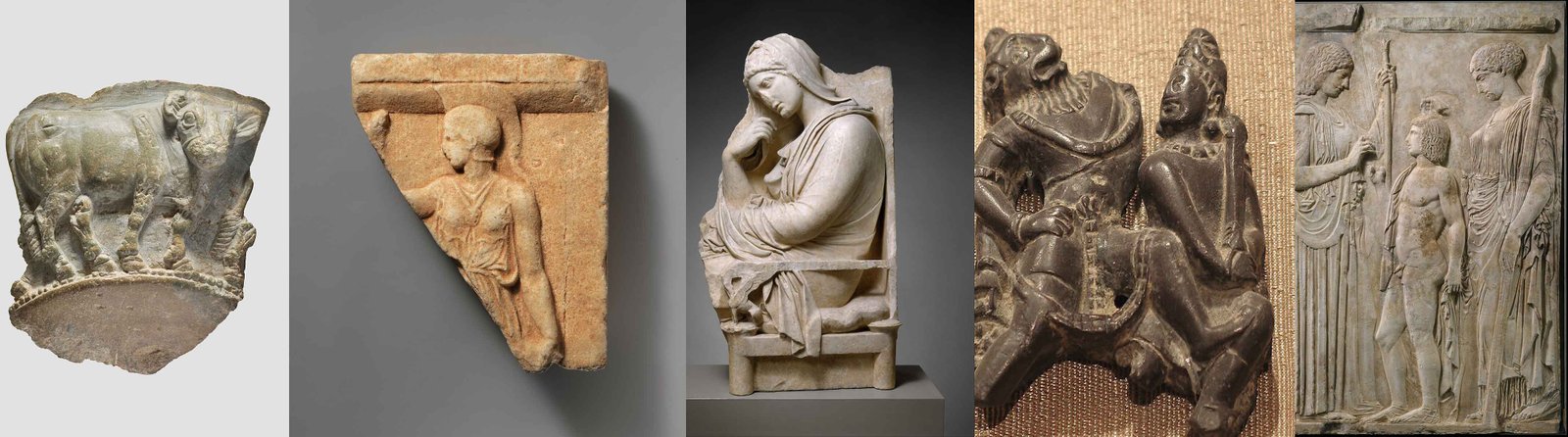
Not every ornament survives beneath the earth, but Gandharan sculptures preserve invaluable visual evidence. Stone carvings depicting the life of the Buddha, Bodhisattvas, donors, queens, musicians, celestial beings, and attendants provide detailed representations of jewellery worn during the period.
These sculptures function almost like an illustrated catalogue of ancient fashion. Historians study them to understand:
- How ornaments were worn.
- Which jewellery styles were popular.
- Differences between male and female adornment.
- Social distinctions reflected through jewellery.
- Religious symbolism associated with ornaments.
Although sculptors worked in stone, they carefully reproduced details such as twisted wires, gemstone settings, bead strings, floral decorations, layered necklaces, and engraved armlets, demonstrating remarkable observational accuracy.
Classification of Gandharan Arm Jewellery – Traditional Silver Antique Jewellery in Pakistan
Academic research on Gandharan sculpture has provided a systematic classification of arm ornaments commonly represented in Buddhist art. This work helps historians compare sculptural depictions with excavated artefacts and surviving traditional jewellery.
The principal categories include:
Armlets
Armlets were typically worn on the upper arm and appear frequently on Bodhisattvas, noblewomen, musicians, and royal figures. Their designs range from simple circular bands to richly decorated examples featuring floral terminals, animal-head motifs, twisted cords, and gemstone settings. Upper-arm ornaments often symbolized prestige and elegance.
Bracelets
Bracelets decorated the wrist and were among the most common ornaments in Gandharan sculpture. Some appear as broad solid bands, while others consist of multiple narrow rings stacked together. Fine engraved patterns suggest that metalworkers possessed advanced decorative techniques.
Bangles
Bangles differ from bracelets primarily in their continuous circular form. Women are frequently depicted wearing several bangles simultaneously, creating layered decorative effects that remain familiar in South Asian jewellery traditions today.
The continuity between ancient bangles and modern handcrafted designs is one of the most striking aspects of Gandharan ornamentation.
Finger Rings
Finger rings occur on both male and female figures. Besides their decorative function, rings may have represented wealth, marital status, family connections, or official authority. Some examples appear plain, while others display raised bezels or decorative motifs.
Necklaces: Symbols of Status and Refinement – Traditional Silver Antique Jewellery in Pakistan
Necklaces occupy a prominent place in both excavated collections and Gandharan sculpture. Several distinct styles can be identified:
- Single-strand bead necklaces.
- Multi-layered bead arrangements.
- Gold chain necklaces.
- Gemstone pendants.
- Large ceremonial collars.
The famous Taxila discoveries include beautifully crafted gold necklaces embedded with precious stones, illustrating the exceptional abilities of Gandharan jewellers. Layered necklaces depicted on Bodhisattvas often symbolize prosperity before spiritual renunciation, while female figures wear necklaces as expressions of beauty and social standing.
Earrings and Hair Ornaments – Traditional Silver Antique Jewellery in Pakistan
Although many excavated examples have not survived intact, sculpture demonstrates that earrings formed an essential component of Gandharan fashion. Common forms include:
- Circular hoops.
- Pendant earrings.
- Floral earrings.
- Gem-set ornaments.
Hair ornaments were equally significant. Women often arranged their hair into elaborate styles decorated with ornamental pins, floral accessories, ribbons, and jewellery. These artistic representations suggest that personal grooming and adornment occupied an important place in Gandharan society.
The Symbolism Behind Jewellery – Traditional Silver Antique Jewellery in Pakistan
Jewellery in Gandhara carried meanings beyond physical appearance. Different ornaments could symbolize:
- Prosperity.
- Royal authority.
- Religious devotion.
- Fertility.
- Protection.
- Social prestige.
- Spiritual transformation.
Bodhisattvas, unlike the Buddha after enlightenment, are frequently portrayed wearing magnificent ornaments. These decorations emphasize their compassionate engagement with the world before attaining complete Buddhahood.
Similarly, donors shown in Buddhist reliefs often wear elegant jewellery, reflecting both their prosperity and their generosity toward religious institutions.
Materials That Defined Gandharan Luxury – Traditional Silver Antique Jewellery in Pakistan
The diversity of materials used by Gandharan craftsmen reflects both local resources and long-distance trade. Popular materials included:
- Gold.
- Silver.
- Copper alloys.
- Bronze.
- Ivory.
- Shell.
- Crystal.
- Carnelian.
- Agate.
- Garnet.
- Lapis lazuli.
- Quartz.
- Glass beads.
Each material served different economic and social groups. Elite families generally commissioned gold ornaments decorated with gemstones, while silver and copper alloys provided beautiful alternatives for broader sections of society. This diversity helped establish jewellery traditions that remained accessible across different communities.
Greek Influence and Indigenous Identity – Traditional Silver Antique Jewellery in Pakistan
One of the most fascinating aspects of Gandharan jewellery is the balance between foreign influence and local tradition. Greek artistic ideas entered the region after Alexander’s campaign and later through Indo-Greek kingdoms.
These influences are clearly visible in sculpture through realistic anatomy, flowing garments, and architectural decoration. Jewellery, however, presents a more complex picture.
Archaeological evidence suggests that while certain decorative motifs may reflect interaction with Mediterranean artistic traditions, most ornament forms remained firmly rooted in indigenous South Asian craftsmanship. This continuity demonstrates that Gandharan artisans selectively adopted external ideas without abandoning their own artistic heritage.
From Ancient Workshops to Modern Craftsmanship – Traditional Silver Antique Jewellery in Pakistan
Many decorative principles established during the Gandharan period continue to influence jewellery-making in Pakistan. Modern craftsmen still employ techniques such as:
- Hand engraving.
- Stone setting.
- Filigree-inspired detailing.
- Wire decoration.
- Floral patterning.
- Symmetrical composition.
These similarities do not necessarily represent direct copies of ancient ornaments. Instead, they illustrate the remarkable continuity of regional craftsmanship passed from one generation to another. This enduring heritage is especially visible in traditional silver antique jewellery, where handcrafted techniques remain central to production.
Across Pakistan, silver jewellery continues to be admired for its intricate detailing, cultural symbolism, and timeless appeal. Although modern artisans use contemporary tools, many of their decorative concepts echo artistic traditions that flourished during the Gandharan era.
Why Traditional Silver Antique Jewellery Continues to Inspire
Collectors and jewellery enthusiasts are increasingly drawn to traditional silver antique jewellery because it represents more than decoration. Each handcrafted piece reflects centuries of accumulated artistic knowledge.
The enduring popularity of oxidized finishes, engraved floral patterns, geometric borders, beadwork, and handcrafted textures demonstrates the lasting influence of ancient craftsmanship.
Designers frequently study museum collections and archaeological publications to better understand historical ornamentation. While modern jewellery naturally evolves with changing tastes, Gandharan artistry continues to provide inspiration for heritage collections and handcrafted silver ornaments across Pakistan.
For those interested in cultural heritage, traditional silver antique jewellery offers a meaningful connection to the artistic achievements of earlier civilizations while remaining practical for contemporary wear.
The Enduring Legacy of Gandharan Jewellery
The Gandhara Civilization may have flourished nearly two millennia ago, but its artistic legacy continues to shape Pakistan’s cultural identity. From archaeological museums to artisan workshops, the influence of Gandharan jewellery remains visible in both historical collections and contemporary craftsmanship.
Every necklace, bracelet, armlet, pendant, bead, and ring discovered at ancient sites tells a story of a civilization that valued beauty, precision, and artistic innovation. These treasures are more than decorative objects—they are historical records that reveal how people lived, traded, worshipped, and expressed themselves through ornamentation.
Today, historians, archaeologists, museum curators, jewellery designers, and collectors study Gandharan jewellery not only for its beauty but also for the insights it offers into one of South Asia’s most sophisticated civilizations.
Museums Preserving Pakistan’s Ancient Jewellery Heritage – Traditional Silver Antique Jewellery in Pakistan
Pakistan’s museums play a vital role in protecting and preserving the country’s priceless archaeological heritage. Many of the finest Gandharan ornaments recovered during excavations are conserved under carefully controlled conditions to ensure their long-term preservation.
Among the most remarkable collections are:
- Gold necklaces crafted from high-purity gold.
- Gemstone-studded bracelets.
- Agate bead necklaces.
- Gold reliquary ornaments.
- Decorative pendants.
- Buddhist ceremonial objects.
- Perfume containers made from semi-precious stones.
- Gold-leaf relic caskets.
These collections allow visitors to appreciate the extraordinary craftsmanship of ancient artisans while helping researchers better understand the technological capabilities of early jewellery workshops. Because gold is a relatively soft metal, the remarkable condition of many excavated ornaments demonstrates the exceptional care with which these objects were manufactured and preserved.
Gandhara’s Influence on Modern Pakistani Jewellery – Traditional Silver Antique Jewellery in Pakistan
Although centuries have passed since the decline of Gandhara, many artistic traditions established during that period continue to inspire jewellery production across Pakistan.
Modern artisans frequently incorporate:
- Floral engraving.
- Geometric symmetry.
- Handcrafted metalwork.
- Stone settings.
- Layered necklaces.
- Decorative bangles.
- Traditional armlets.
- Oxidized finishes.
- Beaded ornamentation.
These design elements are found in heritage-inspired collections produced by skilled craftsmen who continue to value hand-finishing over mass production. The continuing appreciation for handcrafted ornaments reflects a growing desire to reconnect with Pakistan’s artistic heritage.
The Timeless Appeal of Traditional Silver Antique Jewellery
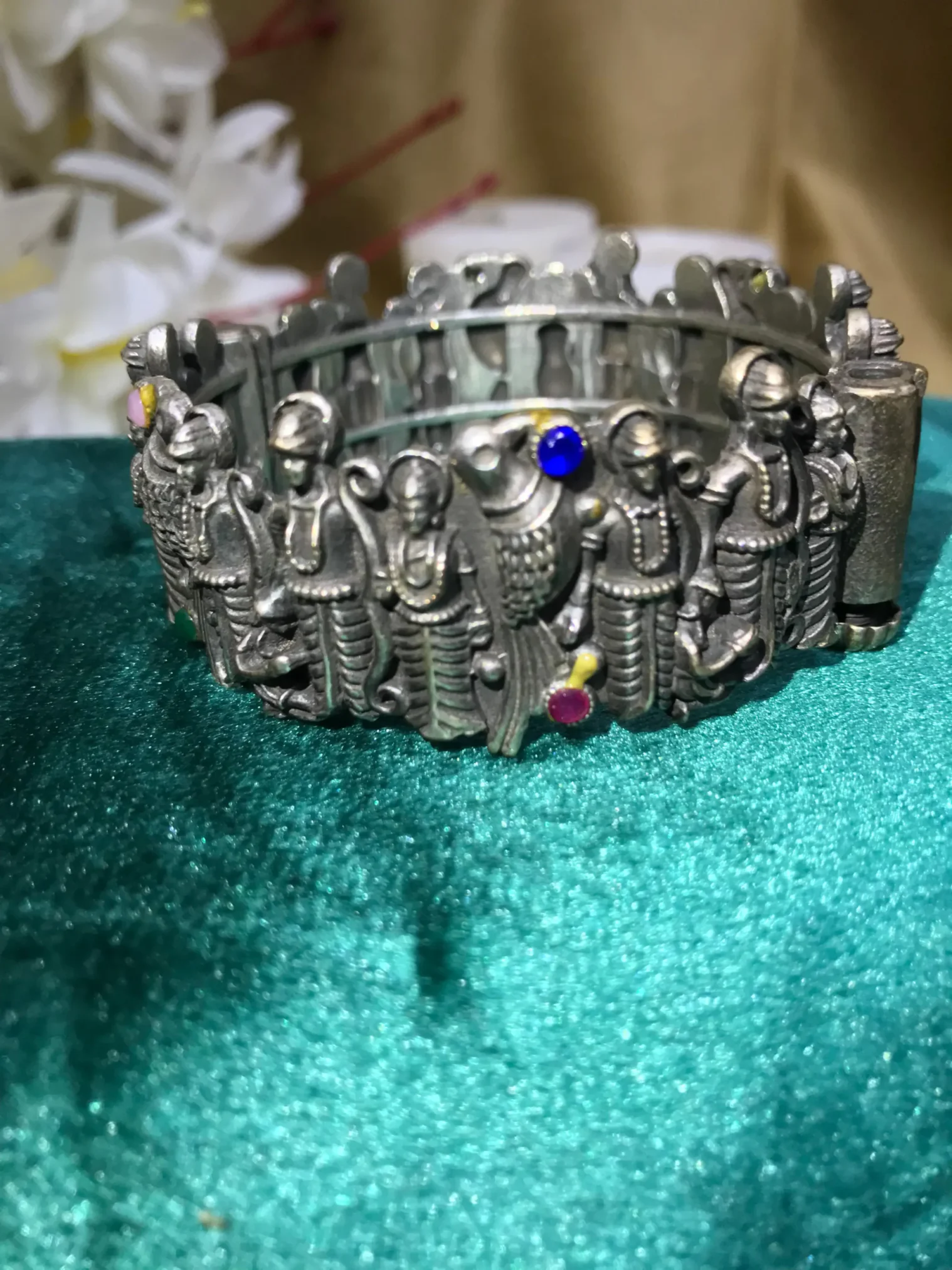
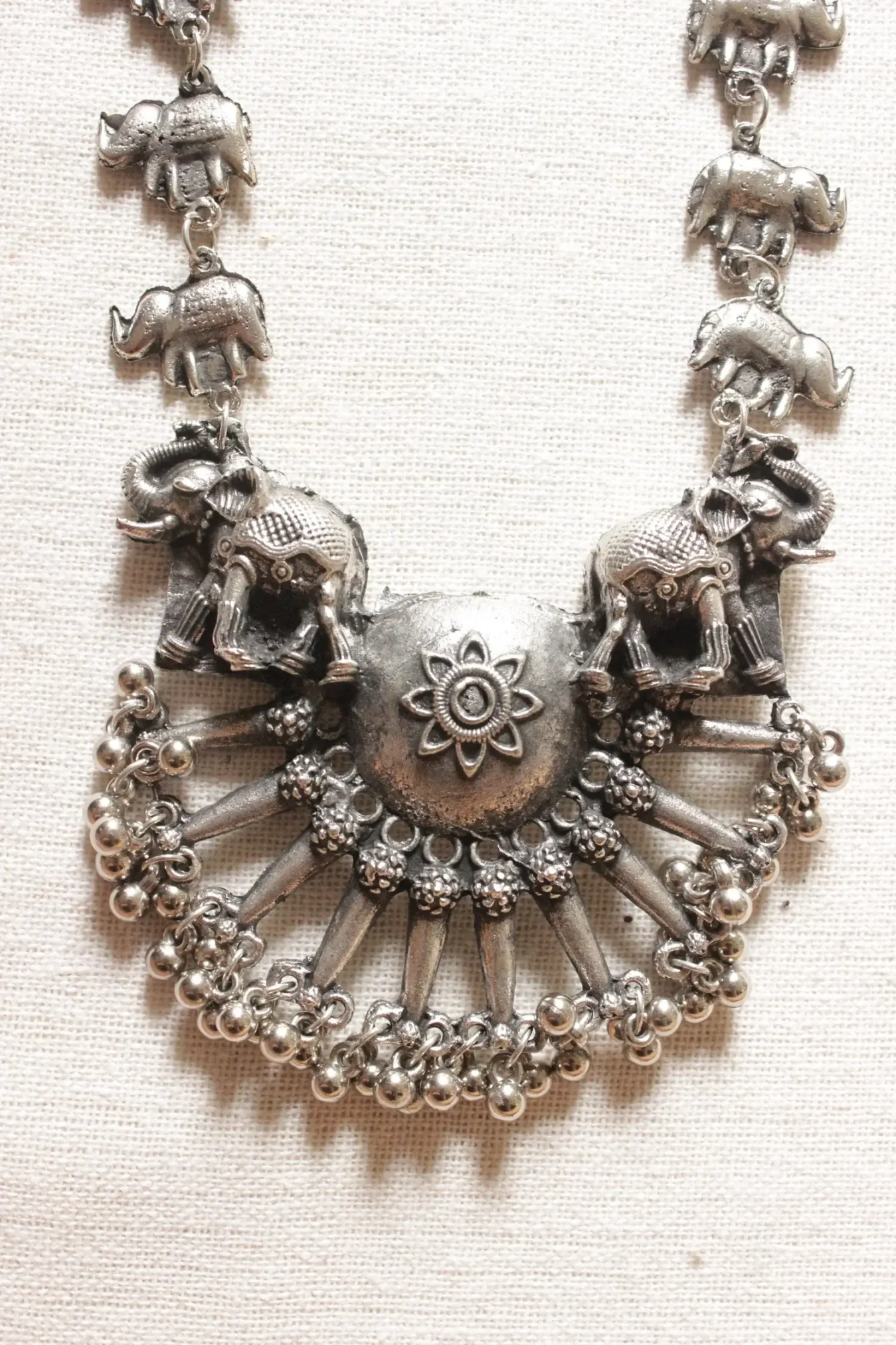
Among heritage-inspired ornaments, traditional silver antique jewellery occupies a special place in Pakistan’s cultural landscape. Silver has long been admired for its versatility, durability, and elegant appearance. Unlike highly polished modern jewellery, antique-inspired silver pieces often feature textured surfaces, oxidized finishes, engraved patterns, and handcrafted details that highlight the artisan’s skill.
Collectors appreciate traditional silver antique jewellery because each piece carries a distinctive character that machine-made products rarely achieve. The subtle irregularities of handcrafted work often enhance its authenticity and artistic value.
Many contemporary jewellers draw inspiration from Gandharan decorative principles, adapting ancient motifs into designs suitable for modern lifestyles while preserving their historical essence.
Collecting Antique Jewellery: What to Look For – Traditional Silver Antique Jewellery in Pakistan
Interest in antique jewellery has grown steadily among collectors, museums, and cultural enthusiasts. Whether acquiring original historical pieces through legal and reputable channels or purchasing heritage-inspired designs, understanding quality is essential. When evaluating antique-style jewellery, consider:
Craftsmanship
Handcrafted work usually displays careful detailing, balanced proportions, and refined finishing.
Materials
High-quality silver, natural gemstones, and traditional manufacturing techniques often indicate superior workmanship.
Design
Look for motifs inspired by historical traditions such as floral scrolls, lotus patterns, beadwork, geometric borders, and engraved surfaces.
Provenance
Authentic archaeological artefacts belong in museums or authorized collections. When purchasing antique or vintage jewellery, always seek reliable documentation and buy from reputable dealers who comply with cultural heritage laws.
Condition
Minor signs of age can add character to genuine vintage pieces, but structural integrity remains important for both value and wearability.
Gandharan Art Beyond Jewellery – Traditional Silver Antique Jewellery in Pakistan
While jewellery forms an important aspect of Gandharan culture, it represents only one element of a much broader artistic tradition.
The civilization also produced:
- Monumental Buddhist sculptures.
- Intricately carved relief panels.
- Stone reliquaries.
- Decorative pottery.
- Ivory carvings.
- Architectural ornamentation.
- Stucco sculpture.
- Coinage.
- Metal vessels.
Many sculptures depict finely detailed jewellery, allowing historians to reconstruct ornaments that may not have survived archaeologically. Together, these artistic achievements demonstrate the remarkable creativity of Gandharan craftsmen.
Lessons for Contemporary Designers – Traditional Silver Antique Jewellery in Pakistan
Modern jewellery designers increasingly explore historical collections for inspiration rather than imitation.
Gandharan ornamentation teaches several timeless design principles:
- Balance between simplicity and richness.
- Harmony of proportions.
- Thoughtful use of gemstones.
- Durable construction.
- Fine handcrafted detailing.
- Symbolic decorative motifs.
These principles remain relevant regardless of changing fashion trends. Rather than copying ancient jewellery exactly, many designers reinterpret classical forms for contemporary audiences, ensuring that Gandhara’s artistic heritage continues to evolve.
Preserving Pakistan’s Jewellery Heritage – Traditional Silver Antique Jewellery in Pakistan
Protecting archaeological heritage requires cooperation between government institutions, museums, researchers, collectors, and the public. Important preservation efforts include:
- Archaeological excavation conducted according to scientific standards.
- Museum conservation using modern preservation techniques.
- Academic research documenting artefacts and historical contexts.
- Public exhibitions that increase awareness of cultural heritage.
- Educational programmes promoting appreciation of Pakistan’s ancient civilizations.
Responsible tourism and public respect for archaeological sites also play an essential role in safeguarding these treasures for future generations.
Frequently Asked Questions
Why is Gandharan jewellery historically significant?
Gandharan jewellery reflects the advanced craftsmanship, artistic traditions, and multicultural influences of one of South Asia’s most important ancient civilizations. It provides valuable insight into the social, economic, and religious life of the region.
Did Greek influence change Gandharan jewellery?
Greek artistic influence is clearly visible in Gandharan sculpture, but archaeological evidence suggests that many jewellery designs retained strong indigenous South Asian characteristics while selectively incorporating external decorative ideas.
What materials were commonly used?
Ancient Gandharan jewellers worked with gold, silver, bronze, copper alloys, ivory, shell, glass, crystal, agate, garnet, lapis lazuli, carnelian, and other semi-precious stones.
Why is traditional silver antique jewellery still popular?
Traditional silver antique jewellery combines historical inspiration with handcrafted artistry, making it both culturally meaningful and suitable for contemporary fashion. Its timeless appeal, intricate detailing, and versatility continue to attract collectors and jewellery enthusiasts.
Where can Gandharan jewellery be seen today?
Many excavated ornaments are preserved in museum collections, where they are protected for research, education, and public appreciation. Heritage-inspired reproductions and modern handcrafted jewellery are also available through skilled artisans and reputable jewellers.
Conclusion – Traditional Silver Antique Jewellery in Pakistan
The story of Gandharan jewellery is ultimately the story of Pakistan’s rich artistic heritage. From the bustling streets of ancient Taxila to the workshops of today’s master craftsmen, the principles of beauty, balance, and skilled workmanship have endured across centuries.
Excavated necklaces, bracelets, armlets, rings, beadwork, and reliquaries reveal a civilization that celebrated artistry while embracing cultural exchange. Despite contacts with powerful empires and foreign influences, Gandharan jewellers preserved a distinctive local identity that continues to inspire generations of artists and historians.
Today, the enduring popularity of traditional silver antique jewellery demonstrates that this heritage remains alive. Whether admired in museum collections, worn as handcrafted ornaments, or studied through archaeological research, these designs continue to connect modern Pakistan with one of its most remarkable civilizations.
As appreciation for cultural heritage grows, Gandharan jewellery serves as a powerful reminder that true craftsmanship never loses its value. It transcends time, preserving the creativity, identity, and artistic achievements of a civilization whose influence continues to shine through every carefully crafted ornament.
By celebrating and preserving this remarkable legacy, Pakistan not only honours its past but also inspires future generations to value the artistry, innovation, and cultural richness that have shaped its identity for more than two thousand years.