Pakistan’s Music Landscape in 2025 – The Digital & Gen Z Revolution
The year 2025 will be remembered as a turning point in Pakistan’s musical history. It was the year when the industry decisively shifted away from television-driven popularity and record-label dominance toward a fully digital, audience-led ecosystem. For the first time, streaming data—not Drama OST airtime or radio rotation—became the most accurate reflection of national taste. Spotify Wrapped 2025 confirmed what many had already sensed: Pakistani listeners had embraced their own artists more deeply than ever before.
This transformation did not happen overnight. It was the result of years of gradual change, accelerated by technology, social media, and a generation that demanded authenticity. Gen Z listeners, who now make up the largest segment of streaming audiences in Pakistan, reshaped success metrics. They valued emotional honesty over perfection, storytelling over spectacle, and relatability over celebrity.
Unlike previous eras dominated by polished pop stars, 2025 celebrated musicians who felt real. Lyrics addressed mental health, social pressure, ambition, heartbreak, and identity crises—topics that mirrored the everyday experiences of young Pakistanis navigating economic uncertainty and digital life. Pakistani Music became not just entertainment, but emotional companionship.
The End of Gatekeeping
One of the most revolutionary aspects of 2025 was the collapse of traditional gatekeeping. For decades, success in Pakistani music required approval from television producers, film studios, or major labels. In contrast, 2025’s biggest songs often emerged from independent releases uploaded directly to streaming platforms.
Artists no longer needed massive budgets or media backing. A laptop, a microphone, and consistency were enough. Bedroom producers, self-written lyrics, and minimalistic visuals became mainstream. This democratization allowed talent from outside traditional cultural centers to thrive, bringing regional voices and diverse perspectives into national playlists.
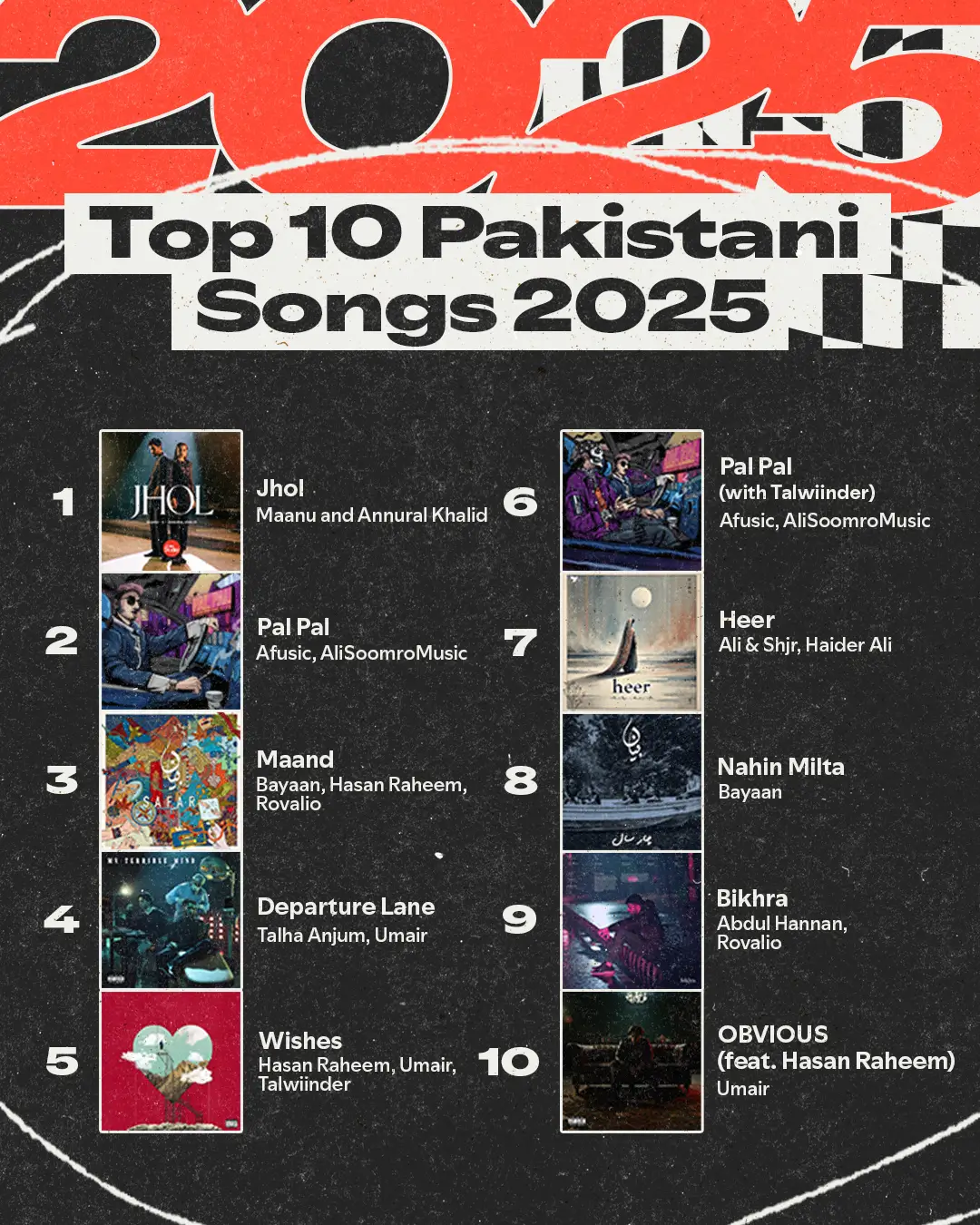
Pakistani Songs like “Jhol” and “Pal Pal” demonstrated how virality now flows upward from listeners rather than downward from institutions. Short-form content on Instagram Reels and TikTok acted as discovery engines, turning unknown tracks into national anthems within weeks. Algorithms replaced executives, and listeners replaced critics.
Streaming as Cultural Authority
In 2025, Spotify, YouTube, and Instagram were not just platforms; they were cultural authorities. Spotify Wrapped became a national conversation, validating independent artists and highlighting how deeply local music resonated with listeners. Pakistani users streamed domestic artists at unprecedented levels, signaling a shift away from Western music dependency.
Playlists curated by mood, activity, and emotion replaced genre-based listening. Lo-fi beats, late-night rap, and chill indie tracks dominated daily listening habits. Music consumption became more personal, intimate, and continuous, blurring the line between background sound and emotional expression.
YouTube remained essential for long-form engagement, while Instagram and TikTok drove discovery. Artists who understood this ecosystem—releasing short snippets, behind-the-scenes content, and interactive stories—built stronger fan loyalty than those relying solely on traditional releases.
Gen Z’s Cultural Signature
Gen Z did not just consume music in 2025; they curated culture. Their playlists reflected fluid identities, mixing Urdu rap with indie pop, folk influences, and experimental sounds. Language barriers dissolved as bilingual and multilingual tracks gained traction. Urdu remained central, but Punjabi, Sindhi, and regional inflections increasingly appeared in mainstream hits.
This generation favored emotional vulnerability over bravado. Even aggressive rap tracks carried introspective undertones, while pop songs leaned toward melancholy rather than glamour. Music mirrored the realities of digital fatigue, ambition, loneliness, and hope—complex emotions that previous mainstream eras often avoided.
Importantly, Gen Z listeners also supported artists long-term. Rather than chasing one-hit wonders, they followed discographies, producers, and collaborations. This loyalty created sustainable careers for independent musicians, proving that Pakistan’s digital audience was not just large, but deeply engaged.
A New Industry Identity of Pakistani Music
By the end of 2025, Pakistani music no longer needed validation from Bollywood, Western charts, or television screens. It had developed its own identity—confident, introspective, and globally aware. The industry now operated as a network of interconnected artists, producers, and listeners rather than a top-down hierarchy.
This new ecosystem set the stage for the dominance of specific genres and figures. Hip-hop and indie-pop were no longer alternatives; they were the mainstream. Producers became stars. Collaboration replaced competition. And most importantly, Pakistani music reclaimed its narrative from within.
The digital revolution of 2025 did more than change charts—it redefined what success meant. It marked the beginning of a Pakistani musical era driven by authenticity, independence, and youth-led cultural power.
Urdu Rap & Hip-Hop Dominance – Talha Anjum, Umair & the New Mainstream
While the digital revolution of 2025 provided the framework, Hip-Hop and Urdu rap became the defining force in shaping Pakistan’s contemporary sound. No genre reflected the realities of Gen Z and young Millennials like rap: gritty, honest, socially aware, and emotionally charged. This year, Hip-Hop in Pakistan transcended underground clubs and YouTube channels to become the nation’s mainstream, dominating Spotify charts and influencing pop and indie trends.
The Rise of Talha Anjum – Pakistan’s Rap Monarch – One of the trending Pakistani Singers
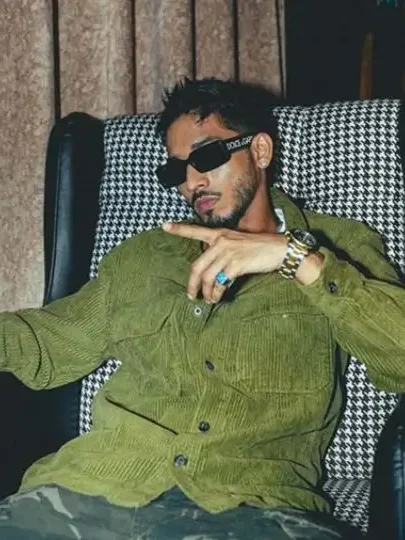
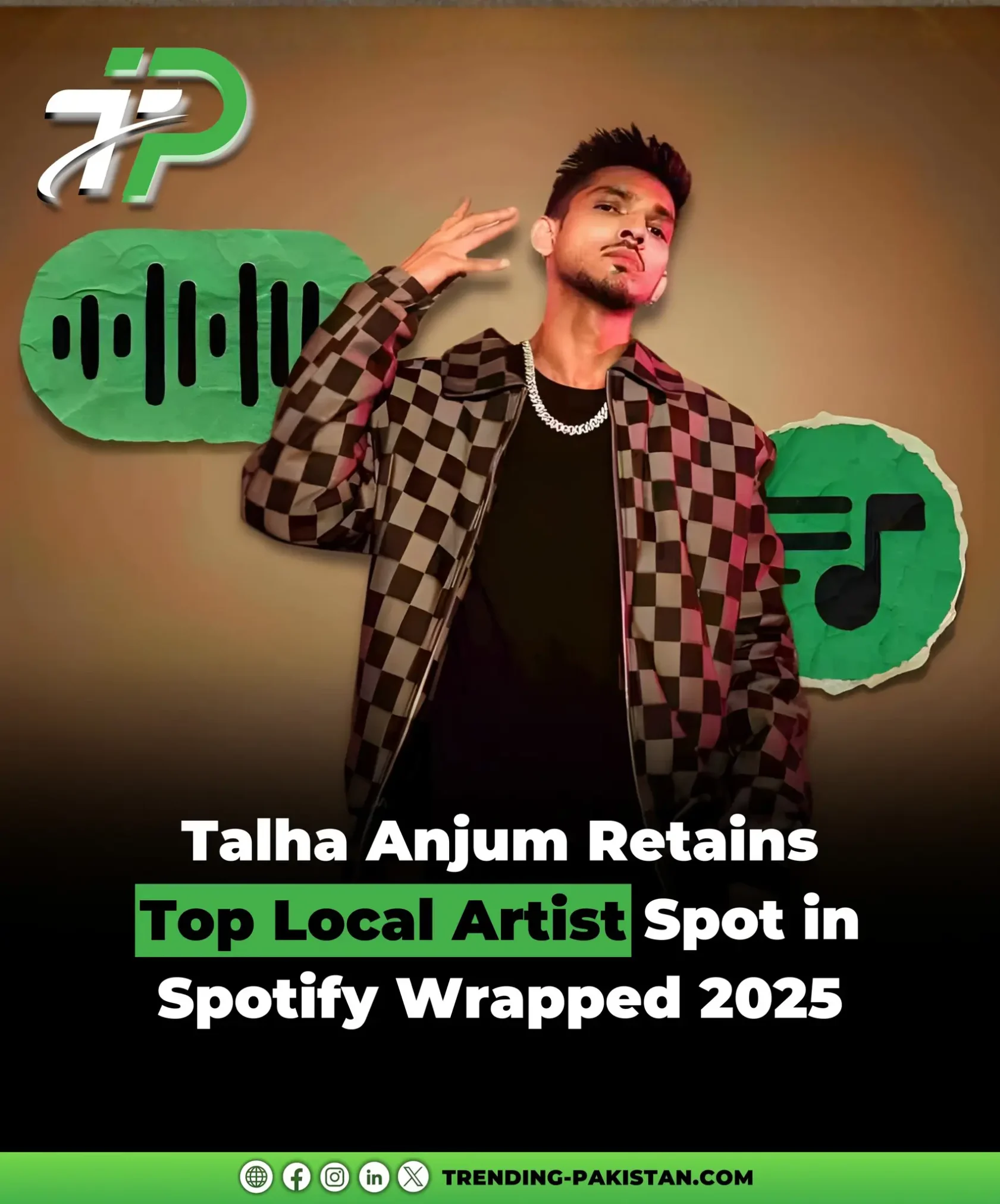
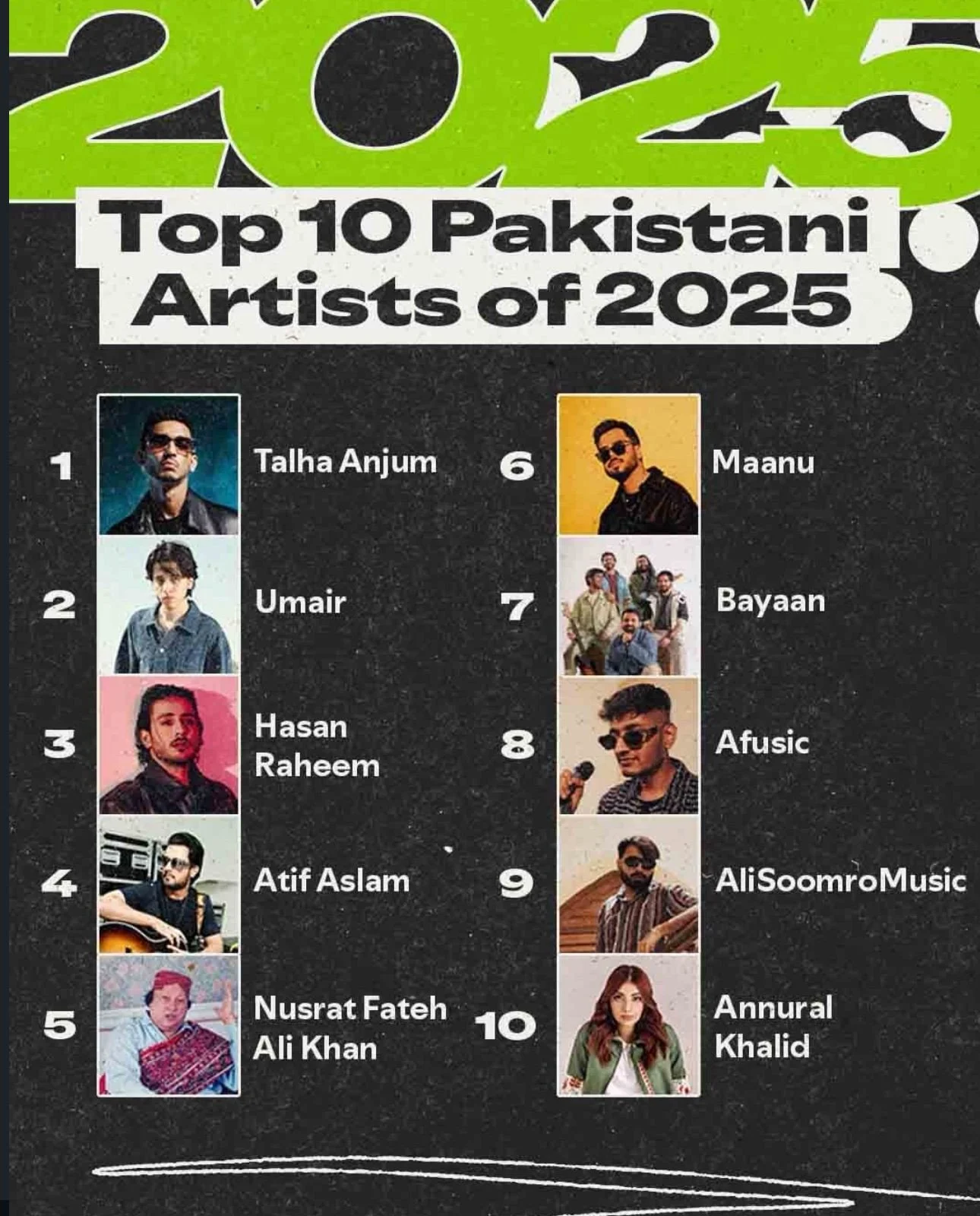
If 2025 had a singular face of the Pakistani music scene, it belonged to Talha Anjum. Crowned Pakistan’s Top Artist for the second consecutive year, Anjum became a symbol of the generation’s struggles, dreams, and resilience. His lyrical sophistication and storytelling earned him a place not just in charts, but in cultural conversations about modern life in urban Pakistan.
Lyricism and Urban Storytelling
Anjum’s genius lies in his ability to portray Karachi’s urban fabric. From socio-economic disparity to digital alienation, he weaves narratives that feel intimate yet universally relatable. His style—often described as melodic rap—balances introspective verses with dynamic beats. Tracks like “Departure Lane” resonated because they captured the tension between aspiration and limitation, ambition and nostalgia, providing a soundtrack for a generation negotiating identity and opportunity.
Chart Dominance Through Albums
Anjum’s 2025 dominance was fueled by two major albums:
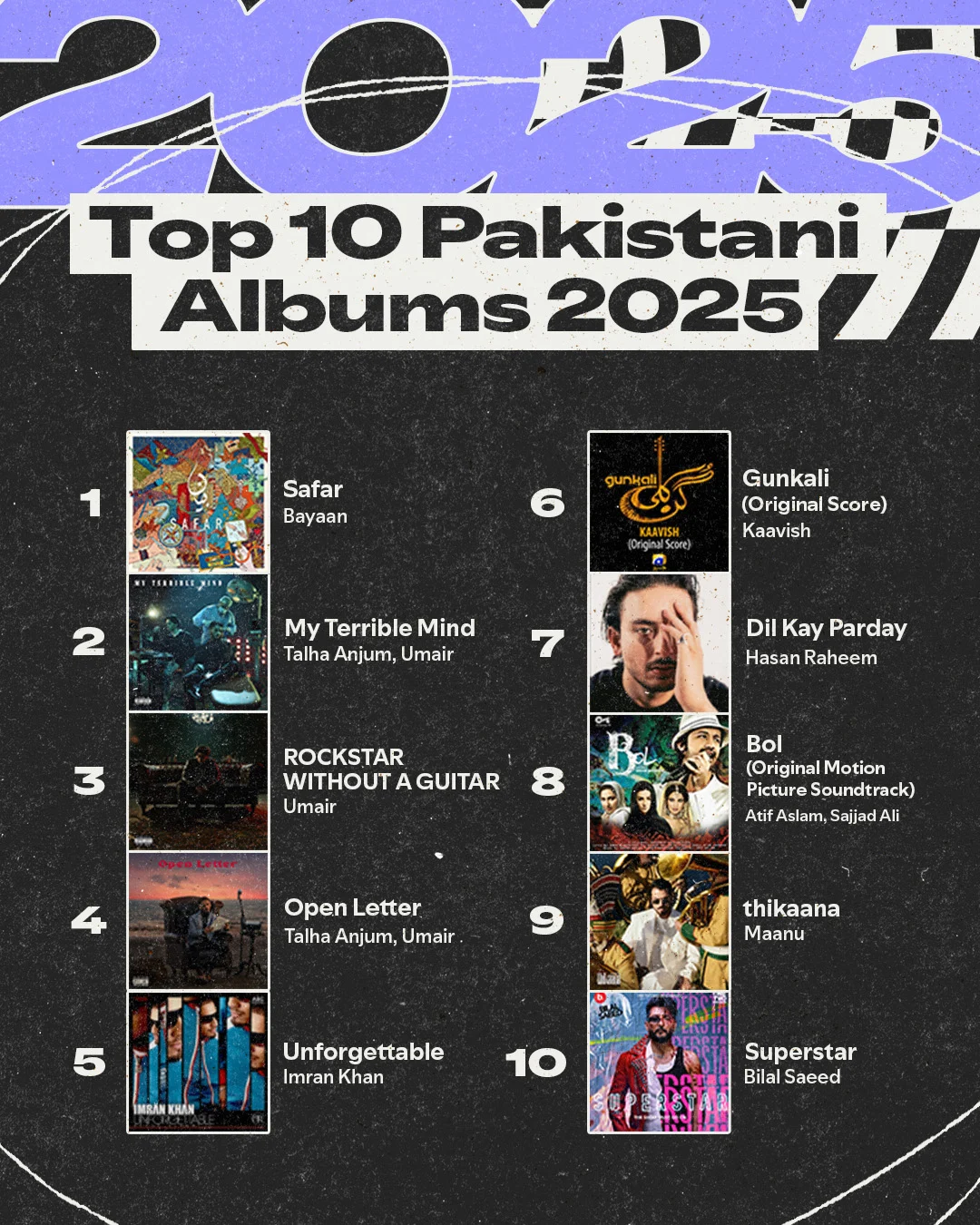
- My Terrible Mind (2nd Most-Streamed Album): An introspective journey blending emotional vulnerability with assertive lyricism. The album’s diverse soundscapes—from trap beats to minimalistic lo-fi backdrops—showcase his versatility. Each track acts as a narrative chapter, allowing listeners to connect on both personal and social levels.
- Open Letter (4th Most-Streamed Album, with Umair): This collaboration exemplified synergy in Pakistan’s rap scene. Combining Anjum’s poetic depth with Umair’s energetic delivery, Open Letter produced hits that dominated urban playlists, with “Departure Lane” becoming the anthem for youth navigating transitions in life.
Umair – The Rockstar Without a Guitar
While Anjum held the crown, Umair emerged as the breakout voice of 2025. Unlike traditional rap artists, Umair blends rock sensibilities with urban beats, creating a hybrid sound that appeals to indie listeners and Hip-Hop fans alike. His meteoric rise was powered by both his solo album and key collaborations.
ROCKSTAR WITHOUT A GUITAR (3rd Most-Streamed Album)
The album is a conceptual statement: Umair channels the rebellious, emotional energy of rock without using guitars, relying instead on rap, electronic beats, and atmospheric production. Tracks like “Gum” and “Waqt” demonstrate lyrical vulnerability paired with hard-hitting rhythms, capturing the tension between youthful angst and existential introspection.
Collaborations Amplifying Impact
Umair’s collaborations strengthened his mainstream footprint:
- Featured on Talha Anjum’s Open Letter, combining melodic introspection with assertive rap flow.
- “OBVIOUS” (10th Most-Streamed Song) showcased his adaptability, proving he could elevate tracks across genres while retaining his distinct vocal signature.
The New Rap Aesthetic in Pakistan
2025’s rap scene is defined by more than just popular singles. A new aesthetic has emerged, characterized by:
- Mental Health Awareness: Lyrics address anxiety, depression, and digital fatigue, connecting deeply with youth audiences.
- Socio-Economic Realities: Artists portray everyday struggles—poverty, unemployment, and the tension of urban survival.
- Digital Alienation: Themes of online life, isolation, and the paradox of hyper-connectivity dominate verses, reflecting contemporary experiences.
Unlike previous generations, these rappers focus less on ego-driven bravado and more on storytelling, emotional resonance, and cultural authenticity. The result: Hip-Hop became Pakistan’s most-streamed genre, growing by 35% in 2025 alone.
Other Key Figures and Emerging Talent
While Anjum and Umair were the faces of the genre, others contributed to the scene’s vitality:
- Faris Shafi: Continues to explore underground themes in independent tracks and Coke Studio appearances.
- Talented Newcomers: Many emerging artists leveraged TikTok and YouTube to debut singles, creating a decentralized talent ecosystem where viral potential often surpassed traditional promotion.
Hip-Hop’s Cultural Significance
The 2025 rap movement represents more than music—it signals a cultural shift:
- Language as Identity: Urdu rap, occasionally blended with Punjabi and English, strengthens local identity while appealing to diaspora audiences.
- Urban Storytelling: Rap became a mirror for Pakistani cities, reflecting not just struggle but hope, ambition, and resilience.
- Cross-Genre Influence: Elements of rap are infiltrating pop, indie, and even wedding tracks, demonstrating the genre’s integration into broader musical culture.
Key Pakistani Songs of 2025
Some standout rap tracks that defined the year:
- “Departure Lane” – Talha Anjum & Umair – Trending Pakistani Singers
- “OBVIOUS” – Umair
- Tracks from My Terrible Mind and Open Letter dominating curated playlists, urban Spotify charts, and YouTube streams.
The Future of Hip-Hop in Pakistan
As 2025 ends, the trajectory of Pakistani rap is clear:
- Genre Fusion: Expect more collaborations with indie-pop and folk artists.
- Producer Recognition: Names like Rovalio and Ali Soomro Music will rise as artist brands, trending Pakistani Singers
- Global Appeal: Diaspora engagement is growing, laying groundwork for international tours and collaborations.
Hip-Hop has become not just a genre, but a movement—reshaping urban culture, empowering youth voices, and cementing Pakistan’s presence on the global music map.
Indie-Pop, Lo-Fi & Viral Hits – Maanu, Annural Khalid, Afusic & Youth Culture – Trending Pakistani Singers
While Hip-Hop defined the streets of Pakistan in 2025, Indie-Pop and Lo-Fi music captured the hearts and playlists of the nation’s youth. This movement became the soundtrack for introspection, romance, and digital-age lifestyle. Characterized by smooth vocals, dreamy production, and catchy hooks, Indie-Pop bridged local identity with global appeal, creating music that resonates with both Pakistani and diaspora audiences.
Maanu & Annural Khalid – The Unstoppable Duo – Trending Pakistani Singers
The defining partnership of the year was undoubtedly Maanu and Annural Khalid, whose collaboration produced the most-streamed song of 2025: “Jhol.” Their chemistry blended lo-fi textures with Pop sensibilities, creating a sound that was at once relatable and globally appealing.
“Jhol” – The Anthem of 2025
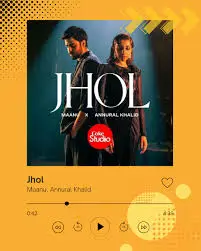
“Jhol” (meaning “mess” or “entanglement”) became the defining anthem of urban youth culture. Its infectious rhythm, combining disco-inspired basslines and crisp synths, made it a favorite for urban commutes, social media clips, and casual listening. The song’s bilingual lyrics—mixing Urdu and English—mirrored the linguistic hybridity of Pakistan’s younger generation, enhancing relatability.
- Cultural Impact: The track became symbolic of modern youth dilemmas, from complex relationships to career uncertainty.
- Production Excellence: Minimalistic yet sophisticated production allowed the vocals to shine, highlighting the duo’s emotional depth.
- Streaming Success: Consistently topping Spotify and YouTube charts, “Jhol” was both a commercial and cultural phenomenon.
Maanu’s Solo Success: thikaana –One of the trending Pakistani Singers
Maanu’s individual projects reinforced his position as a leading indie artist. His album thikaana (9th Most-Streamed Album) exemplified his lo-fi, chill-pop aesthetic:
- Sound Characteristics: Atmospheric instrumentation, conversational vocals, and reflective lyrics.
- Themes: Digital-age romance, personal introspection, and urban solitude.
- Audience Engagement: Tracks from thikaana became staples on study playlists, late-night listening sessions, and curated lo-fi mixes, appealing to the 18–24 demographic.
Annural Khalid: The Rising Female Voice – One of the trending Pakistani Singers
Annural Khalid’s presence in 2025 emphasized the growing visibility of female indie artists in Pakistan. Her vocals on “Jhol” were both emotive and technically sophisticated, allowing her to stand out in a male-dominated industry. Beyond collaborations, her solo releases in R&B and indie-pop cemented her reputation as a versatile and influential artist.
Afusic & Ali SoomroMusic – The Viral Pop Phenomenon
Another major narrative of 2025 was Afusic, whose rise demonstrated the power of streaming platforms in launching new talent.
Spotify RADAR Recognition
Afusic’s selection as a Spotify Q3 RADAR Artist provided global amplification, transforming him from a niche act into a viral sensation. This program’s reach underscores the importance of digital platforms in shaping modern Pakistani music careers.
“Pal Pal” – Pop Excellence
Afusic’s breakout single “Pal Pal” (2nd Most-Streamed Song) was a masterclass in contemporary pop:
- Production: Crafted by AliSoomroMusic, the track featured clean, polished instrumentation, shimmering synth layers, and smooth vocal execution.
- Lyrical Appeal: Capturing themes of longing and romance, the song resonated with urban youth navigating modern relationships.
- Audience Growth: Streaming statistics show a 1,200% increase in listeners, primarily within the 18–24 demographic, solidifying Afusic’s status as a youth icon.
Bayaan & Abdul Hannan – The Indie Pillars – Trending Pakistani Singers
While emerging artists captured attention, established indie acts like Bayaan and Abdul Hannan provided continuity and depth to the scene.
Bayaan’s Safar – Most-Streamed Album
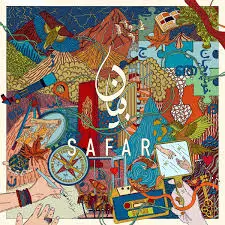
Bayaan’s album Safar dominated streaming charts in 2025:
- Musical Style: Alt-rock infused with indie-pop sensibilities, featuring soaring choruses, narrative-driven lyrics, and rich instrumentation.
- Cultural Resonance: The album’s themes of journey, self-discovery, and emotional complexity resonated with audiences seeking music with substance beyond viral trends.
Abdul Hannan – Emotional Continuity
Abdul Hannan continued his legacy as a master of the heartbreak anthem:
- “Bikhra” (9th Most-Streamed Song) and “Maand” (3rd Most-Streamed Song) remained highly consumed, demonstrating longevity in a fast-moving streaming landscape.
- Production Excellence: Collaboration with producer Rovalio created a signature sound—lush guitars, echoing percussion, and spacious atmospheres—that defined indie melancholy in 2025.

The Youth and Cultural Impact of Indie-Pop
Indie-Pop in 2025 captured the intimate experiences of Pakistan’s young generation:
- Relatable Storytelling: Lyrics reflected personal, emotional, and everyday experiences.
- Digital-Age Sound: Lo-fi textures, minimalist beats, and ambient synths resonated with streaming-first audiences.
- Global Reach: Indie tracks crossed borders via curated playlists, diaspora engagement, and viral social media clips.
Key Takeaways for 2026
- Genre Blending: Indie artists will likely collaborate with Hip-Hop and folk musicians, blending emotional depth with urban edge.
- Female Voices Rising: Artists like Annural Khalid signal a growing space for women in mainstream and independent music.
- Producer Recognition: Producers like Rovalio and AliSoomroMusic are increasingly defining the sonic landscape, turning behind-the-scenes talent into influential brands.
Notable Tracks of 2025
- “Jhol” – Maanu & Annural Khalid
- “Pal Pal” – Afusic
- “Bikhra” – Abdul Hannan
- “Maand” – Abdul Hannan, Hasan Raheem & Rovalio
The Indie-Pop and Lo-Fi revolution of 2025 demonstrates Pakistan’s musical maturity: emotive storytelling, sophisticated production, and a keen understanding of digital consumption patterns are now central to cultural impact.
The Pillars of Pop and Global Fusion
While independent and underground artists dominated the digital streets in 2025, the mainstream pop and globally recognized artists remained the backbone of Pakistani music. These pillars of the industry not only maintained chart dominance locally but also extended Pakistan’s influence onto the international stage.
Asim Azhar – One of the Trending Pakistani Singers
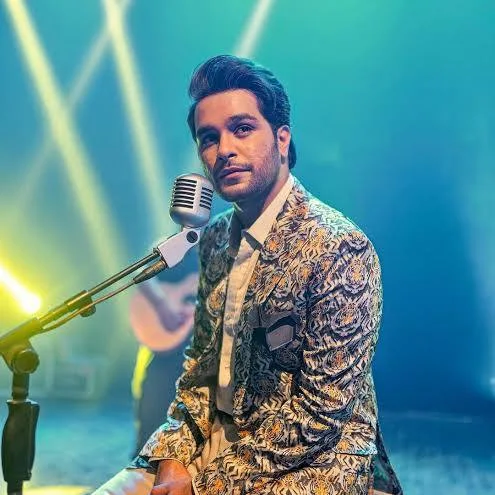
2025 marked a comeback and reinvention for pop sensation Asim Azhar. Amid the indie and hip-hop revolution, Azhar successfully reaffirmed his position as the most-streamed mainstream pop artist in Pakistan.
The Album Launch: Asim Ali – Pop Reinvented and the OST King
- Full-Length Release: Azhar released his self-titled album, Asim Ali, a strategic mix of pop ballads, upbeat singles, and experimental tracks.
- Genre Fusion: Tracks like “Strangers” featured collaborations with Talha Anjum, bridging underground credibility with mainstream appeal.
- Streaming Success: The album garnered millions of streams, topping Spotify and YouTube charts in Pakistan. Notable singles included “Pari”, “Lost n Found”, and “U Got This”.
OST Domination
Asim Azhar maintained his dominance in television drama soundtracks (OSTs):
- Hit OSTs: “Meri Zindagi Hai Tu” and “Baat (Han Mohabbat Par)” became cultural staples.
- Audience Reach: Drama OSTs ensured Azhar’s music penetrated diverse demographics, from urban youth to family audiences watching dramas on TV and streaming platforms.
- Musical Style: Emotional melodies, soaring choruses, and relatable lyrics reinforced his image as Pakistan’s top romantic pop voice.
The Legends: Atif Aslam and Nusrat Fateh Ali Khan
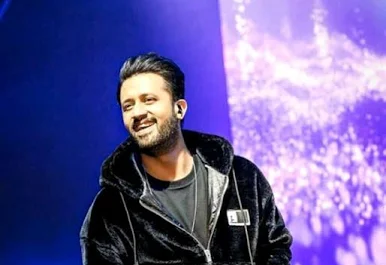
Despite the rise of new artists, legacy artists remained influential, proving that timeless talent never fades.
Atif Aslam
- Catalog Strength: Atif’s decades-long career kept him within the Top 10 Pakistani Artists in 2025.
- Streaming Metrics: His Bollywood hits, independent singles, and love ballads maintained consistent streaming numbers.
- Musical Relevance: Atif Aslam represents a bridge between traditional pop-rock sensibilities and contemporary listening habits, attracting both older fans and new generations.
Nusrat Fateh Ali Khan (NFAK)
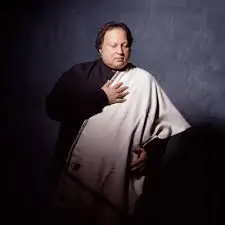
- Enduring Influence: NFAK’s Qawwali tracks, including “Mere Rashke Qamar” and “Sanu Ek Pal Chain”, continued to dominate streaming charts.
- Modern Relevance: Lo-fi remixes and fusion collaborations have introduced his music to younger audiences.
- Cultural Significance: His work remains a pillar of Pakistani music, combining spiritual depth with universal appeal.
Global Recognition: Ali Sethi and Arooj Aftab
Pakistani artists increasingly transcended local charts, reaching international audiences through fusion, experimentation, and awards recognition.
Arooj Aftab
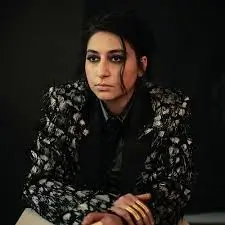
- Grammy Recognition: Following her 2022 win, Aftab continued to submit works for Grammy consideration in 2025, including the Khruangbin remix of “Raat Ki Rani”.
- Global Collaboration: Partnerships with international artists showcase her ability to merge classical Pakistani melodies with modern ambient, electronic, and minimalist soundscapes.
- Impact: Aftab’s success validates Pakistan’s place in global music conversations, combining cultural authenticity with avant-garde experimentation.
Ali Sethi
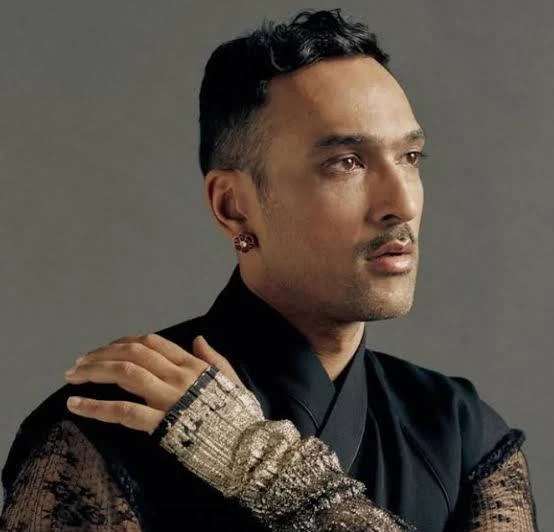
- Ghazal Meets Electronica: Sethi’s experimental project Intiha, produced with Chilean-American electronic producer Nicolas Jaar, fused ghazal poetry with ambient electronica.
- Global Stage: Performances at international festivals like MIRA showcased Pakistani musical heritage in new, innovative forms.
- Significance: Sethi’s work exemplifies the potential of Pakistani music to engage global audiences while retaining cultural depth.
The Wedding & Folk Scene
Even amid pop and indie dominance, traditional and wedding music maintained cultural and economic importance.
Modern Folk Fusion
- Key Artists: Sahir Ali Bagga, Naseebo Lal, Arif Lohar – Trending Pakistani Singers
- Popular Releases: Tracks like Saday Veeray Di Shadi merged traditional Punjabi folk with modern electronic beats.
- Audience Engagement: These Pakistani songs dominated Mehndi, Sangeet, and wedding playlists, showcasing the ongoing relevance of cultural traditions in contemporary production.
Significance for the Industry
- Regional Music Influence: Punjabi, Sindhi, and Balochi folk fusion tracks gained national recognition through streaming, breaking regional barriers.
- Commercial Power: Wedding and folk music represent a significant revenue stream, complementing mainstream pop and indie streams.
Synthesis: Pop, Legacy, and Global Fusion
The pillars of Pakistani pop in 2025 demonstrate a multi-layered musical ecosystem:
- Mainstream Pop Excellence: Asim Azhar’s strategic fusion of pop and collaborations bridges generational gaps.
- Timeless Legacy: Atif Aslam and NFAK provide continuity, proving classic music maintains relevance.
- Global Impact: Ali Sethi and Arooj Aftab validate Pakistan’s artistry internationally, merging tradition with modernity.
- Cultural Anchors: Wedding and folk music maintain deep-rooted cultural identity while evolving with modern production trends.
Predictions for 2026
- Cross-Generational Collaborations: Expect more projects combining pop stars, indie artists, and global fusion musicians.
- Global Recognition: Continued Grammy submissions and international collaborations will elevate Pakistani music’s global footprint.
- Fusion of Genres: Traditional, folk, and modern electronic sounds will increasingly appear in mainstream hits.
The Future of Pakistani Music
As 2025 closed, the Pakistani music industry stood at a pivotal moment. Independent artists, traditional legends, mainstream pop, and global fusion acts had all left an indelible mark on the cultural landscape. Looking forward to 2026, several trends are poised to shape the trajectory of Pakistani music, ensuring continued growth, innovation, and international recognition.
The Hip-Hop/Indie Axis: The New Mainstream
The biggest revelation of 2025 was the rise of Hip-Hop and Indie-Pop from niche to mainstream. This movement has fundamentally reshaped audience expectations and chart dynamics.
1. Genre Blending and Fusion
- Folk-Infused Rap: Independent artists are expected to experiment more with regional instrumentation paired with contemporary rap beats. This fusion not only preserves Pakistan’s folk heritage but also broadens appeal to international listeners who crave unique sounds.
- Electronic Qawwali: Building on Nusrat Fateh Ali Khan’s legacy, artists and producers are merging traditional Qawwali vocals with lo-fi, ambient, and electronic production. The result is spiritually resonant yet sonically modern music suitable for global playlists.
2. Producer-Driven Trends
- Producers like Rovalio and Ali SoomroMusic have emerged as critical architects of the sound, with distinctive styles shaping the Pakistani music more than ever.
- Prediction for 2026: Producers will gain recognition akin to lead artists, becoming brand names in their own right. This will elevate studio innovation and attract fresh talent focused on production excellence.
Streaming Platforms and Regional Pakistani Music Rise
Streaming platforms have democratized music access, creating opportunities for regional languages and niche genres to thrive nationally and globally.
1. Regional Music Growth
- Punjabi, Sindhi, Balochi, and Pashto tracks are no longer confined to their regions. Hyper-curated playlists and algorithmic recommendations amplify these Pakistani songs nationwide.
- Artists blending regional culture with contemporary beats can now compete directly with Urdu mainstream tracks.
2. Global Export Potential
- Pakistani music streams internationally are growing by 27%, particularly in North America, the UK, and the Middle East.
- Successful global hits demonstrate that the industry can move beyond viral moments like Pasoori toward a sustainable model for exporting Pakistani music.
- Implication for 2026: Independent musicians focusing on quality production and cultural authenticity can achieve financial success and international influence without relying solely on domestic popularity.
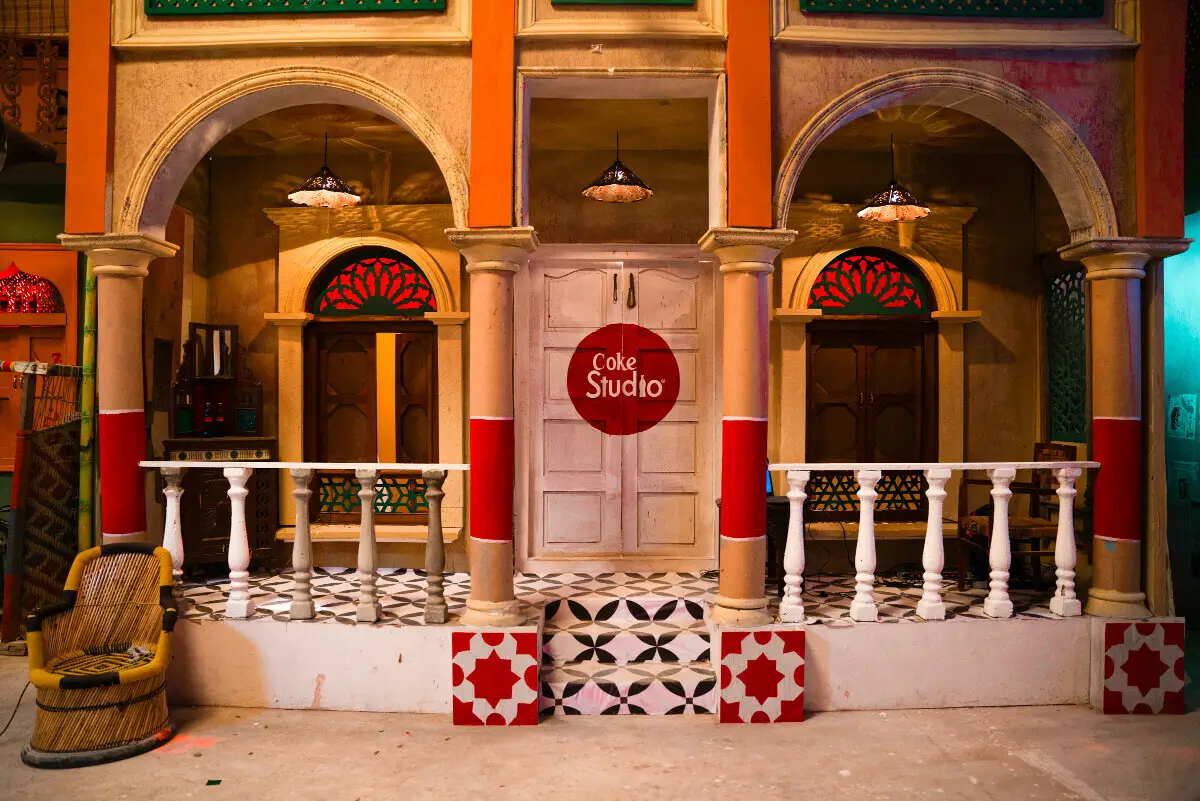
Coke Studio Evolution
Coke Studio remains Pakistan’s premier global music launchpad, but its role is evolving.
1. Focus on Independent Artists
- Coke Studio 15 highlighted talent from the thriving independent and indie-pop ecosystem, signaling a permanent shift toward sourcing fresh voices.
- This ensures the platform stays relevant by reflecting current trends and appealing to younger audiences while maintaining global attention.
2. Grammy Submissions and Technical Excellence
- Meesha Shafi submitted Khilnay Ko for Best Global Music Album, and Arooj Aftab submitted her remix of Raat Ki Rani. These submissions underscore Pakistan’s serious global ambitions.
- Karachi-born sound engineer Taurees Habib winning a Grammy for work on Dune: Part Two further emphasizes technical mastery as a differentiator for Pakistani music on the international stage.
Technological Influence: AI and Immersive Audio
Technology will increasingly redefine how music is produced, distributed, and consumed.
1. AI in Pakistani Music Production
- Advanced AI tools for stem separation, mastering, and composing will lower barriers to entry, enabling bedroom artists to create polished tracks without large budgets.
- Expect an explosion of independent music output, with more artists leveraging AI for experimentation and sound design.
2. Immersive Audio Experiences
- Spatial Audio: Streaming services are promoting 3D audio experiences. Pakistani producers are remixing indie-pop and lo-fi hits to be more enveloping and immersive.
- Impact: Audiences with headphones will experience Pakistani music in a new, multi-dimensional way, elevating the quality of listening and global competitiveness.
The Cultural and Economic Landscape
2026 will see a multi-dimensional music ecosystem combining tradition, innovation, and economics.
1. Multi-Generational Collaboration
- Expect collaborations between pop icons, indie artists, and global fusion performers. This will create hybrid sounds that appeal to both traditional listeners and digital natives.
2. Economic Growth Through Streaming
- Streaming revenue models and global audience growth are creating sustainable careers for independent artists.
- Regional music and wedding tracks will continue generating substantial income, ensuring cultural heritage remains profitable.
3. Genre Diversity
- Hip-Hop, Indie-Pop, Pop, Folk, Qawwali, and Fusion genres will coexist, reflecting a pluralistic musical identity.
- Artists who successfully blend genres while retaining authenticity will likely dominate the charts.
Conclusion: Pakistan’s Musical Renaissance
2025 proved that Pakistan’s music industry is in the midst of a renaissance. Independent Hip-Hop, soulful Indie-Pop, established mainstream pop, regional folk fusion, and globally recognized artists all contribute to a rich and diverse ecosystem.
Key Takeaways
- Youth-Led Innovation: Talha Anjum, Umair, Maanu, and Annural Khalid exemplify the power of independent voices shaping mainstream tastes.
- Legacy and Fusion: Atif Aslam, Nusrat Fateh Ali Khan, Ali Sethi, and Arooj Aftab bridge cultural and global spheres- Trending Pakistani Singers
- Technology and Global Platforms: Streaming, AI, and immersive audio are leveling the playing field, creating opportunities for innovation and worldwide recognition.
- Sustainable Growth: Regional music, wedding tracks, and cross-genre collaborations indicate a diversified and economically sustainable industry.
Final Thought on Pakistani Music
Pakistani music in 2026 will be bigger, bolder, and more diverse than ever before. Artists are no longer constrained by regional or genre limitations—they are digital natives, cultural custodians, and global ambassadors all at once. This is a new era of creativity, where authenticity, production quality, and innovation define success. The Pakistani sound is evolving, expanding, and resonating globally, heralding an exciting future for the nation’s music scene
Frequently Asked Questions – Trending Pakistani Singers & Songs 2025
1. What is “The Sound of Tomorrow” in Pakistani music for 2025?
“The Sound of Tomorrow” refers to the emerging trend in Pakistan’s music scene where digital platforms and Gen Z listeners are reshaping the industry, with streaming data and independent artists driving the year’s most-popular songs.
2. Which Pakistani artists dominated music streaming charts in 2025?
Artists like Talha Anjum, Afusic, Maanu, Hasan Raheem, Umair, Bayaan, and Annural Khalid emerged as the most-streamed Pakistani musicians in 2025.
3. What are the top trending Pakistani songs of 2025?
Some of the 2025 top tracks include “Jhol”, “Pal Pal”, “Maand”, “Departure Lane”, and “Wishes”, which have dominated Pakistani playlists and streaming platforms.
4. Who is Talha Anjum and why is he significant in 2025?
Talha Anjum is a Pakistani artist who topped Spotify Pakistan’s Wrapped 2025 charts, making him one of the most-streamed local musicians with multiple hit songs.
5. What makes Afusic a breakout artist in Pakistan this year?
Afusic became widely popular in 2025 with his viral single “Pal Pal (Jeena Muhal)”, which received millions of views on YouTube and social platforms, showcasing his mix of soulful vocals and hip-hop influences.
6. Is pop and hip-hop music growing in Pakistan’s mainstream in 2025?
Yes — the 2025 music landscape shows strong growth in hip-hop and contemporary pop, with younger artists blending genres and climbing streaming charts.
7. Which female artists are trending in Pakistan’s music scene in 2025?
Annural Khalid, known for her soulful pop and R&B style, is among the trending female Pakistani artists gaining recognition on platforms like Spotify
8. How do Pakistani songs reach global audiences in 2025?
Streaming platforms like Spotify and YouTube have enabled Pakistani tracks to reach global audiences, making songs like “Pal Pal” viral beyond local borders.
9. Why did 2025 mark a shift in how Pakistani music trends are measured?
In 2025, streaming data replaced traditional TV and radio metrics, with listener behavior on digital platforms becoming the most accurate measure of a song’s popularity.
10. What genres are defining Pakistani music trends in 2025?
The 2025 trending sound blends hip-hop, pop, R&B, soulful ballads, and fusion sounds, reflecting Pakistan’s diverse musical tastes and innovative artist collaborations.