
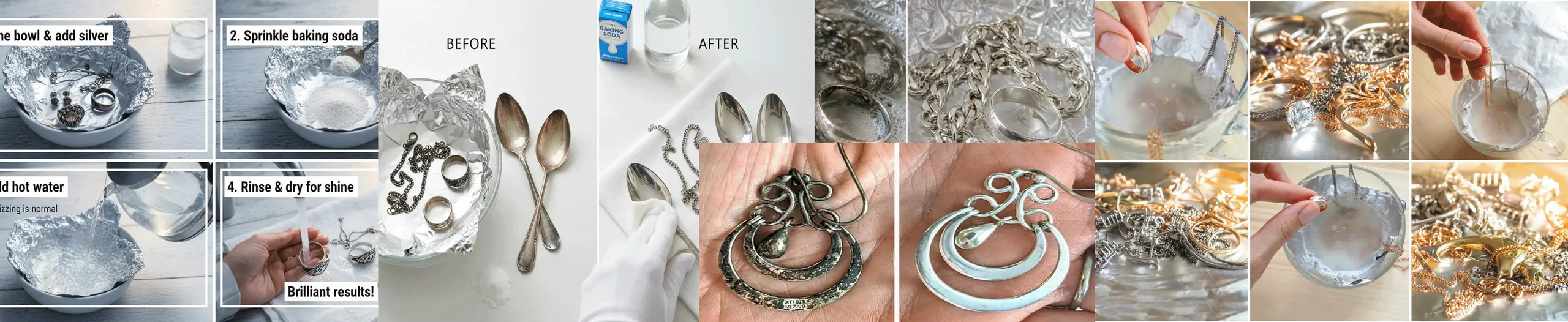
How to Clean Silver Jewelr to Restore Shine and Remove Tarnish
Silver jewelry has a timeless beauty. Whether it is a delicate sterling silver necklace, a favorite pair of earrings, a detailed bracelet, or a meaningful family ring, silver can add elegance to almost any outfit. But over time, silver can lose its bright appearance and develop a dark, dull layer called tarnish. This is why knowing how to clean silver jewelry properly is an important part of jewelry care.
If you are wondering how to clean silver jewelry at home, there are several methods you can try using simple household ingredients. Mild dish soap and warm water are useful for everyday dirt, while baking soda, aluminum foil, hot water, and salt are commonly used for tarnished silver. A silver polishing cloth can also restore shine without requiring complicated equipment.
However, learning how to clean silver jewelry is not simply about finding the strongest cleaner. The safest method depends on the type of silver, the amount of tarnish, and whether the jewelry contains gemstones, pearls, enamel, glue, or other delicate materials.
Before deciding how to clean silver jewelry, always check what the piece is made from. Solid silver, sterling silver, silver-plated jewelry, antique silver, and gemstone-set jewelry may need different levels of care.
Why Does Silver Jewelry Tarnish?
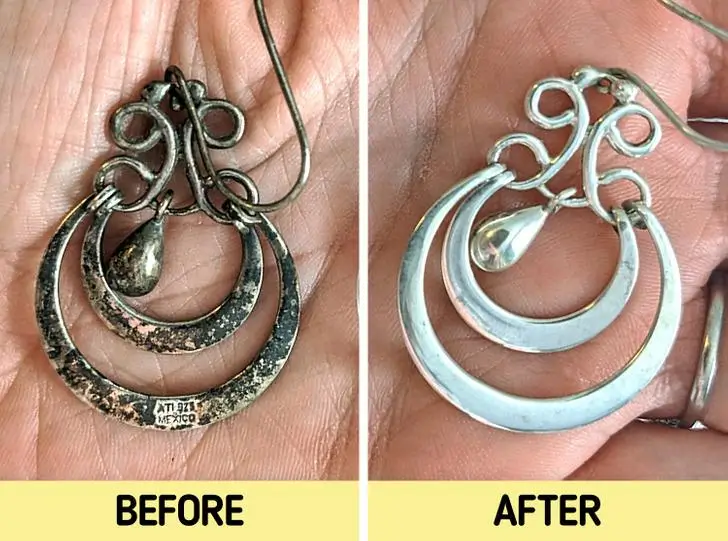
Before learning how to clean silver jewelry, it helps to understand why silver becomes dark. Silver tarnish is generally associated with a reaction between silver and sulfur-containing substances in the environment. Exposure to air, moisture, pollution, body oils, lotions, perfume, and some household chemicals can contribute to the dulling of silver. Tarnish is not necessarily dirt, and it does not mean your jewelry is poor quality. Even high-quality sterling silver can tarnish over time.
This is one reason how to clean silver jewelry is such a common jewelry-care question. Silver naturally changes when exposed to its surroundings, but proper cleaning and storage can help maintain its appearance.
Interestingly, jewelry that is worn regularly may sometimes remain brighter than pieces that are stored for long periods. Normal contact with clothing and skin can provide a small amount of natural polishing. However, wearing silver does not mean you never need to learn how to clean silver jewelry.
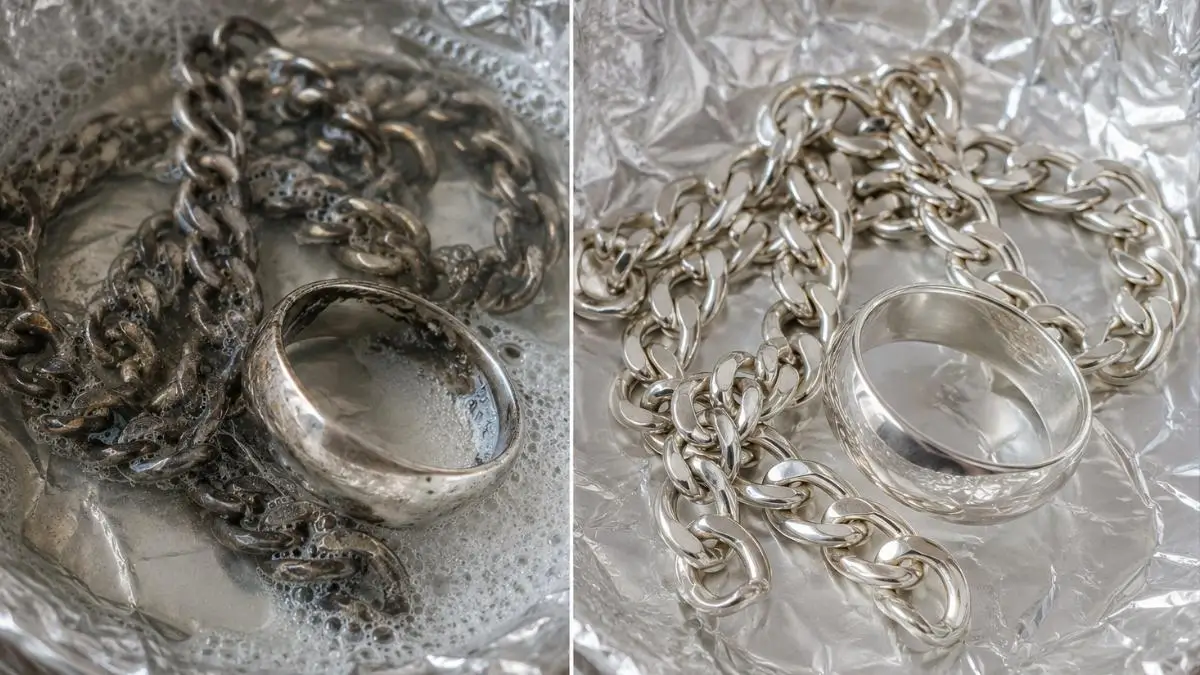
How to Clean Silver Jewelry for Light Dirt
For everyday dirt, oils, lotion residue, and light discoloration, start with the gentlest approach. If you are deciding how to clean silver jewelry that only looks slightly dull, mild dish soap and warm water are usually a practical starting point.
What You Need
- A small bowl
- Warm water
- A few drops of mild dish soap
- A very soft toothbrush
- A soft microfiber or lint-free cloth
Step-by-Step
- Add warm water to a clean bowl.
- Mix in a few drops of mild dish soap.
- Allow the soap to dissolve.
- Place the silver jewelry into the solution.
- Soak it for several minutes.
- Gently clean difficult areas with a very soft toothbrush.
- Rinse with clean water.
- Dry completely with a soft microfiber cloth.
When learning how to clean silver jewelry, remember that gentle cleaning is often better than aggressive scrubbing. Silver is relatively soft, and unnecessary abrasion can leave scratches. A baby toothbrush can be particularly useful because its bristles are softer than those of many standard toothbrushes.
How to Clean Silver Jewelry With Baking Soda and Aluminum Foil
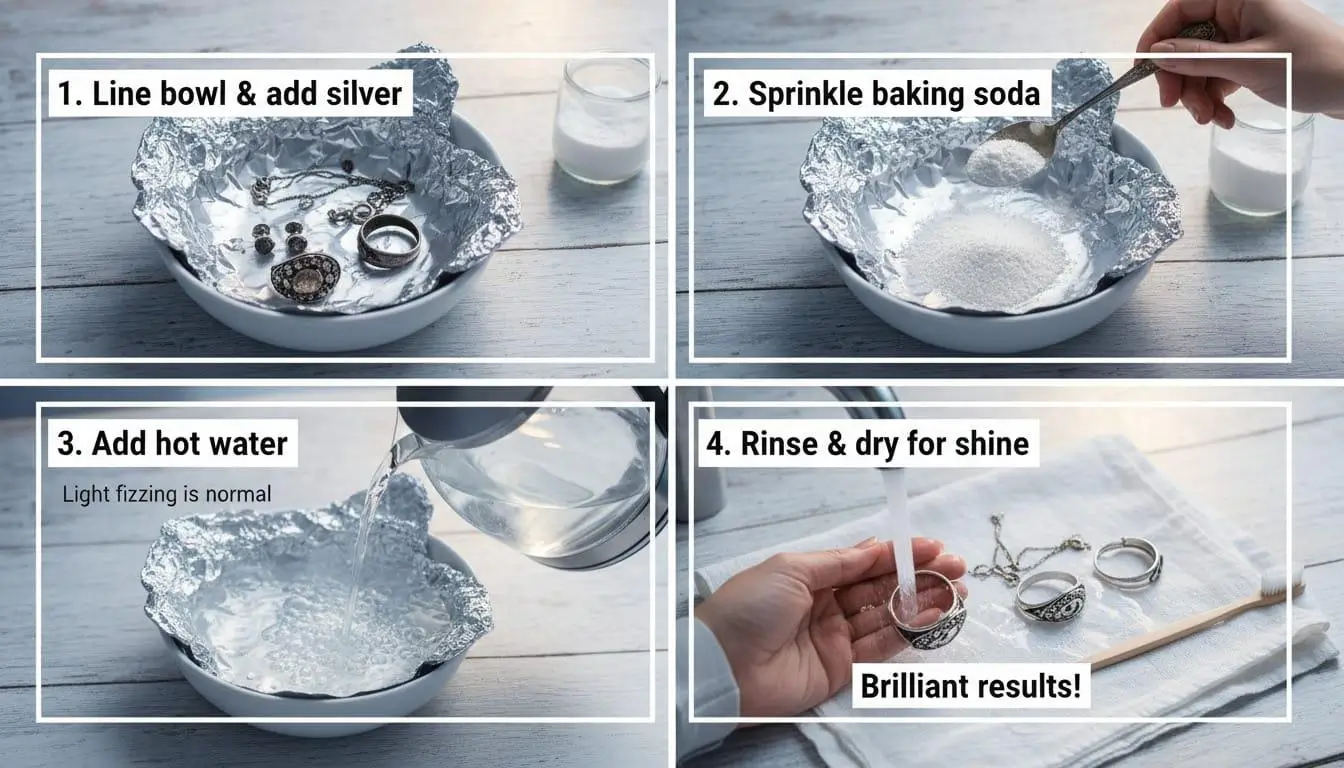
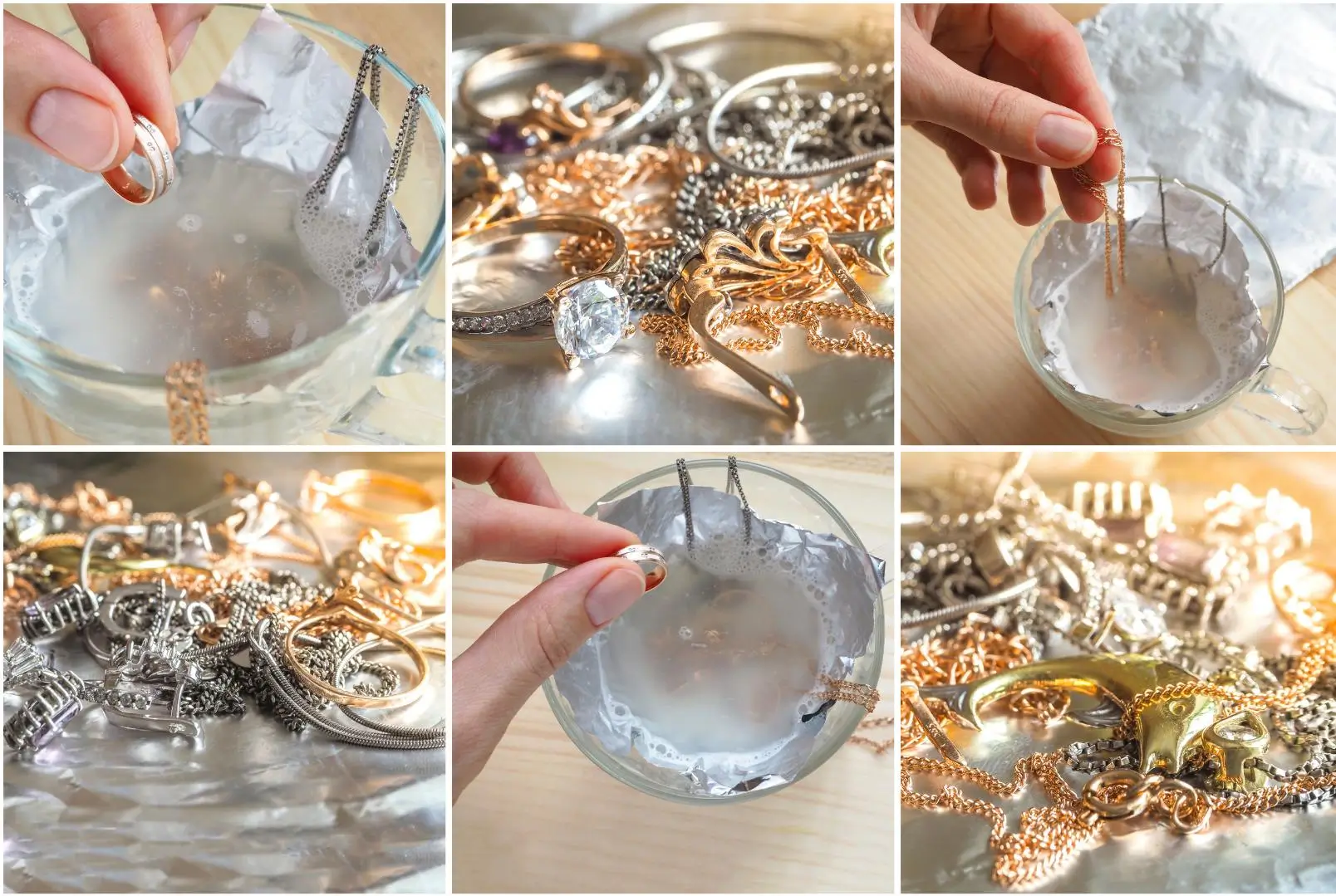
One of the most popular answers to how to clean silver jewelry is the baking soda and aluminum foil method. This method uses a chemical reaction rather than relying entirely on manual scrubbing. The tarnish can transfer from the silver toward the aluminum foil during the reaction.
What You Need
- Aluminum foil
- Baking soda
- Very hot or boiling water
- A glass or ceramic bowl
- Tongs
- Soft microfiber cloth
How to Clean Silver Jewelry Step-by-Step
- Line a small bowl with aluminum foil, with the shiny side facing upward.
- Place the tarnished silver jewelry directly onto the foil.
- Make sure the silver touches the aluminum.
- Sprinkle baking soda over the jewelry.
- Carefully pour hot or boiling water into the bowl.
- Make sure the jewelry is fully submerged.
- Allow it to sit for approximately 2 to 5 minutes for a quick treatment.
- Remove the jewelry carefully with tongs.
- Rinse thoroughly with clean water.
- Dry and buff gently with a soft cloth.
For someone researching how to clean silver jewelry quickly, this is one of the most widely shared home methods. Some variations use approximately one tablespoon of baking soda per cup of water, while other recipes use larger quantities depending on the container and amount of silver being cleaned. The important principle when considering how to clean silver jewelry with foil is that the silver should make direct contact with the aluminum foil.
How to Clean Silver Jewelry With Baking Soda Paste
Another answer to how to clean silver jewelry involves making a paste from baking soda and water. This method can be useful when you want to work directly on tarnished areas rather than soaking the jewelry.
What You Need
- Baking soda
- Water
- Small bowl
- Soft cloth or sponge
Method
- Put baking soda into a small bowl.
- Add enough water to create a wet paste.
- Apply a small amount of the paste to the silver.
- Rub gently with a soft cloth or sponge.
- Allow it to sit briefly if necessary.
- Rinse thoroughly.
- Dry completely.
- Buff gently with a soft cloth.
When deciding how to clean silver jewelry with baking soda paste, avoid heavy pressure. Although baking soda is commonly recommended as a home cleaning ingredient, some jewelry professionals caution that its abrasiveness can scratch silver. For valuable, highly polished, antique, or delicate silver, a silver polishing cloth may be a safer choice.
How to Clean Silver Jewelry With Baking Soda, Salt, Hot Water and Foil
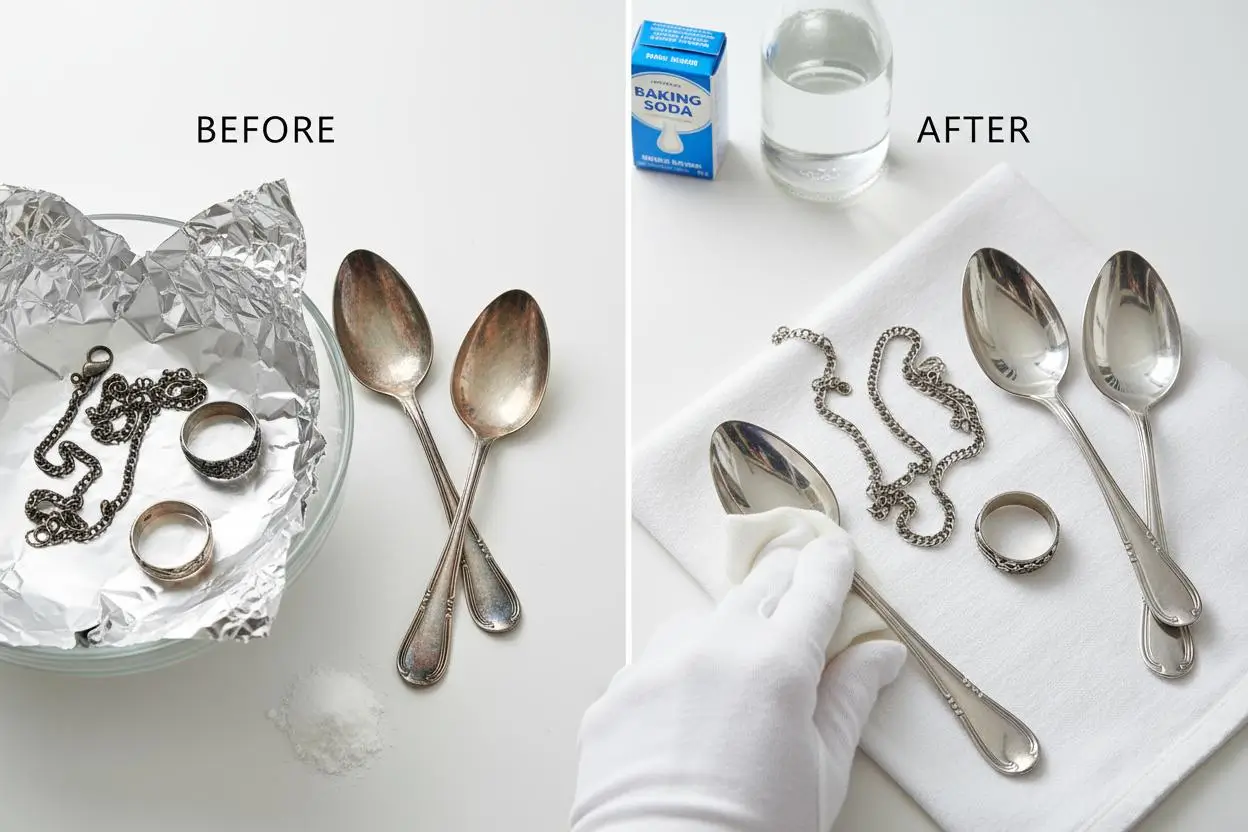
Another variation of how to clean silver jewelry combines baking soda, salt, hot water, and aluminum foil.
Materials
- Aluminum foil
- Baking soda
- Table salt
- Hot or boiling water
- Glass or ceramic bowl
- Tongs
- Soft cloth
Instructions
- Line a bowl with aluminum foil.
- Place the silver jewelry on the foil.
- Make sure the jewelry touches the aluminum.
- Add baking soda.
- Add a small amount of table salt.
- Pour hot water over the jewelry.
- Leave the jewelry in the solution for several minutes.
- Remove it carefully.
- Rinse thoroughly.
- Dry and buff with a soft cloth.
Some versions use approximately one tablespoon of baking soda and one tablespoon of salt with hot water. Other variations use smaller quantities depending on the size of the container. If you are researching how to clean silver jewelry, you may encounter many different measurements online. The basic concept remains similar: aluminum provides the reactive surface while salt or baking soda helps the solution conduct the reaction.
How to Clean Silver Jewelry with Aluminum Foil, Baking Soda, Salt and Aluminum Foil
A stronger variation of how to clean silver jewelry uses boiling water. The basic recipe uses a foil-lined pot or deep pan, water, baking soda, and salt.
Materials
- Large pot or deep pan
- Aluminum foil
- Water
- Approximately 1 teaspoon baking soda
- Approximately 1 teaspoon salt
- Tongs
- Soft cloth
Instructions
- Line the bottom of the pot with aluminum foil.
- Place the silver items inside.
- Add enough water to completely cover them.
- Add baking soda and salt.
- Bring the water to a boil.
- Allow the pieces to remain in the solution for approximately four minutes.
- Carefully remove the jewelry with tongs.
- Rinse each piece thoroughly.
- Dry completely.
- Buff lightly with a soft cloth.
When considering how to clean silver jewelry using boiling water, caution is essential. This approach should not automatically be used for every piece of jewelry. Heat and prolonged soaking can be inappropriate for pieces containing glued stones, delicate materials, pearls, opals, turquoise, coral, or other porous or sensitive gemstones.
How to Clean Silver Jewelry With Toothpaste, Baking Soda, Salt and Aluminum Foil
Another household recipe sometimes suggested for how to clean silver jewelry combines toothpaste, baking soda, salt, boiling water, and aluminum foil. The suggested approach is to place a piece of aluminum foil in a container, add hot or boiling water, and mix in toothpaste, baking soda, and salt before placing the silver into the solution. However, toothpaste requires an important warning.
Toothpaste contains abrasive ingredients, and repeated rubbing can scratch silver. Therefore, although toothpaste is sometimes promoted when discussing how to clean silver jewelry, it should not be considered the first-choice method for valuable, antique, silver-plated, highly polished, or delicate pieces.
If someone chooses to experiment with this method, a small, inconspicuous area should be tested first, and the jewelry should be rinsed thoroughly afterward. For safer everyday how to clean silver jewelry care, mild soap, warm water, and a soft cloth are preferable.
How to Clean Silver Jewelry With Vaseline
A further home-care suggestion for how to clean silver jewelry is applying a small amount of Vaseline or petroleum jelly before cleaning to help loosen or clear carbon and residue. If using this approach, apply only a small amount and work gently over the affected area. Afterward, clean the jewelry using an appropriate mild cleaning method and remove all petroleum residue.
When exploring how to clean silver jewelry, remember that petroleum jelly itself is not a substitute for proper silver cleaning. It should be treated as a preliminary household-care step rather than a silver polish. For delicate jewelry, gemstones, antique pieces, or valuable items, avoid experimenting with multiple substances and consult a jeweler instead.
How to Clean Silver Jewelry With Eno
Eno is another household product sometimes suggested when people search for how to clean silver jewelry. Because Eno contains ingredients such as sodium bicarbonate and citric acid, it can fizz when mixed with water. Some home-cleaning recipes use this fizzing reaction to help loosen light tarnish.
Suggested Method
- Line a small bowl with aluminum foil.
- Place the silver directly onto the foil.
- Add a small amount of Eno.
- Pour hot water into the bowl.
- Allow the silver to sit for approximately 2 to 5 minutes.
- Remove the jewelry.
- Rinse thoroughly.
- Dry with a microfiber cloth.
If you are learning how to clean silver jewelry with Eno, use particular caution with gemstones. Do not use fizzy, acidic, or hot solutions on pearls, opals, turquoise, coral, or other soft or porous stones. Glued-in stones can also be affected by heat and soaking. Eno may be considered for light tarnish, but it should not replace professional care for valuable or heavily damaged jewelry.
How to Clean Silver Jewelry With Vinegar
Vinegar is another method you may encounter when searching for how to clean silver jewelry. Some cleaning recipes use diluted white vinegar for tarnished silver. However, acidic solutions require caution because jewelry is often more complicated than plain silver.
A piece may contain gemstones, glue, enamel, plating, or other materials that do not respond well to acids. Therefore, if you are deciding how to clean silver jewelry, mild soap and water are a more conservative starting point. Avoid acidic cleaning solutions on pearls, opals, turquoise, coral, and other porous or delicate gemstones.
How to Clean Silver Jewelry With Commercial Silver Cleaners
Sometimes homemade solutions are not enough. If you are researching how to clean silver jewelry with a store-bought product, there are several types of commercial cleaners. Silver polishing creams, foams, polishing cloths, and liquid dips are commonly available. Polishing creams can remove tarnish while allowing you to control the amount of rubbing. A silver polishing cloth is another convenient option for regular maintenance.
Liquid silver dips can act much more quickly, but strong chemical dips require careful use. They can be corrosive and may damage silver if used incorrectly or left on too long. When considering how to clean silver jewelry with a commercial product, always follow the manufacturer’s instructions. Never assume that a product suitable for plain sterling silver is automatically suitable for gemstone jewelry.
How to Clean Silver Jewelry With a Polishing Cloth
A silver polishing cloth is one of the simplest solutions for how to clean silver jewelry. For lightly tarnished pieces, gently rub the silver with a cloth specifically designed for jewelry polishing. The cloth can remove surface tarnish and restore shine without requiring a liquid bath.
However, avoid aggressively polishing delicate areas or gemstones. When learning how to clean silver jewelry, the goal should be to restore the surface without causing unnecessary wear. A polishing cloth is especially convenient for quick maintenance after wearing silver jewelry.
How to Clean Silver Jewelry by Type
Different jewelry designs require different approaches. Knowing the construction of your piece is essential when deciding how to clean silver jewelry.
Silver Necklaces and Chains
Silver chains can accumulate perfume, lotion, body oils, and dirt because they remain close to the skin. For a lightly dirty chain, use warm water and mild dish soap. Gently work a soft toothbrush through the links if necessary. Rinse thoroughly and dry completely. When deciding how to clean silver jewelry such as a chain, make sure no moisture remains trapped between the links.
Silver Rings
Rings are exposed to frequent contact with water, soap, cosmetics, and surfaces. For a simple silver ring without sensitive stones, mild soap and warm water can be effective. A soft toothbrush can reach the underside of the setting and other narrow areas.
If you are researching how to clean silver jewelry that contains diamonds or other gemstones, clean around the stone carefully and avoid aggressive brushing.
Silver Earrings
Earrings can collect oils, cosmetics, and residue around their posts and backs. Use mild soap and warm water for appropriate pieces and dry them thoroughly If the earrings contain delicate stones, avoid soaking them without confirming that the stones and setting can tolerate it.
Silver Bracelets
Bracelets can be cleaned using the same gentle approach as necklaces and rings. Pay attention to clasps and joints where dirt can collect. For how to clean silver jewelry with intricate details, a soft toothbrush can help reach areas that a cloth cannot.
How to Clean Silver Jewelry With Gemstones
Gemstone jewelry needs extra attention. Not every gemstone should be exposed to hot water, baking soda, vinegar, Eno, commercial silver dips, or prolonged soaking. Pearls are particularly delicate. Opals, turquoise, coral, and other porous or organic materials also require special care. When learning how to clean silver jewelry with gemstones, identify the stone before selecting a cleaning method.
A safer general approach is to use a soft, slightly damp cloth and avoid soaking whenever the stone or setting is uncertain. For valuable gemstone jewelry, professional cleaning is often the safest option.
How to Clean Silver Jewelry With Pearls
Pearls deserve special caution when considering how to clean silver jewelry. Avoid harsh chemicals, abrasive ingredients, acidic solutions, and hot water. A gentle approach is to wipe the jewelry with a soft cloth and use lukewarm water when appropriate.
- Do not use baking soda paste directly on pearls.
- Do not use toothpaste on pearls.
- Do not place pearl jewelry into a boiling-water foil bath.
When determining how to clean silver jewelry with pearls, protecting the pearl is more important than achieving instant silver shine.
How to Clean Silver-Plated Jewelry
Silver-plated jewelry has a thin layer of silver over another metal. This makes caution particularly important. Aggressive rubbing, abrasive cleaners, frequent polishing, or strong chemical dips can eventually affect the plating. If you are deciding how to clean silver jewelry that is silver-plated, start with mild soap and warm water. Dry it carefully and avoid unnecessary polishing.
How to Clean Antique or Valuable Silver Jewelry
Antique and sentimental jewelry should not automatically be treated like ordinary sterling silver. Some antique pieces have intentional darkened areas that enhance their design. Aggressive cleaning can remove this patina and change the appearance of the piece.
This is why professional advice can be important when deciding how to clean silver jewelry that is antique, rare, valuable, or emotionally significant. Avoid experimenting with boiling water, strong chemical dips, toothpaste, or abrasive pastes on such pieces. A professional jeweler can inspect the metal, stones, settings, clasps, and overall condition before cleaning.
What Not to Use When Cleaning Silver Jewelry
Knowing what to avoid is just as important as knowing how to clean silver jewelry.
Toothpaste
Toothpaste is often recommended online, but its abrasive ingredients can scratch silver.
Paper Towels
Paper towels can be rough enough to leave fine scratches on soft silver surfaces.
Use a microfiber cloth instead.
Harsh Chemicals
Bleach, chlorine, strong household chemicals, and corrosive cleaners can damage metals and gemstones.
Excessive Silver Dip
Strong liquid dips can remove tarnish quickly, but frequent use may be too aggressive.
Hot Water on Sensitive Jewelry
Boiling water is not appropriate for every piece.
Heat can loosen glued-in stones and may damage delicate materials.
How to Clean Silver Jewelry Without Damaging It
The safest approach to how to clean silver jewelry is to match the cleaning method to the jewelry.
- For light dirt, use mild soap and warm water.
- For plain tarnished silver, a foil and baking soda bath is a commonly used household option.
- For quick polishing, use a silver polishing cloth.
- For delicate gemstone pieces, use a gentle cloth-based method.
- For antique, valuable, or heavily intricate jewelry, consider professional cleaning.
The most important principle when learning how to clean silver jewelry is to avoid unnecessary force. You do not need to scrub aggressively to make silver shine.
How to Dry Silver Jewelry After Cleaning
Drying is an important part of how to clean silver jewelry properly. After rinsing, gently pat the piece dry with a clean, soft cloth. Use a microfiber or lint-free cloth whenever possible. Pay attention to crevices, chain links, settings, clasps, and the backs of stones. Do not put jewelry into storage while it is still damp. Moisture can contribute to tarnishing and can be especially problematic for certain jewelry materials.
How to Polish Silver Jewelry
Once you have learned how to clean silver jewelry, polishing can help restore the final shine. Use a dedicated silver polishing cloth and gently buff the metal. Avoid polishing delicate stones or areas where polishing could remove intentional oxidized details. For heavily scratched or badly tarnished pieces, professional polishing may be more appropriate. A jeweler can use professional polishing equipment and compounds to restore a smoother, brighter finish.
How to Prevent Silver From Tarnishing
Knowing how to clean silver jewelry is useful, but preventing tarnish can reduce how often you need to clean it. Store silver jewelry in a cool, dry, dark place. An airtight container or anti-tarnish pouch can help limit exposure to the air.
Anti-tarnish strips can also be placed inside jewelry storage. Keep individual pieces separated so they do not scratch one another. Do not store silver while it is wet. Avoid storing jewelry in bathrooms because humidity can accelerate tarnishing.
Wear Your Silver Jewelry Regularly
One interesting tip related to how to clean silver jewelry is simply to wear it. Regular wear can provide a small amount of natural polishing and may help prevent the heavy buildup that can occur when silver sits untouched for long periods.
That does not mean you should wear silver during every activity. Remove jewelry before swimming, showering, exercising, cleaning, or using household chemicals. Put jewelry on after applying perfume, lotion, hairspray, makeup, or skincare products. These simple habits can reduce the amount of cleaning required.
How Often Should You Clean Silver Jewelry?
There is no single schedule for how to clean silver jewelry because different pieces are exposed to different conditions. Everyday silver can benefit from quick wiping after use. Light cleaning can be performed when the jewelry begins to look dull. A deeper cleaning can be performed when visible tarnish develops. Avoid overcleaning. If your jewelry looks good, there is no reason to repeatedly expose it to cleaning solutions.
When Should You Choose Professional Cleaning?
Sometimes the best answer to how to clean silver jewelry is to avoid doing it yourself. Professional cleaning is recommended when a piece is:
- Antique
- Highly valuable
- Sentimental
- Heavily tarnished
- Intricately designed
- Set with delicate gemstones
- Showing loose stones
- Silver-plated and already worn
- Damaged or scratched
A professional jeweler can clean the piece while also checking the settings, clasps, stones, and overall condition. Professional equipment such as ultrasonic cleaners and specialized polishing tools may reach areas that are difficult to clean at home.
Final Guide: How to Clean Silver Jewelry Safely
Ultimately, how to clean silver jewelry depends on what your jewelry needs.
- For everyday dirt, mild dish soap and warm water are a gentle starting point.
- For plain tarnished silver, the baking soda and aluminum foil method is a popular home technique.
- For targeted cleaning, baking soda paste can be used cautiously, although its abrasive nature means it should not be used aggressively.
- For quick shine, a silver polishing cloth is convenient.
Some people also use salt, baking soda, hot water, and aluminum foil together, while other household recipes include Eno or toothpaste. These methods should be approached cautiously, especially when jewelry contains gemstones. The Vaseline method can be considered as a preliminary step for clearing carbon or residue, followed by proper cleaning.
The toothpaste, baking soda, salt, boiling-water, and aluminum foil combination is another household recipe you may encounter, but toothpaste and abrasive ingredients can scratch silver, so it is not the preferred routine method.
The most important lesson in how to clean silver jewelry is that stronger does not always mean better. Gentle cleaning, careful drying, appropriate polishing, and proper storage can help your silver remain beautiful for years.
If you are ever uncertain about how to clean silver jewelry, particularly when the piece contains pearls, opals, turquoise, coral, antique settings, glued stones, or valuable gemstones, choose the gentlest method or consult a professional jeweler.
With the right routine, how to clean silver jewelry does not have to be complicated. A soft cloth, mild soap, careful handling, and good storage habits can go a long way toward keeping your favorite silver pieces bright, clean, and ready to wear.