Multan Weather Update: Complete Guide
Weather Note: Check the latest forecast for Multan before heading outdoors, especially during periods of extreme heat, high humidity, heavy rain, fog, thunderstorms, or strong winds.
The Multan Weather Widget is a specialized, real-time weather companion designed for the climate of Multan, Pakistan. By retrieving live meteorological data for the city, it provides a practical overview of Multan temperature, feels-like temperature, humidity, wind speed, visibility, cloud cover, UV index, and the probability of rain. Its integrated “Weather Advisory” translates current weather conditions into simple, practical guidance, helping residents and visitors understand whether conditions are suitable for outdoor activities or require additional precautions.
Beyond basic weather measurements, the Weather in Multan widget features a sleek, mobile-responsive hourly weather slider and a 5-day forecast, allowing users to plan work, commuting, shopping, sightseeing, outdoor activities, and travel around changing weather conditions. Designed with a clean, high-contrast appearance, the widget provides an easy-to-read overview of current and upcoming weather in Multan, whether you are checking conditions during the extremely hot summer months, the monsoon season, the foggy winter period, or the comparatively pleasant spring and autumn seasons.
Multan Weather Update: FAQ
1. What is the climate of Multan?
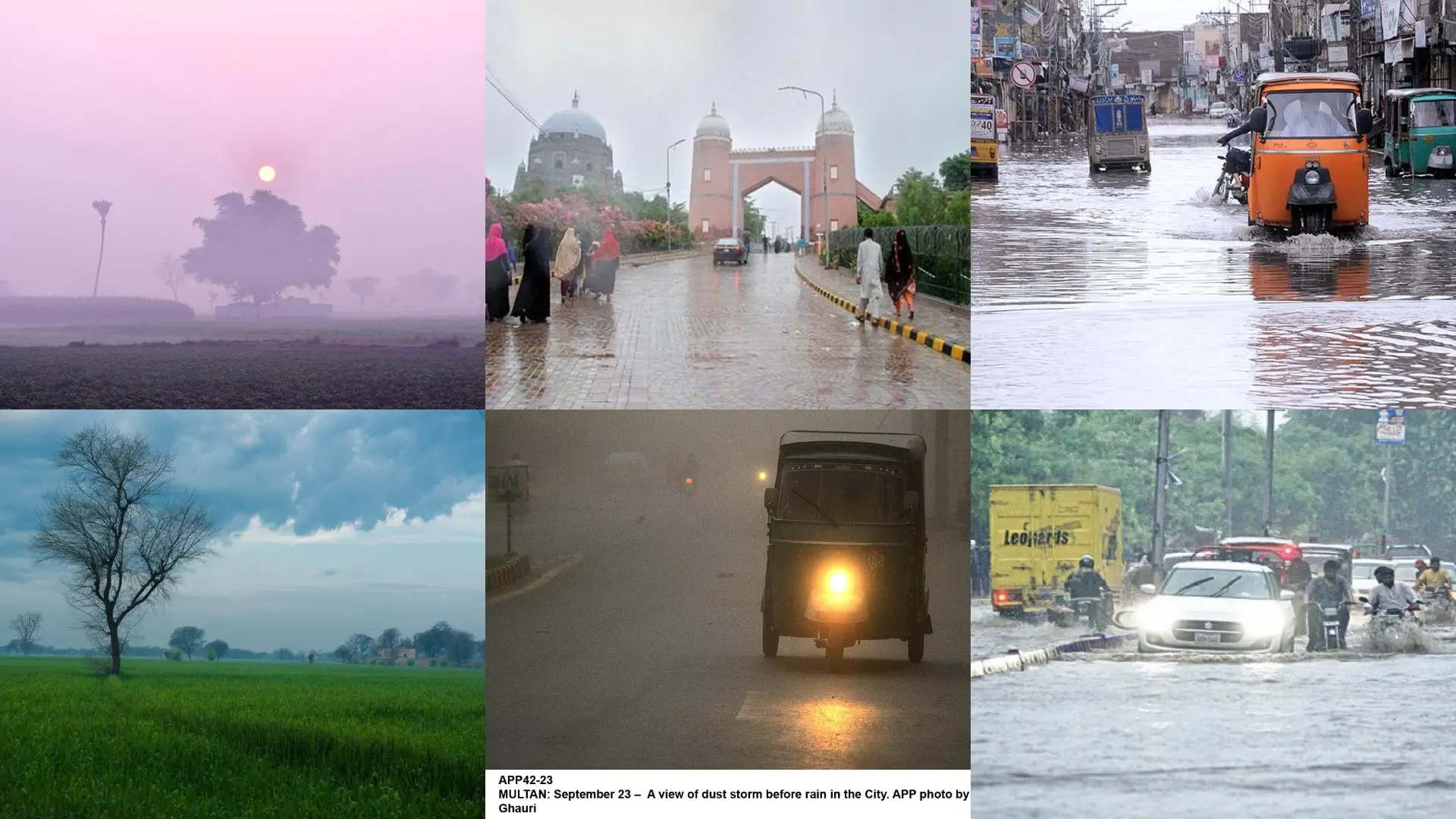
Multan has a hot desert climate, characterized by extremely hot summers, relatively mild-to-cold winters, low annual rainfall, and dry conditions throughout much of the year. The city experiences significant seasonal temperature variations, with summer temperatures rising considerably during May and June. Its geographical location in southern Punjab also makes it susceptible to heatwaves, dust storms, and seasonal monsoon rainfall. Multan+1
2. What is the best time to visit Multan?
The cooler months from approximately November to March are generally the most comfortable for sightseeing and outdoor activities. November, February, and March often provide more pleasant conditions for exploring historic landmarks, visiting shrines, shopping in traditional bazaars, and enjoying local attractions. December and January can bring chilly mornings, cold nights, and occasional fog, which may affect travel.
3. How hot does Multan get in summer?
Multan experiences extremely hot summers, particularly during May, June, and July. Daytime temperatures can exceed 40°C, and during severe heatwaves, temperatures may approach or exceed 45°C. The combination of intense sunlight, dry conditions, and hot winds can make outdoor activities uncomfortable and potentially dangerous. Staying hydrated, wearing lightweight clothing, seeking shade, and avoiding strenuous outdoor activities during peak afternoon heat are recommended. Environment Sector+1
4. Does it rain heavily in Multan?
Multan generally receives relatively low annual rainfall compared with many other cities in Punjab. However, the city can experience heavy showers and thunderstorms during the summer monsoon season. Intense rainfall may cause localized waterlogging, drainage problems, traffic disruptions, and delays in transportation. Although rainfall is limited during most of the year, occasional monsoon systems can produce significant downpours.
5. When is the monsoon season in Multan?
The main monsoon season generally occurs from July to September, although rainfall can begin earlier, particularly in June. During this period, Multan may experience cloudy skies, thunderstorms, heavy showers, gusty winds, and sudden weather changes. July and August are typically among the wetter months. Rainfall intensity varies each year, so checking the latest forecast is useful when planning outdoor activities and journeys.
6. Is Multan very humid?
Multan Weather generally experiences relatively dry conditions, particularly during spring and early summer. However, humidity can increase during the monsoon season, especially in July and August. When higher humidity combines with extreme summer temperatures, the feels-like temperature can become considerably higher, making outdoor conditions uncomfortable. Checking humidity and apparent temperature is useful when planning outdoor activities.
7. Does Multan experience strong winds?
Yes. Multan occasionally experiences strong winds, particularly during thunderstorms, seasonal weather changes, and dust storms. Dusty winds are relatively common during the hotter months and can reduce visibility, affect air quality, and create challenging conditions for outdoor activities and road travel. Checking wind speed and weather alerts is particularly useful before planning outdoor events. Environment Sector+1
8. Is Multan weather suitable for outdoor activities?
Outdoor activities are generally more comfortable during the cooler months, particularly November through March, as well as during early mornings and evenings in warmer seasons. Historic landmarks, Sufi shrines, traditional markets, parks, and cultural attractions can be enjoyable when weather conditions are favorable. During extreme heat, dust storms, heavy rain, or thunderstorms, outdoor plans should be adjusted according to current forecasts and official advisories.
9. Is it safe to travel in Multan during bad weather?
Travel can become more challenging during extreme heat, dust storms, heavy rain, thunderstorms, or dense fog. Dust storms may reduce road visibility, while intense rainfall can cause water accumulation and traffic congestion. High summer temperatures can also make long-distance journeys uncomfortable. Check weather and traffic updates before travelling, carry sufficient drinking water, allow additional time for your journey, and follow official safety recommendations.
10. What should I wear in Multan during summer?
Lightweight, breathable clothing is generally the most comfortable choice during Multan’s extremely hot summers. Loose-fitting cotton clothes, sunglasses, a wide-brimmed hat, and other sun protection can help when spending time outdoors. Carry drinking water and avoid prolonged exposure to direct sunlight during the hottest hours of the day. Light-colored clothing is also a practical choice for reflecting sunlight.
11. Do I need sunscreen in Multan?
Sun protection is particularly important in Multan because of its intense summer sunlight and high daytime temperatures. Sunscreen, sunglasses, protective clothing, and shade can help reduce ultraviolet exposure. Checking the daily UV index is useful when planning sightseeing, outdoor exercise, shopping, or other extended outdoor activities. Additional precautions are recommended during May, June, and July.
12. When is Multan’s weather coolest?
Multan’s coolest period is generally during December and January. Winter temperatures can fall considerably overnight, resulting in chilly mornings and evenings. Although daytime conditions can remain relatively pleasant, colder nights and occasional fog may affect commuting and longer journeys. Warm clothing is recommended during early mornings and late evenings.
13. Does Multan experience fog?
Yes. Multan can experience fog during the winter months, particularly from December through January. Fog can reduce visibility on major roads and highways, affecting commuting and longer journeys. Winter fog conditions may also create transportation delays. Check visibility forecasts and official weather advisories before travelling, especially during early mornings. ResearchGate+1
14. Can heavy rain affect transportation in Multan?
Yes. Although Multan receives relatively little rainfall throughout the year, heavy monsoon showers can disrupt traffic, cause water accumulation on roads, and delay transportation. Some low-lying areas and roads with drainage problems may be particularly vulnerable to waterlogging. During intense rainfall, allow additional travel time, check road conditions, and avoid driving through flooded roads.
15. What is the best way to check Multan weather before going outside?
Use a live Multan weather forecast to check the current temperature, feels-like temperature, precipitation probability, humidity, wind speed, cloud cover, UV index, and visibility. The hourly forecast is particularly useful when planning outdoor activities, commuting, sightseeing, shopping, or travel because weather conditions can change throughout the day.
During summer, pay particular attention to extreme temperatures, heat index, and UV levels. In the monsoon season, regularly check rainfall probabilities and thunderstorm advisories. During winter, monitor fog and visibility conditions before travelling.