Pakistani Wedding Events: The Beauty and Cultural Significance of Pakistani Weddings
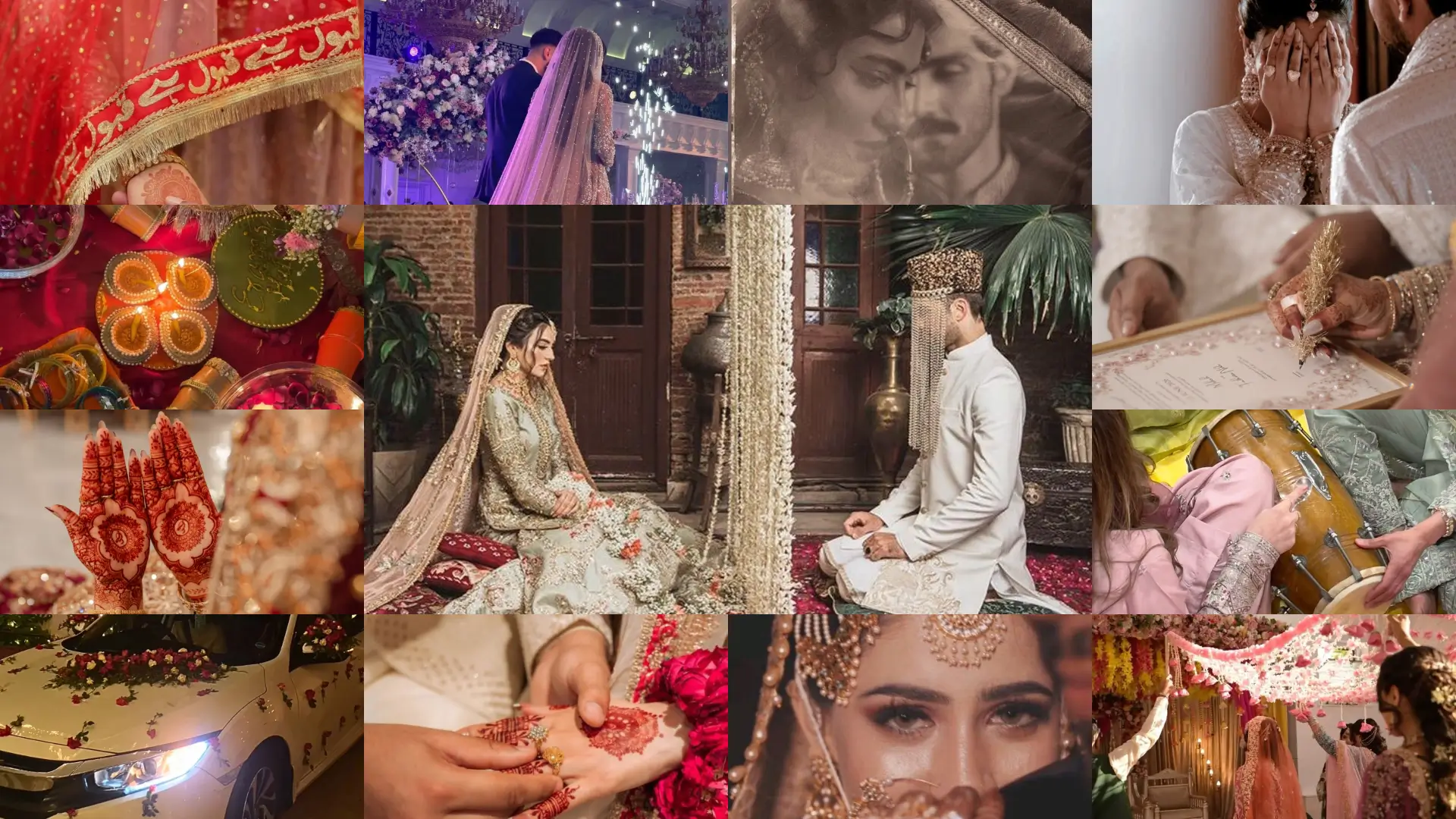
A Pakistani wedding is much more than a marriage ceremony. It is a beautiful celebration of love, family relationships, cultural heritage, religious values, music, traditional clothing, food and unforgettable memories. Unlike weddings that take place within a single day, Pakistani weddings often extend over several days or even weeks, with each function representing a different stage in the journey of two families coming together.
From the first marriage proposal to the emotional farewell of the bride, every ceremony has its own cultural significance. Some Pakistani Wedding functions are deeply rooted in family traditions, while others are associated with Islamic marriage practices. Together, they create the distinctive atmosphere that makes Pakistani weddings so special.
The celebrations traditionally begin with the Rishta process, followed by family discussions and prayers such as Salat al-Istikhara. Once both families agree, they may arrange a Dua-e-Khair gathering or Mangni ceremony to celebrate the upcoming marriage. As the wedding approaches, the festivities become more colourful with Dholki, Mayoun, Ubtan, Qawwali Night and Mehndi. The main wedding celebrations generally revolve around Nikah, Baraat and Rukhsati. Following these ceremonies, the groom’s family traditionally hosts the Walima, while some families also arrange Chauthi and other post-wedding gatherings.
However, there is no single fixed sequence followed by every Pakistani family. Wedding traditions vary according to regional backgrounds, religious practices, family preferences and personal choices. Punjabi, Sindhi, Pashtun, Balochi, Kashmiri and other Pakistani communities may observe different customs or give different importance to particular ceremonies.
Modern Pakistani weddings have also evolved. Families increasingly combine events, organise destination weddings, arrange professional photography and choreography, and introduce contemporary celebrations such as dedicated Qawwali Nights and themed bridal events.
This comprehensive guide explores Pakistani wedding events in order, explaining their cultural meanings, traditional rituals, outfits, family responsibilities and modern variations. Whether you are planning your wedding, researching Pakistani culture or simply interested in understanding traditional wedding customs, this guide will help you discover the beauty of every ceremony.
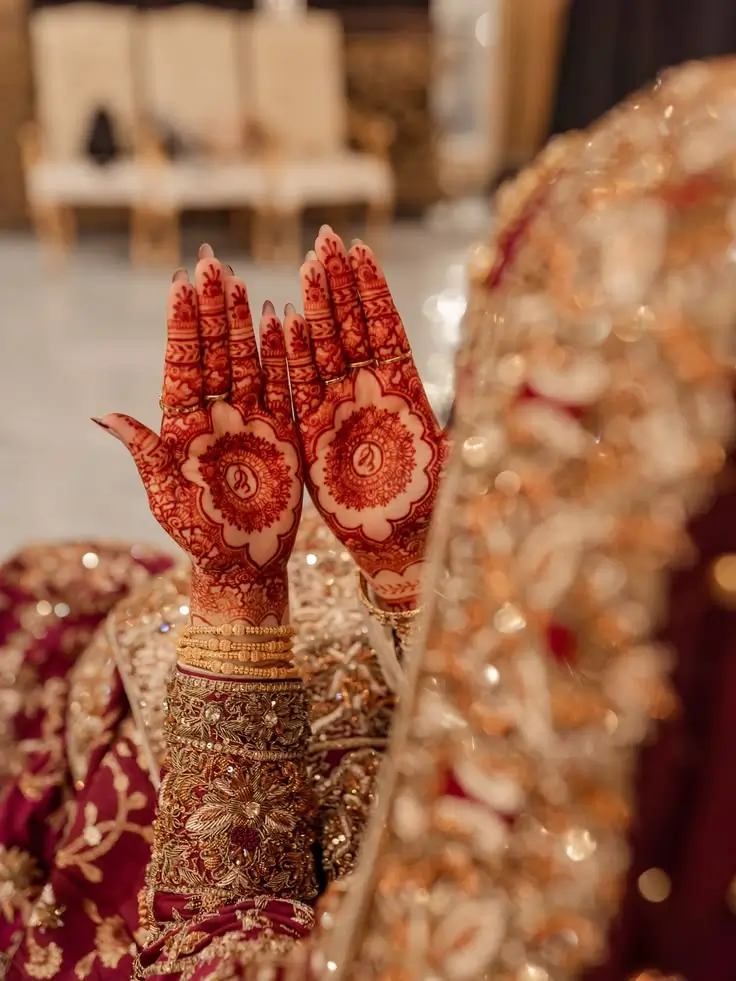
Pakistani Wedding Events in Order: Complete Event Table
Before exploring individual ceremonies, it is helpful to understand the overall sequence of a traditional Pakistani wedding. The following table provides an overview of the most commonly observed Pakistani Wedding functions, their usual timing and their significance.
| No. | Pakistani Wedding Event | Typical Timing | Main Purpose |
|---|---|---|---|
| 1 | Rishta | Before wedding planning | Initial marriage proposal and family meeting |
| 2 | Salat al-Istikhara | During marriage discussions | Seeking Allah’s guidance |
| 3 | Dua-e-Khair | After proposal acceptance | Prayers and family blessings |
| 4 | Baat Pakki | After family agreement | Formal acceptance of the proposal |
| 5 | Mangni | Weeks or months before marriage | Engagement and ring exchange |
| 6 | Dholki | Days or weeks before wedding | Traditional songs and musical celebrations |
| 7 | Mayoun | Usually a few days before wedding | Traditional pre-wedding bridal preparation |
| 8 | Ubtan | During Mayoun or before Mehndi | Traditional beauty and blessing ritual |
| 9 | Qawwali Night | Before Mehndi or Baraat | Live Qawwali and musical gathering |
| 10 | Mehndi | Usually one or two days before Baraat | Henna, music, dancing and festivities |
| 11 | Sehra Bandi | Before groom’s Baraat departure | Groom’s traditional wedding preparation |
| 12 | Nikah | Before or during the main wedding | Islamic marriage contract |
| 13 | Baraat | Main wedding day | Groom’s procession and wedding reception |
| 14 | Milni | On Baraat arrival | Welcoming and greeting both families |
| 15 | Rukhsati | Usually after Baraat | Bride’s departure from her parental home |
| 16 | Walima | After the wedding | Post-wedding reception hosted by groom’s family |
| 17 | Chauthi | Traditionally around the fourth day | Bride’s first visit to her parental home |
Important: This is a commonly followed cultural sequence, not a compulsory wedding schedule. Families may combine functions, rearrange their timing or skip certain customs. Nikah has its own religious significance, while most other listed ceremonies are cultural traditions.
1. Rishta Ceremony: The Beginning of a Pakistani Marriage – Pakistani Wedding Events list
The Rishta is traditionally the first important step in a Pakistani marriage. It represents the beginning of discussions between two families about the possibility of marriage between their children. In Pakistani society, marriage has traditionally been considered a relationship between two families rather than simply a commitment between two individuals. Therefore, the Rishta process often involves parents, grandparents, siblings, relatives and family friends.
The initial meeting is usually arranged at the bride’s home or another comfortable location. Both families introduce themselves, discuss their backgrounds and get to know one another.
How Does the Rishta Process Begin? – Pakistani Wedding Events
Traditionally, the groom’s family approaches the bride’s family to express interest in a marriage proposal. Sometimes, relatives or mutual acquaintances introduce the families. In other situations, the couple may already know each other through education, work or social connections and decide to involve their families.
The initial gathering is generally informal and welcoming. Guests may be served tea, traditional snacks, sweets and refreshments.Some families also bring gifts such as flowers, fruits, mithai or beautifully presented gift baskets. During the meeting, families may discuss:
- Family background and values.
- Education and professional careers.
- Religious beliefs and expectations.
- Future living arrangements.
- Marriage expectations and responsibilities.
- Wedding plans and possible dates.
Importance of Family Approval – Pakistani Wedding Events
Family involvement has traditionally played an important role in Pakistani marriages. Parents and elders may offer advice and guidance based on their experiences. However, mutual consent between the prospective bride and groom is essential. Marriage should not be treated as a decision that relatives can make without the agreement of the individuals getting married.
Modern Pakistani couples increasingly participate directly in the decision-making process, balancing family involvement with their personal preferences.
What Happens After the Rishta? – Pakistani Wedding Events
Once both families are satisfied and the prospective couple agrees, they may officially accept the proposal. This agreement can be celebrated privately with sweets or through a formal Dua-e-Khair or Mangni gathering. The Rishta therefore marks the beginning of a journey that eventually leads to the wedding celebrations.
2. Salat al-Istikhara: Seeking Divine Guidance Before Marriage – Pakistani Wedding Events
Salat al-Istikhara is an Islamic prayer through which a person seeks Allah’s guidance when making an important decision. In the context of marriage, prospective brides, grooms or their family members may perform Istikhara before making a final decision about a proposal. It is a meaningful religious practice for people who wish to seek guidance and ask Allah to make the best decision easier for them.
What Is the Purpose of Istikhara? – Pakistani Wedding Events
The word Istikhara refers to seeking goodness or guidance. When considering marriage, an individual may pray for guidance regarding whether a particular proposal will be beneficial for their religious, personal and family life. The prayer is not limited to marriage. Muslims may perform Istikhara when making different important life decisions.
Is Istikhara a Compulsory Wedding Ritual? – Pakistani Wedding Events
No. Istikhara is not a compulsory marriage ceremony or a legal requirement for Nikah. It is a recommended prayer for seeking divine guidance and can be performed privately without arranging a formal gathering. It should also not be confused with a requirement to receive a dream or a particular sign. Seeking guidance involves prayer, thoughtful consideration and making a responsible decision.
Istikhara and Family Discussions – Pakistani Wedding Events
Many Pakistani families consider Istikhara an important part of their marriage decision-making process. After the families have discussed the proposal and the prospective couple has expressed consent, they may perform Istikhara before finalising their arrangements. This practice reflects the importance of faith and spiritual guidance in many Pakistani households.
3. Dua-e-Khair: A Beautiful Gathering of Prayers and Blessings – Pakistani Wedding Events
Dua-e-Khair is a meaningful family gathering that some Pakistani households arrange after accepting a marriage proposal. The ceremony is centred around prayers, blessings and the expression of happiness over the upcoming marriage. Unlike a large engagement party, Dua-e-Khair is often intimate, peaceful and emotionally significant. The word Dua means prayer, while Khair refers to goodness or well-being. The gathering therefore symbolises the families’ wish for a happy, peaceful and blessed married life for the couple.
What Happens During Dua-e-Khair? – Pakistani Wedding Events
The ceremony usually takes place at the home of either the bride or groom, although some families prefer a small event venue. Close relatives and elders from both families are invited. Depending on family traditions, the gathering may include:
- Recitation from the Holy Quran.
- Collective prayers for the couple.
- Supplications for a successful marriage.
- Sharing sweets and traditional mithai.
- Exchange of gifts.
- Announcing the acceptance of the Rishta.
- A small cake-cutting ceremony.
One of the most recognisable parts of the gathering is the distribution of mithai. Sweets symbolise happiness and the sharing of good news with family members.
Is Dua-e-Khair the Same as Mangni? – Pakistani Wedding Events
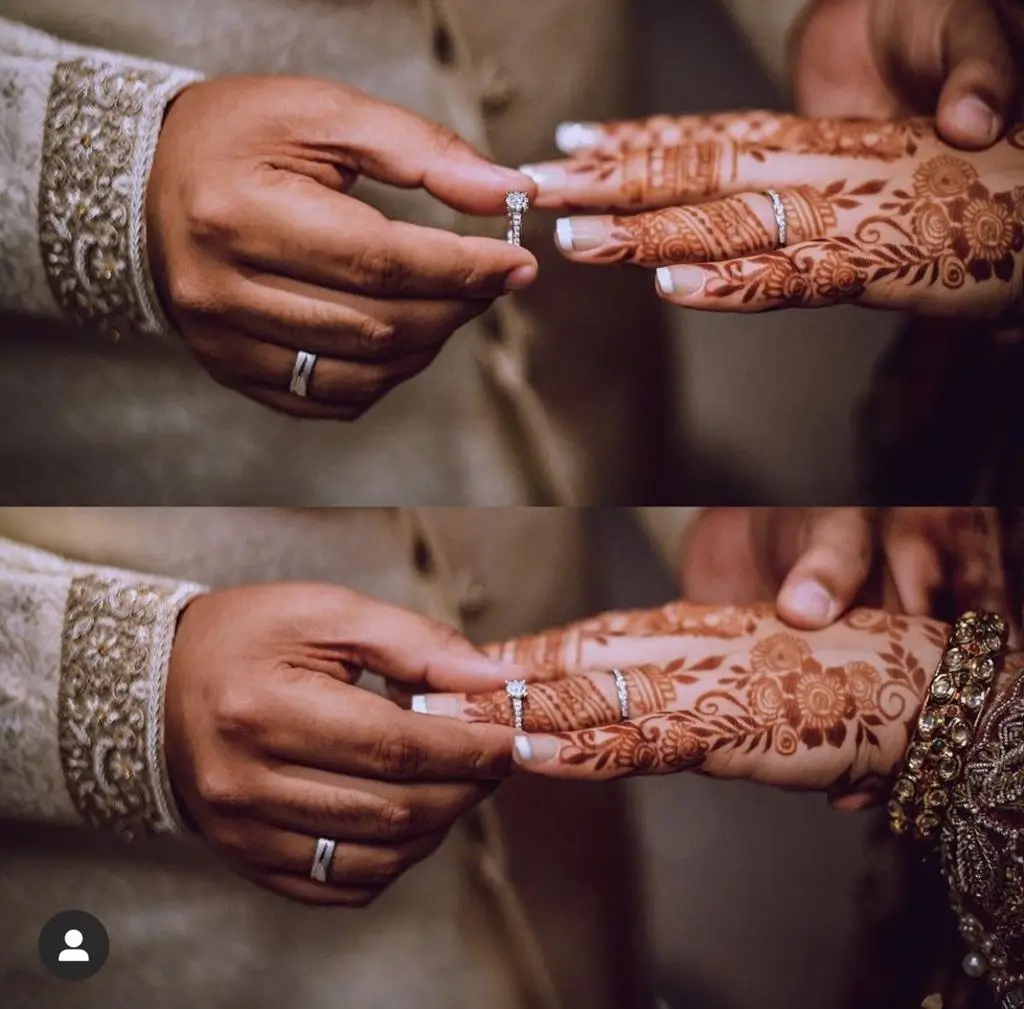
No. Although the two ceremonies can be combined, they have different traditional purposes. Dua-e-Khair focuses on prayers, blessings and the acceptance of the marriage proposal. Mangni is generally associated with the formal announcement of the engagement and, in many families, an exchange of rings.
Modern Dua-e-Khair Celebrations – Pakistani Wedding Events
Modern Pakistani families sometimes organise elegant Dua-e-Khair events with floral decorations, modest stage arrangements, pastel-coloured outfits and personalised cakes. Some families prefer Pakistani Wedding traditional arrangements at home, while others choose small banquet halls. Nevertheless, the central purpose remains the same: to begin the marriage journey with prayers, goodwill and family blessings.
4. Baat Pakki – Pakistani Wedding Events – Pakistani Wedding Events
Baat Pakki (literally meaning “confirmed talk”) is a traditional South Asian pre-engagement ceremony in Pakistan and parts of India where the families of the bride and groom formally agree to the marriage. It marks the first official step and verbal confirmation before a formal engagement (Mangni) or public announcement.
What Happens at a Baat Pakki?
- Intimate Gathering: It is usually a small, close-knit affair held at the bride’s home with immediate family members.
- Gifts & Sweets: Families exchange gifts, clothing items, or dry fruits, and distribute traditional sweets (mithai) to celebrate.
- Duas and Blessings: Elders offer prayers (duas) and well-wishes for the couple’s future together.
- Decor & Setup: Modern celebrations often feature home or drawing-room decors such as floral backdrops, fairy lights, custom cake toppers, and themed banners. You can find local event supplies and decorations
5. Mangni: The Traditional Pakistani Engagement Ceremony – Pakistani Wedding Events
Mangni is the Pakistani traditional engagement ceremony that formally marks the couple’s commitment to marriage. It is one of the most recognised pre-wedding functions in Pakistan. Depending on family traditions, Mangni may be a small gathering at home or a grand celebration at a banquet hall. For many couples, it is the first major occasion on which both families publicly celebrate their upcoming marriage.
Traditional Mangni Rituals – Pakistani Wedding Events
The engagement ceremony usually brings together close relatives and friends from both families. Common activities include:
- Welcoming guests and introducing family members.
- Offering prayers and blessings for the couple.
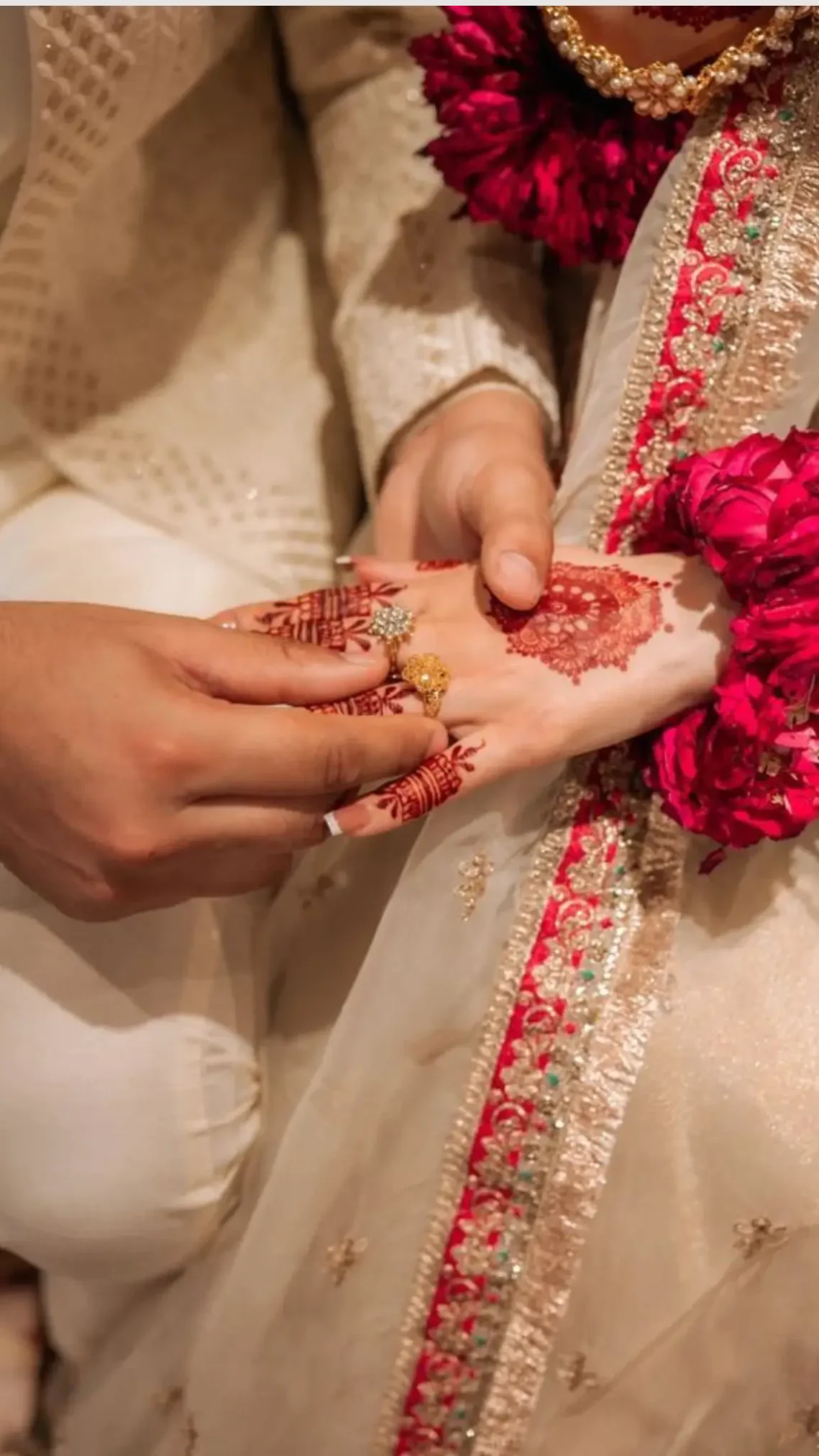
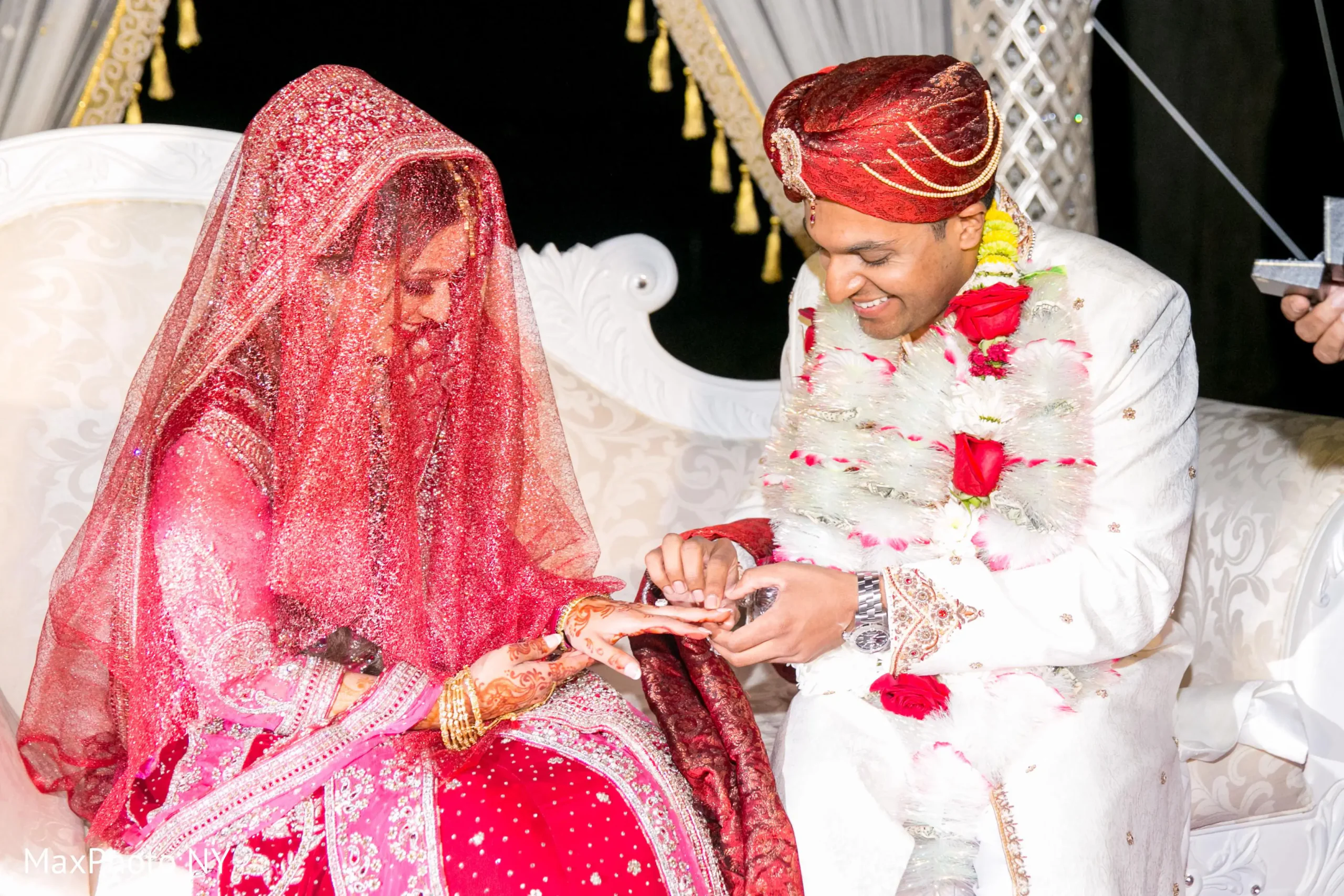
- Exchanging engagement rings.
- Presenting gifts to the bride and groom.
- Sharing sweets and refreshments.
- Announcing the upcoming wedding.
- Taking family photographs.
In some families, the groom’s family presents the bride with jewellery, clothing, perfume or other gifts. The bride’s family may also offer traditional gifts to the groom.
Who Hosts the Mangni? – Pakistani Wedding Events
There is no universal rule. The bride’s family, groom’s family or both families together may arrange the ceremony. In some households, Mangni is hosted by the bride’s family, while others prefer a joint engagement celebration.
What Does the Bride Wear at Mangni? – Pakistani Wedding Events
Mangni outfits are generally elegant but less elaborate than the bride’s main wedding attire.Popular choices include:
- Pastel-coloured lehengas.
- Embroidered shalwar kameez.
- Long shirts with ghararas.
- Formal pishwas.
- Contemporary maxi dresses.
- Lightly embellished sarees.
The groom may wear a formal sherwani, waistcoat, kurta shalwar or tailored suit.
Mangni in Modern Pakistani Weddings
Engagement celebrations have become increasingly personalised. Some couples choose intimate ring ceremonies, while others organise elaborate events with professional photographers, floral stages, live music and customised décor. The ceremony provides an opportunity for both families to celebrate their relationship and begin preparing for the wedding.
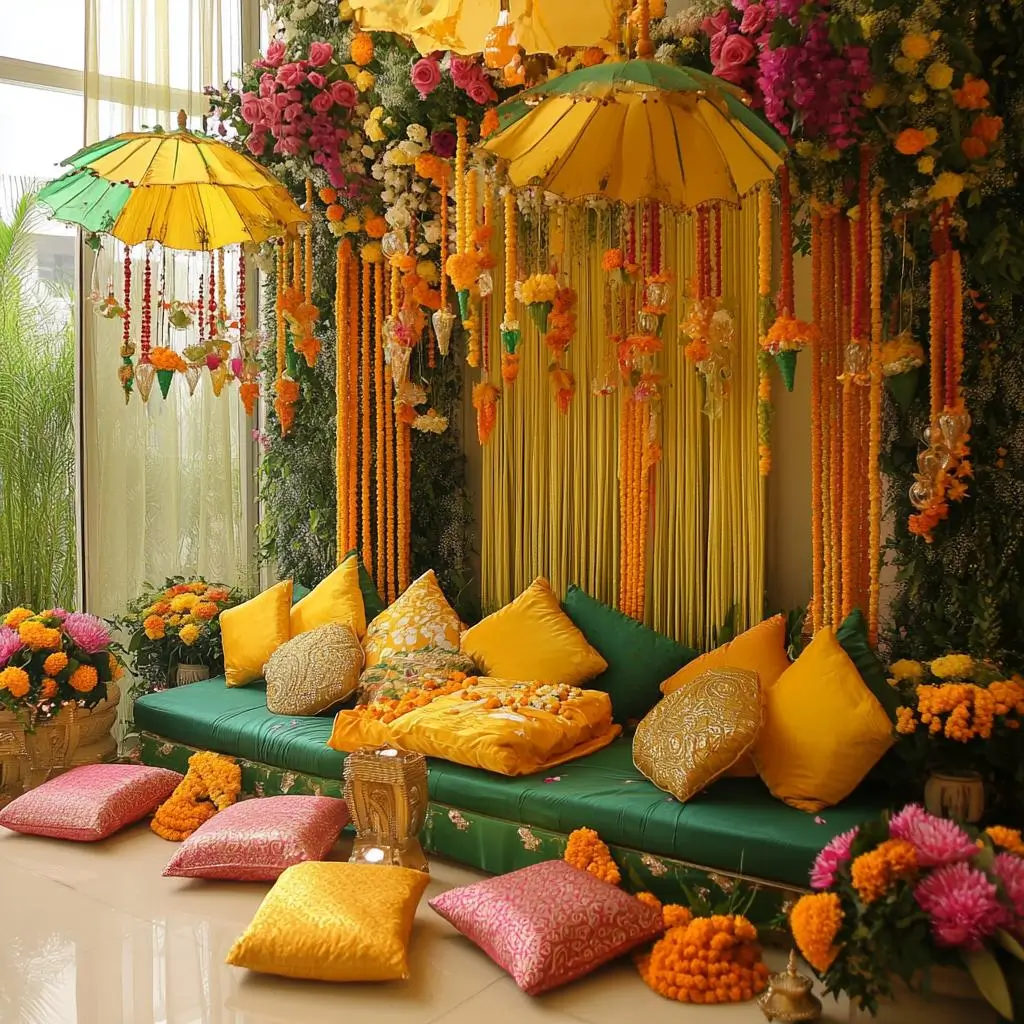
6. Dholki: The Musical Beginning of Wedding Festivities – Pakistani Wedding Events
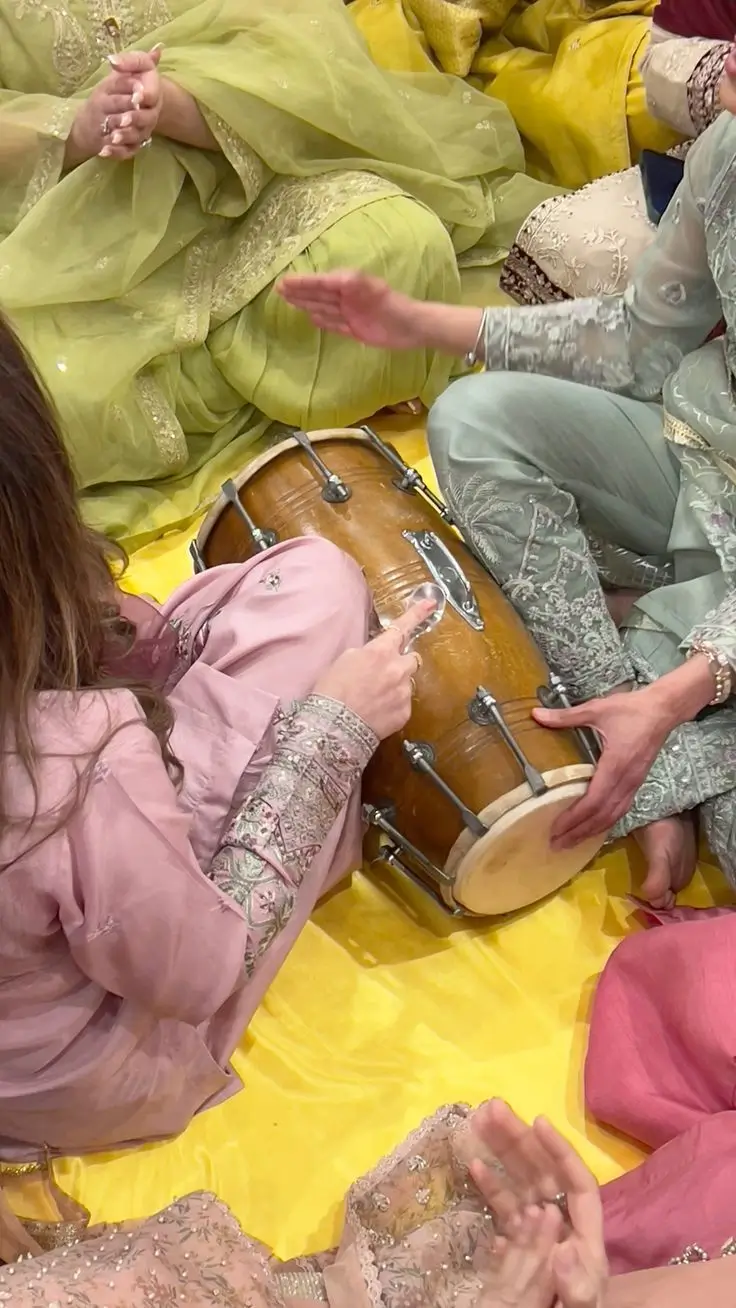
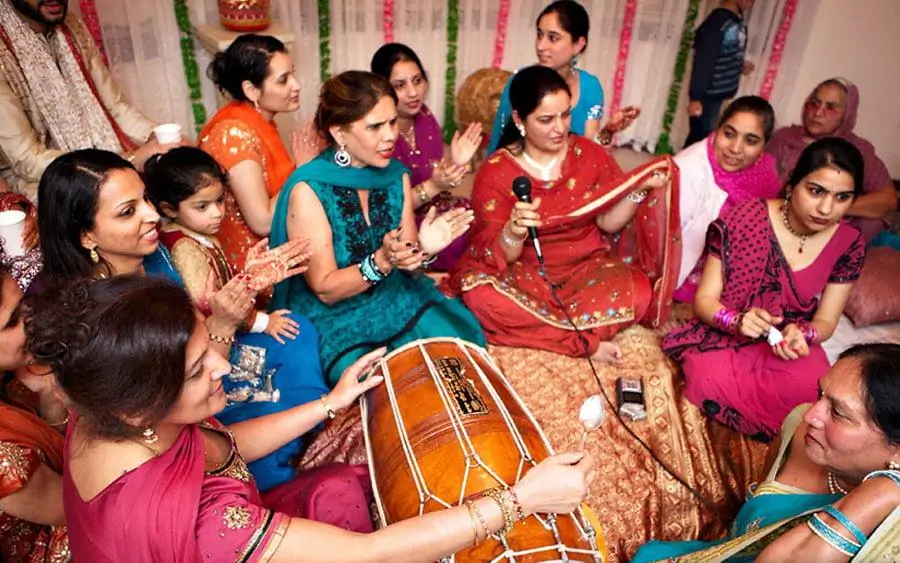
Dholki is one of the most entertaining and lively Pakistani wedding traditions. It is a musical gathering where family members and friends come together to sing traditional wedding songs, dance, enjoy food and celebrate the approaching marriage.
The name comes from the dholki, a small two-headed drum traditionally used to accompany folk songs. Unlike formal wedding receptions, Dholki celebrations are generally informal and relaxed. They often take place at home, creating an intimate atmosphere in which family members can participate freely.
Traditional Dholki Celebrations -Pakistani Wedding Events
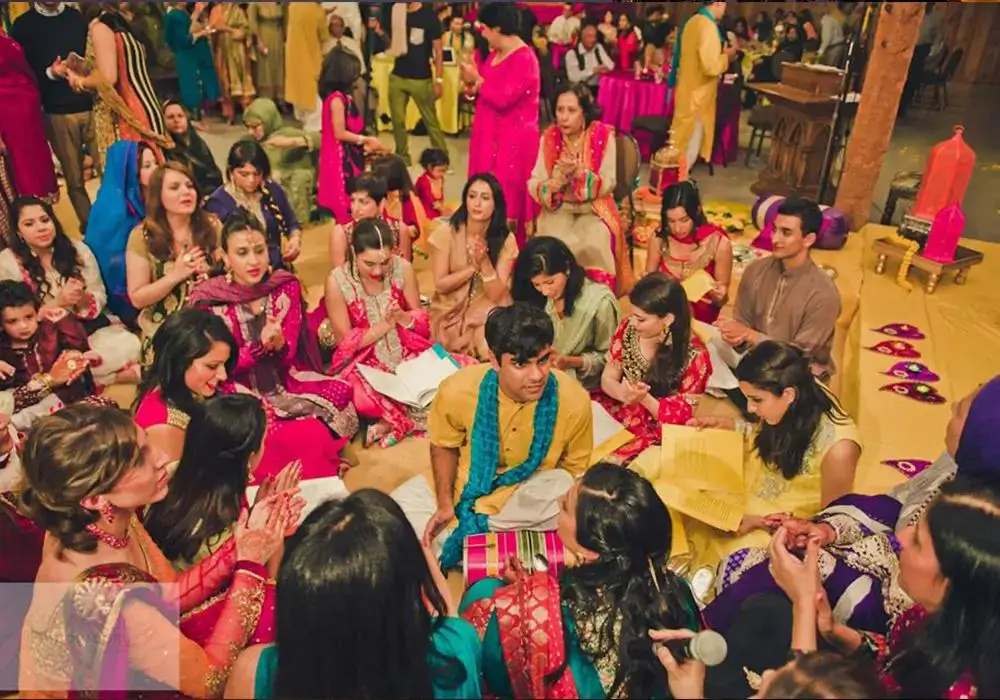
In traditional households, women gather in a comfortable room or courtyard, sit together and sing wedding songs while someone plays the dholki. These songs are often passed down through generations and celebrate the bride, groom, family relationships and excitement surrounding the marriage. Popular musical themes include:
- Songs celebrating the bride.
- Songs teasing the groom.
- Traditional Punjabi wedding folk music.
- Songs about sisters and brothers.
- Humorous verses about in-laws.
- Blessings for the newly married couple.
The atmosphere is usually filled with laughter, clapping and spontaneous dancing.
What Happens at a Dholki? – Pakistani Wedding Events
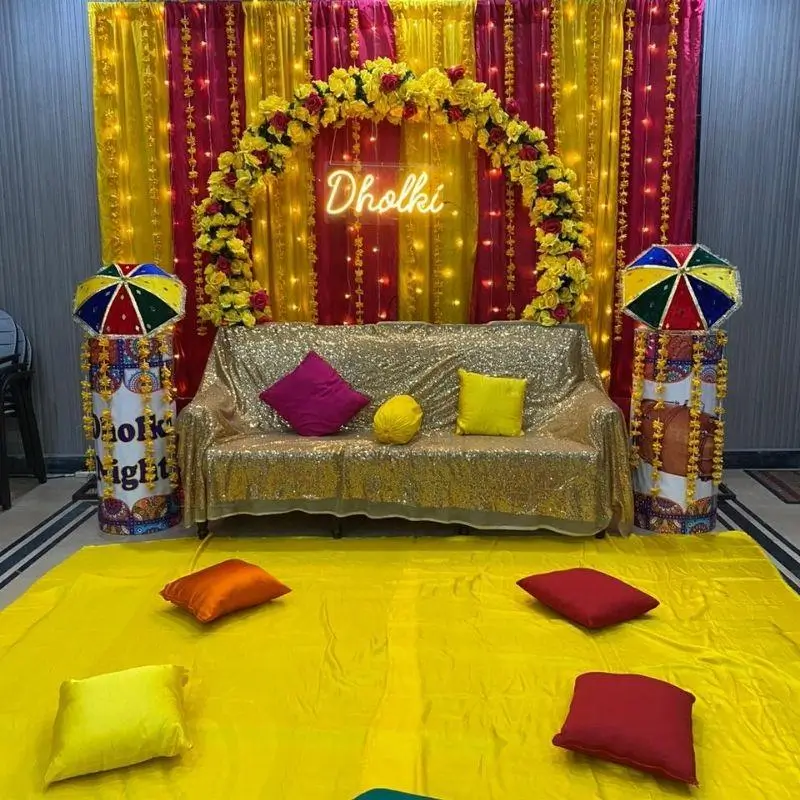
- Decorating the venue: The room is decorated with colourful cushions, flowers, fairy lights and traditional wedding accessories.
- Singing traditional songs: Women from both families sing folk songs that celebrate the upcoming wedding.
- Dancing and performances: Sisters, cousins and friends may prepare short dance performances.
- Sharing food: Traditional snacks, tea, sweets and homemade dishes are served.
- Celebrating family relationships: Dholki provides an opportunity for relatives to spend time together before the more formal wedding events begin.
Popular Dholki Songs and Cultural Heritage – Pakistani Wedding Events
Punjabi wedding songs have a special place in Pakistani culture. Songs such as Suhag and Ghorian are associated with wedding celebrations and are traditionally performed in different family gatherings. These songs often express emotions that are difficult to communicate through ordinary conversation, including happiness, affection, nostalgia and the sadness of a daughter leaving her parental home.
Modern Dholki Trends – Pakistani Wedding Events
Today’s Dholki celebrations can be quite different from traditional home gatherings. Some families arrange:
- Themed Dholki nights.
- Professional dhol players.
- Live singers.
- Traditional folk music performances.
- Customised backdrops.
- Coordinated family outfits.
- Dance competitions.
- Photography and video coverage.
Some couples also combine multiple Dholki gatherings into one event to make wedding planning easier. Regardless of the scale, Dholki remains a celebration of music, family bonding and cultural identity.
7. Mayoun: The Traditional Yellow Wedding Ritual – Pakistani Wedding Events
Mayoun is a traditional pre-wedding ceremony that symbolises the beginning of the bride’s final preparations for marriage. It is usually celebrated a few days before the wedding, although the timing differs between families and regions.
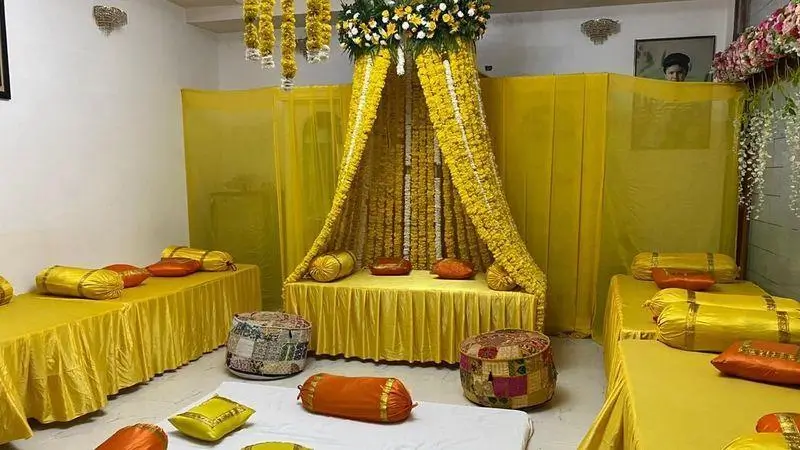
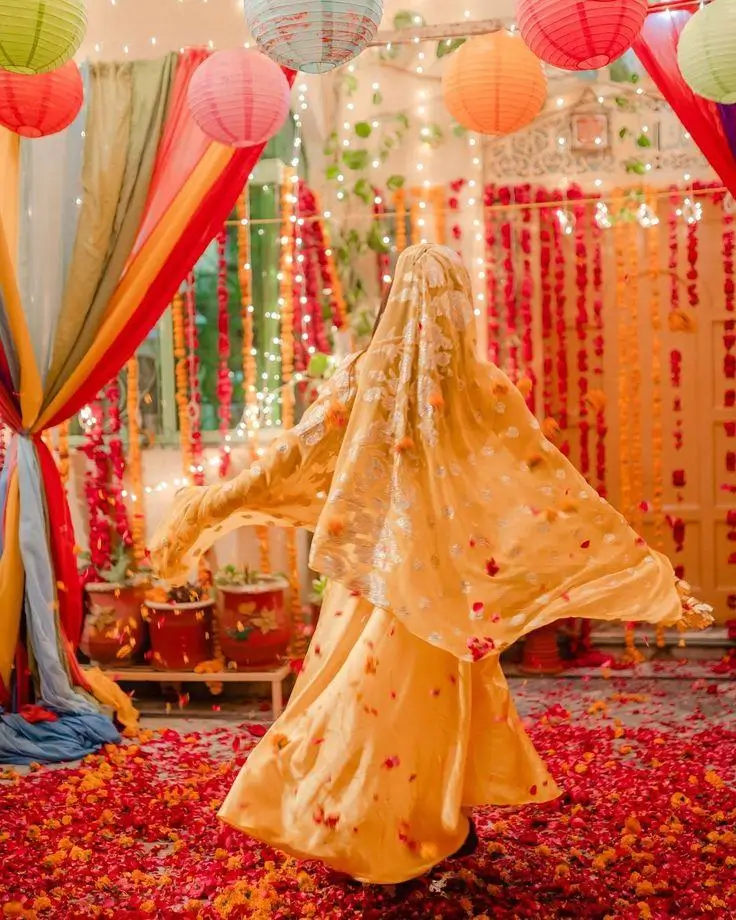
The ceremony is strongly associated with the colour yellow, which represents happiness, warmth, freshness and celebration. Traditionally, Mayoun was an intimate gathering involving female relatives and close friends. The bride wears simple yellow clothing, and the atmosphere is filled with family affection, traditional songs and blessings.
Cultural Significance of Mayoun – Pakistani Wedding Events
Historically, Mayoun was a period during which the bride was encouraged to rest and prepare for her wedding. In some traditional households, she would avoid unnecessary outdoor activities and household responsibilities during this time. The custom was intended to give the bride an opportunity to focus on herself before the wedding celebrations. Today, these practices are generally adapted to suit the bride’s preferences and daily responsibilities.
Traditional Mayoun Rituals – Pakistani Wedding Events
The ceremony may include:
- Dressing the bride in yellow clothing.
- Applying Ubtan to her hands, arms or face.
- Singing traditional wedding songs.
- Decorating the gathering space with flowers.
- Offering prayers and blessings.
- Sharing sweets and refreshments.
Some families also arrange a similar ceremony for the groom.
Why Is Yellow Associated with Mayoun?- Pakistani Wedding Events
Yellow is traditionally linked with happiness, sunshine, prosperity and new beginnings. It also creates a distinctive visual identity for the ceremony. Yellow dupattas, floral jewellery, marigold decorations and traditional accessories are frequently used.
Mayoun Outfit Ideas – Pakistani Wedding Events
Popular bridal Mayoun outfits include:
- Yellow shalwar kameez.
- Mustard-coloured ghararas.
- Yellow lehengas.
- Simple embroidered kurtas.
- Floral jewellery.
- Traditional yellow dupattas.
Modern brides often choose lighter fabrics, including chiffon, cotton, organza and silk, depending on the season. Mayoun is ultimately a celebration of the bride’s transition into a new stage of life, surrounded by the love and support of her family.
8. Ubtan: The Traditional Bridal Beauty Ritual – Pakistani Wedding Events
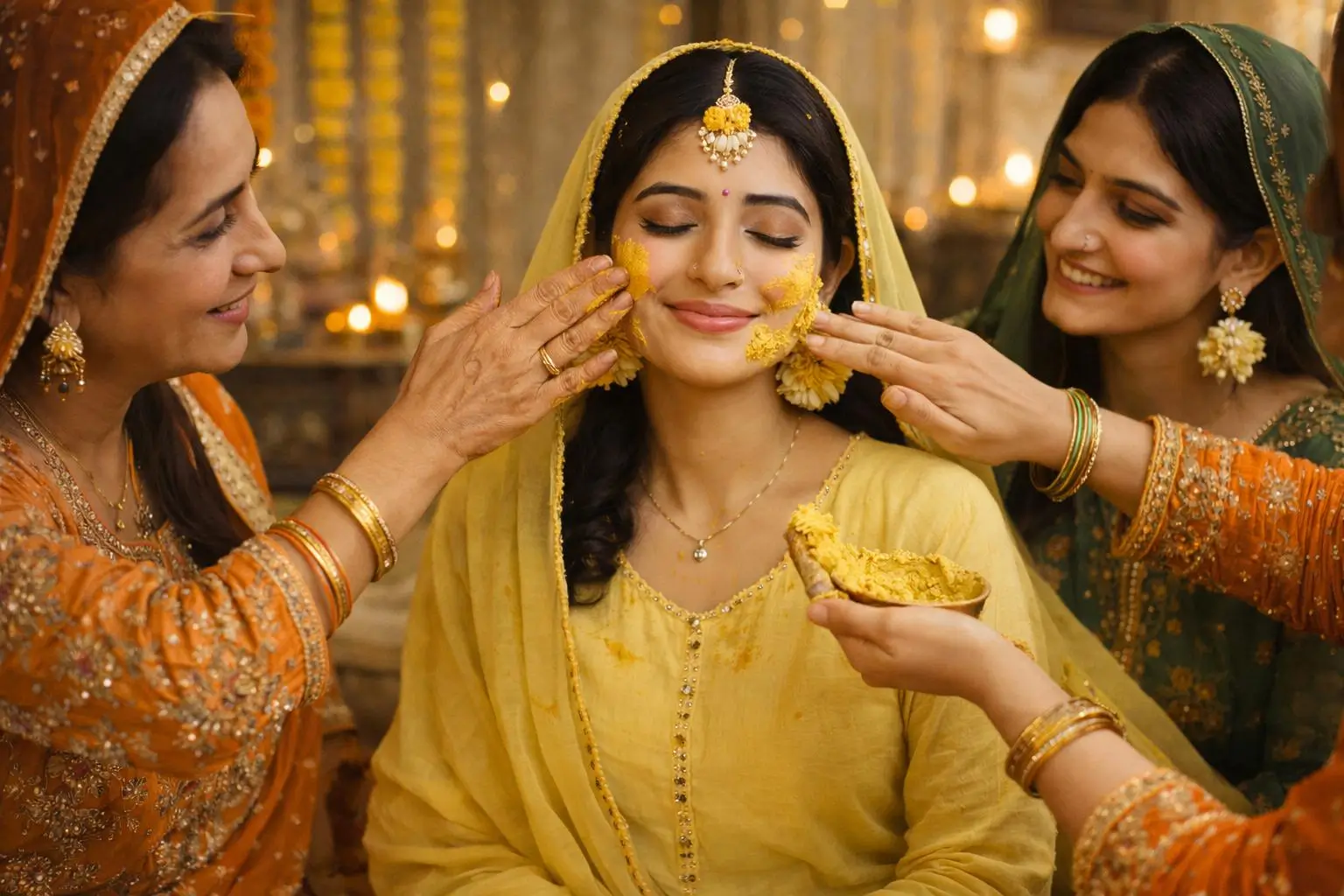
Ubtan is one of the most recognisable beauty-related traditions associated with Pakistani weddings.It is a traditional paste made using ingredients such as turmeric, sandalwood powder, gram flour, oils and other ingredients according to family recipes. The paste is applied to the bride and, in some families, the groom as part of the pre-wedding celebrations.
What Is Ubtan Made Of? – Pakistani Wedding Events
Traditional Ubtan recipes vary considerably. Common ingredients include:
- Haldi (turmeric).
- Besan (gram flour).
- Sandalwood powder.
- Rose water.
- Milk or yoghurt.
- Natural oils.
- Other locally preferred ingredients.
Not every family uses the same combination.
How Is the Ubtan Ceremony Performed? – Pakistani Wedding Events
Female relatives may gather around the bride and gently apply the paste to her hands, arms and other areas of the skin. The gathering may be accompanied by songs, laughter and blessings.Some families perform this ritual over multiple days, while others include it as part of the Mayoun ceremony.
Cultural Meaning of Ubtan – Pakistani Wedding Events
Traditionally, Ubtan is believed to prepare the bride’s skin for the wedding day and is associated with beauty, freshness and good fortune. It is also a symbolic way for relatives to participate in the bride’s wedding preparations. However, Ubtan is a cultural beauty custom rather than a religious requirement. Traditional ingredients can irritate sensitive skin, so anyone using such preparations should consider allergies and perform an appropriate patch test.
Ubtan in Contemporary Weddings – Pakistani Wedding Events
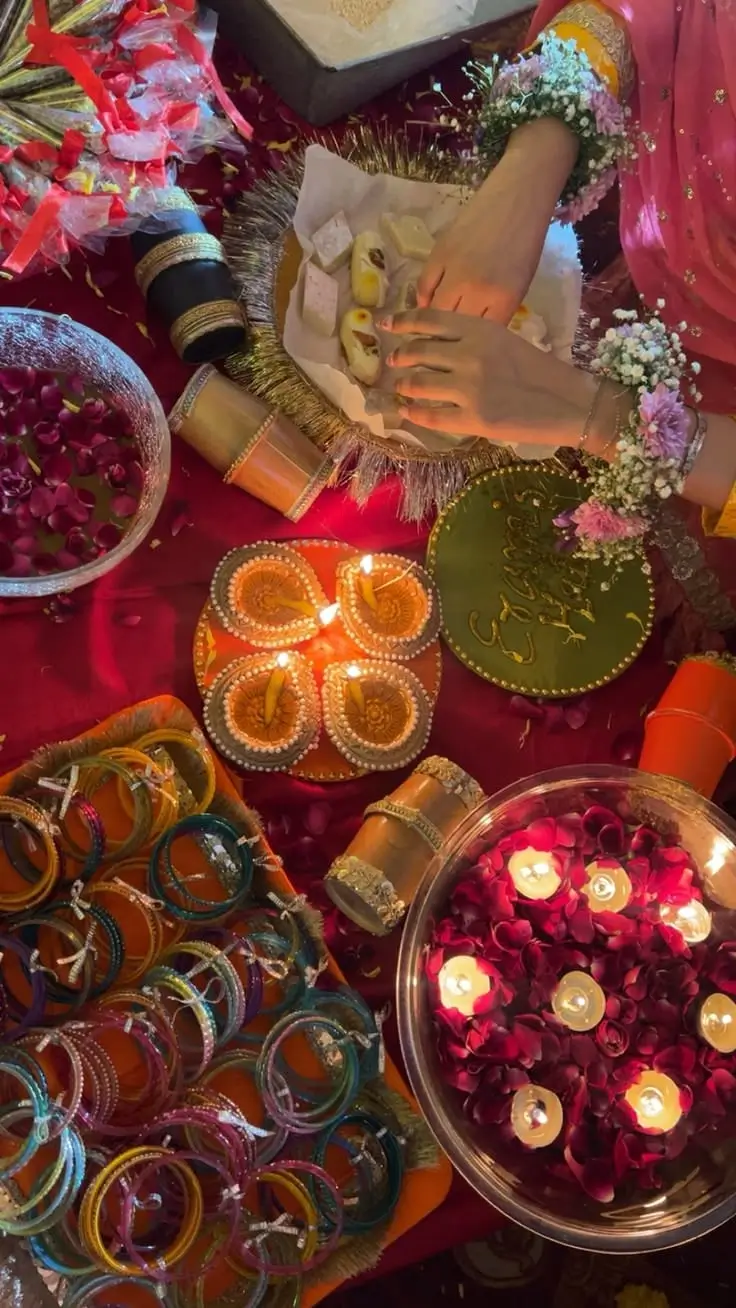
Modern Ubtan events often feature decorative trays, floral bowls, coordinated outfits and beautiful photography arrangements. Some brides prefer professionally prepared skincare treatments, while others maintain the traditional family recipe. The ritual continues to hold sentimental value because it creates a special moment between the bride and the women in her family.
9. Qawwali Night: A Celebration of Soulful Music and Spiritual Heritage – Pakistani Wedding Events
Qawwali Night has become an increasingly popular feature of contemporary Pakistani wedding celebrations. It is a musical event centred around live Qawwali performances, bringing together relatives and friends for an evening of soulful music, rhythm and cultural expression.
Qawwali has a long association with the South Asian Sufi musical tradition. Its distinctive combination of powerful vocals, harmonium, tabla, handclapping and rhythmic repetition creates an atmosphere that can be both reflective and energetic.
What Is Qawwali? – Pakistani Wedding Events
Qawwali is a form of devotional music historically associated with Sufi traditions in South Asia. Traditional performances often explore themes such as:
- Divine love.
- Spiritual devotion.
- Faith.
- Longing and separation.
- Humanity and compassion.
- The search for spiritual connection.
Famous Qawwali traditions are associated with legendary performers such as Nusrat Fateh Ali Khan and other celebrated Qawwals. At weddings, however, the performance selection may include a mixture of devotional compositions, traditional poetry and suitable celebratory music.
Why Do Pakistani Families Arrange Qawwali Nights? – Pakistani Wedding Events
A Qawwali Night creates a different atmosphere from a conventional Mehndi or Dholki. Rather than focusing entirely on dance performances, it allows guests to enjoy live music and experience the beauty of traditional South Asian musical heritage.
The event is also an opportunity for both families to come together before the main wedding ceremonies.
How Is a Qawwali Night Organised? – Pakistani Wedding Events
A typical event may include:
- Live Qawwal performance: A professional group performs traditional compositions and selected wedding favourites.
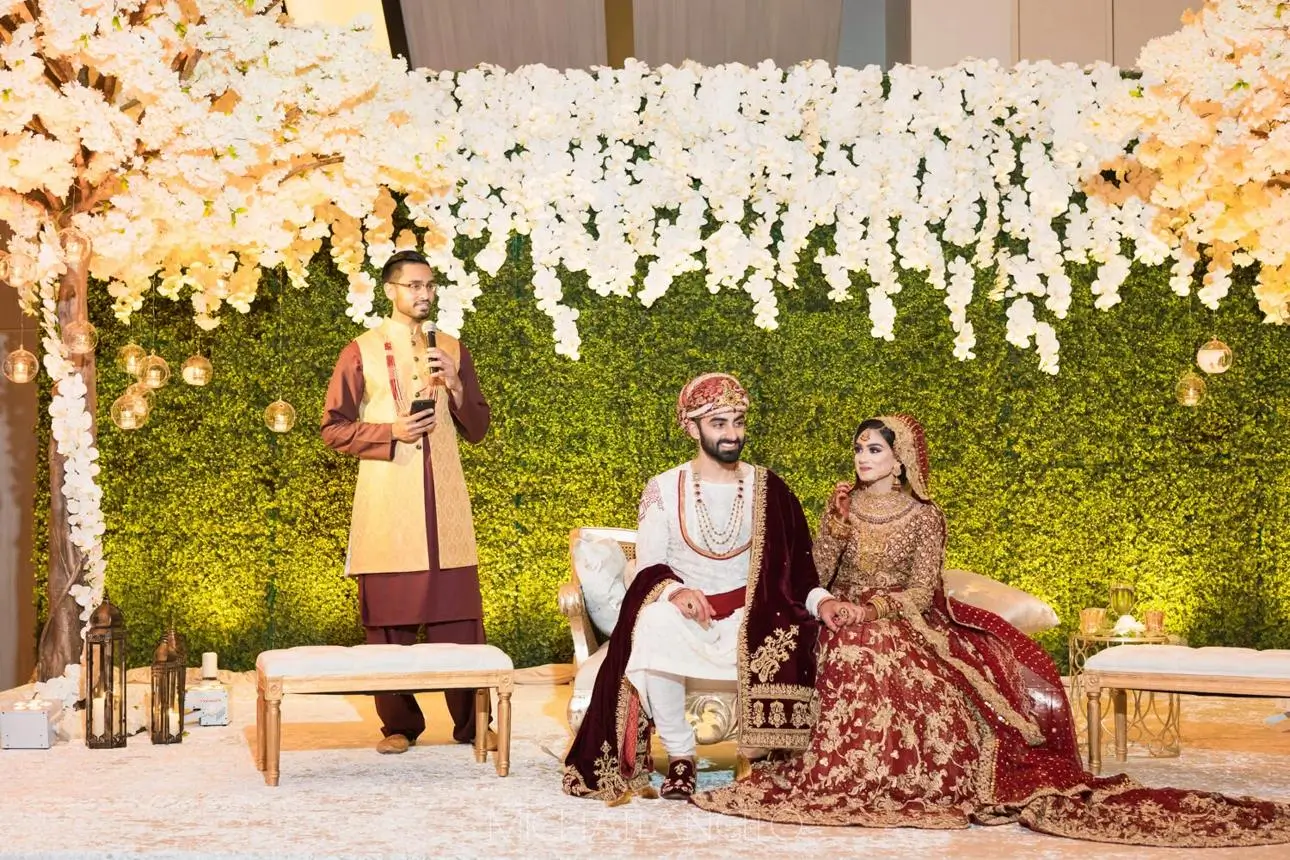
- Traditional stage decoration: The venue may feature Persian-inspired carpets, cushions, lanterns, flowers and warm lighting.
- Family seating: Guests sit around the performance area to enjoy the music.
- Dinner and refreshments: Traditional Pakistani food is served during or after the performance.
- Special musical requests: Families may request suitable songs that hold sentimental meaning.
Qawwali Night Versus Sangeet – Pakistani Wedding Events
Although the two events can overlap in their purpose, they are not identical. Sangeet is generally associated with music, dance and family performances. Qawwali Night focuses more specifically on the Qawwali musical tradition. Some Pakistani families arrange separate events, while others combine Qawwali performances with their Mehndi or Sangeet celebrations.
Modern Qawwali Night Trends – Pakistani Wedding Events
Luxury weddings increasingly feature professionally produced Qawwali Nights with elaborate stages, specialised lighting, premium seating and live instrumental arrangements. Nevertheless, the most memorable part of the evening is often the music itself and the shared experience of enjoying it with loved ones.
10. Mehndi – The Colourful Celebration of Love and Happiness – Pakistani Wedding Events
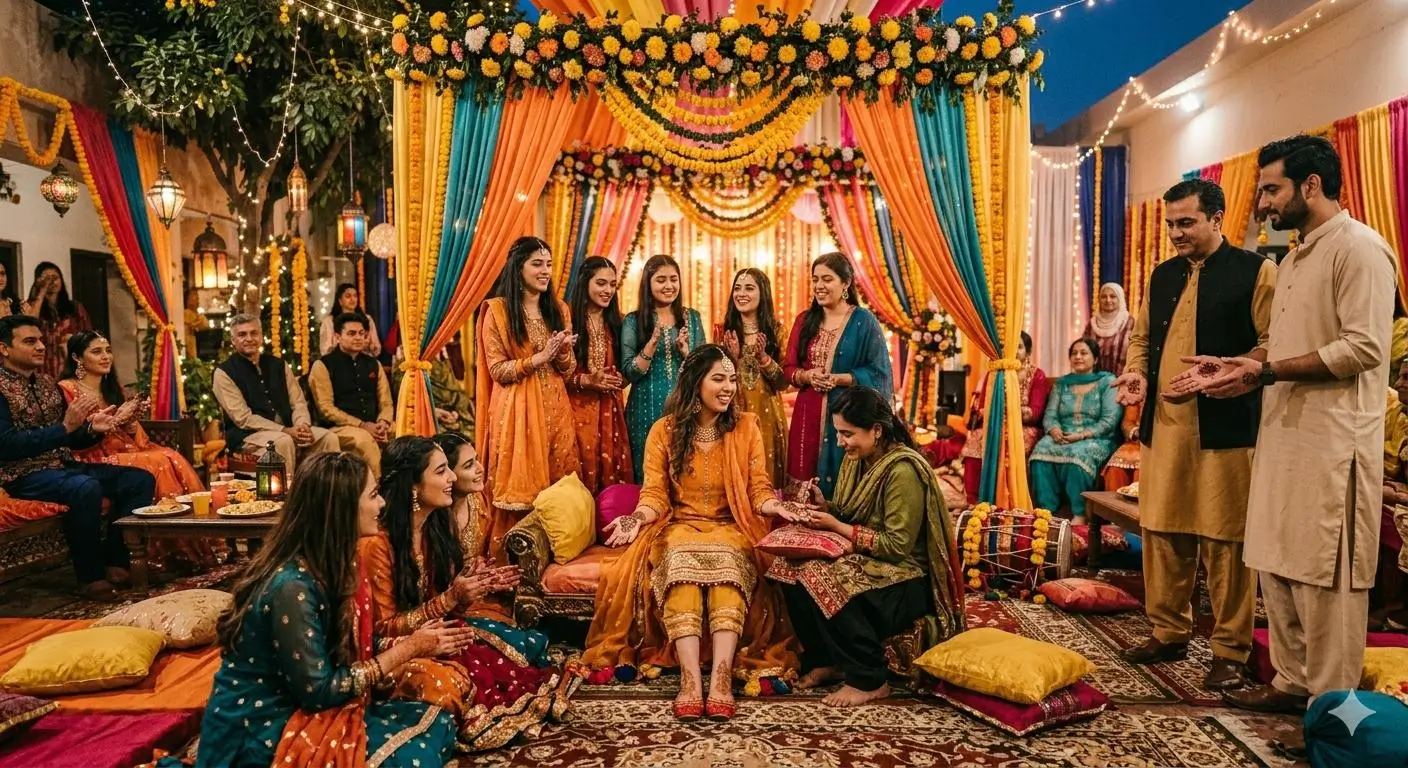
Mehndi, also known as Rasm-e-Henna, is one of the most vibrant and eagerly anticipated events in a traditional Pakistani wedding. Usually held one or two days before the Nikah or Baraat, the Mehndi ceremony brings together relatives and friends for an evening of music, dancing, colourful outfits and joyful traditions.
The event celebrates the bride and groom’s upcoming marriage and symbolises happiness, good wishes and the beginning of a new chapter in their lives.
The tradition of applying Mehndi – Pakistani Wedding Events
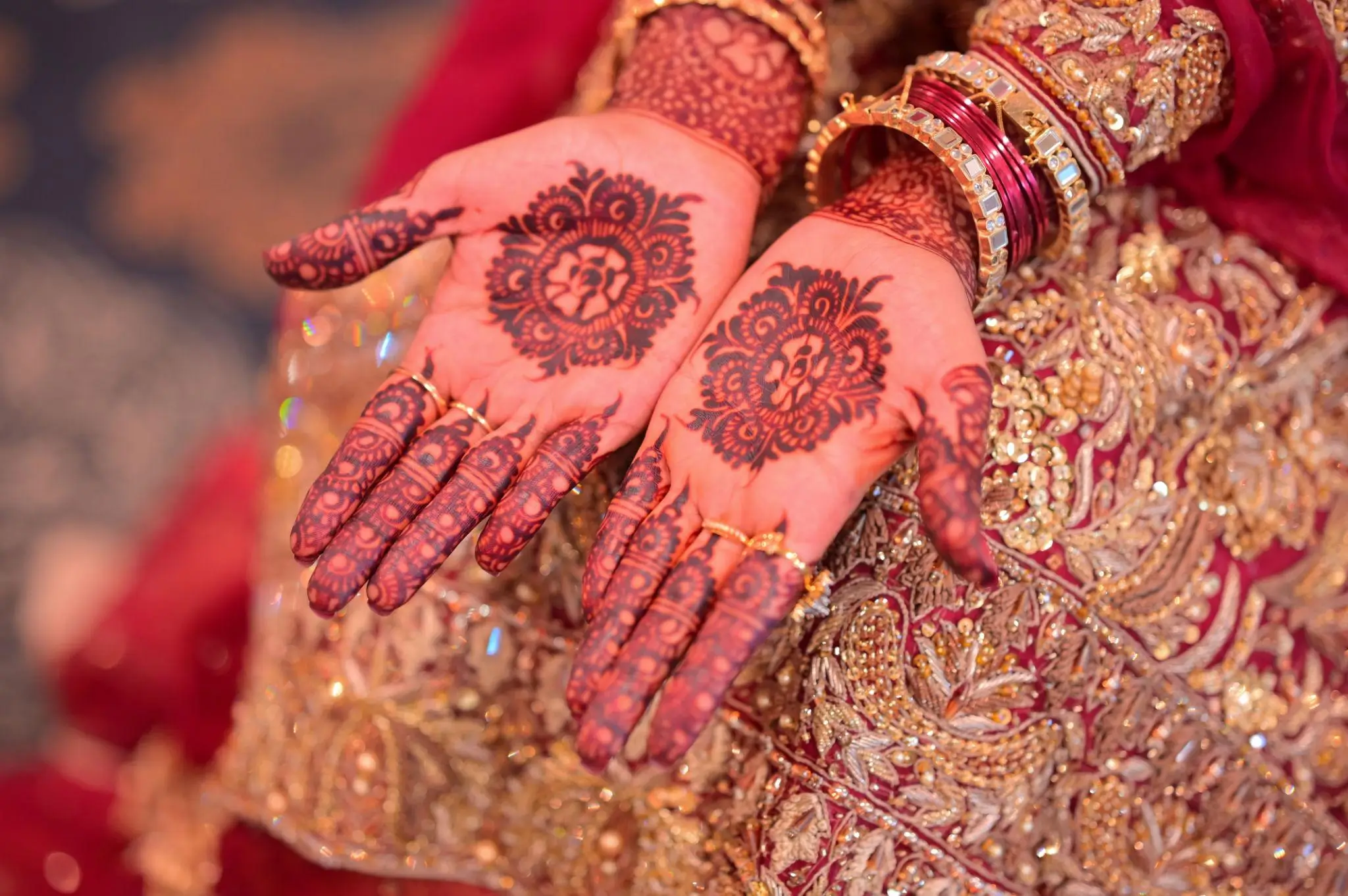
Applying henna to the bride’s hands and feet is among the central customs of this celebration. Female relatives and friends often gather around the bride to apply intricate henna patterns. Traditional bridal Mehndi designs may include:
- Floral patterns and leafy motifs.
- Paisley designs and traditional geometric shapes.
- Intricate fingertips and palm decorations.
- Personalised initials or the groom’s name hidden within the design.
- Bridal motifs such as flowers, peacocks and traditional wedding symbols.
Some brides choose elaborate designs extending from their fingertips to their forearms and from their toes to their ankles. Others prefer simple, contemporary patterns. The groom may also have a small amount of Mehndi applied to his hands, depending on family traditions.
Mehndi songs and celebrations – Pakistani Wedding Events
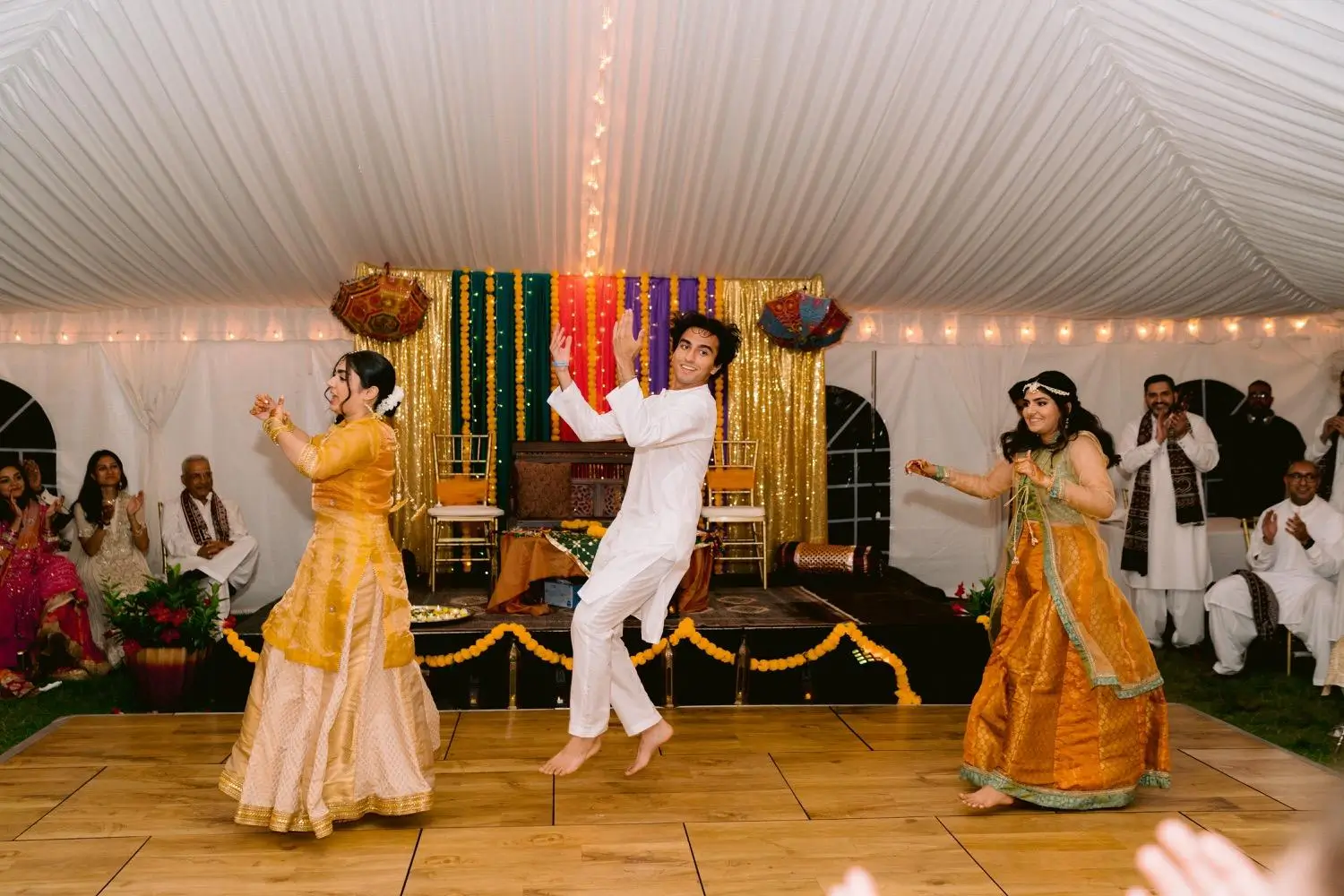
Music is an essential part of many Mehndi celebrations. Traditional wedding songs, folk music and popular Pakistani tracks create a lively atmosphere. Family members may perform choreographed dances, while cousins and friends organise entertaining performances for the bride and groom. Popular activities include:
- Bride and groom dance performances.
- Family dance competitions.
- Traditional wedding songs.
- Dhol performances.
- Funny speeches and playful family performances.
- Games involving the bride and groom.
In some families, the bride and groom celebrate separately, while others organise a combined Mehndi event.
Traditional Mehndi outfits -Pakistani Wedding Events
The Mehndi event is famous for its colourful clothing. Yellow, mustard, orange, green and vibrant pink are particularly popular choices.
Bridal outfit ideas:
- Yellow gharara with a colourful dupatta.
- Mustard or marigold lehenga.
- Green and yellow embroidered ensemble.
- Traditional sharara with gota work.
- Floral jewellery paired with a simple outfit.
Groom’s outfit ideas:
- Mustard or yellow kurta shalwar.
- Green waistcoat.
- Embroidered kurta with traditional khussa.
- Colour-coordinated sherwani or prince coat.
Many couples coordinate their outfits to create a unified appearance in wedding photographs.
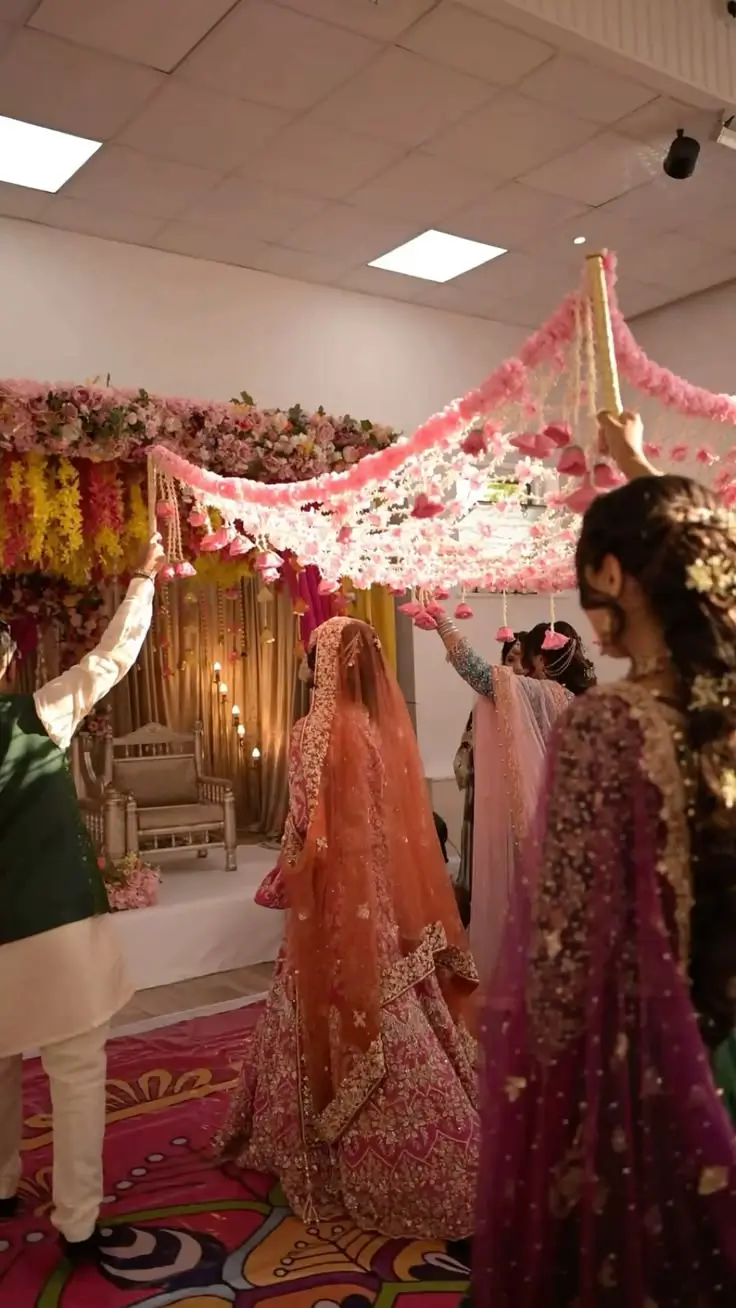
Mehndi decorations and themes – Pakistani Wedding Events
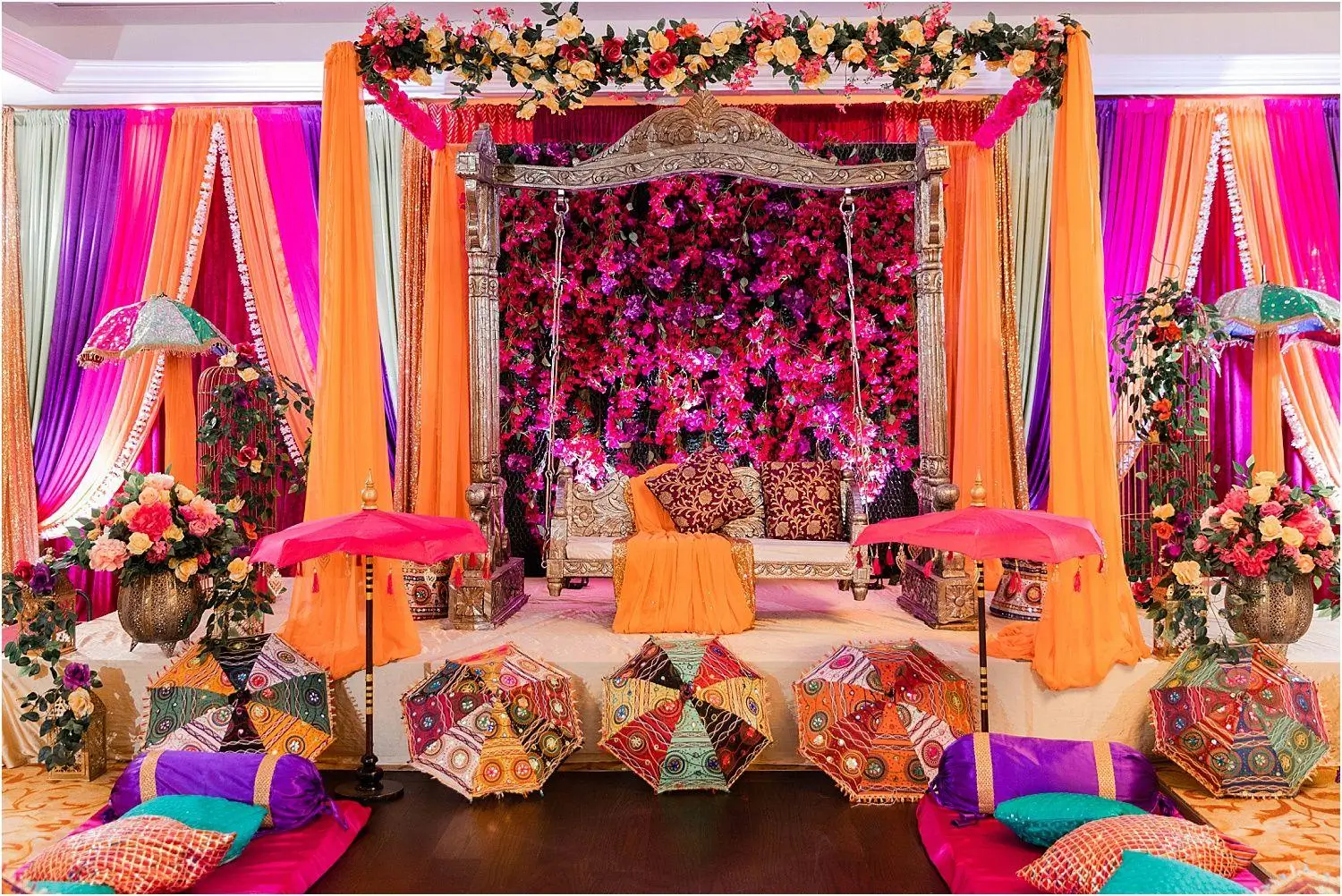
Mehndi decorations are generally bright, cheerful and inspired by traditional South Asian aesthetics. Popular decoration ideas include:
- Marigold flower arrangements.
- Colourful drapes and cushions.
- Traditional charpais and low seating.
- Decorative umbrellas.
- Floral swings.
- Brass pots and lanterns.
- Colourful bangles and henna-inspired installations.
Modern Mehndi celebrations may also feature elaborate stages, personalised signage, photo booths and professional lighting.
11. Sehra Bandi – Preparing the Groom for the Wedding – Pakistani Wedding Events
Sehra Bandi is a traditional ceremony performed shortly before the groom leaves for the bride’s home or wedding venue. It is particularly associated with the Baraat procession. The word Sehra refers to a decorative veil or floral ornament worn around the groom’s forehead. Traditionally, it consists of flowers, beads, pearls or decorative threads arranged to frame the groom’s face. The ceremony symbolises the groom’s preparation for marriage and is often accompanied by prayers and blessings from family members.
How is Sehra Bandi performed? – Pakistani Wedding Events
The ceremony usually takes place at the groom’s home or another location where the Baraat is assembling. A typical sequence includes:
- The groom dresses in his wedding sherwani or traditional outfit.
- Close family members gather around him.
- A father, brother, uncle or respected elder places the Sehra on the groom’s head.
- Family members offer prayers and blessings.
- The groom may be presented with gifts or traditional sweets.
- Photographs are taken before the Baraat departs.
In some families, the groom’s mother or sisters also perform small traditional gestures to express their happiness and affection.
Different styles of Sehra – Pakistani Wedding Events
Sehra designs vary according to personal taste, regional traditions and wedding fashion. Common styles include:
- Floral Sehra: Made with fresh flowers, often roses or jasmine.
- Pearl Sehra: Features strings of pearls or pearl-like decorations.
- Traditional thread Sehra: Made with decorative threads and embellishments.
- Modern Sehra: Uses crystals, beads or lightweight decorative elements.
Some grooms prefer a minimal Sehra or choose not to wear one at all.
Groom’s wedding attire – Pakistani Wedding Events
Sehra Bandi is usually performed after the groom has dressed for the Baraat. Popular outfits include:
- Traditional sherwani.
- Embroidered prince coat.
- Achkan with churidar trousers.
- Shawl or embroidered stole.
- Traditional turban or pagri.
- Khussa or formal traditional footwear.
Ivory, cream, gold, beige, maroon and deep green are popular wedding colours.
Is Sehra Bandi an Islamic requirement? – Pakistani Wedding Events
No. Sehra Bandi is a cultural wedding tradition, not an obligatory Islamic ceremony. Muslim couples may choose to include it as part of their family celebrations, but it is not a requirement for a valid Nikah.
12. Nikah – The Sacred Islamic Marriage Ceremony – Pakistani Wedding Events
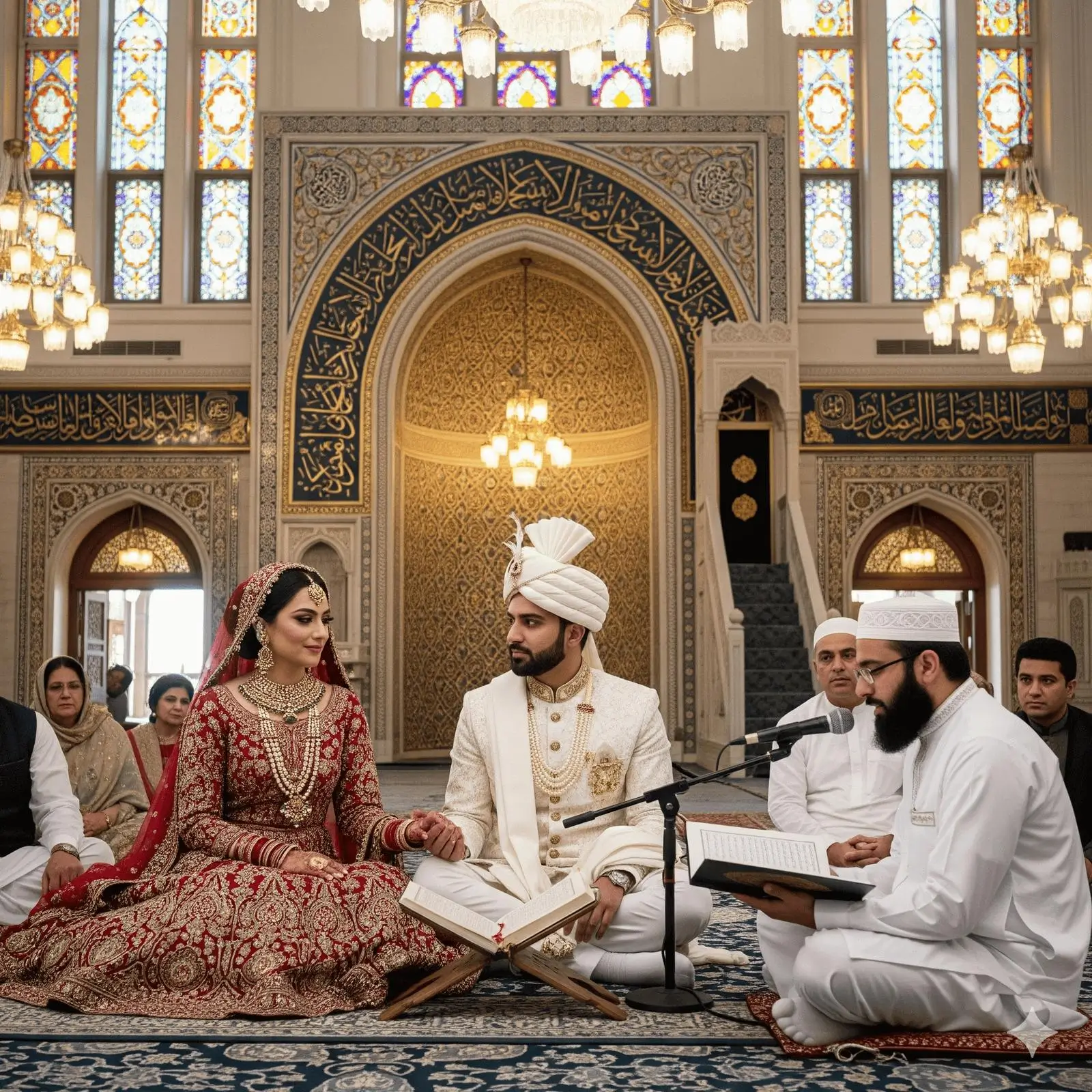
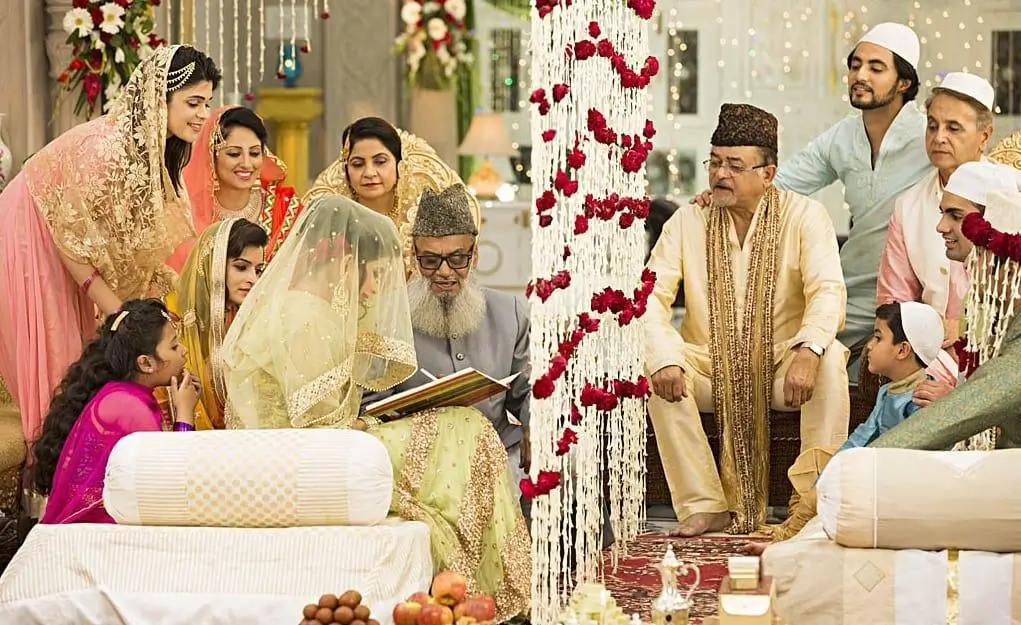
Nikah is the most significant religious part of a Muslim wedding. Unlike many celebratory wedding customs, Nikah establishes the marriage contract between the bride and groom. In Islam, marriage is a solemn commitment based on mutual consent, responsibility, respect and companionship. Pakistani weddings often include several days of celebrations, but the Nikah is the ceremony that formally solemnises the marriage under Islamic principles.
The religious significance of Nikah – Pakistani Wedding Events
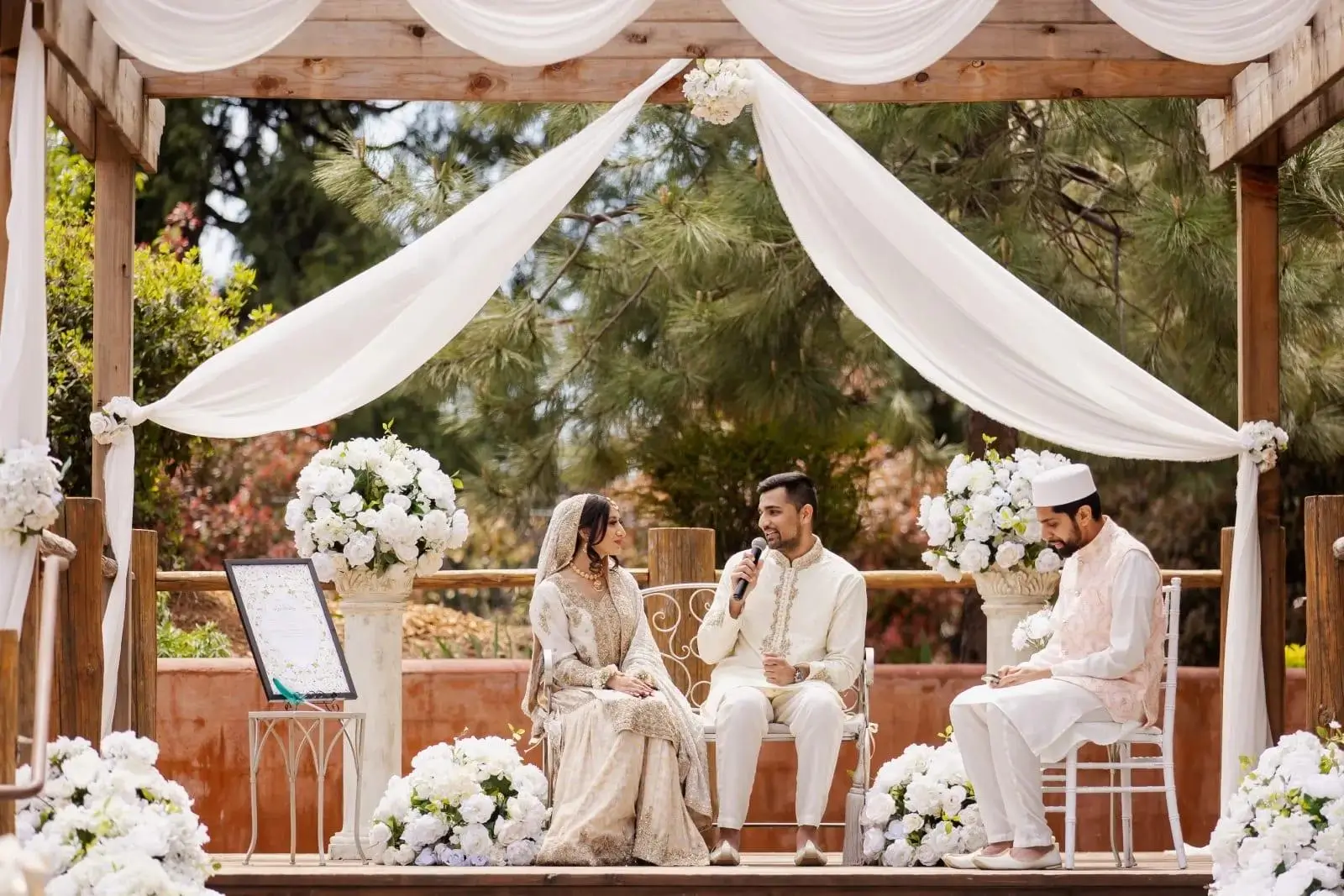
Nikah represents the beginning of a lawful marital relationship. It establishes rights and responsibilities for both spouses and encourages kindness, mutual respect and cooperation. The ceremony is often conducted by an Islamic scholar, imam or authorised Nikah registrar, although the precise arrangements vary. A Nikah can be a simple gathering at a mosque, home or wedding venue. It does not need to be an extravagant event.
Important elements of a Nikah – Pakistani Wedding Events
1. Consent of the bride and groom: Free and genuine consent is fundamental to an Islamic marriage. Both individuals must agree to the marriage. The bride’s agreement should be obtained without coercion. A marriage forced upon someone against their will is not an acceptable substitute for genuine consent.
2. Mahr – The bridal gift: Mahr is a financial gift or other agreed consideration that the groom gives to the bride as part of the marriage contract. It belongs exclusively to the bride. It is not a payment to her family.
Mahr may be:
- Paid immediately.
- Deferred until an agreed time.
- Divided into immediate and deferred portions.
The amount and terms should be clearly agreed upon and recorded.
3. Witnesses: Witnesses are generally part of the Nikah arrangements. The requirements and legal interpretations can vary between Islamic schools of thought and applicable law.
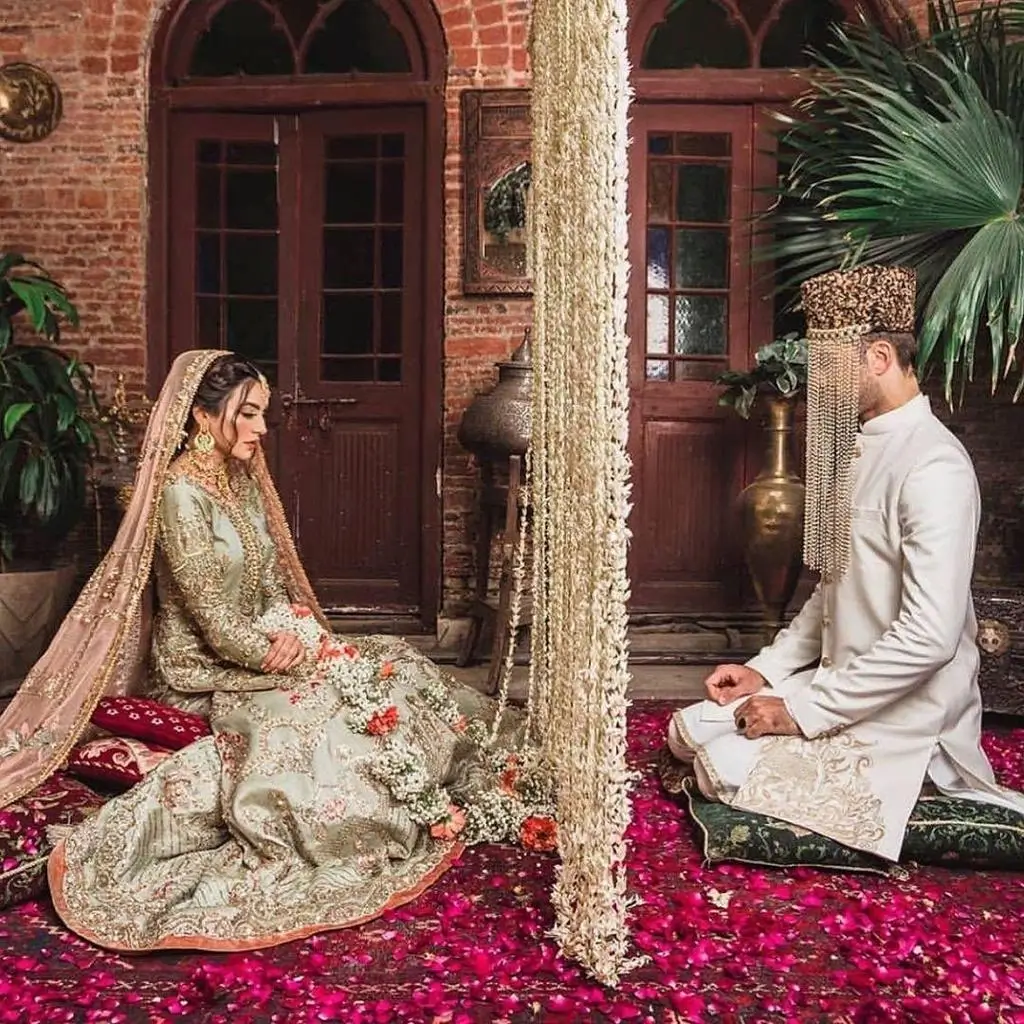
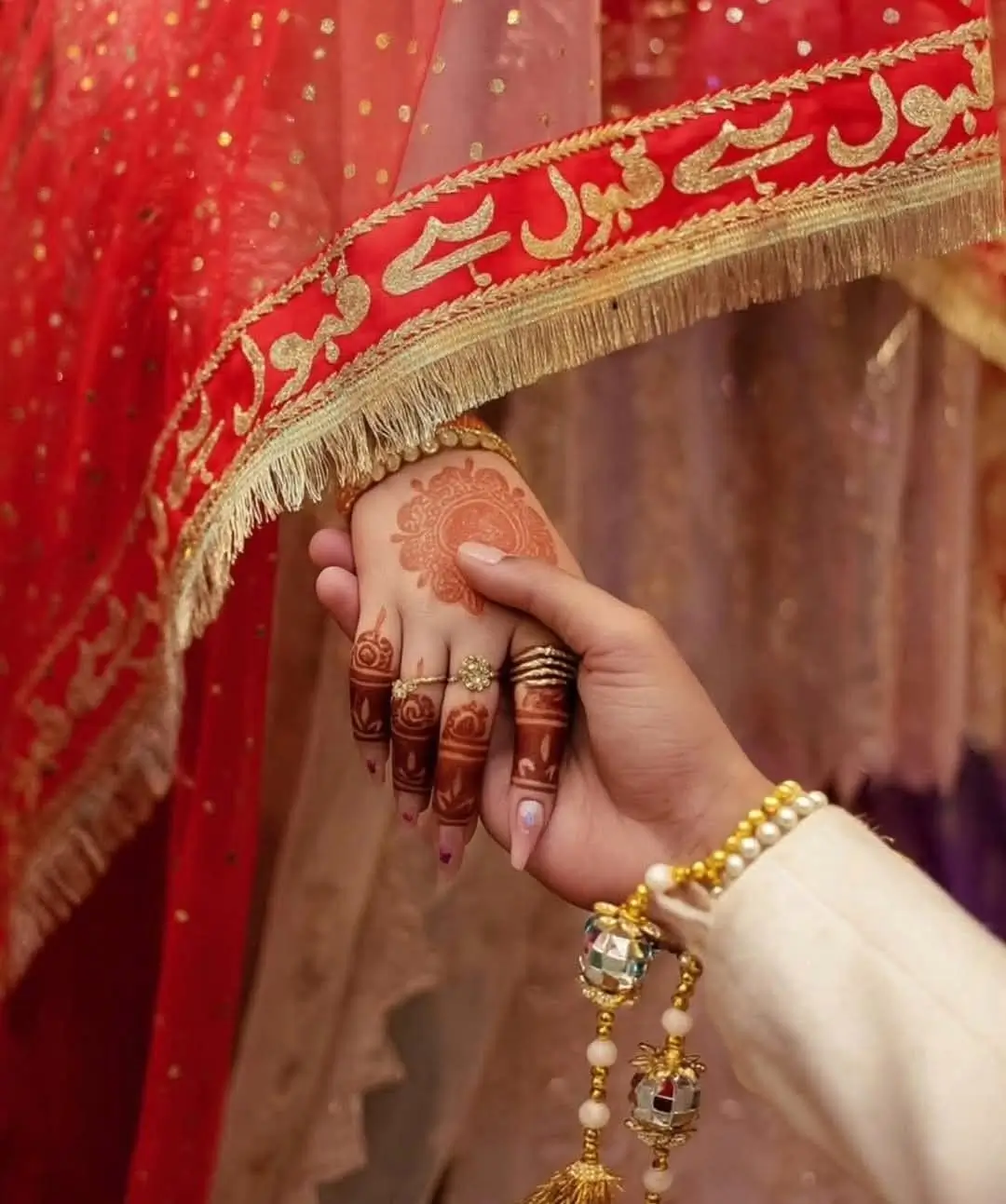
4. Offer and acceptance: The marriage contract involves a clear offer and acceptance, commonly referred to as Ijab-o-Qubool. The bride and groom, or their authorised representatives where applicable, express agreement to the marriage.
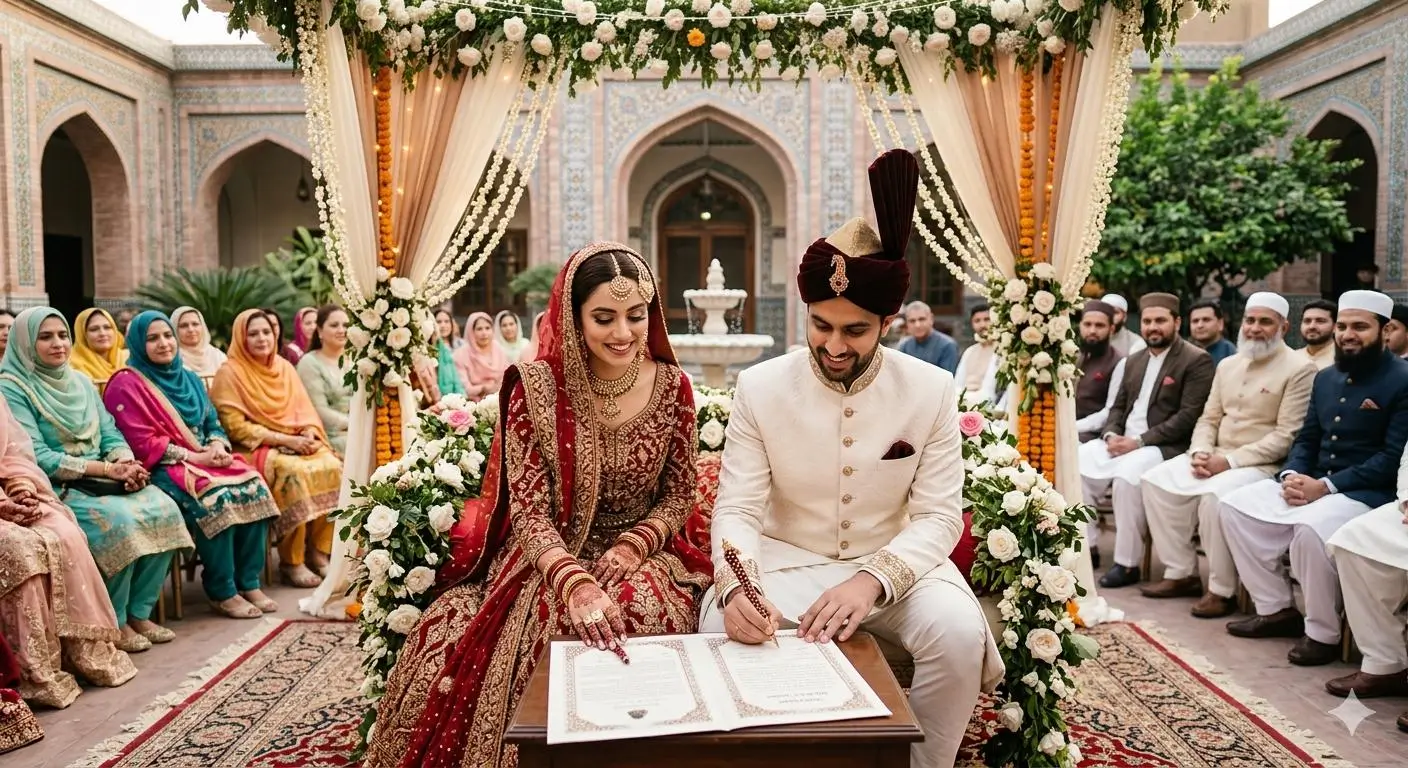
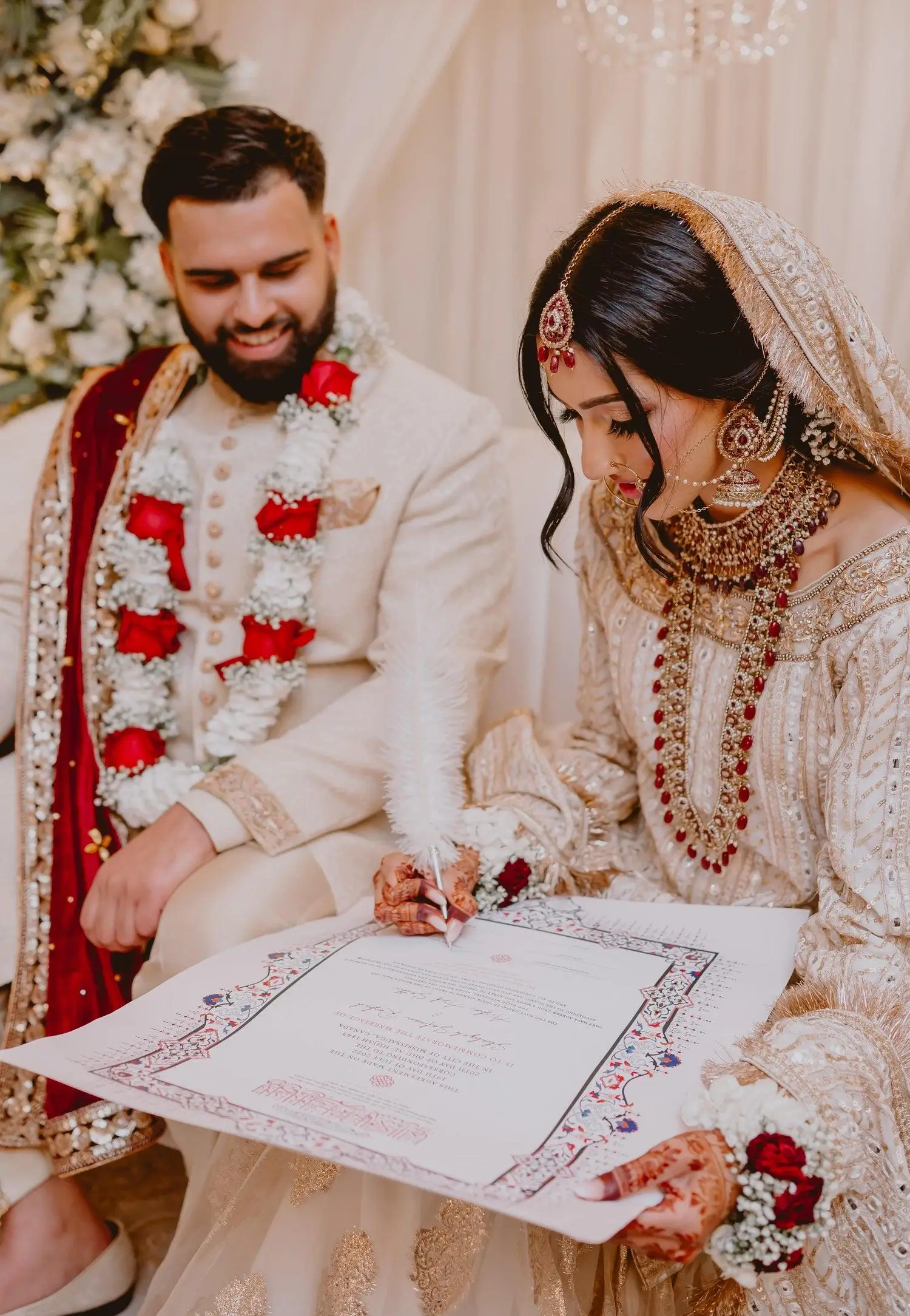
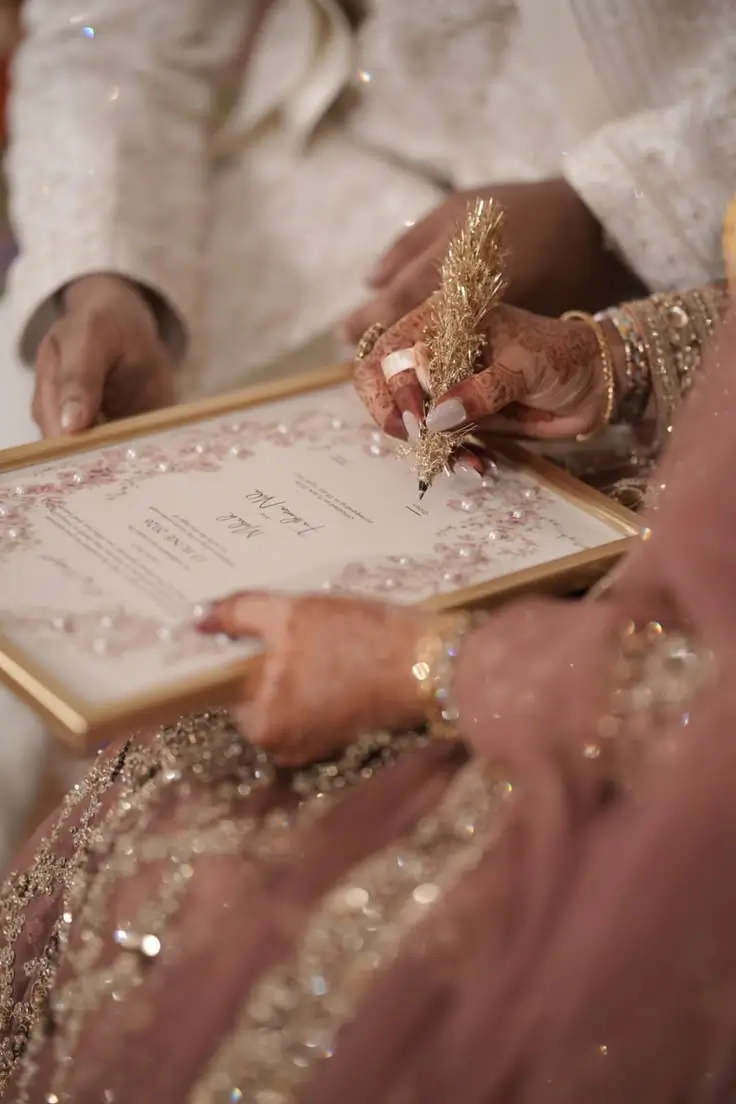
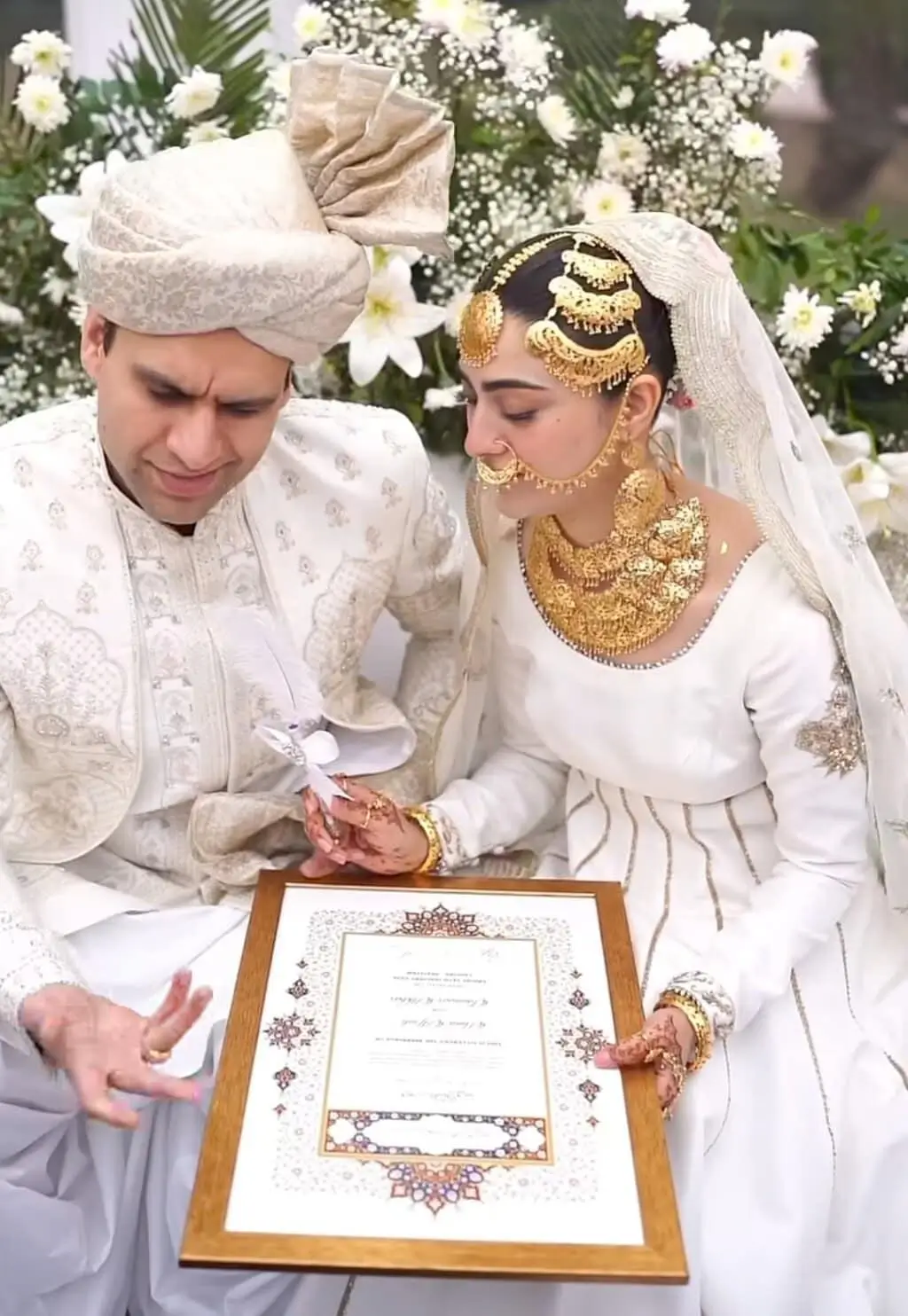
5. Nikahnama: The Nikahnama is the marriage contract document used in Pakistan. It records important details about the marriage, including the spouses’ information, Mahr and other agreed conditions. The bride and groom should read and understand the document before signing it. Any agreed conditions should be accurately recorded.
How does a Pakistani Nikah ceremony take place? – Pakistani Wedding Events
A traditional Nikah may follow this sequence:
- Guests assemble at the venue.
- The bride and groom are prepared for the ceremony.
- The Nikah officiant explains the marriage contract.
- The bride’s consent is obtained.
- The groom’s consent is obtained.
- Mahr and other agreed terms are confirmed.
- Witnesses participate as required.
- The Nikahnama is completed and signed.
- Prayers and blessings are offered.
- The families congratulate the newly married couple.
Some families arrange separate seating for men and women, while others prefer a combined gathering.
The role of the Nikahnama in Pakistan – Pakistani Wedding Events
In Pakistan, the Nikahnama is an important legal record of the marriage. The marriage should also be registered through the relevant authorised process under applicable Pakistani law. Couples should make sure that:
- The marriage details are accurate.
- Mahr is correctly recorded.
- Any agreed conditions are included.
- Both spouses understand the document before signing.
- The marriage is properly registered.
- They receive the relevant official documentation.
A religious Nikah ceremony and its legal registration are related but distinct matters. Couples should follow the applicable registration requirements rather than assuming that a ceremony alone completes every administrative step.
Nikah outfit ideas for the bride – Pakistani Wedding Events
Pakistani brides often choose elegant and graceful outfits for their Nikah. Popular choices include:
- White or ivory bridal dresses.
- Pastel pink lehengas.
- Champagne and gold ensembles.
- Traditional red bridal dresses.
- Long embroidered shirts with ghararas.
- Delicate dupattas with traditional jewellery.
Many brides prefer subtle makeup and delicate jewellery for the Nikah, particularly when the main reception will take place on another day.
Nikah outfit ideas for the groom – Pakistani Wedding Events
Popular groom outfits include:
- White or ivory sherwani.
- Cream kurta shalwar.
- Traditional waistcoat.
- Simple prince coat.
- Embroidered shawl and khussa.
Nikah decorations – Pakistani Wedding Events
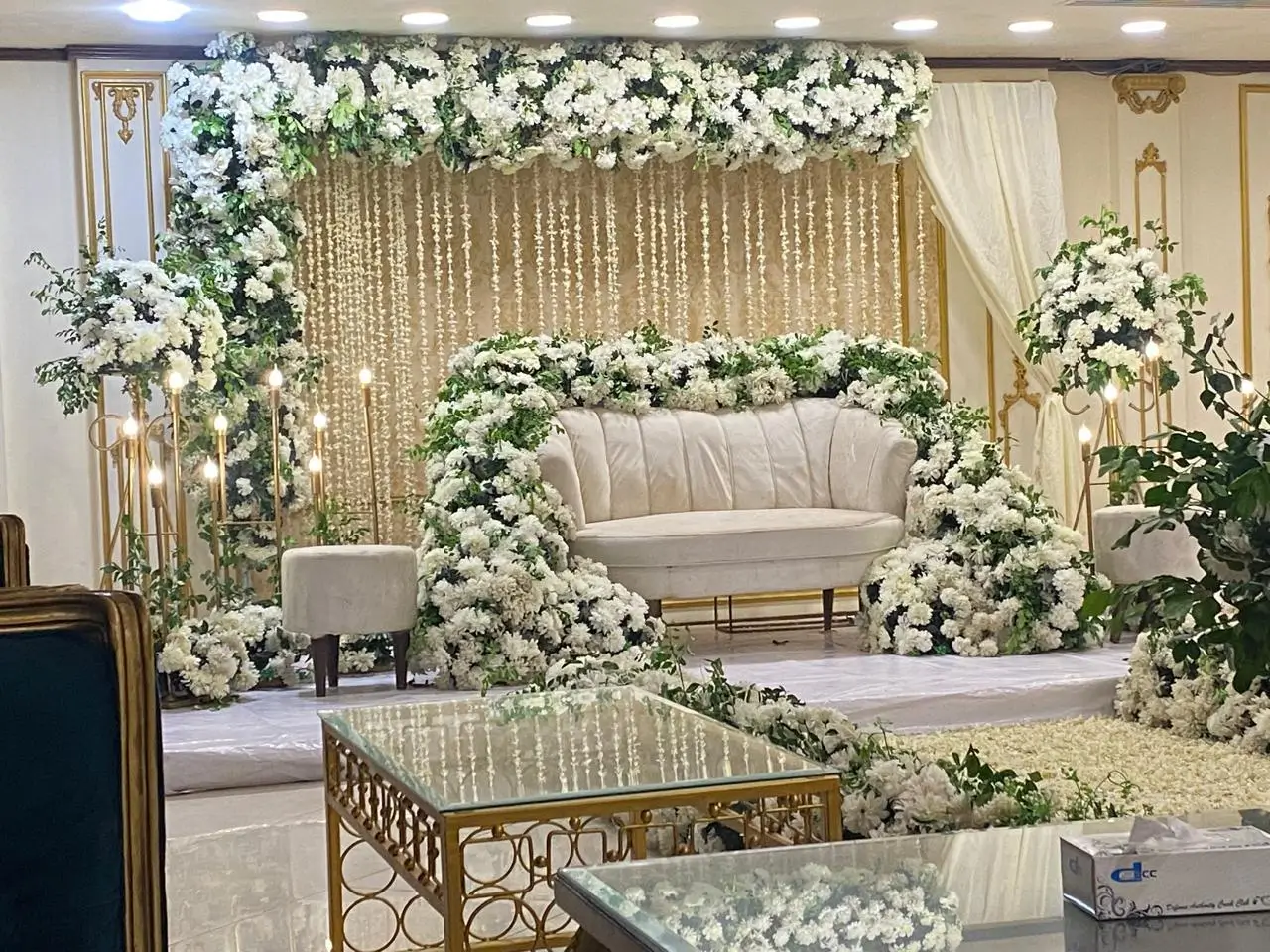
Nikah décor is often more understated than Mehndi or Baraat décor. Popular ideas include:
- White floral arrangements.
- Soft pastel backdrops.
- Elegant seating for the bride and groom.
- Candles and lanterns.
- Minimalist stage decoration.
- Qur’an stand and prayer-inspired details.
13. Baraat – The Groom’s Wedding Procession – Pakistani Wedding Events
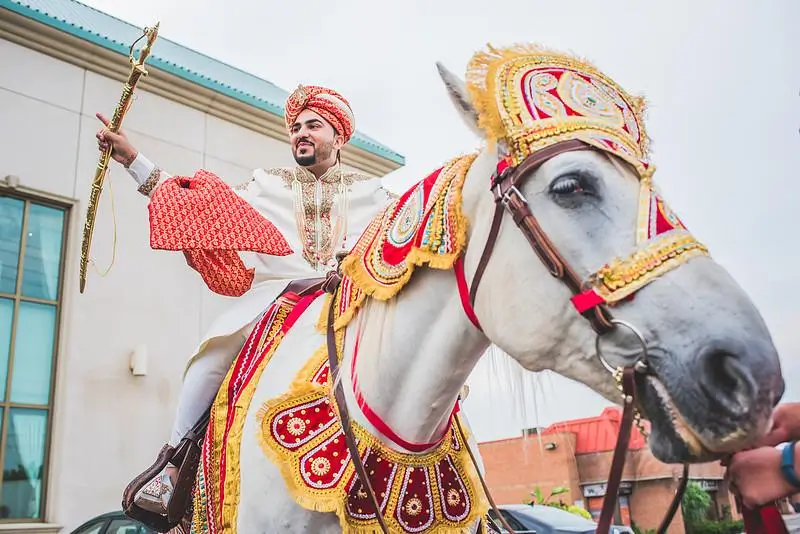
Baraat is one of the most recognisable events in a traditional Pakistani wedding. It is the formal arrival of the groom and his family at the wedding venue or the bride’s family home. The Baraat represents the groom’s side joining the bride’s family to celebrate the marriage. Traditionally, the groom travels with relatives, friends and other guests in a procession. Today, the event is often organised at a wedding hall, hotel, marquee or outdoor venue.
How does the Baraat begin? – Pakistani Wedding Events
The Baraat usually begins at the groom’s home or a designated gathering point. The groom gets dressed, participates in Sehra Bandi if the family observes it, and prepares to leave for the wedding venue. The procession may include:
- The groom’s parents.
- Brothers and sisters.
- Close relatives.
- Friends and family elders.
- Wedding guests.
- Musicians or a dhol group, depending on the family’s preferences.
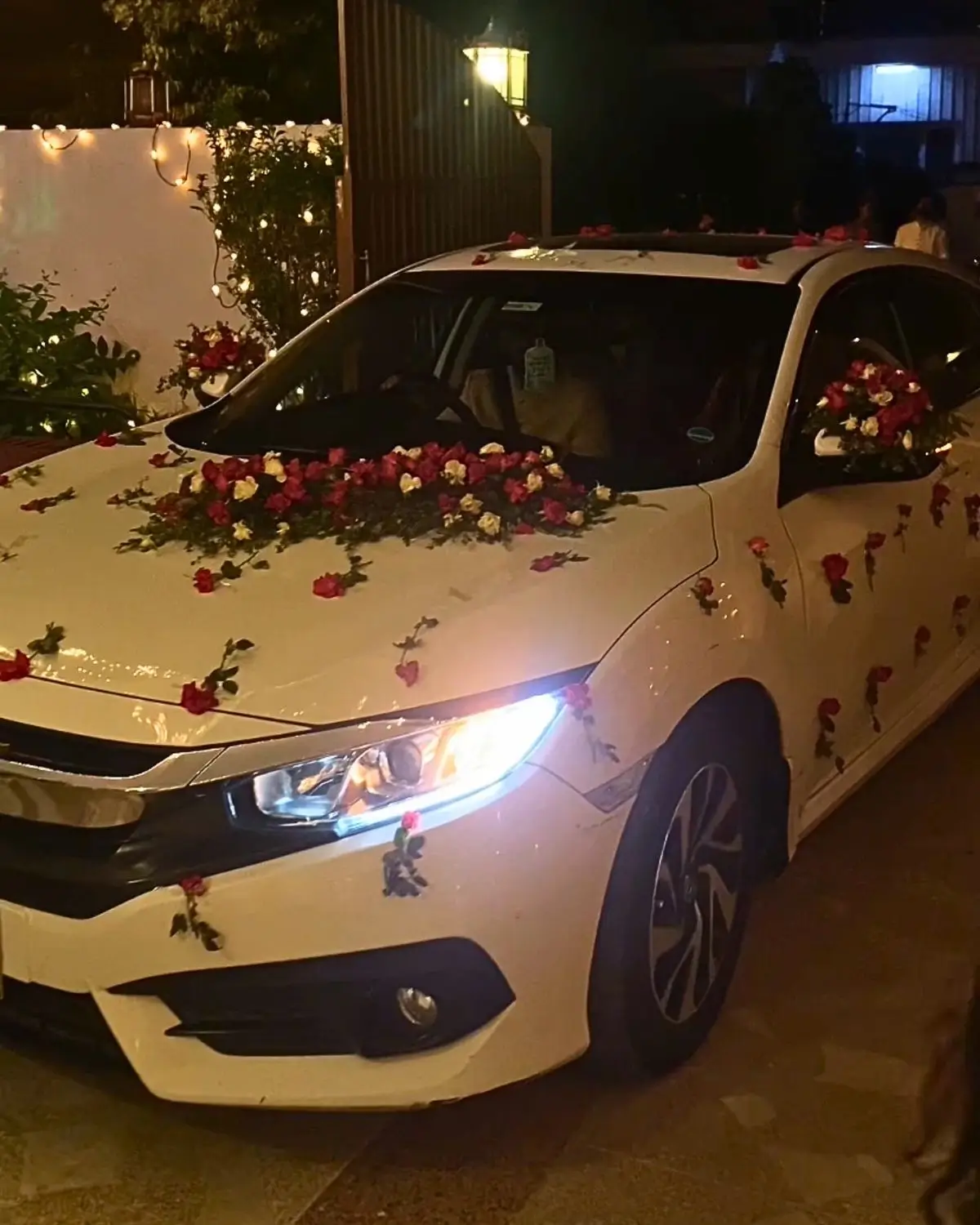
Some families arrange decorated cars, while others choose a traditional decorated vehicle or a modern luxury car.
The groom’s arrival – Pakistani Wedding Events
The groom’s arrival is an important moment at the Baraat. He may be welcomed with:
- Traditional music.
- Flower petals.
- Family greetings.
- Dhol performances.
- A formal reception by the bride’s relatives.
The bride’s family welcomes the groom and his guests, marking the beginning of the main wedding gathering.
Baraat wedding attire – Pakistani Wedding Events
Baraat is traditionally considered one of the most formal events of a Pakistani wedding.
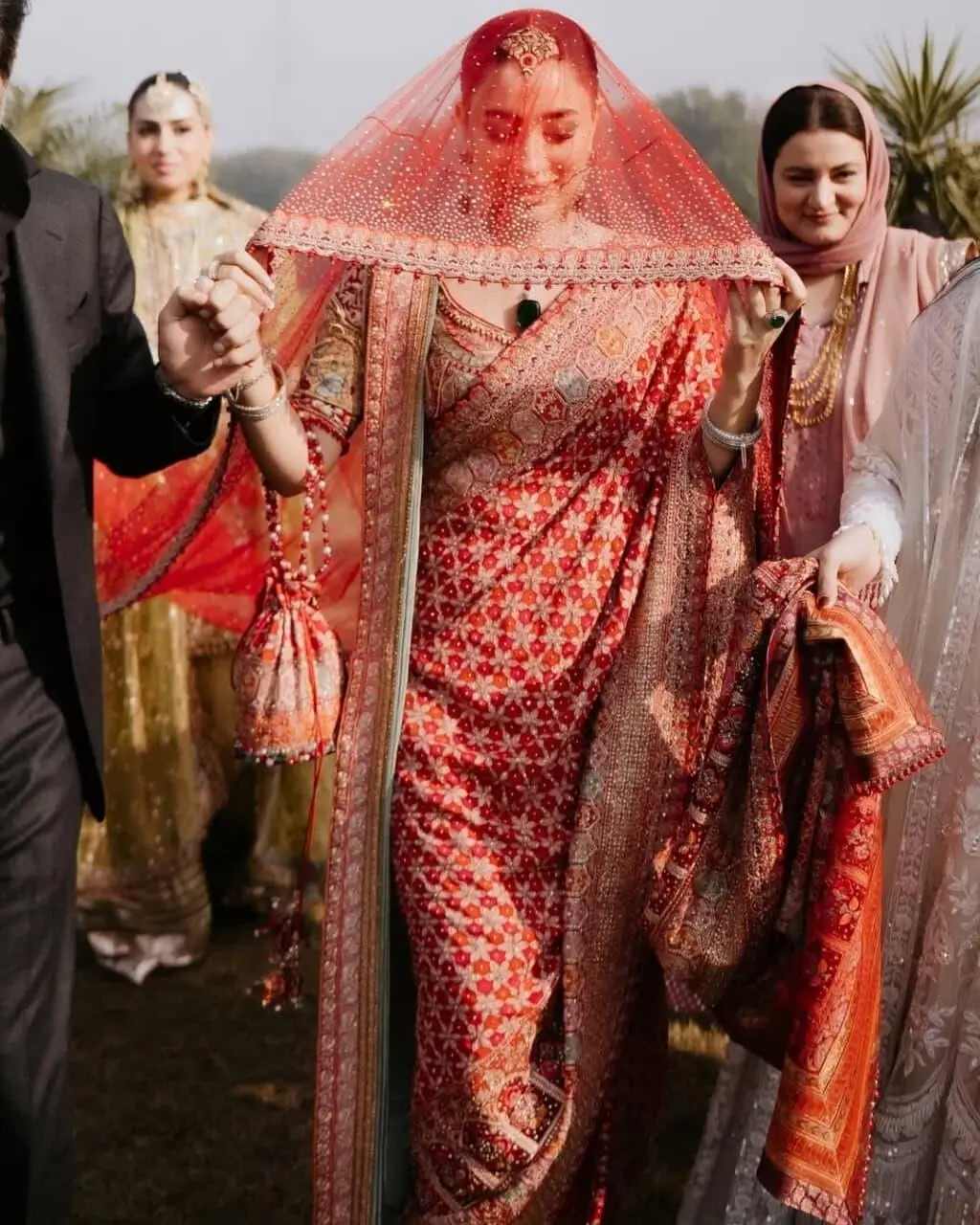
Bride’s outfit :The bride may wear:
- Traditional red lehenga.
- Deep maroon bridal dress.
- Red and gold gharara.
- Embroidered sharara.
- Contemporary ivory or pastel bridal ensemble.
Traditional bridal outfits often feature zardozi, dabka, gota, naqshi and other forms of detailed embroidery.
Groom’s outfit : The groom may wear:
- Embroidered sherwani.
- Traditional achkan.
- Prince coat.
- Turban or pagri.
- Shawl or stole.
- Traditional footwear.
Couples sometimes coordinate their outfits through matching colours, embroidery or accessories.
Baraat food and hospitality – Pakistani Wedding Events
Food is an important part of Pakistani wedding hospitality. Depending on the location, season and family preferences, a Baraat menu may include:
- Chicken or beef qorma.
- Biryani or pulao.
- Mutton karahi.
- Chicken tikka.
- Seekh kebabs.
- Naan and roti.
- Fresh salads and chutneys.
- Traditional desserts.
- Tea, juices and other beverages.
Some families serve a formal multi-course meal, while others prefer a buffet.
14. Milni – The Meeting of the Two Families – Pakistani Wedding Events
Milni is a traditional Pakistani wedding custom that takes place when the groom and his family arrive at the wedding venue. The word Milni is associated with meeting or coming together. The ceremony represents the welcoming of the groom’s family by the bride’s relatives. It is a gesture of respect, warmth and family connection.
How is Milni performed? – Pakistani Wedding Events
The ceremony generally takes place shortly after the Baraat arrives. Members of the bride’s family greet corresponding members of the groom’s family.
For example:
- The bride’s father may greet the groom’s father.
- The bride’s brother may greet the groom’s brother.
- Uncles from both families may exchange greetings.
- Other relatives may participate according to family custom.
The families may embrace, shake hands, exchange flowers or present traditional gifts.
Milni gifts – Pakistani Wedding Events
In some Pakistani families, Milni includes the exchange of money, envelopes, flowers or other gifts. The exact practice differs from one family to another. Possible gifts include:
- Traditional garlands.
- Cash envelopes.
- Shawls.
- Sweets.
- Flowers.
- Small commemorative gifts.
Milni should ideally be treated as a gesture of goodwill rather than a financial obligation. Families can adapt or simplify the custom according to their preferences and budgets.
The cultural meaning of Milni – Pakistani Wedding Events
Milni is more than a greeting ceremony. It symbolises the joining of two families and the beginning of a relationship that extends beyond the bride and groom. The custom also gives relatives an opportunity to meet, exchange blessings and celebrate the occasion together.
15. Rukhsati – The Emotional Farewell of the Bride – Pakistani Wedding Events
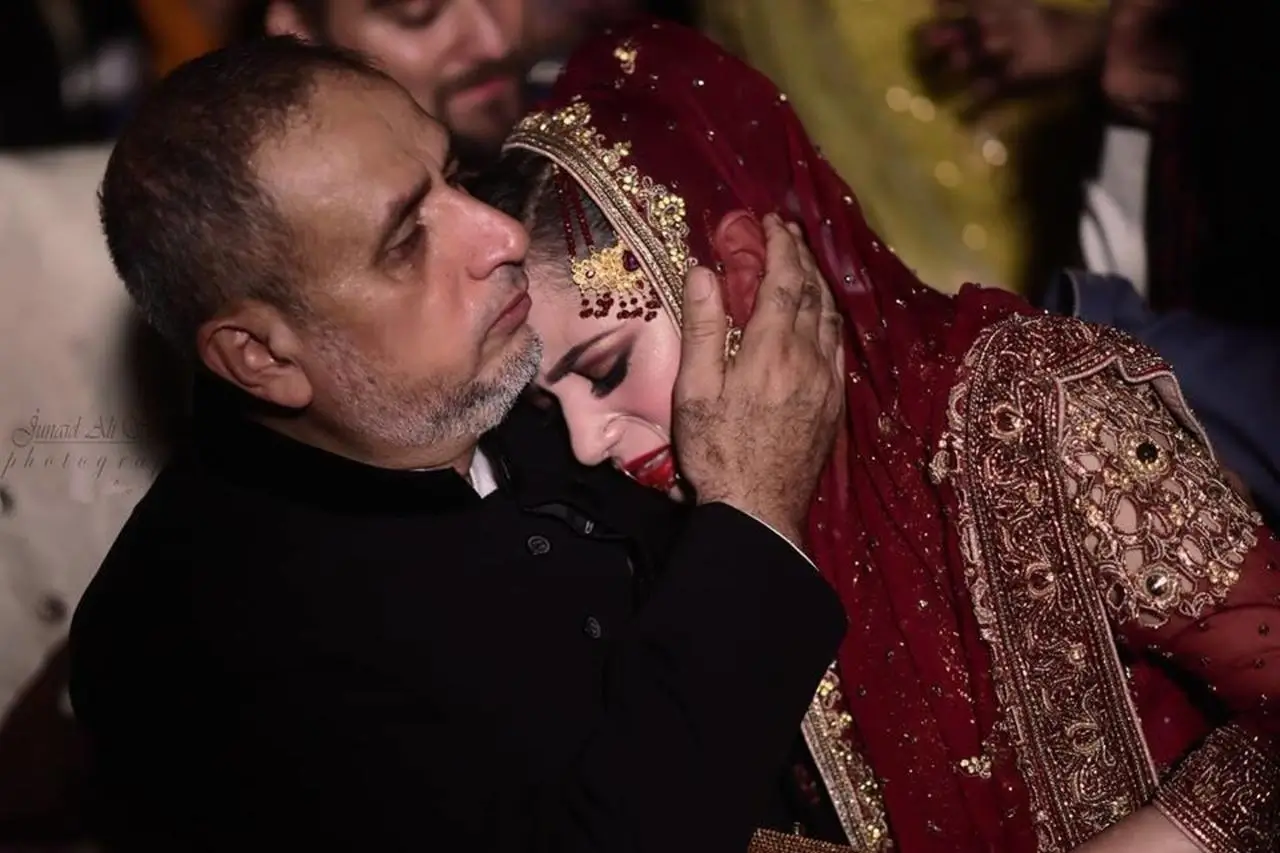
Rukhsati is one of the most emotional moments of a traditional Pakistani wedding. It marks the bride’s departure from her parental home after the wedding celebrations and her transition into married life. The word Rukhsati means farewell or departure. For many families, it represents a deeply meaningful moment filled with love, prayers, tears and good wishes. Although the custom is widely observed in Pakistan, its timing and arrangements vary. Some couples have their Rukhsati immediately after the Nikah, while others arrange it after the Baraat or on a separate day.
How does the Rukhsati ceremony take place? – Pakistani Wedding Events
A traditional Rukhsati may follow this sequence:
- The wedding celebrations begin to wind down.
- The bride prepares to leave with her husband.
- Her parents and close relatives gather around her.
- Family members offer prayers and blessings.
- The bride embraces her parents and siblings.
- The groom accompanies the bride to their departure vehicle.
- The couple leaves for their new home or agreed destination.
Some families recite prayers or verses from the Qur’an, while others simply offer personal blessings.
The emotional significance of Rukhsati – Pakistani Wedding Events
Rukhsati can be particularly emotional for parents, siblings and close relatives. For the bride, it may represent leaving the familiar surroundings of her childhood home and beginning a new chapter. For her parents, it is often a moment of pride, happiness and nostalgia.
The tradition is best approached with sensitivity. A bride should be given space to experience the moment in her own way, without unnecessary pressure to perform or display particular emotions.
Traditional Rukhsati customs – Pakistani Wedding Events
Different families observe different customs, including:
- The bride receiving blessings from her parents.
- A Qur’an being held above the bride’s head in some households.
- Flower petals being scattered.
- Family members accompanying the couple.
- The bride’s brothers or relatives helping her into the vehicle.
- Traditional farewell songs.
These practices are cultural customs and should not be confused with compulsory religious requirements.
Rukhsati outfit and styling – Pakistani Wedding Events
The bride usually wears her Baraat or Nikah bridal outfit, depending on the wedding schedule.
Popular choices include:
- Traditional red bridal lehenga.
- Maroon and gold bridal ensemble.
- Embroidered gharara.
- Heavy dupatta with traditional jewellery.
- Elegant contemporary bridal dress.
The groom generally wears his Baraat sherwani or another formal outfit.
Modern Rukhsati celebrations – Pakistani Wedding Events
Modern couples sometimes adapt the traditional ceremony to make it more personal. Some choose:
- A small, private farewell with close family.
- A separate outdoor photography session.
- A simple departure without elaborate rituals.
- A combined Nikah and Rukhsati.
- A delayed Rukhsati after the wedding reception.
There is no single way to celebrate this moment. The most important consideration is that the couple and their families feel comfortable with the arrangements.
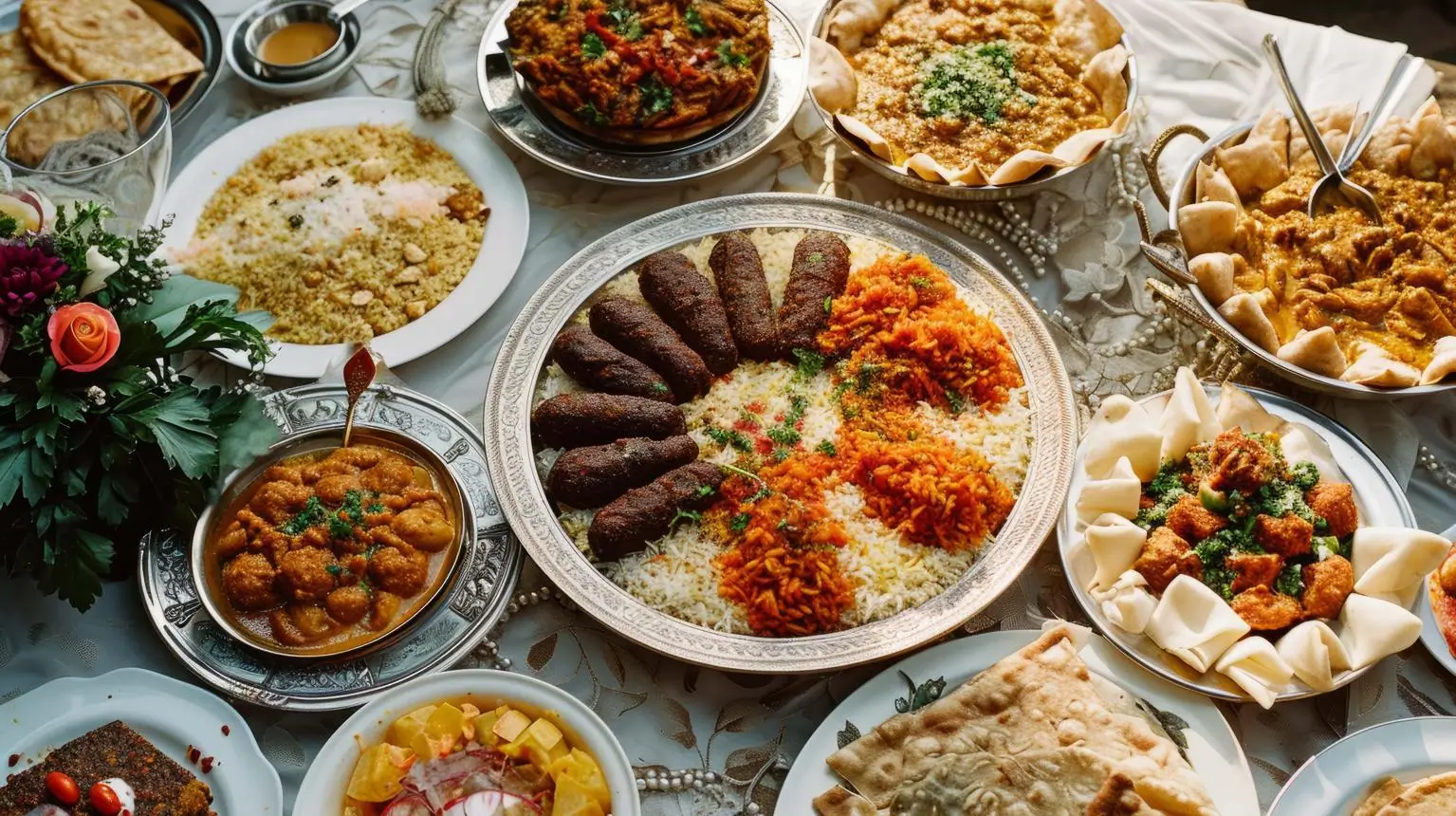
16. Walima – The Traditional Wedding Reception – Pakistani Wedding Events
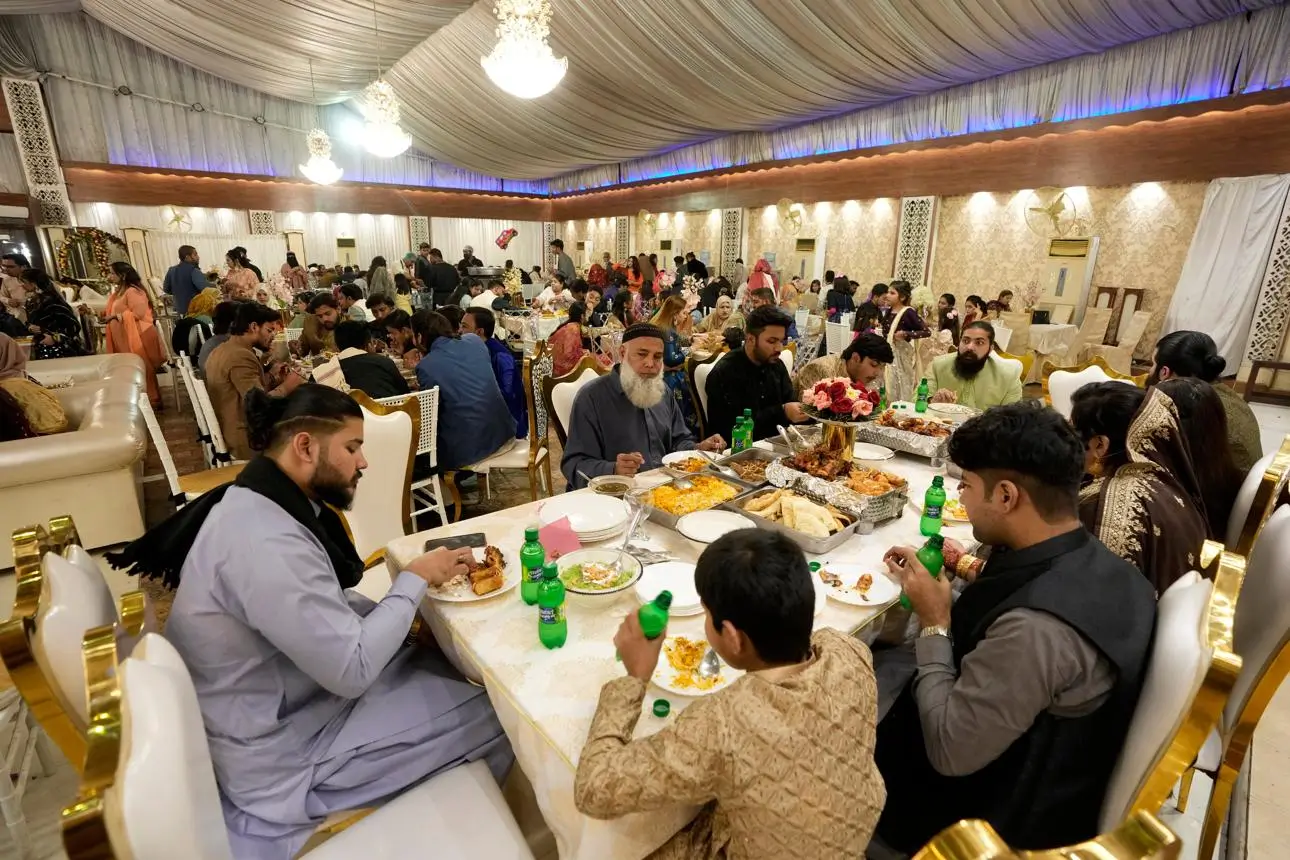
Walima is one of the most important celebrations in a Pakistani Muslim wedding. It is traditionally hosted by the groom or his family after the Nikah and consummation of the marriage, although contemporary families may arrange it according to their circumstances and schedules.
The Walima is an occasion to celebrate the marriage, welcome relatives and friends, and share happiness with the wider community.Unlike the Mehndi, which is usually full of colourful performances and music, Walima celebrations are often more formal and elegant.
Religious significance of Walima
Walima is an established Islamic wedding tradition associated with announcing and celebrating a marriage. It reflects gratitude to Allah and provides an opportunity to share the happiness of marriage with family, friends and the community. The scale of the celebration is not what makes it meaningful. A simple gathering can also fulfil the purpose of sharing the occasion.
How is Walima celebrated in Pakistan?
A traditional Pakistani Walima usually takes place at a wedding hall, hotel, marquee, restaurant or outdoor venue. The event may include:
- Guests arriving at the venue.
- The bride and groom making their entrance.
- Family photographs and greetings.
- A formal reception.
- Dinner or lunch.
- Dessert and refreshments.
- Guests offering congratulations and blessings.
Some couples also arrange a cake-cutting ceremony or a special photography session.
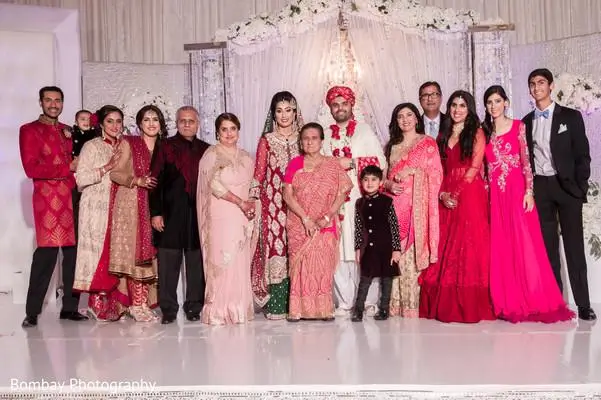
Walima outfits for the bride – Pakistani Wedding Events
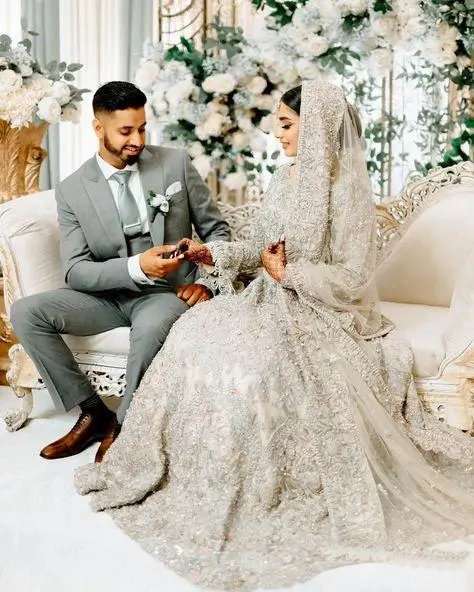
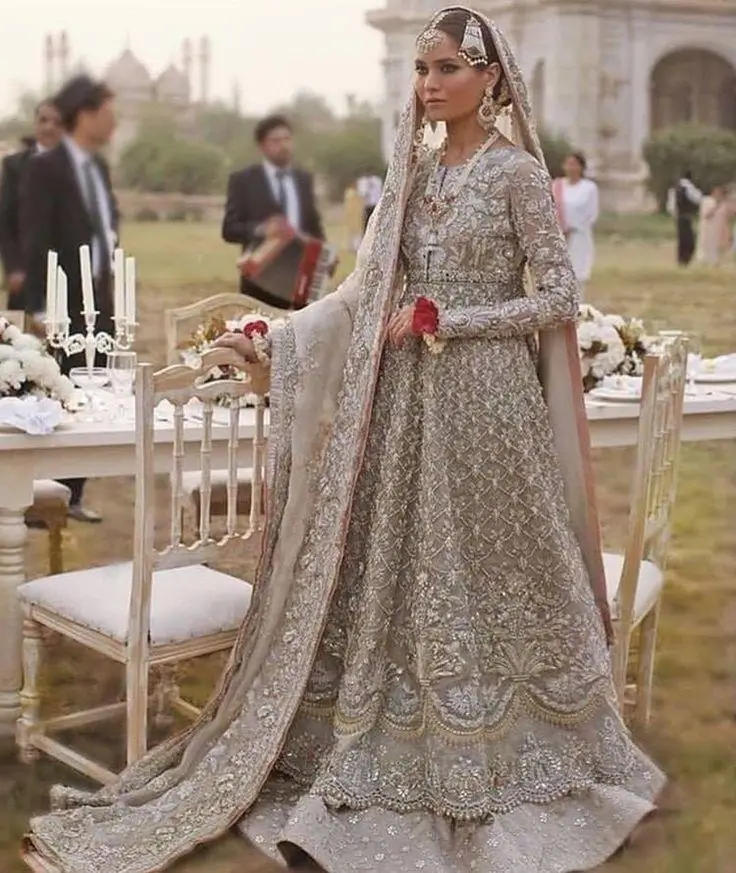
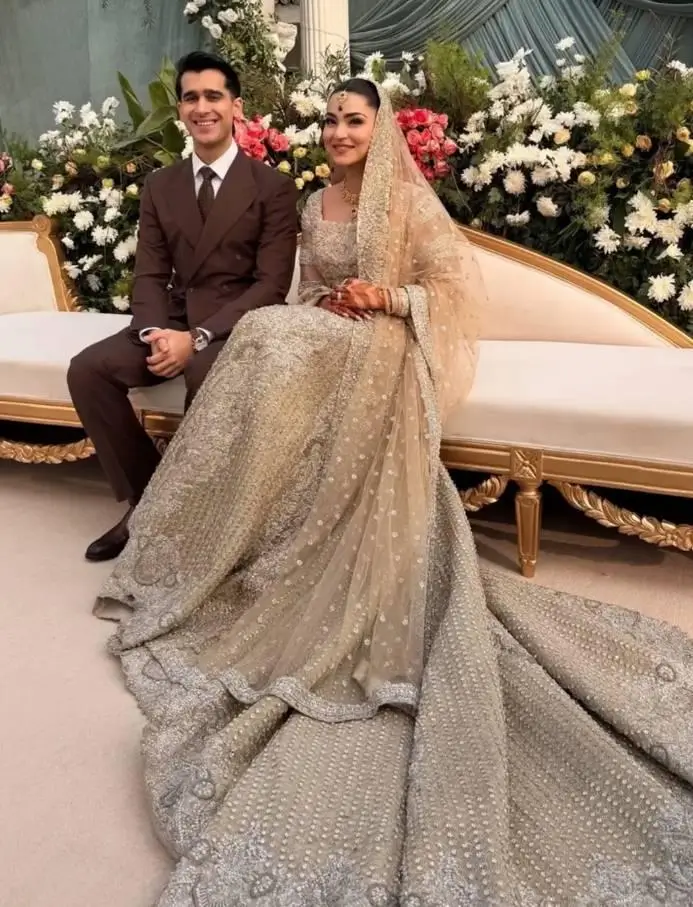
Walima fashion is often associated with sophisticated colours, delicate embroidery and elegant silhouettes. Unlike the traditional red Baraat dress, Walima outfits frequently feature softer colours. Popular bridal colours include:
- Ivory.
- Champagne.
- Silver.
- Powder pink.
- Pastel blue.
- Mint green.
- Beige.
- Light gold.
Popular outfit styles include:
- Embroidered maxi dresses.
- Long shirts with lehengas.
- Contemporary gowns.
- Traditional ghararas.
- Elegant shararas.
- Pastel pishwas.
Brides may choose diamond-style jewellery, pearls, delicate necklaces and statement earrings.
Walima outfits for the groom – Pakistani Wedding Events
Grooms often choose a formal outfit that complements the bride’s look. Popular choices include:
- Classic black or navy suits.
- Grey formal suits.
- Ivory sherwanis.
- Cream prince coats.
- Formal waistcoats.
- Traditional kurta shalwar with a jacket.
Many couples coordinate their outfits through complementary colours rather than wearing identical shades.
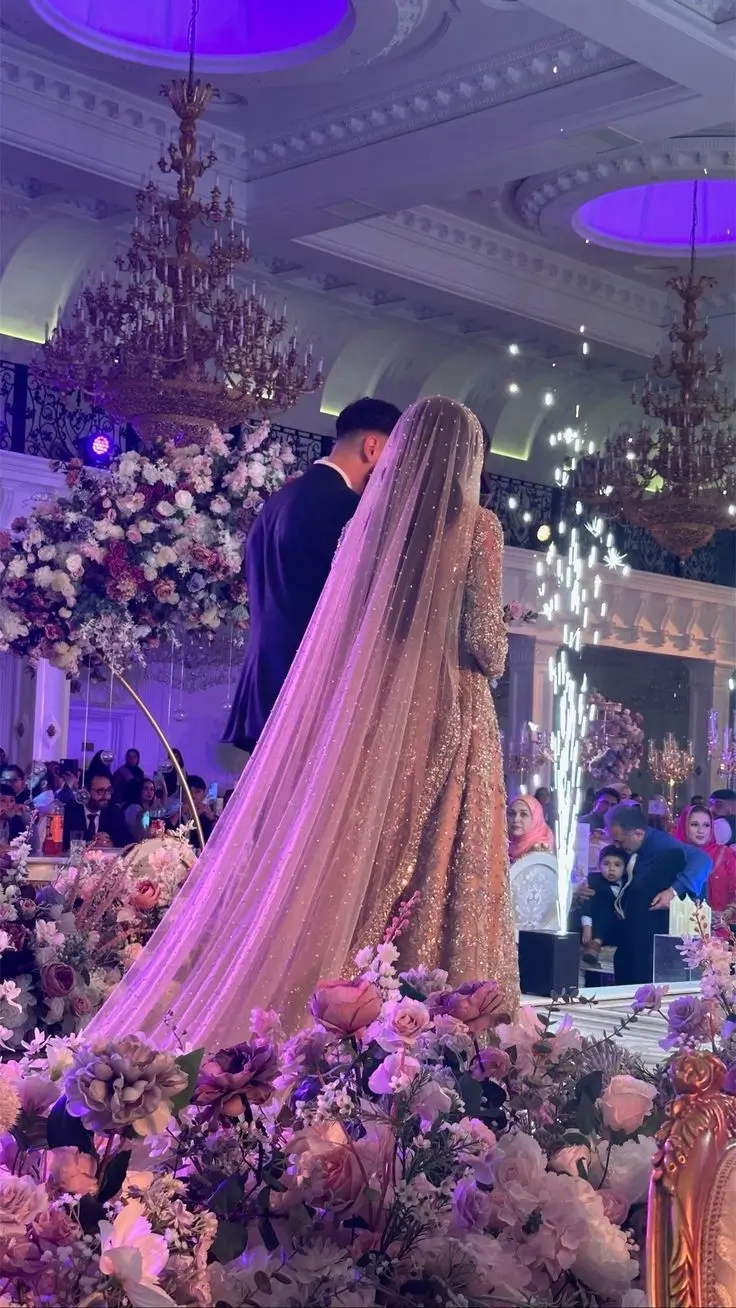
Walima decorations – Pakistani Wedding Events
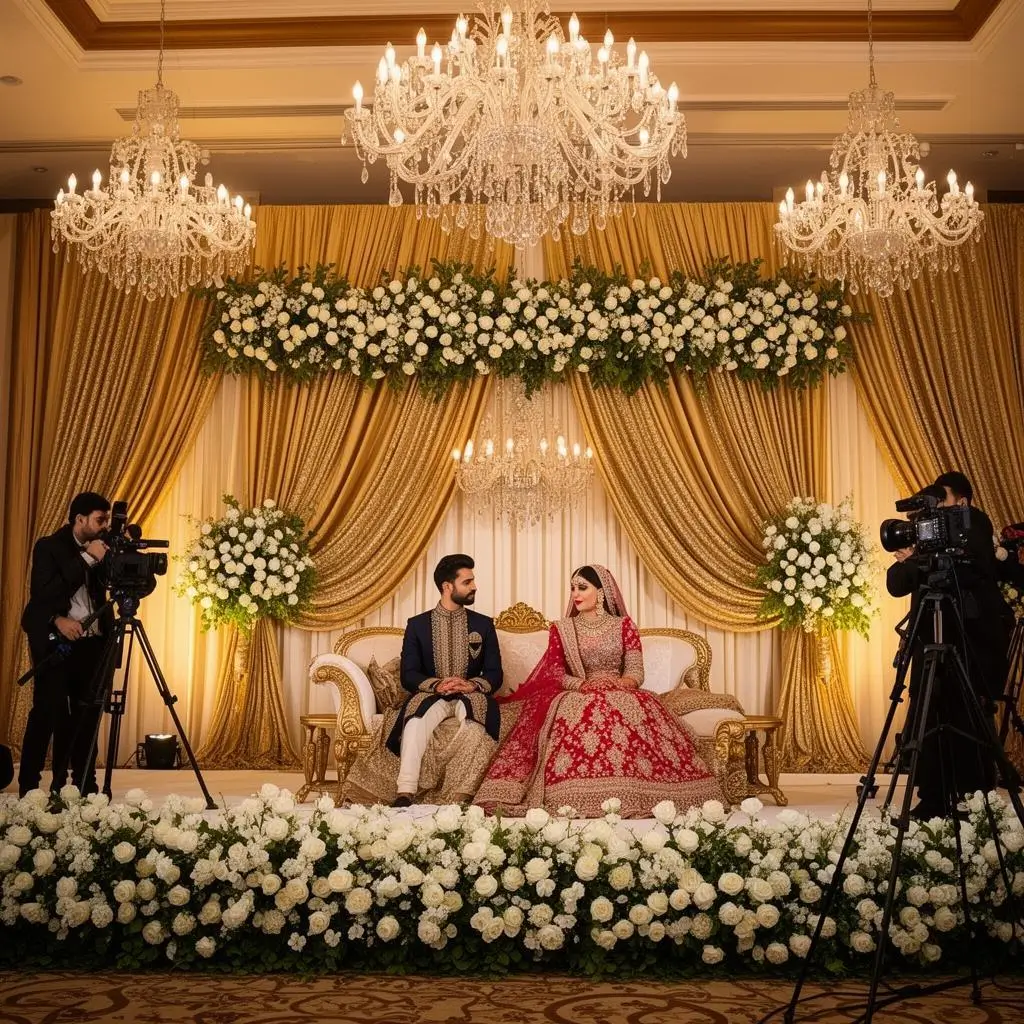
Walima décor is often elegant and understated. Popular ideas include:
- White and pastel floral arrangements.
- Crystal chandeliers.
- Elegant stage backdrops.
- Soft lighting.
- Fresh flower installations.
- Minimalist table decorations.
- Luxury seating arrangements.
Some couples prefer a traditional Pakistani setting, while others choose contemporary European-inspired reception décor.
Pakistani Walima food menu – Pakistani Wedding Events
Food is an important part of the Walima reception. A traditional menu may include:
Main courses
- Chicken qorma.
- Mutton karahi.
- Chicken biryani.
- Mutton pulao.
- Chicken tikka.
- Seekh kebabs.
- Grilled fish.
Side dishes
- Fresh salads.
- Raita.
- Mint chutney.
- Naan.
- Roghni naan.
- Mixed vegetables.
Desserts
- Gulab jamun.
- Kheer.
- Shahi tukray.
- Gajar ka halwa.
- Ras malai.
- Traditional ice cream.
Modern receptions may also include continental dishes, live barbecue stations, pasta counters and dessert tables.
17. Chauthi – A Traditional Post-Wedding Visit
Chauthi, sometimes written as Chauthi Rasam, is a post-wedding custom observed in some Pakistani families. Traditionally, it refers to a visit or gathering involving the newly married couple and the bride’s family after the wedding. The name is associated with the fourth day, although the timing and exact arrangements differ between households.
It is important to understand that Chauthi is not a compulsory Islamic wedding ceremony. It is a cultural tradition that some families continue to observe.
How is Chauthi celebrated?
In families that follow this custom, the bride may visit her parents’ home with her husband a few days after the wedding. The gathering gives the bride an opportunity to spend time with her parents and siblings after the wedding celebrations. A traditional Chauthi gathering may include:
- Welcoming the newly married couple.
- Preparing special food.
- Offering sweets and refreshments.
- Giving the bride gifts.
- Taking family photographs.
- Spending time with relatives.
In some households, the bride’s family also presents gifts to the groom.
Chauthi gifts
Gifts vary according to family customs and financial circumstances. They may include:
- Clothes for the bride.
- Jewellery.
- Traditional sweets.
- Perfumes.
- Shawls.
- Gifts for the groom.
- Decorative items.
There is no universal gift list or fixed financial expectation.
Modern Chauthi celebrations
Today, many families celebrate Chauthi as a small family lunch or dinner rather than a formal ceremony. Some couples visit the bride’s parents without organising a separate event, while others choose to skip the custom entirely. The important thing is to maintain family relationships without turning traditions into financial or social pressure.
Traditional and Modern Pakistani Wedding Practices
Pakistani weddings have evolved considerably over time. While many families continue to observe traditional customs, modern couples often adapt the celebrations to suit their preferences, budgets and schedules. Some families organise separate events for every major ceremony, while others combine several celebrations into fewer gatherings.
For example:
- Mehndi and Dholki may be combined.
- Nikah and Baraat may take place on the same day.
- Rukhsati may happen immediately after Nikah.
- Milni may be kept short and simple.
- Sehra Bandi may be replaced with a private family gathering.
Social media, destination weddings and contemporary bridal fashion have also influenced wedding celebrations. However, the central purpose remains the same: bringing families together to celebrate a marriage and offer their blessings to the couple.
Pakistani Wedding Planning Checklist
Organising several wedding events requires careful coordination.The following checklist can help families plan a traditional Pakistani wedding.
Six to twelve months before the wedding
- Decide on the approximate wedding dates.
- Set the overall budget.
- Discuss the number of events.
- Prepare an initial guest list.
- Select venues.
- Book major vendors.
- Begin bridal and groom outfit planning.
Three to six months before the wedding
- Finalise the wedding venues.
- Book photographers and videographers.
- Confirm catering arrangements.
- Select event decorators.
- Arrange transport.
- Choose wedding invitations.
- Book makeup artists.
- Finalise the main wedding outfits.
One to three months before the wedding
- Send invitations.
- Confirm guest numbers.
- Finalise the food menus.
- Plan Mehndi performances.
- Arrange music and entertainment.
- Confirm the Nikah officiant or registrar.
- Review the Nikahnama arrangements.
- Confirm Mahr and other agreed marriage conditions.
One week before the wedding
- Confirm all vendors.
- Check wedding outfits.
- Arrange jewellery and accessories.
- Confirm transport timings.
- Prepare essential documents.
- Share the final event schedule with family members.
- Confirm seating and guest arrangements.
How to Organise These Pakistani Wedding Events
Planning Mehndi, Sehra Bandi, Nikah, Baraat, Milni and Rukhsati requires coordination between both families. The following practical checklist can help keep the celebrations organised.
Mehndi checklist
- Finalise the venue and guest list.
- Select the bride’s and groom’s outfits.
- Book a Mehndi artist.
- Arrange music and performances.
- Plan decorations and seating.
- Confirm catering and photography.
Sehra Bandi checklist
- Arrange the groom’s outfit.
- Select or prepare the Sehra.
- Decide which family elder will perform the ceremony.
- Set aside time for family photographs.
- Coordinate transport for the Baraat.
Nikah checklist
- Confirm the Nikah officiant or authorised registrar.
- Discuss and agree on Mahr.
- Arrange witnesses as required.
- Review the Nikahnama carefully.
- Ensure all relevant details are accurate.
- Confirm legal registration arrangements.
- Keep copies of the necessary documents.
Baraat checklist
- Confirm the venue and timings.
- Arrange the groom’s transport.
- Finalise the bride’s and groom’s outfits.
- Confirm guest seating.
- Finalise the food menu.
- Coordinate the arrival and welcome arrangements.
- Arrange photography and videography.
Milni checklist
- Identify the participating family members.
- Decide whether gifts or garlands will be exchanged.
- Inform the event coordinator.
- Arrange a suitable space for family greetings.
Rukhsati checklist
- Respect the bride’s wishes and comfort.Wedding day
- Discuss the timing with both families.
- Arrange the couple’s transport.
- Keep essential belongings ready.
- Coordinate with the photographer.
- Allow time for a relaxed farewell.
- Keep the couple comfortable.
- Make time to enjoy the celebrations.
Frequently Asked Questions About Pakistani Weddings
1. What are the main events in a Pakistani wedding?
The main events commonly include Dholki, Mayoun, Ubtan, Mehndi, Nikah, Baraat, Rukhsati and Walima. Some families also organise Mangni, Qawwali Night, Sehra Bandi, Milni and Chauthi.
2. What is the first event of a Pakistani wedding?
The first formal step is often the Rishta process, during which families discuss a potential marriage proposal. Some families then arrange Istikhara, Dua-e-Khair, Baat Pakki or Mangni.
3. What is the difference between Mehndi and Mayoun?
Mayoun is traditionally associated with the bride’s pre-wedding preparation and a period of celebration before the wedding. Mehndi is a festive event centred around applying henna, music, dancing and family gatherings.
4. What happens at a Pakistani Nikah?
During Nikah, the bride and groom enter into a marriage contract based on mutual consent. Mahr is agreed, witnesses participate as required, and the Nikahnama is completed. The marriage should also be registered according to applicable law.
5. Is Nikah compulsory for a Muslim wedding?
Nikah is the Islamic marriage contract that establishes a Muslim marriage. Cultural events such as Mehndi, Mayoun and Baraat are not substitutes for Nikah.
6. What is the difference between Nikah and Baraat?
Nikah is the religious marriage contract, while Baraat is a cultural wedding celebration involving the groom and his family arriving at the wedding venue.
7. What is Sehra Bandi?
Sehra Bandi is a cultural ceremony in which a decorative Sehra is placed on the groom’s head before he leaves for the Baraat.
8. What is Milni in a Pakistani wedding?
Milni is a traditional greeting ceremony in which members of the bride’s and groom’s families meet, exchange greetings and sometimes present gifts.
9. What is Rukhsati?
Rukhsati is the traditional farewell during which the bride leaves her parental home with her husband after the wedding.
10. What is Walima?
Walima is a traditional Islamic wedding reception hosted by the groom or his family to celebrate the marriage and share the occasion with relatives and friends.
11. Is Chauthi compulsory in Pakistani weddings?
No. Chauthi is a cultural post-wedding tradition observed by some families. It is not an obligatory Islamic wedding ceremony.
12. How many days does a Pakistani wedding usually last?
A Pakistani wedding can last anywhere from one day to a week or longer, depending on the number of events and family traditions. Some couples combine several ceremonies into one or two days.
13. What colour does a Pakistani bride traditionally wear?
Red is a traditional bridal colour in many Pakistani communities. However, brides also choose maroon, gold, ivory, pink, champagne and other shades.
14. Who usually hosts the Walima?
Traditionally, the groom or his family hosts the Walima. Modern arrangements may vary depending on the couple’s circumstances and family preferences.
15. Are Pakistani wedding traditions the same across all provinces?
No. Wedding traditions vary across Punjab, Sindh, Khyber Pakhtunkhwa, Balochistan and other communities. Local languages, clothing, music, food and family customs influence celebrations.
16. Can Pakistani couples combine Nikah and Baraat?
Yes. Many couples arrange Nikah and Baraat on the same day. Others hold Nikah separately and arrange the Baraat and Rukhsati later.
17. What is the difference between Walima and Chauthi?
Walima is a wedding reception celebrating the marriage, traditionally hosted by the groom’s side. Chauthi is a cultural post-wedding visit or gathering observed by some families.
18. What should guests wear to a Pakistani wedding?
Guests generally wear formal traditional clothing such as shalwar kameez, sarees, lehengas, ghararas, sherwanis or formal suits. The choice depends on the event, dress code and family preferences.
Conclusion: Celebrating the Beauty of Pakistani Wedding Traditions
Pakistani weddings are much more than a series of ceremonies. They represent family relationships, cultural heritage, hospitality, faith and the beginning of a new chapter in two people’s lives. From the initial Rishta and engagement to the colourful Mehndi, sacred Nikah, joyful Baraat, emotional Rukhsati and celebratory Walima, each event contributes to the wedding experience.
Regional traditions add even more variety. Punjabi music, Sindhi cultural clothing, Pashtun celebrations, Balochi embroidery and the diverse customs of urban Pakistani families all demonstrate the richness of the country’s wedding culture. At the same time, modern couples are finding new ways to celebrate. Some prefer elaborate multi-day weddings, while others choose intimate gatherings and simpler ceremonies.
Ultimately, there is no single correct way to organise a Pakistani wedding. What matters most is that the marriage is entered into willingly, the couple is treated with respect, and the celebrations bring happiness to the families involved. Pakistani wedding traditions continue to evolve, but their central values of love, togetherness, hospitality and family remain an important part of the country’s cultural identity.