

Mutton Nihari is one of those dishes that rewards patience. Unlike quick mutton curries, a good Nihari is all about slow cooking, marrow-rich bones, deeply aromatic spices, and a silky, flour-thickened gravy.
The secret is not simply adding more spices. It is giving the mutton enough time to become tender while the connective tissue and marrow enrich the broth. A final tempering of hot ghee or oil, plenty of julienned ginger, fresh coriander, green chillies, and lemon brings everything together.
This recipe gives you two ways to make the masala: a homemade whole-spice potli for a more traditional aromatic flavour, or Shan Nihari Masala when you want a convenient shortcut. Shan itself uses mutton/goat with marrow and knuckle bones and recommends several hours of gentle cooking.
Why You’ll Love This Mutton Nihari Recipe
- Rich, authentic Pakistani-style flavour
- Tender, slow-cooked mutton
- Marrow bones add incredible depth and body
- Homemade spice potli gives a complex aroma
- Shan Nihari Masala add extra flavours
- Roasted wheat flour creates the classic velvety texture
- No complicated restaurant equipment required
- Even better after resting for several hours
- Perfect for breakfast, brunch, Eid, daawat and winter dinners
Authentic Mutton Nihari Recipe
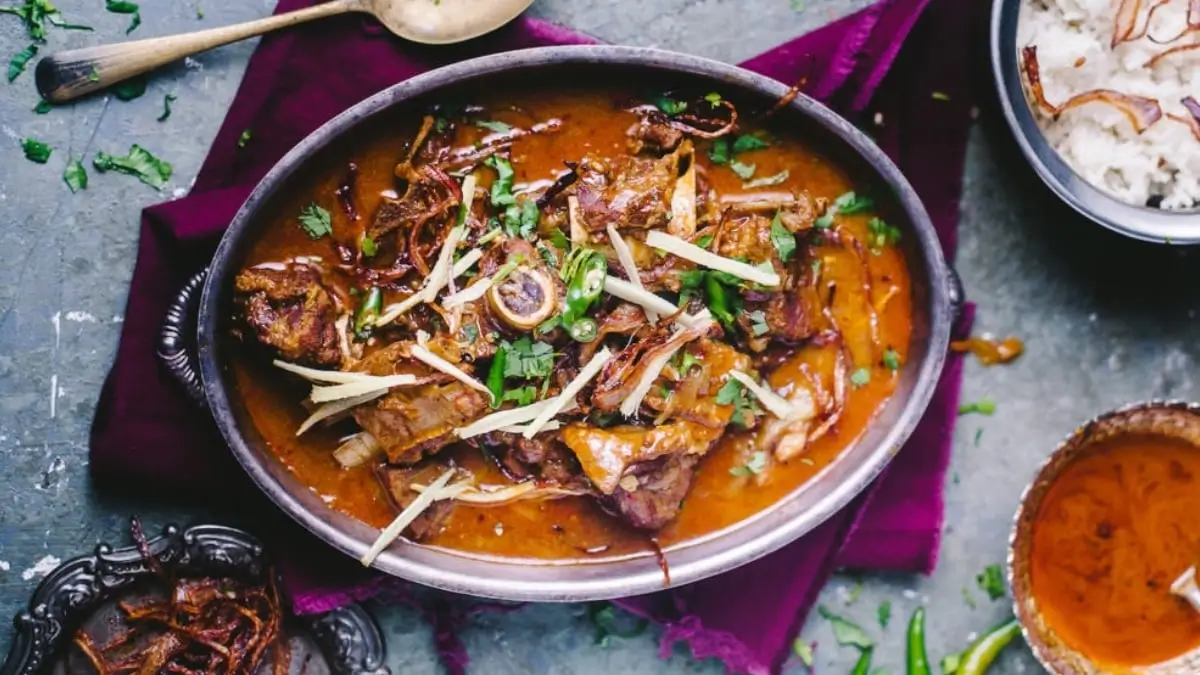
Yield and Serving Information – Nihari Recipe
- Preparation Time: 25 minutes
- Cooking Time: 4–5 hours
- Total Time: About 5 hours
- Yield: 6–8 servings
- Cuisine: Pakistani / South Asian
- Course: Main Course
- Difficulty Level: Intermediate
For the best result, use bone-in mutton, particularly shank pieces, along with marrow or knuckle bones. The shank is widely recommended for Nihari because slow cooking turns the connective tissue tender and contributes body to the gravy.
Ingredients : For the Mutton Nihari Recipe
- 1 kg mutton, preferably bone-in shank pieces
- 500 g–1 kg knuckle and marrow bones
- ½ cup ghee or cooking oil
- 2 medium onions, thinly sliced
- 2 tablespoons ginger-garlic paste
- 1 teaspoon Kashmiri red chilli powder, according to taste
- ½ teaspoon turmeric powder
- 1½–2 teaspoons salt, or according to taste
- 8–10 cups hot water, approximately
- 4 tablespoons wheat flour/atta
Optional – Nihari Recipe
- ½ cup plain yogurt, well whisked
Yogurt is not essential to a traditional slow-cooked mutton Nihari, so I recommend keeping it optional rather than making it the dominant ingredient. Some quicker Nihari versions use yogurt for additional tang and body
Homemade Pakistani Nihari Recipe Spice Potli
This is the special aromatic element of this Pakistani Nihari Recipe. Place the following whole spices in a small piece of clean muslin cloth:
- 2–3 pieces Long Pepper
- 2 Black Cardamom
- 1 tablespoon Fennel Seeds
- 2 piece Dried Ginger
- 5–6 Clove
- 1 teaspoon whole black pepper
- A small piece of Grated Nutmeg
- 1½ tablespoons Coriander Seeds
- 1 Bay Leaf
- 2 1-inch Cinnamon Sticks
- 2-3 pieces Mace
- 4-6 Green Cardamoms
- 1 teaspoon kalonji
Tie the muslin securely to make a potli.
Why use a potli in Nihari Recipe?
The potli allows the whole spices to slowly release their fragrance into the broth without leaving a large quantity of coarse spice particles in the finished gravy.
The combination is especially suitable for Nihari because fennel, dried ginger, black pepper, cloves, cardamom, nutmeg and long pepper are characteristic of many homemade Nihari spice blends.
Important: Lightly crush the whole spices before putting them into the potli, but do not grind them into a powder.
Shan Nihari Masala – Nihari Recipe
While the Homemade potli crushed ingredients provides masala flavors, adding one small packet of Nihari Mix to 1 kg of meat and marrow or knuckle bones, followed by several hours of low-temperature cooking, will give a rich flavor and fragrance.
My recommended Shan version – Nihari Recipe
For an especially aromatic homemade-style result:
- 1 packet Shan Nihari Masala
- The same mutton and marrow bones
- You may still use a small potli of peepli, bari elaichi, saunf, soonth, cloves, kali mirch and nutmeg if you want extra whole-spice fragrance.
However, because Shan Masala already contains a prepared spice blend, So use only potli crushed ingredients. The potli should be treated as an aromatic enhancementAlso taste before adding extra salt and Kashmiri chilli powder because commercial masala mixes already contain seasoning.
For the Final Garnish – Nihari Recipe
Nihari is incomplete without its fresh toppings.
- 2–3 inch piece fresh ginger, cut into thin julienne
- 3–4 green chillies, sliced
- Fresh coriander, finely chopped
- 1–2 lemons, cut into wedges
- Fresh coriander leaves
- Optional: finely sliced green chillies
The combination of ginger + lemon + fresh coriander + chilli provides the freshness and acidity needed to balance the rich gravy.
For the Final Tarka – Nihari Recipe
- 2–3 tablespoons ghee or oil
- 1 Brown sliced small onion
- A pinch of Kashmiri red chili powder
You can also use a few whole red chillies if desired.
How to Make Mutton Nihari Recipe
Step 1: Prepare the Nihari Potli – Nihari Recipe
Lightly toast the all ingredient including fennel, black pepper, cloves, black cardamom and Long Pepper in a dry pan for about 30–40 seconds. Do not burn them.
Transfer them to a plate and allow them to cool slightly. Place the spices in a piece of muslin cloth and tie tightly. Set aside.
Step 2: Brown the Onions – Nihari Recipe
Heat the ghee or oil in a heavy-bottomed pot. Add the sliced onions. Cook over medium heat until they become deep golden brown. Do not rush this step. Properly browned onions give Nihari additional colour, sweetness and depth. Reserve a small portion of the fried onions for the final garnish if desired.
Step 3: Add the Mutton – Nihari Recipe
After Step 2 in the same pan, Increase the heat slightly and add the bone-in mutton. Fry for about 5–7 minutes, stirring occasionally. The meat should change colour and develop a little browning around the edges.
Add:
- Ginger-Garlic paste
- Kashmiri Chilli Powder
- Turmeric
- Salt
Mix thoroughly. Cook for another 2–3 minutes until the spices become fragrant.
Step 4: Add the Bones and Potli – Nihari Recipe
Add the knuckle and marrow bones and Add Shan Masala in it. Place the prepared spice potli into the pot. Pour in approximately 8 cups of hot water. The liquid should generously surround the meat and bones. Bring everything to a boil.
Step 5: Slow Cook the Nihari – Nihari Recipe
Once the liquid begins boiling, reduce the heat to very low. Cover the pot tightly.
Now comes the most important part. Let the Nihari cook slowly for approximately 4 hours, or until the mutton becomes exceptionally tender. The exact time depends on the size and cut of the mutton.
The meat should become soft enough to separate easily with a spoon or fork. This long cooking process is what distinguishes a proper slow-cooked Nihari from a quick mutton curry. The mutton, bones and spices gradually develop into a rich, deeply flavoured broth.
Don’t keep stirring
Avoid repeatedly disturbing the pot. Check occasionally to make sure there is enough liquid, but otherwise allow the Nihari to cook gently.
Step 6: Remove the Bones and Potli – Nihari Recipe
Once the mutton is completely tender, carefully remove the marrow and knuckle bones. Open the bones and scrape out the soft marrow. Discard the empty bones. Return the marrow to the Nihari. Now remove the spice potli and discard it.
The broth should already be intensely aromatic and returning it to the gravy before thickening.
Step 7: Prepare the Wheat Flour Slurry –Nihari Recipe
Place 4 tablespoons wheat flour/atta in a bowl. For a deeper flavour, lightly roast the flour in a dry pan for 1–2 minutes until it smells nutty and fragrant. Allow it to cool slightly. Add approximately 1 to 1½ cups water, little by little, whisking continuously.
Make a completely smooth slurry. There should be no lumps. Roasted wheat flour is particularly useful because it provides the characteristic nutty flavour associated with Nihari rather than simply making the gravy thick.
Step 8: Thicken the Nihari – Nihari Recipe
Reduce the heat. Slowly pour the flour slurry into the Nihari while stirring continuously. Do not dump the entire slurry into the pot at once. Keep stirring until the flour is completely incorporated. Bring the Nihari back to a gentle simmer.
Cook for another 15–20 minutes. The gravy will gradually become thicker, smoother and more velvety.
Check the consistency
Your Nihari should be: Thick enough to coat the spoon, but fluid enough to pour easily. Do not make it as thick as haleem or a conventional curry. Remember that Nihari becomes considerably thicker as it cools and rests.
Step 9: Make the Final Tarka – Nihari Recipe
Heat 2–3 tablespoons ghee or oil in a small pan. Reduce the heat. Add the saved Brown onion and a pinch of Kashmiri red chili powder. In 3- 4 seconds remove from the heat so the chilli does not burn. Pour the hot ghee over the Nihari.
For an even more traditional presentation, pour it over the centre of the pot and let the red-orange fat spread naturally across the surface.
Step 10: Rest the Nihari – Nihari Recipe
This is one of my favourite Nihari tricks. Turn off the heat and allow the Nihari to rest for at least 20–30 minutes before serving. If you have time, make it several hours ahead. Nihari often tastes even better after resting because the spices have more time to settle into the gravy.
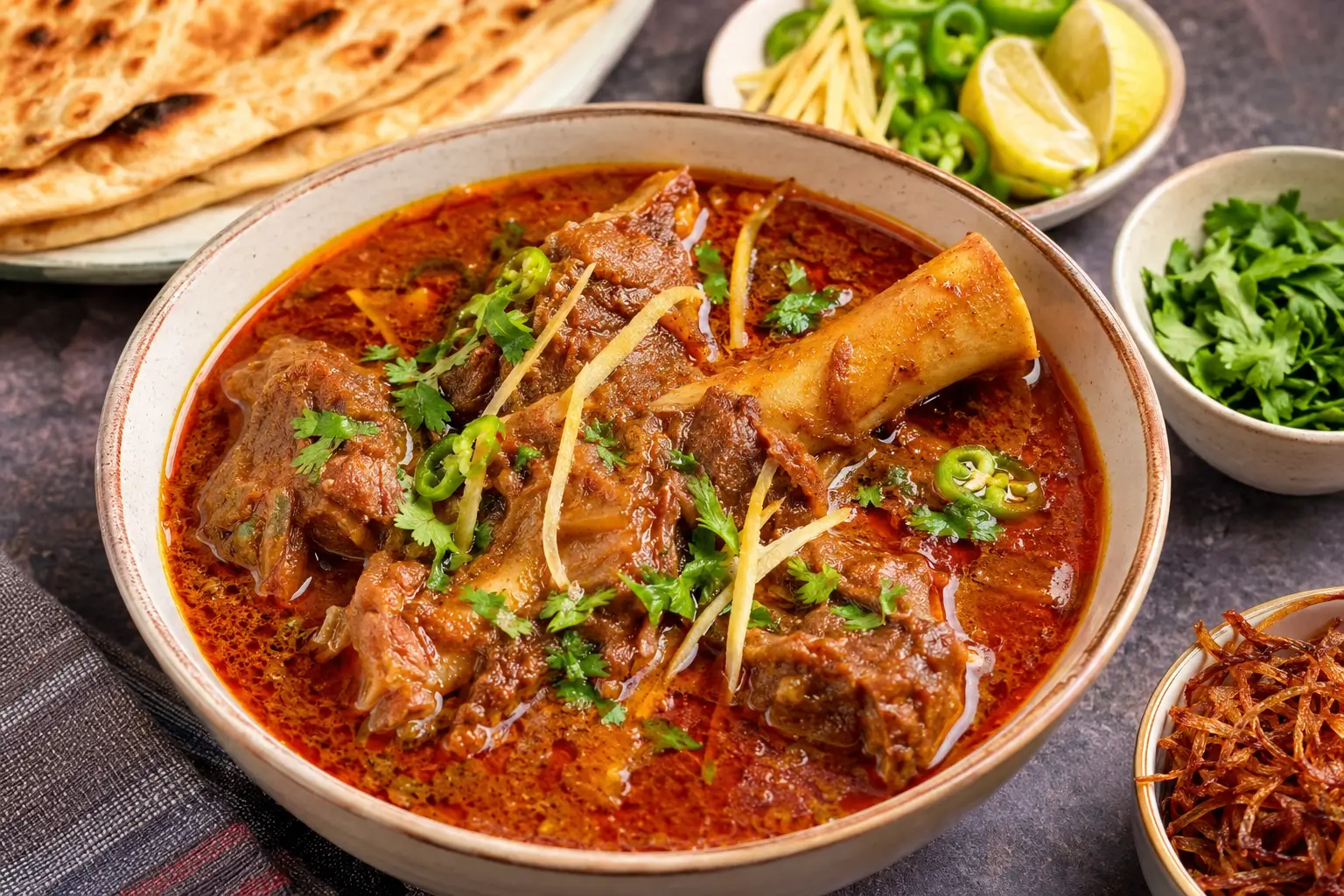
How to Serve Mutton Nihari
Transfer the Nihari into a large serving bowl.
Top generously with:
- Julienned ginger
- Green chillies
- Fresh coriander
- A little fried onion, if desired
Serve immediately with lemon wedges on the side.
Best breads with Nihari
- Naan
- Khameeri roti
- Kulcha
- Sheermal
- Tandoori roti
- Karachi-style double roti
The hot, chewy bread is perfect for soaking up the rich Nihari gravy.
Tips for Perfect Mutton Nihari
1. Use bone-in mutton
Boneless mutton can work, but you lose much of the richness that comes from bones and marrow.
2. Don’t skip the marrow bones
If you want restaurant-style richness, marrow and knuckle bones make a noticeable difference.
3. Cook it slowly
The most important ingredient in Nihari is time. A pressure cooker can make tender meat quickly, but traditional slow cooking allows the broth and spices to develop more deeply.
4. Roast the wheat flour
A short roasting step gives the flour a subtle nutty flavour and prevents the gravy from tasting like raw flour.
5. Add flour gradually
Too much flour can turn Nihari into a heavy paste. Always remember that the gravy thickens further as it cools.
6. Don’t overdo the Shan Masala
If using Shan, start with the packet small quantity rather than adding additional commercial size Nihari masala. Taste after cooking and adjust only if necessary.
7. Ginger is not just decoration
Generous fresh ginger cuts through the richness of the Nihari and provides a sharp, fresh contrast.
8. Lemon should be served separately
Don’t add lots of lemon directly into the cooking pot. Let everyone squeeze fresh lemon over their own serving.
9. Make it ahead
Nihari is an excellent make-ahead dish. It can be cooked earlier in the day and gently reheated before serving.
Frequently Asked Questions
What cut of mutton is best for Nihari?
Mutton shank is one of the best choices because it contains connective tissue and bones that become tender during slow cooking. Knuckle and marrow bones can be added for additional richness.
Can I make Nihari with boneless mutton?
Yes, but bone-in mutton produces a richer broth. If using boneless meat, add marrow or knuckle bones separately.
Can I use Shan Nihari Masala?
Absolutely. Use one small packet for approximately 1 kg meat with potli following Shan’s basic approach, and adjust the water and flour according to the quantity and consistency you want. la?
Why is my Nihari too thick?
You probably added too much wheat flour, or the gravy reduced too much.
Add a little hot water, stir gently and simmer for several minutes.
Why is my Nihari too thin?
Mix a small amount of roasted wheat flour with water to make a smooth slurry and add it gradually.
Never add dry flour directly to the hot gravy.
Can I make Nihari in a pressure cooker?
Yes, particularly when time is limited. However, traditional slow cooking gives the best depth of flavour because the meat, bones and spices have more time to develop.
Can I make Nihari the night before?
Yes—and it can actually improve the flavour. Cool it properly, refrigerate it, then reheat gently the following day. Remember that the gravy will become thicker after refrigeration, so loosen it with a little hot water while reheating.
How do I reheat Nihari?
Reheat over low heat, stirring occasionally. Avoid high heat because the flour-thickened gravy can catch on the bottom of the pot.
Storage
Allow leftover Nihari to cool before transferring it to an airtight container. Keep refrigerated and consume within 3 days. For longer storage, freeze in individual portions. When reheating frozen Nihari, thaw it safely and reheat gently. Add a little hot water if the gravy has become excessively thick.
Final Thoughts on This Mutton Nihari Recipe
A truly unforgettable Mutton Nihari requires a measured approach, emphasizing the importance of patience in the cooking process. It’s not merely about hurrying through the steps or inundating the dish with a multitude of spices. Instead, the magic lies in the gradual layering of flavors, crafted through an authentic Karachi Nihari recipe. This traditional preparation method elevates the dish to new heights, resulting in a rich and aromatic experience that captures the essence of Karachi’s culinary heritage. Each simmering moment adds depth and complexity, leading to a Nihari that is nothing short of outstanding.
Serve it piping hot with naan or khameeri roti, plenty of ginger and a squeeze of lemon—and you have a deeply satisfying Pakistani-style Mutton Nihari that is worthy of a family daawat.